Fine line roses look incredible fresh, and they force a choice most people avoid. The styles that score the most likes on social feeds are not always the ones that hold up for years. Pick the line weight, placement, and color with the finish in mind, and you avoid the common touch-up trap. Below are 17 modern rose tattoo designs with what to ask in consults, how they age, and how to show them off.
1. Minimalist Fine Line Rose on Inner Forearm
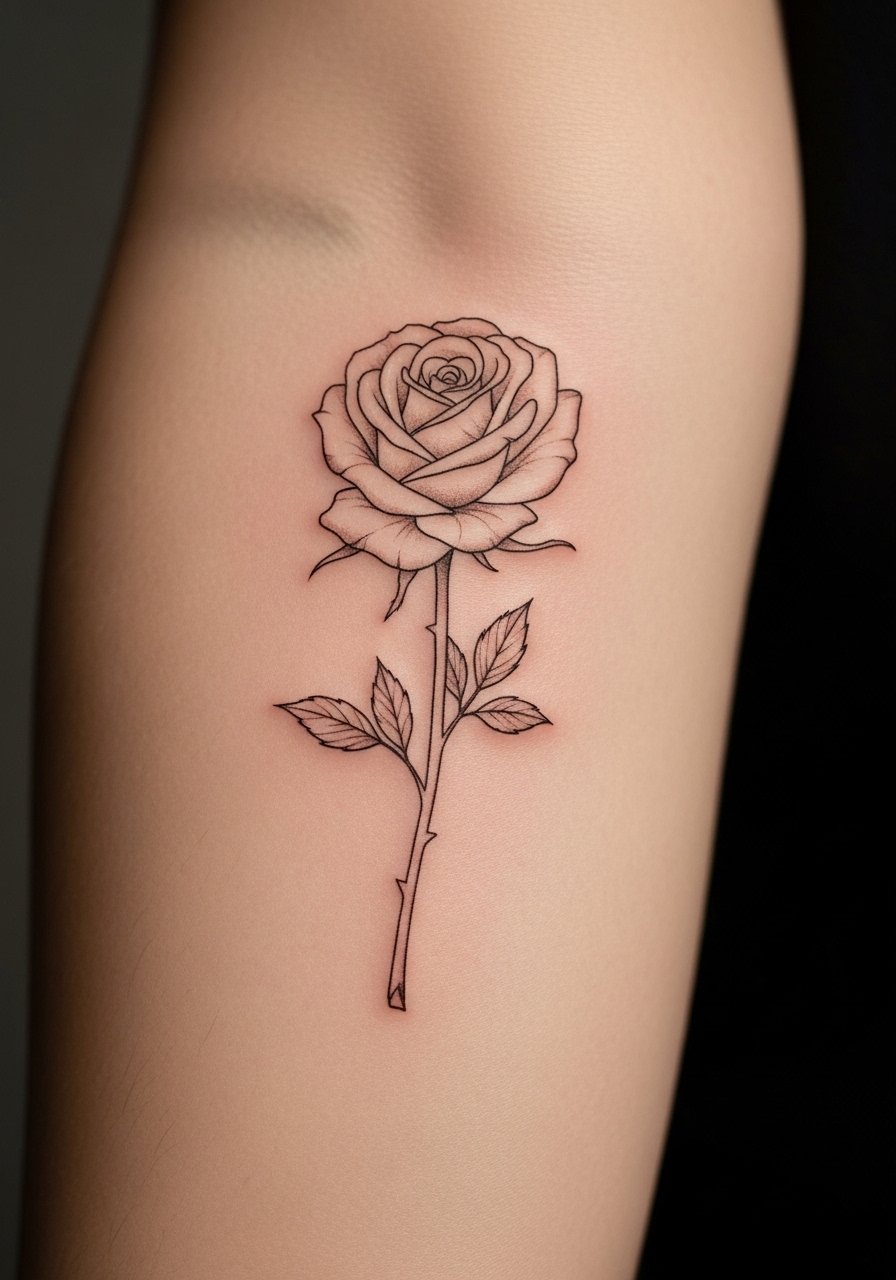
Fine line roses read as quiet and precise when done with the right spacing and needle depth. One camp says fine line is only for low-movement areas because tiny lines blur with skin stretch. The other camp argues experienced artists can make single-needle work last on forearms with slightly increased spacing between petals. Tell your artist you want clear single-needle contour with a tiny bit more negative space between petals to preserve detail. Expect a one-to-two hour session on most forearms and a touch-up around year two to three if you wear this spot in the sun. For showing it off, roll sleeve cuffs up and try a rolled-up linen shirt that frames the forearm without covering the linework.
2. American Traditional Bold Rose on Upper Arm

Traditional roses rely on heavy linework and strong saturation, which makes them forgiving as the skin ages. I recommend this when you want a piece that still reads from a distance years down the line. Tell your artist you want clear black outlines and full saturation rather than micro detail that depends on tight dots. Sessions usually run one to two hours for a medium-sized upper arm piece and pain is moderate because muscle cushions the needle. Avoid requests to shrink line weight to "make it subtle" because that is how bold pieces lose their longevity.
3. Micro-Realism Rose on Upper Thigh
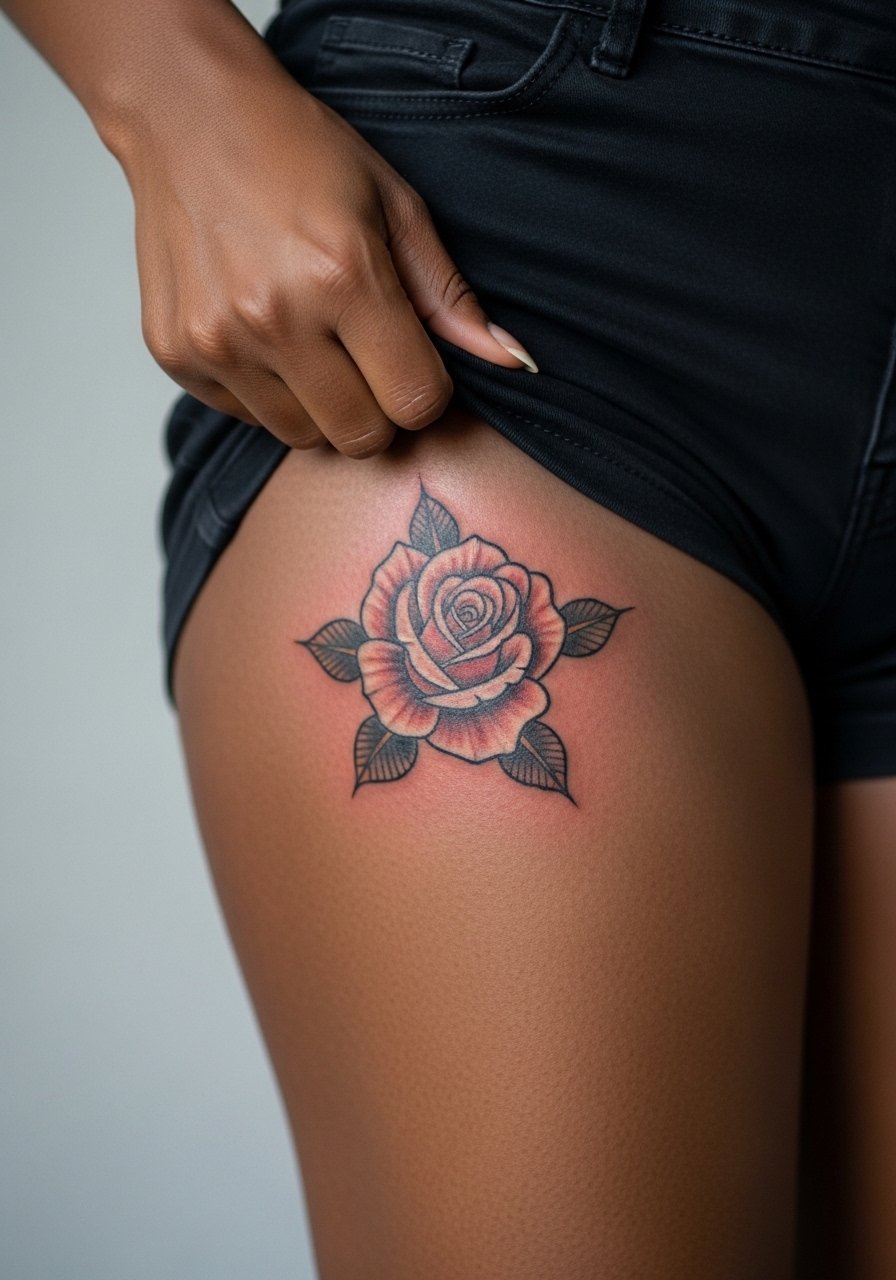
Realistic roses demand time and an artist who works with subtle shading and saturation. For thigh placement, the skin holds detail well and the area is forgiving with movement, so larger scales work best. In consults, bring a few reference photos that show petal edge contrast and ask the artist how the design will read when scaled to your thigh. Sessions can span multiple sittings, often two to four hours each, and you should expect touch-ups in the first year to settle highlights. For the appointment, wear high-waisted shorts so the artist can access the top of the thigh without discomfort.
4. Watercolor Shoulder Bloom
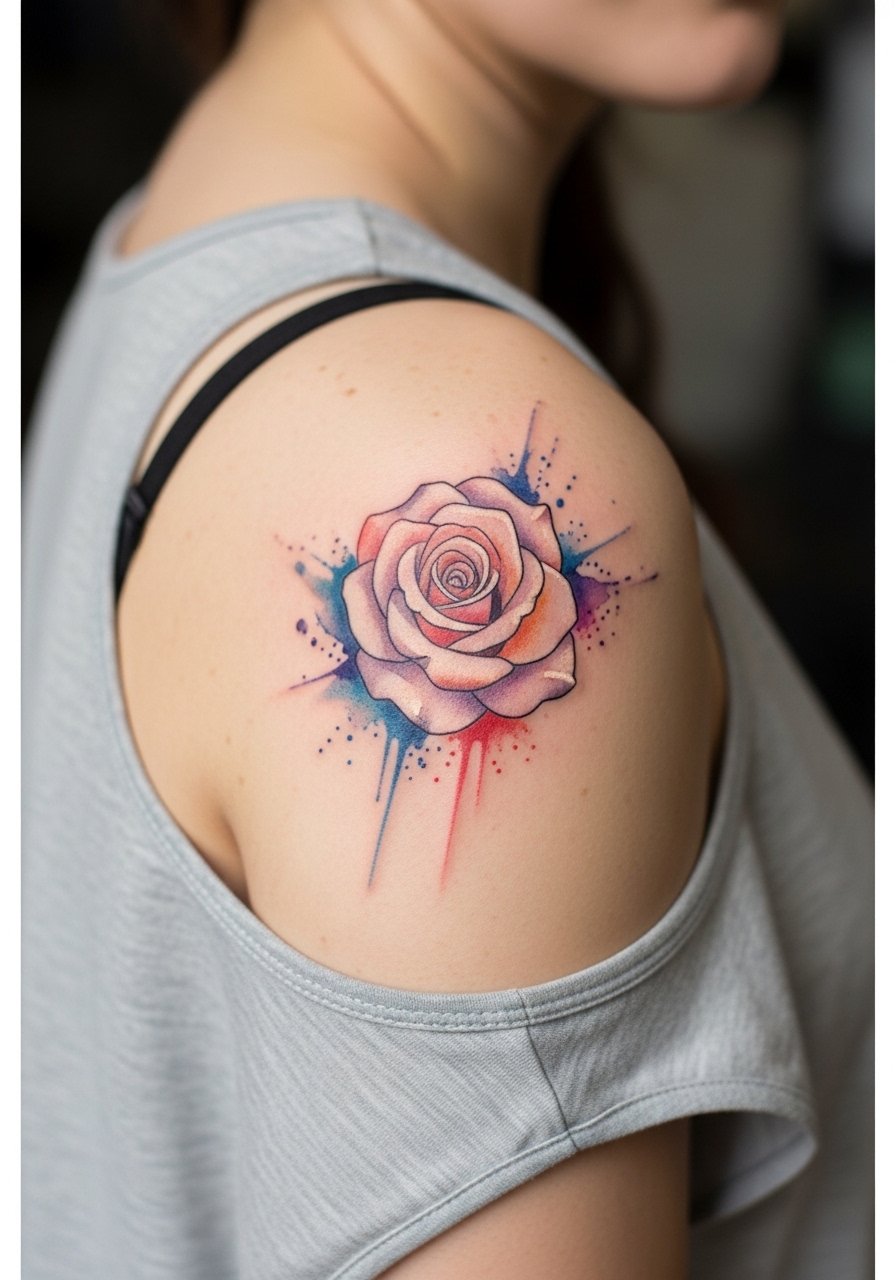
Watercolor roses trade crisp edges for painterly color transitions and delicate washes. One camp worries watercolor fades quickly and becomes muddy unless the artist uses careful layering. The other camp says the technique can last if the composition includes anchor lines and thoughtful saturation in shadow areas. Ask whether the artist will integrate subtle black line anchors to keep the piece readable over time. Shoulder placement gets moderate sun exposure so expect some color loss without sunscreen on healed ink. For sessions, bring a loose tank so the artist can shift the strap and still access the shoulder cleanly.
5. Neo-Traditional Rose With Dagger on Outer Bicep

Neo-traditional work blends strong linework with modern shading techniques to keep the piece readable and dimensional. This pairing is great when you want symbolic contrast and a bolder silhouette. In consults, specify that you want the dagger form to read from a distance and the petals to keep rounded saturation points so they do not wash out. Outer bicep sessions feel moderate on pain and usually take around one to two hours per sitting. Wear a loose tank top for the session so the artist can move your arm and keep the area accessible.
6. Blackwork Geometric Rose on Back of Hand
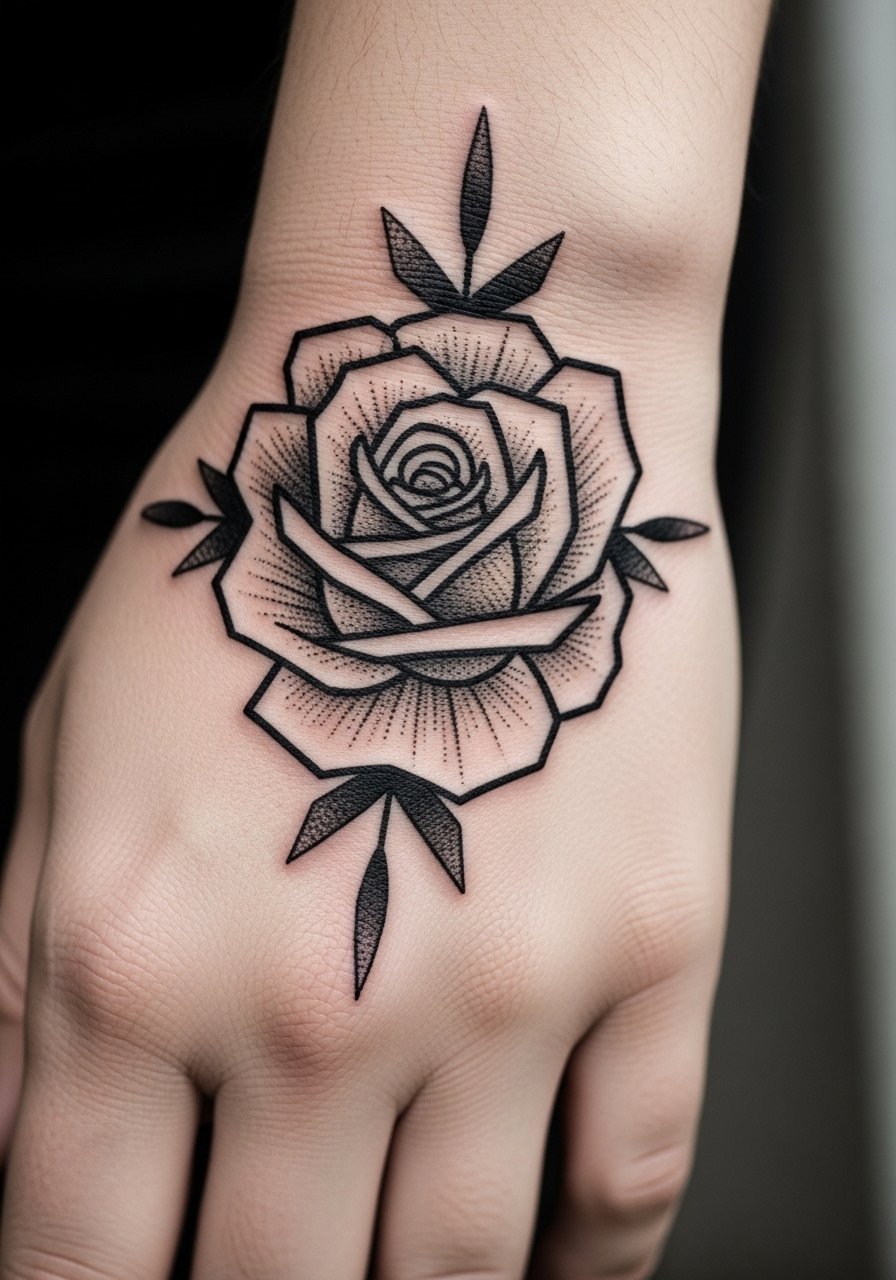
Hand tattoos age differently because the skin moves and sees a lot of friction. Expect earlier fading and the highest chance of partial loss compared with arm or thigh work. When you want a hand piece, favor bold geometry that tolerates some blur. Tell your artist to keep the shapes slightly larger than they would on the forearm so lines do not vanish into skin texture. Sessions are short but painful, and touch-ups are a near certainty in the first two years. Consider your job and lifestyle because hands remain visible and can affect some professional situations.
Studio Day Picks
The small placements above and the hand piece ask for different prep than larger arm work, so a few targeted items smooth the session and the first week.
-
Stencil transfer paper kit. Lets you and the artist preview the exact placement and scale before the needle hits skin, which is crucial for wrist and hand pieces.
-
Topical numbing cream. Applied about 45 minutes before the session it takes the sting edge off sensitive areas like ribs and sternum without changing linework.
-
Thin protective film roll. Useful for fingers and ankles, it limits friction and keeps the site cleaner during the first few days.
-
Fragrance-free gentle body wash. Mild cleansers reduce irritation on fine line pieces while you shower.
-
Aquaphor healing ointment. A thin layer in the first 48 hours helps protect fresh fine line work without suffocating the area.
7. Tiny Behind-the-Ear Rose
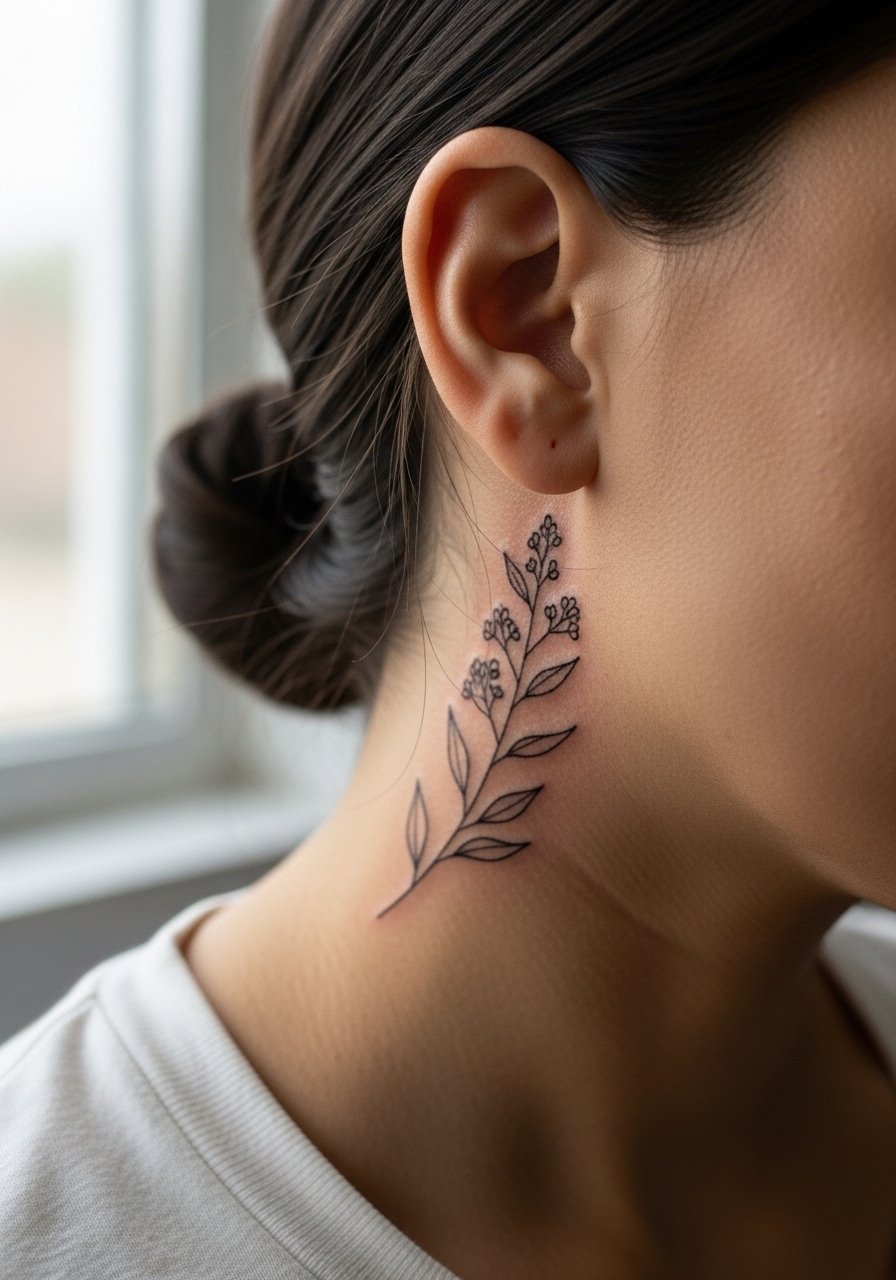
Tiny roses behind the ear make for a discreet accent that peeks out with short hair or an updo. The area requires a precise hand because space is small and the canvas curves. Tell the artist you want the design kept to skin-level detail and not pressed into the ear cartilage area. Sessions are brief and the pain is low to moderate. For a subtle finish with jewelry, a thin chain pendant necklace sits above the area without drawing attention from the tattoo.
8. Large Photorealistic Chest Rose

Chest roses read big and dramatic when executed in micro-realism, but they require stamina from both client and artist. Healed chest skin can hold soft shadowing very well if the artist spaces highlights and midtones properly. Be explicit in consults about how the design will sit over the sternum and collarbone. Sessions can be long and may need multiple visits. Expect that intimate chest areas often take longer to heal and that you should plan clothing that avoids rubbing the zone during recovery.
9. Tiny Ankle Rose
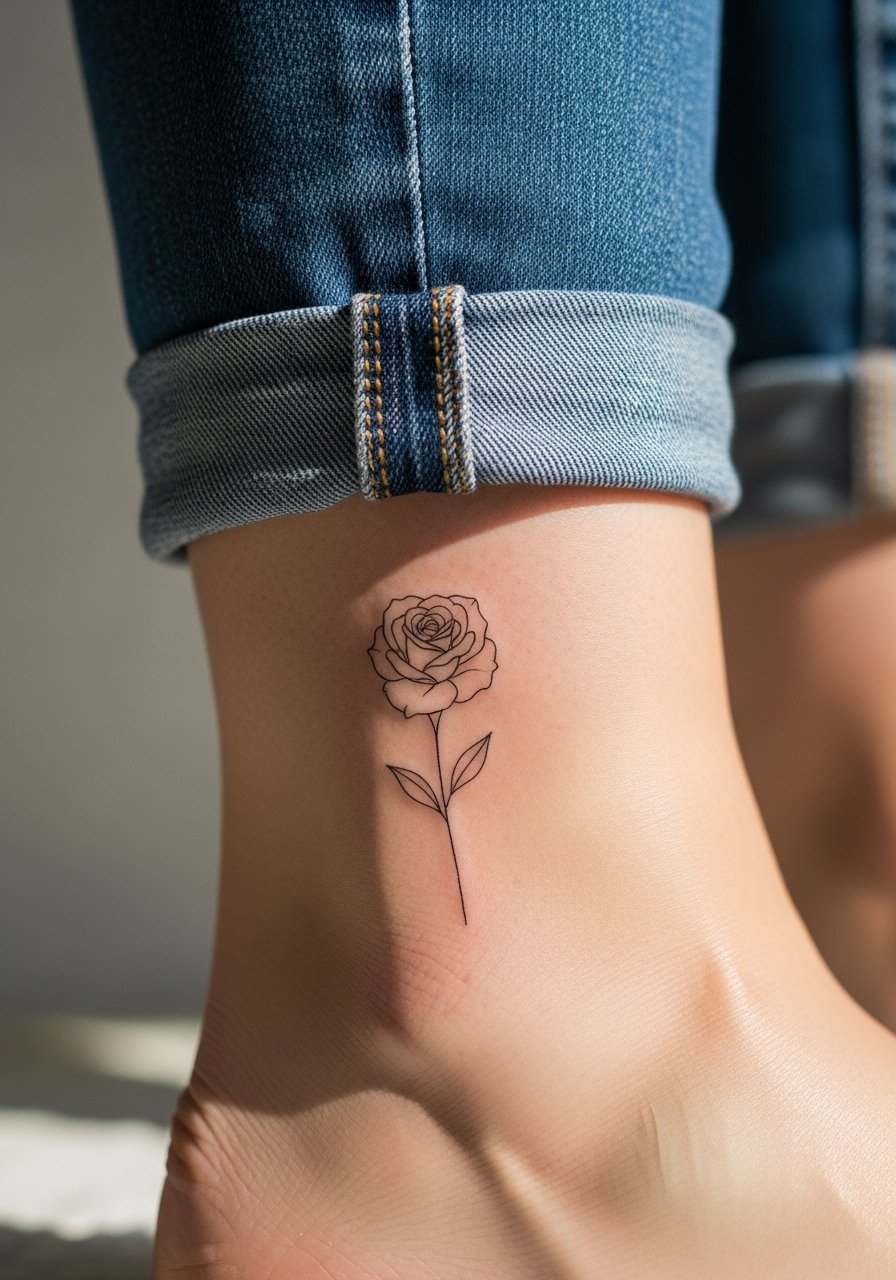
Ankle roses are perfect when you want a design that shows in sandals and hides in shoes. The area is prone to rubbing from socks and shoes, and that friction causes early fading. Ask your artist to keep negative space around the petals and to avoid ultra-thin lines. Sessions are short and pain varies by proximity to bone. For showing the piece off, pair it with strappy sandals and low socks so the tattoo gets air and sunlight without friction.
10. Collarbone Single-Line Rose
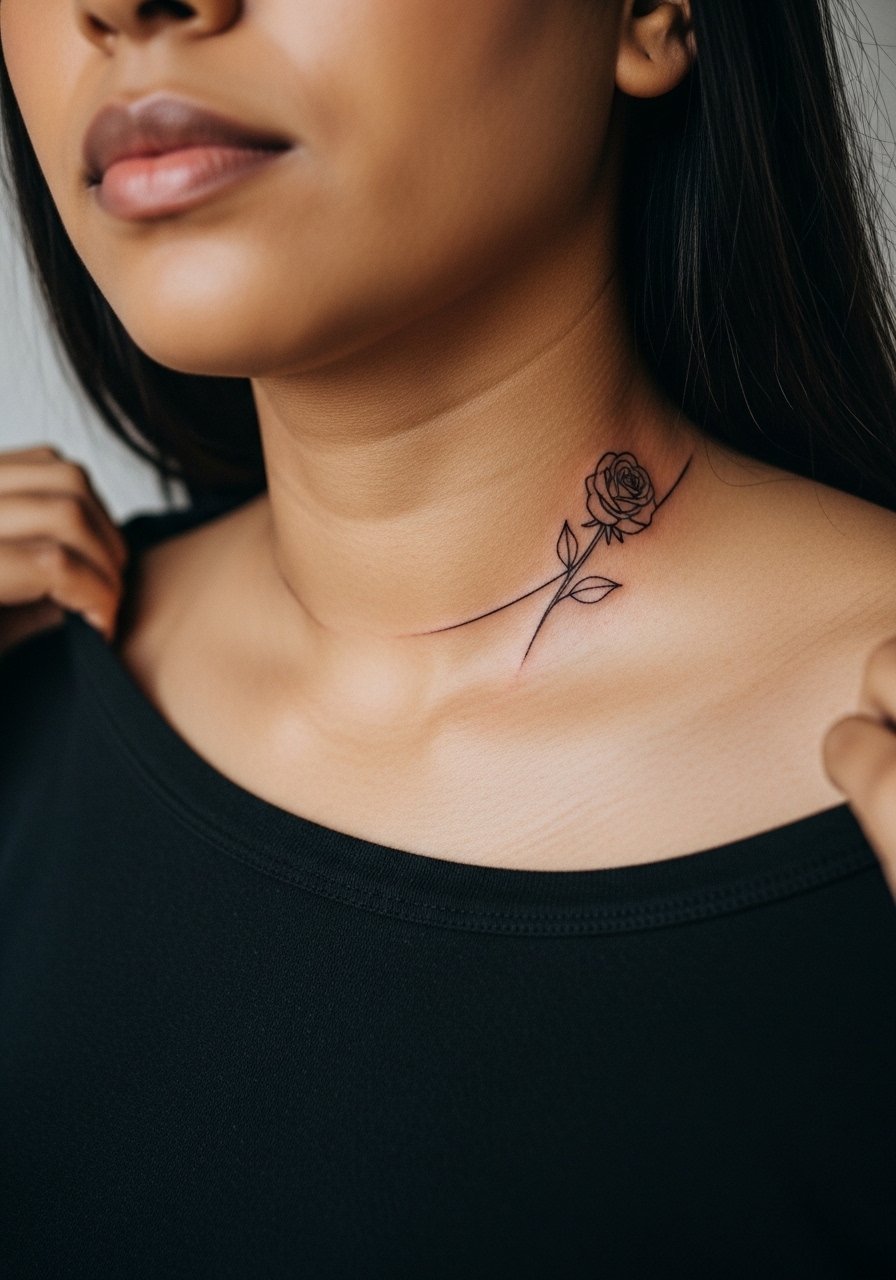
Collarbone tattoos sit right on a high-movement area and get direct sun exposure when you wear open necklines. For single-line work, ask the artist about spacing and slight thickness increases in the central stroke to help the piece remain legible with time. Sessions are usually under an hour for small designs and pain ranges moderate because of thin skin. For evening wear, the piece pairs well with open-neck dresses and delicate chains.
11. Thigh Panel Rose With Leaves
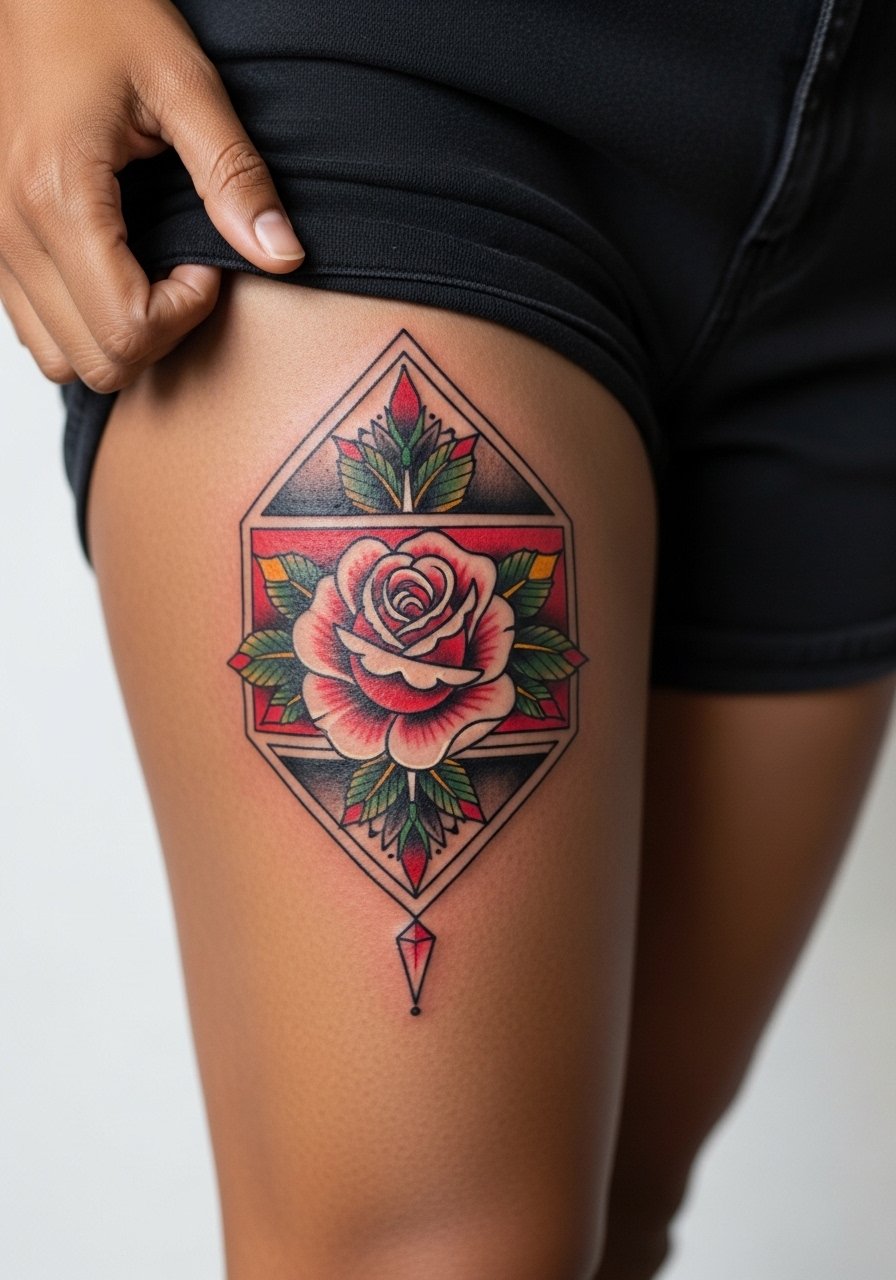
Thighs are forgiving canvases for larger rose panels because they allow scale without demanding too much contouring. If you want leaves to hold shape, ask the artist to emphasize midtone contrast rather than tiny stippling that can vanish. Sessions for a panel may be multiple hours and you will want loose bottoms for the appointment. Plan outfits with high-waisted shorts for the session, and avoid tight seams over the piece while it heals.
12. Calf Black and Grey Rose Cluster
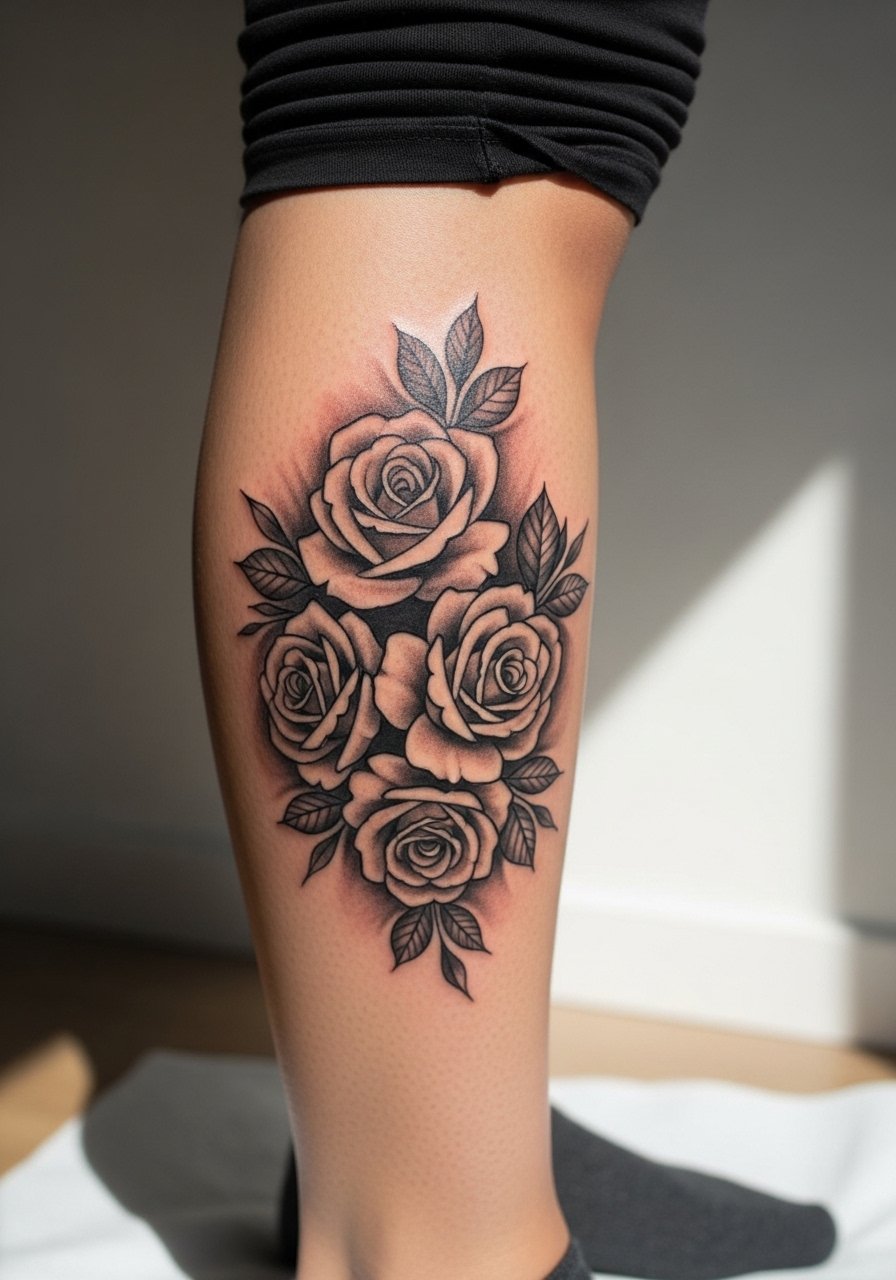
Calf roses give the option to display or conceal depending on shoes and pant choice. Black and grey shading ages nicely here because the area swaps less tension than hands or feet. Tell your artist you prefer gradual stipple shading in shadow areas so the design keeps depth without relying on tiny strokes. Sessions take moderate time and the area handles heavier saturation with lower blowout risk.
13. Fine Line Sternum Mini Rose
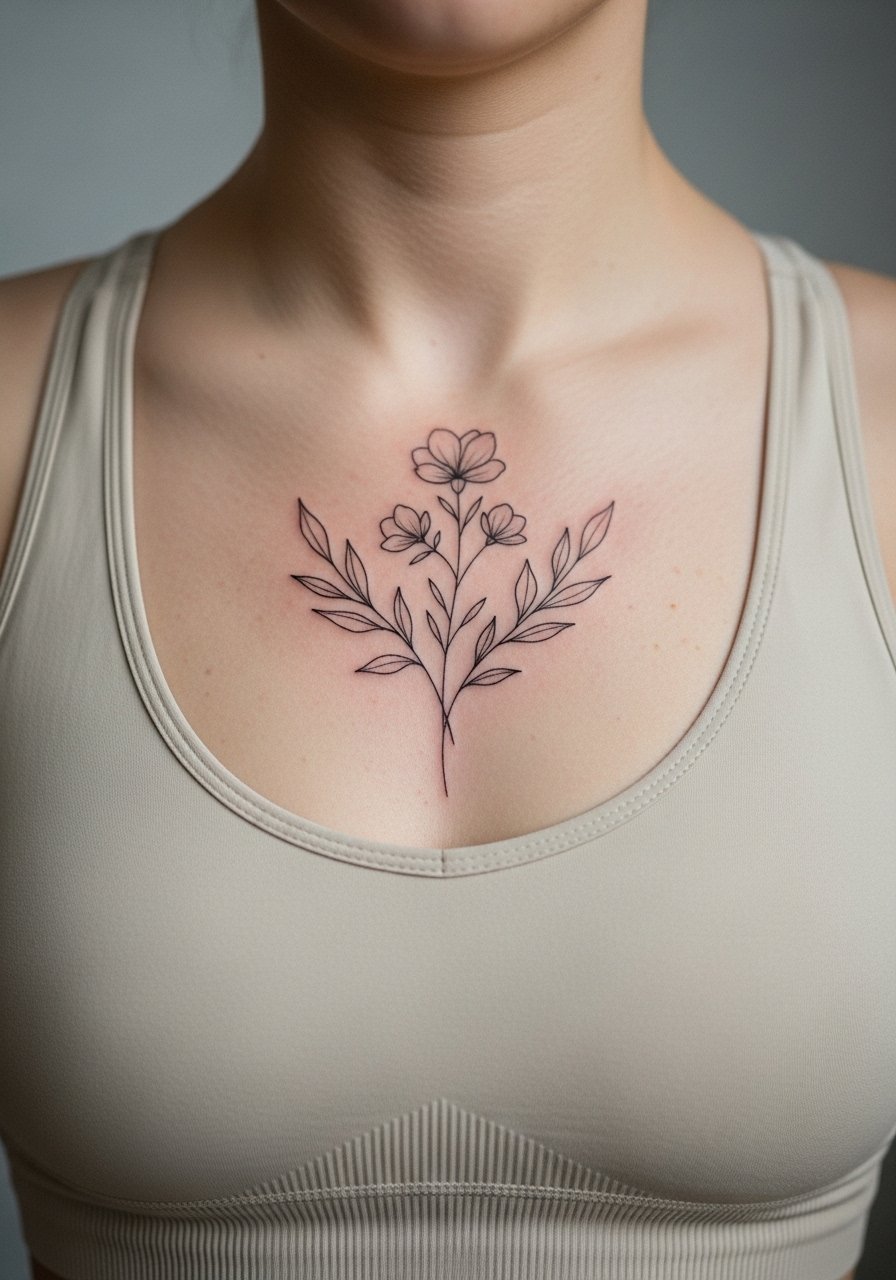
Sternum tattoos demand a thoughtful approach because anatomy varies and the skin stretches with breathing. One-sentence professional note: sternum work often needs a practitioner who has experience with centerline symmetry and can adapt the stencil to body contours. In consults ask how the artist will map the design over your sternum and whether they prefer a slightly larger scale to avoid blur. Plan for a sensitive session and limited direct pressure on the area during the first week. For the appointment, a fitted sports bra helps the artist access the sternum while keeping you comfortable.
14. Shoulder Cap Cluster in Neo-Traditional Style
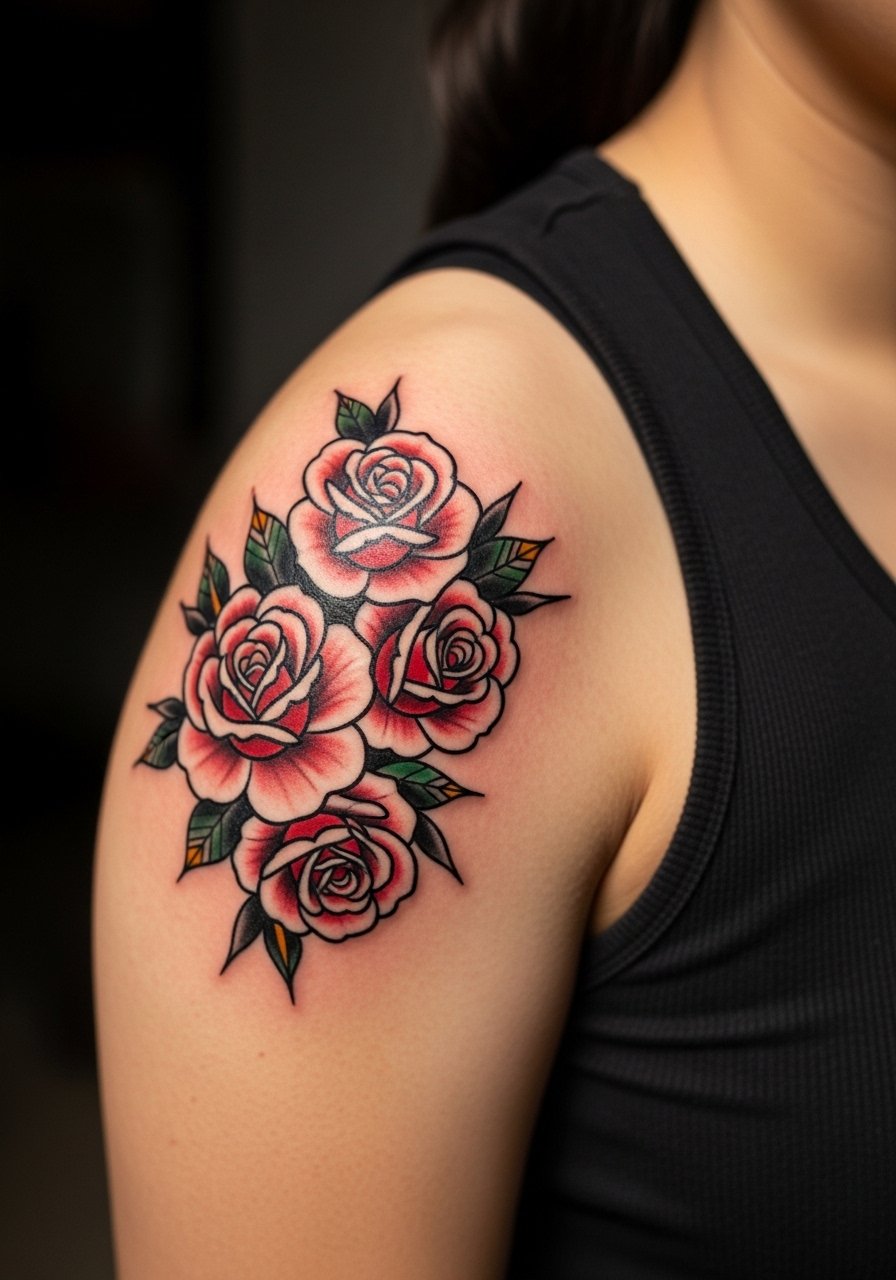
Shoulder cap placement offers great motion and visibility when you wear sleeveless tops. Ask for a design that follows the shoulder curve so petals do not seem distorted when you raise your arm. Sessions are manageable in length and pain is moderate. This is a solid spot for colorful neo-traditional work because the area tolerates repeated shading sessions well.
15. Spine-Aligned Rose Column

A spine column feels dramatic when the roses follow the vertebral line, and the vertical composition reads well in clothes with open backs. Tell your artist whether you want petals to align perfectly with the spine or to sit slightly off-center for a relaxed look. Sessions may be longer because the artist works in a narrow, curved area, and pain can spike near the vertebrae. For showing off, an open-back midi dress frames the column beautifully for evenings out.
16. Micro Rose on Finger as Ring Accent

Finger tattoos are popular but they fade and blur faster than most placements due to constant washing and friction. Keep designs simple and slightly larger than you might expect so they do not dissolve into skin texture. Tell the artist you accept the likelihood of touch-ups and that you prefer bolder anchors rather than hairline strokes. Sessions are very short but the area is sensitive. Consider whether you want the piece to act like jewelry or prefer a less visible spot.
17. Inner Bicep Wrapped Rose
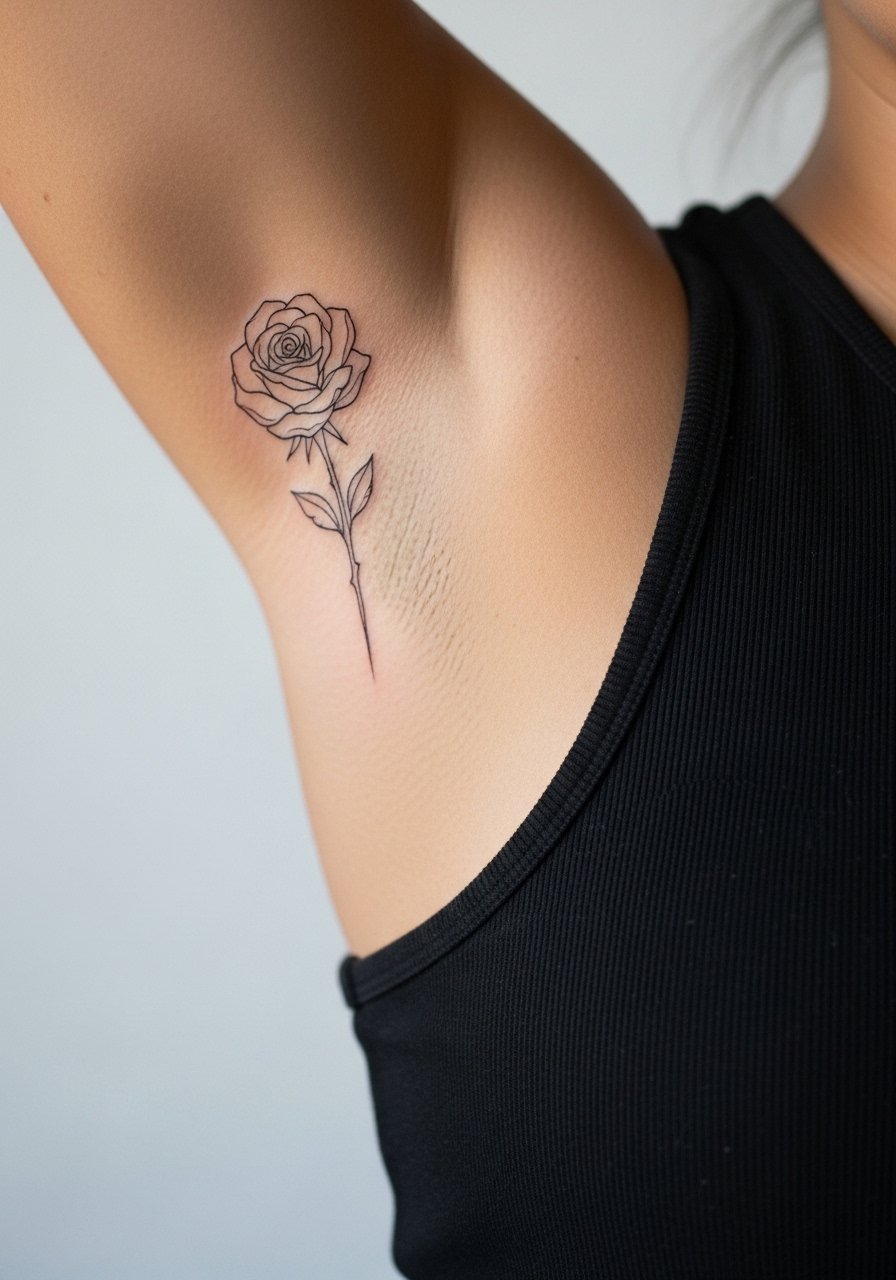
Inner bicep roses look intimate and sit on skin that shifts with arm movement, so needle depth and spacing matter. Artists disagree on whether fine line holds on inner biceps. One camp warns that the skin there stretches and thin lines blur quickly. The other camp says with slightly deeper placement and more negative space between petals, the work can remain crisp for years. Ask the artist how they plan to balance depth and spacing. Sessions feel more tender than the outer arm, and you should wear a loose tank top so the artist can raise your arm and access the area without strain.
Frequently Asked Questions
Q: Will fine line roses blur faster than traditional roses on my forearm or wrist?
A: Fine line designs rely on tight lines that can soften with time, especially on wrists where skin gets more movement and sun exposure. If you love fine line, ask for slightly wider gaps between petals and plan for a possible touch-up around year two or three.
Q: Do watercolor roses require different long-term care than black and grey roses?
A: Watercolor pieces depend on color saturation and soft washes that can fade faster with sun exposure. The practical difference is that you must be diligent with sunscreen once the piece is healed, and you may want a refresh earlier than you would with black and grey work.
Q: How much will a realistic thigh rose need touch-ups compared with a hand rose?
A: Thigh skin holds detail better so realistic work there usually needs fewer touch-ups than the hand, which sees constant friction. Expect touch-ups sooner on hands and fingers, sometimes as early as year one or two, while thigh pieces often stay stable for longer.
Q: Are sternum and ribcage roses more painful than forearm roses, and how should I prepare?
A: Sternum and ribs tend to rate higher on pain because skin lies over bone and the area flexes during breathing. For those sessions wear a fitted sports bra or easily adjustable top, and get a good night of sleep beforehand.
Q: Can I pair a small collarbone rose with my everyday jewelry without crowding the design?
A: Yes, simpler collars like thin chains or small pendants sit above a collarbone rose without competing. Consider a thin chain pendant that sits just above the design so both the jewelry and the tattoo breathe visually.
Q: How do I find an artist who actually specializes in the rose style I want?
A: Search style-specific tags and portfolios and check for healed photos in an artist's feed so you see long-term results rather than only fresh work. Use location search terms like "realism rose tattoo + your city" to narrow down shops that post healed pictures and client follow-ups.