
Fine line octopus tattoos on fingers are everywhere on saved boards, but trends and reality often diverge. They can need touch-ups sooner than you expect, the bones under the skin make some placements genuinely painful, and darker skin tones sometimes lose subtle lines during healing. Pick a design that suits your skin and schedule a consult that covers longevity, pain management, and realistic touch-up plans before you book.
1. Minimalist Octopus Outline on Side Finger

A single-line minimalist octopus outline is the easiest finger design to read at a glance and the quickest in the chair. I recommend it for first-timers who want a nod to the sea without wrapping the joint. Tell your artist you want slightly bolder linework than the purest micro line so the ink keeps shape after healing. The common mistake is asking for ultra-thin lines that heal faint on fingers. Expect a short session under 30 minutes and plan a touch-up at year one or two if lines soften. For showing it off, pair with a thin silver ring set on non-tattooed fingers, which frames the outline without crowding the linework.
2. Fine Line Tentacle Wrap Around Index

This wrap feels intimate because the tentacle follows your finger motion. Fair warning, fine line on fingers splits artists into two camps. One camp accepts that these delicate lines will need touch-ups every couple of years. The other insists a skilled hand can make fine line last longer. In practice, request slightly spaced linework and ask the artist how they adjust depth for hands. Expect moderate pain over the bone and a 30 to 60 minute session. A common mistake is wrapping too tightly across a knuckle, which distorts when you bend your finger. For session comfort, wear a loose short sleeve top so the artist can access your hand without feeling cramped.
3. Micro-Realism Octopus Eye on Knuckle
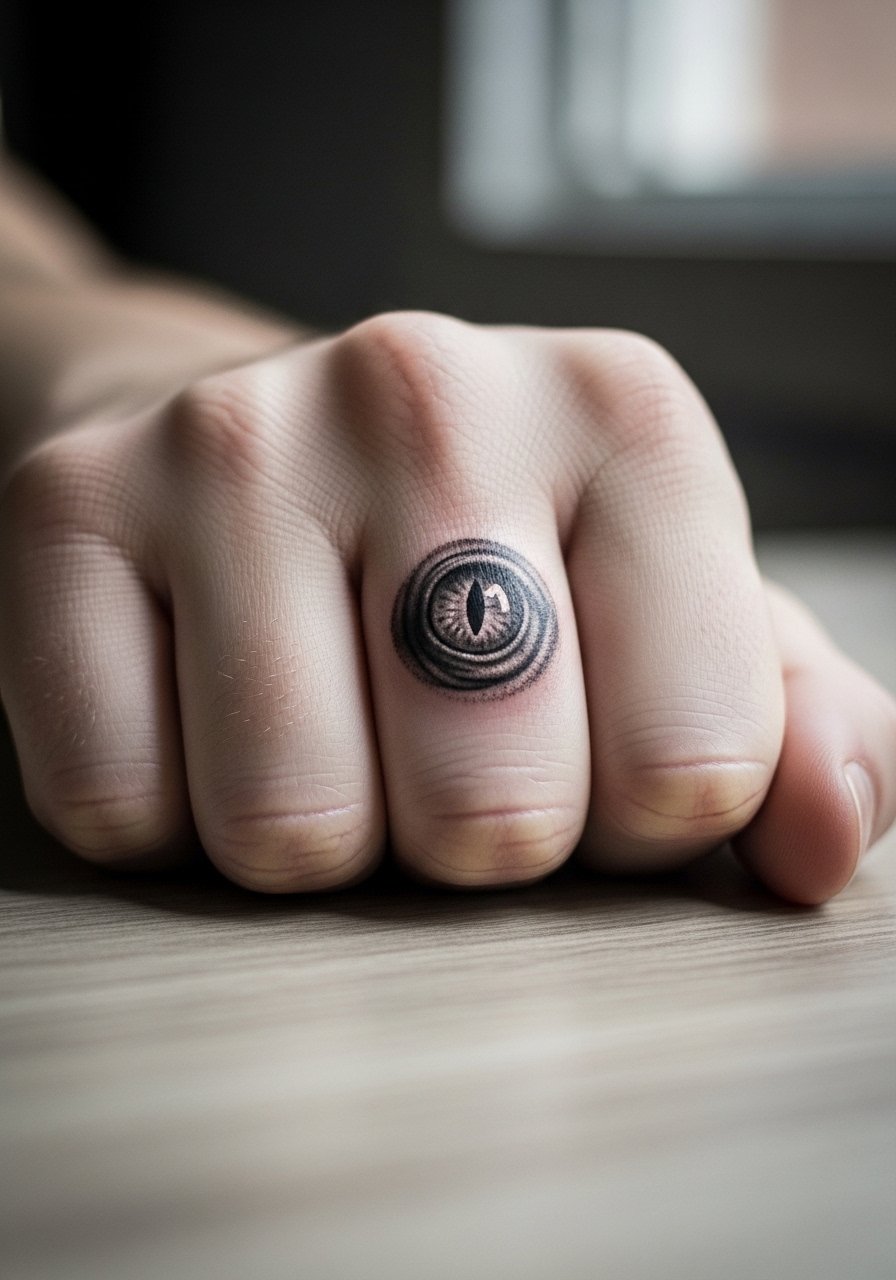
A tiny, realistic octopus eye on the knuckle reads like a secret detail. This one is for people who want intensity in a micro spot. Expect a short but focused session, around 30 to 45 minutes, because stipple shading and tiny gradients take patience. Knuckles age and see a lot of friction, so plan touch-ups at year one and again at year three. A real mistake is compressing too much detail into a knuckle canvas; ask your artist to simplify the shadows so the eye reads at distance. Pair this with a minimalist leather cuff on the wrist when you show it off to keep attention on the knuckle without adding visual noise.
4. Blackwork Geometric Octopus on Finger Side

Blackwork is the practical answer to finger fading. Solid fills and strong negative space read longer on high-friction spots. This geometric take uses bold blocks for tentacles and small open facets to keep the design from merging. In consultation, say you want areas of solid black balanced with breathing room so the piece does not become a smudge after a year. Session time is usually under an hour if the piece is compact. Pain is moderate where the needle meets bone. A typical mistake is over-detailing the negative shapes; give the black space room to age. For style, matte finishes look great against chunky accessories, so try a chunky chain bracelet on the opposite wrist to create contrast.
5. Traditional Octopus Head at Thumb Base

Classic sailor lines translate well to the thumb base because the shape complements the pad of the hand. Color accents help the head read even as the piece ages. Tell your artist you want strong outlines and solid saturation rather than tiny color gradients; saturation ages better on hands. The session is usually 45 to 75 minutes depending on color. Pain is noticeable on the fleshy thumb base but softer than near the knuckle. People sometimes cram too many elements into the thumb, which makes the design confusing as it heals. A chunky bracelet on the opposite wrist pairs nicely for show-off looks and keeps attention balanced. Consider a matte black nail polish to ground the traditional palette.
6. Neo-Traditional Octopus Gripping the Finger

Neo-traditional lets the octopus get playful with exaggerated eyes and bold color blocks. For a full wrap that grips a finger, plan two sessions because color saturation and layering take time. This style reads well when artists leave small gaps between tentacle curls so the lines do not merge during healing. The main mistake is wrapping over too many joints; movement distorts the motif. Expect higher pain when the needle crosses knuckles and a realistic touch-up scheduled at year two. For an outfit that complements the vibrant palette, wear a wide band ring set on adjacent fingers to echo the wrap effect.
Studio Day Picks
The finger and thumb pieces above have different prep needs than larger tattoos, so a few small items make the session and first week easier.
-
Stencil transfer paper kit. Lets you preview how the octopus lines sit on your finger before the needle hits skin, useful for wrap and side placements.
-
Topical numbing cream. Applied per instructions about 45 minutes prior, it reduces discomfort over bony areas while you stay alert for the artist's feedback.
-
Thin protective film roll. Helps shield newly inked fingers from friction while you wash hands and type during the first days.
-
Fragrance free gentle body wash. A mild cleanser avoids irritating delicate linework for fine line and micro-realism pieces on hands.
-
Aquaphor healing ointment. A thin layer in the first 48 hours helps maintain moisture without suffocating the tiny needle channels that fine line tattoos rely on.
7. Watercolor Splash Over a Finger Joint

Watercolor effects add an artistic blur to a fingertip or joint, which can emphasize movement as you bend your finger. Be realistic about longevity. Watercolor fades faster than saturated work on hands because washes sit near the skin surface. To make the look survive, request a balanced outline that anchors the washes and plan touch-ups within two years. The session can be split into two short sittings to let color layers settle. A frequent mistake is asking for too many blended hues in a tiny space. For the appointment, wear a loose short sleeve top so you can relax your arm on the chair without constriction.
8. Ignorant Style Blocky Octopus on Ring Finger
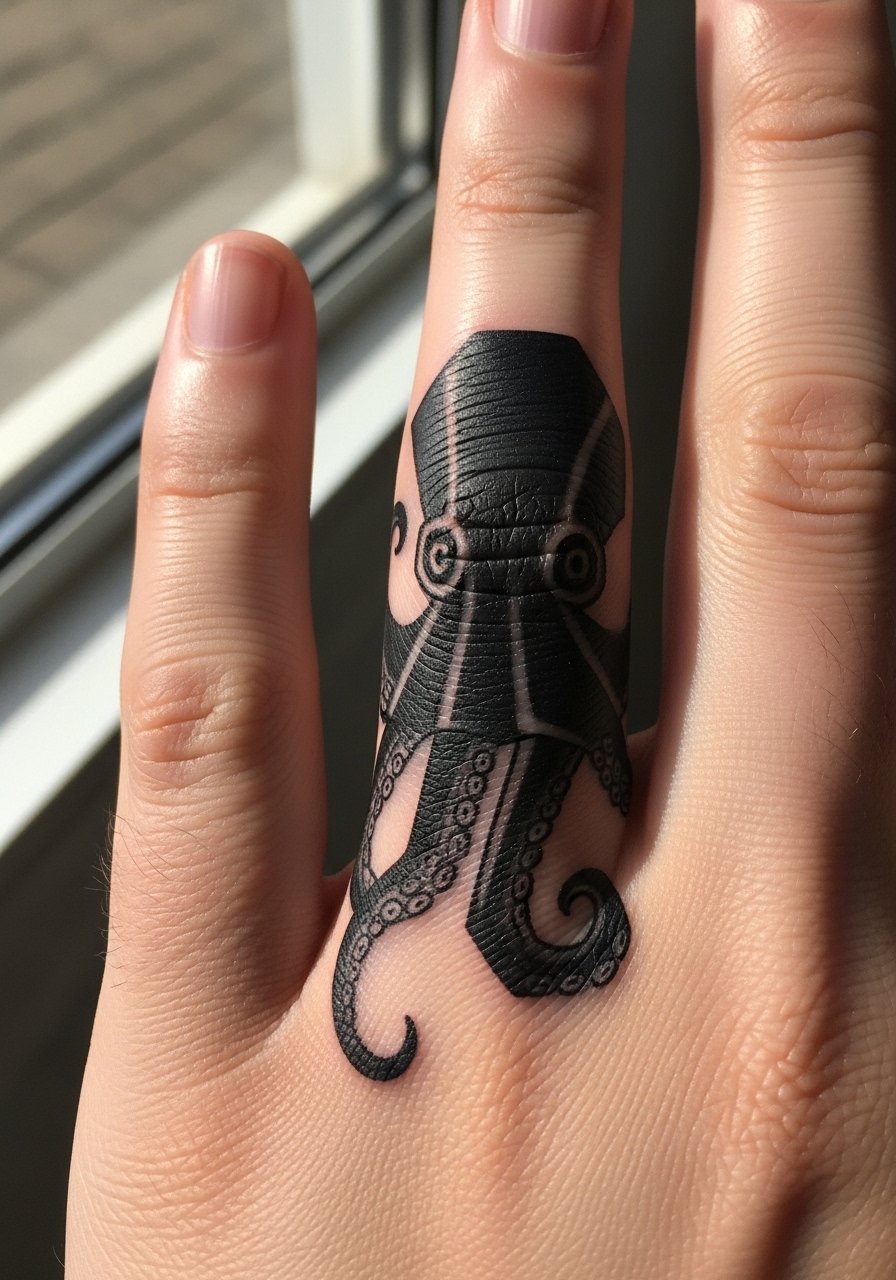
Ignorant style is raw and unapologetic. The thick black blocks are forgiving on fingers and age into a graphic statement rather than a blurred mess. Artists can execute this quickly in a single session under 30 minutes. The biggest mistake is adding micro details to a style that thrives on bold simplicity. Blowout risk is lower here because the shapes are chunky, but edges near the joint still need a steady hand. If you tend to wear lots of rings, try pairing the piece with a wide band ring set on adjacent fingers to balance the streetwear vibe.
9. Ornamental Mandala Tentacle on Pinky
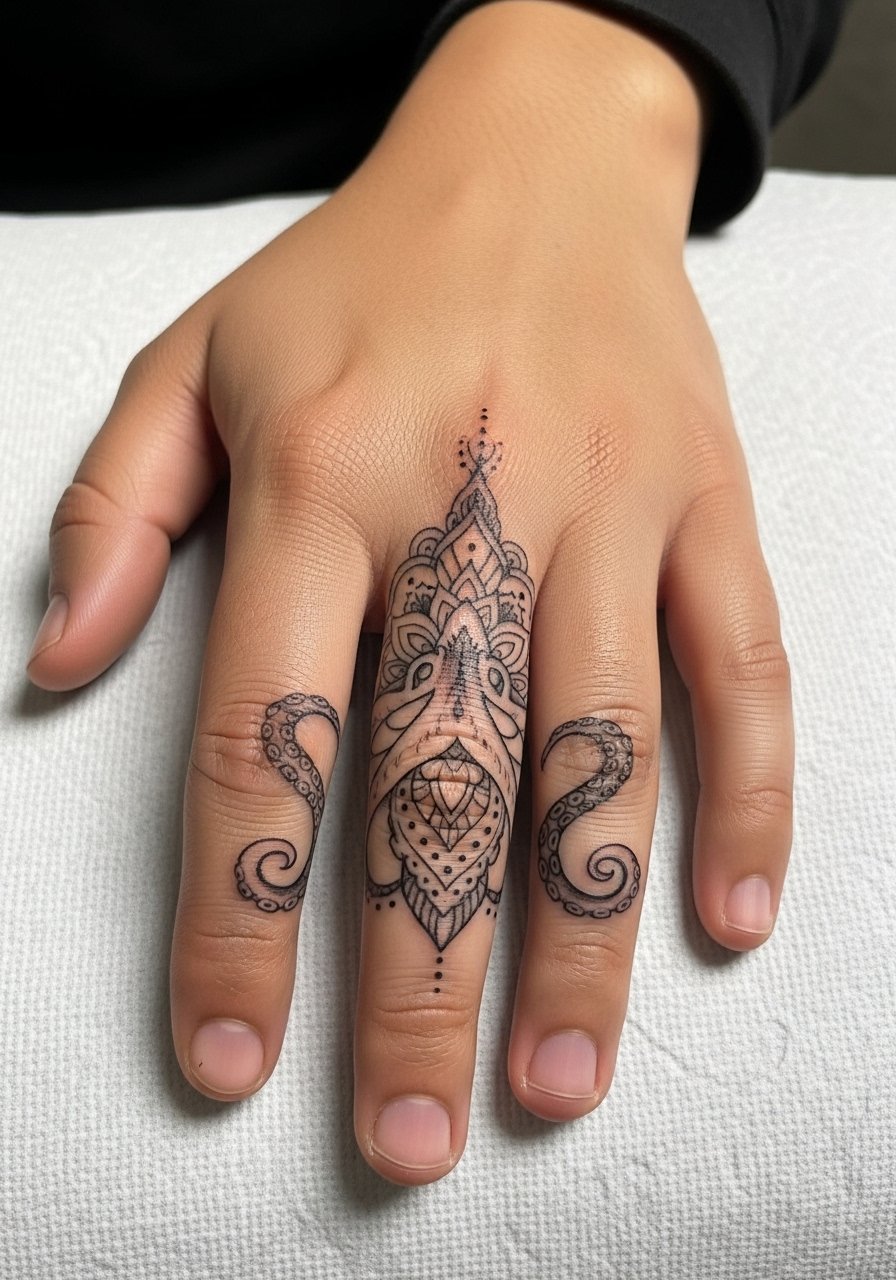
A pinky mandala tentacle reads like jewelry and suits someone who wants complexity in a tiny spot. The trick is spacing. Dense mandala work done too small will blur into a dot within a year. Ask for increased spacing and slightly bolder dots in stipple shading so patterns hold. Session time is usually under an hour if kept compact. Because this placement mirrors ring jewelry, consider pairing it visually with a delicate chain anklet or subtle jewelry elsewhere to create a coordinated look. For workplace considerations, remember hand visibility varies by industry.
10. Micro-Realism Tentacle Curl on Phalange

A phalange curl is a compact way to tell a longer story without wrapping joints. Micro-realism here needs careful shading to keep texture without filling the tiny space. Expect a focused 30 to 45 minute session and a likely touch-up around year two depending on daily wear. The common mistake is packing too many suckers or gradients into the phalange. Ask your artist to suggest a simplified focal curl so it reads at arm's length. Pain is sharp when needles cross knuckles or bone, so plan a short session and breaks. This placement ages faster with constant knuckle flexing, so placement choice matters.
11. Palm-to-Finger Climbing Tentacles Illusion

This optical illusion starts on the palm and peeks onto a finger for a narrative effect. It reads best when tentacles are positioned to follow natural creases so movement enhances rather than distorts the illusion. Palm skin heals differently and often needs more touch-ups, so plan a two-part session and a realistic touch-up timeline at year one. The mistake I see is trying to cram high detail onto the palm where friction removes pigment faster. For session wear, avoid rings and wear a short sleeve top so the artist can access the palm cleanly. If workplace visibility matters, remember palm work is extremely visible in close interactions.
12. Regeneration Story Micro Tattoo on Pinky
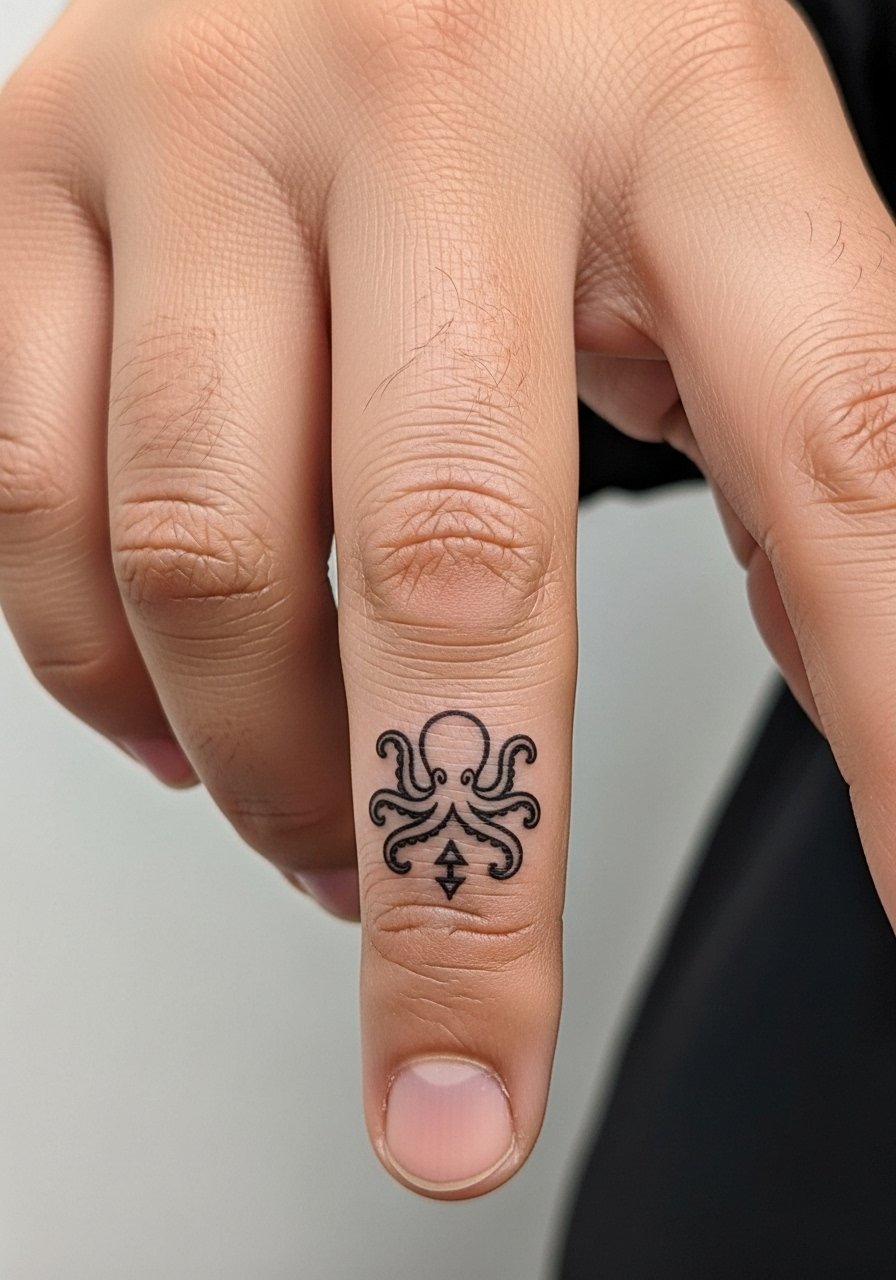
A minute octopus on the pinky can symbolize personal renewal without shouting. I recommend this for people who want a ring-like commitment without jewelry. Keep line weight slightly heavier than ultra-fine so the motif stays visible on darker skin tones. The session is brief, under 30 minutes, and touch-ups are typically expected within one to two years. A common error is choosing a design with too many thin loops that disappear on healing. For a subtle show-off, add a dainty ring or keep nails neutral to let the tattoo read clearly.
13. Temporary Ink Trial of Moving Tentacles

Testing a finger octopus with temporary ink is an underused sanity check. It reveals how a wrap looks when you bend, how rings interact, and whether tiny details survive daily tasks. Try a week of a temporary or stamp version before booking a permanent session. This avoids the common regret of choosing a design that clashes with your ring habits or job. The one practical tip is to test the exact width of lines you want because what reads well as a sticker often looks too thin when tattooed. Use this trial to refine placement and line weight with your artist.
14. Negative-Space Octopus Accent on Side Finger

Negative-space designs use surrounding blackwork to make the octopus silhouette pop. On fingers this technique helps avoid dense linework that fades into a blur. Tell the artist you want clear skin channels preserved so the negative shapes remain distinct. Expect a 45 minute session if the piece relies on solid fills. A typical mistake is making the negative areas too thin, which causes loss of definition over time. This approach carries a lower blowout risk in the filled areas, but edges near joints still need careful spacing. For a clean show-off, a thin silver ring set keeps visual focus on the negative silhouette.
15. Stipple-Shaded Micro Octopus Near Knuckle

Stipple shading can create texture without heavy lines. On or near the knuckle, dot work softens the transition between shadow and skin, which helps the piece read like a miniature illustration. Session time varies, often 45 to 60 minutes, since stippling is deliberate. The mistake is over-stippling too close to the joint, which invites pigment migration. Discuss how many dots per centimeter you want so the artist can avoid dense packing. Pain is sharp near bone but manageable with short breaks. This style pairs with simple stacked rings that do not compete with the dot texture.
16. Geometric Dot-Work Octopus Band
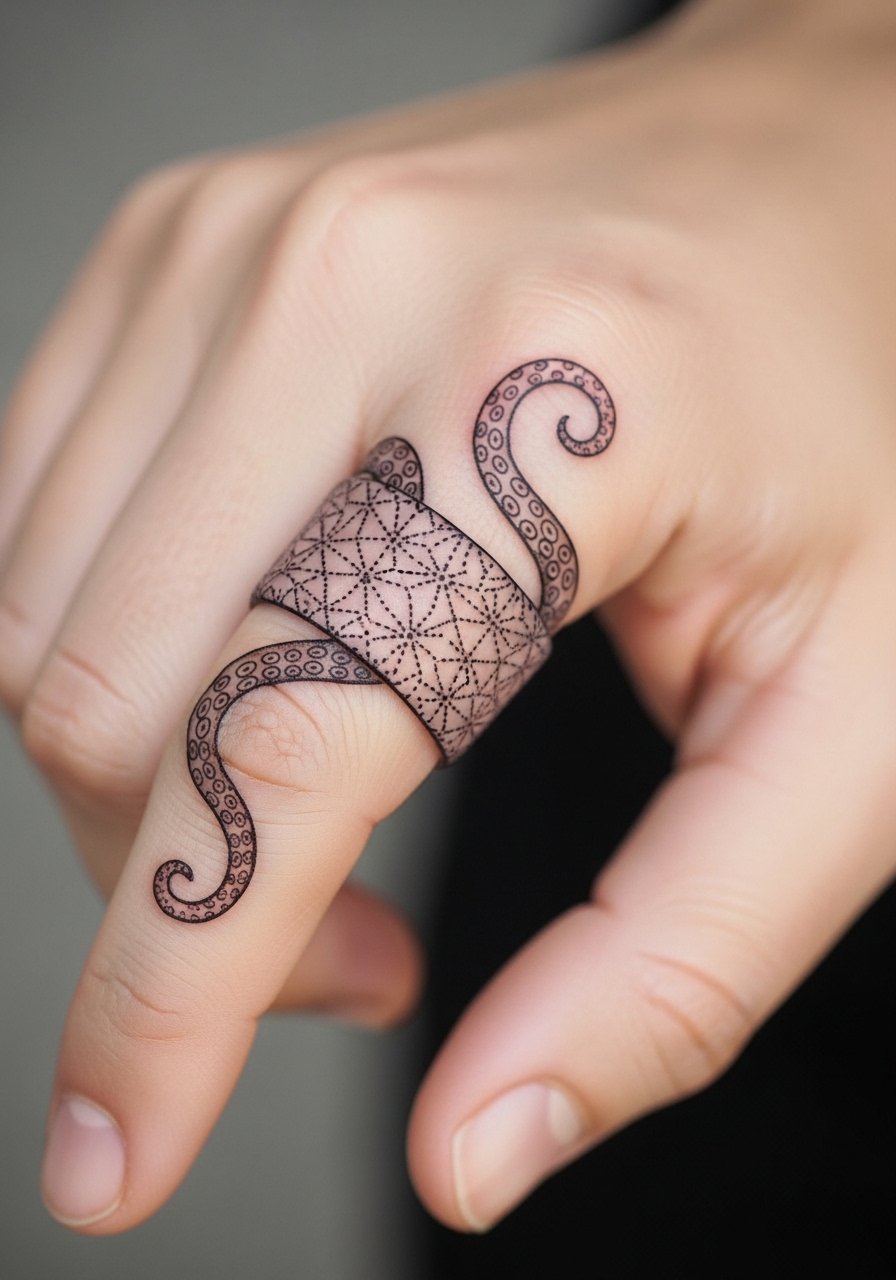
A band-style octopus uses repeating geometry to create an effect similar to a permanent ring. It works when the dots and negative spaces are scaled up slightly from what looks right on paper. The common mistake is making elements too small, which causes the pattern to fill in with time. Expect a focused session under an hour if the band is narrow. Because bands feel like jewelry you wear daily, think about how adjacent rings might rub the ink and accelerate fading. During the consultation, ask for suggested spacing that factors in daily friction and planning for a touch-up at year two.
17. Mini Octopus as Pinky Ring Replacement
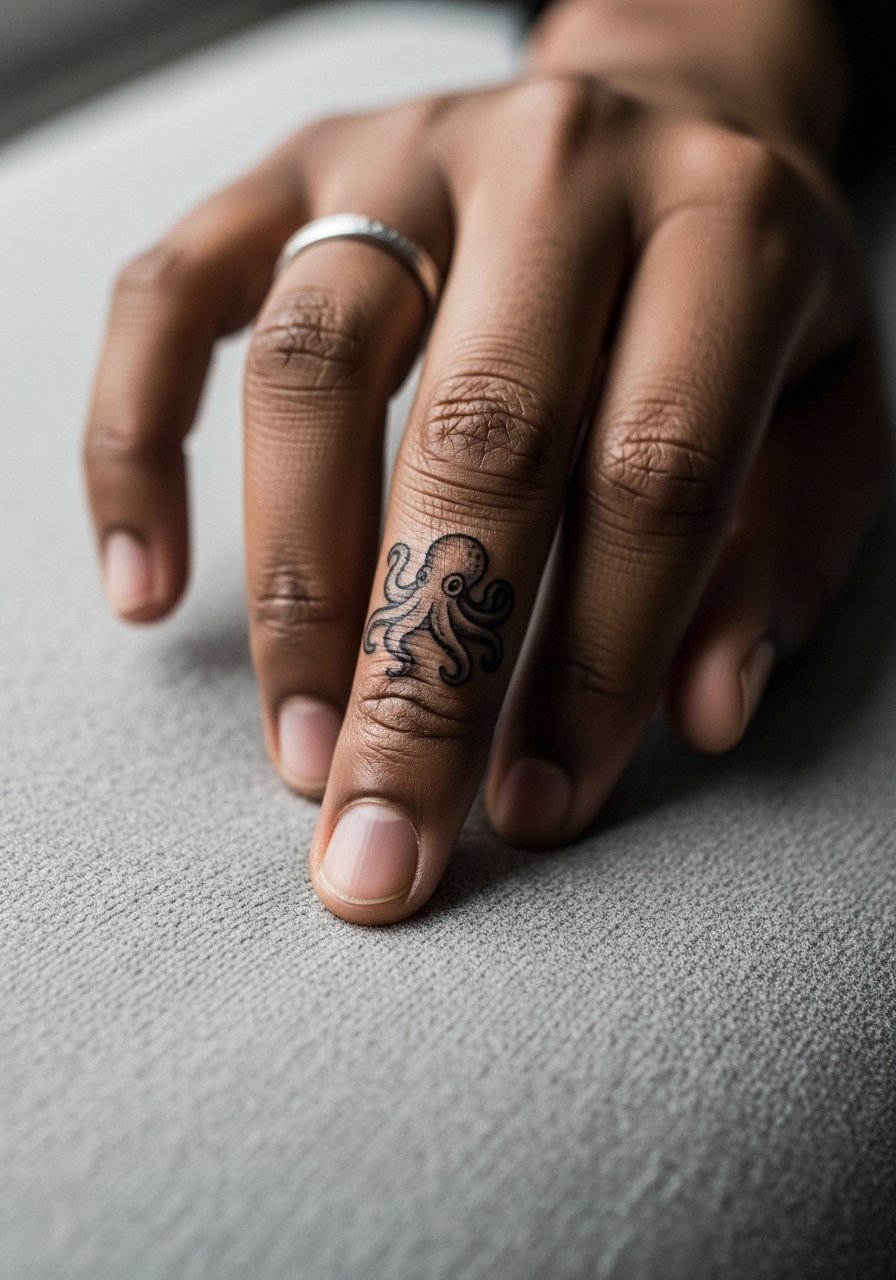
This micro pinky ring lives where a ring would sit and reads as a personal band. Because the canvas is tiny, ask for simplified tentacle cues rather than full articulation. Sessions are short and often done in one go. A typical mistake is choosing too many colors or overly fine detail that the skin cannot hold. Expect to plan a touch-up within a couple of years if you wear rings nearby that rub the area. For showing it off, keep other hand jewelry minimal so the pinky band reads as intentional.
Frequently Asked Questions
Q: Do fine line octopus tattoos on fingers really fade faster than bold blackwork, and why?
A: Yes, in my experience fine line pieces tend to soften sooner on fingers because the needle deposits pigment closer to the skin surface and the area sees constant friction. Bold blackwork sits with more saturation and usually keeps shape longer. Artists are split on this, so ask them which approach they prefer and why before booking.
Q: How painful is a finger octopus compared with other placements, and can numbing cream help?
A: Fingers are among the more painful spots because the skin is thin over bone and nerve endings are dense. Short sessions and breaks help, and topical numbing cream can reduce surface pain if used correctly. Some traditionalists say numbing detracts from the experience, while many clients swear by it for hand work, so discuss the option with your artist.
Q: What should someone with darker skin tones ask for when booking a tiny octopus design?
A: Ask the artist to show healed examples on similar skin tones and request slightly bolder line weight or stronger contrast so the design reads after healing. Micro realism and ultra-fine lines can vanish on darker skin if not adapted, so insist on a version optimized for your tone.
Q: How often do finger tattoos need touch-ups, realistically?
A: Plan for at least one touch-up within one to two years for most finger tattoos, and every one to three years after that depending on wear. Solid blackwork tends to need touch-ups less often than fragile fine line work.
Q: Can temporary ink reliably predict how a tentacle wrap will look while I type and wash my hands?
A: Yes, a temporary trial is a practical way to see how movement and daily tasks affect the design. It reveals whether details catch on rings or whether a wrap crosses a creased area that distorts when you bend your finger.
Q: Which clothing or accessory choices help a finger octopus stand out without competing with it?
A: Minimal jewelry on the tattooed hand and neutral nails usually help. For example, a thin silver ring set on non-tattooed fingers frames the art without crowding it, and rolled sleeves or short tops during the session give the artist clear access.