Fine line moon phases look delicate on a phone screen. On skin they face real-world problems like friction, sun exposure, and the way tiny lines blur over time. Pain, placement, and realistic aging matter more than the initial photo. Below are 17 practical, photo-friendly moon phase ideas that consider how they heal, what to ask your artist, and what to wear to show them off without losing detail.
1. Crescent Sequence on the Inner Forearm

I see this placement everywhere because the forearm holds detail and heals predictably. Ask your artist for slightly heavier linework than a thumbnail reference so the crescents do not vanish when they settle. Expect a 2 to 3 hour session with light discomfort. The biggest mistake is asking for ultra-tiny moons packed tight. Give each phase space to avoid merging after two years. Wear rolled sleeves and a loose button-down shirt the day of the session so the artist has clear access and your fresh work stays clean.
2. Micro-Realism Lunar Sequence along the Collarbone
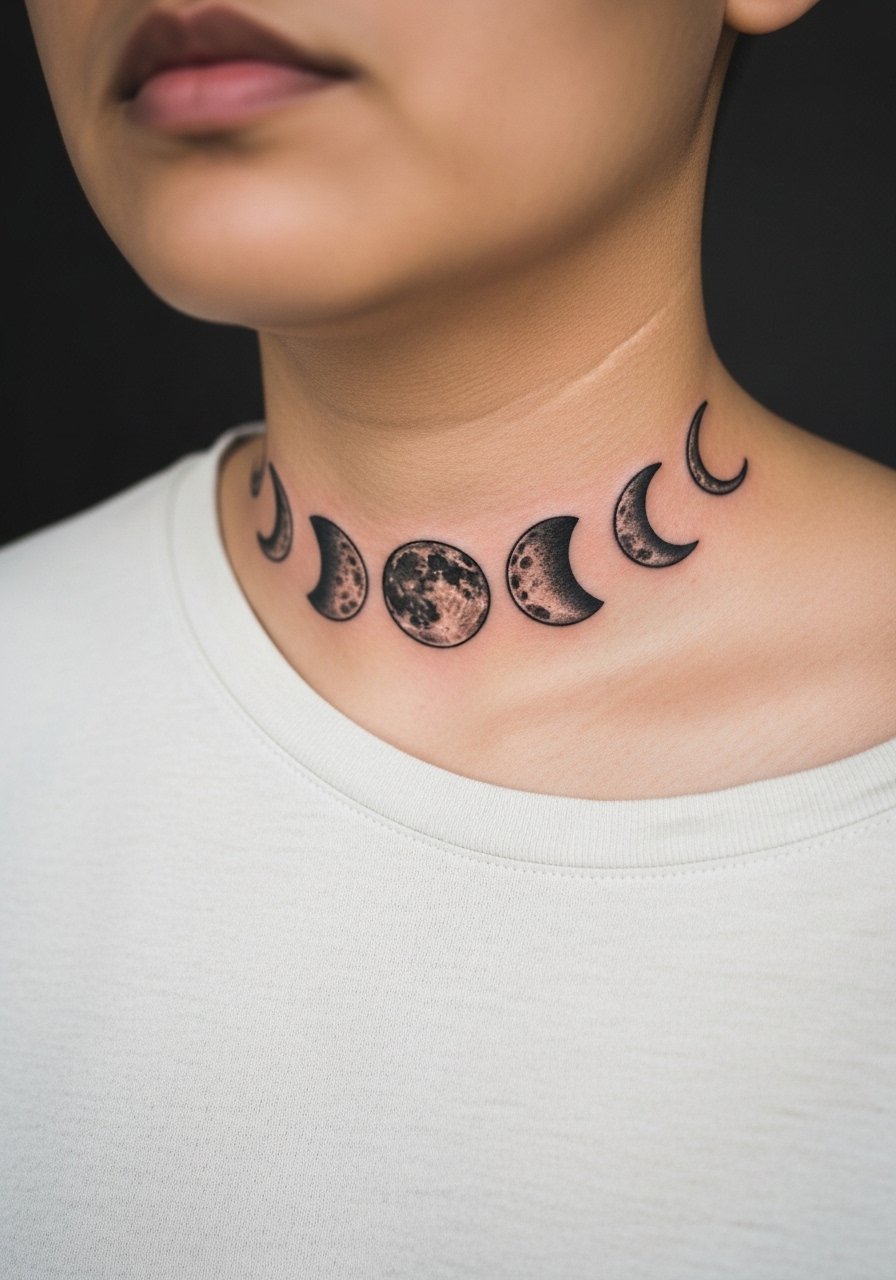
This runs parallel to the clavicle and reads like jewelry when healed. Pain is moderate because the bone is close to skin. In consultation ask for gradual saturation changes across the phases so texture reads even under thin clothing. A common error is dense stipple shading too close to bone, which can look muddy after a year. For outfits that highlight the line, pair it with a thin chain pendant necklace and a wide-neck top. Expect touch-up around year three if you spend lots of time in sun.
3. Wrapped Wrist and Finger Phase Band
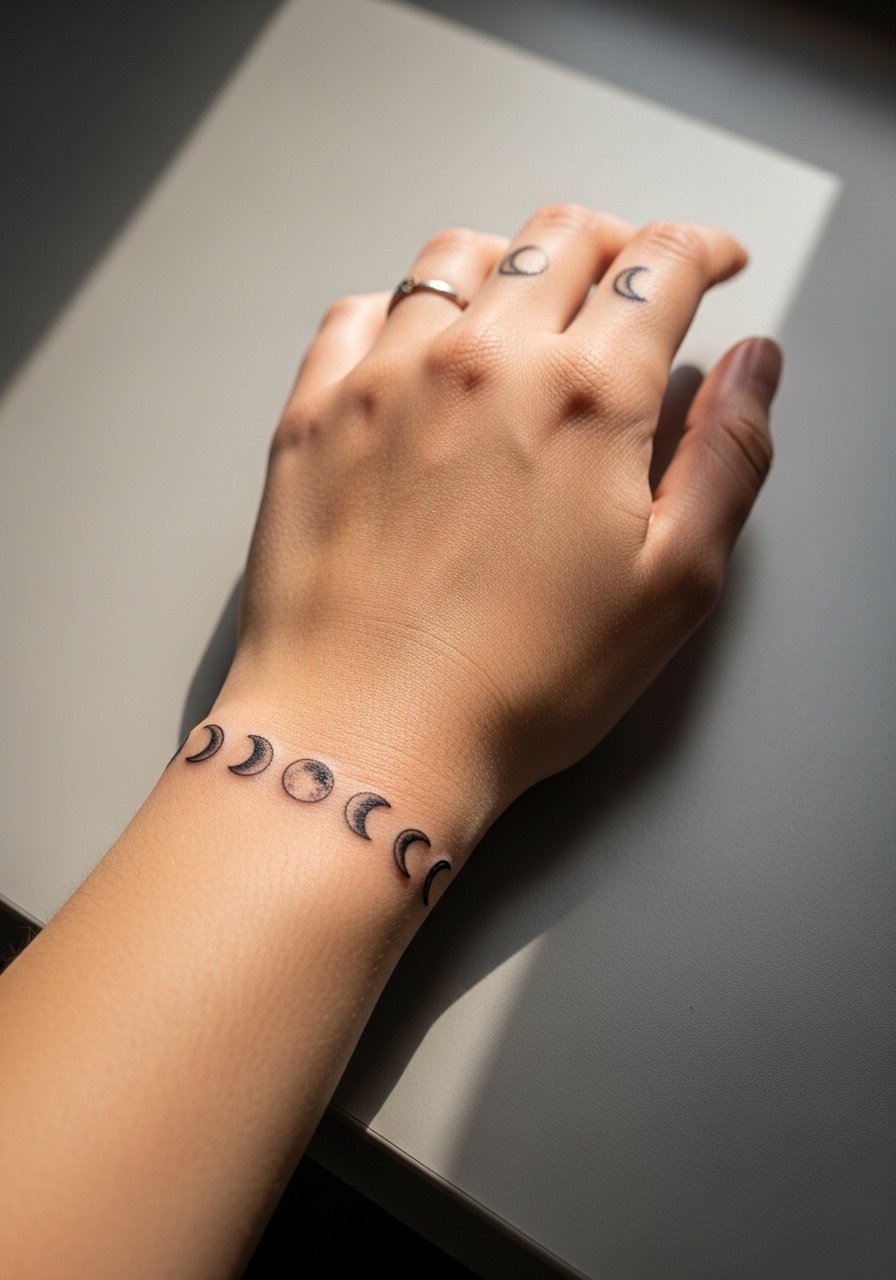
Fair warning: wrist and finger skin sees more friction than most spots. A session for a wrapped band plus a finger moon can be quick, but finger work often needs a touch-up at year one. When you bring references, point out exact spacing so the finger moon does not bleed into the knuckle crease. For showing it off, layered bracelets can complement the band without hiding the moons. I like a minimalist watch or thin stacked bracelets that sit above the band and do not rub the ink during healing.
4. Ribcage Stacked Moon Phases with Floral Fill
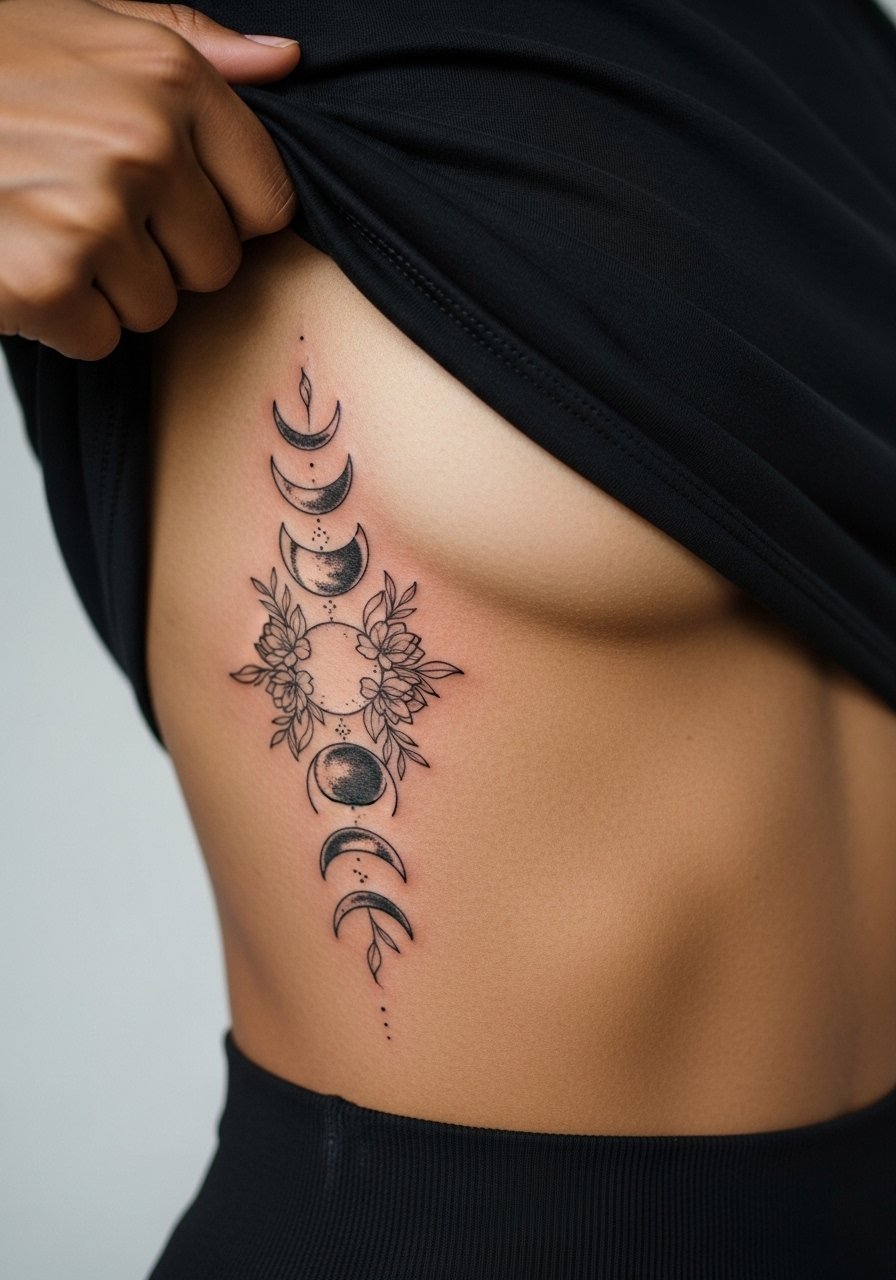
Artists split on fine line on the ribs. One camp says the skin there stretches and blurs tiny lines quickly. The other camp argues that with correct needle depth and spacing the work settles fine. The truth is you need an artist experienced on torsos and expect stronger pain during the session. Ask for slightly bolder key lines and leave breathing room between moons and floral elements. The common mistake is cramming dense dot work too close to the rib folds. For sessions, bring a comfortable top you can shift without exposing more than the tattoo zone.
5. Sternum Moon Phases in Dot Work

Sternum pieces read centralized and symmetrical when spaced right. Expect a higher pain rating and longer session time for the central line. Tell your artist if you want the dots finer or denser because stipple behavior changes on soft chest tissue versus bone-adjacent areas. One mistake is asking for extremely small stipple that fades into a gray patch after six months. For this placement, session wear like a fitted sports bra makes access clean while keeping you comfortable.
6. Tiny Half-Moons at the Ankle
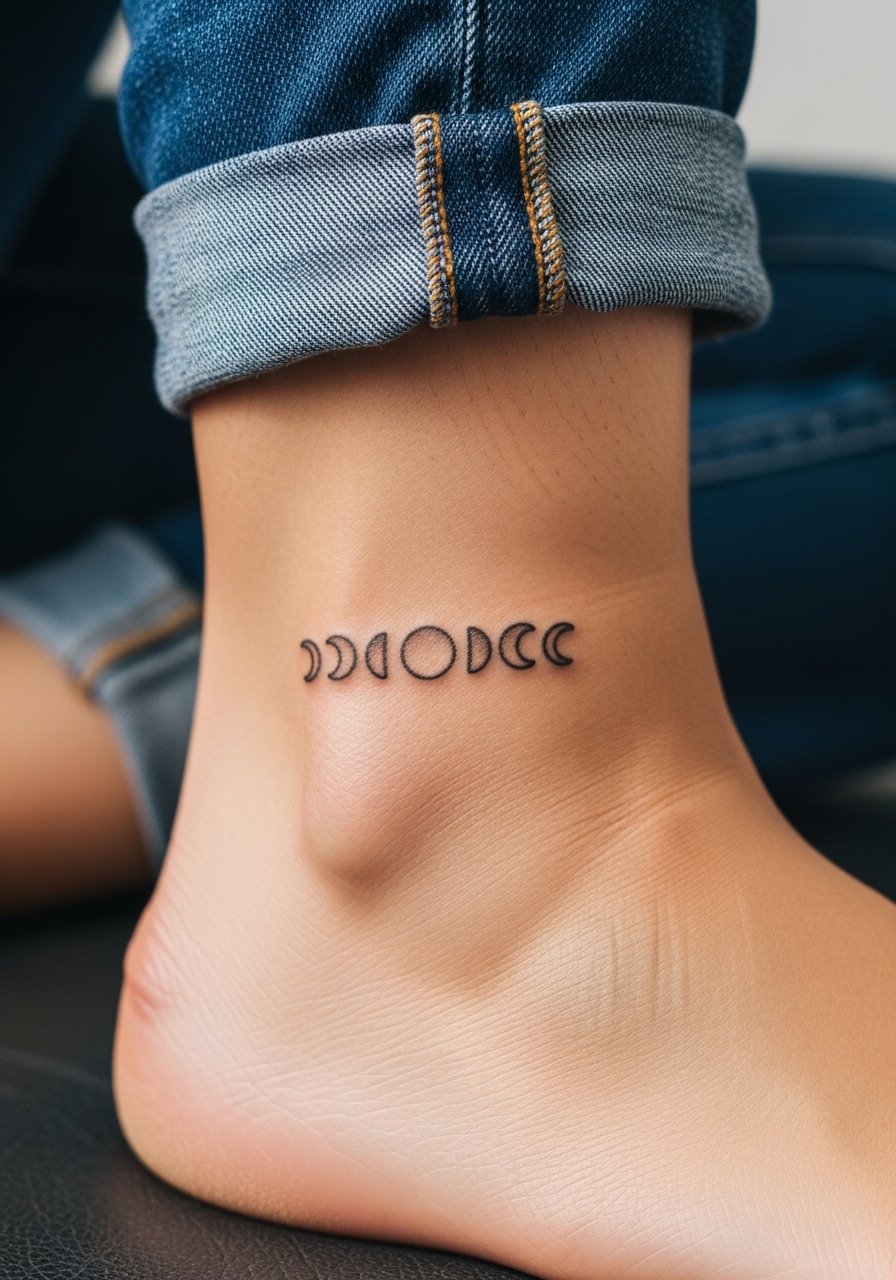
Ankle tattoos handle bold linework well but are exposed to boots and socks that rub during early healing. The session is short and the pain is usually manageable, but expect touch-up if the artist had to work close to bone. For showing off the moons, pair with sandals or cropped jeans and a simple ankle bracelet that does not sit on the tattoo during the first two weeks. Ask your artist about aftercare for friction zones before you book.
Studio Day Picks
The upper chest, ribs, and ankle pieces above each ask for different prep. These picks smooth the session and the first week of healing.
-
Stencil transfer paper kit. Lets you preview line placement on skin, which matters for the collarbone and forearm alignments in the ideas above.
-
Thin protective film roll. Useful for ankle and wrist work that encounters friction from clothing and footwear.
-
Fragrance-free gentle body wash. Cleans healing areas like the rib and sternum sites without stripping delicate ink.
-
Topical numbing cream. For people booking a longer chest or rib session, applied before the appointment it helps manage sensitivity without impacting linework.
-
Aquaphor healing ointment. A thin layer in the first days locks in moisture for fine line pieces like the forearm crescents while allowing the skin to breathe.
7. Spine-Running Moon Phases from Nape to Mid-Back

There is a dramatic vertical flow to a spine series. Sessions are split across a couple of visits if you want heavy detail for each phase. Pain varies with proximity to bone and the length of the session. Tell your artist whether you want each phase identical or evolving in texture. A common error is cramming highly detailed micro-realism into narrow gaps. For evenings out try pairing the line with an open-back dress that frames the negative space without rubbing the area.
8. Thigh-Wrap Lunar Sequence with Negative Space Landscape

Thigh skin absorbs ink well so gradations and negative space hold up. Session pain is lower but the area can swell and bruise more readily. I recommend a slightly larger scale so that stipple and tiny landscape details keep breathing room. The common mistake is overfilling negative space which ages into a gray block. For the appointment wear loose shorts or a wrap skirt so the artist can access the area without a tight waistband.
9. Tiny Moon Trio Behind the Ear

Behind-the-ear placements give a discreet hint of lunar imagery. The session is quick and the pain is light to moderate depending on how close to the bone the work is. Be explicit with your artist about line weight because tiny lines can blur easily in that zone. This spot is also easy to conceal with hair. If you plan visible jewelry think about small hoops that do not press against the area during healing.
10. Upper Arm Lunar Band in Solid Blackwork

A band reads bold from across a room and tends to age cleanly because the skin there holds saturation. Expect a 2 to 4 hour session with intermittent breaks. Ask for consistent saturation across the band so one phase does not look denser than the next. A common mistake is insufficient spacing for stipple fills which can look heavy after a few years. For showing the band, roll sleeves or wear a loose tank top and keep short sleeves above the work during the first two weeks.
11. Single-Line Finger Phases with Spaced Rings

Finger tattoos split artists into two groups about longevity and career implications. One group accepts the high touch-up rate and treats fingers like promise pieces. The other advises against fingers for those who need long-term sharpness. If you choose fingers, plan for touch-ups at year one or two. A frequent mistake is asking for too much detail on a fingertip surface. For staging the look, lightweight stackable rings that sit away from the tattoo are the best choice.
12. Calf Lunar Topography in Micro-Realism

Calf skin tolerates heavier saturation and texture, so crater detail holds well. Sessions run longer if you want complex lunar topography across several moons. The spot is lower pain unless work nears the Achilles. A mistake is placing too many tiny details that read poorly when the leg moves. Pair this design with cropped pants or a loose drawstring linen pant you can roll up without pressure on the fresh tattoo.
13. Shoulder Blade Phases with Stipple Shading

Shoulder blade pieces age gently because the area moves less and usually avoids constant sun. Tell your artist whether you want the phases to anchor a larger back piece later. The common mistake is too small a scale which loses the stipple texture over time. For sessions wear a loose button-down shirt you can slide off easily so the area stays private but accessible.
14. Inner Bicep Micro Moon Collection

Inner bicep skin can be softer so very fine lines risk feathering. Expect a sensitive session as the area is less commonly tattooed and requires careful needle control. Ask for slightly heavier anchor lines and leave small areas of negative space. A common error is compacting too many moons into a narrow strip which leads to early blurring. For the appointment pick a sleeveless top you can shift without full exposure.
15. Top-of-Hand Crescent and Quarter Moon

Hand tattoos remain controversial in some workplaces. One camp accepts them as normal now. The other warns about professional consequences in client-facing roles. Name both camps in your planning. If you get hand work, expect high touch-up needs and a slower healing window because of constant washing. The common mistake is choosing ultra-fine detail that washes away with daily use. Consider discrete placement or discuss long-term renewal plans with your artist.
16. Outer Forearm Lunar Landscape Half-Sleeve
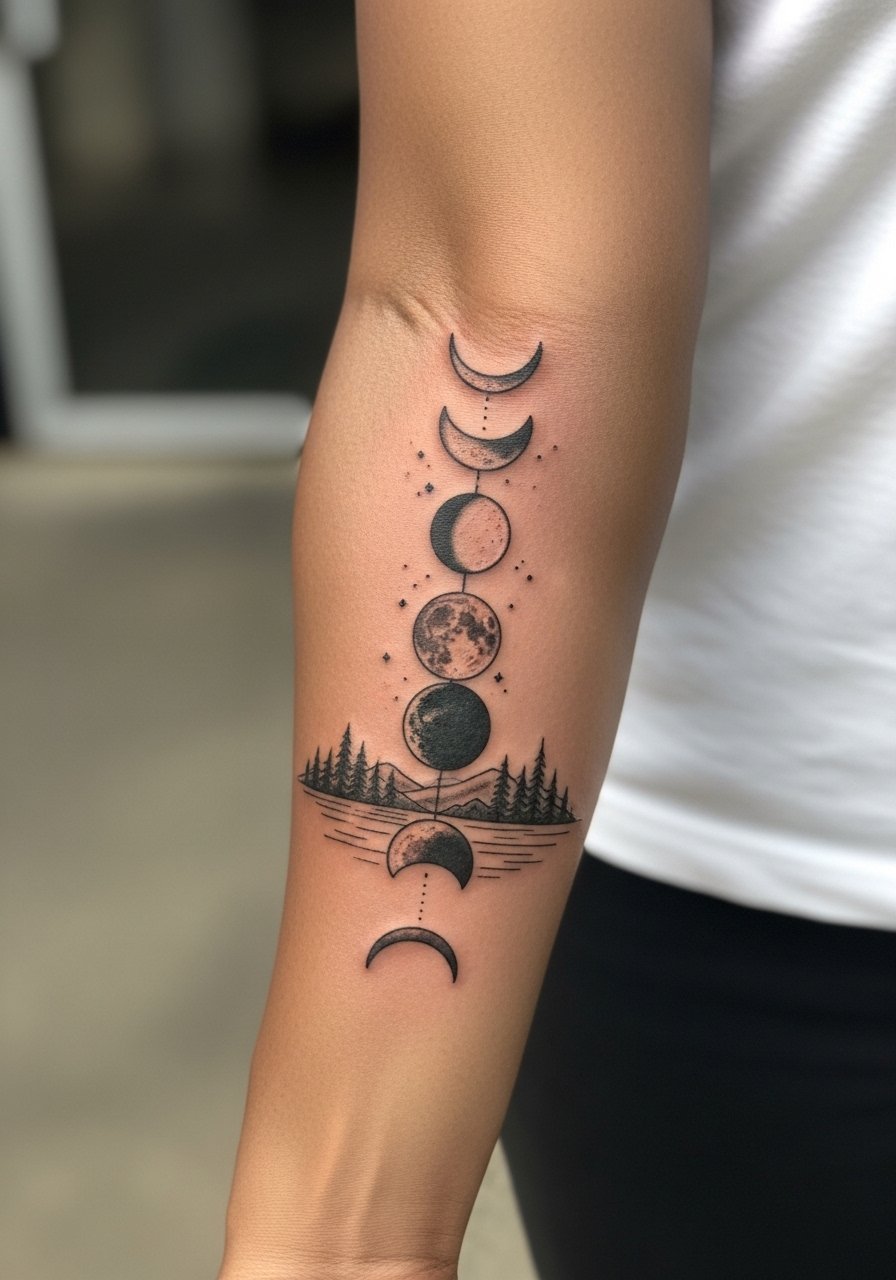
A half-sleeve allows storytelling across phases and terrain. Sessions are multiple hours and may span two or three visits depending on saturation. Tell your artist if you want the moons to be focal points or background elements. A mistake is inconsistent lineweight that distracts from the flow. For showing off the half-sleeve, roll sleeves and wear a short-sleeve linen shirt in neutral tones that frames the design.
17. Nape-of-Neck Mini Lunar Row
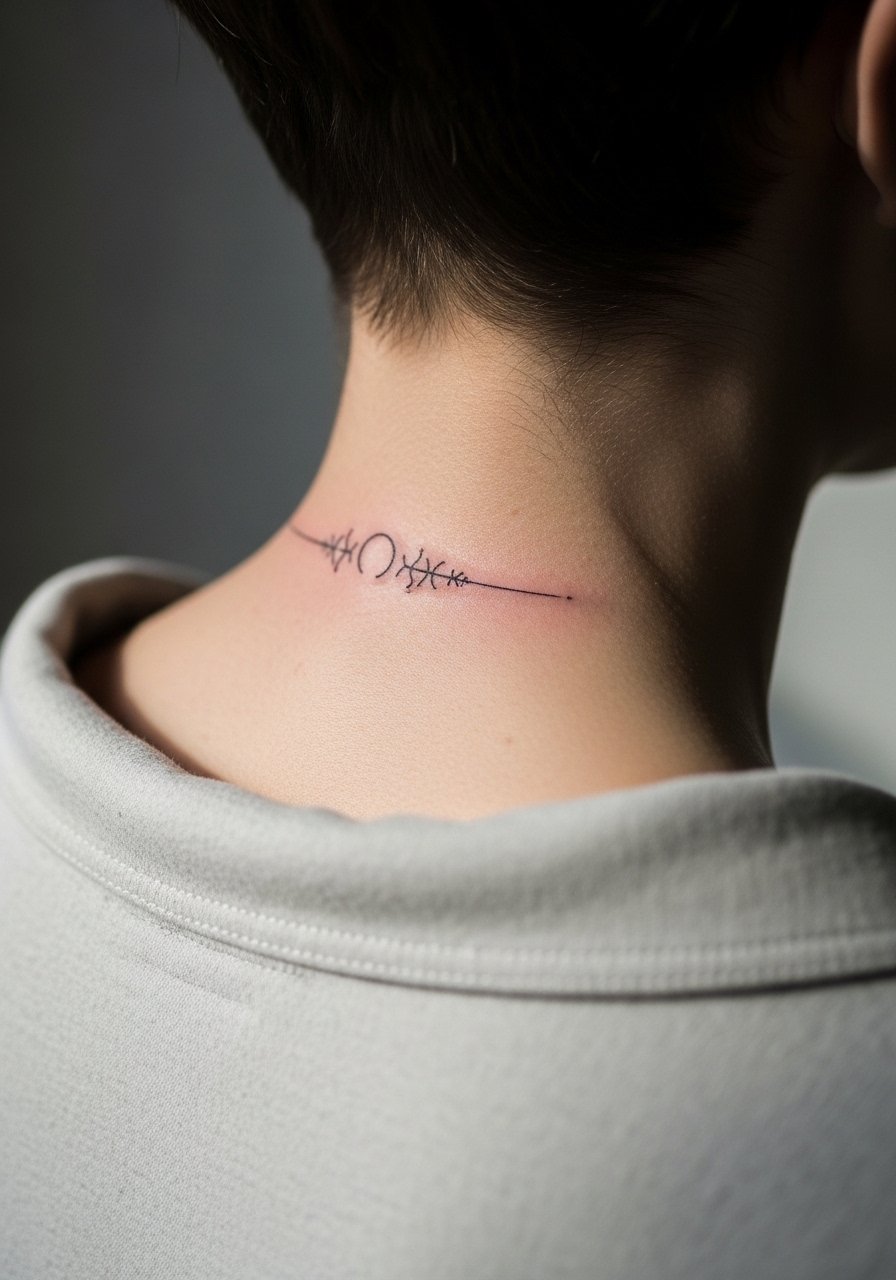
A nape placement is subtle and easy to hide with hair or show with an updo. Pain is moderate and sessions are quick. Be clear about exact spacing because the neck area moves and stretches, which can blur very fine work. A common error is asking for micro-detail too close to the hairline where ink can migrate. For the appointment wear a wide-neck shirt you can pull aside without removing layers.
Frequently Asked Questions
Q: Will fine line moon phases blur faster than bolder blackwork on the forearm?
A: Fine line tends to soften sooner than bold blackwork because tiny channels in the skin close and spread. On the forearm you get a good run time if you ask for slightly heavier anchor lines and leave breathing room between elements. Expect a touch-up window around year three if you are outdoors a lot.
Q: Are ribcage moon phases worth the pain if I want crisp detail?
A: The ribs are painful but they can look excellent long term when done by an artist experienced on torsos. The trade-off is higher pain and a slightly higher chance of early blurring if lines are too fine. Ask about their rib portfolio and touch-up policy before booking.
Q: How do I style collarbone lunar sequences for nights out without rubbing them?
A: Choose wide-neck or strapless tops that sit just below the tattoo line and avoid tight straps. A thin chain pendant can sit above without competing. Try an open-back dress or a wide-neck top that frames the collarbone.
Q: Do finger and hand moons affect job prospects and how long do they last?
A: Finger and hand tattoos are still viewed differently across industries. Expect more frequent touch-ups because of constant use and washing. If your job requires a conservative appearance, consider a less visible placement or plan on renewals every one to two years.
Q: How should I prepare clothing-wise for a sternum or rib session?
A: Wear a fitted sports bra or a cropped athletic top you can lift slightly so the artist only exposes the treatment zone. Bring a loose hoodie to stay warm in the shop without rubbing the fresh work.
Q: Can moon phase tattoos be expanded into larger back or sleeve pieces without losing their shape?
A: Yes. If you plan to expand, tell your artist early so they can design negative space and anchor points for future work. Keep key moons slightly larger than tiny accents so they stay readable when the composition grows.