Fine line cat outlines are everywhere on feeds, but what looks delicate on a screen can age unpredictably in real life. Trends push ultra-thin strokes and tiny silhouettes, yet longevity depends on placement, spacing, and how your skin moves. Read these 21 small cat outline options with practical notes on how they heal, what to ask for in the consult, and which outfits show them off best.
1. Minimalist Cat Outline on Inner Forearm
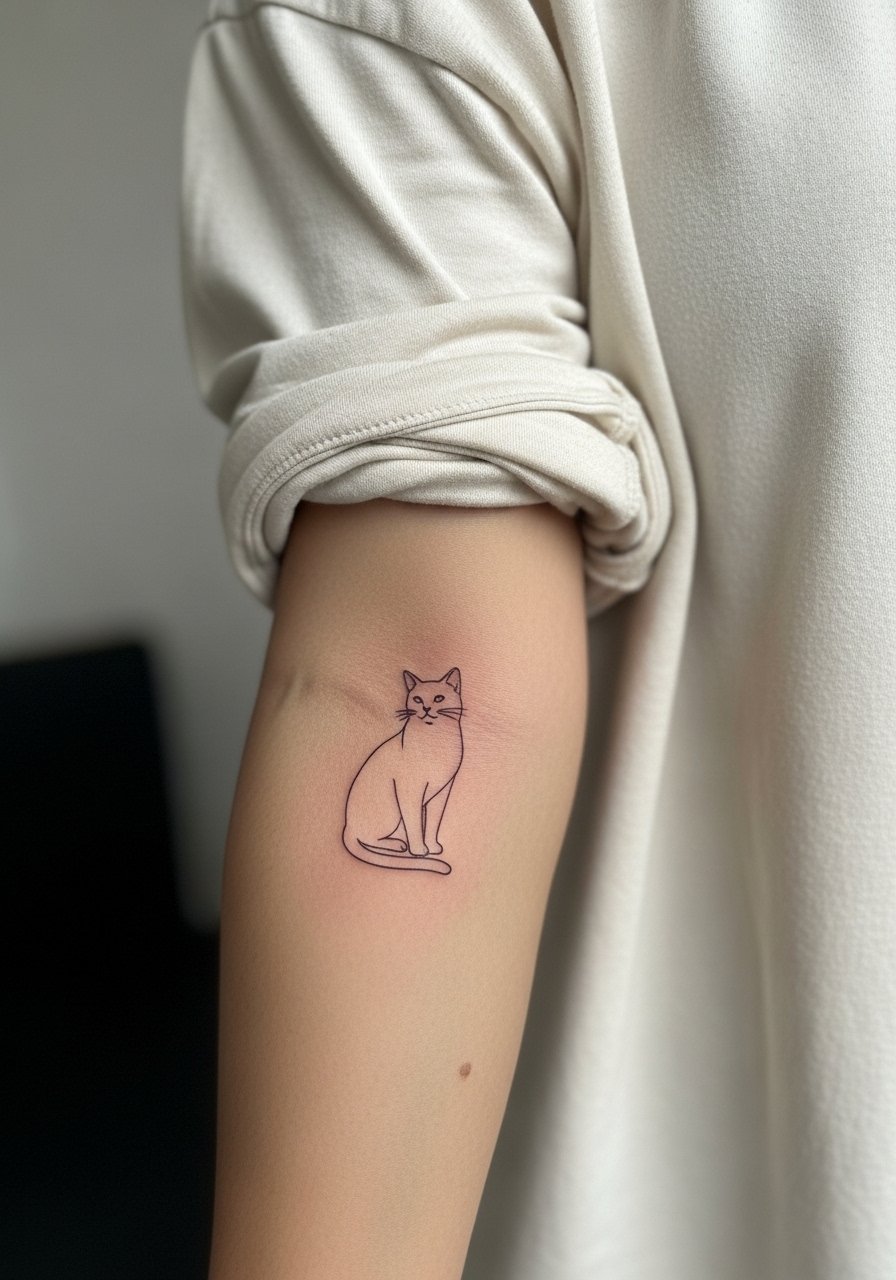
This is the go-to for people who want something visible but subtle. I recommend this when you want a piece that reads from close range and wears well under sun exposure. Tell your artist you want single-needle linework with slightly increased spacing between curves so the contours do not merge over time. A common mistake is asking for ultra-thin lines without room; that looks fragile at one month and smudged by year three. Expect low to moderate pain and about 30 to 45 minutes in the chair. For showing it off, roll up a linen shirt sleeve so the silhouette sits cleanly against neutral fabric.
2. Tiny Sitting Cat on the Ankle
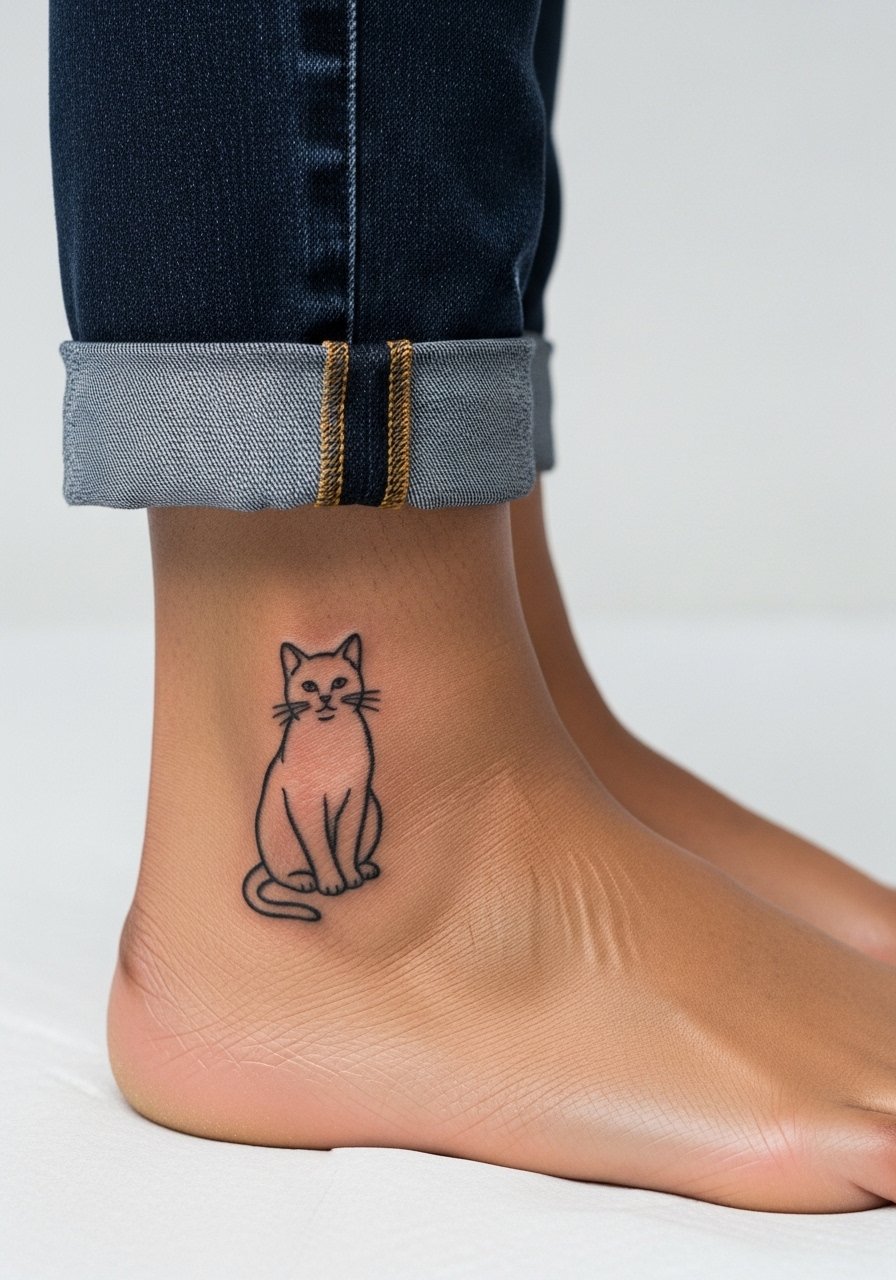
This placement reads like jewelry and moves with footwear friction. Recommend a slightly bolder line for the ankle because constant rubbing from socks and shoes accelerates softening. The session is quick and the pain is mild but the area tolerates less saturation. Wear slip-on shoes and pants you can roll for the appointment. The design looks sharp at six months if the linework has a touch more depth, and may need a touch-up around year two if you want crisp edges. Watch for blowout risk along thin curves near bony spots, and ask your artist to avoid driving needles too deep where skin is thin.
3. Tiny Cat Paw Outline on the Wrist
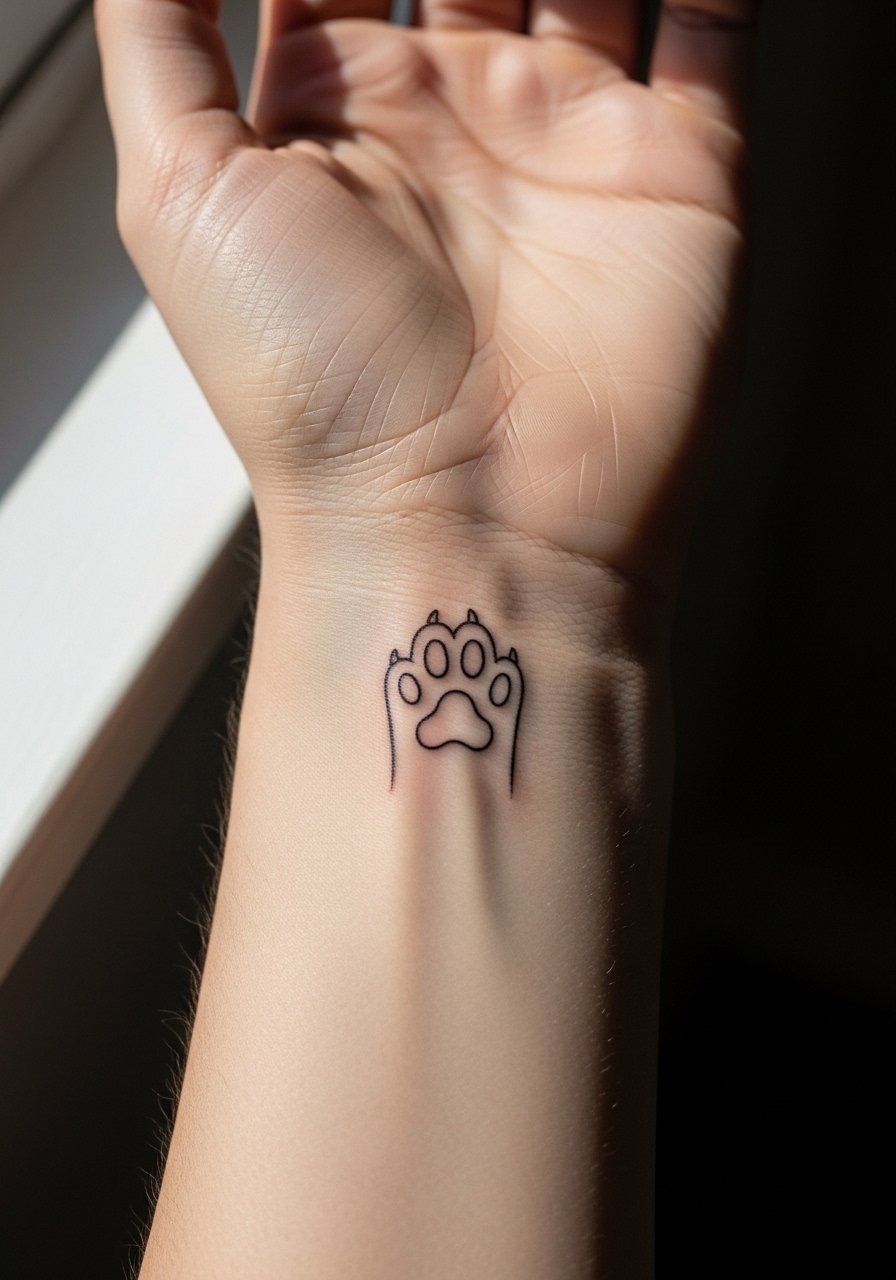
A paw outline is playful and low-commitment. The wrist is high-motion and frequently washed, so recommend slightly thicker linework and ask the artist to keep the design compact but with breathing room between pads. Common mistake is cramming extra detail into a tiny area, which becomes muddy after a year. The session feels quick but the wrist can sting more than the ankle. Show-off pairing is simple bracelets. Try a thin chain bracelet that sits below the tattoo so the piece stays visible without being crowded.
4. Sleeping Cat Outline Above the Collarbone
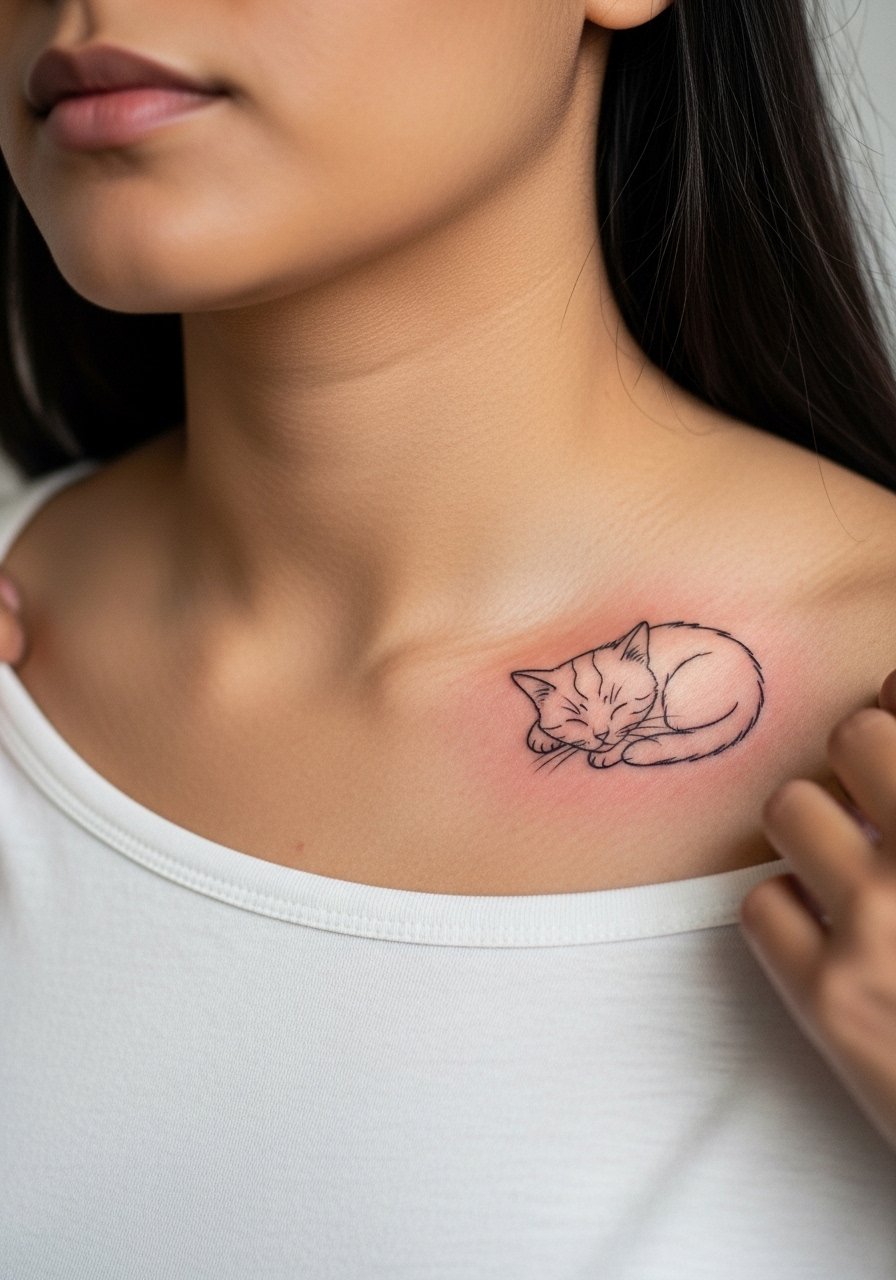
Collarbone pieces read as both personal and chic. This spot can be finicky because skin tension near the clavicle moves when you breathe and when you wear straps. I suggest a slightly curved base so the cat follows the bone structure. Tell your artist you want clean, single-weight linework with intentional spacing along the spine of the design. The common mistake is forcing too-small detail directly on the bone, which ages unevenly. For sessions, wear a wide-neck shirt you can pull aside easily. Pair the healed tattoo with a thin chain pendant that sits above it for balance.
5. Continuous Line Cat on the Side Rib
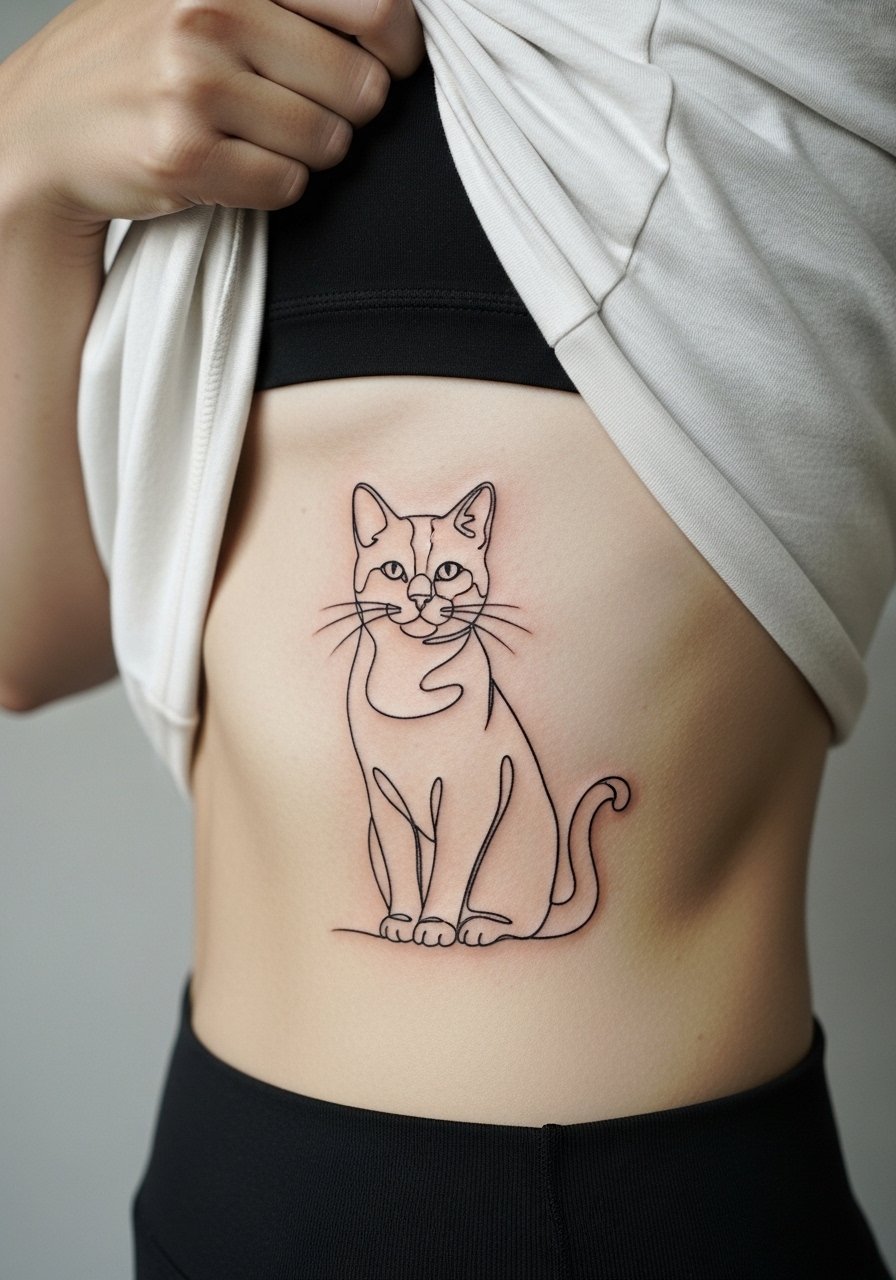
Rib pieces are dramatic and sensitive. Pain is higher here and the skin moves a lot, which makes tiny single-line styles controversial. Artists split into two camps. One camp says fine single-line work blurs quickly on ribs due to skin stretch and movement. The other camp argues that with correct needle depth and spacing, single-line ribs can stay legible for years. Ask your artist which camp they fall into and request a slightly heavier line if they believe in extra spacing. For the session, wear a cropped athletic top so the area is accessible without exposing more than necessary. Expect a longer touch-up timeline if you favor ultra-thin lines.
6. Tiny Outline Cat on Finger Side
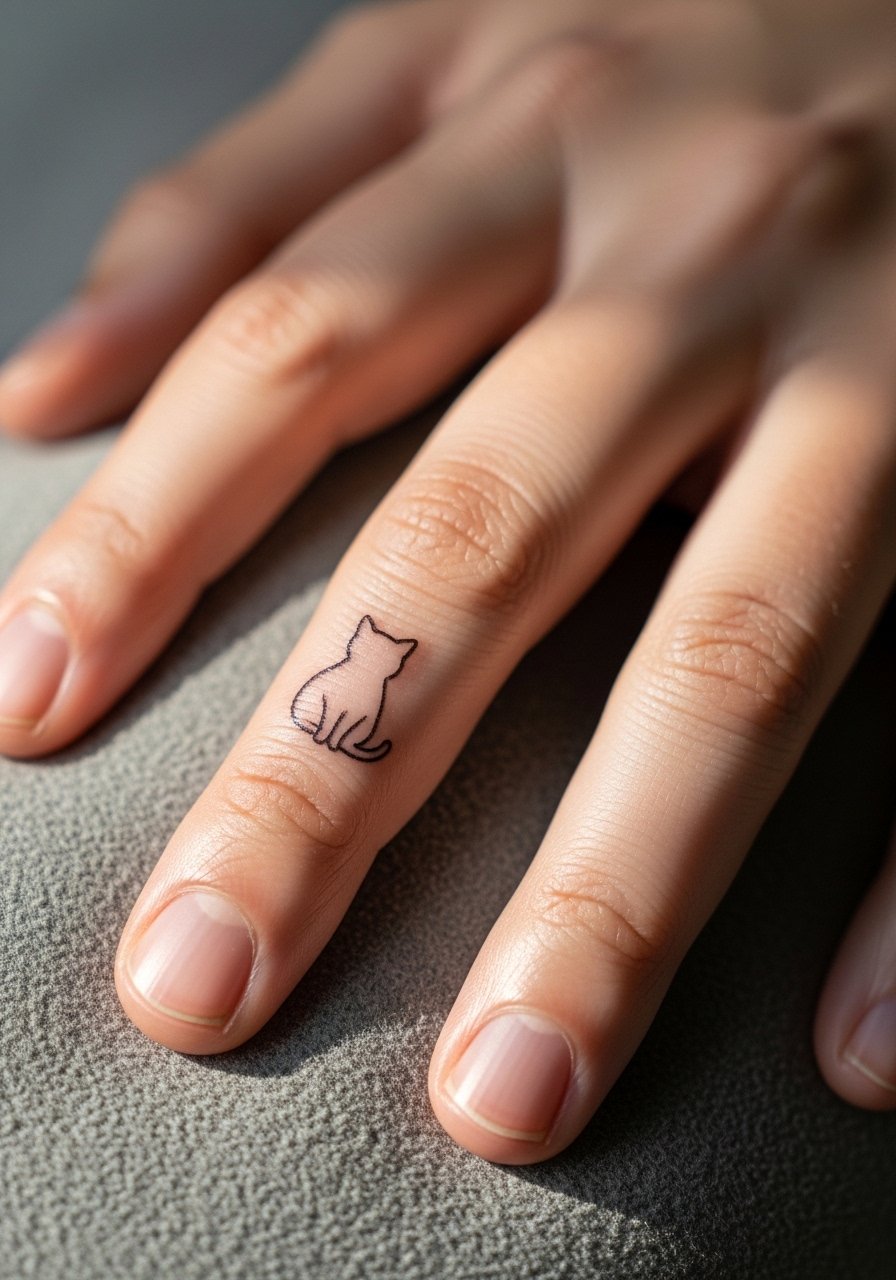
Finger tattoos are visible and fragile. The skin there regenerates quickly, so crisp lines fade faster and often need yearly touch-ups. Tell your artist you accept a higher maintenance plan and plan to avoid heavy hand work the first two weeks. The session is very quick but the finger can feel sharp pain. A frequent mistake is requesting extremely skinny script-like lines; they disappear fast. If you like rings, pair the design with a set of dainty stacking rings that frame the outline without covering it. Expect touch-ups at year one or two depending on your hand habits.
Studio Day Picks
The small, high-motion placements above heal differently from larger arm pieces, so a handful of focused items smooth the session and the first week.
-
Stencil transfer paper kit. Lets you preview the scale and placement on the exact skin zone, which is especially helpful for wrist and collarbone layouts above.
-
Topical numbing cream. Applied per the artist’s guidance it reduces chair pain for ankle and rib sessions without changing linework feel.
-
Thin protective film roll. Useful for tiny pieces on fingers and wrists where daily friction and hand washing are constant factors.
-
Fragrance-free body wash. Gentle cleansing helps preserve delicate outlines while the skin forms a stable healed surface.
-
Aquaphor healing ointment. A thin, short-term layer protects tiny single-needle work during the earliest days without suffocating texture that linework needs to settle.
7. Micro Cats Cluster on the Shoulder Blade
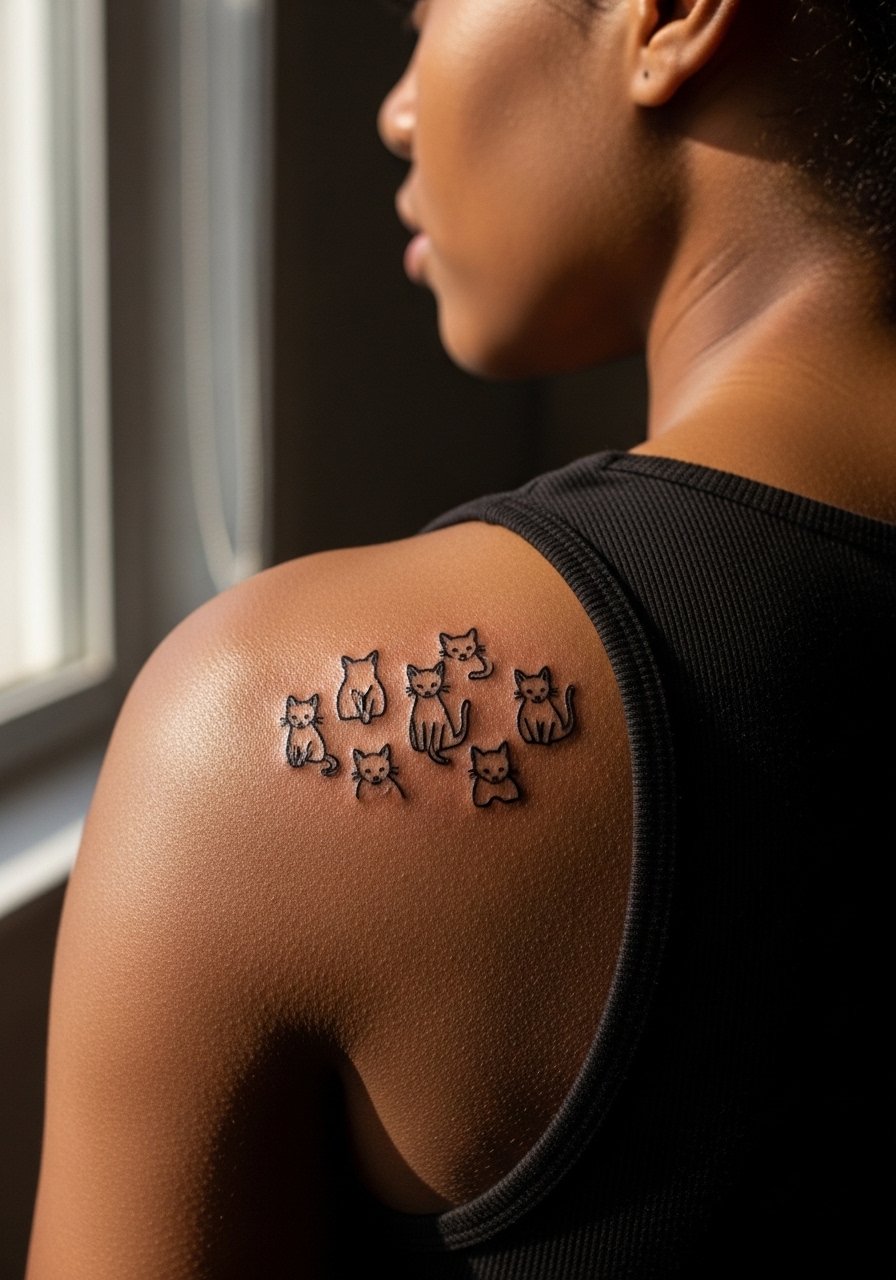
A cluster of micro cats reads like a pattern when the shoulder moves. This placement is forgiving because it is low friction and easy to hide under clothing. Ask for slight variation in size so each outline keeps negative space between them. A common aging issue is placing pieces too close, which invites line merging after a few years. The session is relaxed and feels like noise compared to ribs or fingers. For showing off, an off-the-shoulder tank top frames the cluster without stealing focus. If you plan future expansion, tell your artist where you might add color or dot work later.
8. Minimalist Cat Face Behind the Ear
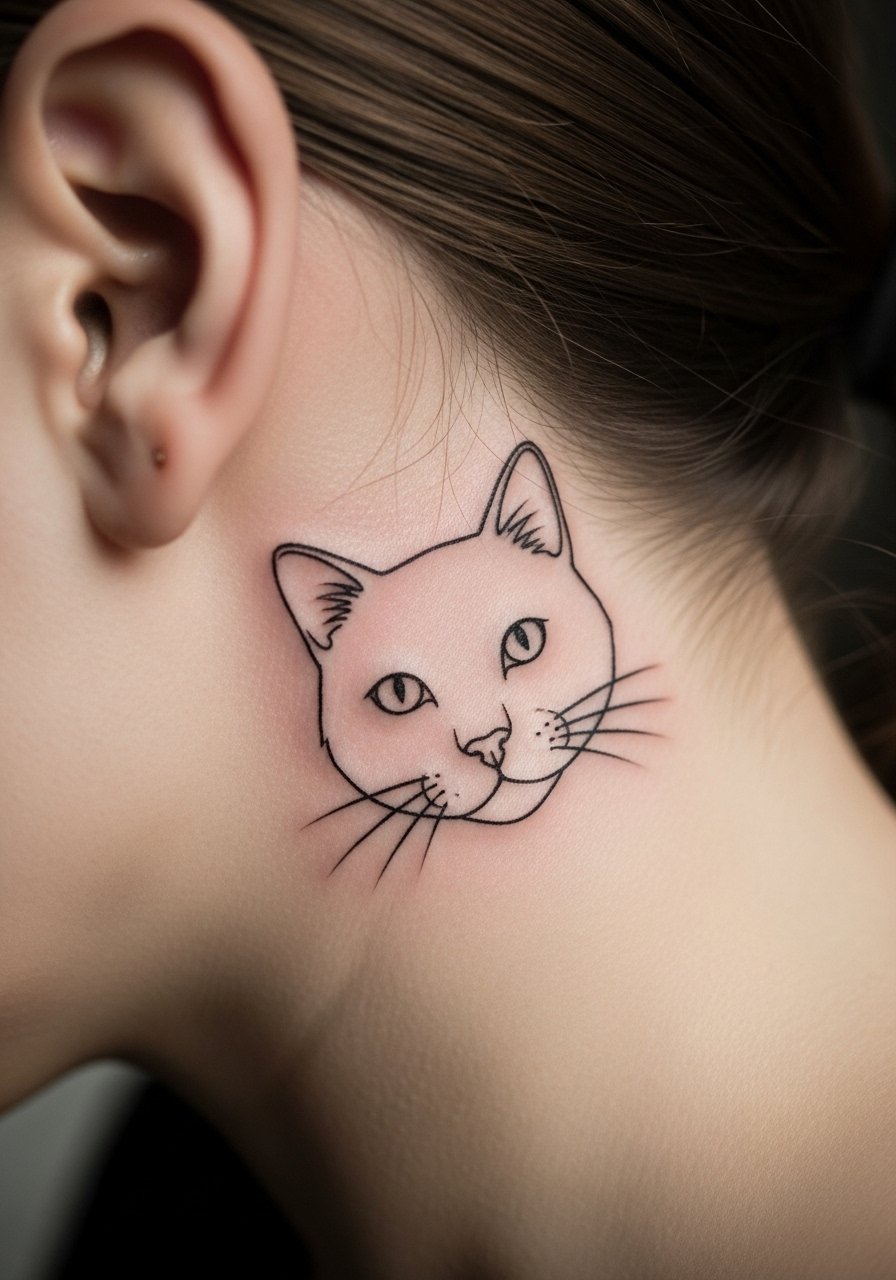
Behind-the-ear tattoos require careful placement and a compact design. The area has thin skin and curvature, so ask your artist to place the cat below the hairline and slightly forward to avoid the ear cartilage. Session time is short but the spot is sensitive and can throb after. A common mistake is asking for more detail than the canvas permits. Because the area is discreet, think about occupation visibility before booking. This spot works with hair up styles for nights out rather than daily visibility. No clothing link here since the area is mostly hair-managed.
9. Single-Line Cat on the Lower Rib
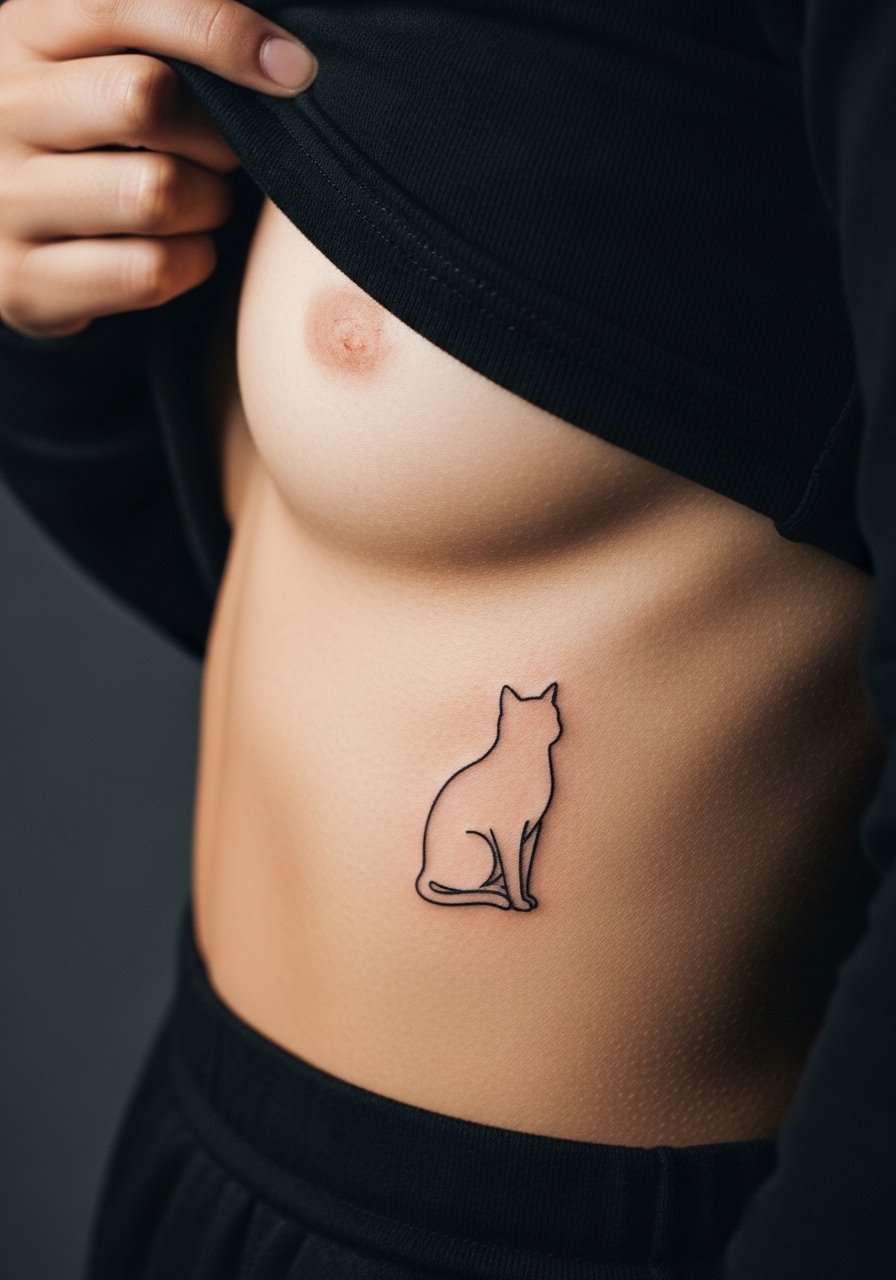
Rib tattoos invite a real debate in the community. One group warns that fine single-line work on the ribs blurs within two years because the skin stretches when breathing and sleeping. The other group says that with deliberate spacing and slightly stronger line weight, ribs can keep definition for much longer. My advice is to ask your artist which approach they prefer and to request a mock stencil in both weights before committing. The session is painful but short. Wear a cropped top that gives easy access while keeping you covered. Plan for a possible touch-up at year two if you like razor-sharp edges.
10. Tiny Cat Silhouette on the Calf
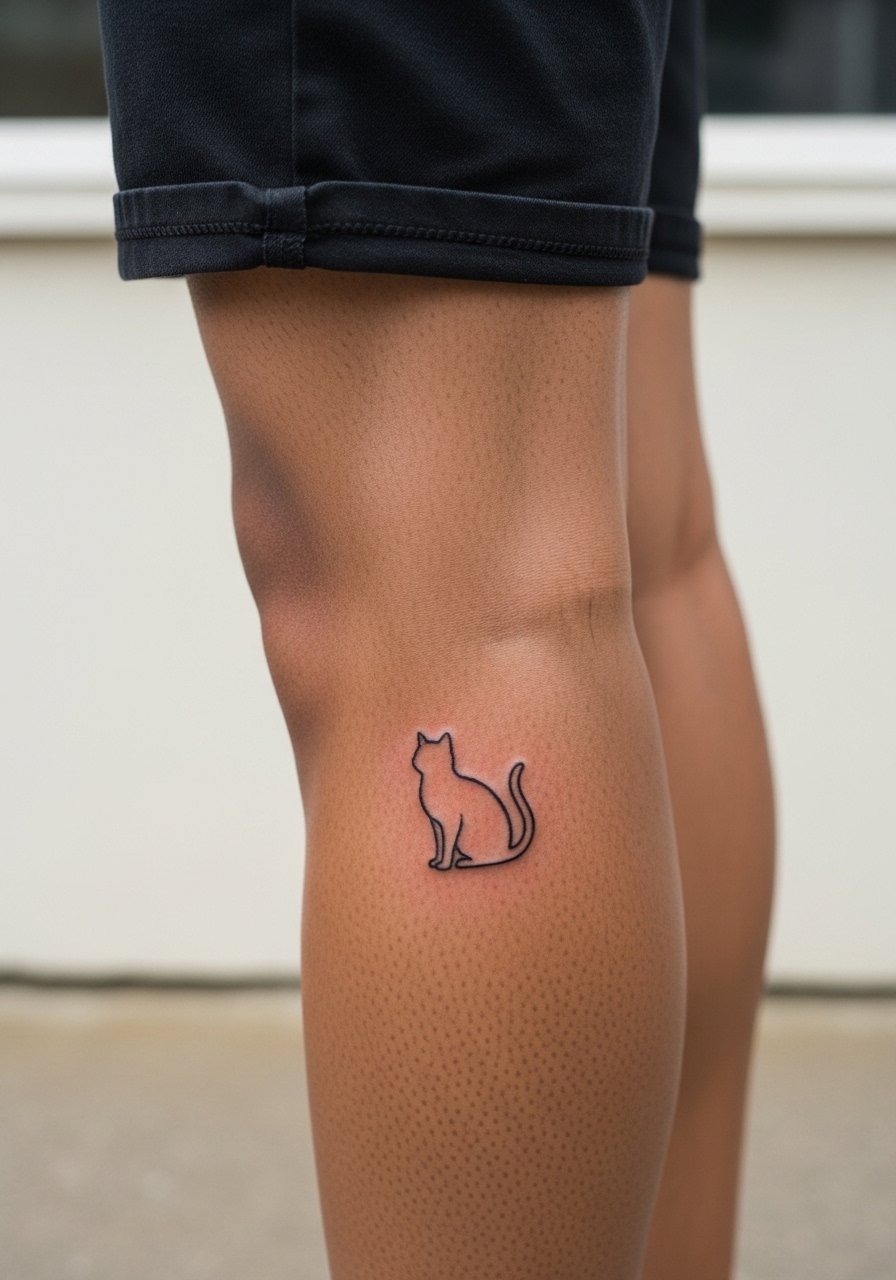
Calf pieces age well thanks to thicker skin and lower daily abrasion. This spot is ideal for a slightly bolder outline that still feels minimal. For people who run or cycle, recommend placement off the highest friction zone to avoid premature softening. The session is low to moderate pain and usually under an hour. A frequent mistake is making the silhouette too tiny for the calf surface, which leaves it looking lost. If you want to show the design casually, pair with mid-calf boots or shorts that expose the area. No heavy aftercare links here.
11. Tiny Cat Outline on the Side of the Neck
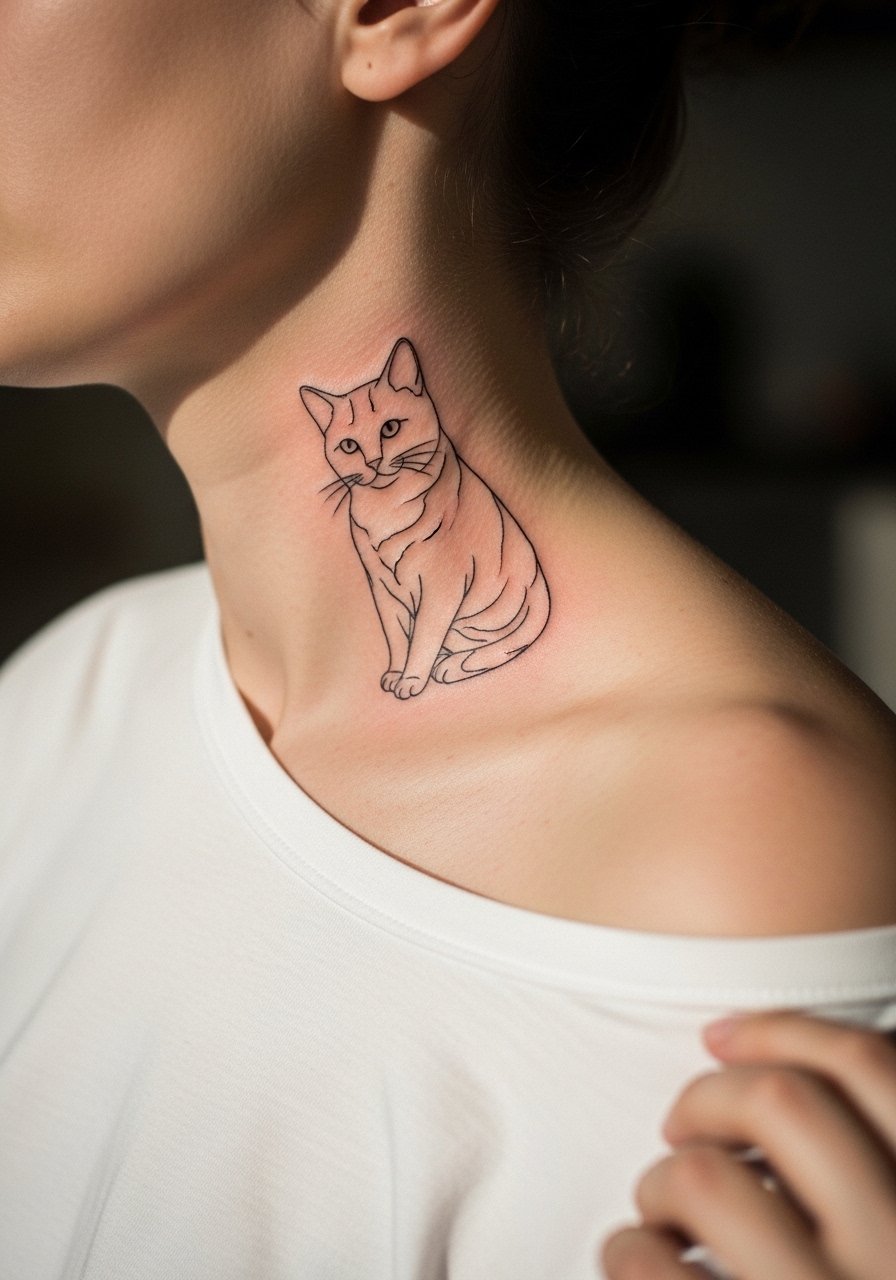
Side neck tattoos are high-visibility and need extra consult time. Skin here moves with swallowing and head turns, which affects how thin lines settle. Tell your artist you want a clean outline with intentional thickness and avoid super-fine ends that might vanish. A common regret is forgetting to consider workplace constraints. For sessions, wear a wide-neck shirt you can pull to one side to expose the area without removing layers. Expect moderate pain and a touch-up possibility after a couple of years.
12. Tiny Cat with Tail Around the Ankle Bone
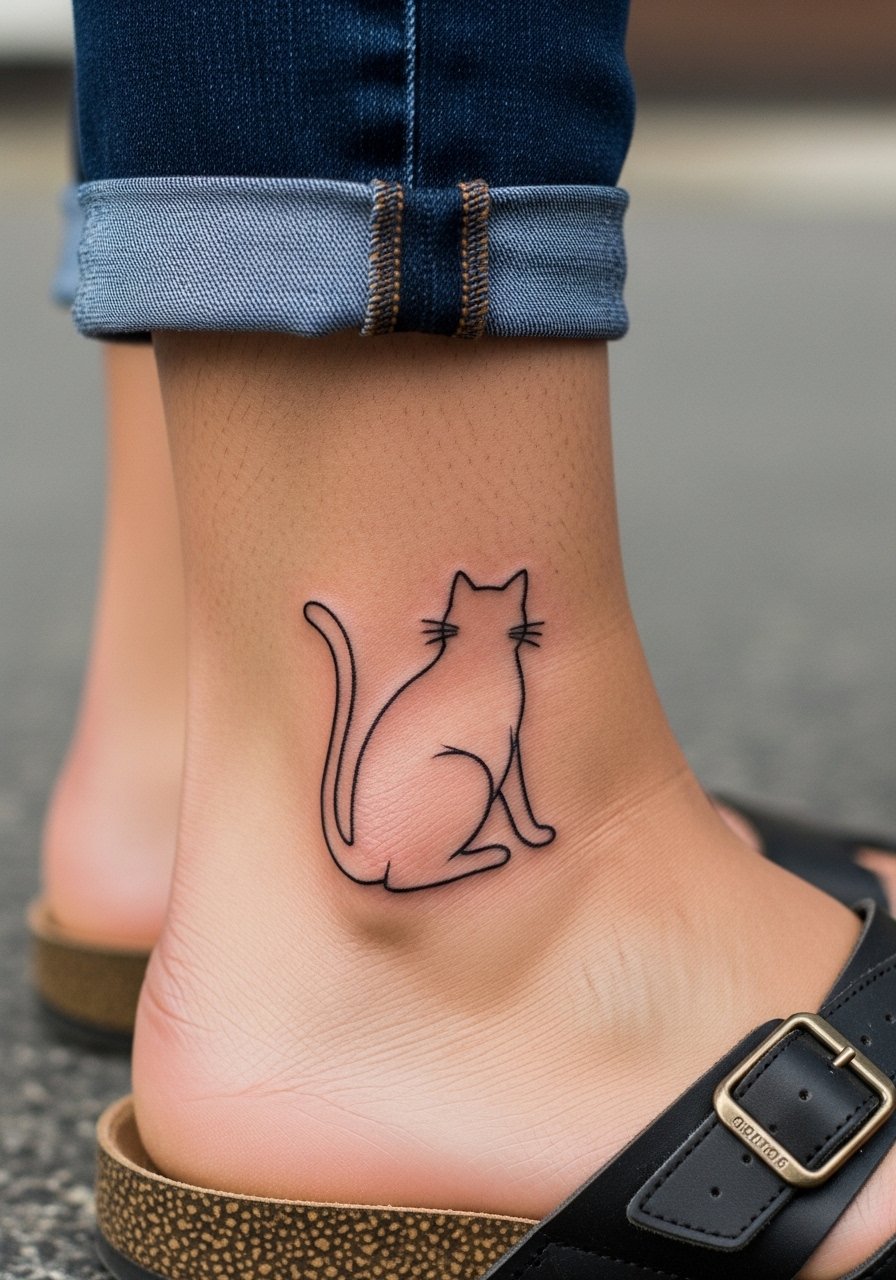
Wrapping a tail subtly around the ankle is playful, but bone-adjacent spots demand slightly stronger linework. The ankle sees frequent movement and footwear abrasion, so ask for consistent line depth rather than micro-variations that will fade. A common mistake is having the tail thread too thin where it hugs bone, inviting blowout or early fade. The session is short but the bony spot can be sharp. Pair with low-rise sandals and try an anklet bracelet to accent the composition without rubbing the ink.
13. Micro-Realism Cat Outline on the Inner Bicep
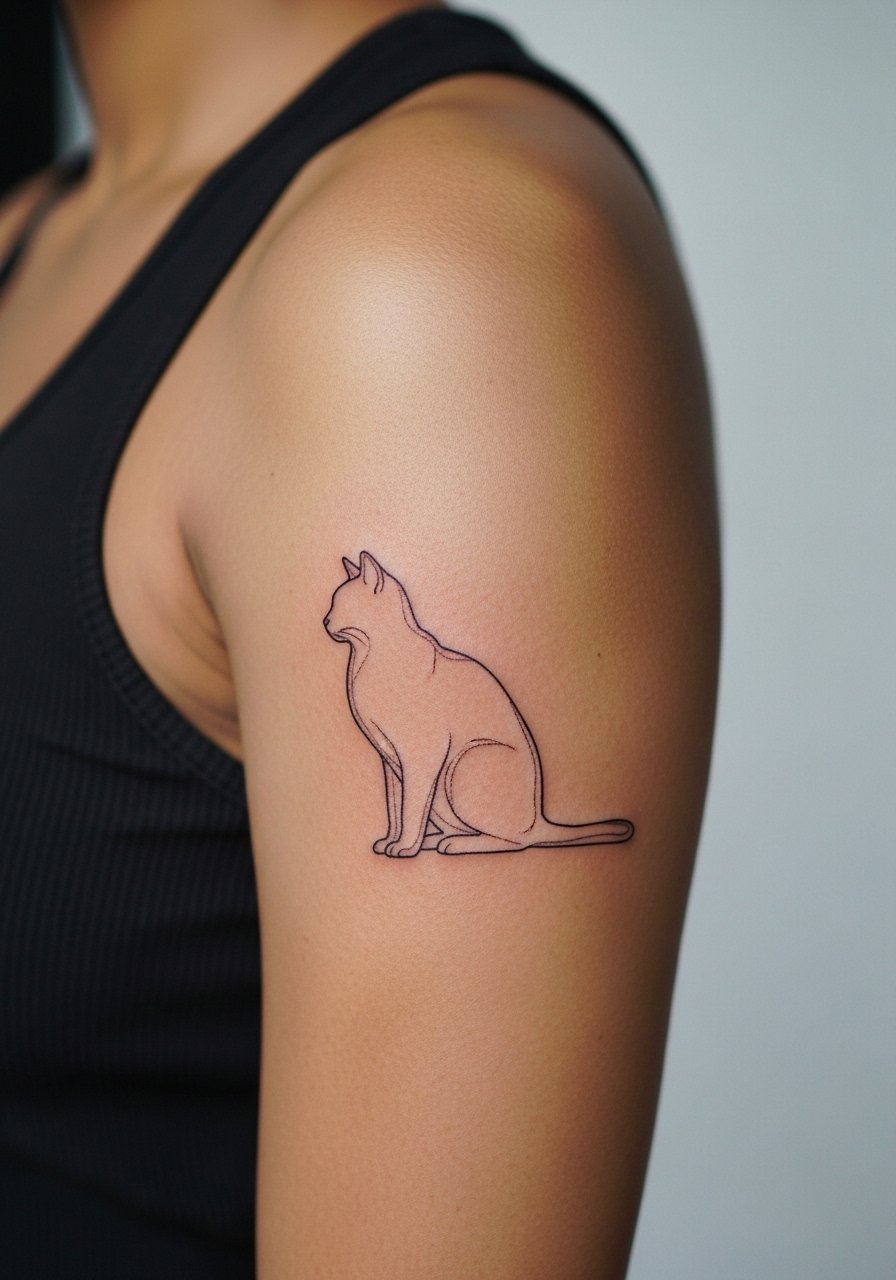
Inner bicep pieces sit in a protected zone, so fine detail can last longer here. The skin is softer and less exposed to UV, but sweating can affect early healing. Ask your artist for subtle stipple texture to give the outline a hint of form without heavy saturation. The pain is moderate and the session is comfortable for seated work. Typical mistakes include cramming too much shadow into a small inner-arm piece. For the session, wear a tank top you can lift so the artist has access without you being uncomfortable.
14. Tiny Cat Outline at the Nape
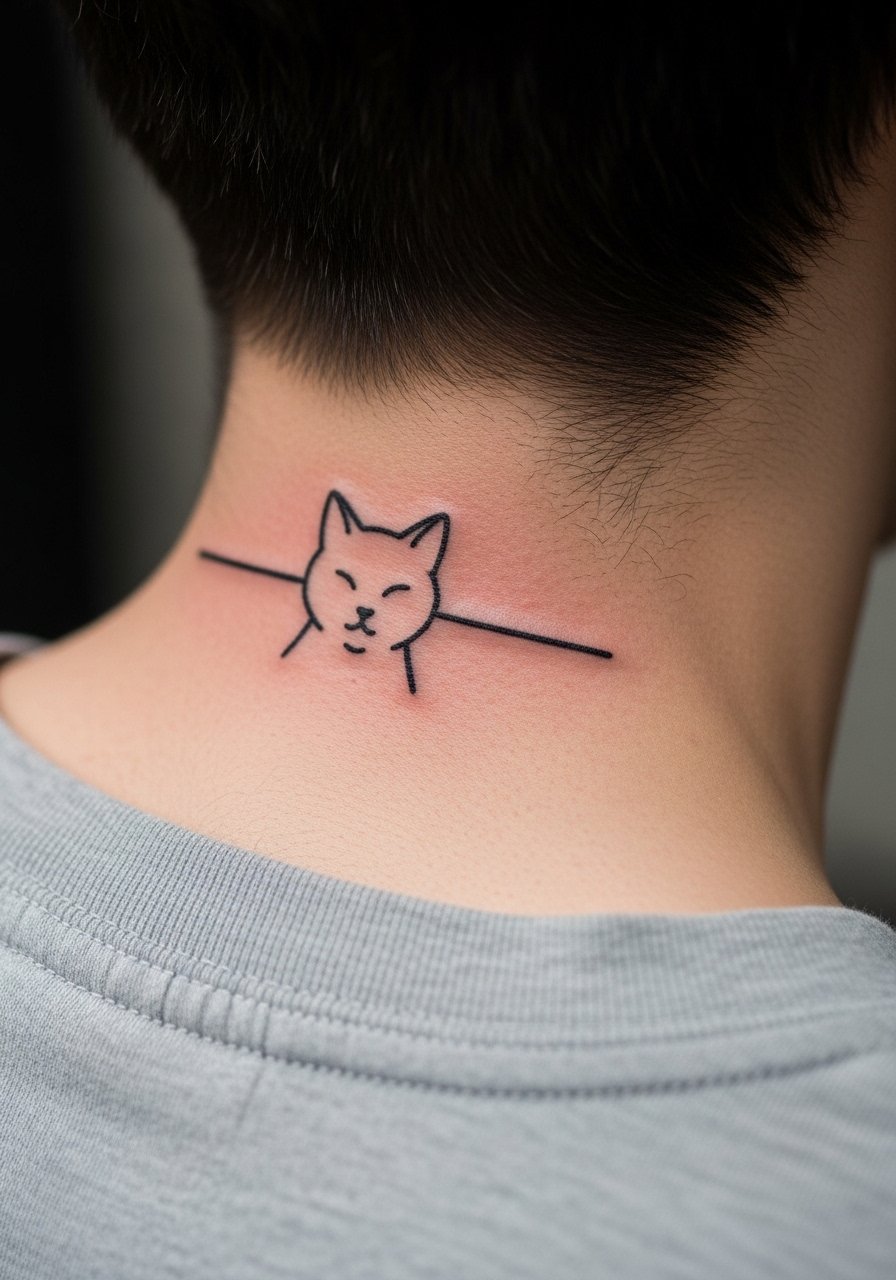
The nape is a flattering spot that pairs well with updos. Skin texture is similar to the neck and needs spacing in fine work to avoid blurring. Tell your artist you want the cat positioned so it is visible with hair up but discreet with hair down. The session can be tender but brief. Many people regret placing text-like strokes here because of fading patterns caused by hair friction. If you like to wear open-collar shirts, this spot becomes a surprise detail when your hair is up.
15. Tiny Cat Outline on the Foot Arch
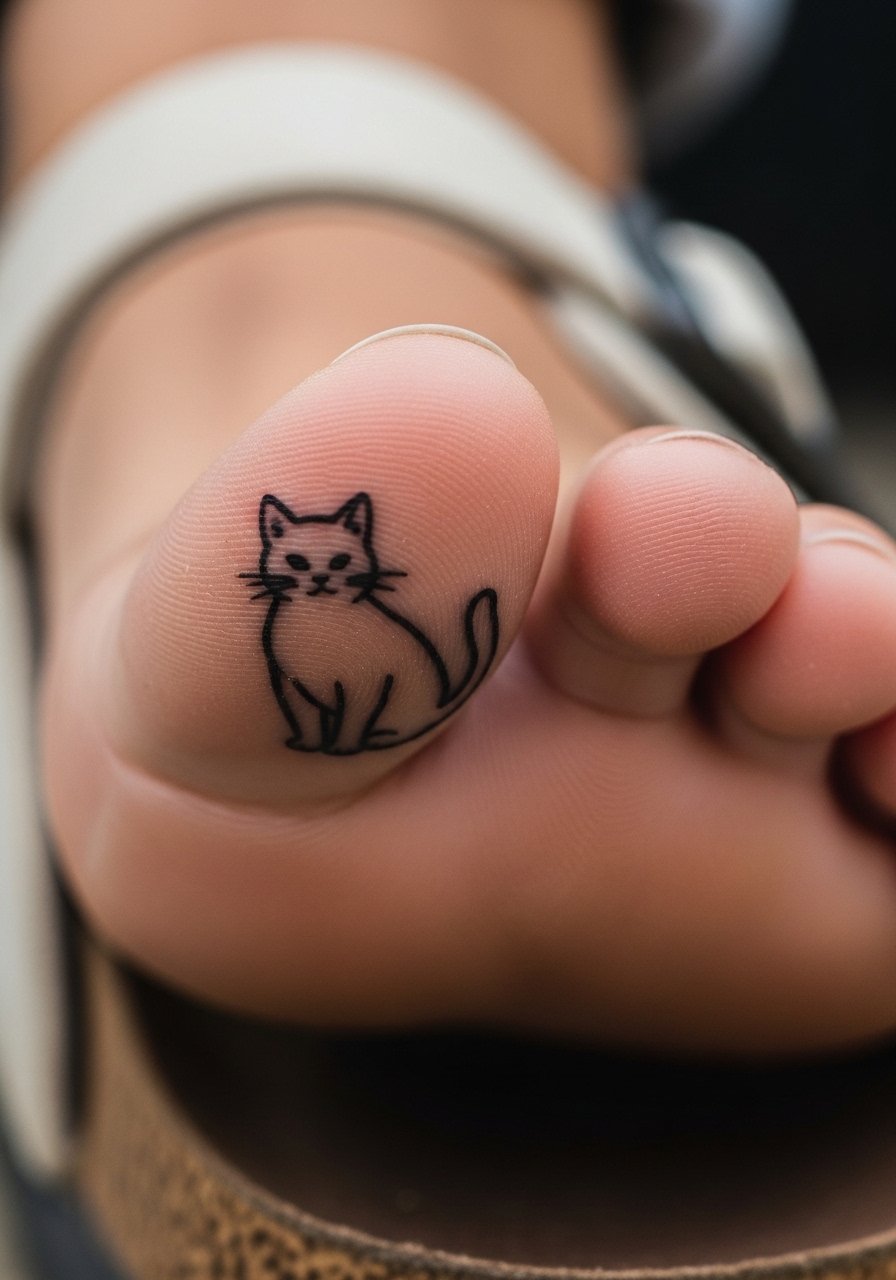
Foot tattoos face heavy wear from shoes and moisture, so they require a bolder approach than they look like on screen. Ask for slightly thicker linework and a conservative placement away from the widest bending zone. The session is sensitive and healing needs attention to avoid infection due to shoe contact. Common errors include placing too close to the toes where flexing smears the ink. For showing off, sandals that avoid straps across the design are best. Consider touch-ups earlier than on less-abrasive locations.
16. Tiny Cat Outline Near the Hip
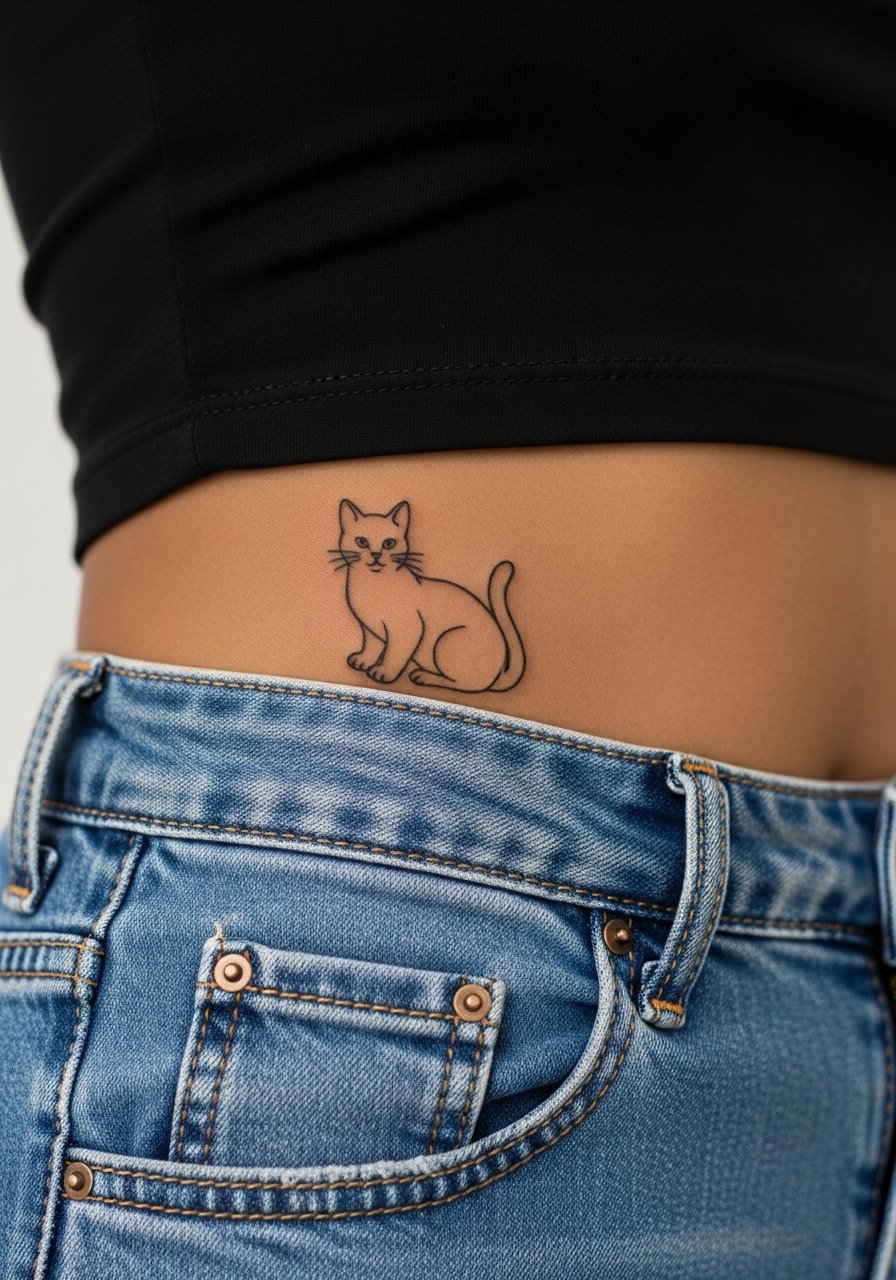
Hip tattoos are intimate and easy to hide. The skin there stretches with movement and weight change, so avoid ultra-dense detail. Tell your artist the piece should have room and flow with the hip curve. The session often involves lying on one side, which changes sensation. A typical mistake is assuming the design will sit the same when you wear different cuts of clothing. For appointments, high-waisted bottoms you can shift are helpful. No accessory link here since the placement is usually covered for most of the day.
17. Tiny Cat Outline Over the Sternum
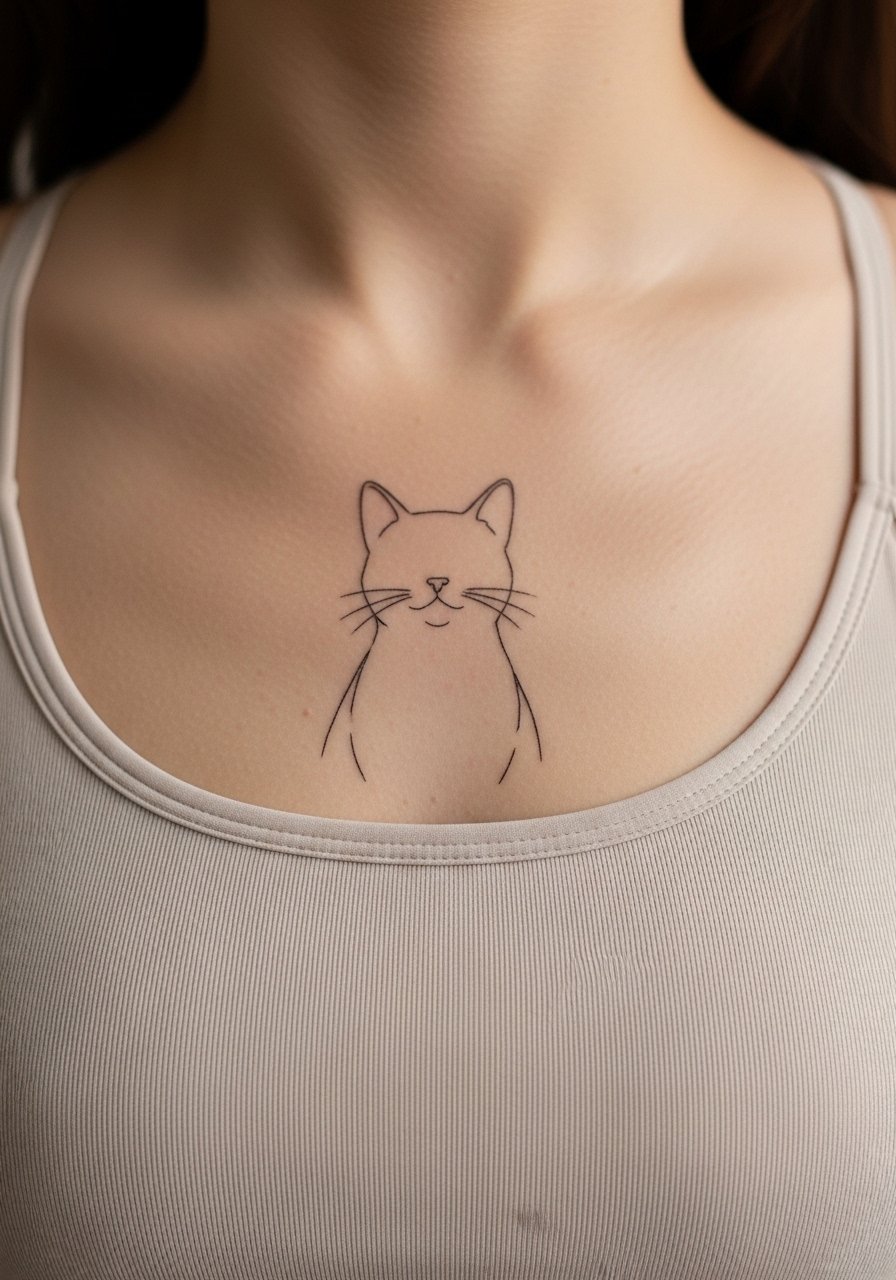
Sternum work sits close to bone and under clothing edges, so line thickness matters. There is a debate about fine line on the sternum similar to the rib discussion. Some artists favor slightly heavier single lines to resist early blurring. Others keep needle counts low to avoid tissue trauma. Ask your artist which approach they use and request a preview stencil while upright to check how it sits with your posture. Session pain can be higher. Wear a fitted sports bra for access without exposing more than the area needed.
18. Tiny Cat Outline on the Lower Back
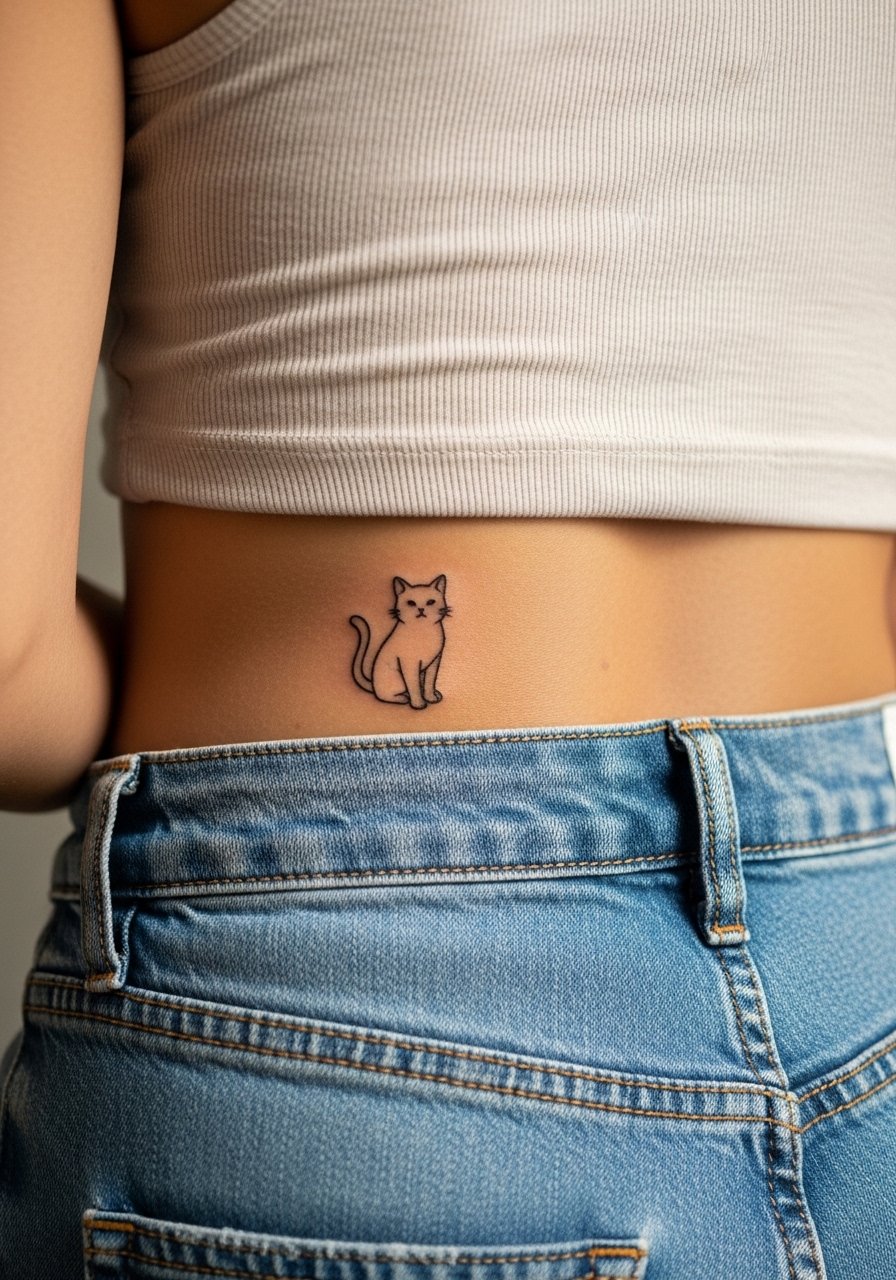
Lower back pieces age well because they are sheltered from constant sun and abrasion. The area allows slightly larger outlines while keeping the minimal aesthetic. For sessions, lying face down on the table is common and comfortable. A common mistake is choosing a placement too low that sits under waistband pressure, which can rub during healing. If you wear crop tops or low-rise jeans, this becomes a cheeky placement that peeks out when you sit or move.
19. Tiny Cat Outline Along the Spine
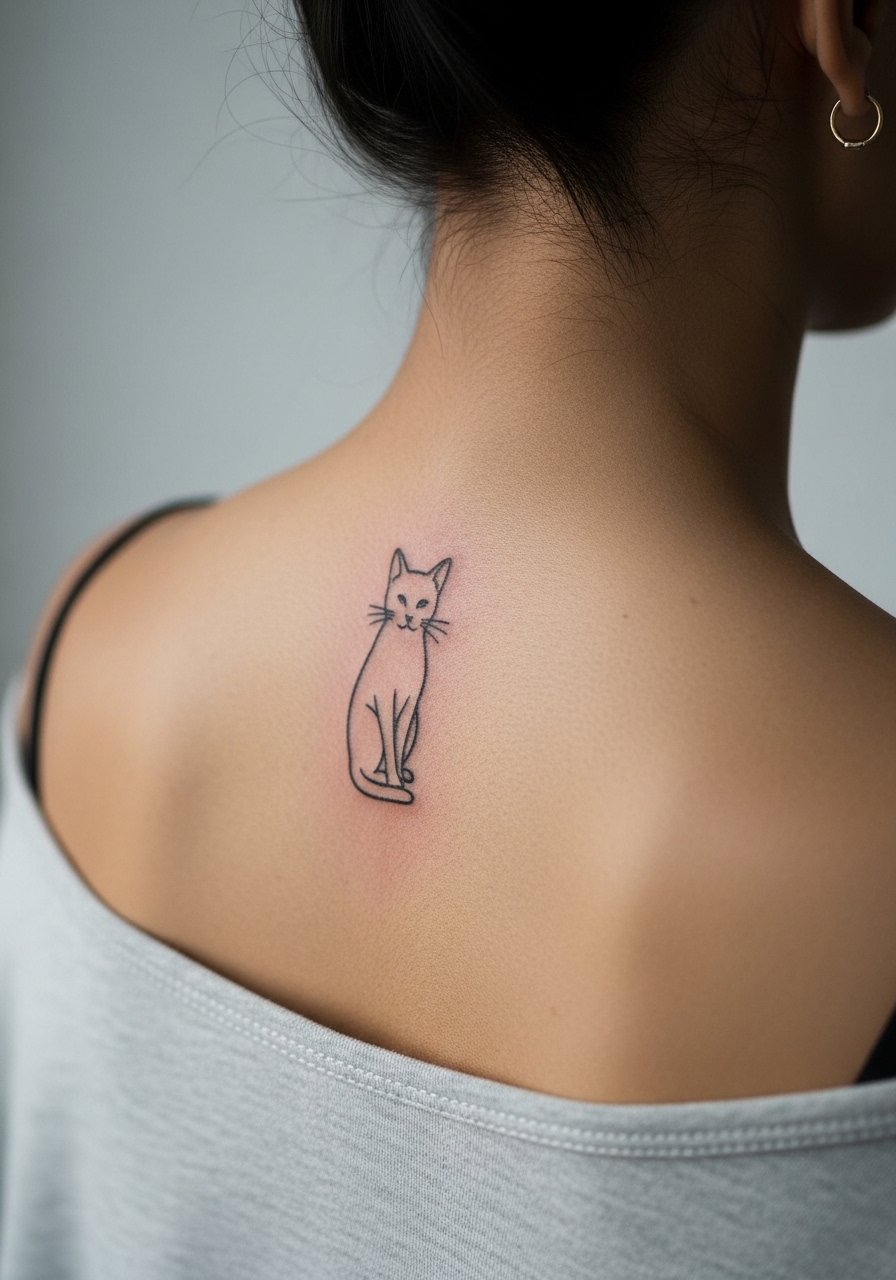
Spine placements create a vertical rhythm and read elegantly with body movement. The skin on the spine can be uneven so slight variations in line weight help maintain visual consistency. Tell your artist you want the cat aligned to a specific vertebra landmark so you can reproduce placement if you add pieces later. Sessions can be painful due to proximity to bone. A frequent mistake is trying to cram elaborate detail into a strip that would fare better as a simple silhouette. For apparel, back-exposing tops highlight the area nicely.
20. Tiny Cat Outline on the Shoulder Cap
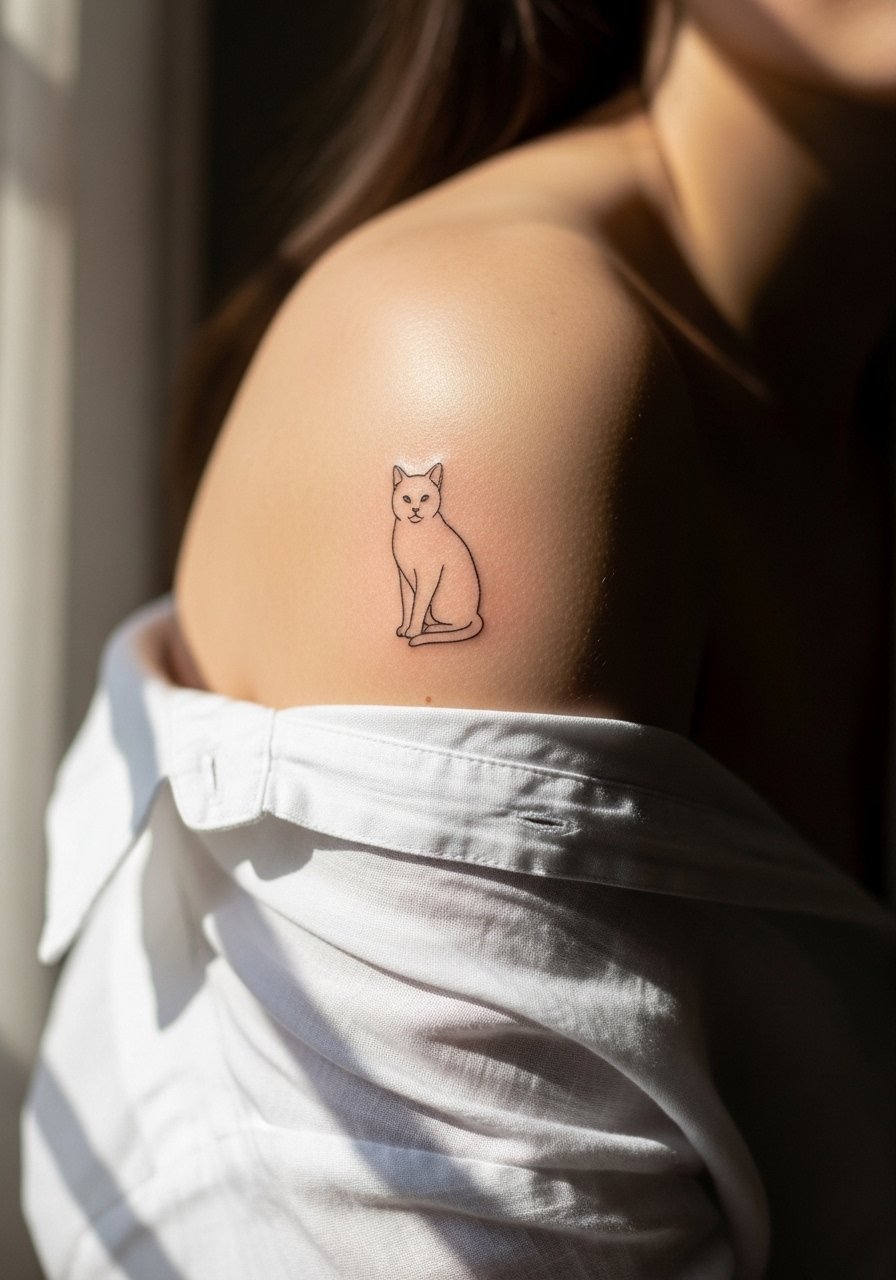
Shoulder cap tattoos are low-maintenance and photograph well. The skin is durable and holds linework reliably, which makes this a great spot for single-needle outlines. The session is comfortable and usually short. A common mistake is placing the cat too close to the arm where sleeve friction softens the lines. For the session, wear a loose button-down shirt you can pull aside so the artist has easy access without you being cold. This spot ages gracefully with minimal touch-ups.
21. Tiny Cat Outline on the Inner Thigh
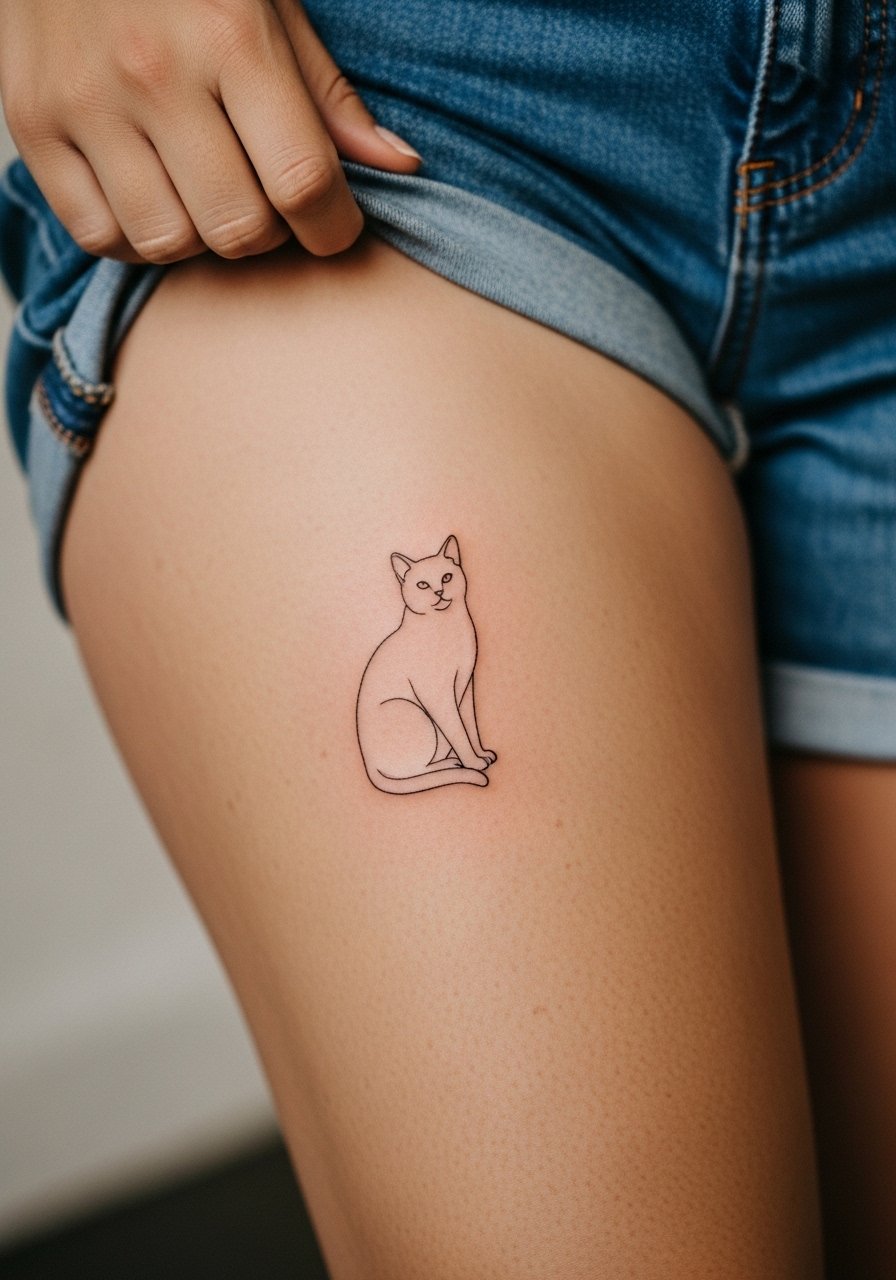
Inner thigh tattoos are intimate and well protected from sun, which helps longevity. The area is sensitive and can swell during healing, so request a design that tolerates stretching. Common mistakes include over-detailing and underestimating session discomfort. For the appointment, wear loose shorts you can shift to expose only the tattoo area. If you plan to wear dresses or swimwear, imagine how the piece sits while moving to avoid placements that the fabric constantly rubs. Touch-ups are often less frequent here than on hands or feet.
Frequently Asked Questions
Q: Can a small cat outline tattoo be done as single-needle fine line and still last?
A: It depends on placement and how the lines are spaced. Fine single-needle work can last on protected areas like the inner bicep or shoulder cap with minimal touch-ups. For high-motion or thin-skin zones like fingers, ribs, or ankles, ask for slightly stronger line weight or deliberate spacing during the consult.
Q: What should I tell my artist if I want a tiny cat that won't blur into a blob?
A: Ask for deliberate negative space and slightly increased line depth rather than the absolute thinnest stroke. Request a stencil preview on skin while upright so you see how movement changes the shape. If you are unsure, ask the artist to show portfolio examples of the same placement on healed work.
Q: How do I find reliable reference images or communities for small cat outline ideas?
A: Search platform tags and topic threads for inspiration and technical nuances. Look for hashtags such as #smallcatoutline, #catoutline, and #finecatline. Community threads on tattoo-focused forums and subreddits help reveal real healed photos and artist experiences without relying on curated portfolios.
Q: Do certain placements mean I should plan for touch-ups sooner?
A: Yes. High-motion, high-friction, and thin-skin spots usually need touch-ups sooner. Fingers, hands, feet, and some rib areas commonly require maintenance within one to three years, while protected zones like the upper arm, shoulder, and inner thigh often hold longer.
Q: What should I wear to the appointment for sensitive placements like sternum or ribs?
A: Choose clothing that exposes only the area the artist needs while keeping you comfortable. For sternum and upper chest, a fitted sports bra is practical. For ribs, a cropped top that you can lift without becoming cold works well. These choices make the session smoother and keep exposure minimal.
Q: If I want to show the tattoo off without making it obvious all the time, which placements are best?
A: Collarbone, shoulder blade, and ankle placements offer flexible visibility. They are easy to reveal with certain outfits and hide with others, which makes them practical for people who want control over when the piece is seen. Trust your artist to help fine-tune exact placement for how you move and dress.