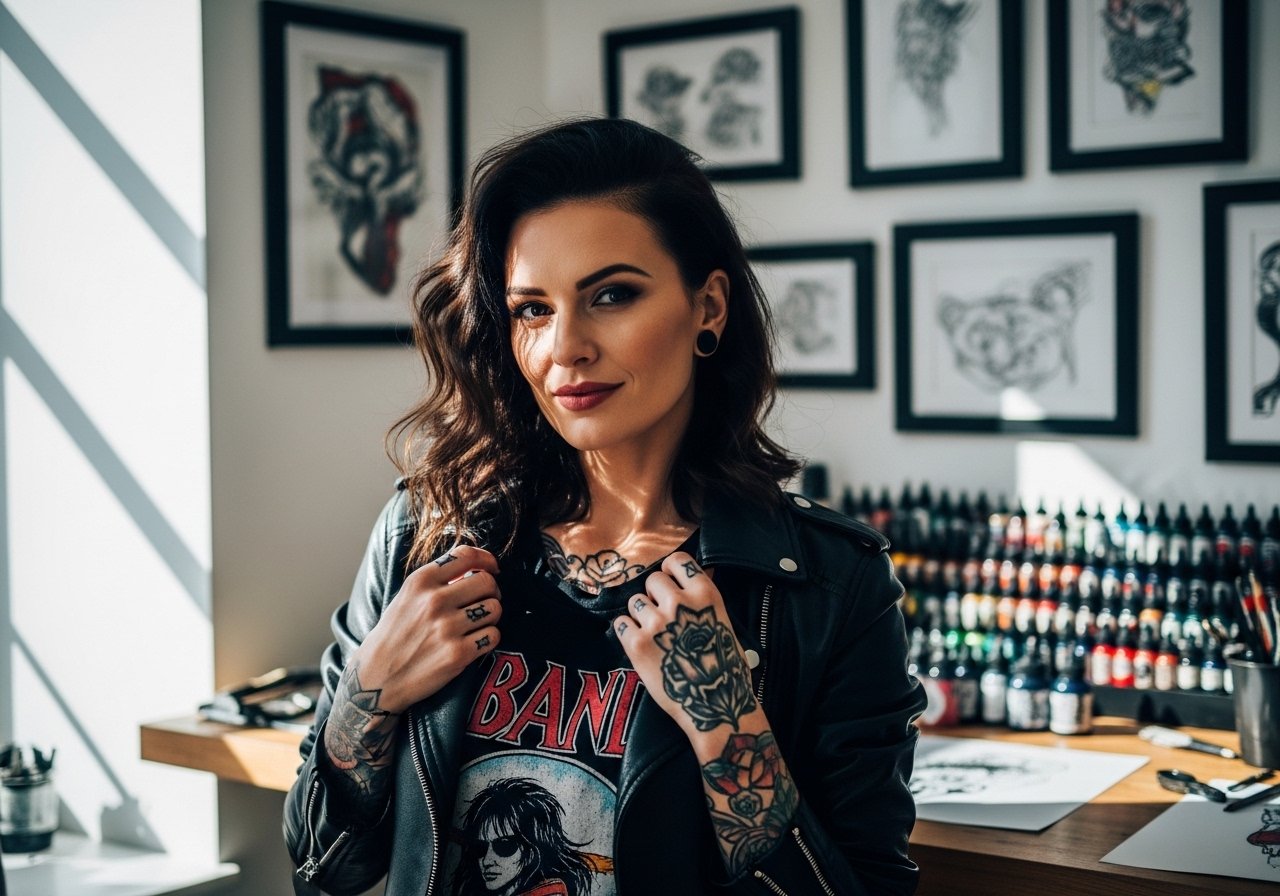
Soft takes on the Hannya mask are becoming a quiet favorite for people who want the motif without the theatrical glare. The challenge is balancing the mask's heavy symbolism with gentle linework and subdued color so the piece reads like a personal talisman, not a costume. Below are 17 soft hanya mask directions that keep the shape and emotion intact while dialing down the scream, plus what to ask your artist in consultation.
1. Inner Forearm Mini Hannya in Fine Line
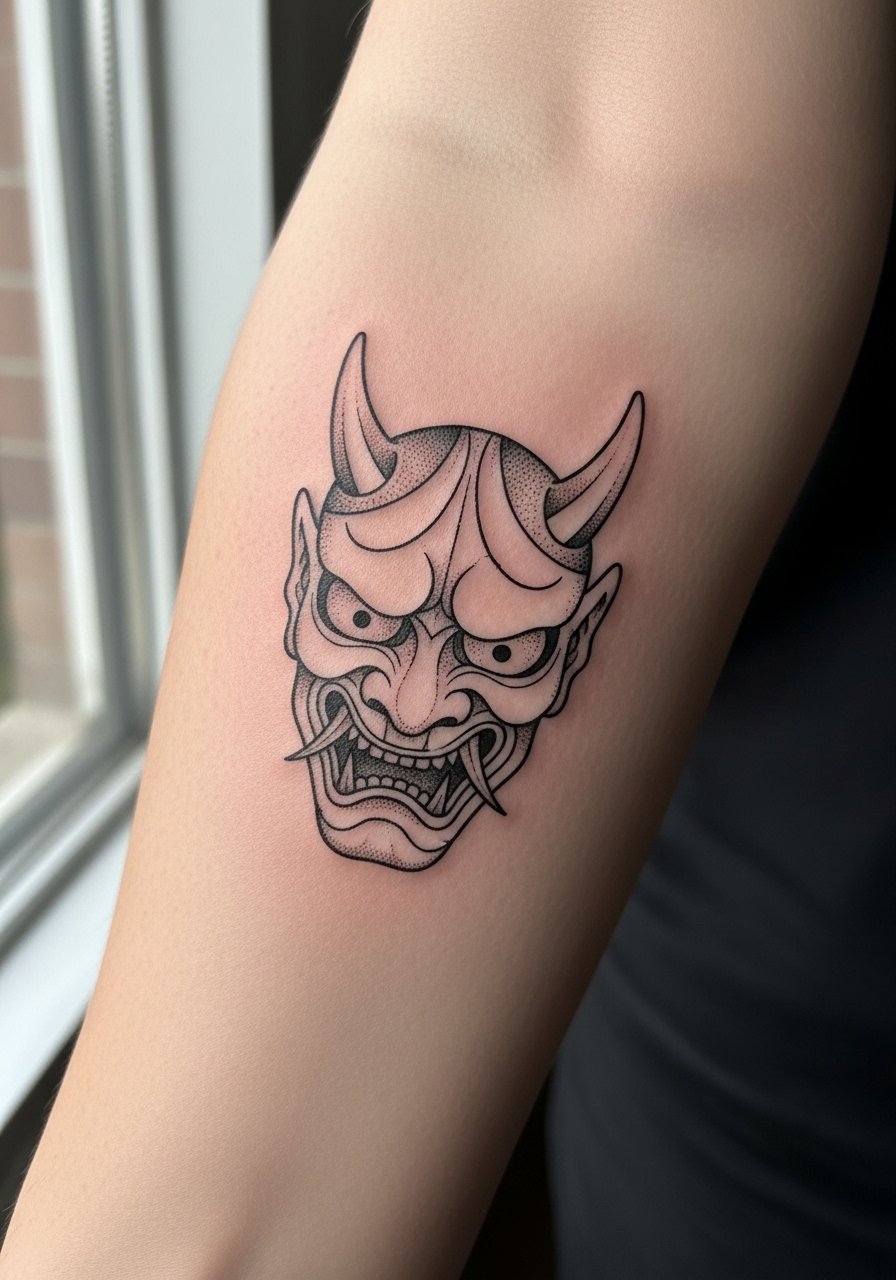
This tiny inner forearm Hannya uses thin linework and light stipple shading to suggest the mask without heavy horns. Tell your artist you want shallow depth and a single needle grouping so the lines sit delicately, and expect a low-to-moderate pain level with a short session under an hour. Common mistakes include asking for too much detail at a tiny scale, which leads to blurring after a couple of years. For showing it off, roll a sleeve and wear a loose button-down shirt you can pull aside for the session and photos.
2. Subtle Watercolor Wash Behind the Ear

A faded watercolor wash softens the Hannya’s edges and reads like a mood more than a mask. In the consult, ask for muted pigments and ask the artist to keep color layers thin so saturation never goes heavy. Behind-the-ear placements need the tattoo framed by hair, so this is discreet and quick to heal. Sensitivity is low but note that the area holds less pigment over time. For session comfort, bring a racerback tank so the artist can access the spot without you feeling exposed.
3. Shoulder Blade Soft Hannya with Peonies
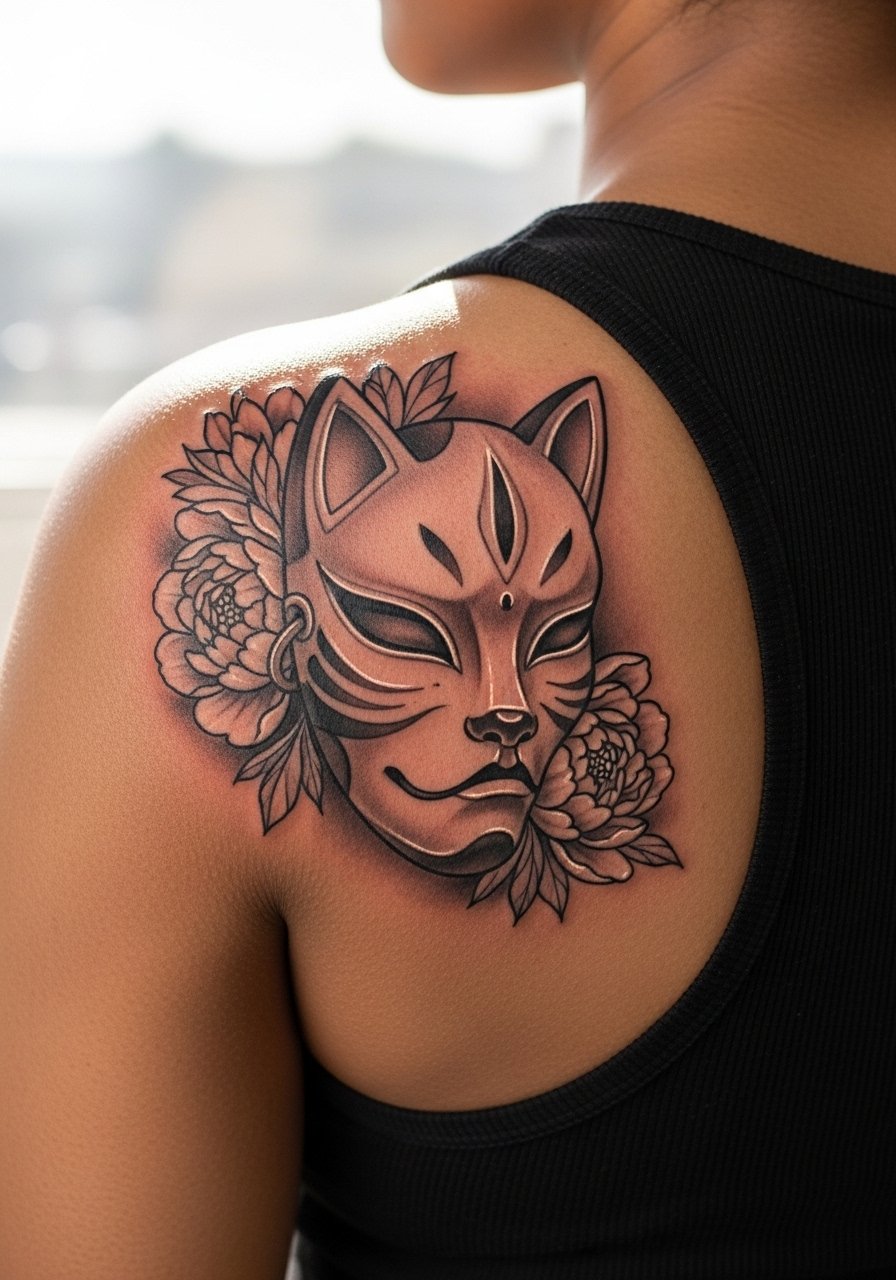
Pairing a soft Hannya with peonies shifts the reading toward traditional Japanese floral balance. I recommend asking for mid-tone shading and petal overlap that frames the mask rather than competes with it. Shoulder blade pieces sit well with medium sessions of two to three hours and age cleanly if the artist avoids extremely fine interior lines. A common mistake is packing too many small details into the petals, which blur faster than the mask itself. For nights out, an open-back midi dress shows the shoulder blade without making the rest of the back visible.
4. Chest-Offset Hannya in Muted Grayscale
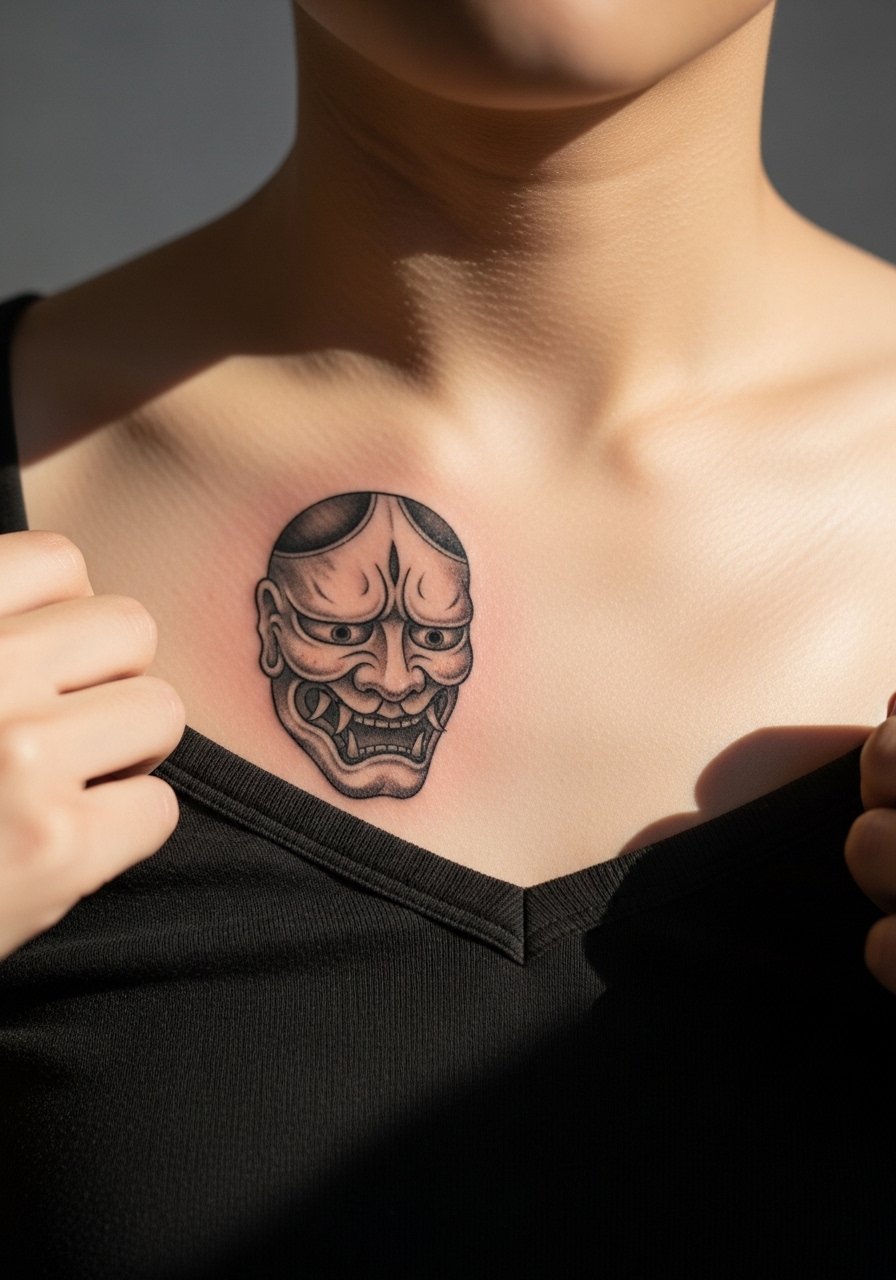
The chest placement reads intimate and strong at once. Artists and cultural commentators split into two camps on chest-placed Hannya masks. One camp argues that using this theatrical mask outside its cultural context can feel appropriative and calls for restraint. The other camp says respectful adaptation can work when the wearer knows the symbolism and uses it thoughtfully. If you choose this placement, discuss meaning with your artist and ask for softer gradients across the mask so the piece reads like a portrait rather than a costume. Session time runs moderate to long depending on size, and the clavicle area can sting more than the upper arm.
5. Neo-Traditional Soft Hannya on the Outer Bicep
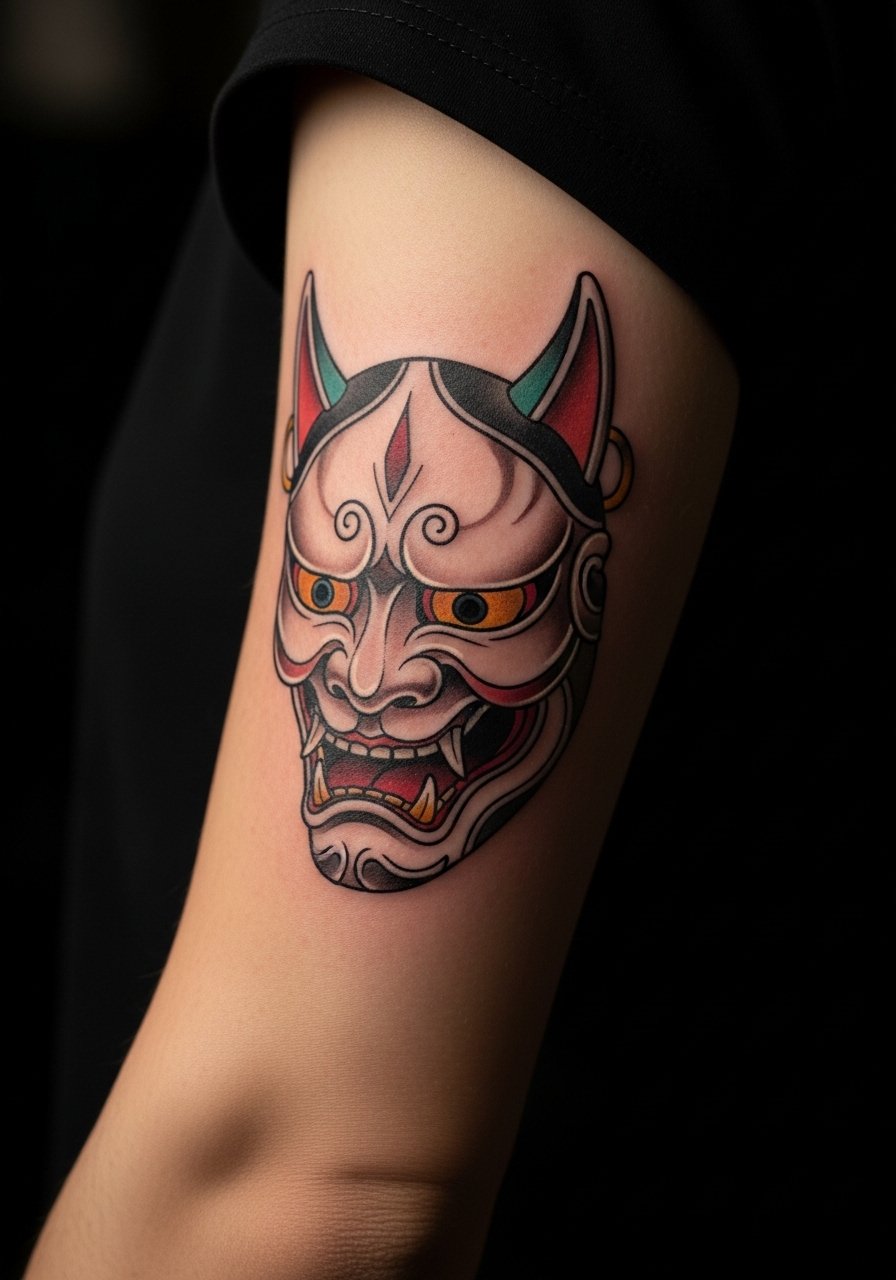
Neo-traditional lineweight with desaturated fills gives the Hannya a modern twist that still reads like classic tattooing. Tell the artist you want bold outer contour lines with softer interior strokes, and ask them to show healed examples of similar saturation on comparable skin tones. Mistakes include choosing high-saturation palettes that look flat after a year. Outer bicep sessions are forgiving for touch-ups and are a good place for larger motifs that need room to breathe. For the appointment, a loose drawstring linen pant keeps you comfortable when sitting for a longer session.
6. Tiny Finger Hannya with Negative Space
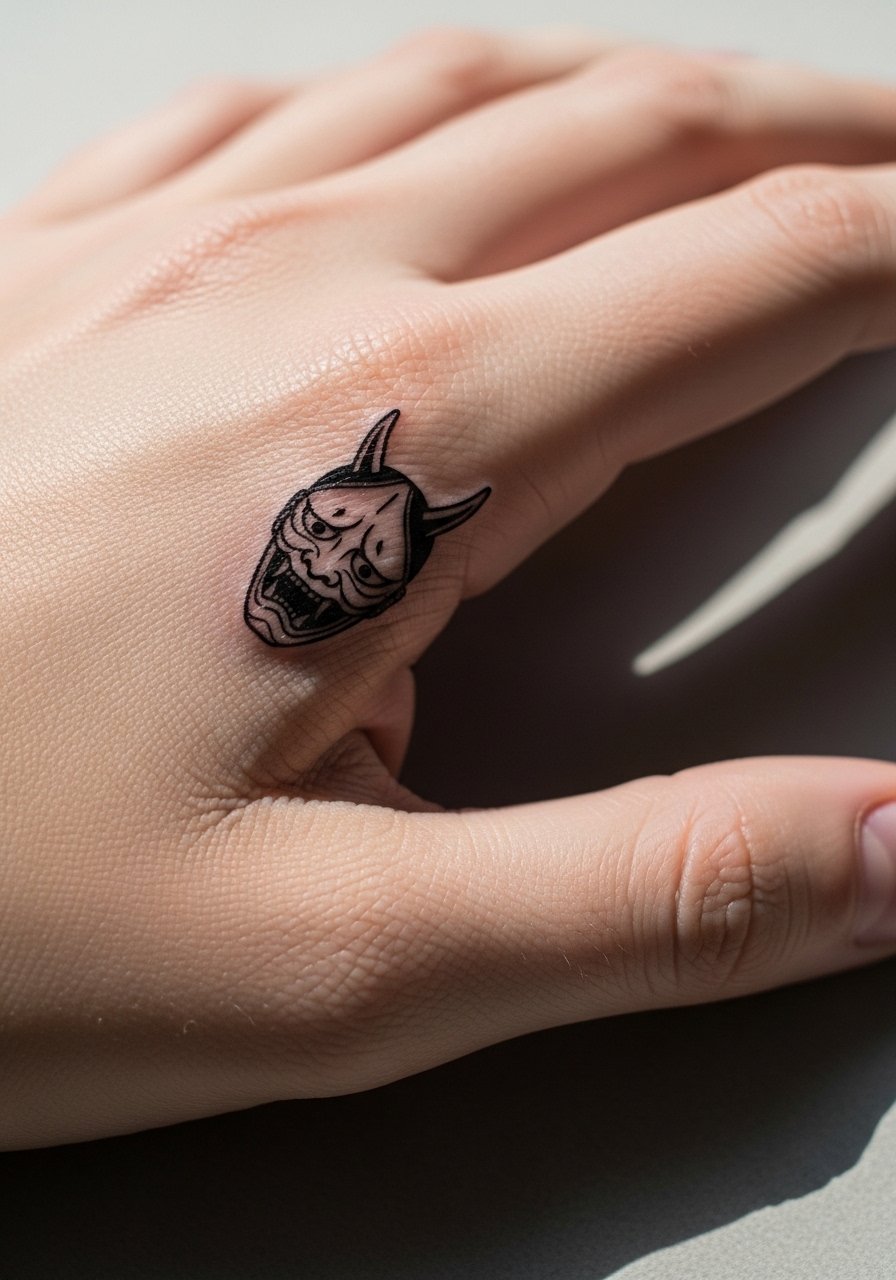
Finger Hannya tattoos read intimate but are a commitment because the area blurs faster. The trick is to use negative space as part of the design so you avoid packing in thin lines. Be explicit in consultation that you accept probable fading and a likely touch-up at year one. Sessions are short but the healing window is fussy because of washing and friction. For shows, a minimalist gold watch or thin stackable rings complements the tiny mask without crowding it. Keep in mind that visible hand tattoos can affect job prospects in some fields.
Studio Day Picks
The first six ideas include visible forearm, chest, shoulder, and finger placements, and those areas demand different prep. These small items smooth the session and the first week.
-
Stencil transfer paper kit. Lets you preview how the mask will sit on curved areas like the rib or shoulder blade before the needle hits skin.
-
Topical numbing cream. Applied 45 minutes before the session takes the edge off sensitive spots like the chest and inner arm.
-
Thin protective film roll. Useful for small wrist and finger pieces that face frequent washing and abrasion during the first week.
-
Fragrance-free body wash. Gentle cleansing for the first week protects fine line work on forearms and biceps without drying the skin.
-
Aquaphor healing ointment. A thin layer during the initial days helps keep delicate stipple shading hydrated and improves comfort.
7. Ribcage Whisper Hannya in Single Needle
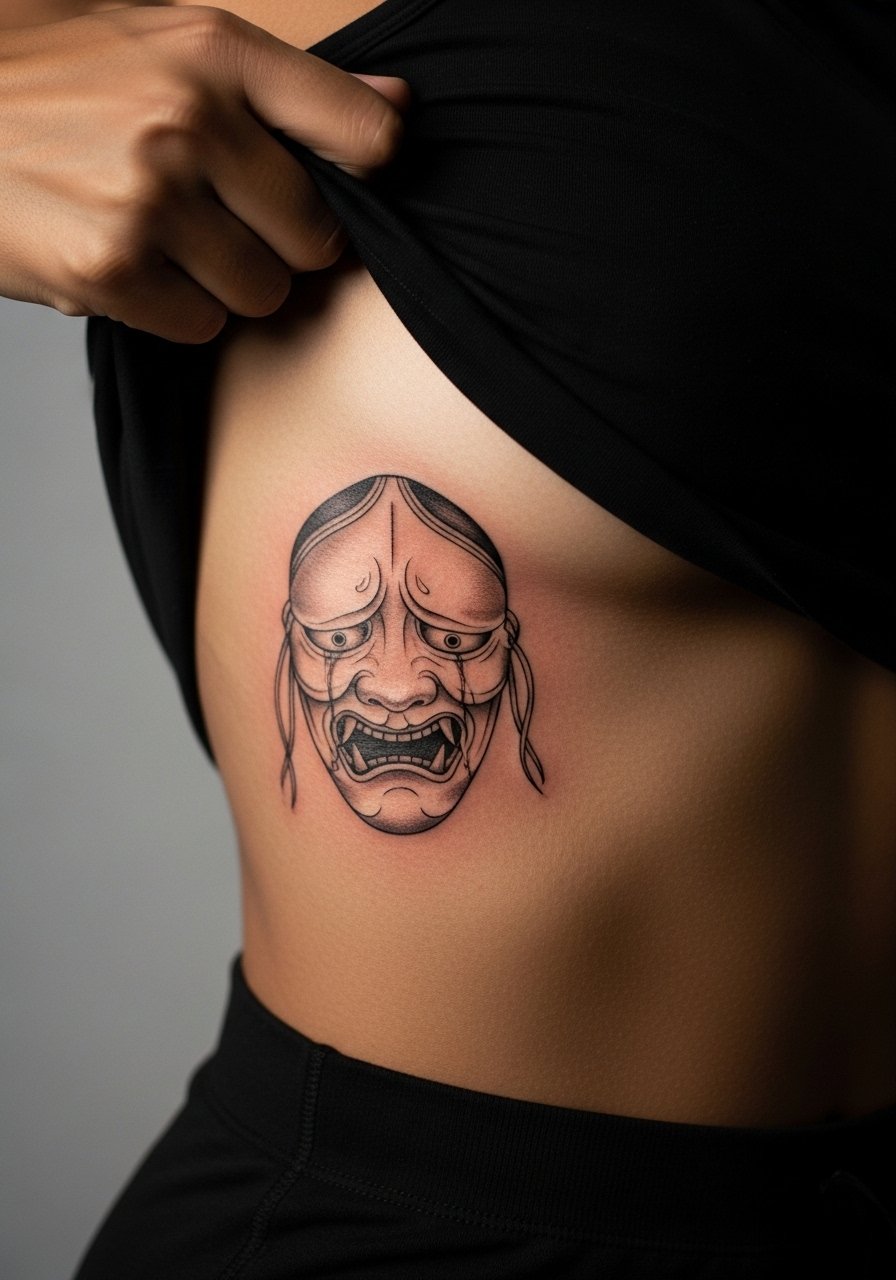
Ribcage Hannya in single needle reads like a secret resting under clothing. Fair warning, the ribcage is a high-pain zone, but the result can be hauntingly subtle when done with careful spacing. Artists disagree on fine line on ribs. One group says the skin stretch blurs lines quickly. The other group says with correct needle depth and spacing fine line can settle well. Ask about their experience on rib placements and expect a longer session with breaks. During the appointment, wear a zip-up hoodie you can lift for access without shifting your whole outfit.
8. Sternum Hannya with Soft Stipple Shading
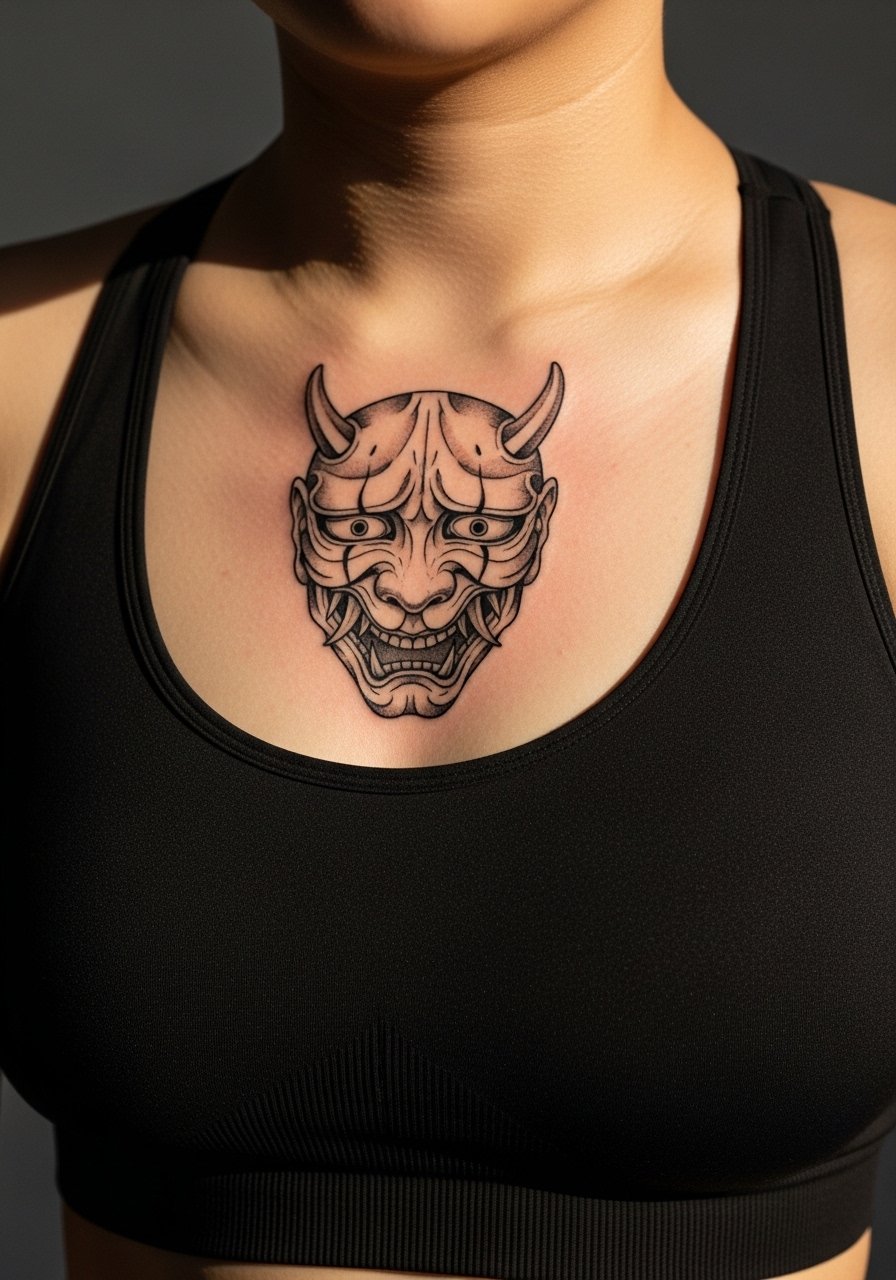
Sternum placements are intimate and central. For a soft Hannya, stipple shading keeps the mood tender while retaining the mask’s shape. Tell your artist you want low contrast and ask for a mockup showing how the piece sits against the sternum curve. Pain is moderate to high and sessions may require shorter sittings. Many clients prefer a modest sports bra during the appointment so the artist has clean access. If you plan to reveal the piece, a thin chain pendant necklace sits nicely above subtle sternum work.
9. Calf-Length Watercolor Hannya and Waves
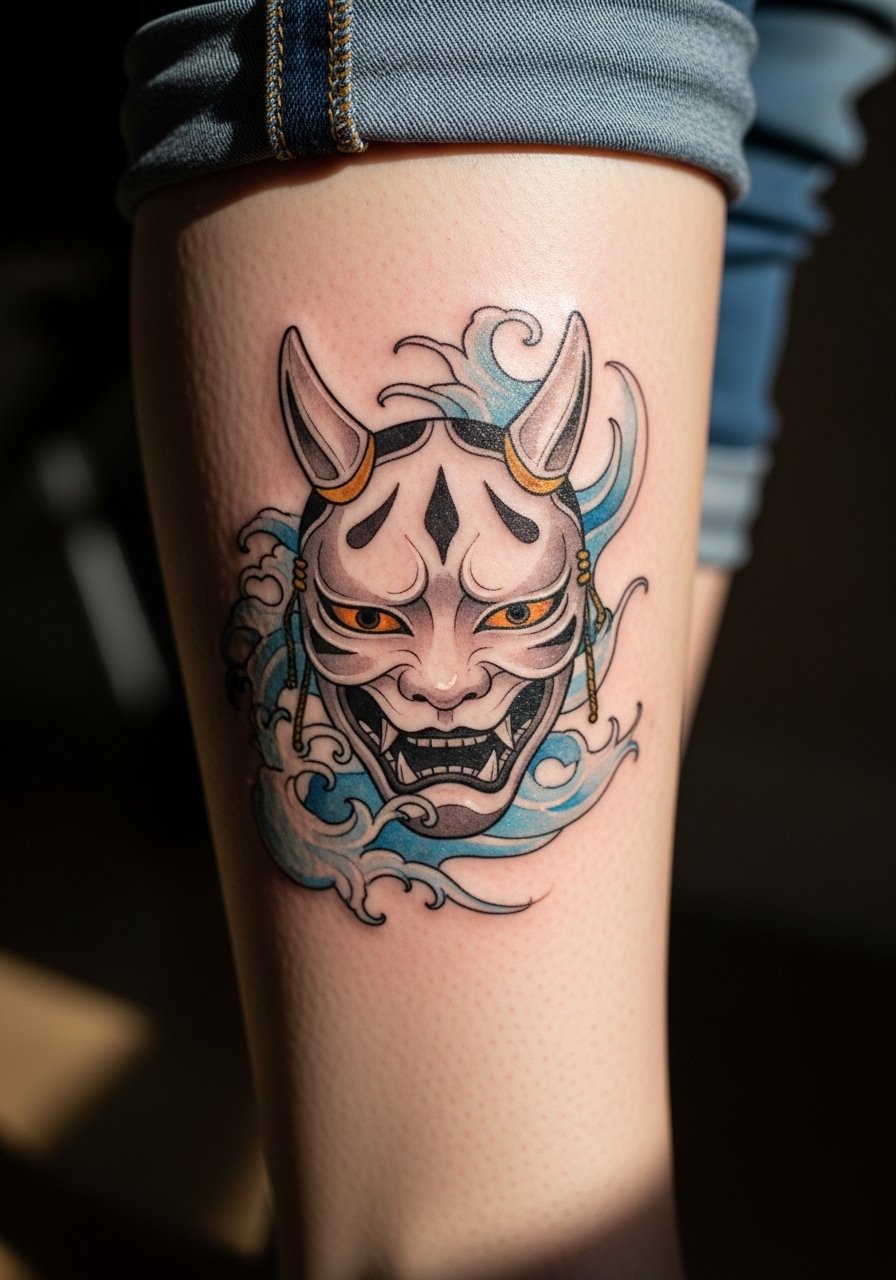
A calf Hannya allows vertical composition and movement. The watercolor waves can push the design into a softer, more abstract territory. The calf tolerates heavier saturation than ribs, so you can ask for slightly deeper pigments that still read soft when healed. Common mistake is overloading the piece with tiny details that the calf’s curvature later distorts. Sessions are moderate, and the area heals well with minimal touch-ups. There is a cultural conversation about using theatrical masks for body art. One camp urges restraint and cultural respect. The other sees thoughtful adaptation as acceptable. Bring that topic into consults so the artist can guide design choices.
10. Collarbone Micro Hannya in Light Gray Wash
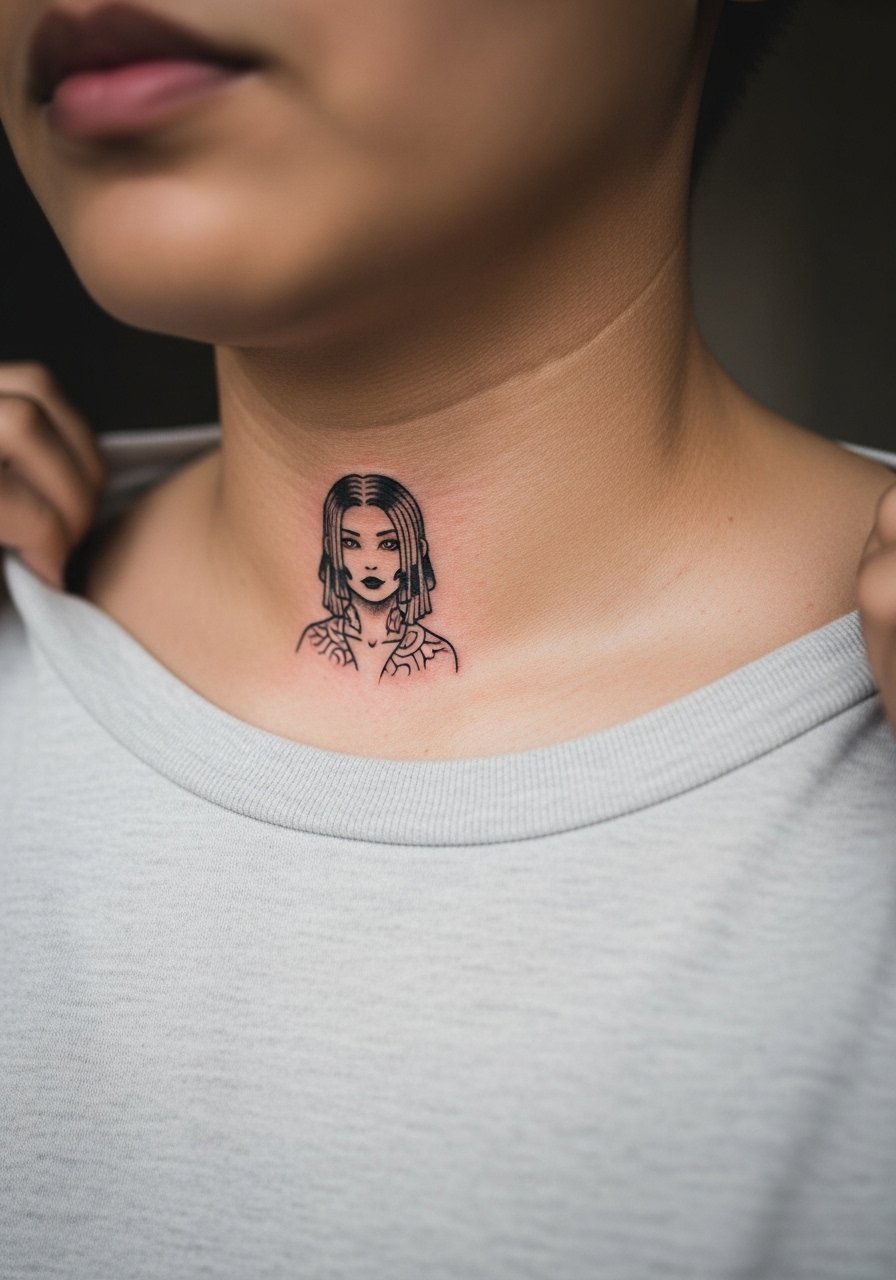
A collarbone Hannya reads like jewelry and is ideal for those who want a visible but restrained piece. The artist should use thin washes of gray and avoid dense blacks that overpower the clavicle’s bone shadow. Pain is moderate and session time is short. A frequent misstep is placing the design too close to the bone where touch-ups are harder. For evening looks, an open-back blouse or wide-neck knit frames the piece without baring too much skin.
11. Half-Face Scalp-Edge Hannya in Washed Ink
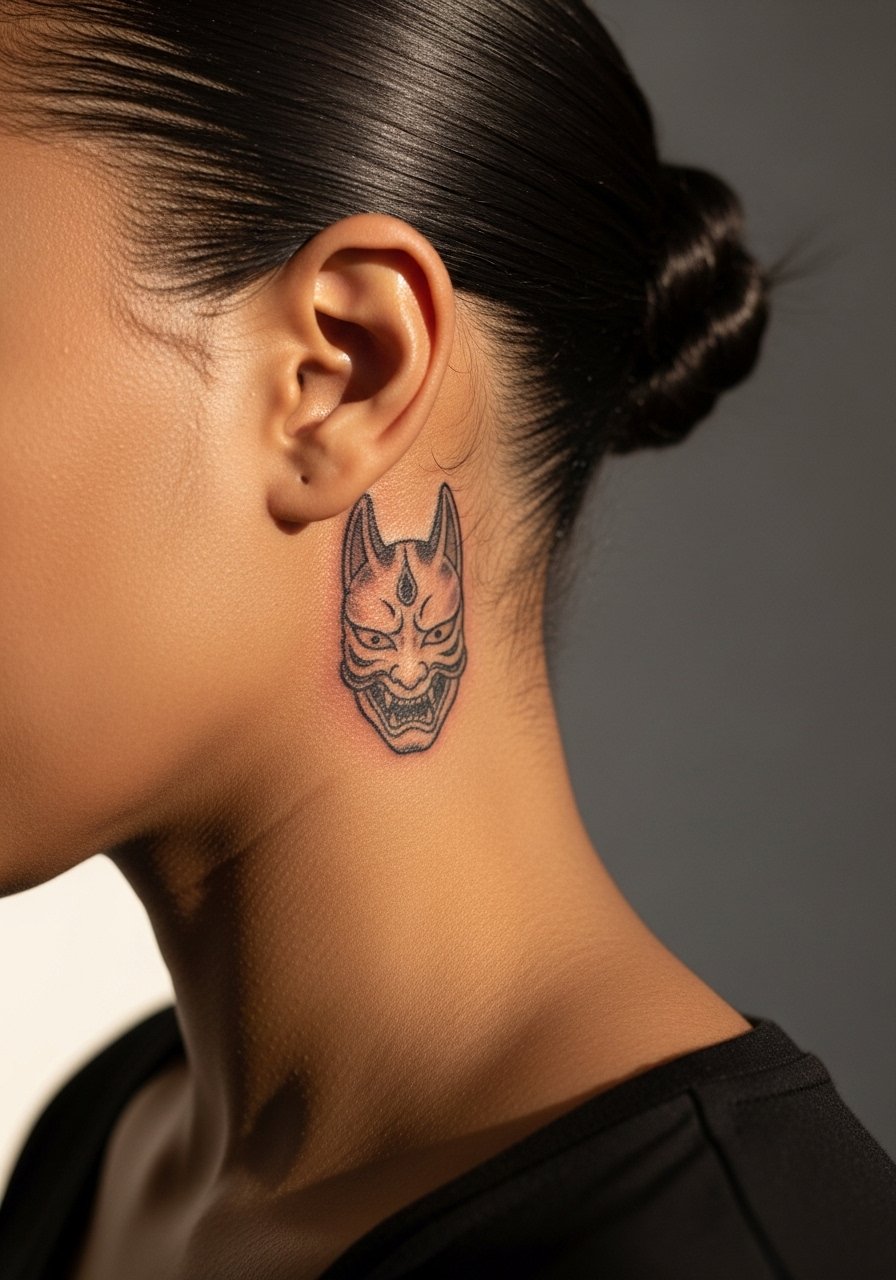
Placing a Hannya near the hairline gives the effect of a mask half hidden by hair. This requires an artist comfortable with neck and hairline transitions. The area is sensitive and sessions can sting more than on limbs. Keep the scale conservative and avoid dense blacks that will read heavy against short hair. A professional note: neck placements may require a specialized artist who regularly works in that zone. If you get this, ask how they handle stencil stability near hair.
12. Thigh Panel Hannya with Peony and Koi

The thigh gives space for a narrative composition. Combining a soft Hannya with peony and koi lets you tell a story of transformation rather than fear. Tell your artist to scale the mask so horns do not reach into crease zones that cause friction while sitting. Sessions here are comfortable and can be long if you want an extended panel. A common mistake is placing heavy detail where pants will rub constantly. For the session, wear high-waisted denim shorts you can shift slightly for access without discomfort.
13. Scapula Horizontal Hannya with Cloudwork

A scapula layout lets the Hannya stretch and breathe visually. Cloudwork or soft background shading gives the mask weight without heavy contrast. Tell the artist you want airy background fills and clear horn outlines so the main silhouette reads from a distance. The scapula is moderate for pain and generally ages well if lines are not too fine. For outfits, an open-back midi dress or tank top pairs well for showing the spread.
14. Minimalist Outline Hannya at the Nape
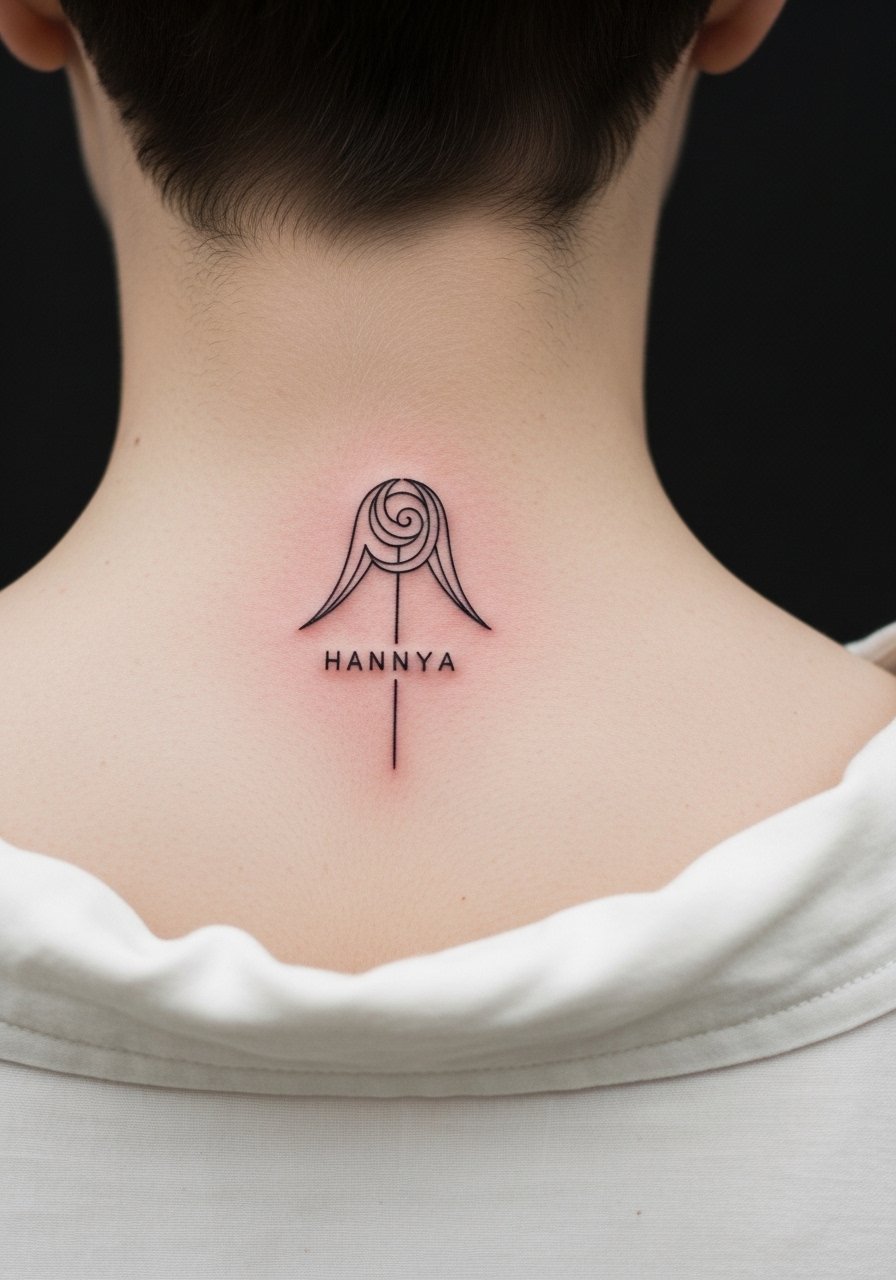
A nape Hannya in outline form reads as a whisper when hair is up. This placement looks intentional and modern when the lines are bold enough to survive neck movement. Artists debate whether neck outlines need extra spacing. One practical point is to ask for slightly heavier lineweight so the outline does not break up with time. The nape can impact employability in some roles, so weigh visibility against lifestyle. For sessions wear a wide-neck shirt that exposes only the nape for access.
15. Ankle Accent Hannya with Tiny Blossoms
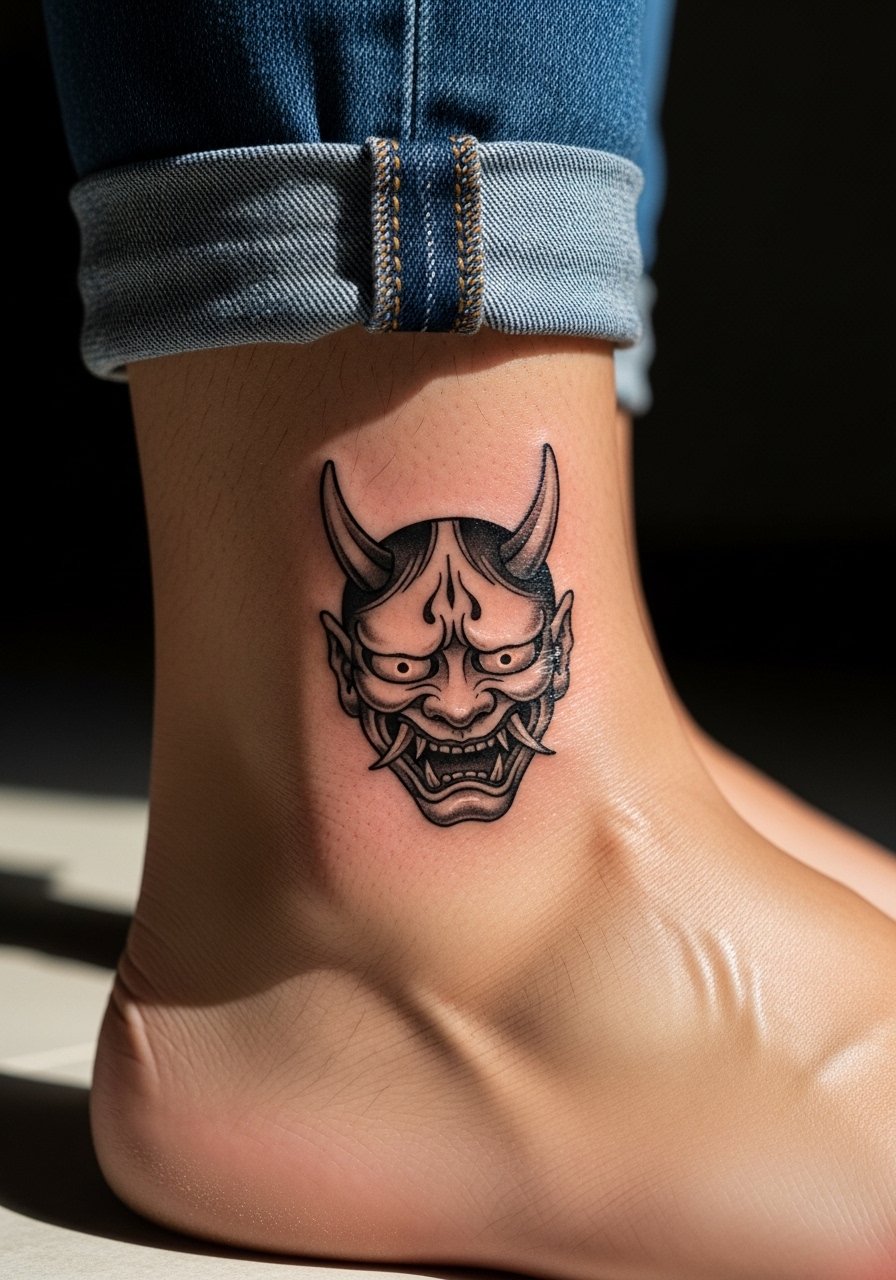
Ankle Hannya accents are discreet and photograph nicely with footwear. Because the ankle faces lots of friction, keep the design small and avoid dense detail. The area is bony and can be sharp during the session, but it recovers quickly. A common error is asking for dense blacks that patch into the skin with daily shoe rubbing. For showing it off, sandals or cropped trousers work well. During the appointment try a pair of pants you can roll up easily so the artist can access the area without you losing warmth.
16. Sleeve-Adjacent Hannya Peeker with Soft Color

A Hannya that peeks from a sleeve allows you to mix motifs across a larger panel without committing the mask to the whole composition. For this, ask the artist to plan negative space so the mask remains legible when other elements are added later. The upper arm is forgiving and touch-ups are straightforward. Avoid the mistake of crowding the mask with small filler that will compete visually. For sessions, a loose button-down shirt that you can slip off easily keeps you comfortable during longer sittings.
17. Subtle Clavicle Hannya in Soft Sepia Wash
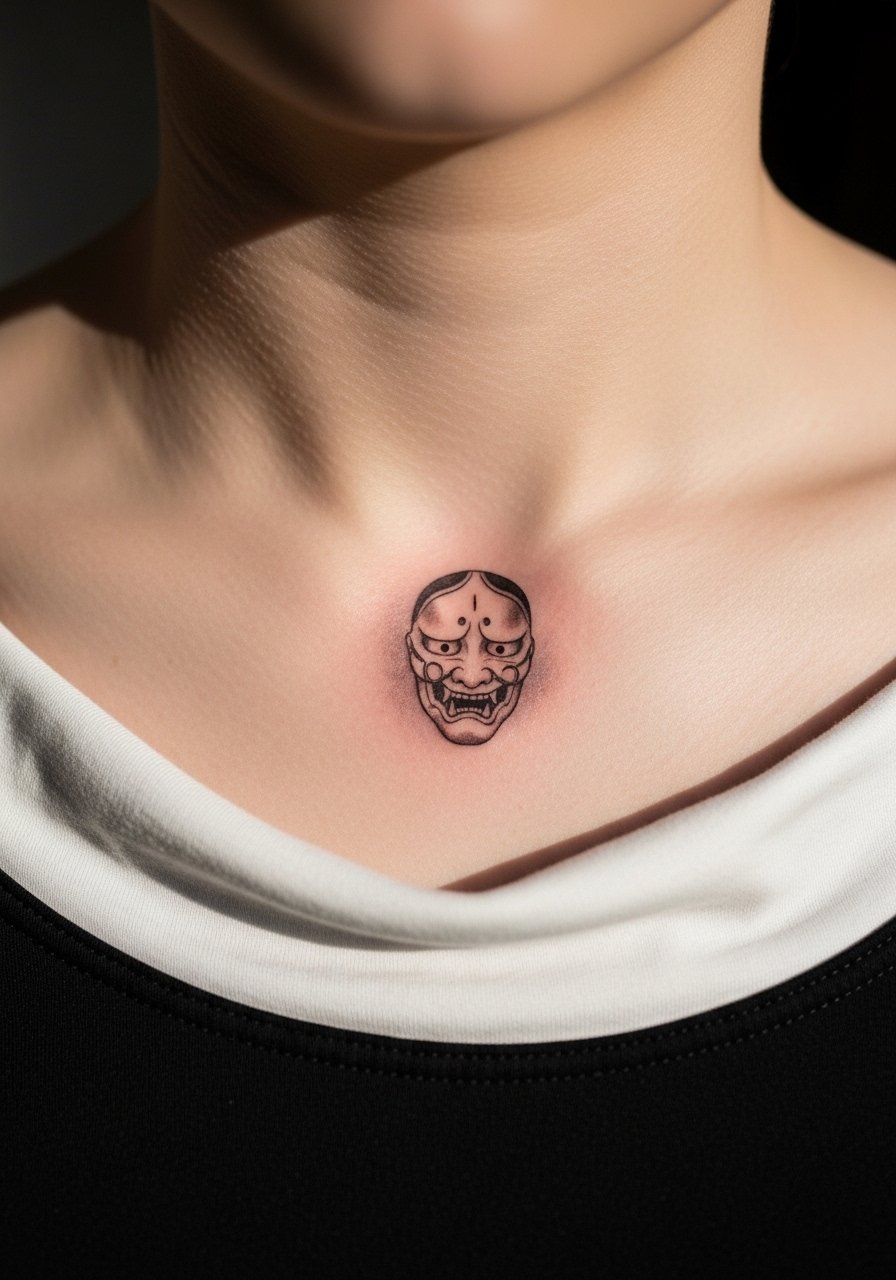
A clavicle Hannya in sepia tones ages gently and reads like a personal marking rather than a dramatic piece. The area sits nicely with single or two-session art and tends to keep its look if the artist spaces strokes appropriately. A common mistake is over-contrasting against the natural shadow of the collarbone. For revealing the piece, a thin chain pendant necklace can sit above the design and create a layered effect.
Frequently Asked Questions
Q: Will a soft Hannya mask tattoo lose its meaning if I tone down the horns and teeth?
A: Not necessarily. Softening elements can shift the piece from theatrical to personal without erasing the original symbolism. If the cultural meaning matters to you, discuss which attributes to keep and which to mute so the final design communicates what you intend.
Q: How soon can I wear regular clothing over a new chest or sternum Hannya without rubbing the area?
A: Aim to avoid tight fabrics over the area for the first week and choose loose tops for at least two weeks. For sternum work consider zip or button closures so you do not have to pull garments over your head during early healing. This reduces friction and minimizes scabbing disruption.
Q: Are finger and ankle Hannya tattoos worth it if I want longevity?
A: They work if you accept likely faster fading and plan for touch-ups. Fingers and ankles face constant washing and abrasion. A design using negative space and slightly heavier lineweight will last better, but plan on a maintenance touch-up at year one or two depending on wear.
Q: Is it disrespectful to get a Hannya mask if I do not have Japanese heritage?
A: Opinions split. One camp sees it as appropriation when cultural symbols are used without context. The other camp accepts respectful adaptation when the wearer understands and honors the symbol. If this is a concern, bring it into the consultation so the artist can propose design variations that acknowledge origin respectfully.
Q: What should I bring to my consultation to get the soft Hannya look I want?
A: Bring specific reference images of soft treatments, examples of healed work in similar tones, and notes on which elements you want to keep or remove. A small mood board helps an artist see the balance between mask structure and subtlety. If you plan a visible reveal, consider asking about wardrobe choices that highlight the placement, such as an open-back midi dress for shoulder work.
Q: How does skin tone affect color choice for a muted Hannya design?
A: Skin tone changes how pigments read once healed. Mid and dark tones often take muted colors differently than light skin. Ask to see healed photos of similar pigments on comparable skin, and prefer slightly higher contrast if you want the mask to remain legible at a distance.
Q: How often do soft Hannya pieces typically need touch-ups?
A: It depends on placement and pigment choices. Visible friction zones like hands and ankles usually need touch-ups earlier. For more protected areas like the shoulder blade or calf, touch-ups may be a few years out. Expect that fine detail will blur sooner than broader shapes.