Fine line leg sleeves look incredible in photos but they live in the real world. Trends push pale washes and whisper-thin stems, yet the pieces that still read clean after five years usually have deliberate spacing and controlled saturation. If you want a soft leg sleeve that stays readable, these ideas balance delicate shading with practical linework, and the first few entries show how to talk to an artist so the piece ages the way you hope.
1. Thigh-Bloom Floral Wrap
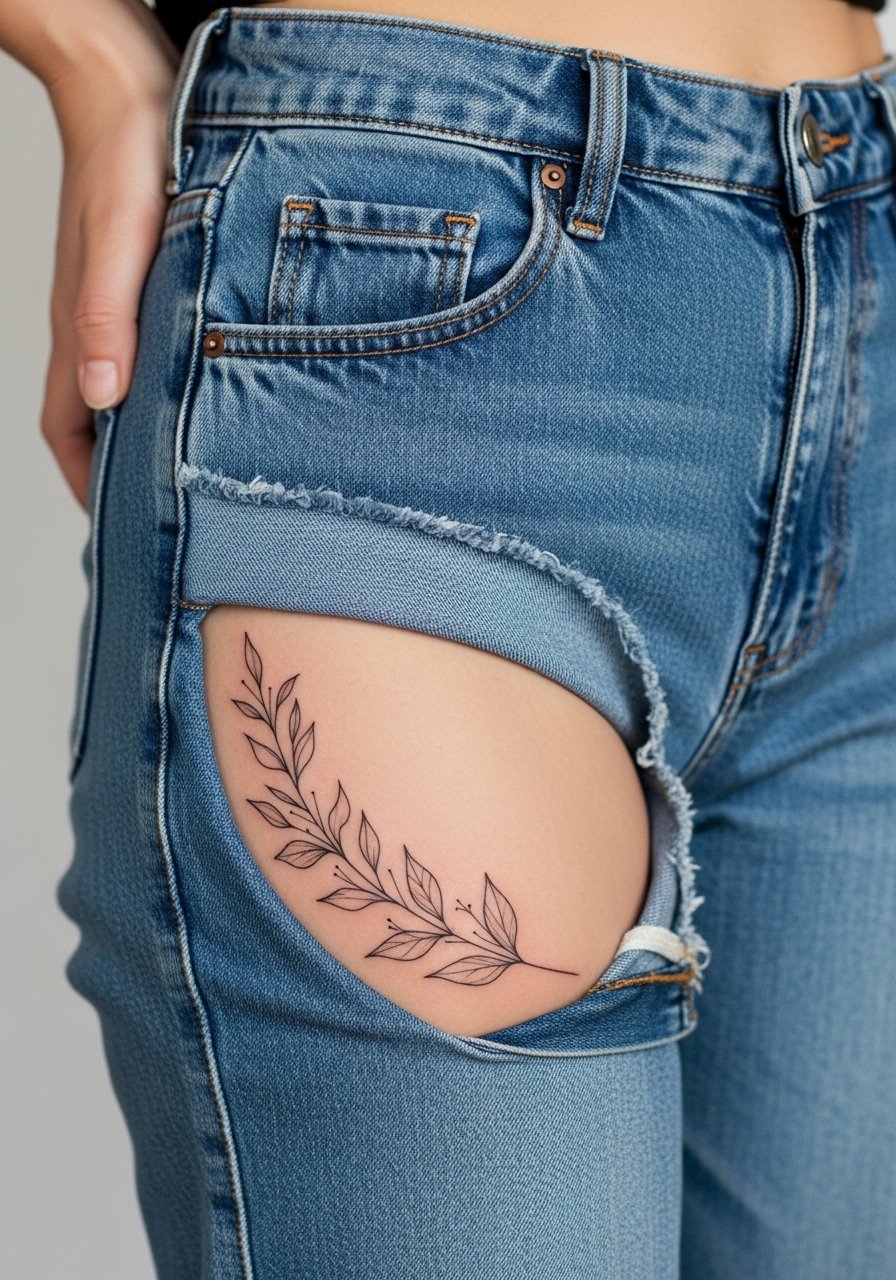
I recommend a thigh bloom wrap when you want coverage you can hide for work but show off in summer. Tell your artist you want interspersed negative space between petals so the design breathes as the skin moves. Common mistakes include packing too many tiny petals close together, which leads to blurring after a few years. Expect moderate pain for the inner thigh and upper sessions that can run two to three hours each. For the session wear, a pair of high-waisted denim shorts makes access simple and keeps you comfortable while the artist works.
2. Watercolor Meadow Half-Sleeve

Watercolor washes give a soft, painterly leg sleeve without heavy outlines. In consultation, ask for low-saturation color layers and stipple shading to anchor the pieces so they do not just wash away into a bruise-like look. There is a debate in the community about watercolor longevity. One camp says these washes need frequent touch-ups because pigment sits superficially. The other camp argues careful layering and controlled saturation make them last. The practical route is to plan for touch-ups at year two to three if you want the same vibrancy. Wear a loose drawstring linen pant to the appointment so the artist can roll the leg up without pressure.
3. Fine Line Botanical Full Thigh Sleeve

Fine line on the thigh can read like jewelry when it is spaced correctly. Ask your artist for slightly varied line weights and controlled saturation in shadowed areas so the piece keeps depth as it heals. A common version that ages poorly has uniform ultra-thin lines shoved together. That creates merging after a couple of years. Expect lower pain than ribs but more than the calf, with session times around two to three hours. For showing it off, a slip skirt or open-back midi dress pairs well and frames the upper leg without covering the flow.
4. Pastel Neo-Traditional Calf Panel
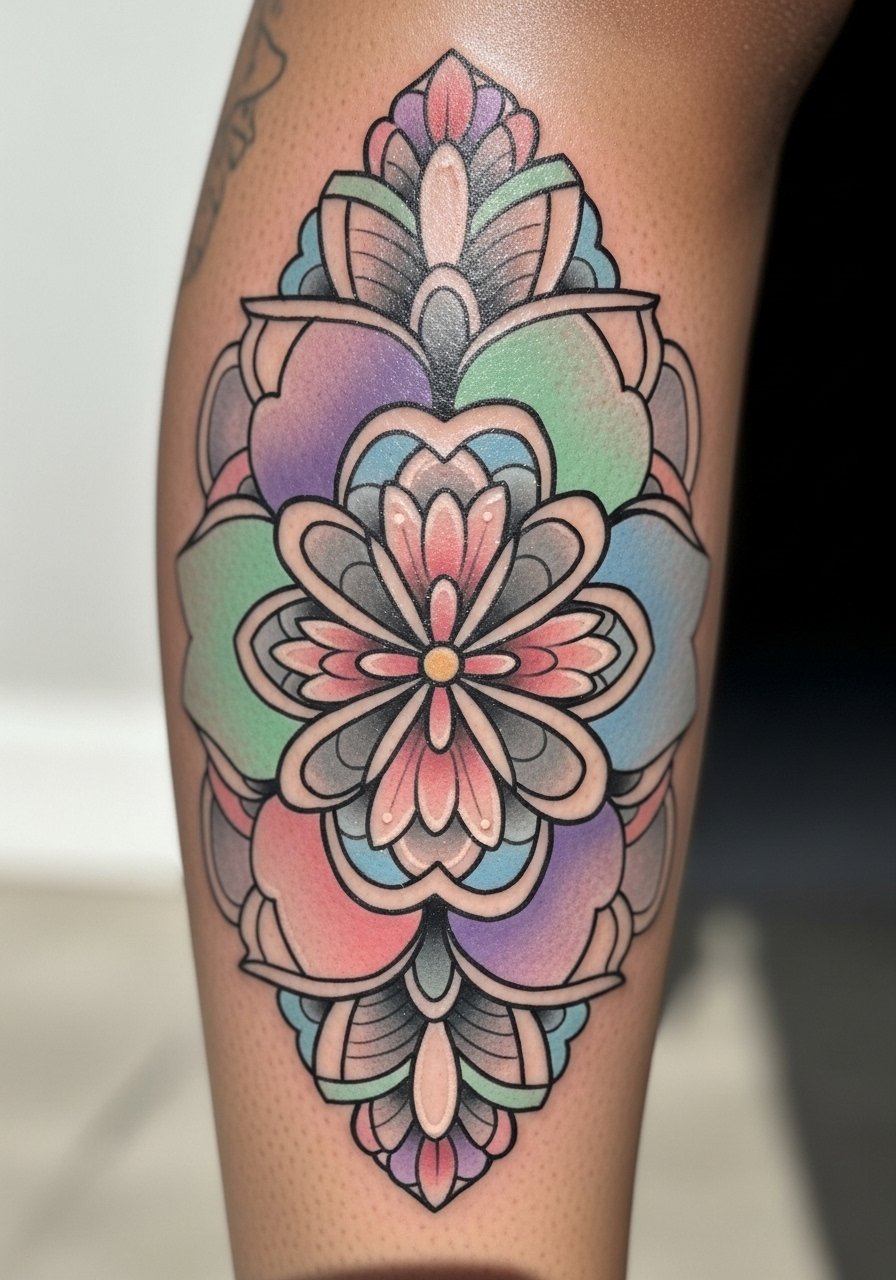
If you like color but want a gentle look, pastel neo-traditional keeps the silhouette readable by balancing softened outlines with modest saturation. Tell the artist you want the outlines slightly thicker than fine line, then ask for diluted pigment fills so the saturation sits below the skin surface. The biggest mistake is using pastels without a strong anchor, which leads to uneven fade. Calf sessions are tolerable for most people and often finish in a single three-hour sitting. Pair this with ankle boots or cropped trousers so the panel is framed at the right height.
5. Stippled Forest Wrap
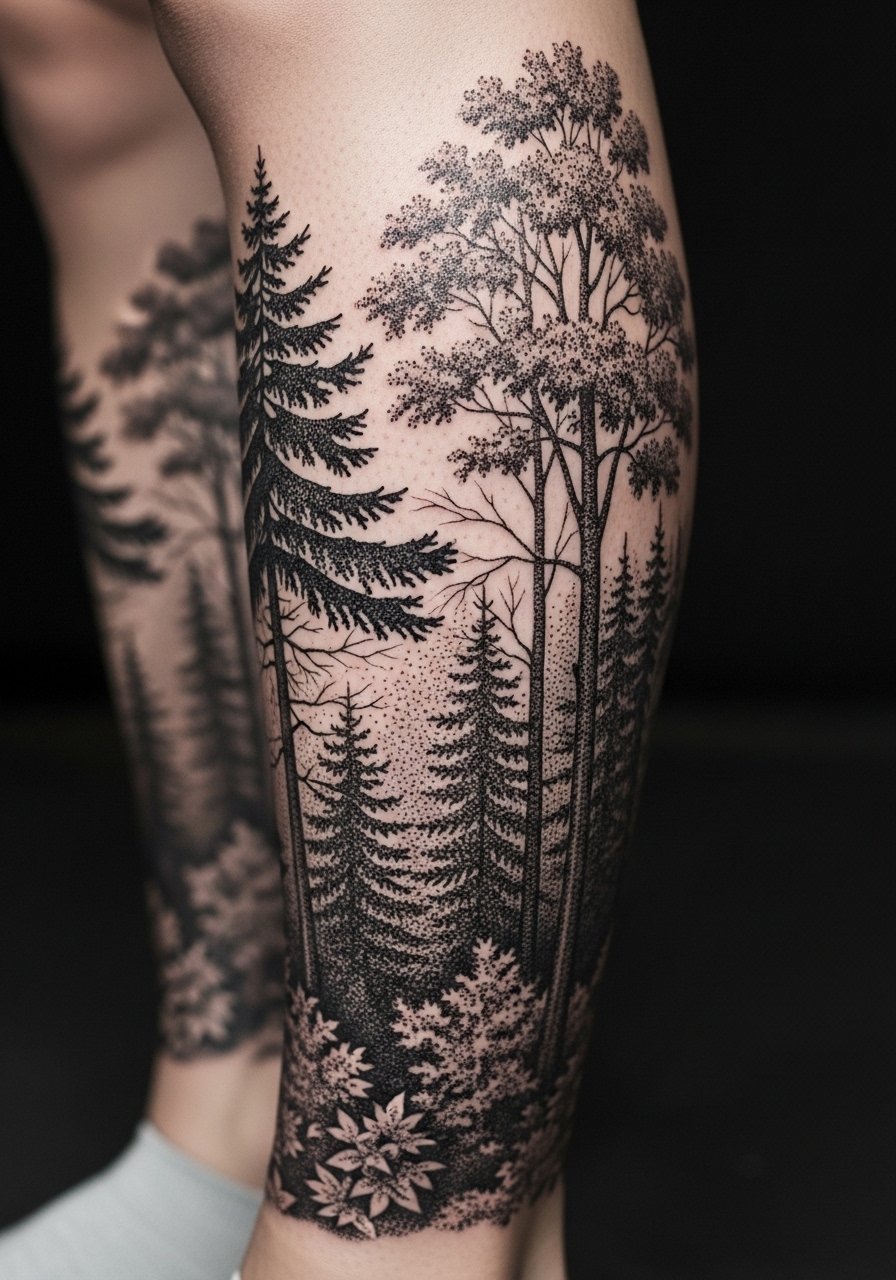
Dot work and stipple shading create a soft, textured leg sleeve that reads subtle from a distance. During the consult, ask for gradual density changes so silhouettes do not merge into solid black. A common mistake is starting the density too high near tight skin, which risks blowout on softer areas like the inner shin. Pain is variable around the shin and calf with the shin being higher on most scales. Expect multiple shorter sessions for dense stipple work and schedule touch-ups at year two for the darkest areas. For session comfort wear a loose button-down shirt you can pull aside if the work drifts up toward the hip.
6. Minimal Wave Line Lower-Leg Sleeve

A minimalist wave band is low-key but elegant for a lower-leg sleeve. Say you want long, continuous linework with breathing room between turns to avoid crowded junctions. The mistake is making turns too tight, which causes the line to thicken and lose elegance as it heals. Expect lower pain near the ankle but more sensitivity on the bone. Sessions are short, often under 90 minutes. For showing it off wear cropped trousers or sandals that draw the eye to ankle placement.
Pre-Session Essentials
The thigh, calf, and lower-leg pieces above require different prep, and these items smooth the studio day and the first week of healing.
-
Stencil transfer paper kit. Lets you preview placement on skin, especially useful for wrap pieces and bands so you can confirm scale before ink goes in.
-
Topical numbing cream. Applied as directed before sessions that hit the inner thigh or shin to reduce discomfort for longer sittings.
-
Thin protective film roll. Helps protect lower leg and ankle pieces from friction during the first days of movement and shoe wear.
-
Fragrance-free gentle body wash. Mild cleansing without stripping pigment supports soft washes and fine line healing.
-
Aquaphor healing ointment. Thin layers in the earliest window keep delicate linework moisturized without clogging the needle channels, especially on thinner skin zones.
7. Soft Irezumi-Inspired Leg Panel
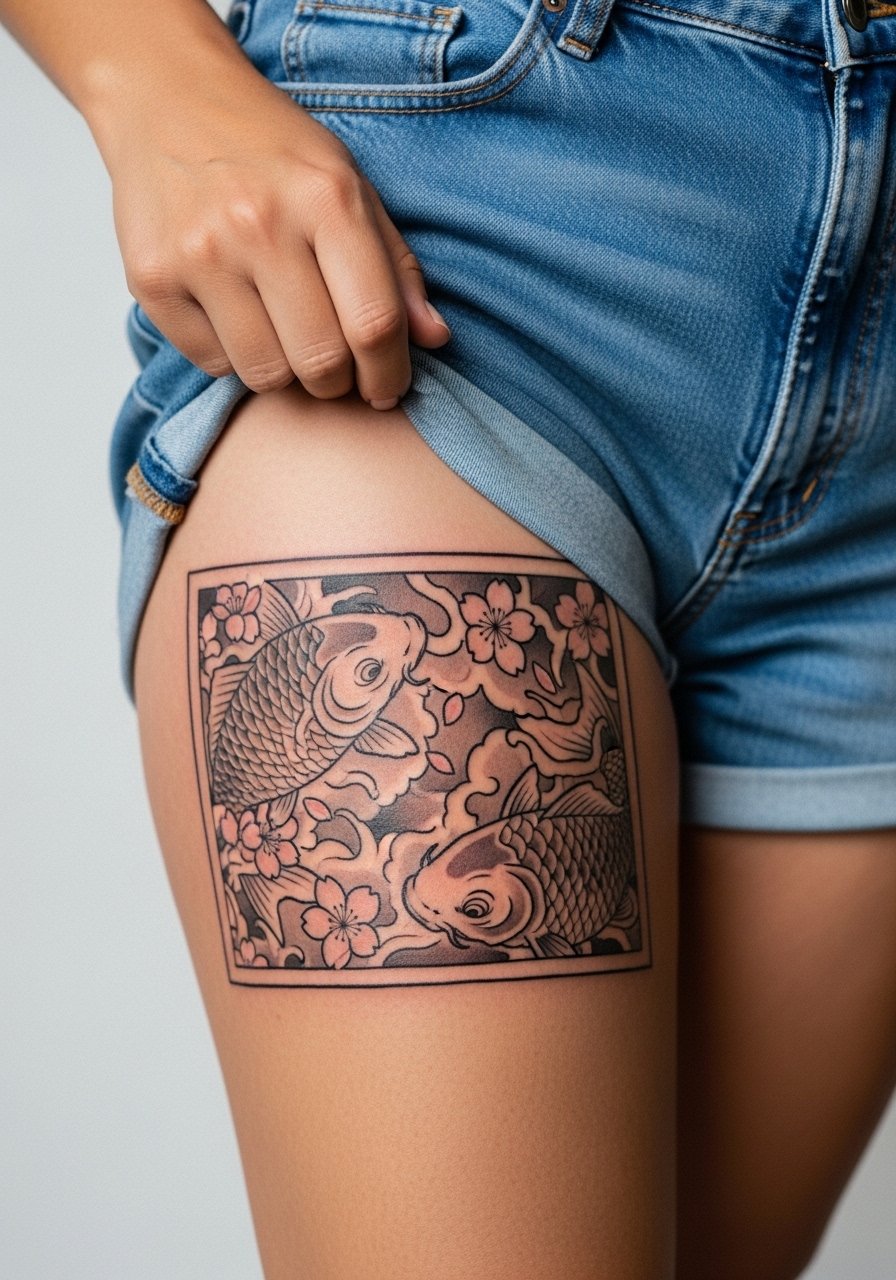
Soft Irezumi borrows the flow and placement of traditional motifs while dialing down saturation for a gentler look. Ask your artist to keep the scales and petal edges distinct with open negative space that prevents heavy merging over time. A common error is compressing too many motifs into a small band, which reduces clarity as the piece ages. Thigh placement means moderate pain and multi-session planning. For showing this style, an open-back midi dress or high-waisted shorts frames the panels well.
8. Lace Band and Filigree Thigh Sleeve

Lace and filigree read like wearable adornment for leg sleeves. Tell your artist you want negative space inside trims for longevity and to avoid tiny dense dots in the lace that blur. The mistake is replicating a lace fabric exactly; real lace has gaps that translate into better aging on skin. Thigh lace is less painful than ribs and often fits into one or two sessions depending on coverage. Pair this design with a bandeau top or high-cut swimwear when showing it off so the filigree sits against clean lines.
9. Cloud and Moon Gradient Sleeve
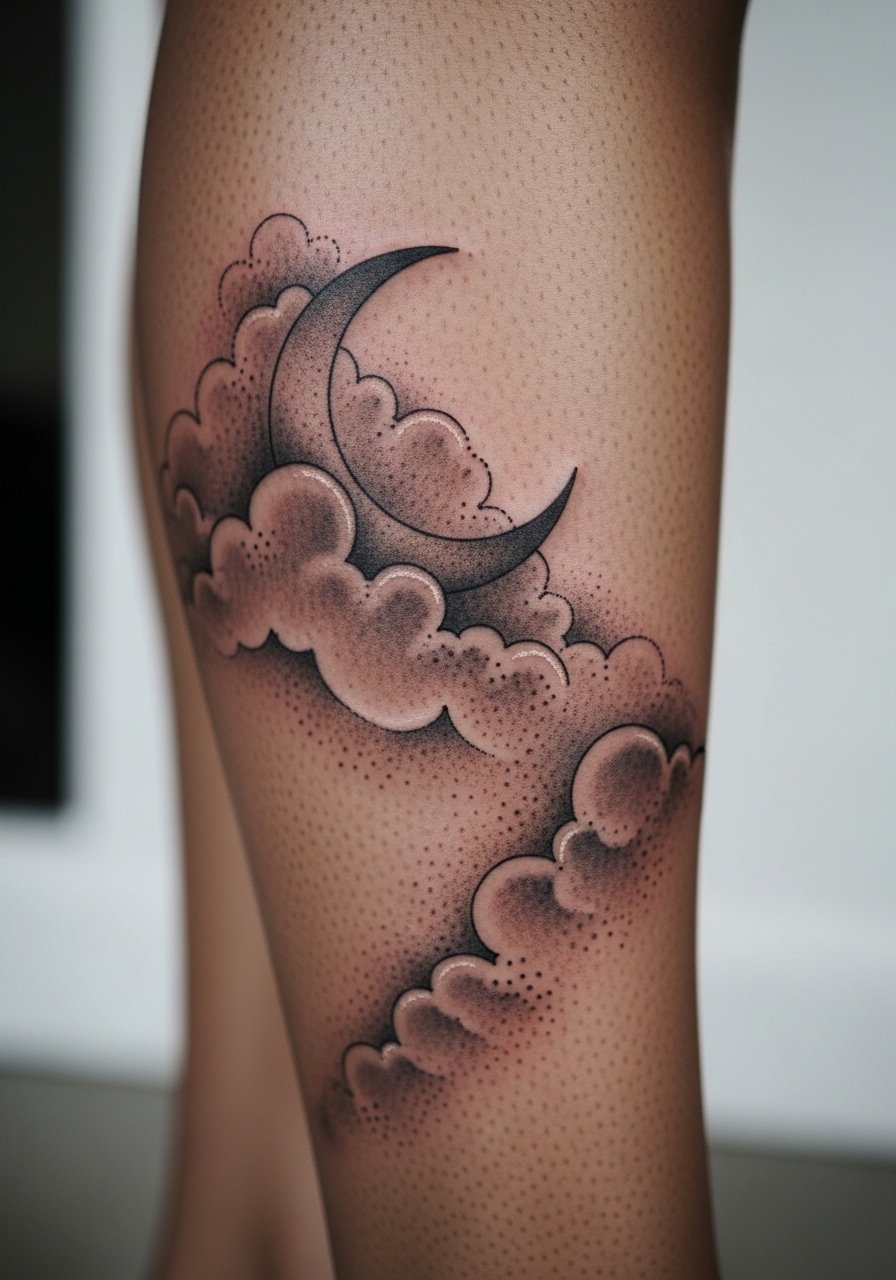
A celestial gradient uses low-contrast gray washes and dot highlights for a weightless look. During consultation request layered gray washes with a stipple highlight over edges to maintain depth without heavy outlines. One pitfall is going too close to pure white highlights that vanish on darker skin tones. Expect variable pain across shin and calf and plan two shorter sessions rather than a single long one. For evenings pair the piece with a slip skirt that shows the leg movement and lets the gradient read in motion.
10. Soft Geometric Mandala Flow
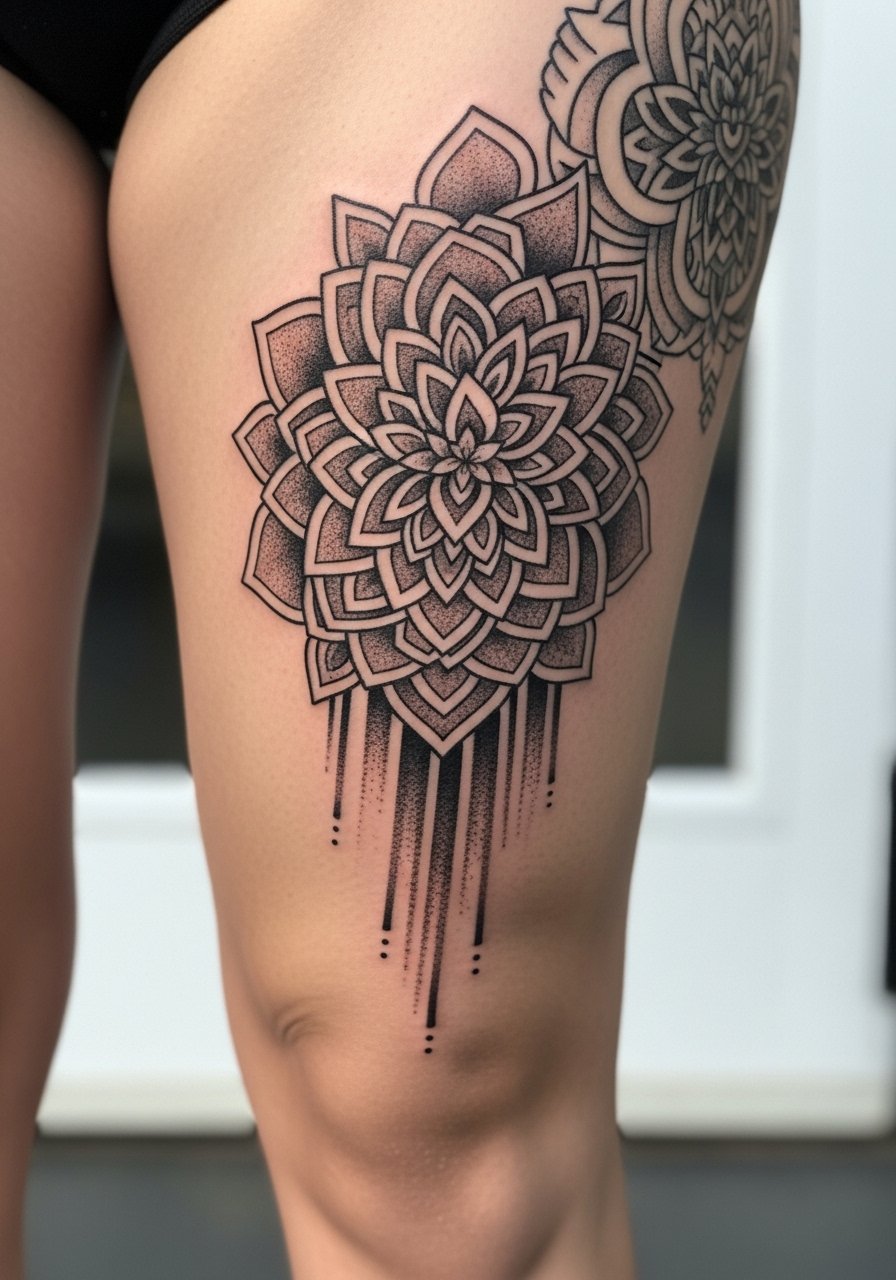
Mandala elements can anchor a soft leg sleeve when you ask for open geometry and controlled negative space. Tell your artist to scale inner shapes larger than they might draw on paper so the dense centers have room to breathe. A usual mistake is compressing too many concentric rings into a small radius. Thigh geometry typically needs precise stencil placement and moderate session length. For show-off outfits, try an open-back midi dress or a high-cut short to keep attention on the pattern.
11. Serpent and Peony Gentle Contrast
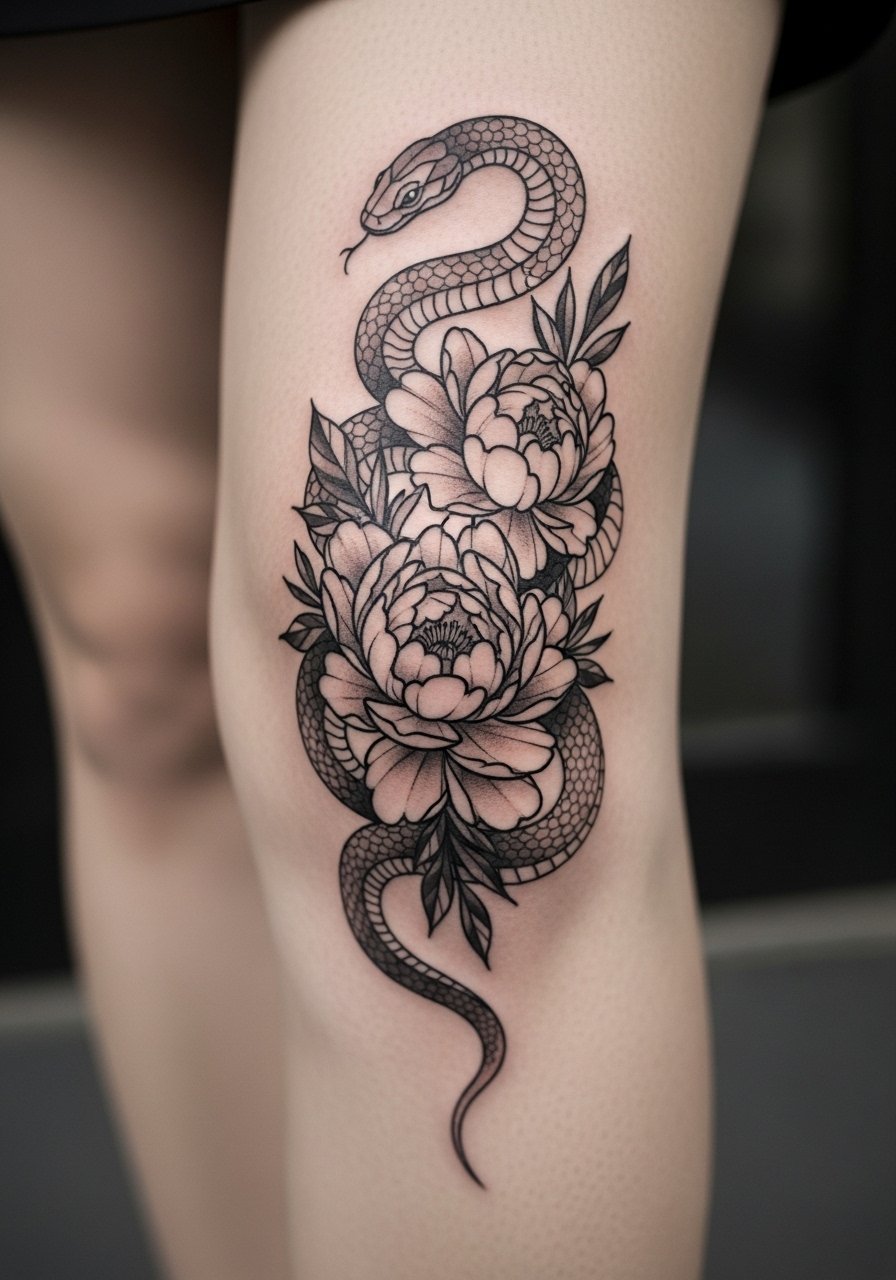
A serpent winding through peonies offers movement without heavy black fields when done in softer tones. Request the serpent scales be suggested with light shading rather than solid fills to avoid over-saturation in tight curves. The common mistake is making the snake too thin in parts, which can break the silhouette as skin shifts. Knee work can be more painful and may require shorter sittings. Pair this with cropped trousers or ankle boots that let the wrap be visible when you want it to be.
12. Micro-Realism Memory Band
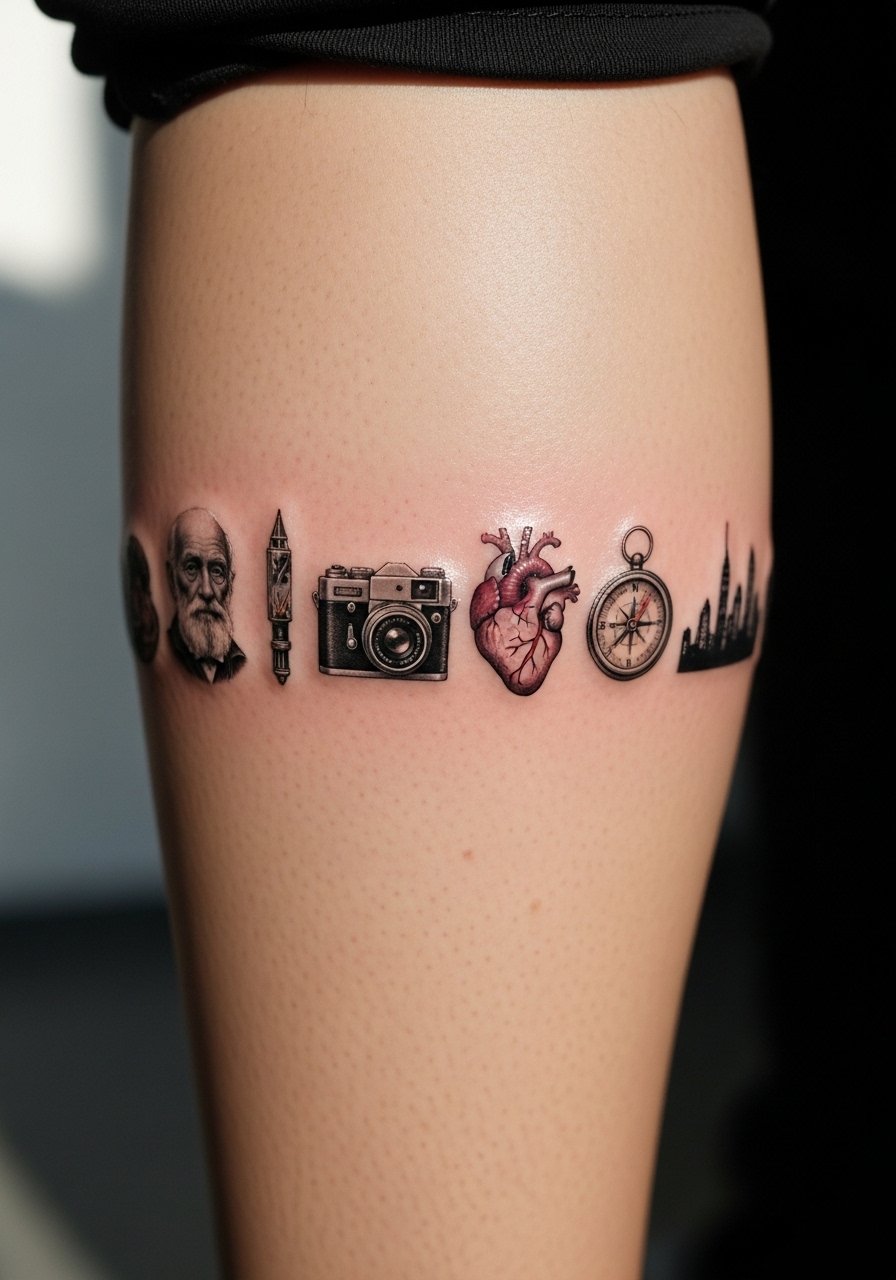
Micro-realism on the leg can be unexpectedly durable if the elements are sized to skin movement. Tell your artist to scale facial features slightly larger than a photo reference so eyes and mouths do not blur into smudges. A typical mistake is compressing a portrait into too small a zone, which requires touch-ups sooner. Calf portraits are less prone to stretch than thighs, and sessions often run two to three hours. For session day, wear a loose drawstring linen pant so the artist can access the area comfortably without pressure.
13. Wildflower Patchwork Leg Sleeve
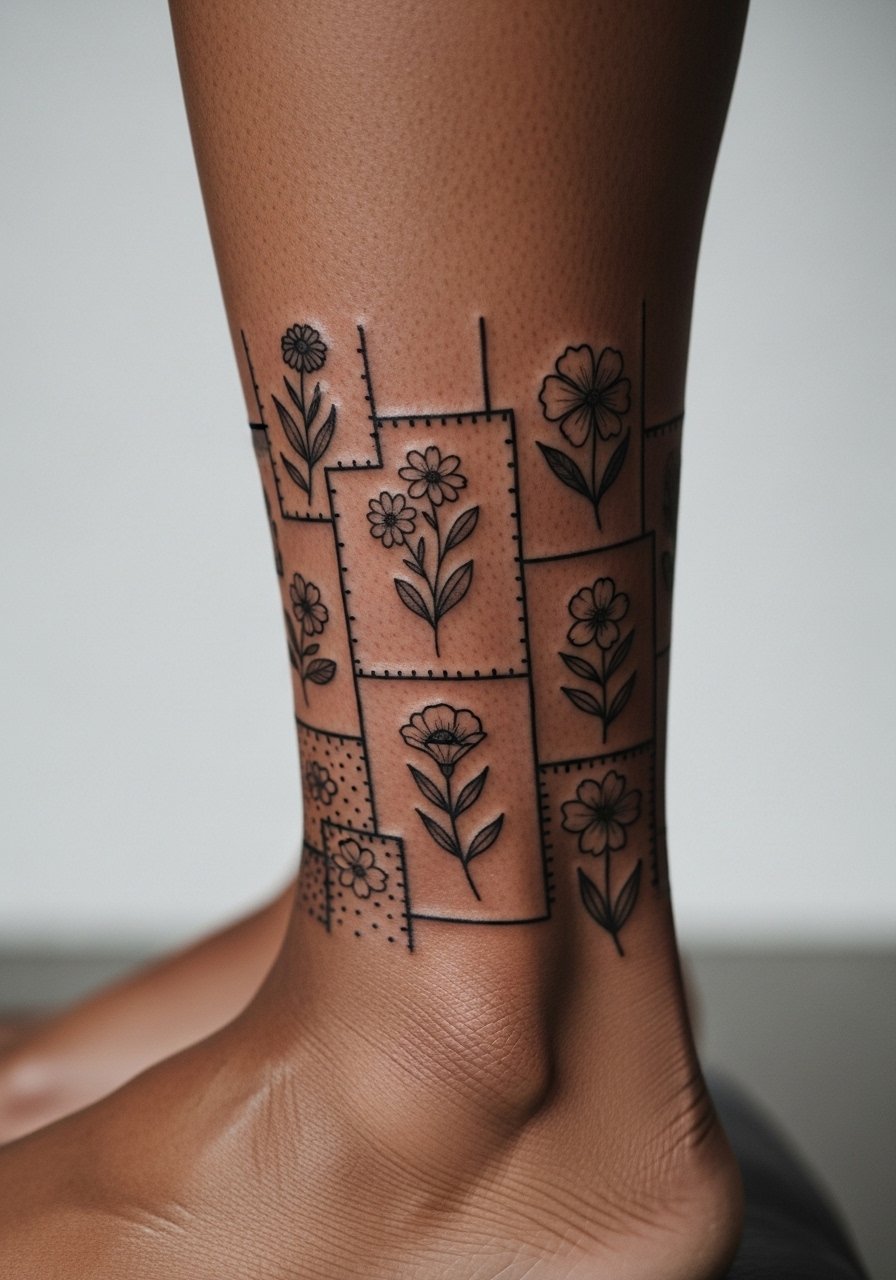
Patchwork sleeves made of small linked wildflowers let you build a softer sleeve over multiple sessions. Ask for space between motifs and varied stem directions so elements remain distinct as you add more. A common error is tightly packing flash-style pieces too soon, which creates a muddled look later. Ankle pieces experience high friction from socks and shoes, so plan protective measures in the first week. Show it off with rolled jeans or sandals that let each patch read independently.
14. Abstract Brushstroke Gradient
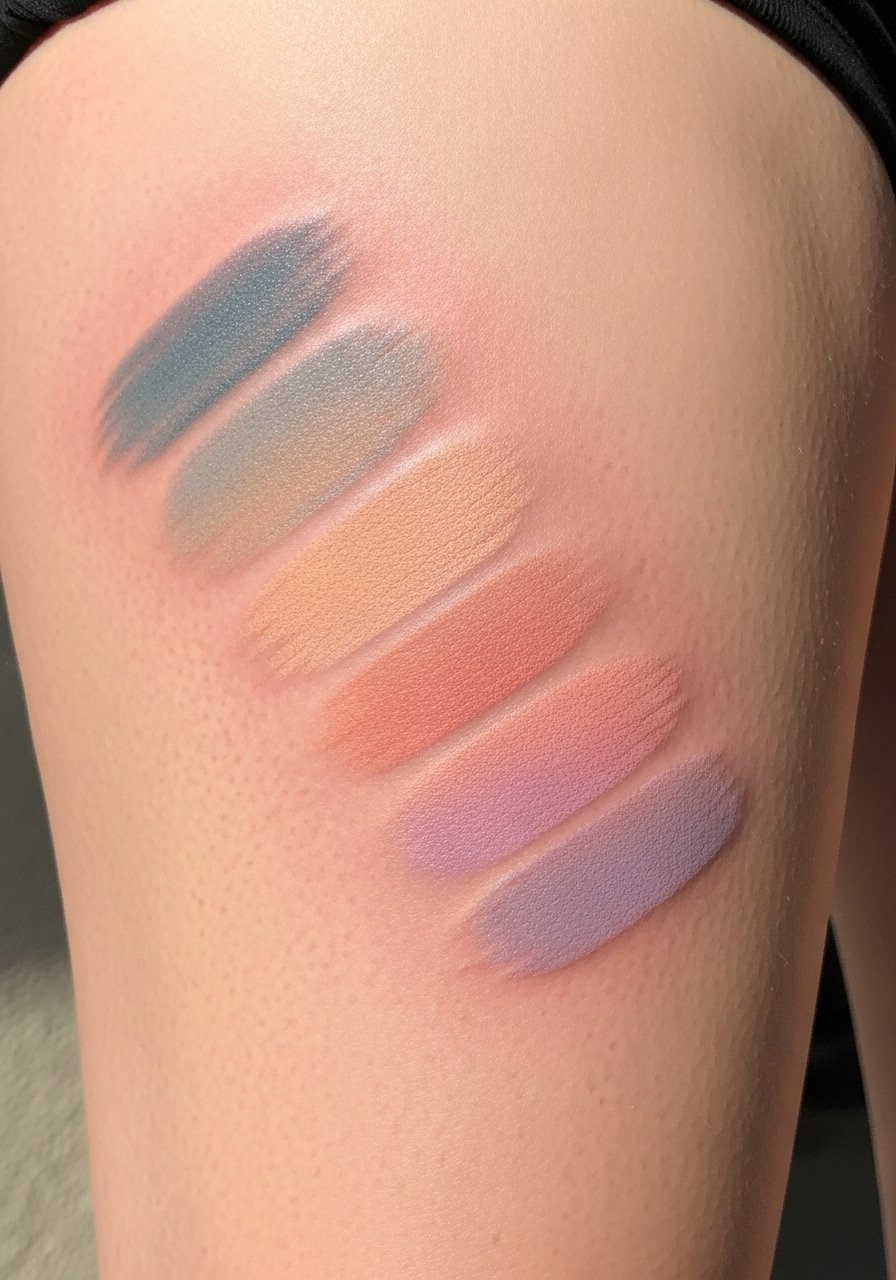
Brushstroke gradients feel organic and modern with minimal linework. During your consult, ask for intentional breaks in strokes so pigment does not form continuous heavy bands that age into darker blocks. The mistake is treating brushstrokes like solid fields of color rather than layered washes. Thigh work allows for larger canvas and comfortable longer sits. For showing the movement, try a wrap skirt that flows against the strokes and reveals how the piece changes with motion.
15. Silhouette Animal Wrap
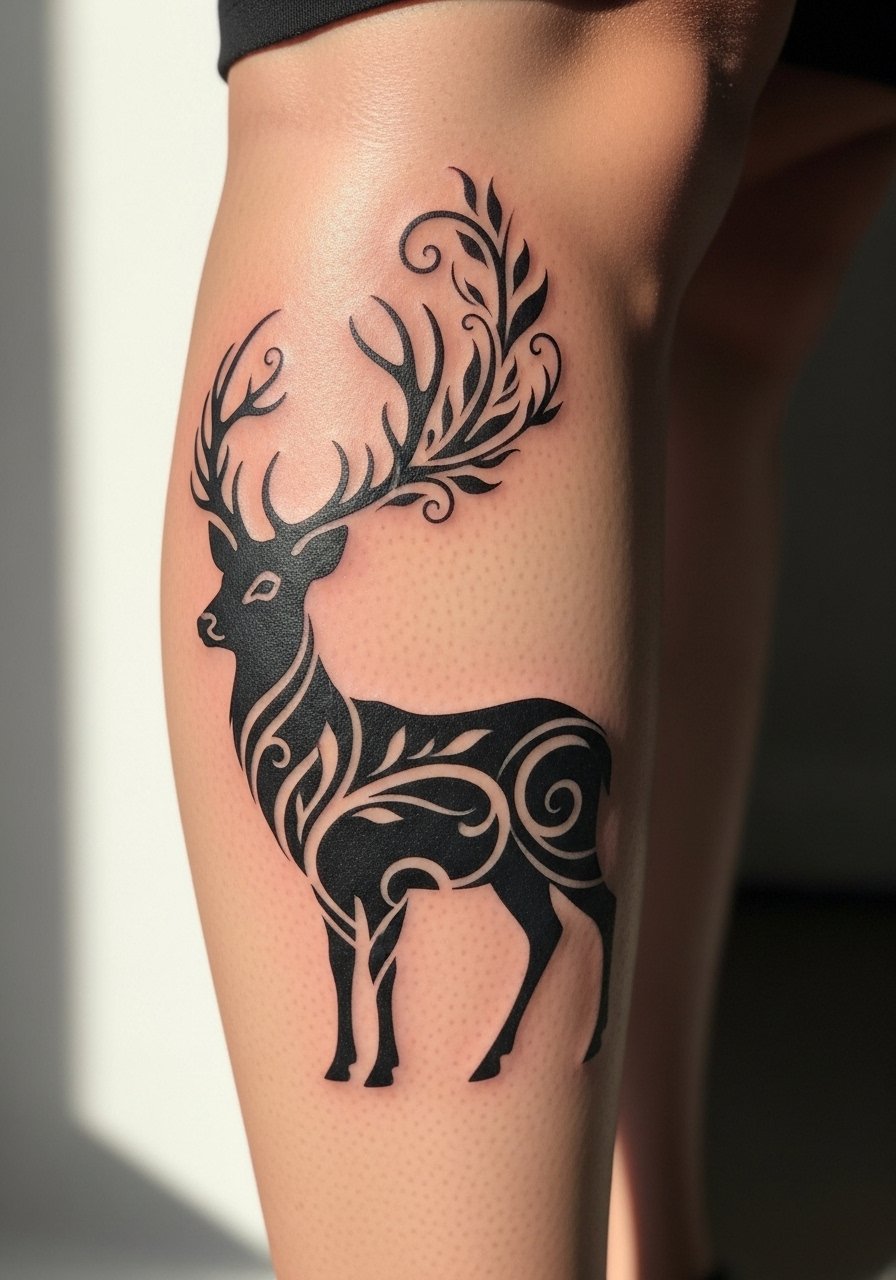
Silhouette wraps read simply but effectively when you want a soft statement. Tell the artist to use slightly softer edges and to avoid full solid fills in small areas to prevent heavy fade lines. A common error is using too much solid black in narrow spaces which later cracks visually. Calf silhouette pieces are quick and often done in under two hours. For casual show-off, pair the wrap with cropped denim shorts so the silhouette sits at the right height.
16. Ribbon Script Band Around Thigh
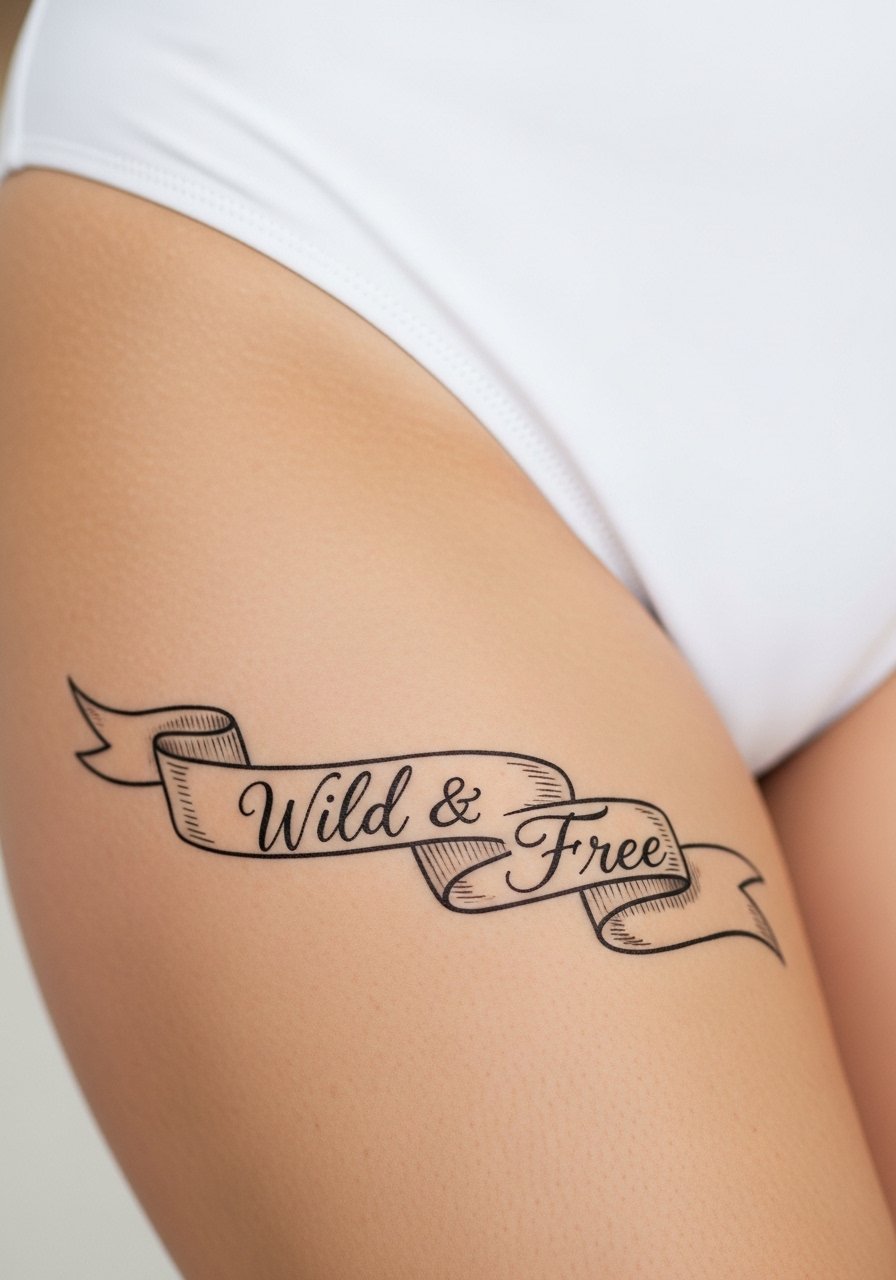
A ribbon script band reads soft and intimate on the thigh when letter spacing and weight are carefully planned. Ask the artist to kern letters slightly more than on paper and to use modest line weight for longer phrases. The mistake is packing long quotes into a narrow band which forces letters too small. Thigh script is moderately painful and often sits well for multi-line ribbons. For showing it off, a bandeau top and high-waisted bottom keeps attention on the wrap without competing silhouettes.
17. Celestial Dotwork Leg Sleeve

Dotwork can create a gentle cosmic sleeve with subtle gradation. Ask the artist for varied dot density and measured transitions to avoid sudden solid areas. One mistake is packing dots too densely near joints, which can lead to smudging with movement. Expect more time in a dotwork session since the technique is meticulous. For evenings, pair the piece with a slip skirt that reveals the lower leg and lets the starfield read in motion.
18. Art Nouveau Vines and Faces Flow
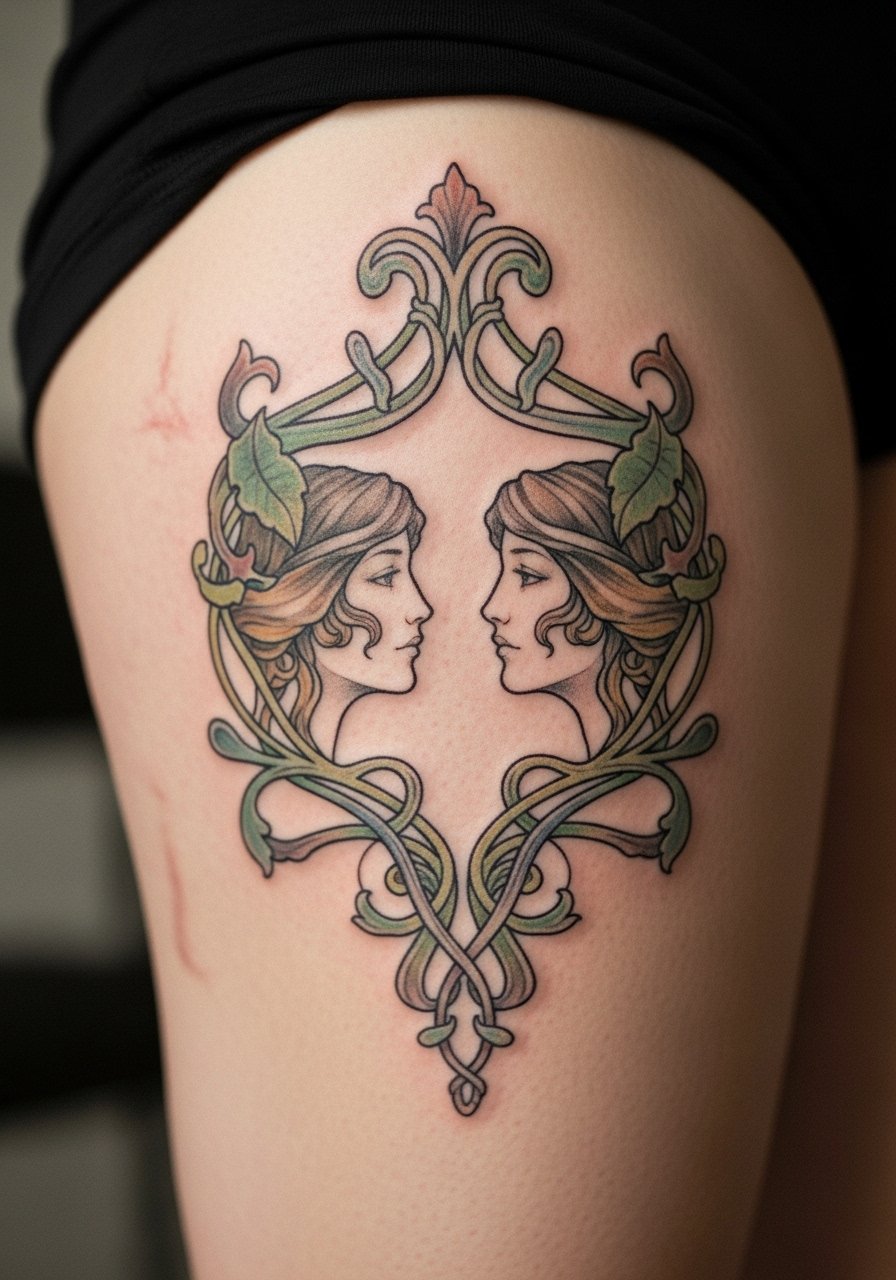
Art Nouveau motifs translate to legs when the composition follows body curves. Tell the artist you want the faces scaled to the thigh's plane and vines spaced to avoid dense knotting. A common mistake is forcing symmetrical patterns onto an asymmetrical body surface. Thigh placement allows longer sessions with fewer seams. For show-off looks, an open-back midi dress or a skirt with a side slit frames the flowing vines.
19. Botanical Ankle-to-Knee Vine
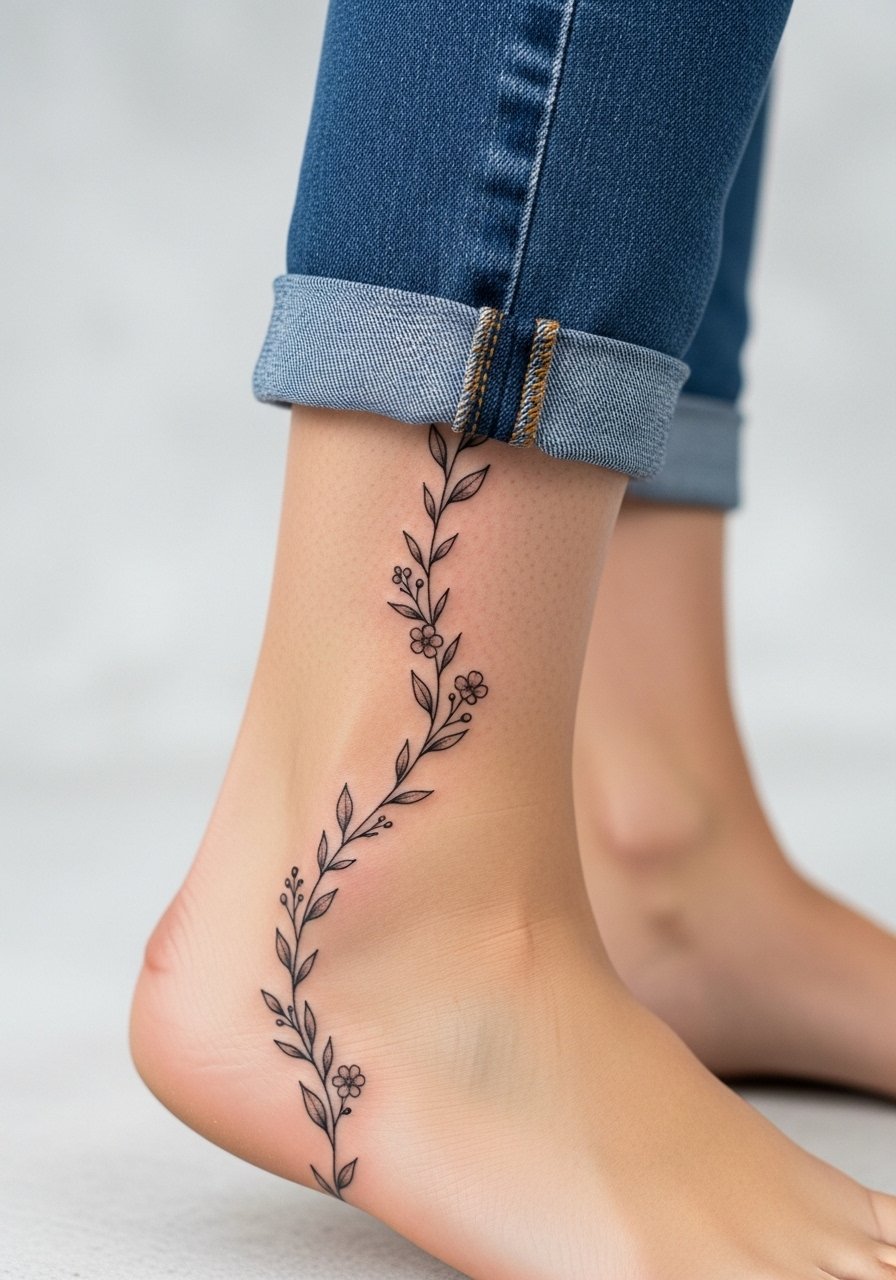
A continuous vine from ankle to knee creates a soft sleeve that reads elongated and elegant. Ask the artist to stagger bloom sizes and to keep leaf clusters sparse near joints to avoid blending. The mistake is making repetitive identical leaves which age into a patternless block. Pain varies from ankle to behind the knee and you should expect shorter sessions near sensitive spots. For daily wear show-off, cropped jeans or racerback tank tops paired with rolled pants help frame the vine without covering it.
20. Soft Blackwork Gradient Calf
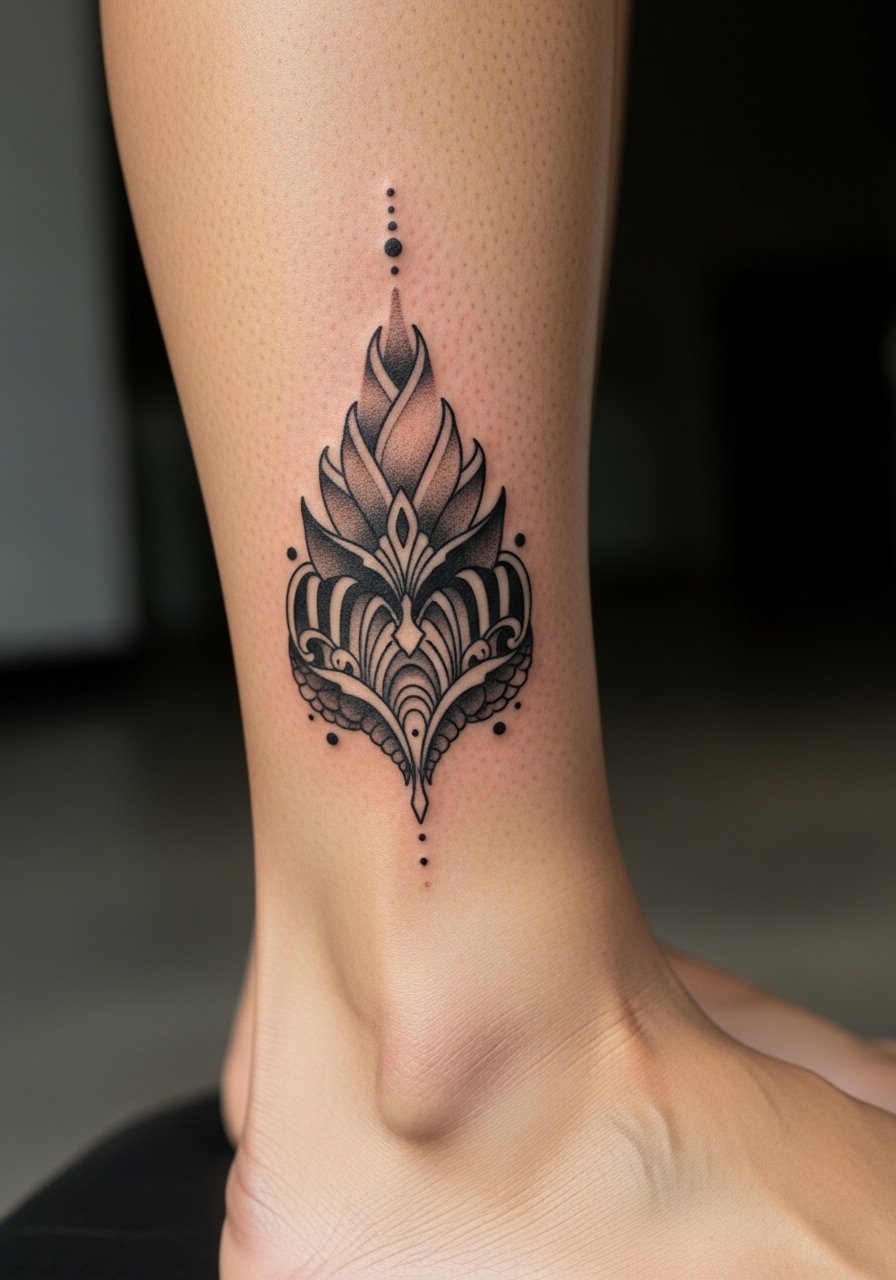
Soft blackwork gradients read bold yet gentle when the saturation transitions are smooth and planned. Tell your artist you want feathered edges to avoid hard lines where the gradient should fade. One mistake is abrupt transitions that become obvious as contrast fades with time. Calf gradients often finish in one to two sessions and need touch-ups at the darkest junctions. For a streamlined look pair the piece with cropped trousers that let the gradient show at ankle level.
21. Patchwork Memory Sleeve

A memory patchwork sleeve lets you add elements over years while keeping a soft overall look. When planning, ask the artist to assign negative-space buffers between icons so the sleeve can expand without cramming. A common mistake is placing patches too close together in early sessions which forces awkward fills later. Pain and session time vary by placement across thigh and calf so plan with flexible appointments. For showing a collected sleeve, try a wrap skirt or cropped shorts that reveal how individual pieces interact across the leg.
Frequently Asked Questions
Q: Will fine line elements in a full leg sleeve blur into each other over time?
A: Fine line elements can merge if placed too close or if the skin in that area experiences a lot of friction. Spacing, slightly varied line weight, and modest saturation help keep detail readable. Expect that thin linework may need touch-ups around year three depending on placement and sun exposure.
Q: How should I dress for a long thigh session so I stay comfortable and give the artist access?
A: Wear loose bottoms like high-waisted denim shorts or drawstring linen pants that you can slide down a bit without getting fabric tight against the work. Layers that you can lift or move aside without needing to fully undress are best.
Q: Are watercolor leg sleeves worth it if I want low maintenance?
A: Watercolor looks soft but often requires more maintenance than muted blackwork. If you want lower upkeep, ask the artist to build subtle anchors with light stippling or thin outlines so the composition keeps definition as color fades.
Q: How often do calf and ankle tattoos need touch-ups compared with thigh pieces?
A: Calf pieces generally need fewer touch-ups than ankle tattoos because ankles face more friction from shoes and socks. Thigh work can shift with weight changes so plan touch-ups around major body changes. Most soft pieces show noticeable changes around year two to three if they are very light initially.
Q: How do I find an artist who understands soft, low-saturation leg sleeves without naming anyone?
A: Use portfolio filters on gallery sites, search hashtags that match your technique, and read recent convention lineups to find artists doing soft shading and stipple work. Book a consult and ask to see healed photos of similar placements so you know how their work ages.