Fine line floral pieces look gorgeous fresh, but what matters most is how they read in real life after years of sun, sleeves, and daily wear. The trick is choosing a scale and placement that keep petals readable without crowding the skin. Below are 17 delicate flower arm tattoo ideas that balance immediate appeal with how they actually heal and age, plus what to ask your artist in that first consultation.
1. Delicate Wildflower on Inner Forearm
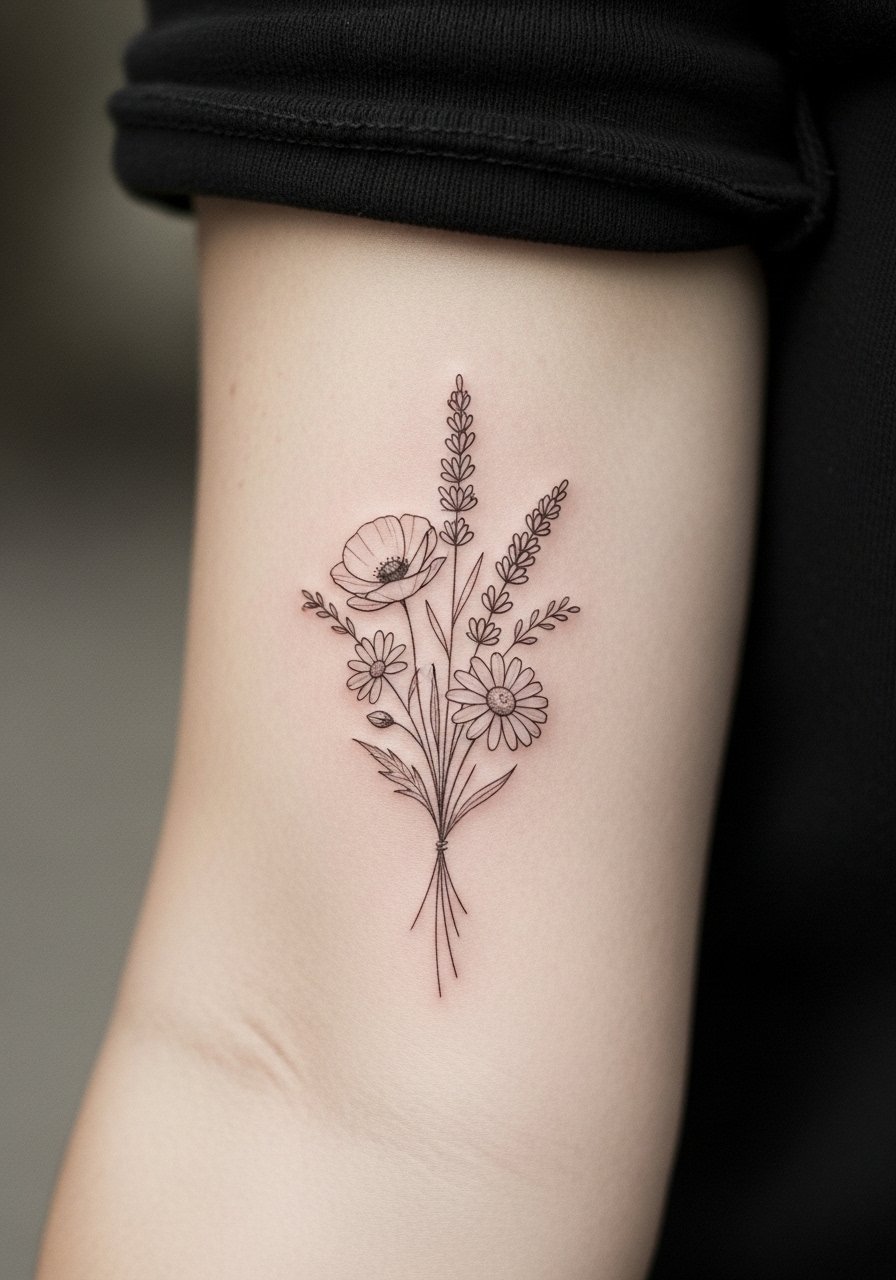
I recommend this when you want a readable piece that still reads quiet from a distance. Tell your artist you want slightly increased spacing between stems and a mix of single-needle linework with light stipple shading so the petals keep their shape as they soften over years. Fair warning, the biggest mistake is packing too many tiny blooms into a narrow strip. Pain is low to moderate and sessions often run under two hours. Expect the lines to crisp first six months, soften by year two, and need a touch-up around year three if you spend lots of time outdoors. For showing it off, rolled-up sleeves pair well with a loose linen button-down that frames the forearm without hiding the design.
2. Tiny Daisy Cluster Near the Wrist
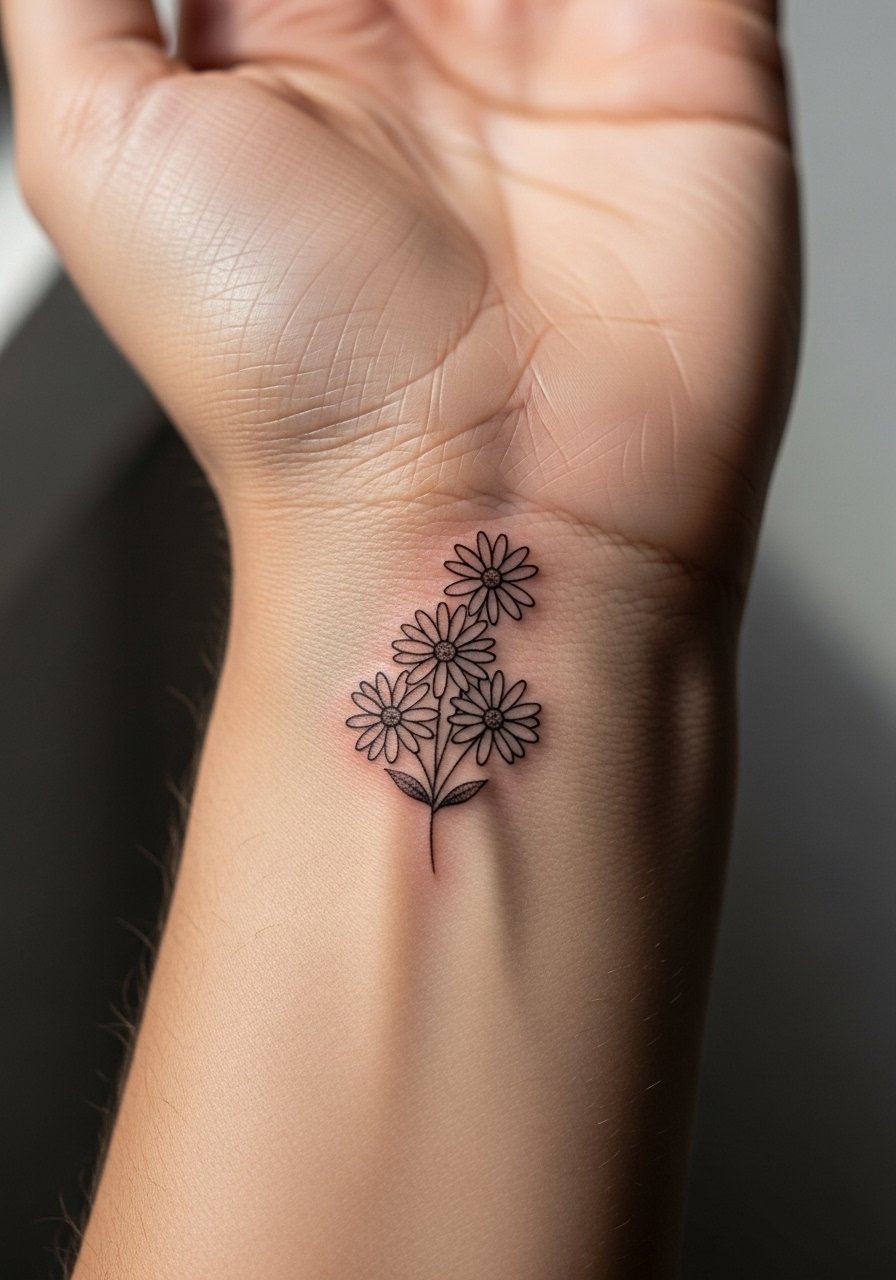
Wrist placements are great for small floral accents that catch attention when you gesticulate. Tell the artist to keep negative space between petals and avoid ultra-fine single-needle hairlines that vanish into motion over time. This spot is higher on a pain scale than the forearm and tolerates very short sessions, often under an hour. Blowout risk is higher here because the skin is thin, so heavier line weight around the petal edges helps longevity. For daytime wear, a minimalist watch or a few thin bracelets looks intentional without covering the work. Try pairing with a thin chain bracelet to complement the scale.
3. Single Stem Rose on Outer Bicep
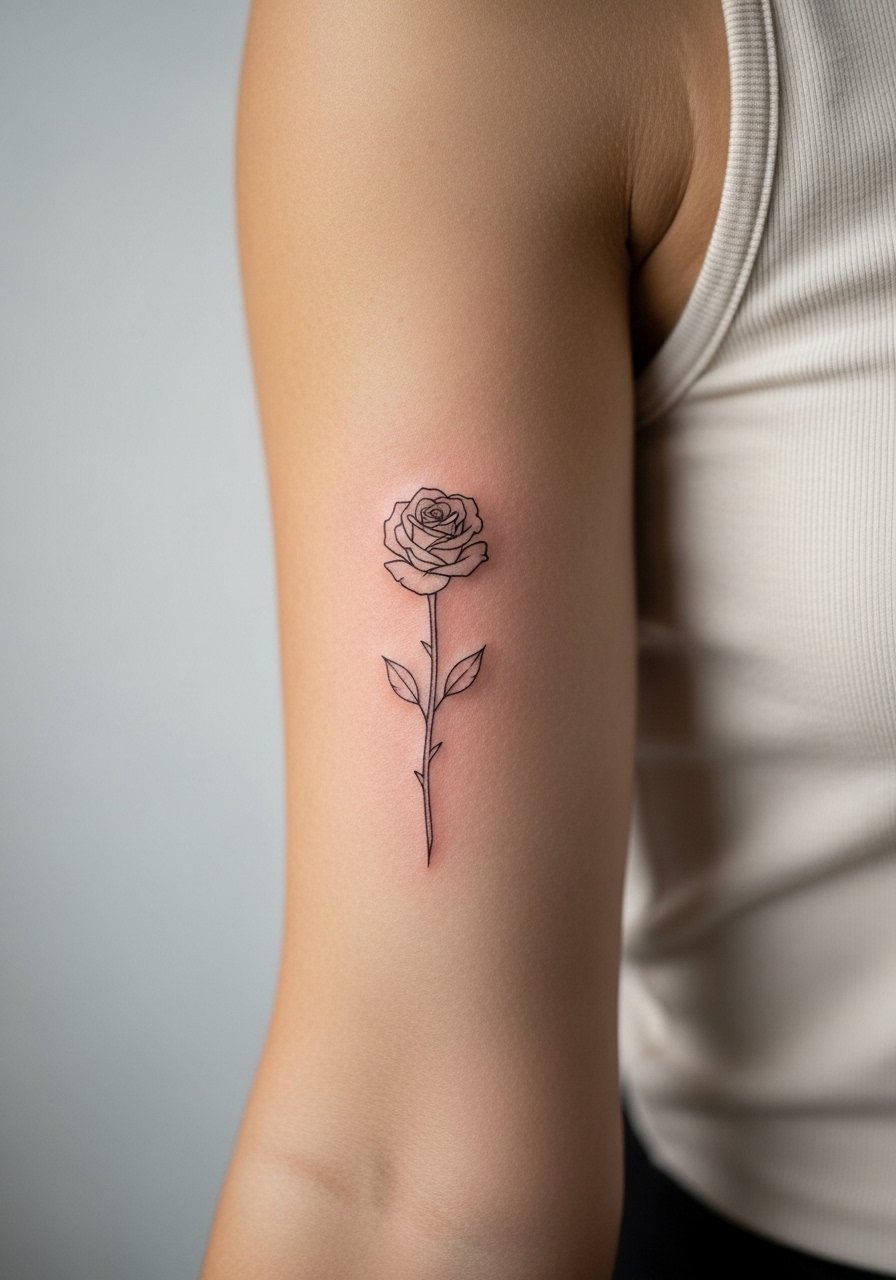
The outer bicep gives room for a rose that breathes and avoids crowding. In consultation ask for a mix of clean linework and subtle stipple shading to keep the bloom readable when the muscle moves. This placement is forgiving on aging because the skin sees less friction than the forearm. Sessions are comfortable and often split into one to two sittings depending on detail. A common mistake is adding heavy fill to small roses, which loses the delicate character and calls for touch-ups. For the session wear a loose tank top so the artist can access the area without you feeling exposed.
4. Tiny Ankle Blossom with Stem
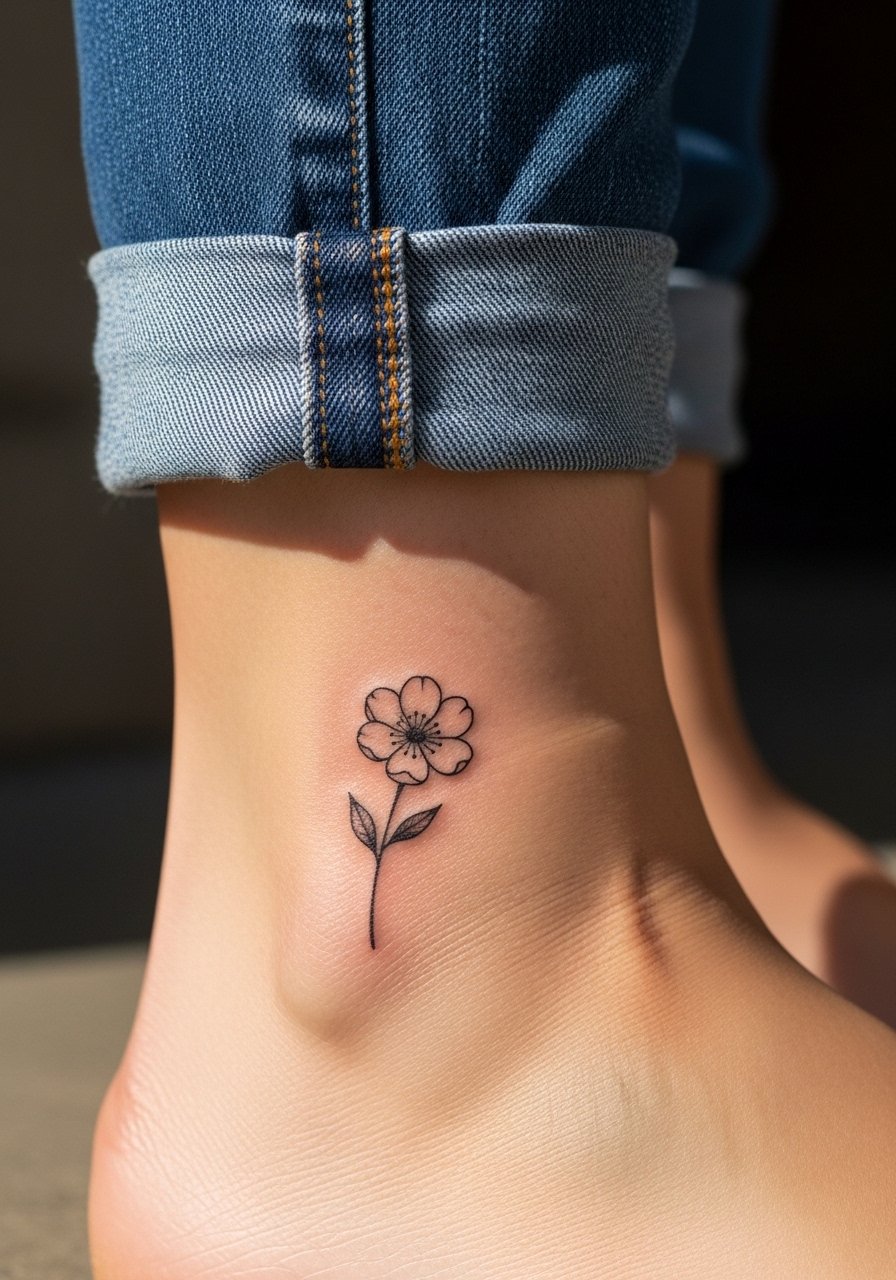
Ankle tattoos read as subtle accents when sized correctly. The skin here moves a lot and rubs against socks and shoes, so pick a design with a durable outline and minimal internal linework. Sessions are short and the area can sting more than the forearm. Expect the lines to require touch-up sooner if you wear low-cut shoes daily. A common error is asking for ultra-fine details that will blur from friction. For showing this piece, cropped jeans or a summer sandal look frames the design. Consider pairing with soft suede ankle boots when you want the blossom to peek out.
5. Tiny Florals Along the Inner Wrist
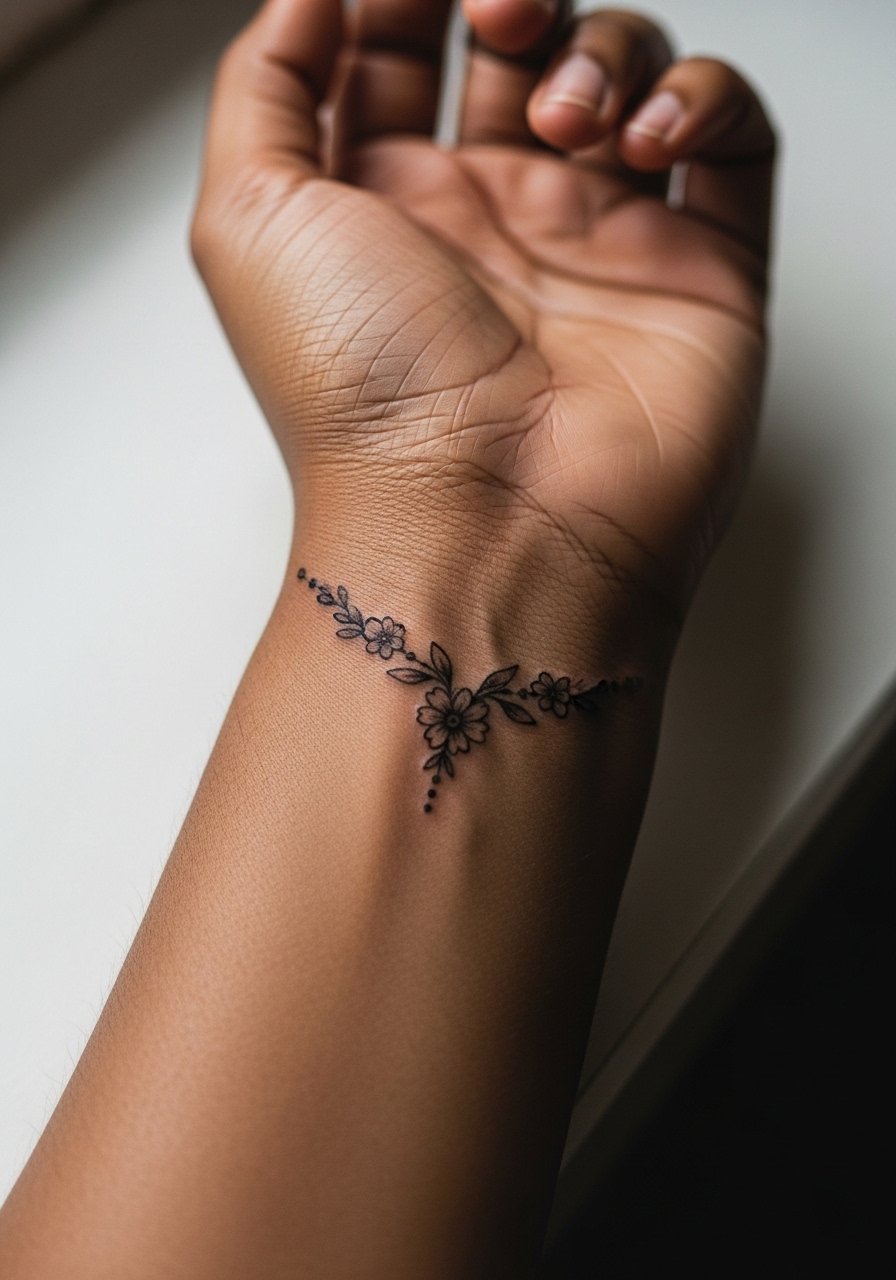
Inner wrist work reads like jewelry when scaled right. Ask your artist for slightly bolder outer linework with delicate interior dot work so the design keeps its shape as the skin shifts. The wrist is high-contact, so a thin protective routine matters during healing. Sessions are quick but can be more sensitive than the forearm. A common mistake is insisting on ultra-thin script around tiny flowers, which competes with the linework. For a jewelry effect, stacked minimalist bracelets work well, try a delicate chain bracelet that complements without crowding.
6. Slim Botanical Band Around the Upper Arm
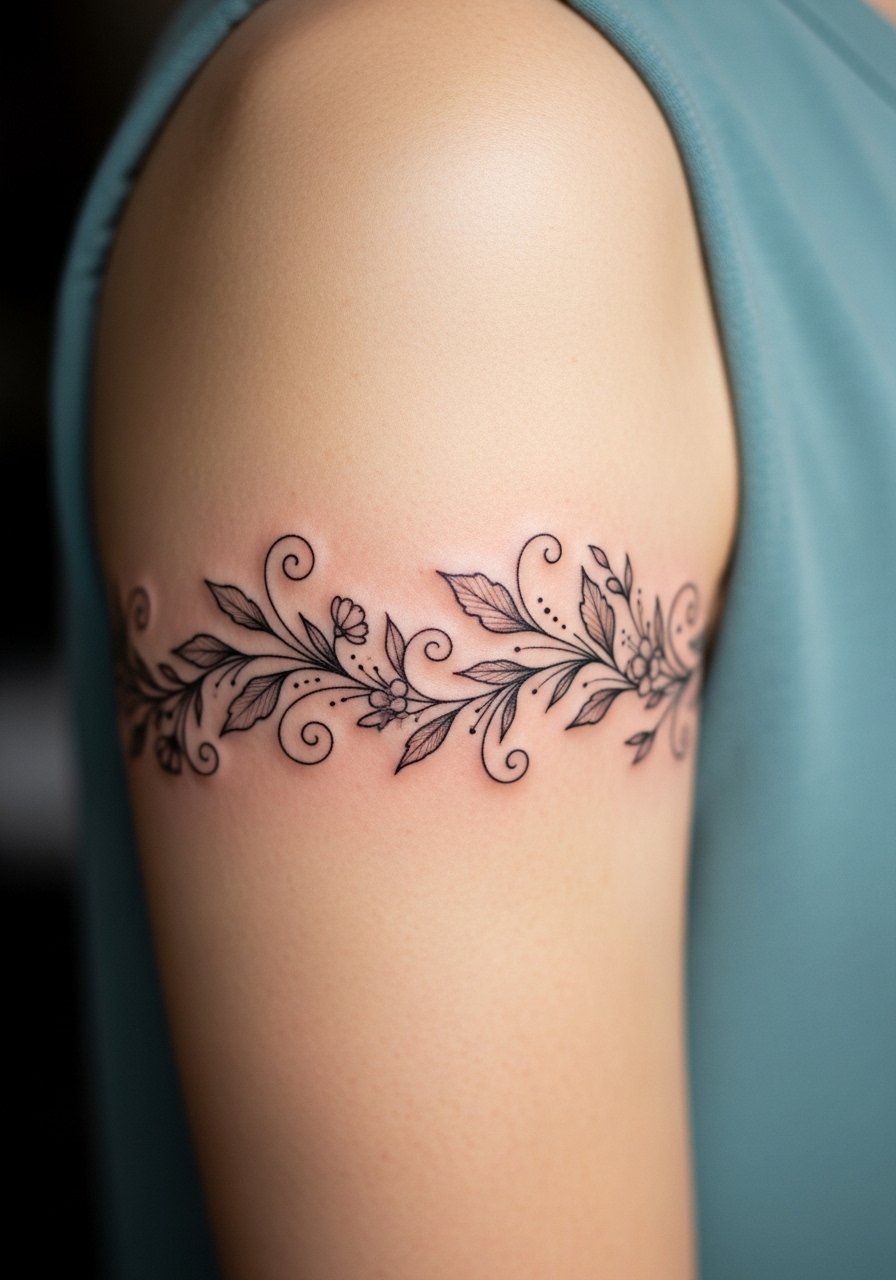
A wraparound botanical band is a low-commitment sleeve alternative that still reads cohesive. In a consultation mention you want consistent negative space around each stem to avoid merging as the piece ages. Expect moderate discomfort if the band sits near the inner biceps. The session can take two to three hours depending on circumference. The key mistake is making the band too tight with tiny elements that merge into blotches over a few years. For show-off outfits, sleeveless tops highlight the band. Pair it with a simple cuff bracelet to balance the arm visually.
Pre-Session Essentials
The wrist and inner-arm ideas above heal differently from larger bicep pieces, so a few small items smooth the session and the first week.
-
Stencil transfer paper kit. Lets you preview placement on skin before the needle touches, which is handy for the wrist and band pieces above.
-
Topical numbing cream. Applied as directed before the appointment eases sharp wrist sensitivity without changing linework.
-
Thin protective film roll. Protects wrist and ankle tattoos from friction during the highest infection risk days.
-
Fragrance-free gentle body wash. Cleanses healing skin without irritating delicate fine line work.
-
Aquaphor healing ointment. Thin layers the first couple of days lock in moisture for crisp lines without clogging.
7. Single Line Poppy Along the Outer Forearm
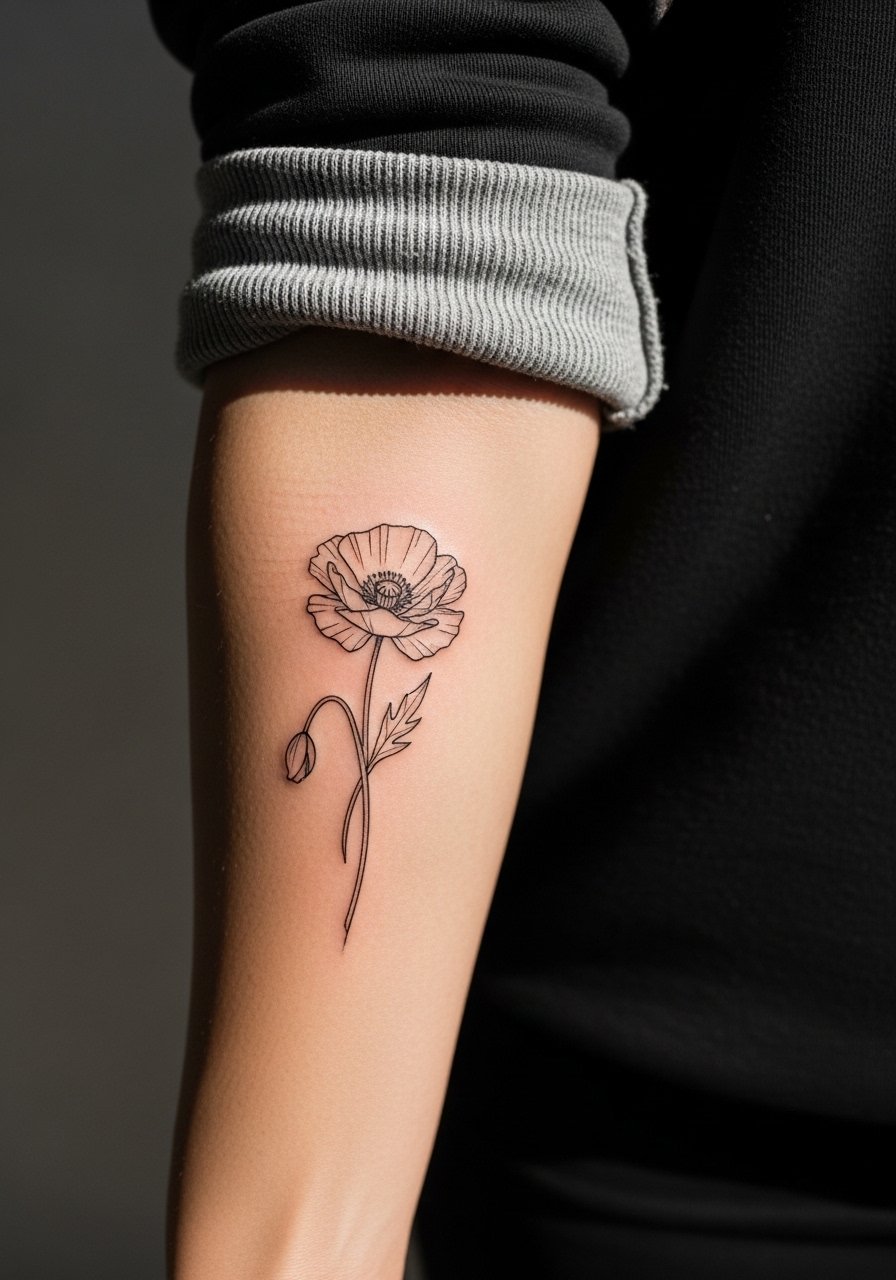
This design is about bold contour with minimal interior detail. Ask your artist to use a steady line weight and avoid tiny internal shading that will soften quickly. The outer forearm is forgiving and ages better than inner areas, so bold outlines help the poppy retain shape for years. Sessions are moderate and usually under two hours. A common mistake is asking for overly intricate veins in a small petal, which becomes indistinct. For casual wear, roll your sleeves or use a three-quarter linen shirt to frame the artwork without covering it completely.
8. Cluster of Mini Anemones on the Upper Forearm

Upper forearm clusters let you mix scale so each bloom keeps its identity. In the consult, specify a clear hierarchy of sizes so the largest bloom anchors the design and smaller ones fill negative space. Aging is kinder here because the area sees moderate sun exposure but little friction. Sessions can run longer, often two hours or more for proper composition. People often pack too many tiny fillers which later look muddy. This spot pairs well with a rolled cuff or a short-sleeve tee. Consider adding a casual rolled-sleeve tee to let the cluster peek out.
9. Micro-Realism Single Peony on the Inner Arm

Inner-arm micro-realism shows off texture but demands careful expectation setting. Tell the artist you want moderate contrast and avoid ultra-tiny stippling that fills in. There is a real debate about fine micro-realism here. One camp says inner-arm skin stretches and blurs tiny detail within two years. The other camp argues that with measured depth and slightly larger negative space, the piece holds well. Ask your artist which approach they use and why. Pain here is moderate to high for some. Sessions often take longer because shading must be layered. For the appointment wear a loose tank top so the artist can access the area cleanly.
10. Side-Band of Small Flowers Near the Elbow
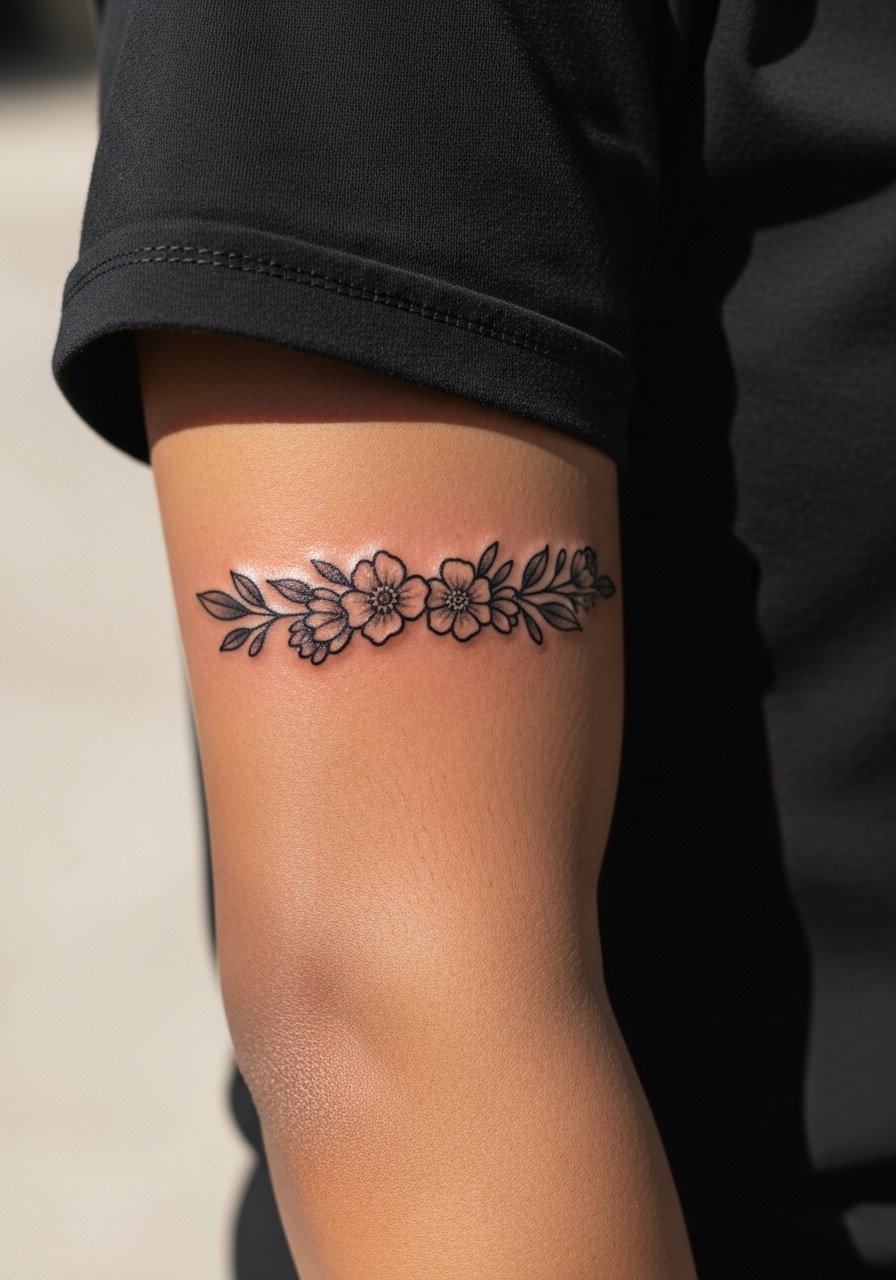
Elbow-adjacent work needs a design that accounts for bending and thicker skin. Ask for slightly heavier outer lines and reduced interior detail so the flowers stay legible when you flex. Pain spikes near the joint, so expect short breaks during the session. A common mistake is wrapping tiny motifs too close to the crease which causes distortion with repeated movement. Touch-ups are more likely at year two. For session comfort, wear a short-sleeve shirt you can pull aside without full exposure.
11. Single Line Botanical Along the Outer Wrist to Hand
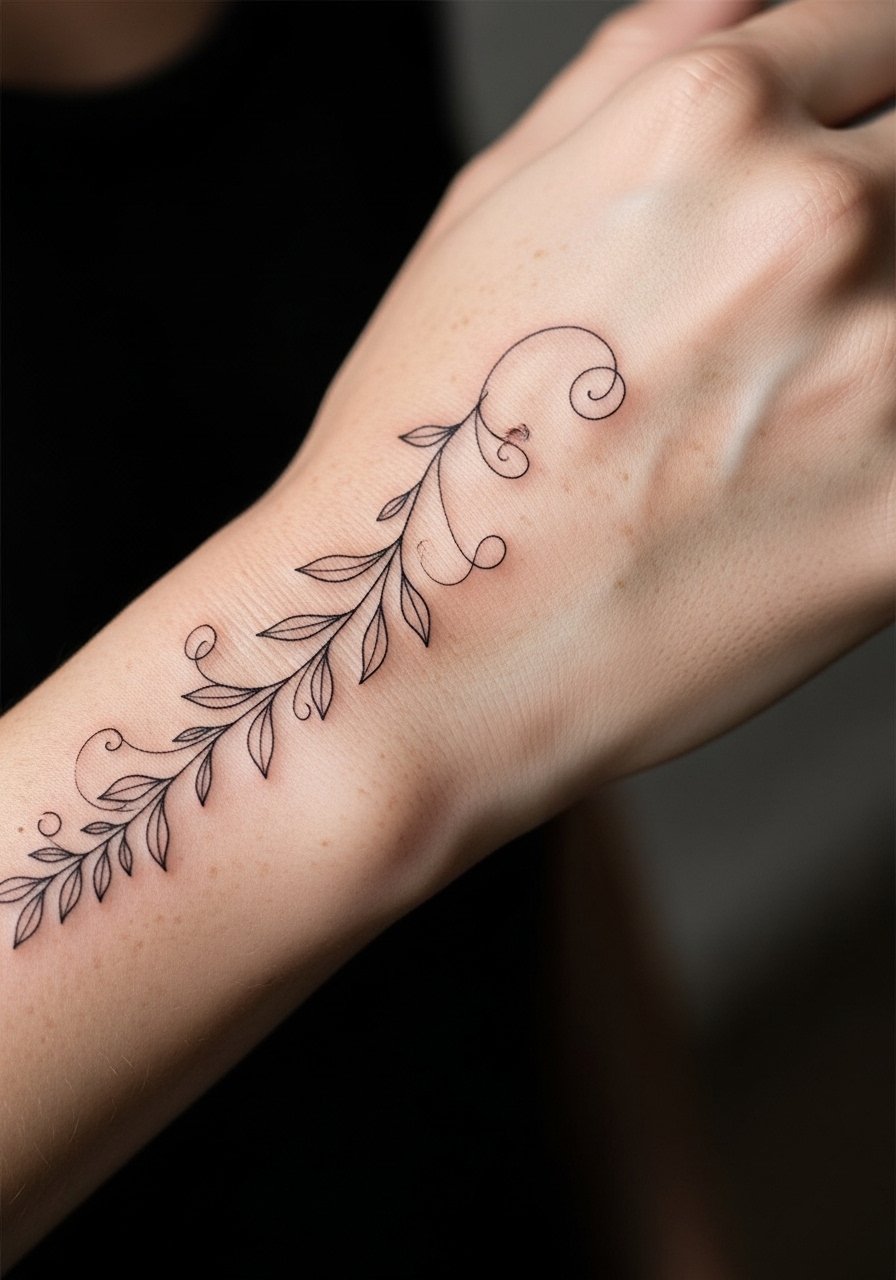
Hand and wrist transitions are striking but tricky. The skin on the hand wears quickly and industries still vary on accepting visible hand tattoos. Ask for bold anchor lines and minimal internal detail if this is near your knuckles. There is greater blowout risk on the dorsal hand, so artists often advise more space between elements. Sessions can be shorter but healing is longer because of washing and motion. If career visibility matters, think through placement carefully. For showing a wrist-to-hand design, a slim leather bracelet can frame the transition without covering the artwork.
12. Small Botanical Cluster Near the Elbow Inside
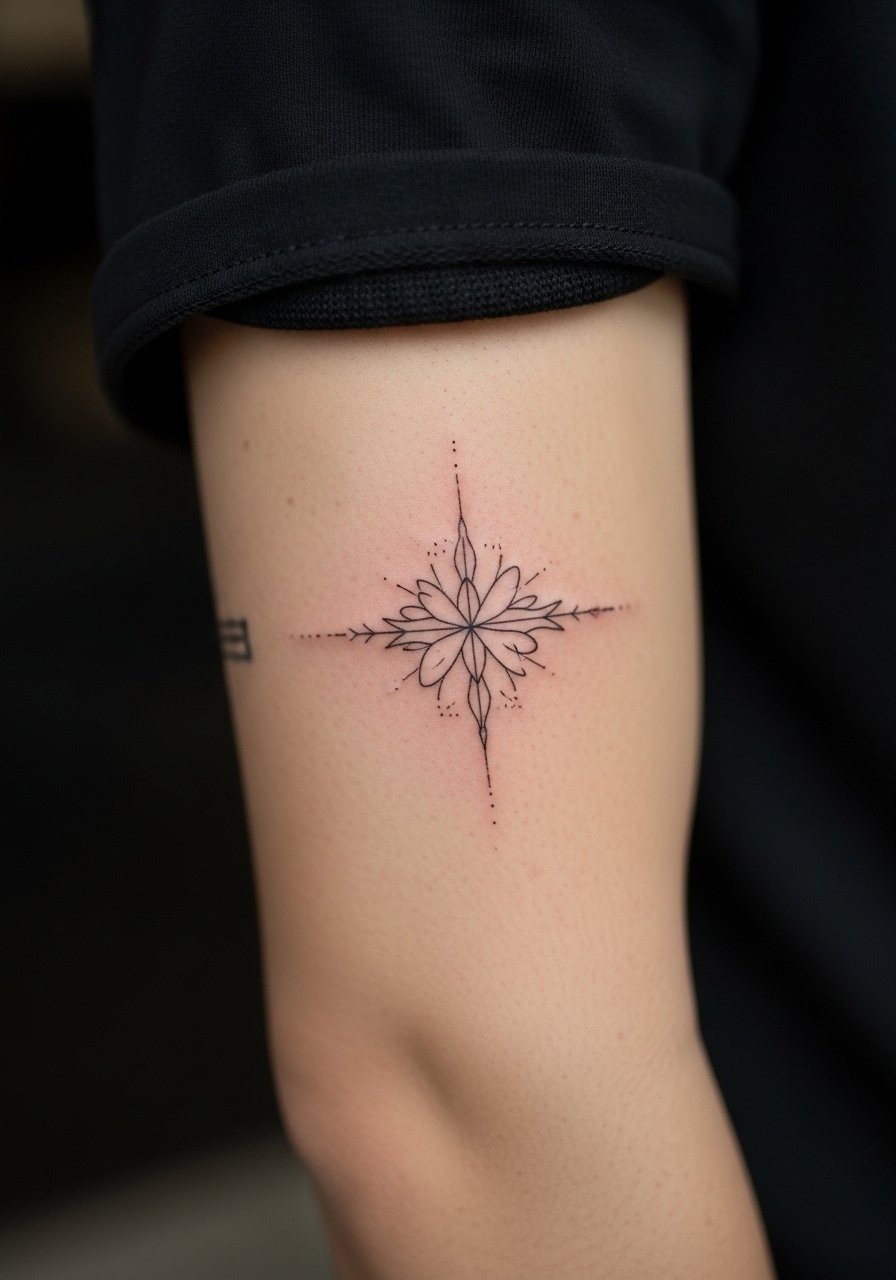
Inner-elbow pieces look intimate and move with the arm, so spacing is everything. When you talk with the artist request slightly larger gaps between blooms so flexing does not merge lines. This placement is sensitive and can sting as the needle reaches the crease. Sessions are often segmented to allow for numbness wearing off. A common error is placing dense dot work right in the fold, which compresses into an indistinct mark. For comfort during the session wear a cotton short-sleeve shirt you can adjust easily.
13. Single Stem Lavender Running Down the Forearm

Lavender lines suit long, narrow placements and often age gracefully because of their linear nature. Ask for slightly bolder stem outlines and lightly dotted flower clusters. The forearm is a low-pain area and sessions are pleasant. A common mistake is over-detailing each bud which loses definition after a year. Expect touch-ups around year three depending on sun exposure. For an effortless look pair with rolled linen shirts or a lightweight button-down that lets the stem follow the sleeve line.
14. Minimalist Orchid Behind the Elbow
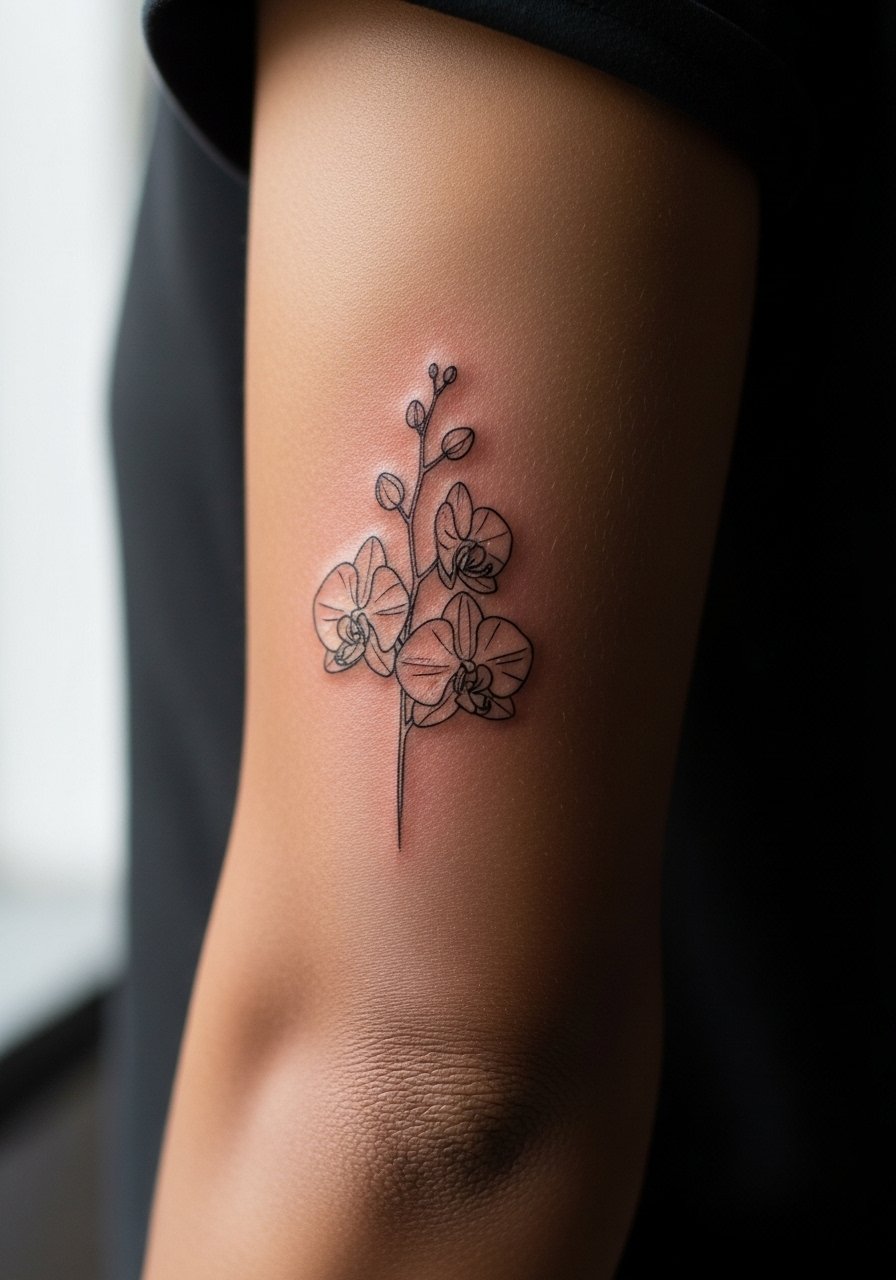
Behind-the-elbow pieces sit on a high-movement zone and need a simple silhouette to avoid distortion. Ask the artist for a single clean outline with minimal interior strokes so the orchid reads even as the joint bends. Pain is moderate and sessions may be shorter because of sensitivity. The frequent mistake is requesting lots of internal shading which turns into an indistinct blotch after months of motion. If your wardrobe shows this area, pair with a short sleeve cropped top to display the orchid without overexposure.
15. Tiny Floral Chain Along the Collarbone Edge
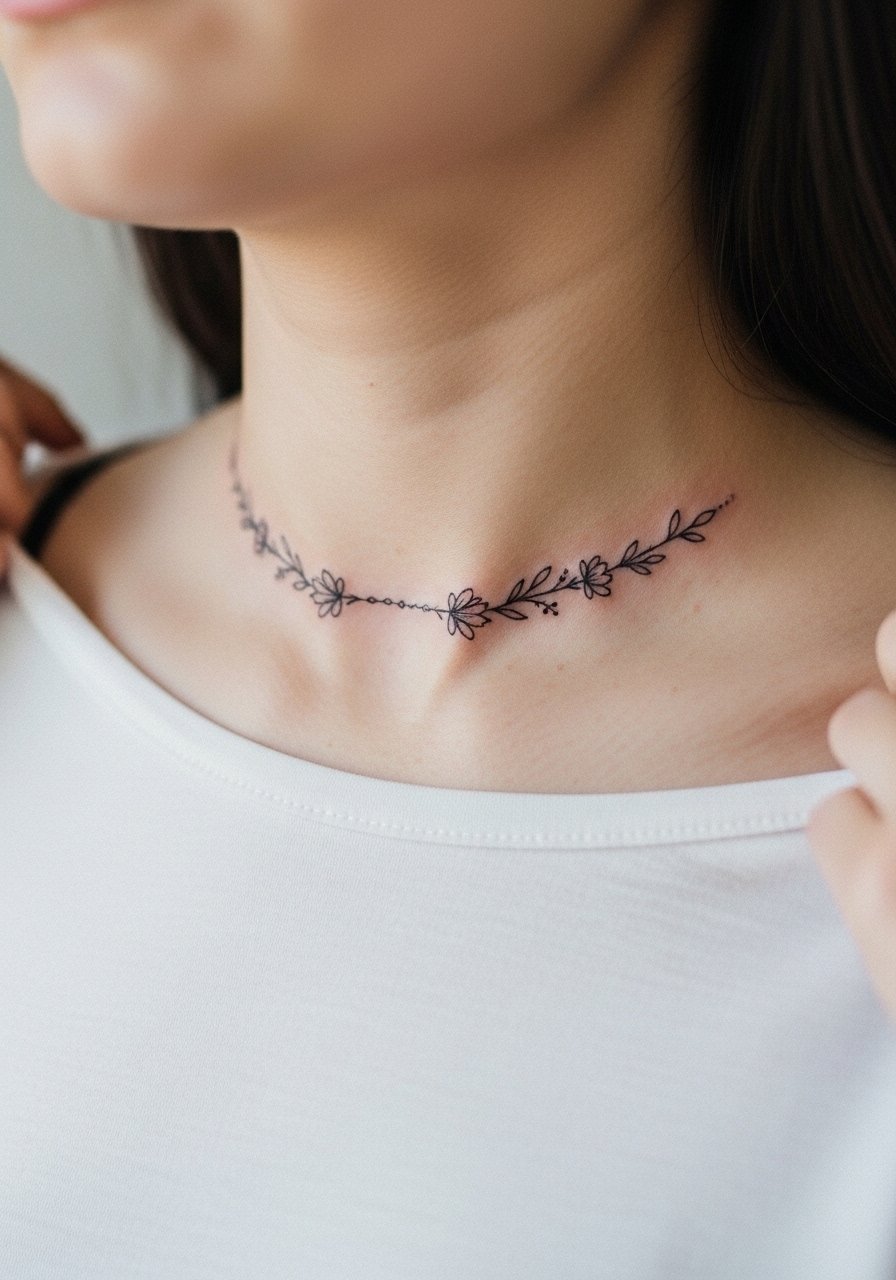
Collarbone placements are flattering but sensitive to pressure from straps and necklaces during healing. Tell your artist you want low-contrast stippling and clear spacing between blooms to avoid merging. Sessions can be tender and short. A mistake is asking for dense ink right on the bone which reads heavy and may require touch-up. For showing this piece off, a wide-neck or off-shoulder top frames the line. Pair with a thin chain pendant necklace that sits just above the tattoo without resting on it.
16. Wrist-to-Forearm Vine with Tiny Blooms
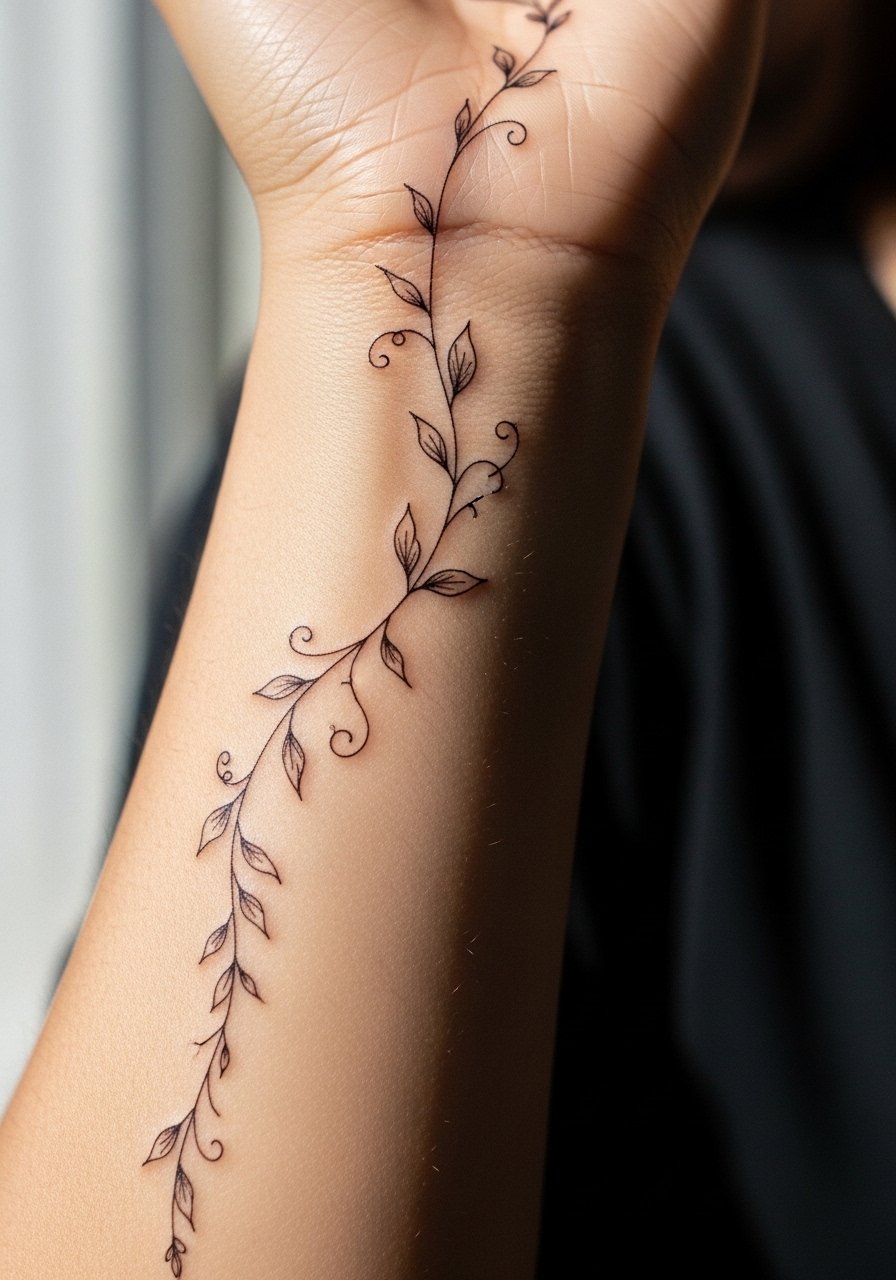
A vine that flows from wrist to forearm creates movement and works best when larger negative space separates each bloom. Tell the artist to scale the blooms progressively so the smallest ones near the wrist have slightly stronger outlines. This design experiences mixed aging because the wrist sees heavy wear. Expect a touch-up at two to three years if you type or wash hands frequently. Sessions are medium length and comfort is manageable. For styling, rolled sleeves and a minimalist watch pair well while keeping the vine visible.
17. Tiny Sunflower Cluster on the Outer Forearm Near the Wrist
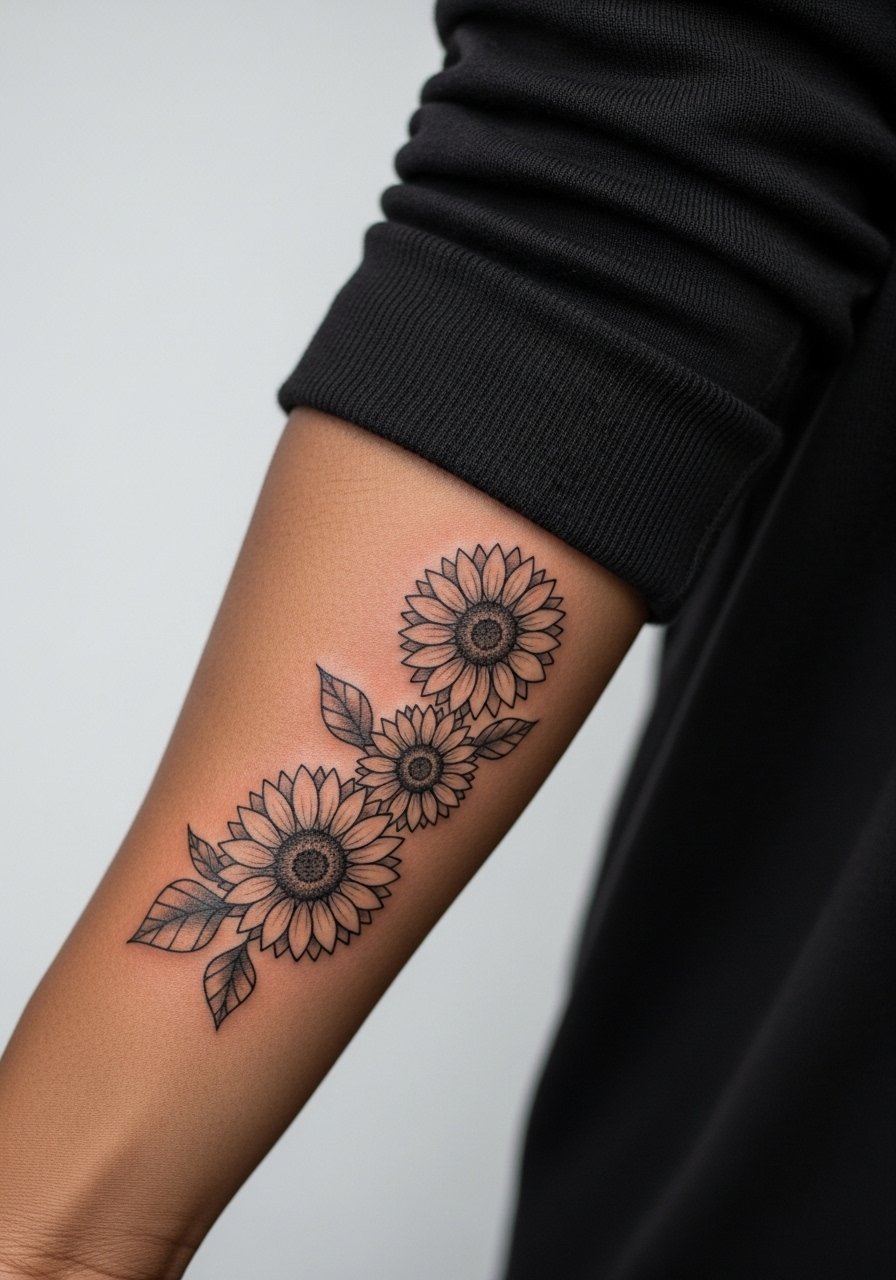
Sunflowers need clear centers and bold petal outlines to maintain contrast as they age. In your consult ask for slightly thicker petal edges and restrained dot shading inside the head to prevent early softening. This area is visible and ages moderately well if protected from sun. A common mistake is compressing too many petals into a tiny head which blurs within a year. Sessions are short and aftercare is straightforward. For daily wear, rolled sleeves or short-sleeve shirts show the cluster. Try pairing with a cotton tee with rolled sleeves that keeps attention on the bloom.
Frequently Asked Questions
Q: Will fine line floral work on the inner forearm blur faster than on the outer forearm?
A: In my experience the inner forearm can soften sooner because the skin sees more stretch and contact. The outer forearm usually has less friction and keeps crispness longer. Ask your artist to increase spacing and line weight slightly for inner-arm pieces to extend clarity.
Q: Are wrist and hand floral pieces a bad idea for office environments?
A: Some workplaces are more conservative about visible hand tattoos, while others are fine with small wrist pieces. If you work in a field where visibility matters, position the design higher on the forearm or opt for a wrap that can be covered by long sleeves. A subtle accessory like a simple cuff bracelet can also balance visibility when needed.
Q: How often should I expect touch-ups for tiny floral details on the ankle or wrist?
A: For small, high-contact areas like wrist and ankle expect possible touch-ups around year two to three depending on sun exposure and friction. Plan on a consultation with your artist after the first year to assess whether a light refresh will keep lines distinct.
Q: Does micro-realism on the inner arm require a different aftercare routine than a line-only forearm piece?
A: The mechanics of aftercare are similar but micro-realism benefits from diligent sunscreen once healed and a gentle moisturizer during the first weeks to preserve subtle shading. Check back with your artist at the two-month mark to see if any touch-up is needed.
Q: What should I bring to the consultation if I want a long, thin vine from wrist to forearm?
A: Bring photos showing the exact scale and flow you like and point out where you want gaps between blooms. Mention your daily habits like typing or frequent hand washing so the artist can suggest line weight and spacing that will age well.