Fine line tattoos dominate pinboards right now and the ones that still read clean after a few years are not always the prettiest fresh pieces. On legs you have extra factors working against you—friction from pants, skin stretch with weight changes, and the way fine lines fade faster than saturated work. Here are 17 easy-to-wear leg ideas that lean soft, age purposefully, and include what to ask your artist in the chair.
1. Fine Line Floral Vine Wrapping the Calf
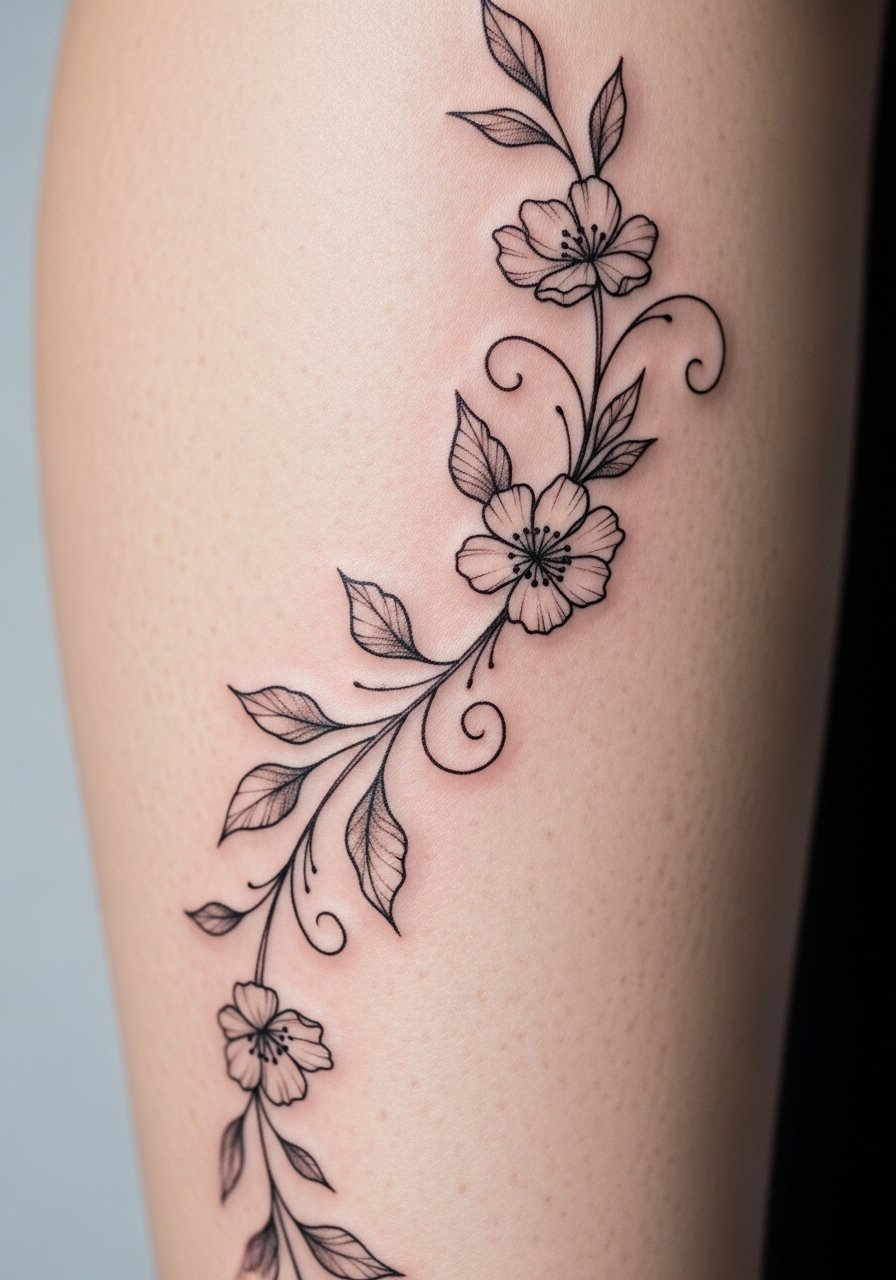
I recommend this when you want a leg-lengthening piece that still disappears under socks. Tell your artist you want slightly thicker linework than the thinnest fine line they show in their portfolio so the vine keeps its shape through regular friction. The common mistake is packing too many tiny leaves in a small area, which leads to softening and the need for touch-ups in two to three years. Expect a one-session ride of about 60 to 90 minutes and a moderate pain level on the calf. For appointments wear cropped jogger pants you can roll up easily so the artist has full access without tugging.
2. Minimalist Ankle Script Quote

This is a first-timer classic because it hides under socks and stays intimate. During consultation ask for single-weight linework and specify letter height in millimeters so the script does not look cramped against tendon motion. The usual error is going too small in a busy script, which blurs faster than plain block lettering. Expect 20 to 40 minutes in the chair and light to moderate discomfort near the bone. To show it off pair with strappy sandal flats and keep the opposite ankle free of heavy jewelry so the eye goes to the script.
3. Blackwork Geometric Band Above the Knee
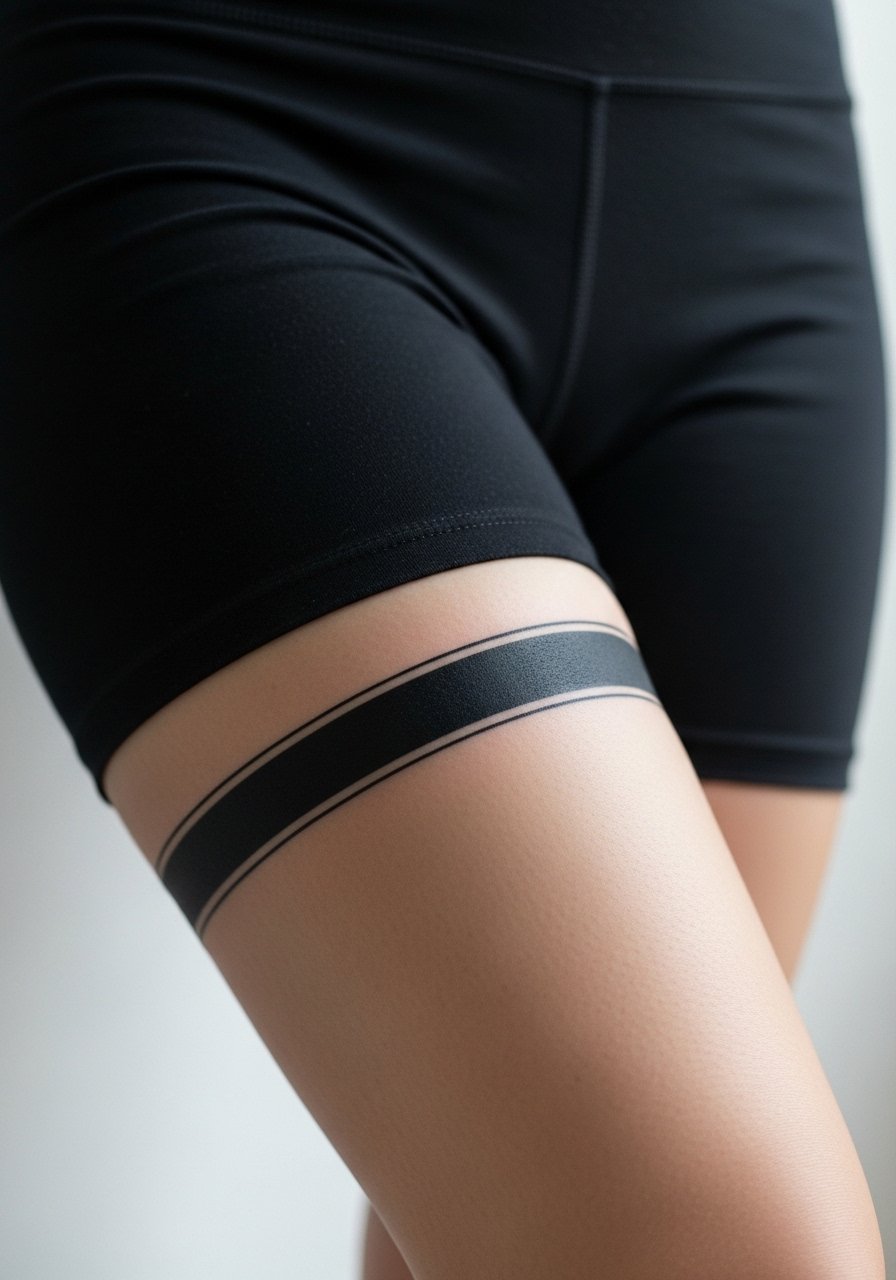
This is the jewelry-like option that resists sweat and holds up longer than tiny lines. Ask the artist to draft negative-space elements so the band reads like texture rather than a black strip that risks migration. The common mistake is making the band too narrow. On curved skin that leads to pooling and visible distortion when you sit. Expect a single session of about 60 minutes and a moderate pain level. Pair the finished piece with high-waisted biker shorts for a fitted look that frames the band.
4. Watercolor Lotus on the Inner Thigh
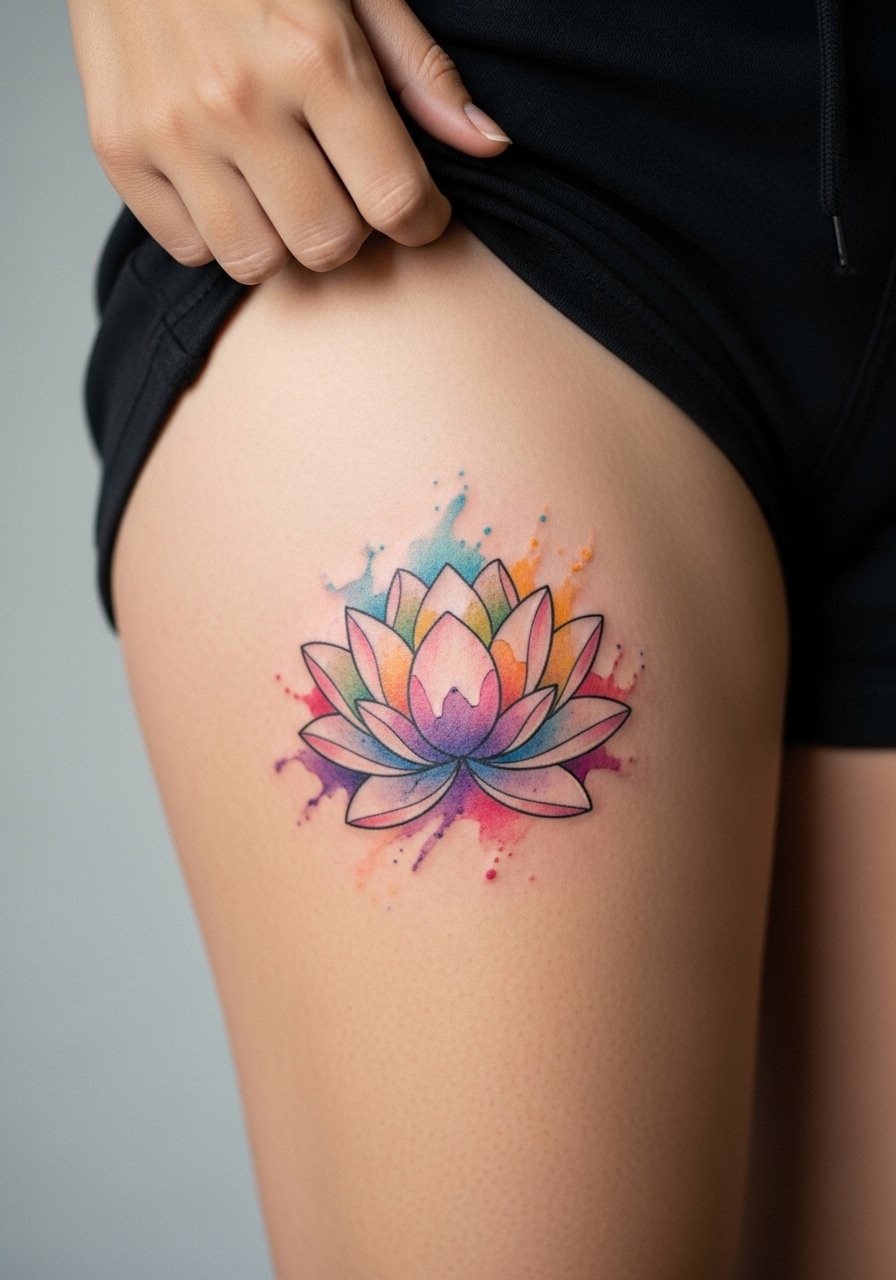
Inner thigh watercolor works if you plan for two sessions and a touch-up at the one-year mark to refresh subtle gradients. Be upfront about sweat and friction in the consultation and ask the artist to anchor the piece with a light black outline so color doesn't migrate into a bruise-like wash. The mistake is requesting extreme watercolor with no outline. On the thigh that often blurs within 18 months. Sessions feel cushioned but the area can be tender when you walk for a few days. For the appointment wear loose cotton lounge pants so you can expose the area and keep pressure off the healing skin afterwards.
5. Neo-Traditional Wave Crest on the Shin
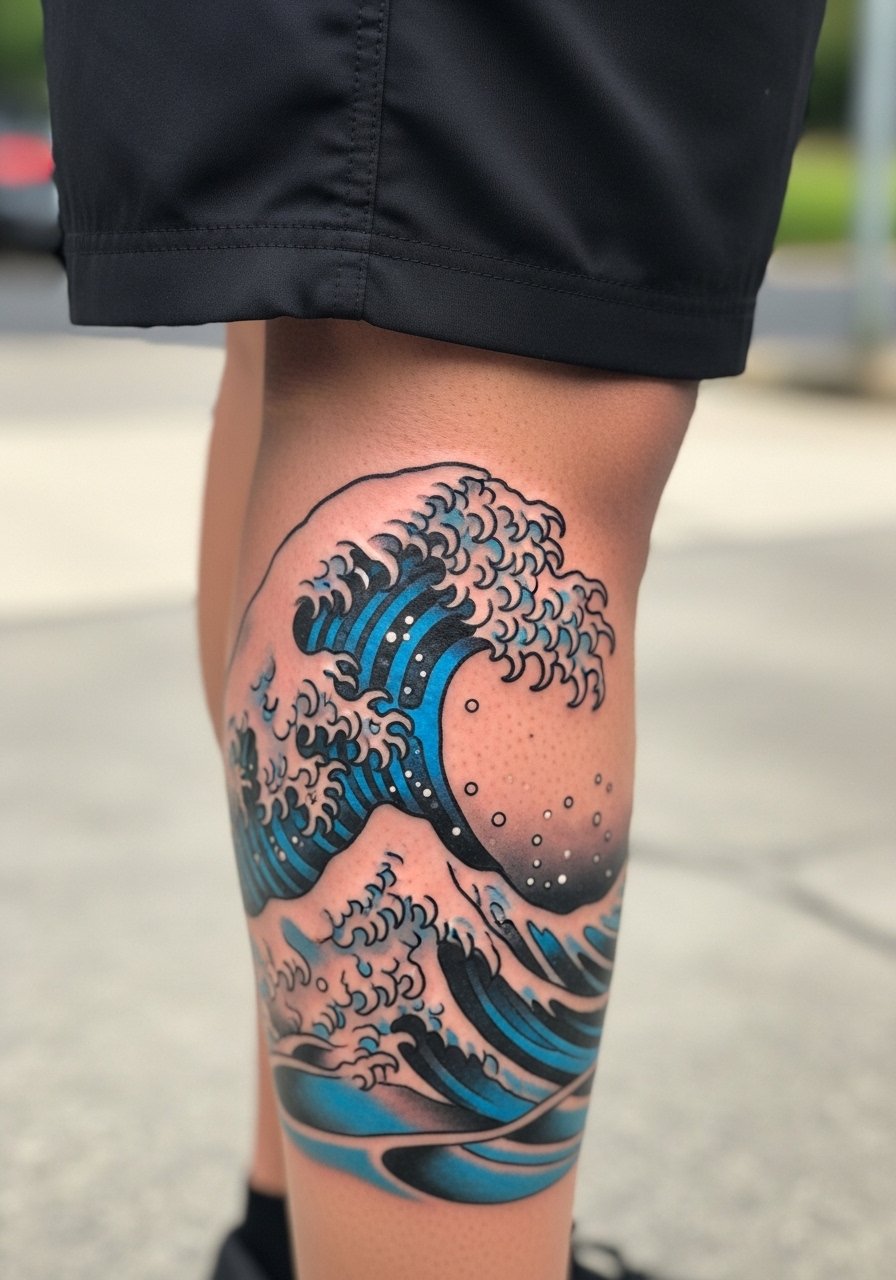
This slim, graphic crest reads vintage without taking up the whole leg. Ask for bold outlines around the main shapes and softer whip shading inside to avoid muddying in two years. The biggest mistake is packing heavy dot shading in narrow strips. That turns into a gray smudge on active shins. Expect moderate pain on the bone and a 60 to 90-minute session. For show-off wear rolled cuff cigarette pants in black so the crest sits just above the cuff and looks like intentional styling.
6. Micro-Realism Butterfly Mid-Calf

Micro-realism thrives on contrast and crisp dot work, but it demands a steady hand. Tell your artist you want a slightly larger scale than a true 1-inch micro piece so the tiny veins keep clarity over time. A common regret is choosing hyper-small size that needs a touch-up or rework at year two. The session usually takes 90 to 150 minutes with moderate pain behind the calf muscle. For dressing, cuff wide-leg palazzo pants so the butterfly reads in motion and the fabric does not rub the fresh ink while healing.
Pack Smart
The calf vines through the shin and ankle pieces above need different prep than thigh and inner-thigh work, so a few targeted items smooth the session and the first week.
-
Stencil transfer paper kit. Lets you preview scale and placement on the actual leg, which is crucial for vines and bands that follow curves.
-
Topical numbing cream. Useful for long shin sessions or dense blackwork on the thigh to keep the session manageable.
-
Thin protective film roll. Helps ankle and calf pieces avoid direct friction from socks and shoes during the first few days.
-
Fragrance-free gentle body wash. Cleanses tender leg ink without stripping color, helpful for watercolor and fine line work.
-
Aquaphor healing ointment. Thin layers for the initial days lock in moisture, which matters when you have many small lines that need to close cleanly.
7. Ornamental Mandala Ankle Wrap
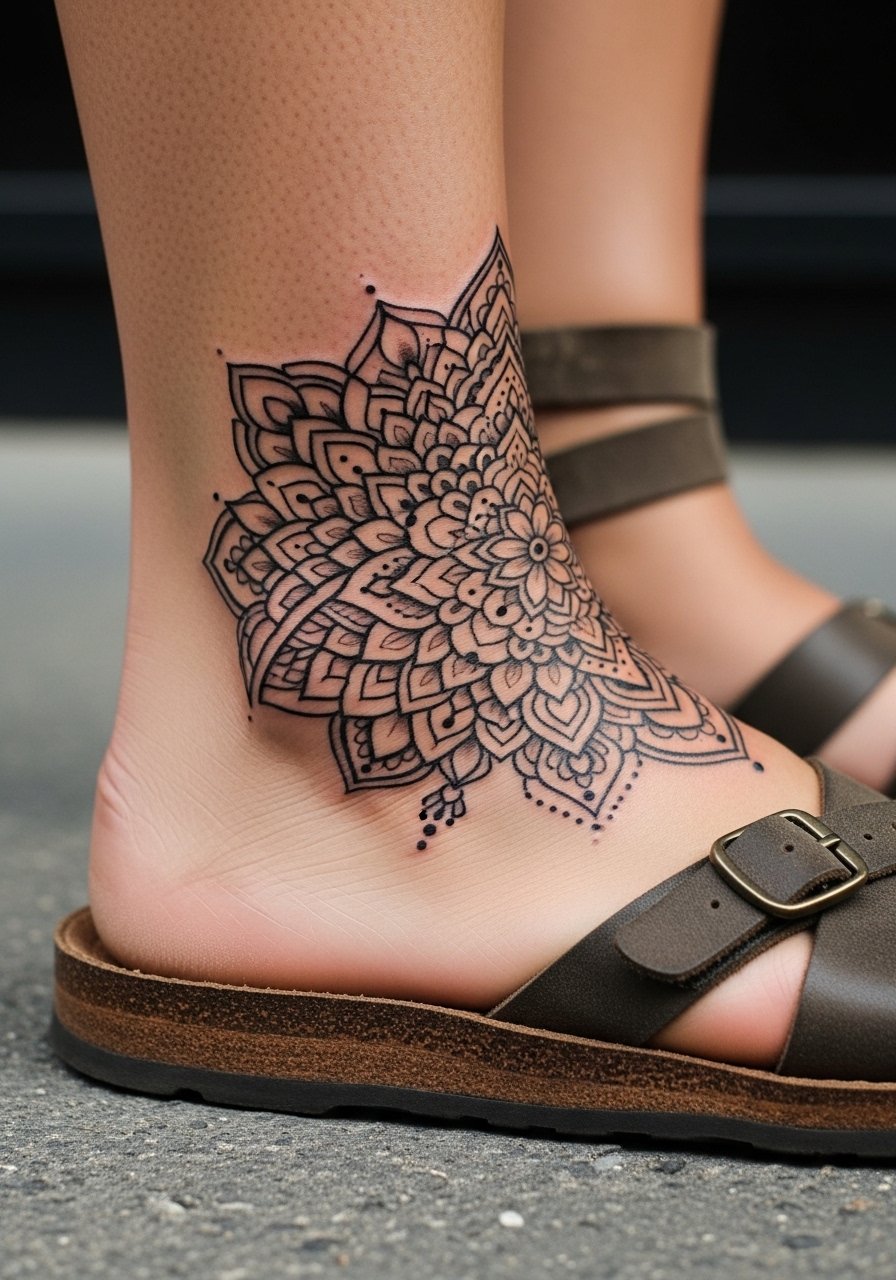
This is a henna-like option that frames the foot without overtaking it. Ask for open spacing between petals so dot work breathes and does not merge. A common error is asking for dense mandala lines in a 2-inch circle. On the ankle that density can fill in quickly. The session is usually 40 to 70 minutes and discomfort is light to moderate over bone. Wear dainty ankle chains for styling, but avoid putting jewelry on the fresh tattoo until it has healed.
8. Ignorant-Style Mushroom Cluster on the Lower Leg
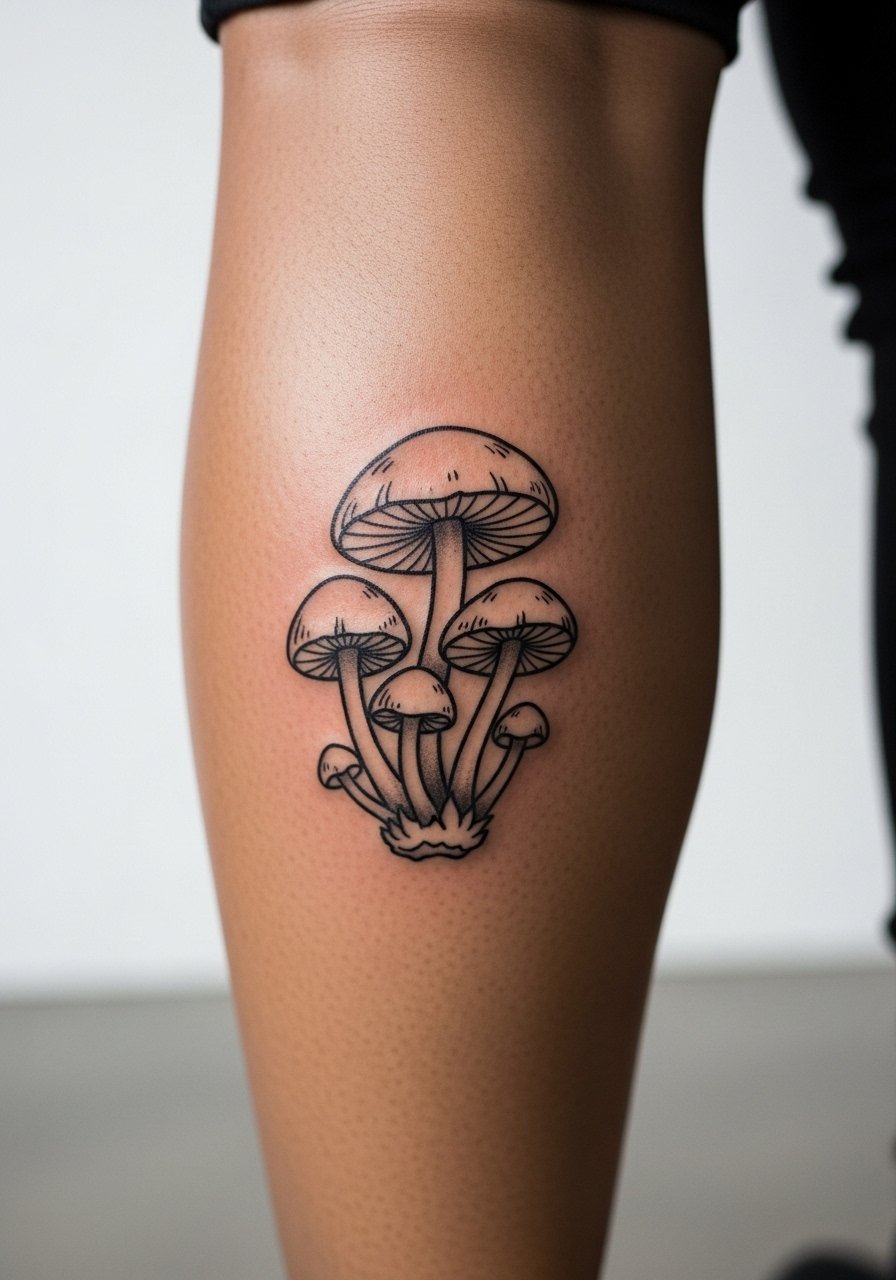
The imperfect, sketchy look reads personal without demanding saturation. Tell your artist you want sketchy outlines and avoid heavy fill, which loses the awkward charm. Mistakes happen when someone asks to bold every outline. The quirky appearance softens too much then looks like a faded doodle. Expect a single session of about 45 minutes and moderate comfort on the calf. Session wear suggestion is high waist yoga pants pulled down slightly so the artist can reach the back of the calf without contorting.
9. Fine Line Constellation on the Outer Thigh

Constellations age well when spaced correctly. Ask for slightly larger dot sizes and thin connectors rather than micro-dots to keep the pattern readable at two and five years. The usual mistake is cramming tight star clusters which merge as the skin moves. Plan for 40 to 80 minutes and light to moderate discomfort. Show it off with slit maxi dresses on warm days so the outer thigh peeks through fabric movement.
10. Blackwork Vine Thigh Band

A strong black band grips fabric and hides under skirts when you need discretion. Ask the artist for crisp edges and to mark the exact width on your thigh while standing so the band sits level in real life, not just on paper. A common mistake is underestimating how high-waisted clothing will move against the band, which can create uneven pressure and slight fading. Expect a 45 to 75-minute session and moderate pain in the upper thigh. Pair the finished piece with A-line denim skirts that keep the band visible without competing prints.
11. Minimalist Arrow Along the Shin

This is a direction symbol that flatters leg length. During consultation specify a single straight needle line and ask the artist to mark the path while you stand so the arrow follows natural muscle lines. The biggest slip is choosing a needle too fine in a six-inch design, which can thin out and need a touch-up at year two. Expect 30 to 45 minutes and above-average discomfort where the bone sits close to the skin. For the session wear capri shorts so the shin is fully exposed.
12. Watercolor Feather Calf Wrap
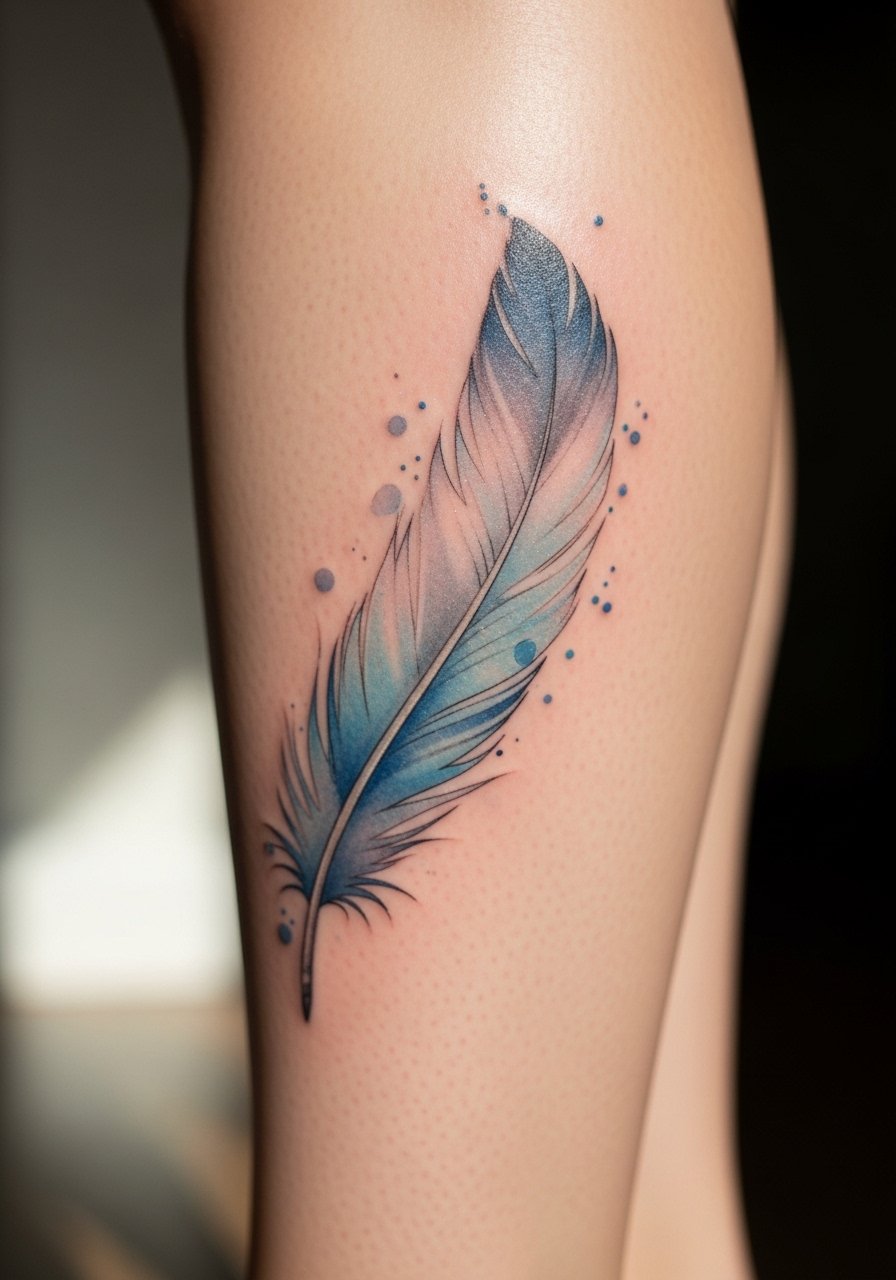
Feather wraps move with the leg and create a floating effect. Ask for a thin black anchor line at the quill to keep the piece readable as colors soften. The common regret is asking for saturated watercolor with no hold points. On calves that can spread into a blurred wash. Plan for two sessions and a possible touch-up at year one for the soft blues. For showing it off pair with linen midi skirts women so the feather peeks as you walk.
13. Fine Line Honeycomb Pattern Across the Ankle
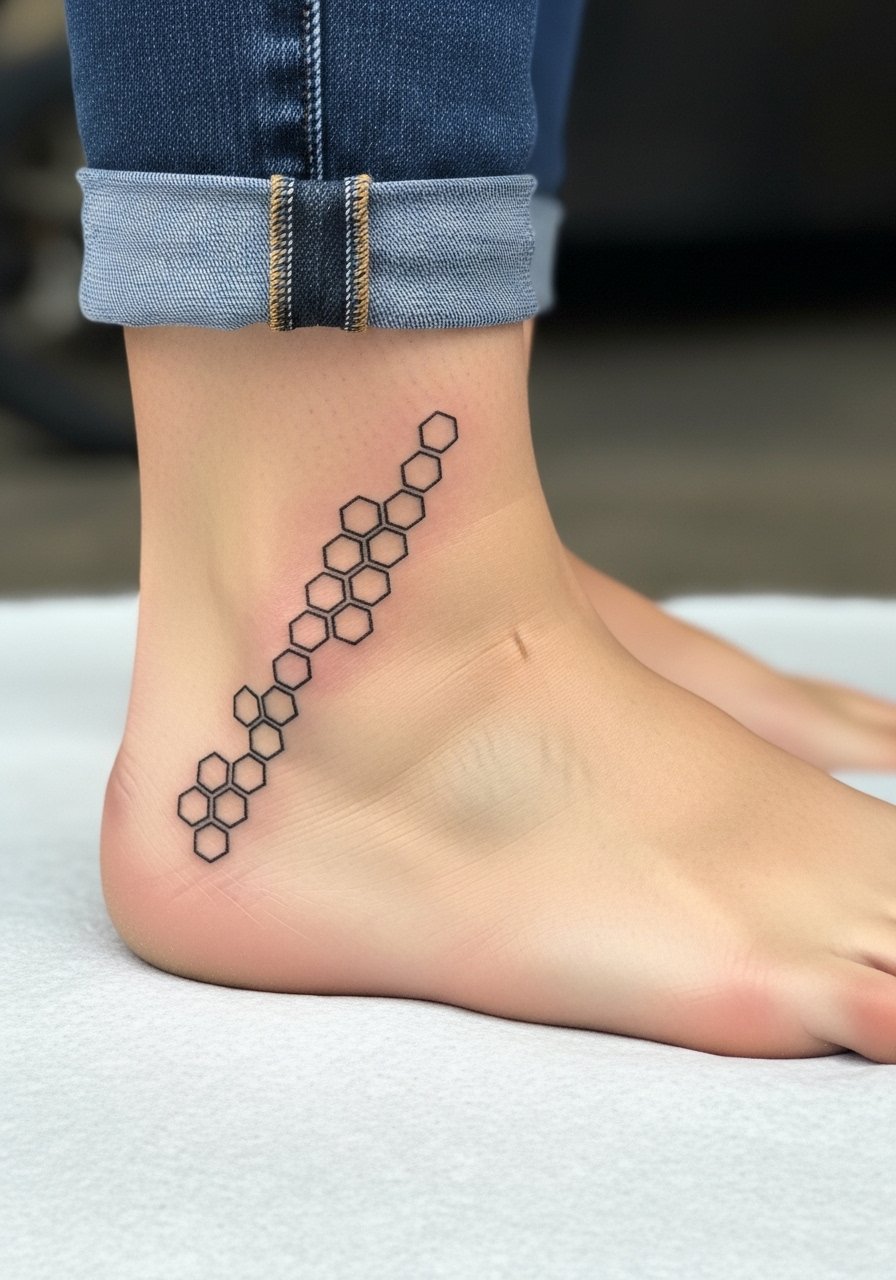
This geometric option reads modern without color. Tell the artist you want each hexagon sized to at least three millimeters across so the negative space ages well. The mistake is choosing a micro-grid that collapses after a year. Expect a 30 to 60-minute session and light discomfort on the foot and ankle. Style it with high waisted shorts and simple sandals so the pattern frames your foot.
14. Negative-Space Blackwork for Darker Skin on the Thigh

Negative-space blackwork is a smart option when you want contrast without heavy pigment that can gray on deeper tones. Discuss how the artist will leave skin gaps to create the pattern rather than relying on fine lines that disappear. The common issue is using tiny white highlights which do not read on darker tones. Expect one session of 60 minutes and moderate pain on the upper thigh. For placement testing use standing photos so the pattern respects natural contours and will stretch gracefully with minor weight changes.
15. Knee-Contouring Vine That Follows Movement

Designs that curve around the knee need intentional flow. Tell the artist you want a vine that arcs with the knee crease and to test the stencil with you bending and straightening. A frequent mistake is ignoring how the joint compresses, which leads to pinched-looking elements while you sit. Expect 50 to 80 minutes and moderate discomfort where the skin flexes. For the appointment wear shorts that expose the knee and avoid tight leggings for the first week to reduce rubbing.
16. Micro-Realism Insect on the Lower Leg
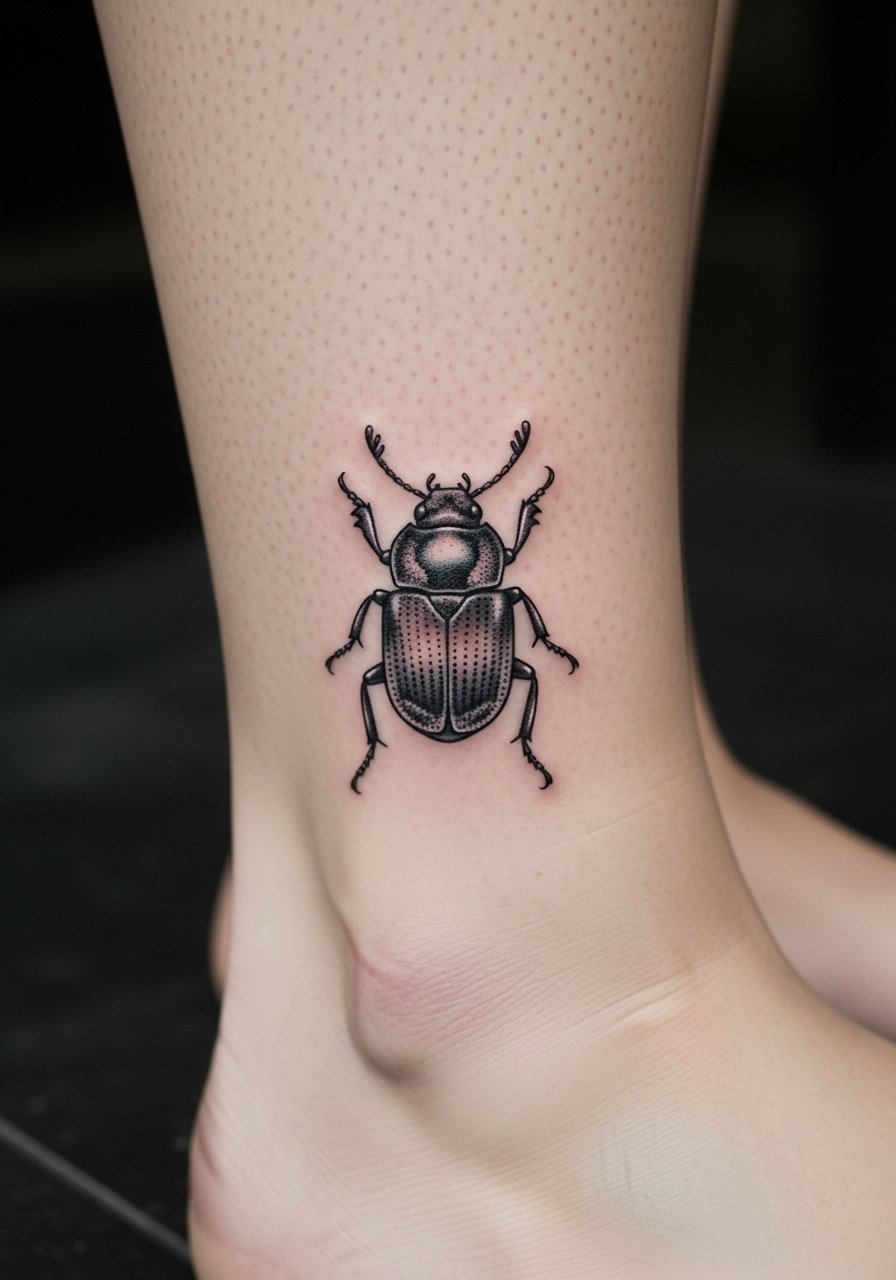
Tiny naturalist pieces read like a creature just landed. Ask for the size in millimeters and insist on a test stencil so you can confirm placement. The common regret is selecting an insect under 1.2 inches in length. At that scale details lose their crispness in two to three years. Expect 60 to 120 minutes depending on detail and moderate discomfort near the ankle. For session day wear sandals so the area is easy to access and the artist can stitch detail without fabric interference.
17. Thin Geometric Shin Band That Mimics Jewelry
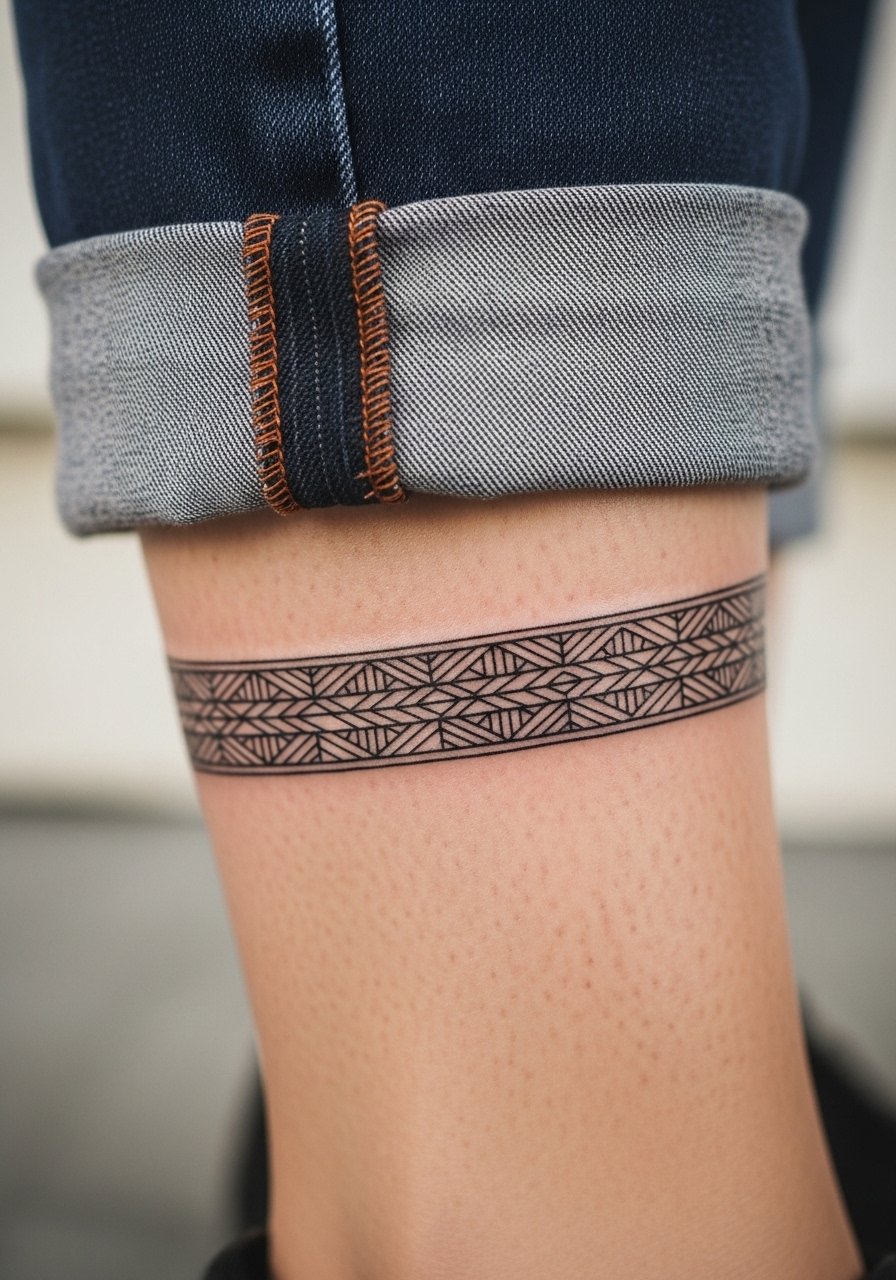
This is for people who want a leg bracelet without metal. Ask for measured spacing between elements so patterns do not blur together as the skin moves. The mistake is requesting a dense pattern in a narrow band, which loses geometry with time. Sessions run about 45 to 75 minutes with moderate pain depending on proximity to bone. Style with rolled cuff pants or boots so the band sits where jewelry would naturally rest.
Frequently Asked Questions
Q: Will fine line tattoos on the calf fade faster than blackwork?
A: Fine line tends to soften sooner when placed on areas that experience constant friction. Blackwork and saturated fills usually hold tone longer. That said, if you ask for slightly heavier line weight and proper spacing the fine line option can still look intentional at year three. Expect routine touch-ups for high-friction placements.
Q: Is Saniderm recommended for leg tattoos or does it trap sweat?
A: Artists are split on Saniderm. One camp uses it to protect fresh ink from rubbing and to reduce touch contact. The other camp worries about trapped moisture on areas that sweat more, which can irritate the wound. Decide with your artist based on the placement and your personal sweat patterns.
Q: How should I plan clothing and transport after a thigh or inner-thigh session?
A: Wear loose bottoms and bring a change if you travel after the appointment. A wrap skirt or drawstring gym shorts helps you avoid tight waistbands and keeps pressure off the fresh ink while you ride home.
Q: Do geometric bands above the knee need more touch-ups than ankle scripts?
A: Bands above the knee resist daily shoe friction but they do face flex points that can alter edges over time. Ankle scripts experience shoe and sock rubbing which affects fine lines. Both can need touch-ups, but the timelines depend on spacing, line weight, and how much you protect them from friction.
Q: Is numbing cream OK for shin or long calf sessions?
A: Many artists endorse topical numbing when a session is long, especially on bone-heavy shins. Others avoid it because it can slightly alter how the skin takes ink. If you plan to use numbing, disclose it in advance and follow the artist's prep instructions.
Q: There are debates about tipping for small pieces. What is reasonable etiquette?
A: Tipping norms vary. Some studios expect a standard gratuity, while other walk-in or apprentice situations do not. If the studio has house policy mention it during booking. In practice it helps to ask during consultation so expectations match before the session starts.