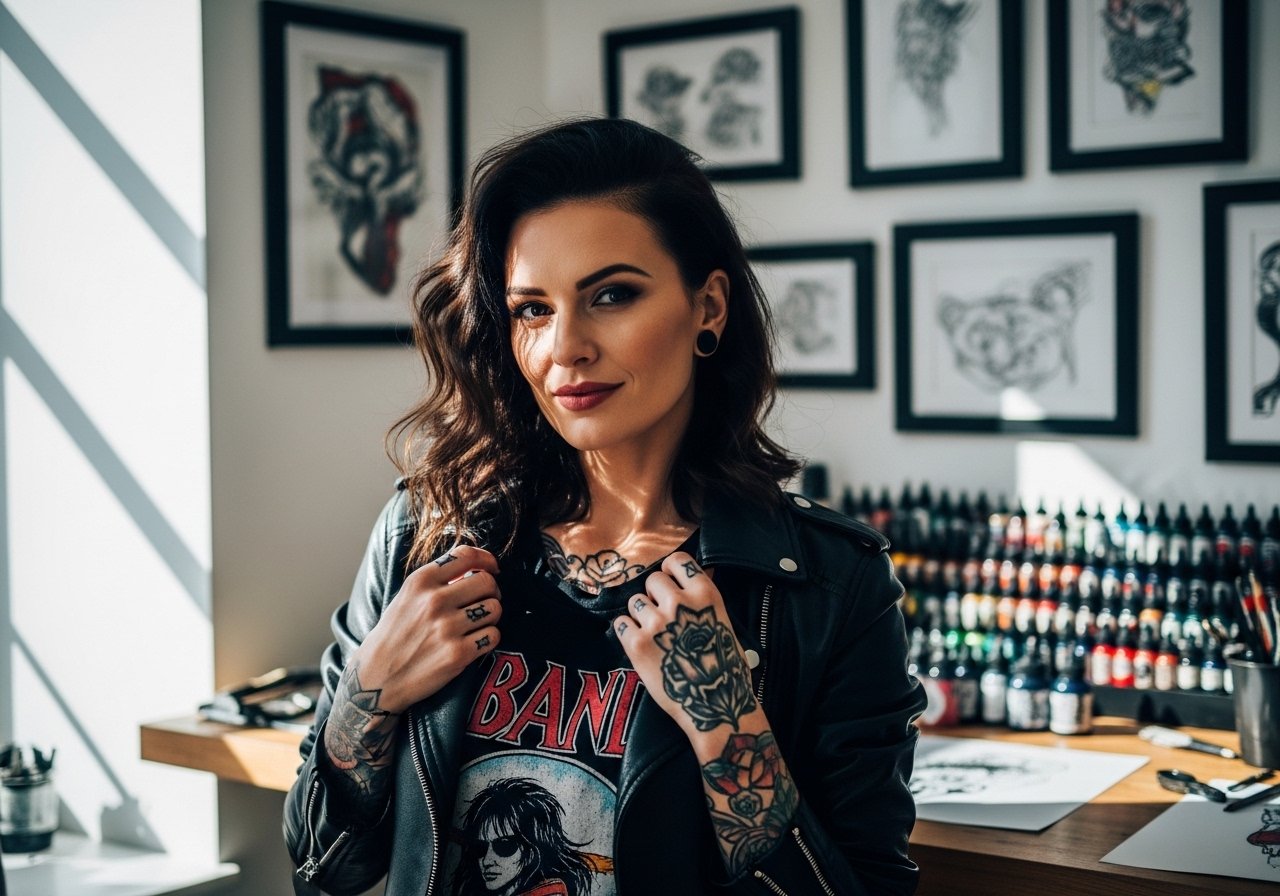
Fine line trends flood feeds, but when it comes to thigh cover ups the winner is often the thing that hides the old work, not the thing that looks best fresh. Thick saturation, layered petals, and vertical compositions are the moves that actually last on moving skin. Read on for practical ideas you can show your artist, what to ask at consult, and how to keep the healed look clean.
1. Black and Gray Realism Rose on Outer Thigh
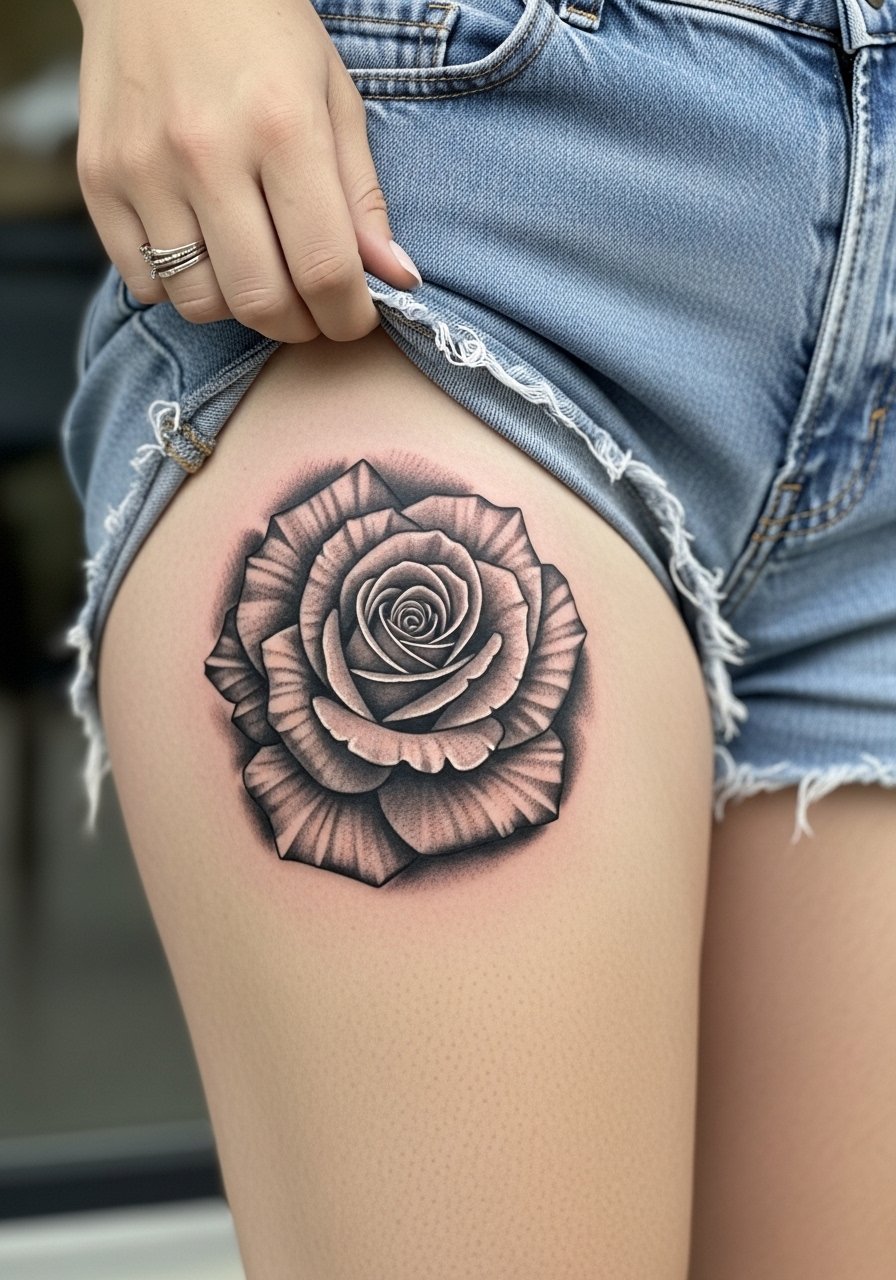
This is a go-to when an old tattoo needs density more than color. Tell your artist you want layered petal saturation and a soft background wash so the old lines disappear under depth. Common mistake is asking for micro-detail over diffuse shading, which can peek through as the piece settles. Outer thigh stretches less than inner, so expect a two to four session build for full opacity and a touch-up at year two. For showing it off, pair with high waisted denim shorts or a slit midi skirt to let the piece peek out.
2. Vertical Hot Air Balloon That Travels Up the Thigh
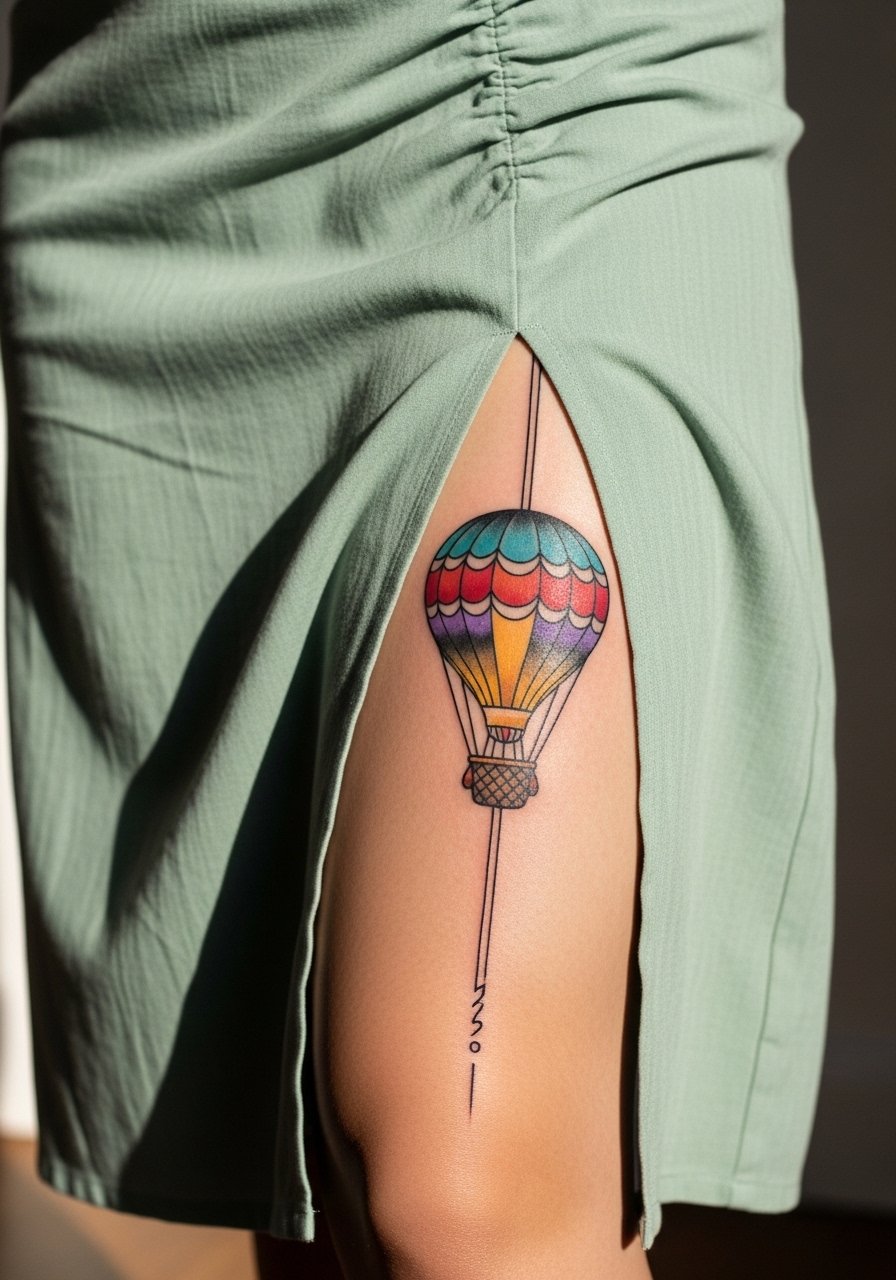
Vertical designs draw the eye away from older horizontal marks and are great for hiding script. During consult, ask for a dark outline on the basket and selective color accents on the balloon for eye flow. The visual trick is elongation, not crowding, because small verticals can warp with weight changes. Session feel is moderate; expect longer needle time for saturation near the hip. For wardrobes, the balloon pairs well with flowy midi skirts that split at the thigh, try a midi skirt thigh slit to frame it.
3. Lotus Flower Blackwork on Inner Thigh
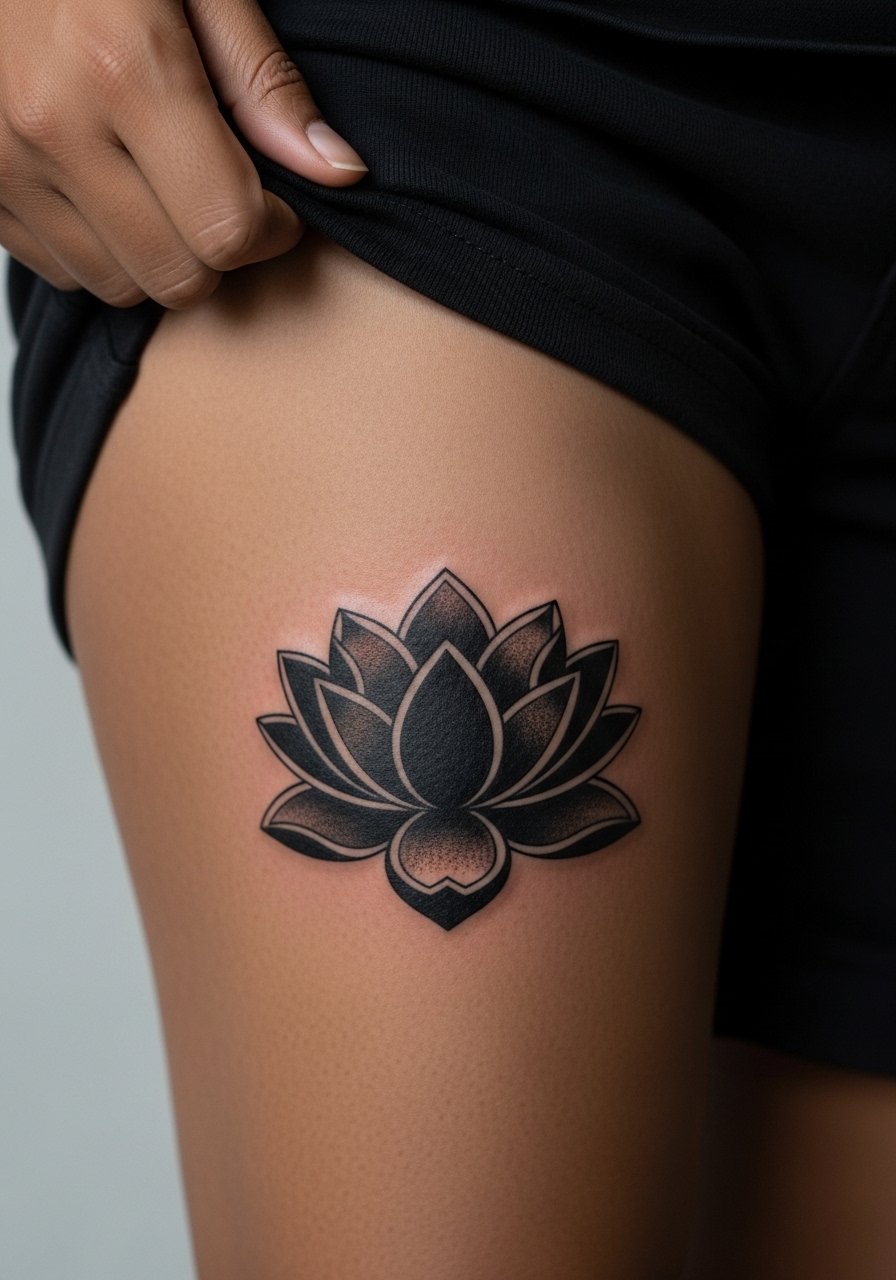
Inner thigh is sensitive and sweaty during summer, so plan for healing adjustments. This blackwork lotus uses solid fills and layered petals to mask faded ink under thin lines. Tell the artist you want saturated black petals and a stem that crosses the old design rather than sitting beside it. Pain is higher on the inner thigh, and the risk of infection rises if you trap moisture. For session wear, bring wide-leg pants so the artist can roll the leg up without tight bands and the area can breathe after in the taxi.
4. Ivy Vine Ornamental Wrap Across the Outer Thigh
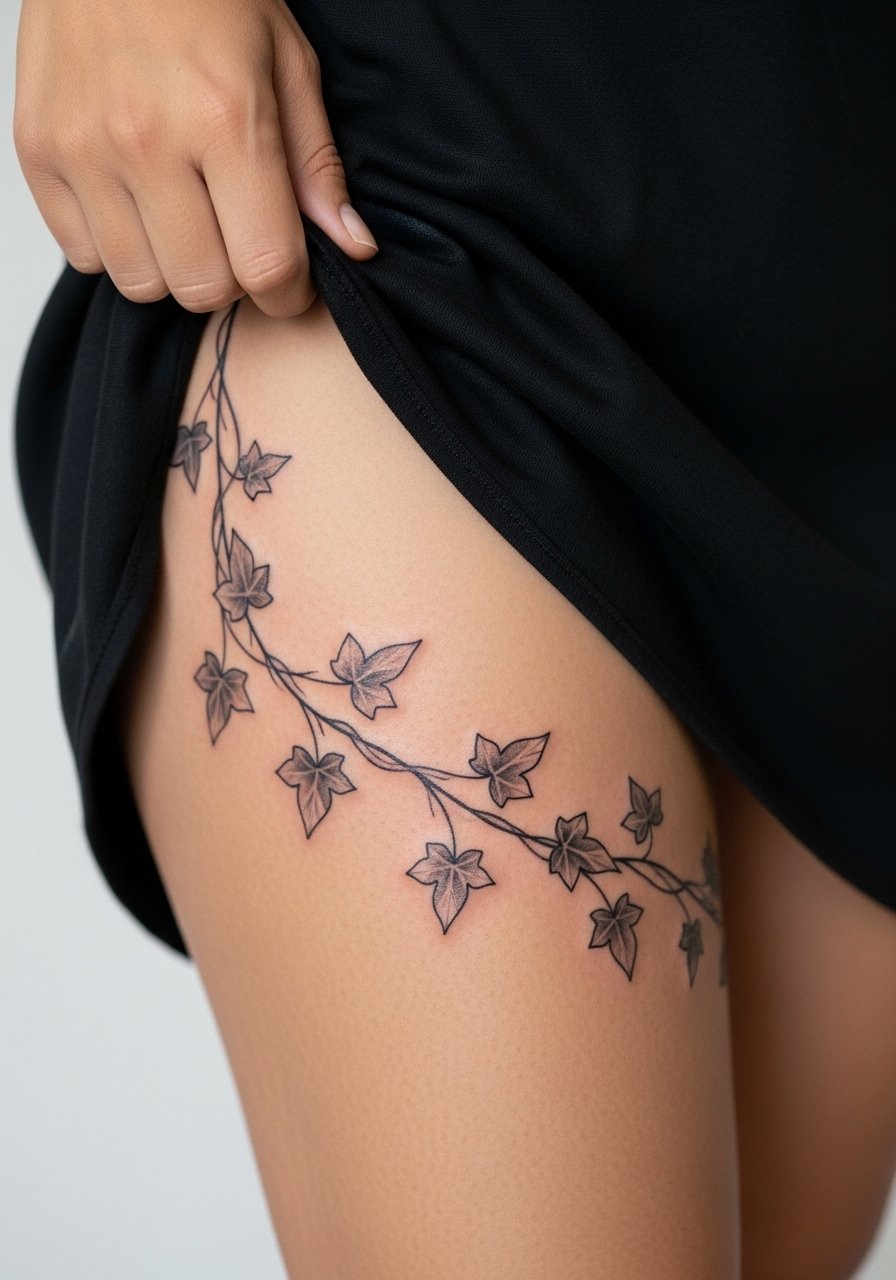
Ivy is ideal for odd-shaped old work because it snakes around existing marks instead of fighting them. Ask for varied leaf sizes and occasional dense shading nodes where the old tattoo sits beneath the vine. The common mistake is keeping the vine too thin which makes coverage uneven as the ink settles. Expect two to three sessions and a later touch-up where the old lines were darkest. Pair the finished wrap with olive wrap skirts or cargo pants rolled to the knee to echo the nature vibe.
5. American Bald Eagle Traditional on Upper Thigh
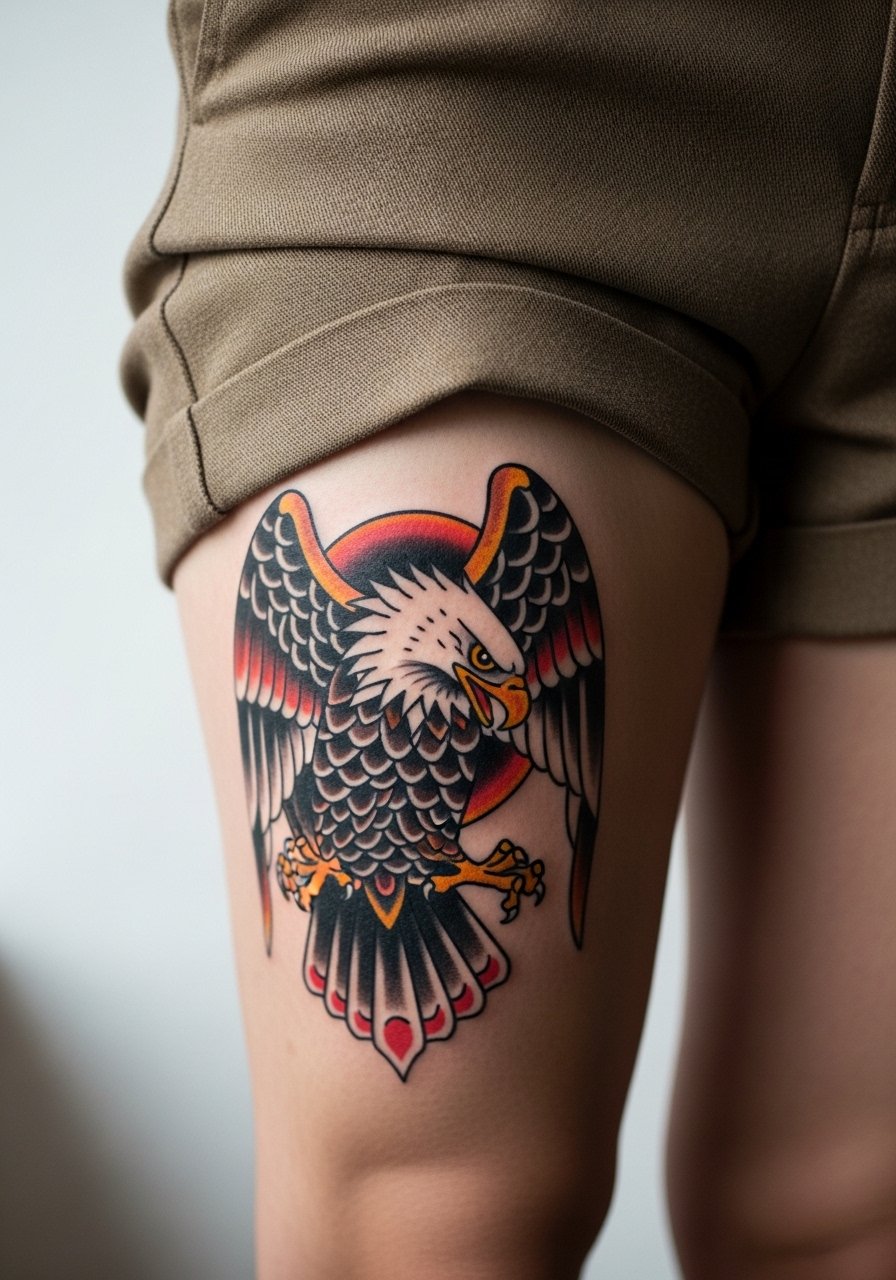
Traditional pieces are great when you need bold outlines to overpower darker remnants. Tell the artist you want thick outlines and heavy fill rather than delicate shading. The downside is larger sessions and longer healing when color fills cross old dark lines. Expect four or more sessions for big saturation and plan your wardrobe around loose shorts or asymmetrical dresses so the area gets fresh air between sessions. A vintage leather belt or tailored shorts frame the eagle well when you show it off.
6. Nautical Compass Neo-Traditional at Mid-Thigh
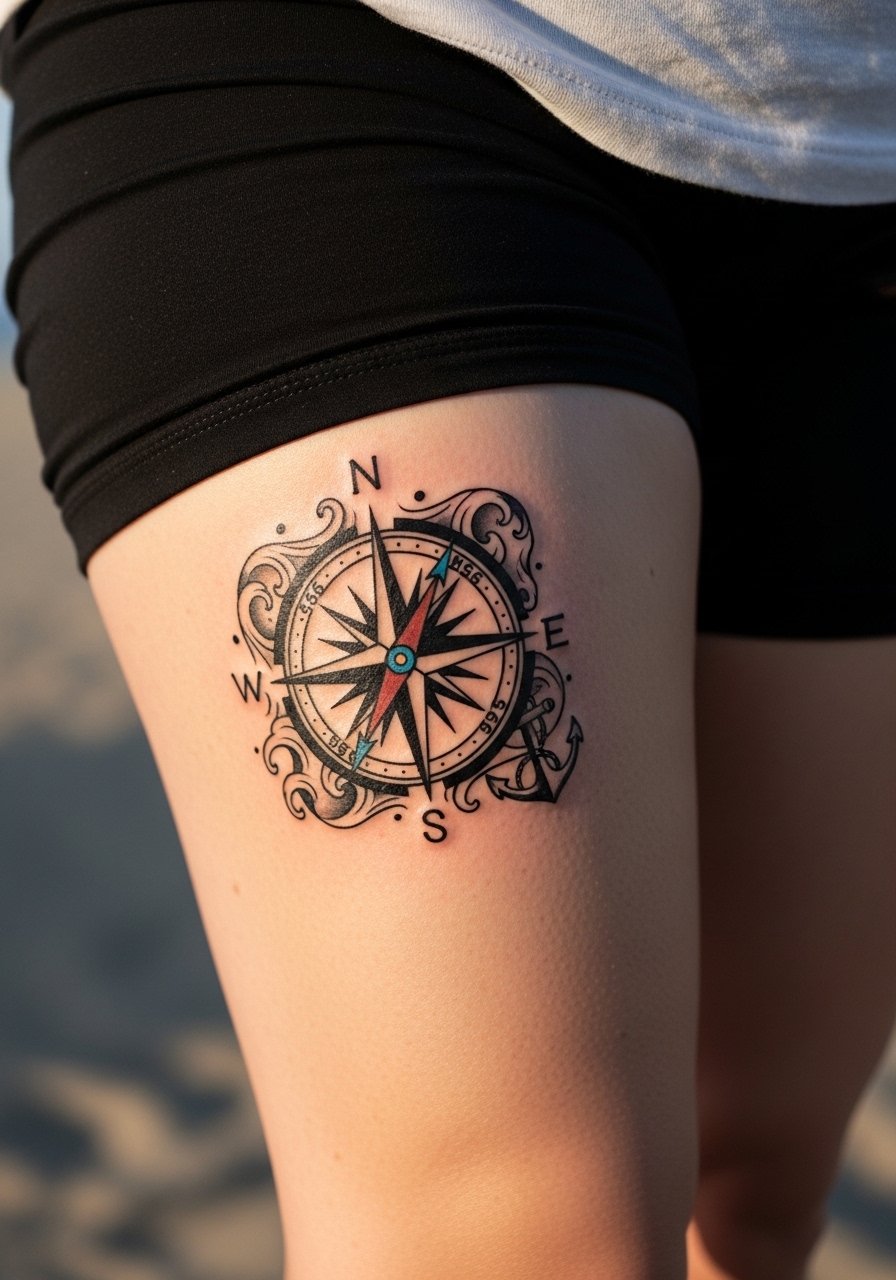
Compasses are great for covering horizontal script because the geometric points break linear text. During consult ask for rope elements and a dark center to distract from old lettering. A frequent mistake is making the compass too small which reduces the cover-up power. Expect two to three sessions depending on how dense the old ink is. For showing off, clean white Bermuda shorts or sailor-style culottes complement the design, and a simple rope belt echoes the motif.
Studio Day Picks
The first six thigh pieces above need different prep than small wrist work, and a few session day items make the artist setup and first week easier to manage.
-
Tea tree salve. Thinner than heavy ointments it helps with humid thigh healing when a greasy layer would trap sweat around dense blackwork.
-
H2Ocean tattoo spray. Gentle spray cleanse during showers keeps large thigh pieces clear without residue that can irritate fresh saturation.
-
InkSafe aftercare butter. Non-greasy formula that users in humid climates prefer for large wrap work on the thigh where heavy balms caused itching.
-
Kuro Sumi unscented balm. Fine for deeper skin tones since it leaves no white cast, useful if you want healed photos that actually match what you see.
-
Saniderm tattoo bandage. Protective film option for the first days keeps thigh friction down but remove early if sweating traps moisture.
7. Dark Blackwork Mandala as a Full Thigh Wrap
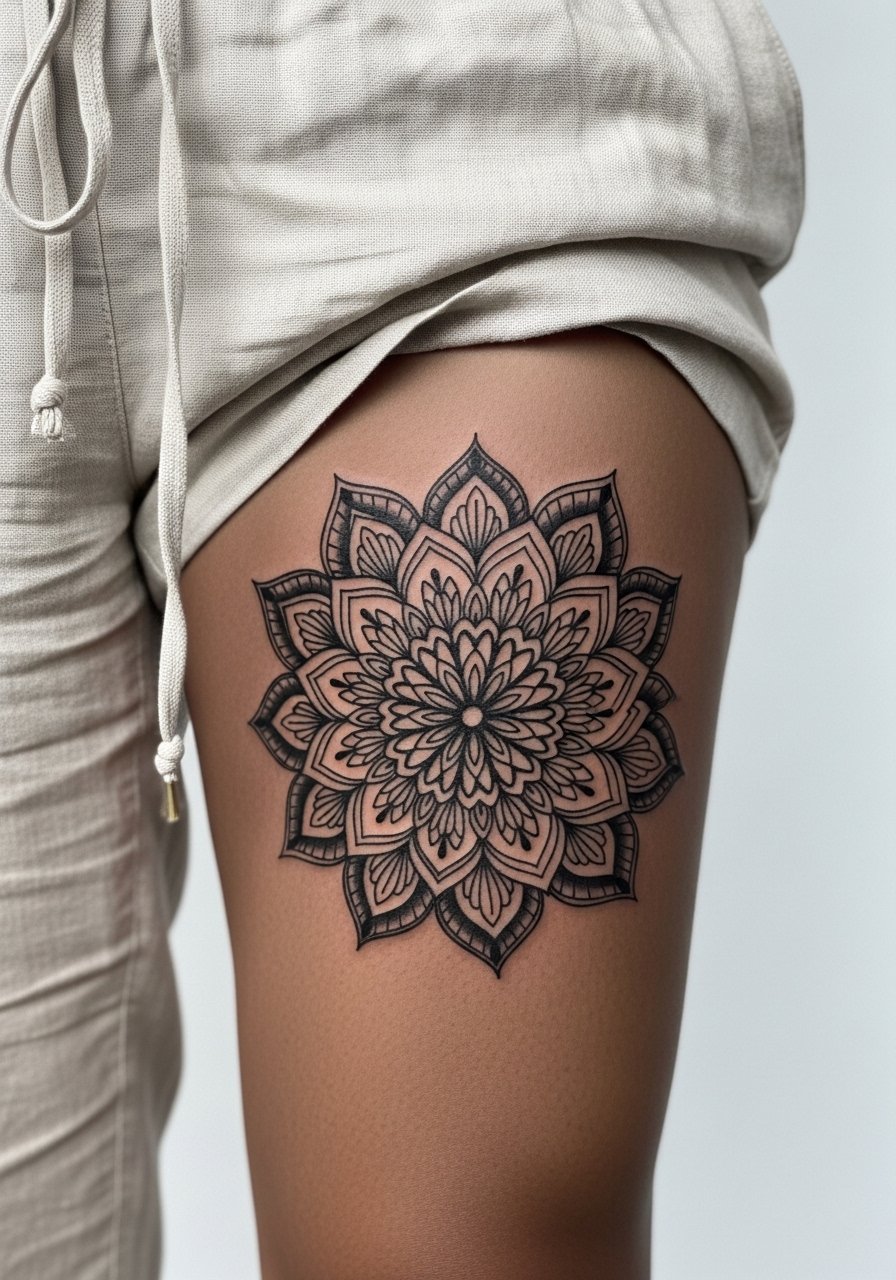
A mandala delivers opacity through pattern density so it is excellent at hiding multicolored or bleeding old ink. In consult ask for alternating solid rounds and stipple shading so the pattern breathes rather than becoming a single blob over time. Artists debate whether full blackwork ages better than layered realism, so talk through touch-up expectations. Building saturation takes sessions and the first healed month can be itchy with sweat, so bring breathable linens for the ride home and recovery.
8. Realistic Floral Bouquet Centered on Inner Thigh
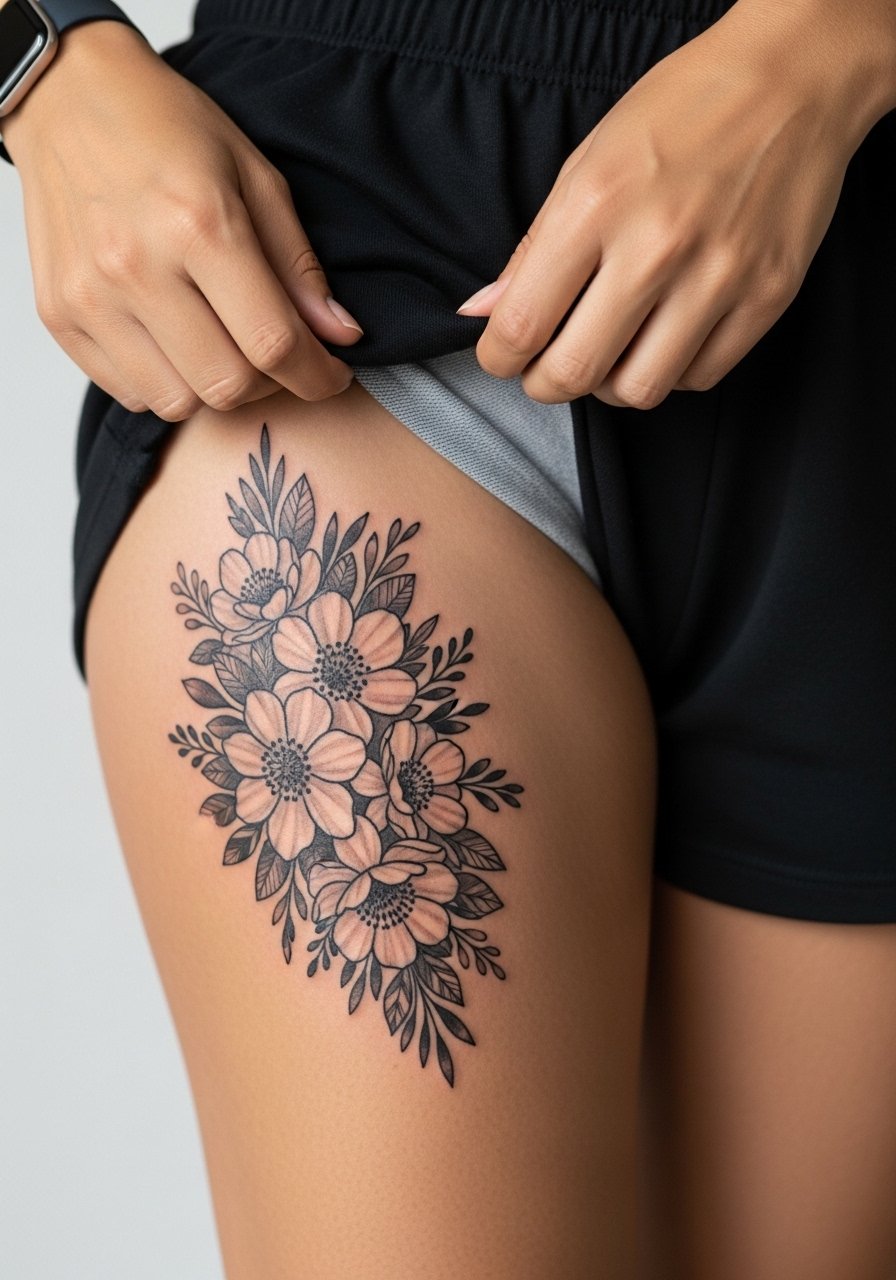
Micro-realism covers faded script by layering petals and leaves that interrupt previous line flow. Be upfront at consult about the old ink location so the bouquet places darker elements directly over the densest spots. Expect four sessions for depth and subtle touch-ups later. Inner thigh pain is higher and sweat can complicate healing, so discuss numbing options and plan for breathable session pants that let the area cool after tattooing.
9. Stipple Shaded Peony That Blurs Old Lines
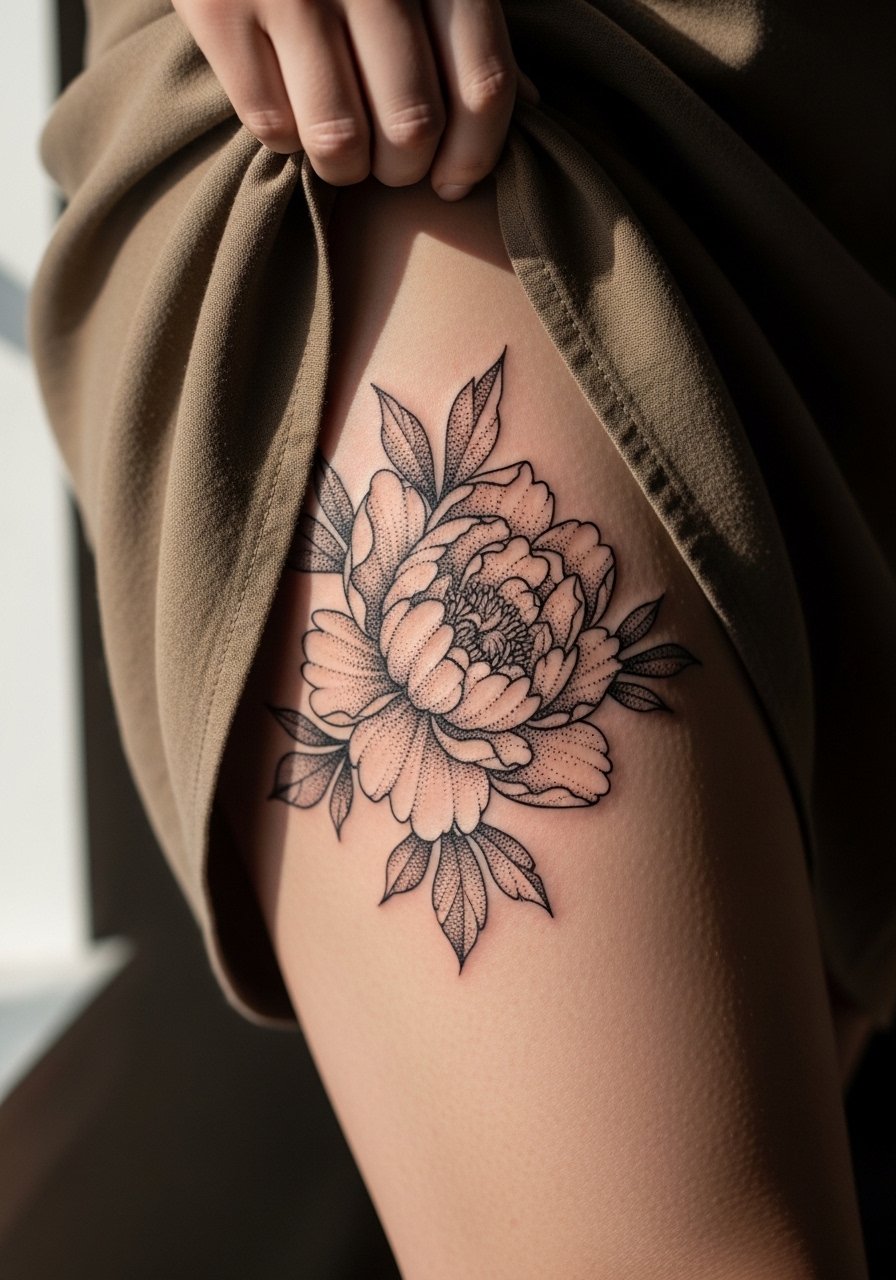
Stipple and dot work give a soft texture that can mask old outlines without heavy black fill. Ask for denser dots where the old work shows through and lighter dots on surrounding skin so the eye reads the peony as the focal point. Mistakes come when stipple is too sparse which lets underlying marks show. Pair this with wrap skirts or cargo pants rolled to the knee for a nature-ready aesthetic.
10. Geometric Shield to Break Up Horizontal Script
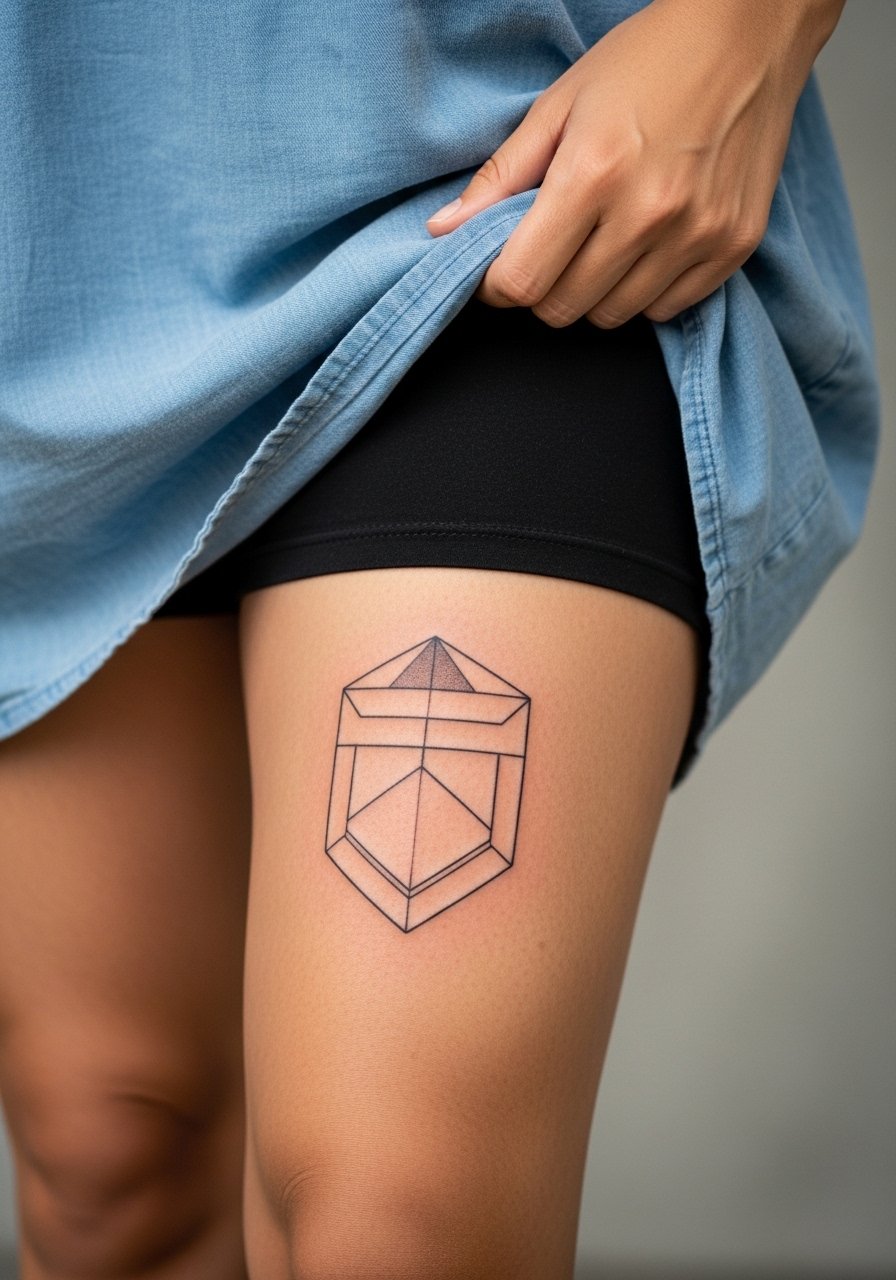
Geometric pieces hide script by introducing deliberate negative space and solid anchors. On consult, request large anchor areas and avoid ultra-fine single lines that risk blowout on moving thigh skin. Aging looks best when shapes have breathing room, so scale up the shield size for longevity. For session wear, a loose skort or button-front shorts makes access painless and keeps pressure off the area during travel home.
11. Portrait-Style Cameo in Black and Gray for Strong Coverage
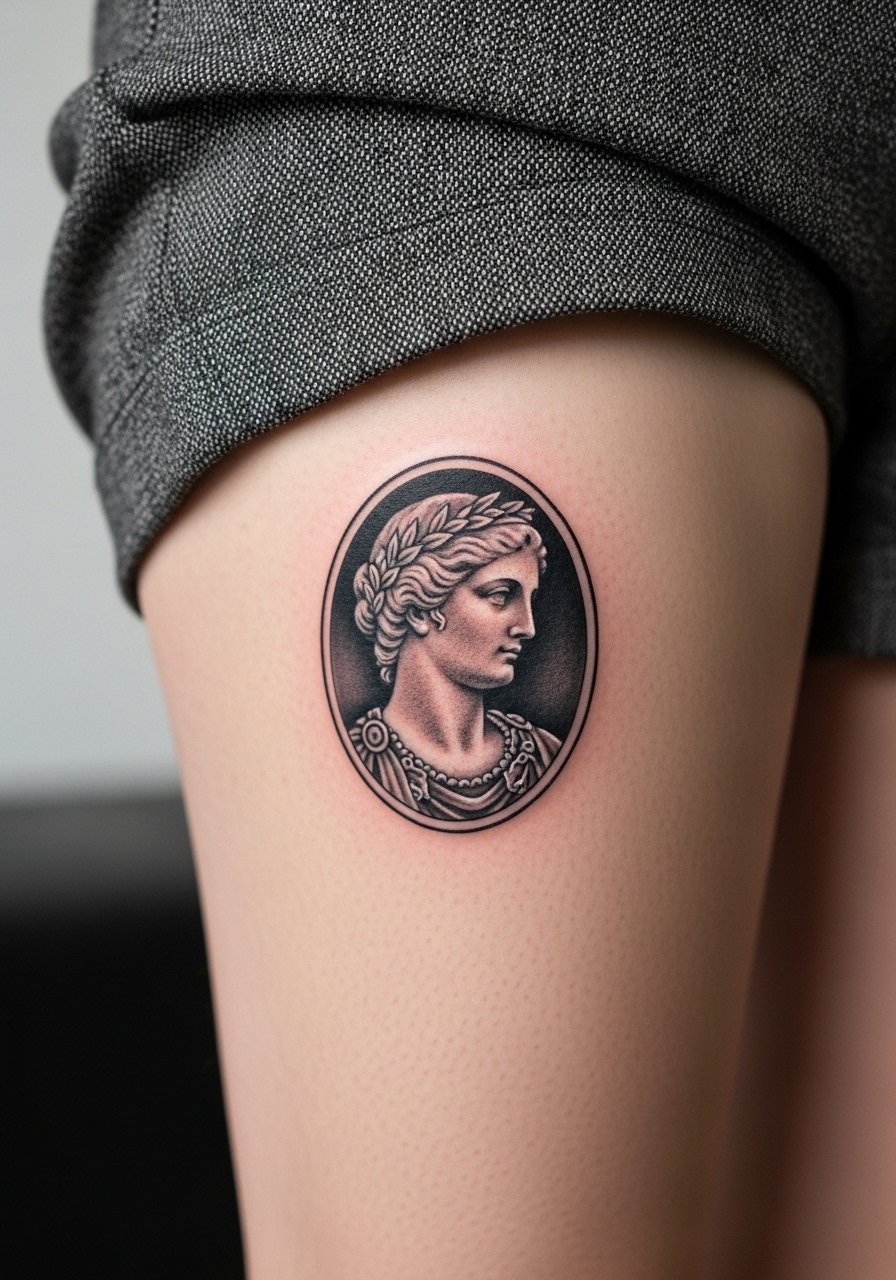
Portrait techniques can overpower dark remnants when the artist layers deep background shading and strong contrast near the edges. Tell your artist to plan a darker halo behind the portrait to mask any stubborn linework. The session time is long and requires shifting positions for comfort so wear button-front shorts or loose drawstring pants. Expect touch-ups after a year since moving skin can soften fine facial details over time.
12. Botanical Garland That Follows the Thigh Curve
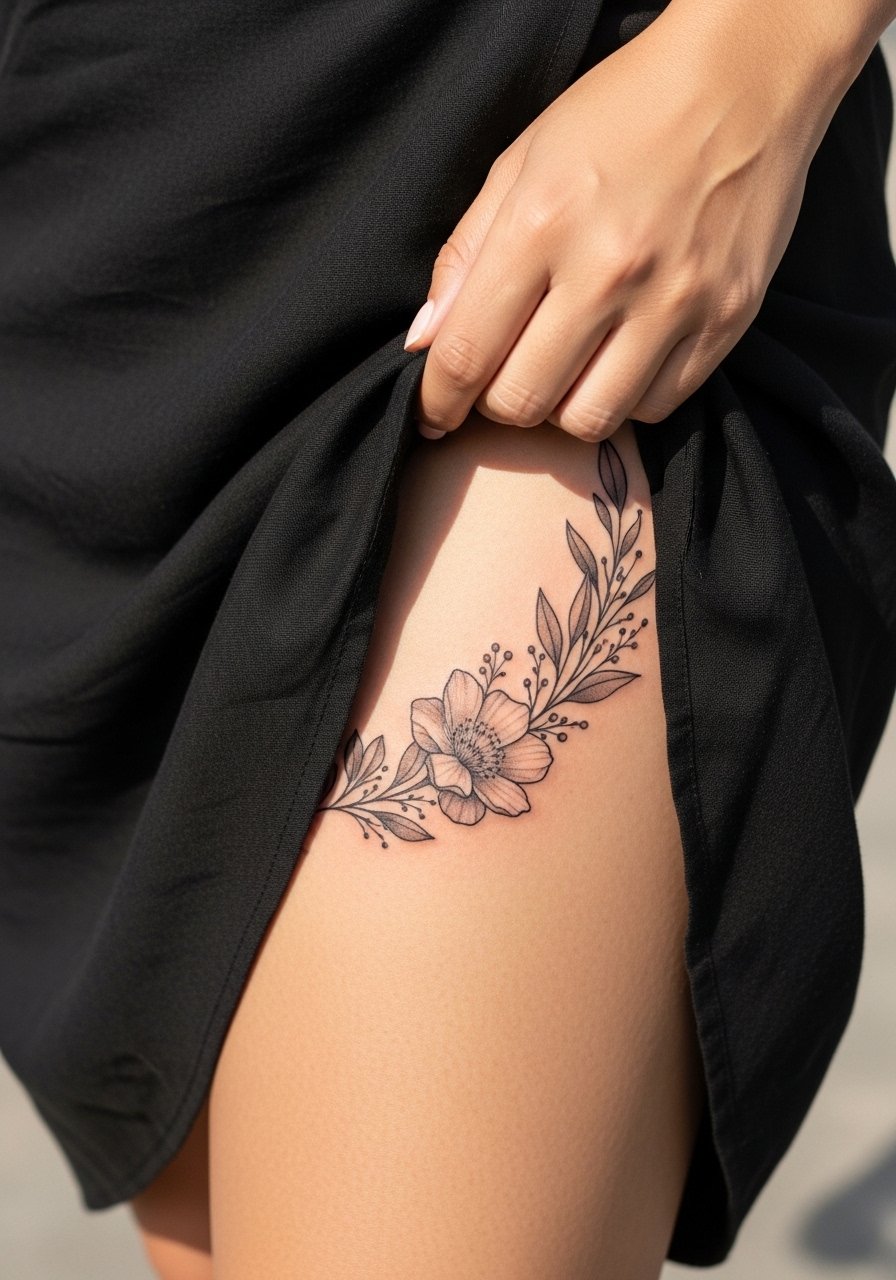
A garland uses curve adaptation to hide irregular old tattoos by directing the design along natural body lines. During consult point out areas that will sit on curved muscle so the artist can plan thicker lines there. A common error is keeping the garland too symmetrical on asymmetric old work which creates awkward negative spaces. For showing off, pair with wrap skirts or high-rise shorts and choose fabrics that move with the design.
13. Bold Script Replacement with Banner and Floral Shield
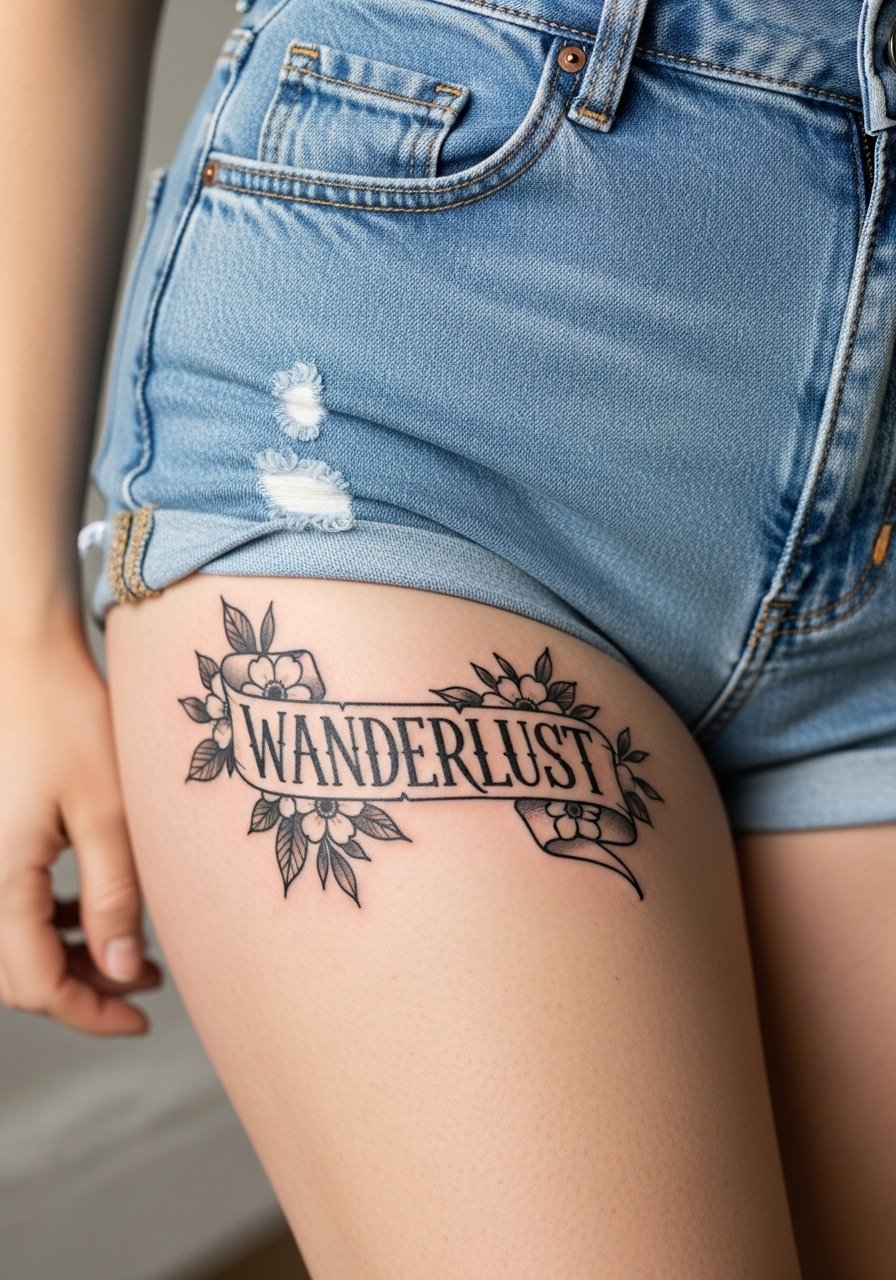
If the original is script you want gone, use a banner and surrounding florals to break the word shape into new elements. Tell the artist the exact words to remove and to place the darkest fill directly over the oldest ink. Avoid asking for thin, delicate script replacement since that can reveal raggedness after healing. For sessions, loose shorts work, and for styled looks the piece sits clean under tailored shorts or asymmetrical dresses.
14. Nautical Ropes and Anchors for Horizontal Repair
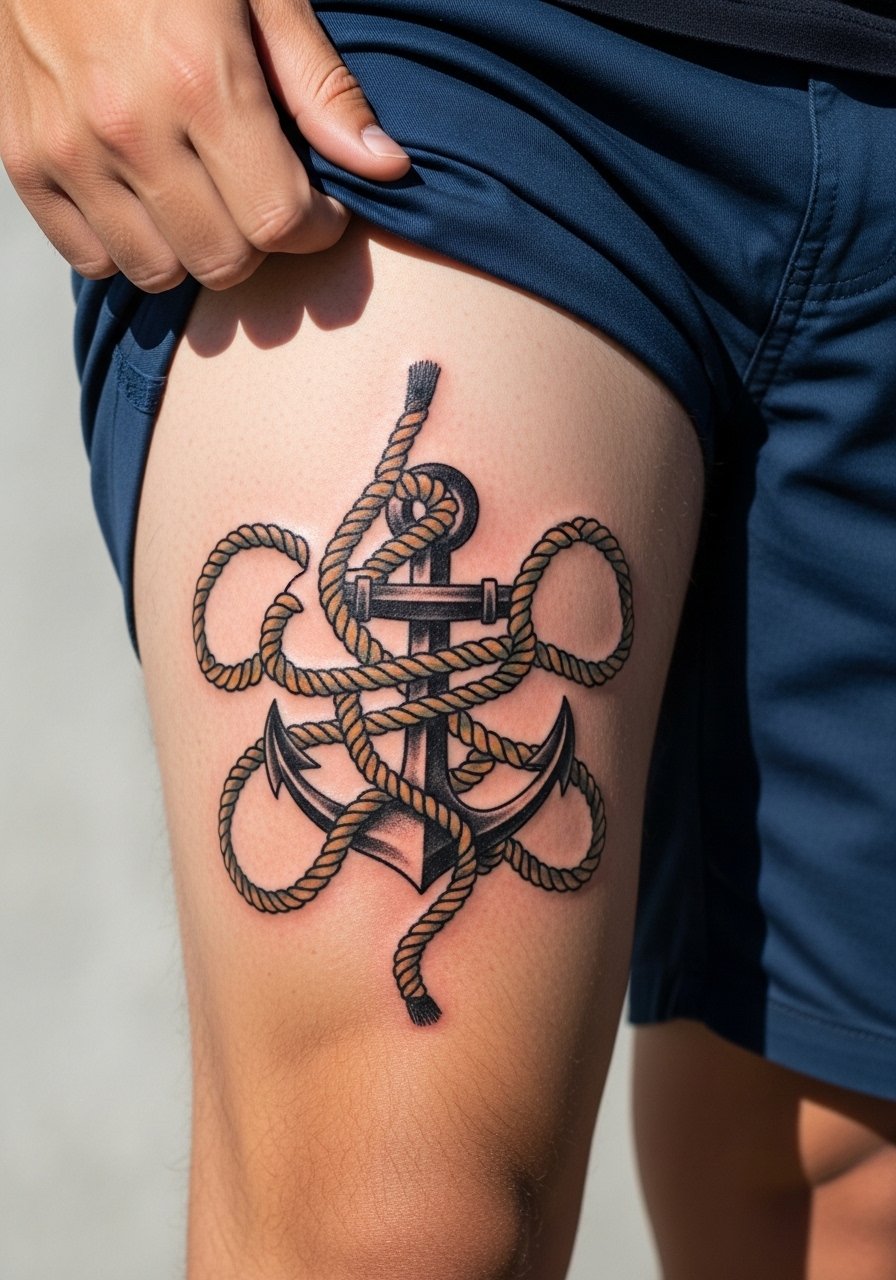
Nautical motifs are practical for covering names or bands because rope patterns obscure linear text. Specify rope weave density and request darker knots over the old lettering. The session is straightforward but requires careful placement to avoid the design twisting when you sit. Style it with crisp white bermuda shorts or sailor culottes that let the compass and rope feel built in.
15. Abstract Brushstroke Blackwork That Eats Old Color
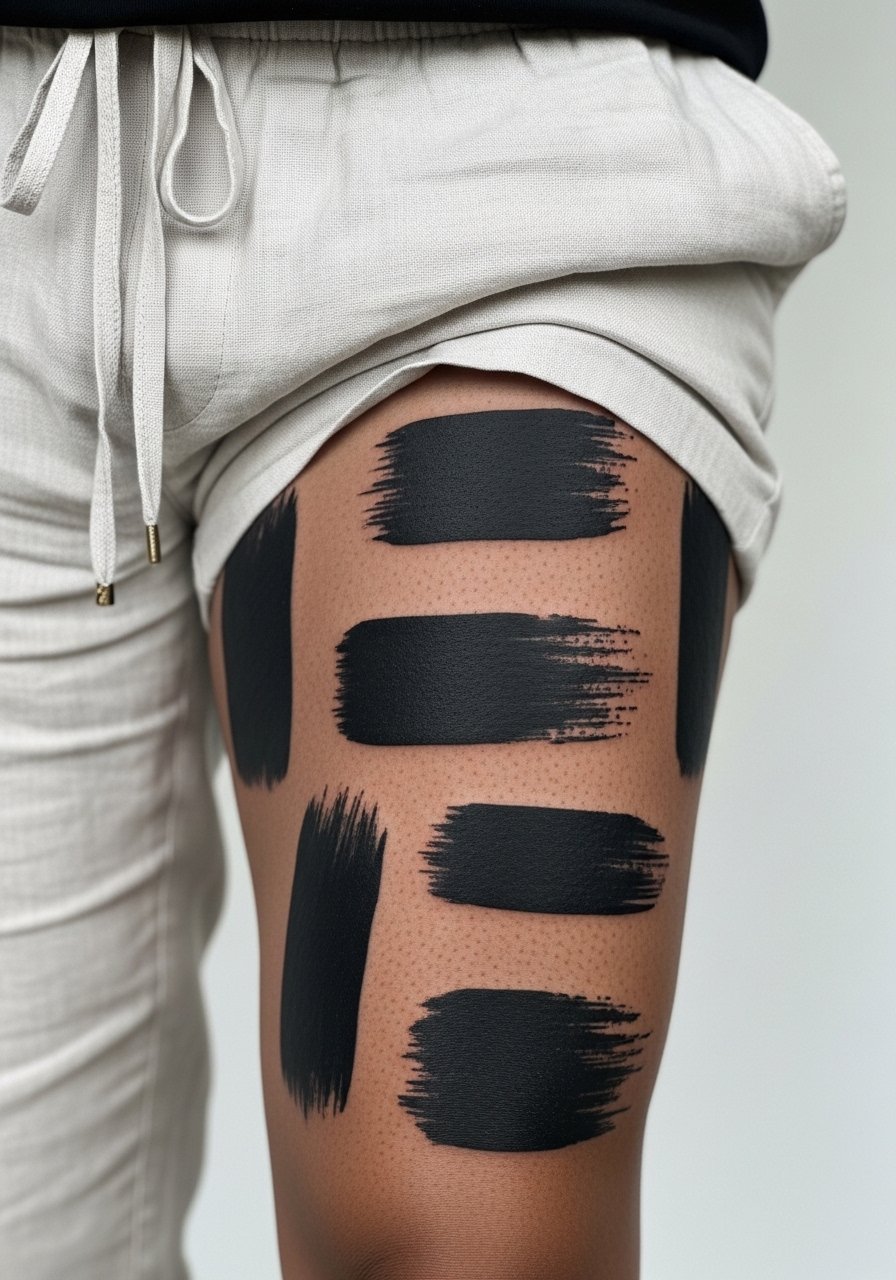
Abstract strokes let you choose where to place the heaviest coverage so the old work is literally painted over. Ask for irregular edges and a mix of solid and stippled areas so the piece reads intentional and not like a patch. Mistakes happen when strokes are too uniform which highlights the patchwork. For session wear, loose linen drawstring pants are ideal and the look pairs well with neutral skirts for contrast.
16. Minimalist Line Bouquet Placed Slightly Off-Center
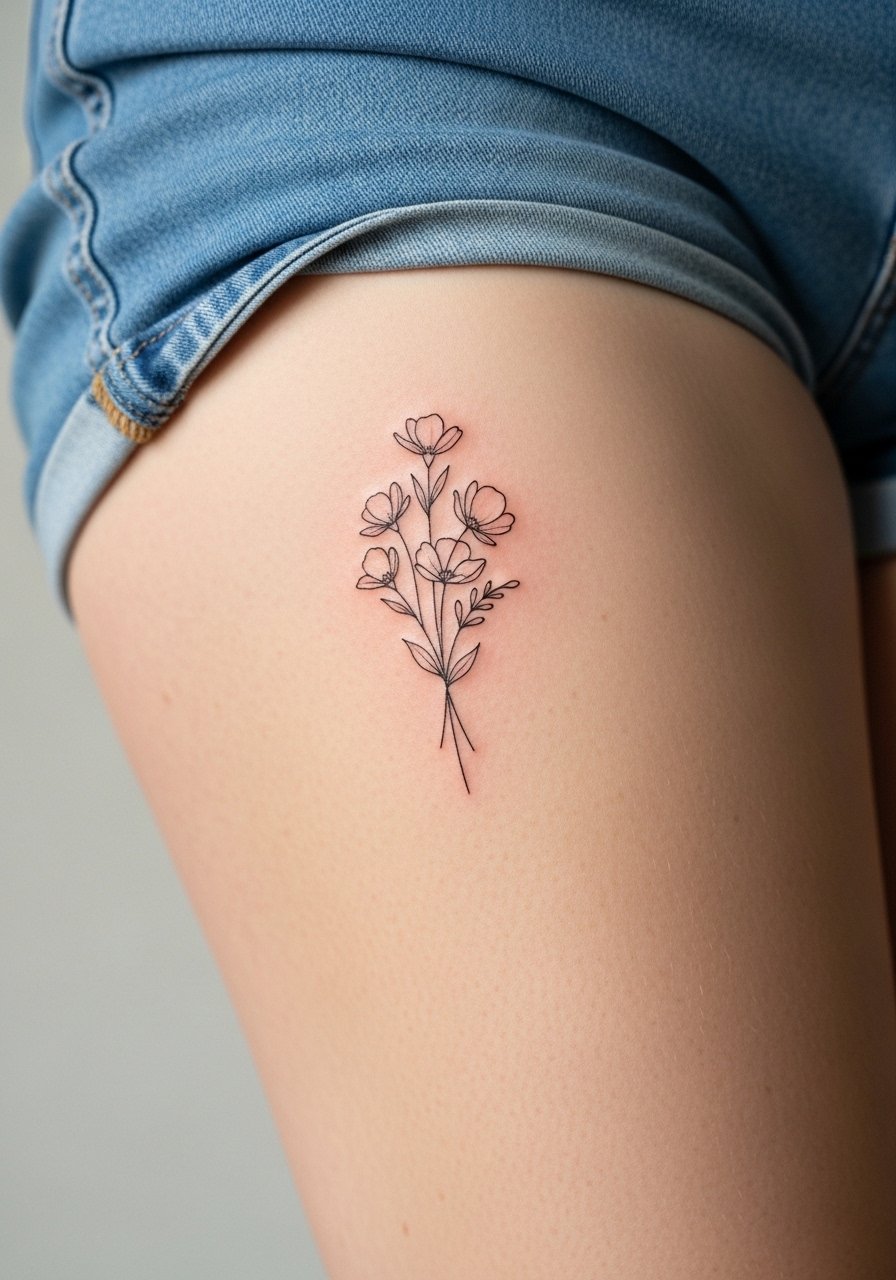
Minimal line bouquets can work over faint, faded tattoos when placed to avoid the densest old ink and use negative space to distract. Be clear with your artist about which old lines to avoid and where you want the bouquet stem to curve. Fine line on the inner thigh brings higher risk of blur, so expect touch-ups sooner than with saturated blackwork. For session wear, pick wide-leg pants so the artist can access without pressure.
17. Armor Plate Blackwork to Mask Large Dark Remnants
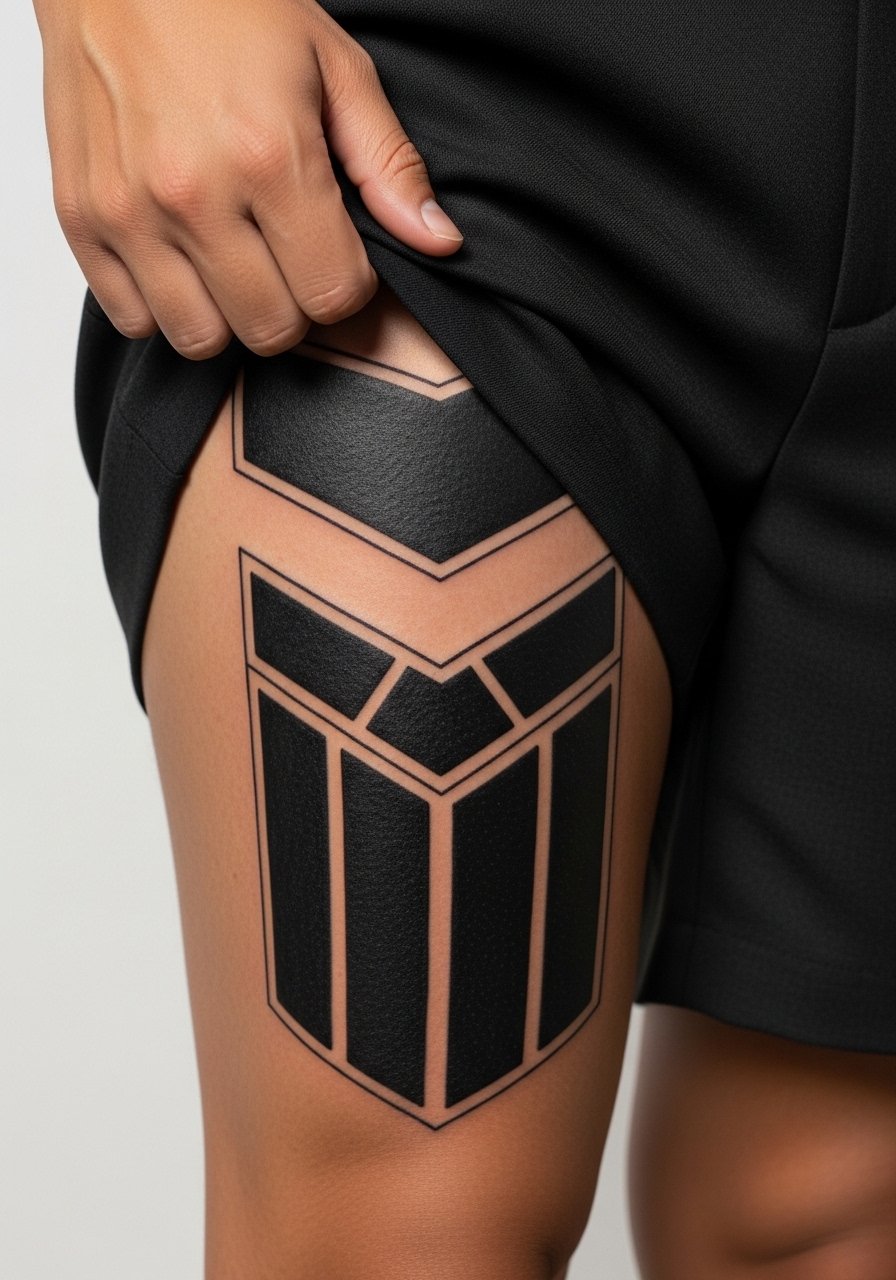
Armor plates use large black panels and negative space to neutralize intense dark areas under old tattoos. Tell the artist you want strategic panels positioned over the darkest spots and softer edges elsewhere to avoid a blocky look. This is a heavy coverage approach and touch-ups are often needed to keep saturation even. Pair the finished work with asymmetrical skirts or tailored shorts for an edgy counterpoint.
18. Neo-Realism Animal Motif with Dark Backdrop
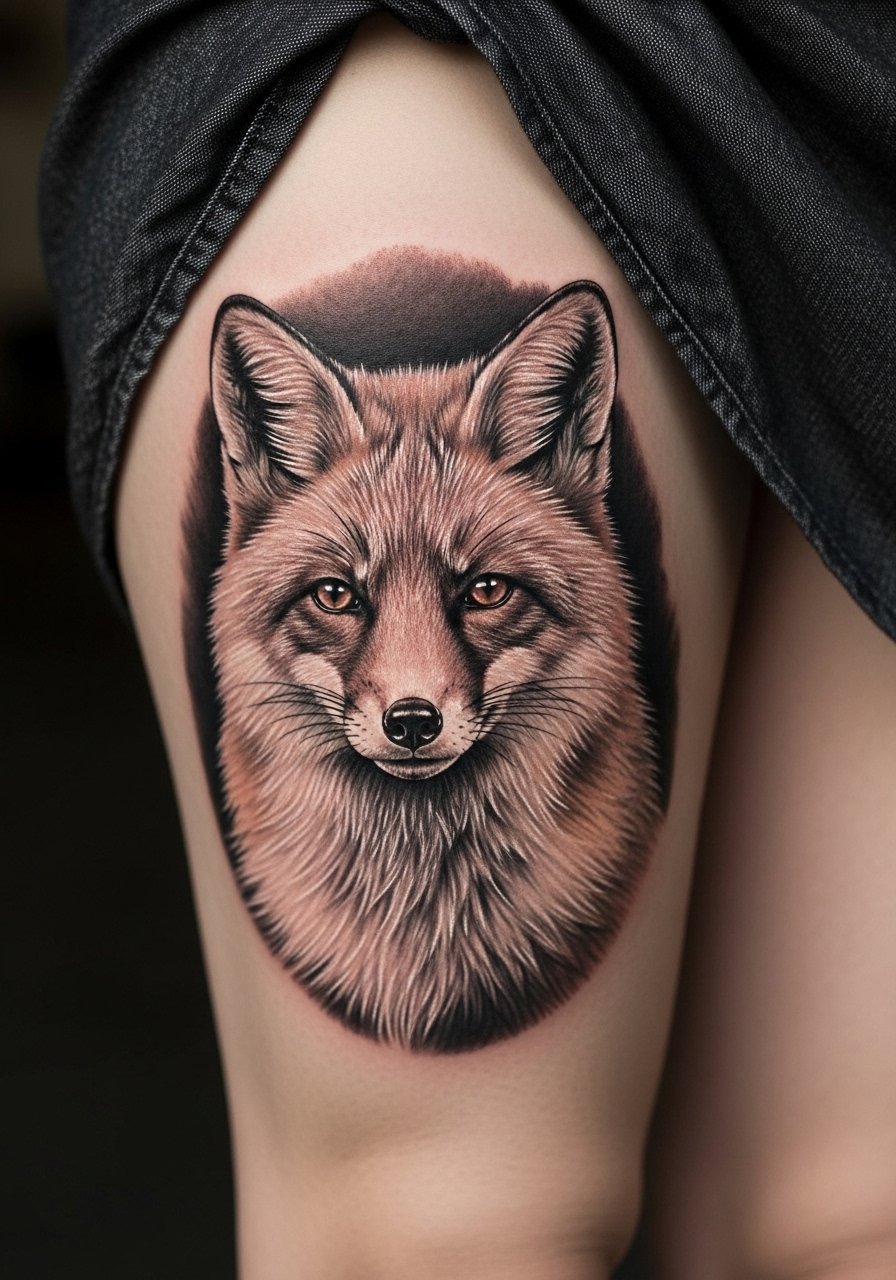
Animals in neo-realism can incorporate heavy backdrops that obliterate previous lines while keeping the subject recognizable. Ask the artist to place darkest values behind and under the animal, not just around the edges. Sessions take time for layered shading and the piece needs long sleeves or loose bottoms for the first week to avoid rubbing. Styled looks like flowy midi skirts with slits frame the motif naturally.
19. Filigree Ornament with Hidden Dark Nodes
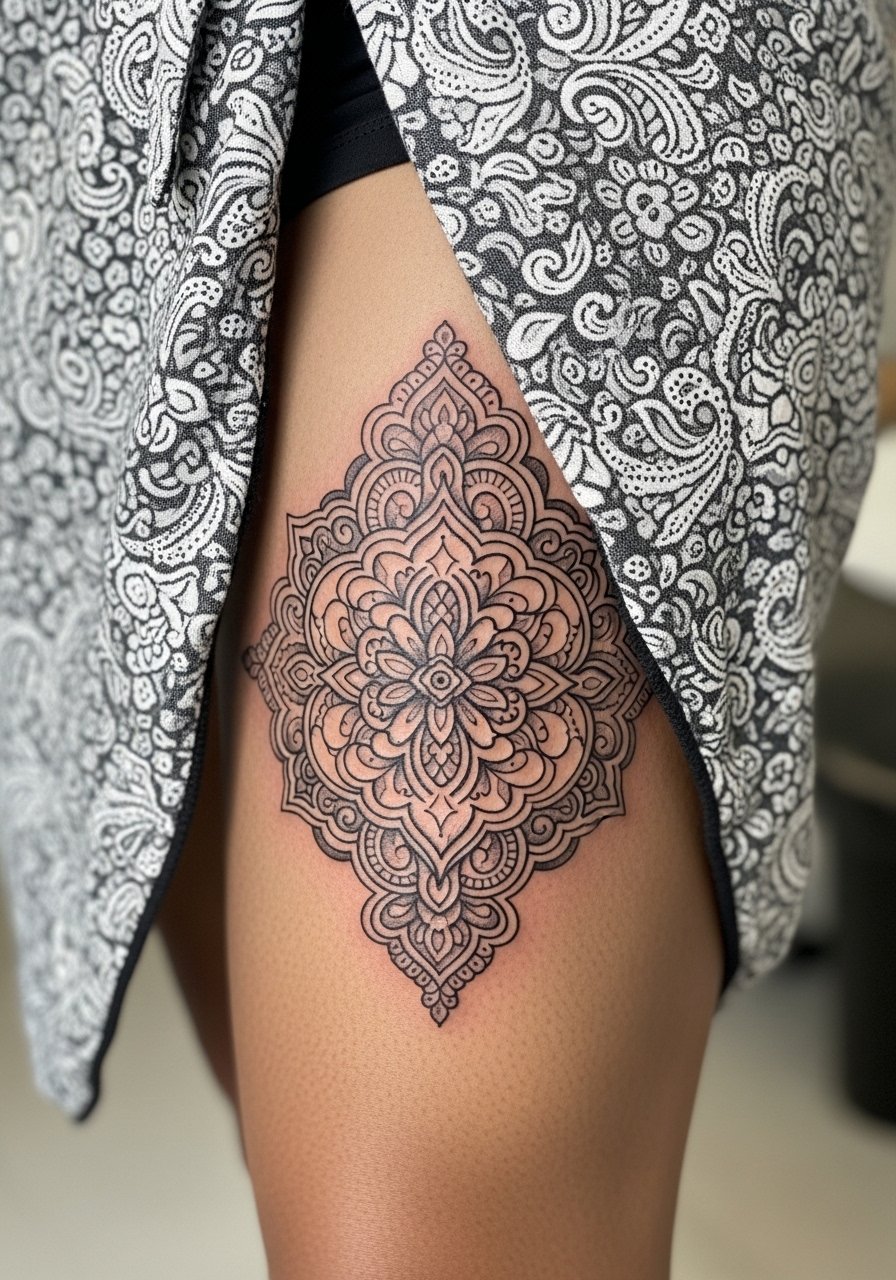
Filigree disguises older marks by breaking the eye with detailed ornament and localized dense nodes where the old ink sits. During consult show the old tattoo so the artist can plan those coverage nodes. The risk is making the filigree too delicate which lets the old work peek through, so insist on a mix of density. For showing off, choose wrap skirts or cargo pants rolled up to the knee so the pattern breathes.
20. Compass Rose with Thick Central Saturation
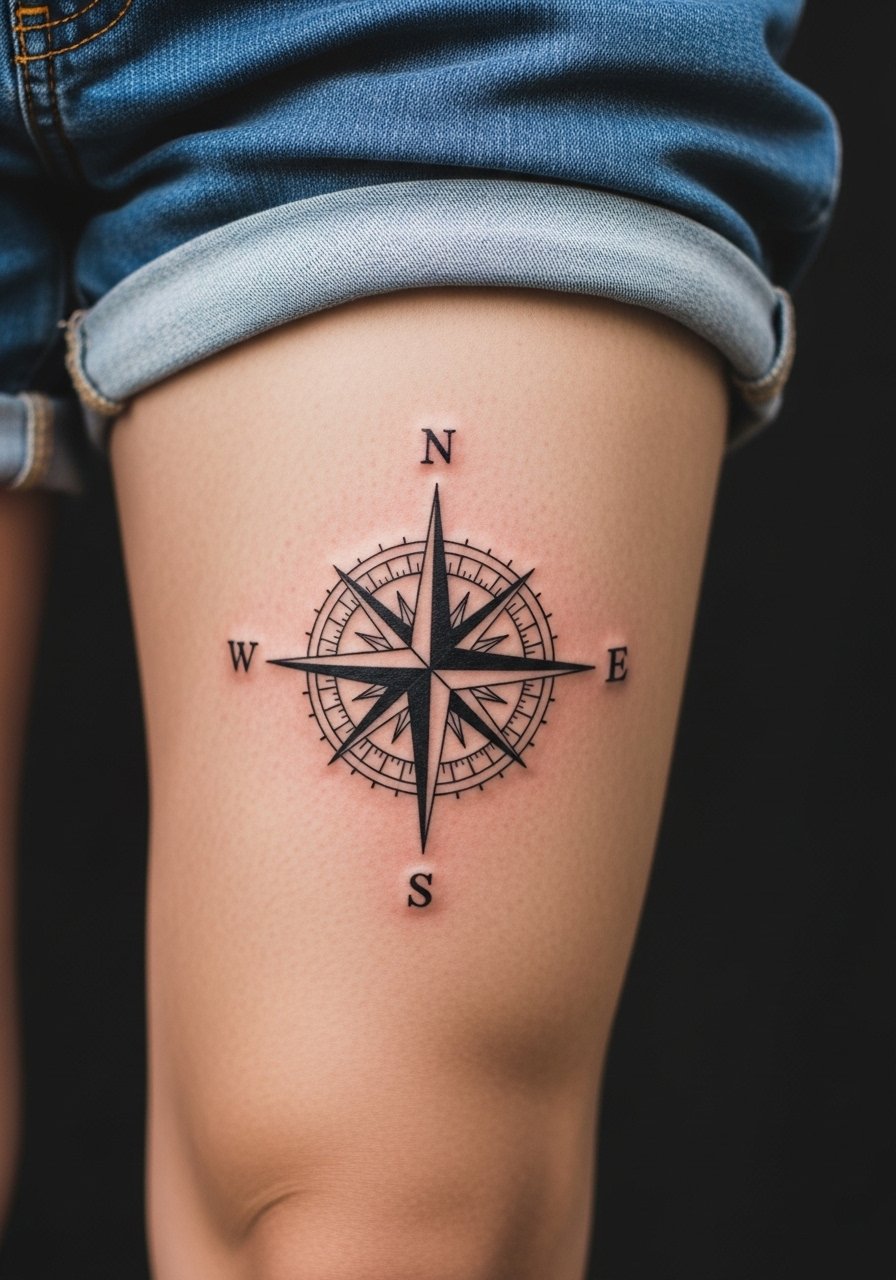
A heavy central hub in the compass hides dark script by concentrating saturation where it matters most, while outer points keep the design light. Tell your artist to anchor the cover-up with a dark core and refine the points with selective color if desired. Expect two to three sessions to layer the center without overworking surrounding skin. Bermuda shorts or sailor culottes make showing the piece intentional and stylish.
21. Watercolor-Adapted Neo-Traditional Bouquet with Dark Anchors
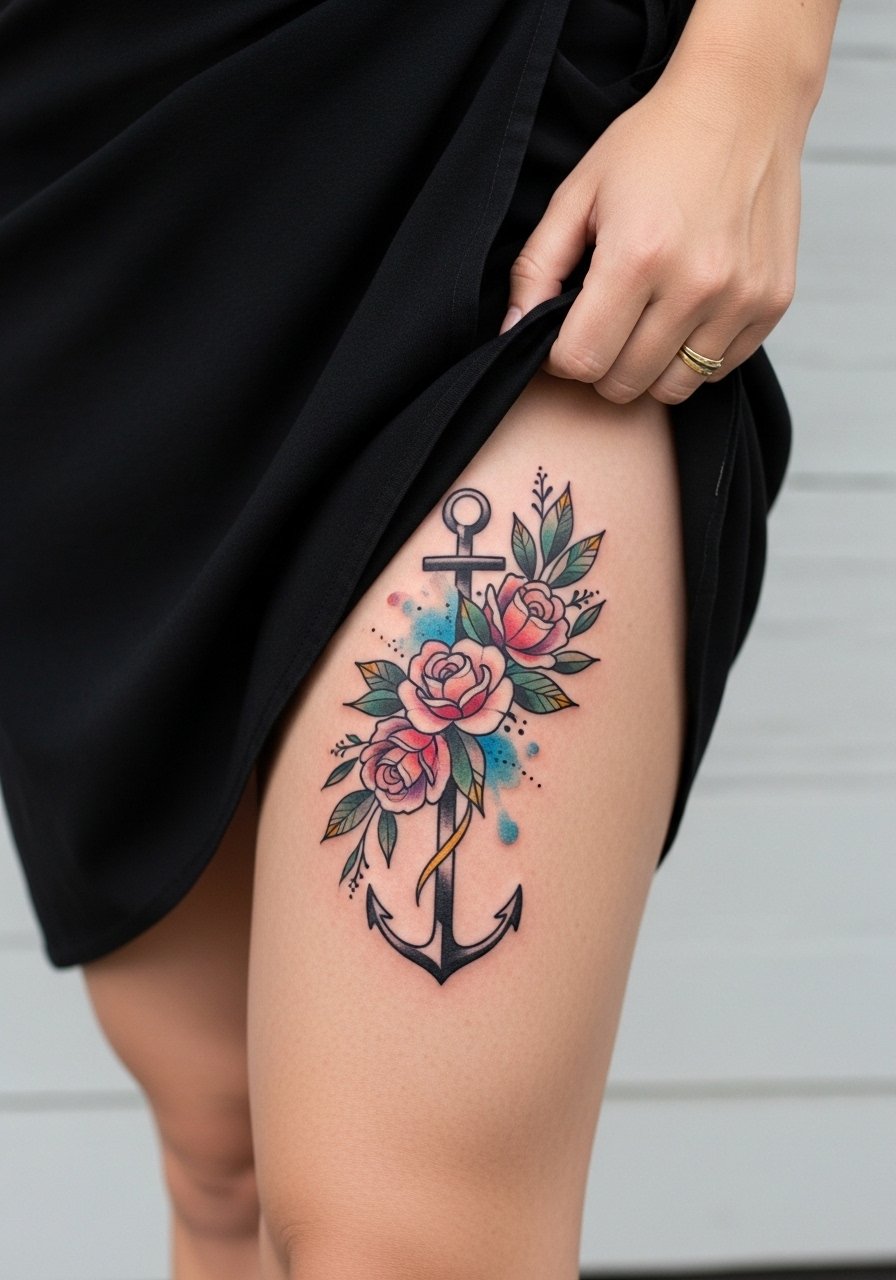
Watercolor effects can fail at covering heavy dark ink unless paired with solid black anchors. Request that the artist plan dark nodes that the color can float around. The controversy here is that watercolor is trendy but often insufficient for cover-ups unless anchored by blackwork. Expect longer sessions and a conservative approach to color so nothing peeks through. Pair the final piece with flowy skirts that let the color read without being overexposed to sun.
22. Leaf Cluster That Leans Into the Thigh Shape
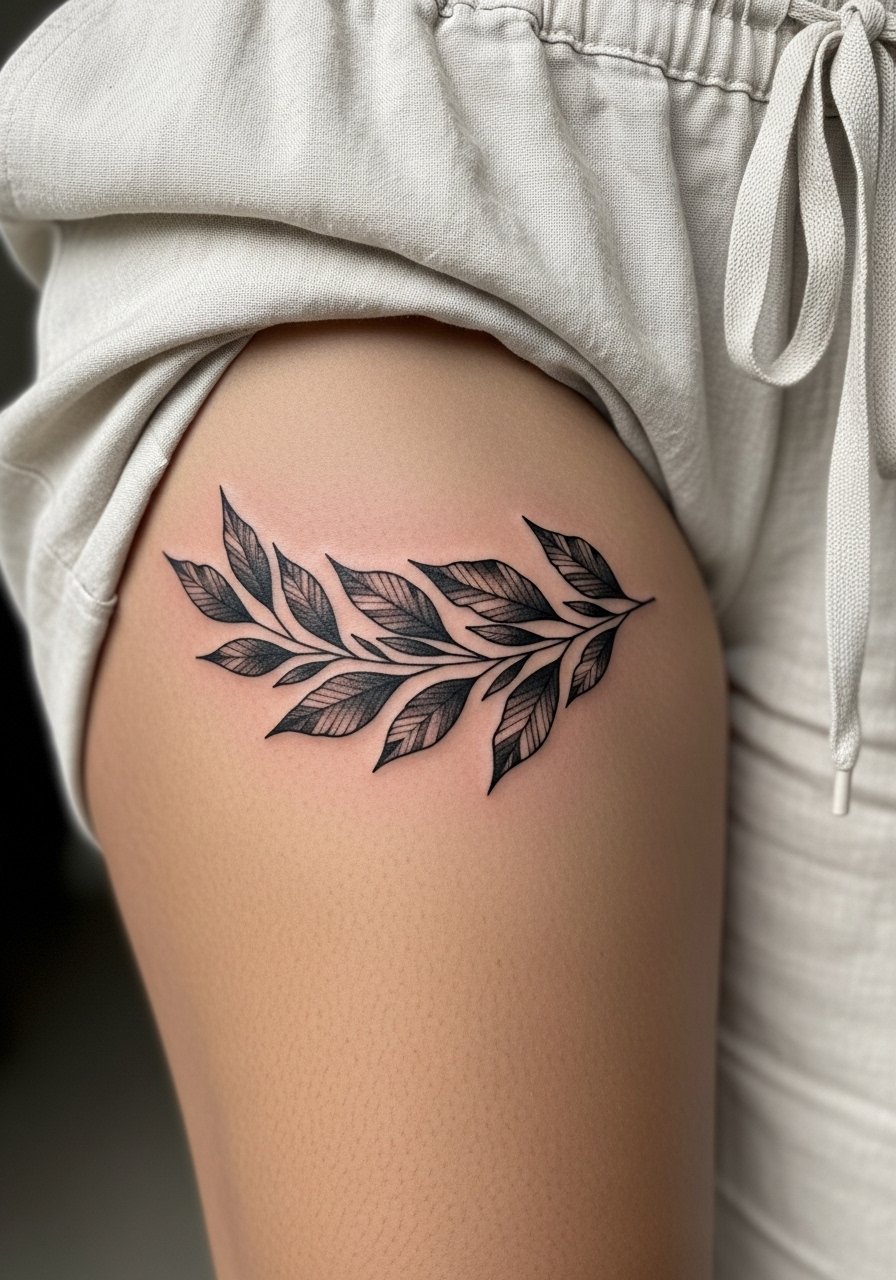
Clusters of leaves follow the muscle lines and can camouflage older markings by redirecting the pattern. Ask the artist to place darker leaves over old lines and lighter leaves elsewhere so it reads as movement. The common mistake is using identical leaf sizes which flattens the camouflage. For sessions, loose pants with a drawstring avoid bands that would press on the fresh ink.
23. Script Overwrite Framed by Floral Elements
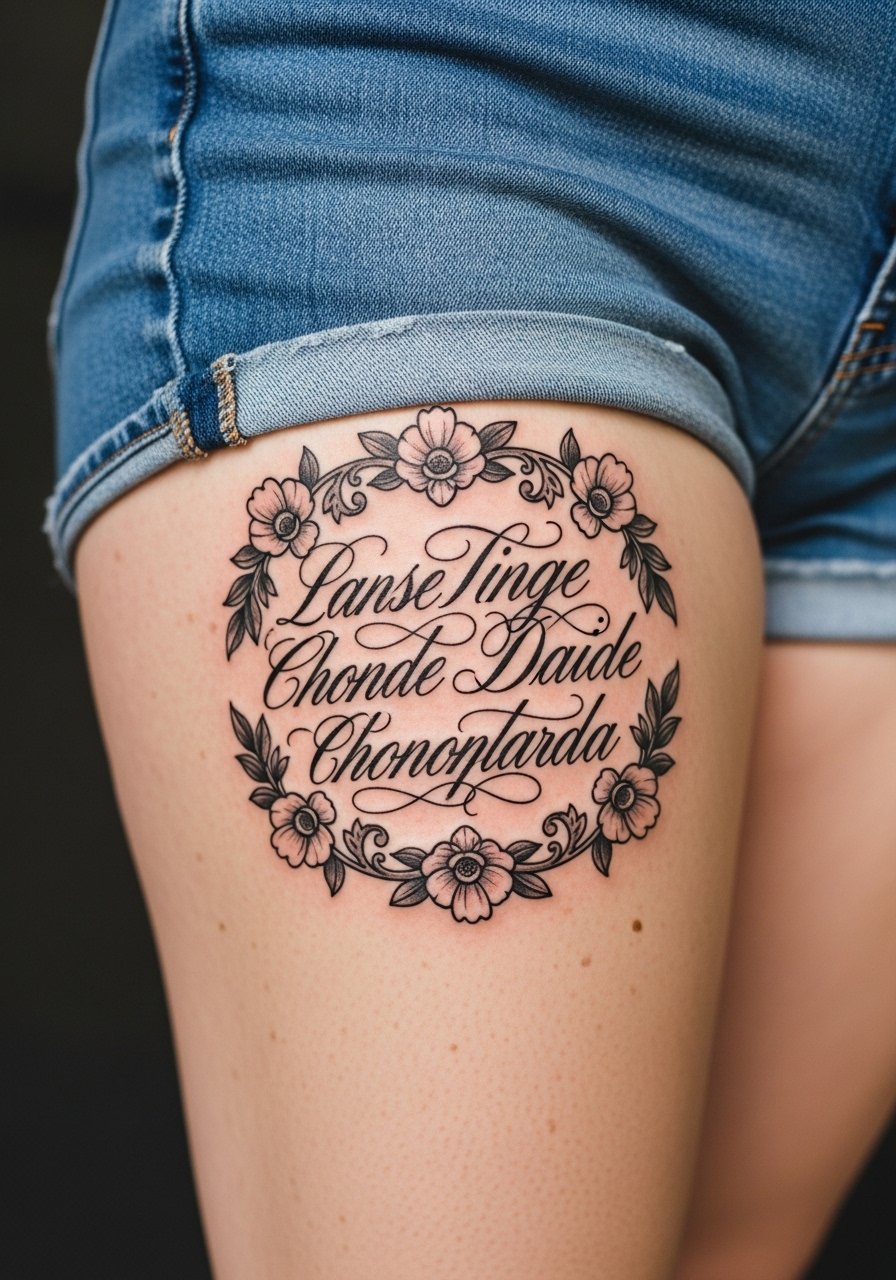
When replacing script, a bold overwrite paired with framing florals distracts from ragged old lines. Tell the artist the exact positioning and request heavy black in the new lettering so the old shapes are lost beneath. Avoid skinny new lettering since that can reveal the old outline. Tailored shorts or asymmetrical dresses show the framing without making the linework fight clothing seams.
24. Mixed-Scale Roses with Deep Sepals for Coverage
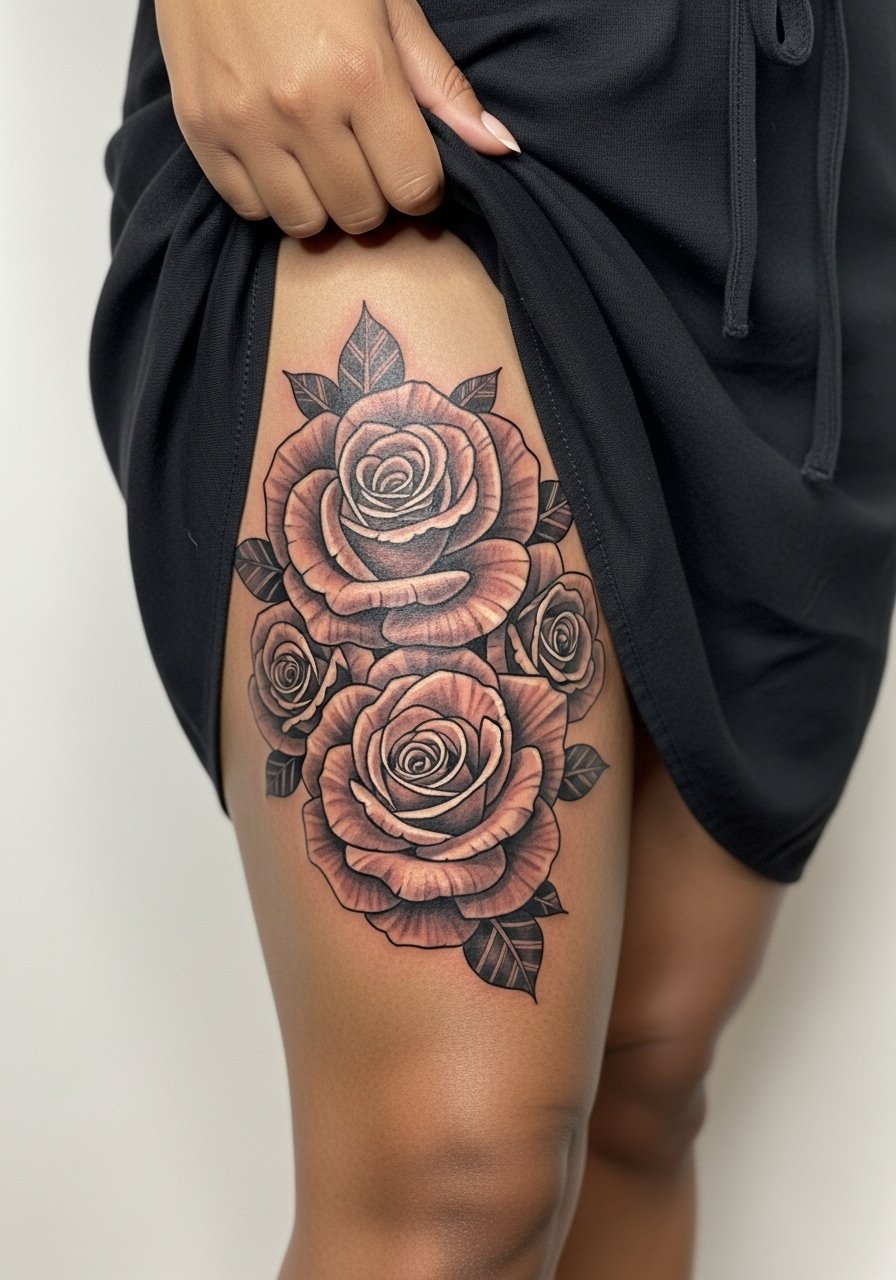
Mixing rose sizes lets you place the largest blooms over stubborn old spots and surround them with smaller pieces to blend edges. During consult ask for deeper sepals directly over darker old ink so the bloom reads natural. Mistakes arise when all blooms are identical and the old tattoo shows through the gaps. For show-off looks, high-rise shorts or slit skirts keep the focus on the layered petals.
25. Neo-Classic Shield with Botanical Inlays
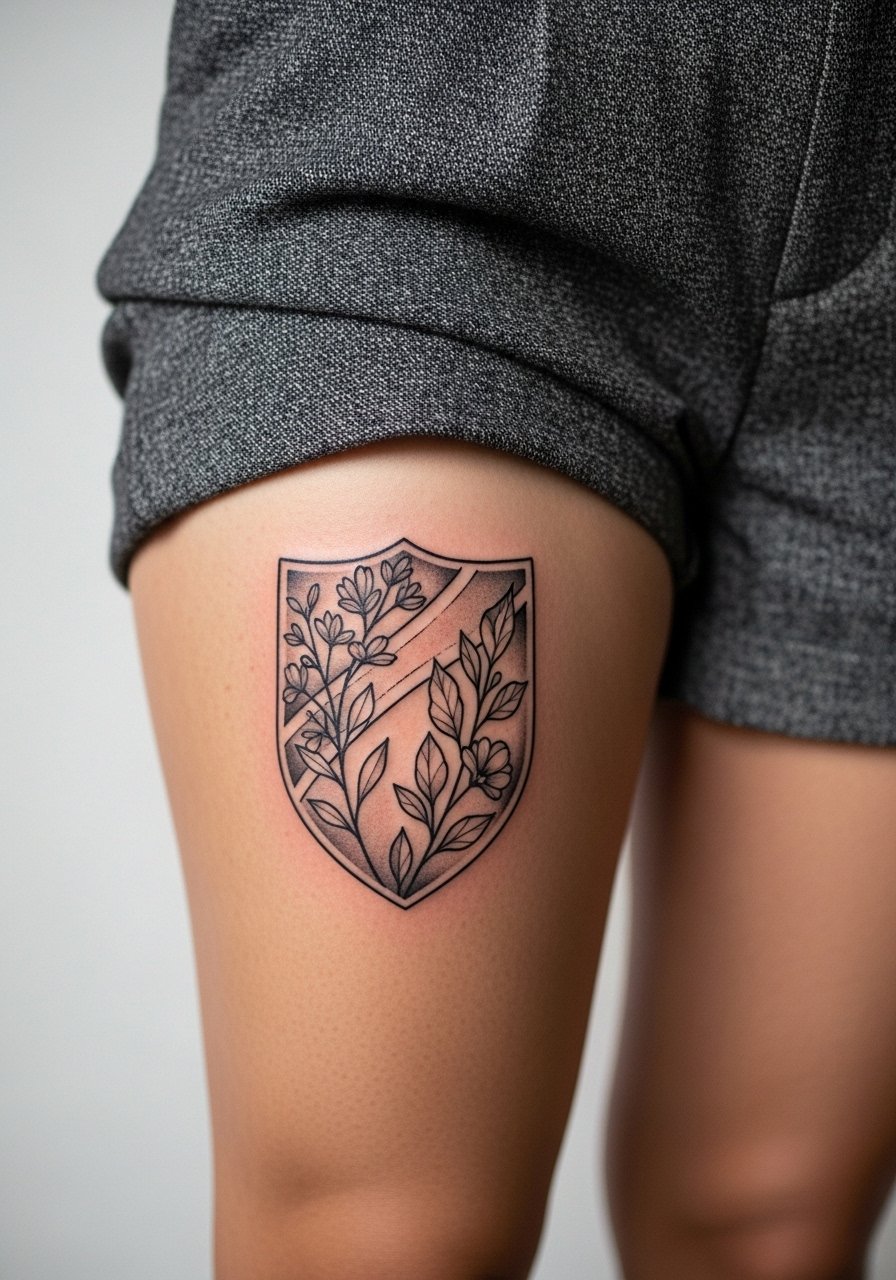
Shields combine bold outlines with softer botanical fills to take over previous marks without feeling like a patch. Tell the artist you want the shield edges thick and the interior florals to soften the transition. The design ages well if the shield remains proportionally larger than the old work. Pair with tailored shorts or a vintage leather belt for an on-purpose look.
26. Flowing Script Banner Integrated with Dot Work Background
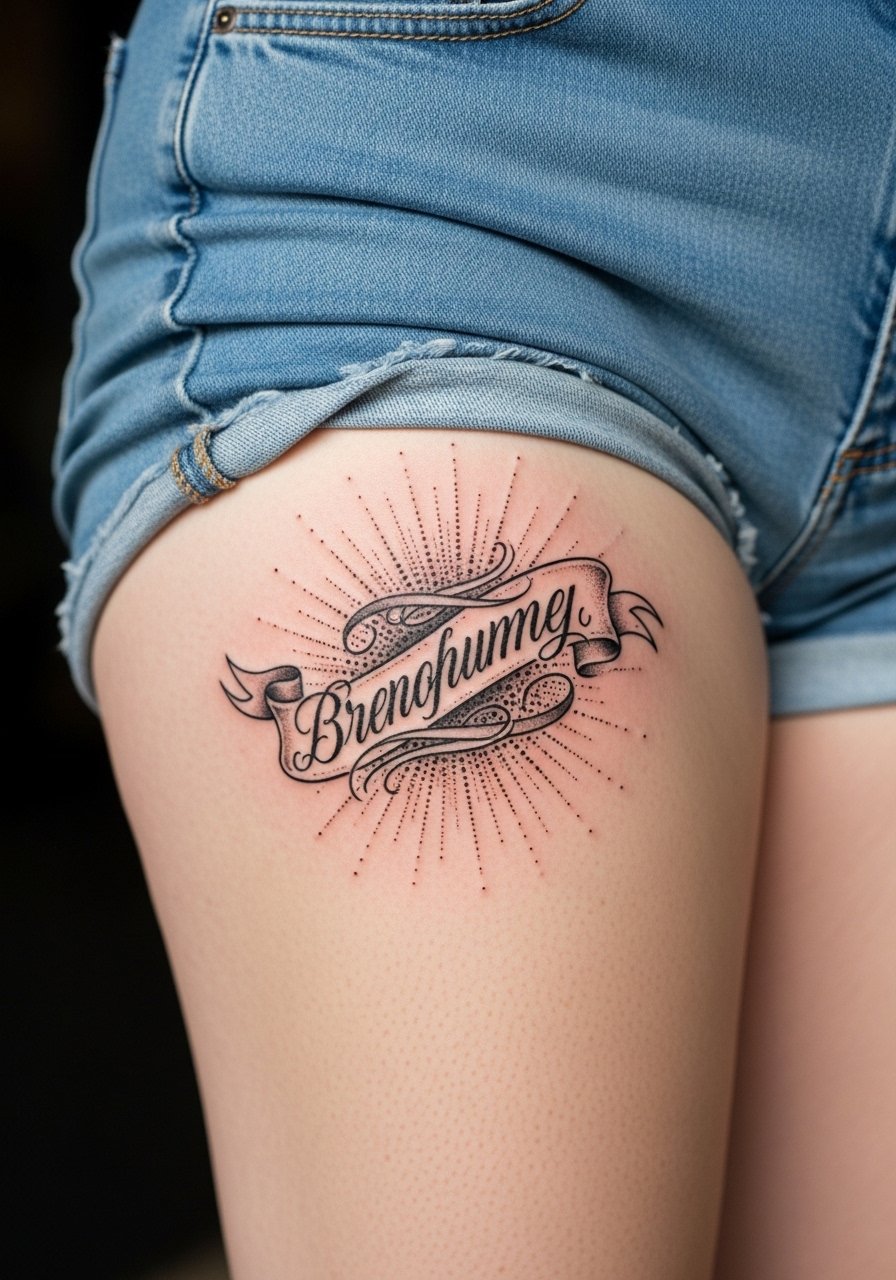
If you want new wording over old script, a banner can place the new line over the densest area while a dotted background distracts the eye. Ask the artist to plan the banner width to fully cover the previous text and to use stipple for a softer blend. Expect a touch-up in months as dot work can soften with movement. For style, pair with high-waisted denim shorts or asymmetrical dresses.
27. Ivy and Mandala Hybrid That Masks Irregular Shapes
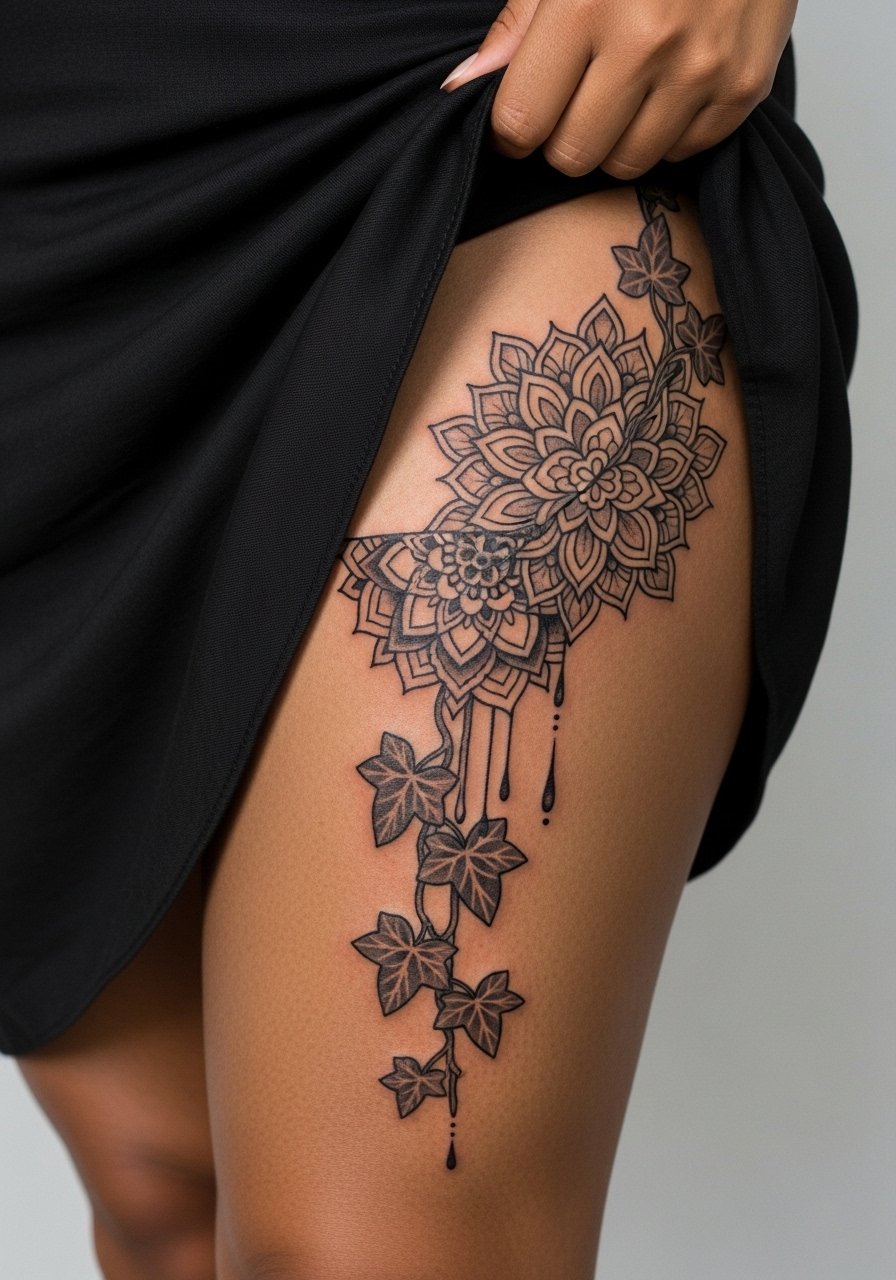
Combining mandala geometry with ivy tendrils is a smart way to tackle irregular old tattoos because geometry provides density while ivy snakes around awkward edges. During consult show photos of the old work so the artist can plan where the mandala centers and where vines will tuck in. The hybrid needs careful spacing to prevent merge over time, so expect periodic touch-ups. Wrap skirts and cargo pants rolled to the knee echo the design and make it feel intentional.
Frequently Asked Questions
Q: My thigh tattoo is faded and an artist said it needs darkening before a cover up. Is that necessary and how do I discuss it?
A: Sometimes pre-darkening is recommended so the cover-up sits on even tones. Bring clear photos of the healed fade and ask the artist to mark proposed darker areas on a temporary transfer. If an artist suggests heavy darkening, ask how many sessions that adds so you can plan downtime and wardrobe.
Q: Does weight fluctuation really mess with thigh cover ups and where should I place work to reduce distortion?
A: Thigh skin moves with muscle and fat so outer thigh placements tend to stretch less than inner or front thigh when weight shifts. If you expect changes, pick bolder linework and larger shapes that tolerate distortion. Discuss anticipated body changes during consult and ask to place focal elements on more stable areas of the thigh.
Q: Inner thigh cover ups hurt more and sweat is an issue. What healing adjustments help?
A: Inner thigh sessions rate higher on pain and sweat can trap bacteria in the first week. Ask about approved topical numbing and plan breathable session wear like wide-leg pants. For healing, remove protective film early if you notice trapped moisture and switch to a thin, non-greasy salve recommended by your artist.
Q: Artists disagree on Saniderm versus dry healing. Which camp should I listen to for thigh work?
A: Both camps make solid points. One group says Saniderm speeds healing and reduces friction on thighs by protecting the area. The other warns that on high-sweat zones like the inner thigh a film can trap moisture and cause maceration. Ask how your skin responds to occlusion and follow the artist's plan for removal timing if you try protective film.
Q: I have darker skin. Do cover ups need different planning to avoid color washout?
A: Yes, darker skin often benefits from heavy blackwork and strong saturation rather than delicate color palettes. Request healed portfolio examples from the artist on similar skin tones and specify you want solid black anchors or deep grays so the design reads after healing.
Q: How many sessions should I realistically plan for a thigh cover up and when will I likely need touch-ups?
A: Expect two to four sessions for medium to large cover ups depending on old ink density and placement. Touch-ups are common around year one to two, especially on moving thigh areas. Plan sessions with spacing for proper healing and ask the artist to map touch-up windows during your consult.