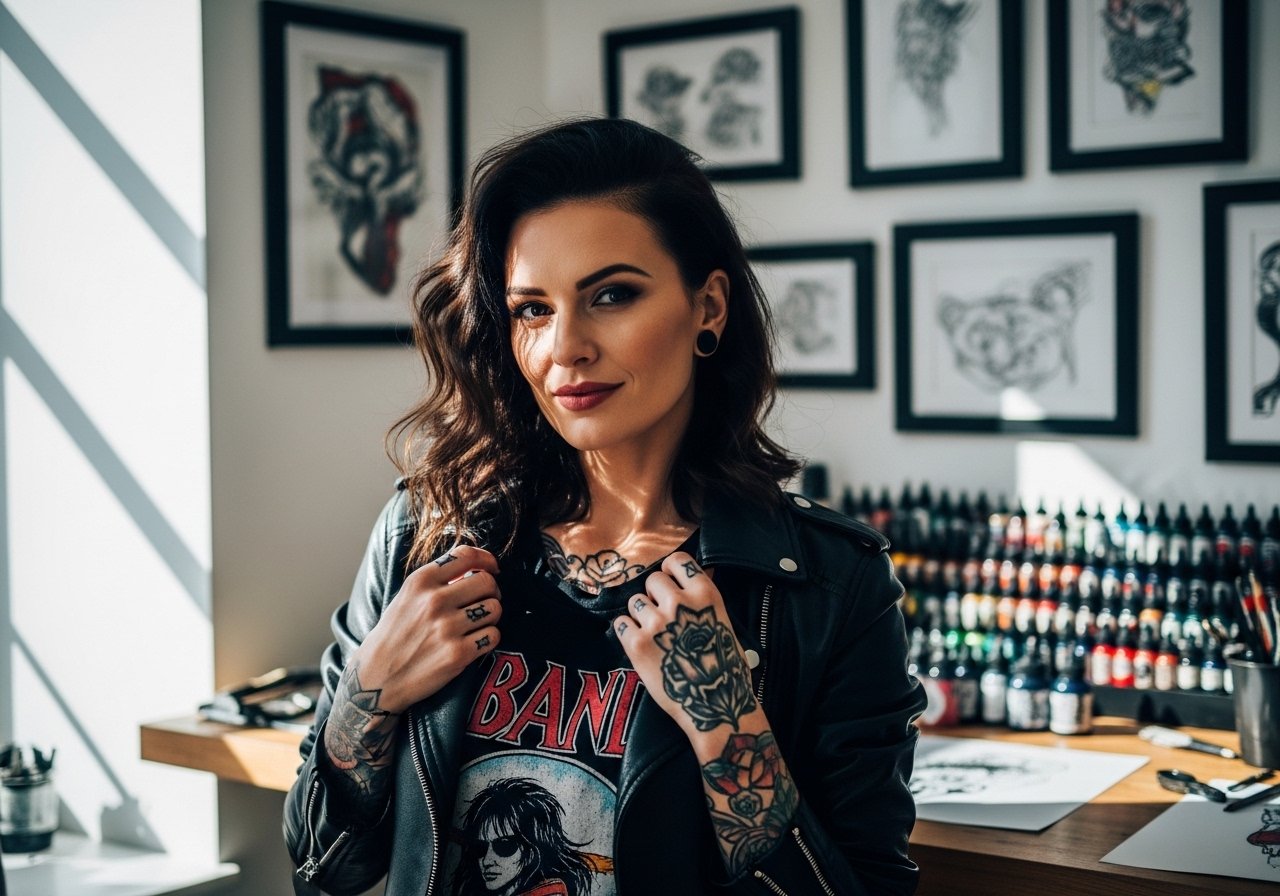
Fine line is trending on mood boards and saturated blackwork is quietly winning when it comes to lasting shape, and that split matters for thigh sleeves. Weight shifts, sweaty summer healing, and hunters of artist availability are the usual headaches people discover at booking. This list pulls together designs that handle thigh curves, what to ask at consults, and wardrobe tips that make each style read like it was made to live on your leg.
1. Floral Mandala Thigh Sleeve That Wraps the Curve
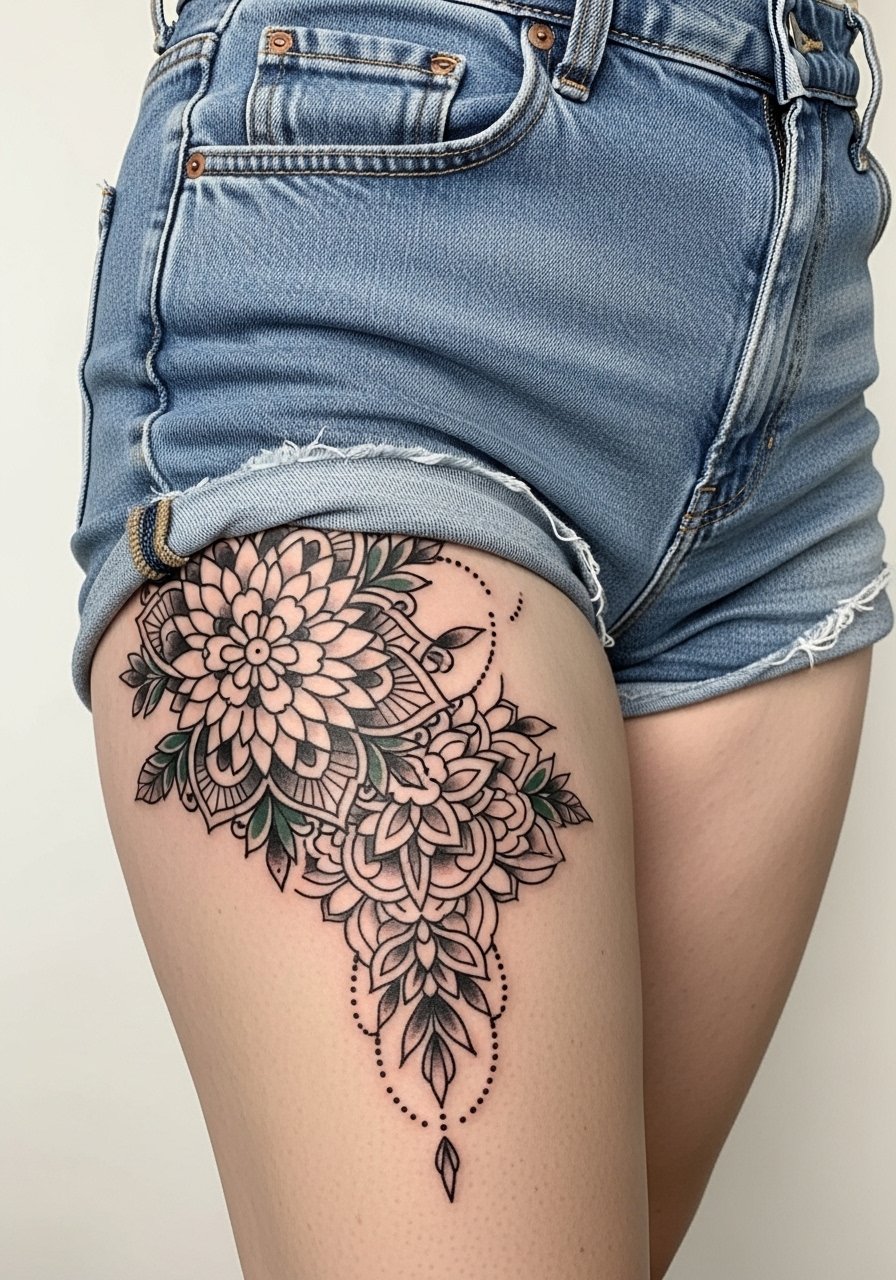
I recommend a mandala when you want symmetry that actually follows the leg instead of fighting it. Ask your artist to draft the piece directly on skin so the petals sit with the thigh contours, and request slightly heavier outer linework so the pattern keeps its shape if weight changes. Common mistake is squeezing too much tiny detail into a small circle. Expect moderate pain on the outer thigh and plan for two to four sessions depending on size. Pair this with high waisted denim shorts for summer reveals, and wear loose joggers to the session so the stencil can be adjusted without pressure.
2. Inner Thigh Fine Line Flower Chain for Subtle Vertical Flow
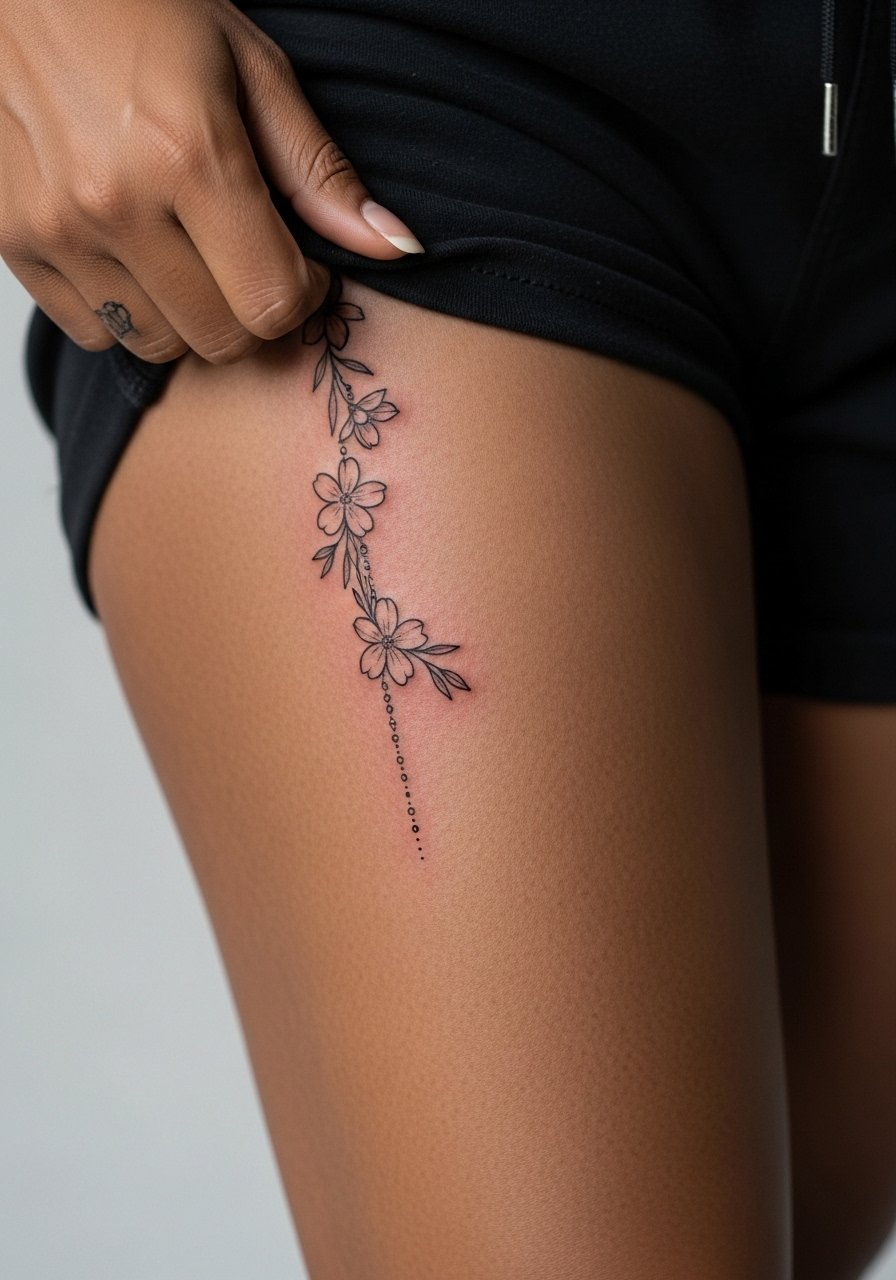
Fine line chains lengthen the leg visually when placed vertically on the inner thigh, but they are the most sensitive to friction and fade. Tell your artist you want clean line weight with slightly deeper needle depth than a wrist script so the ink settles better on this mobile skin. The biggest mistake is asking for hairline lines without accounting for thigh rubbing. Pain here varies, higher toward the inner seam near the bone. For showing it off, layer bike shorts under sheer skirts. Expect a touch-up at two to three years depending on body changes and exposure.
3. Geometric Animal Hybrid Full Leg Sleeve for Modern Edge
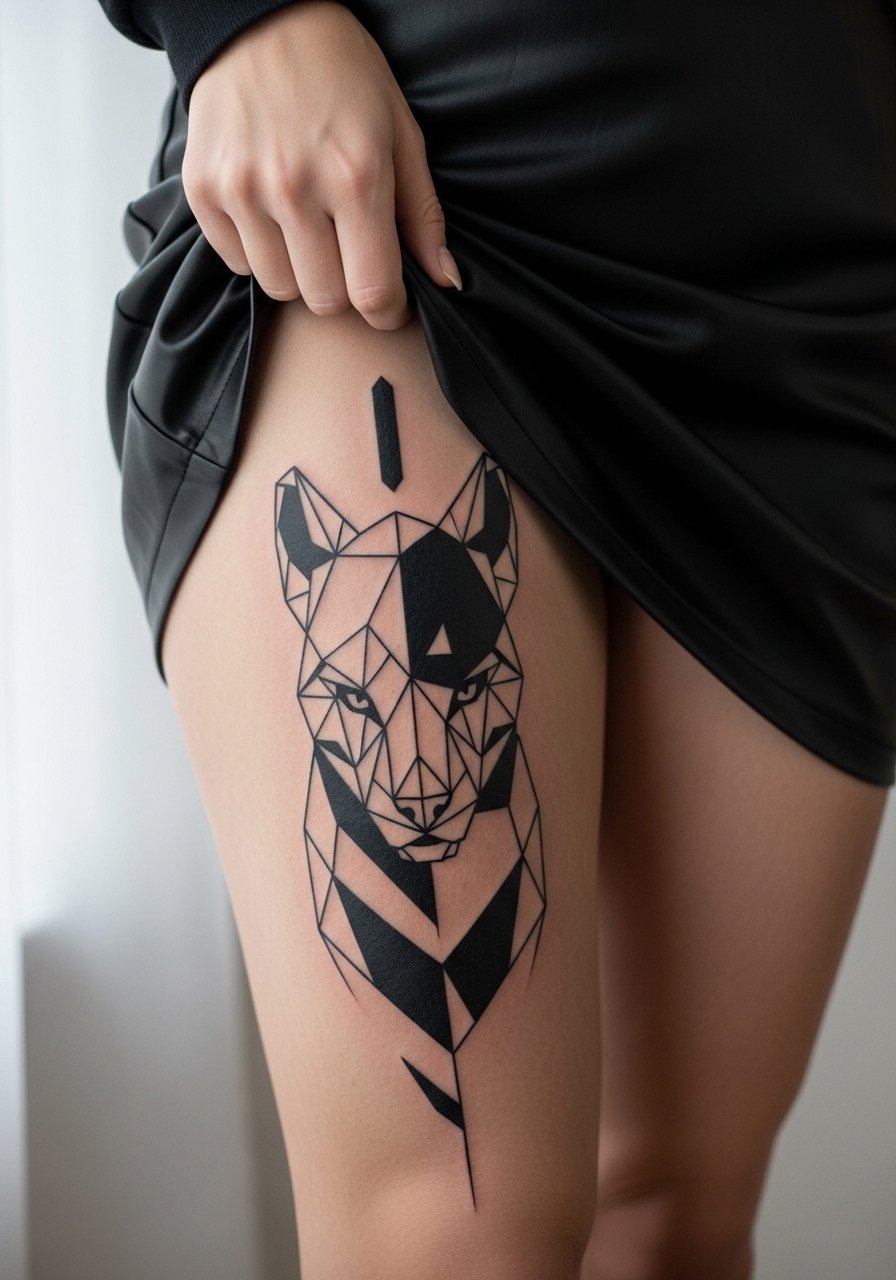
A geometric animal hybrid uses hard shapes to carry classic realism across curves without looking patchy. In consult, bring photos that show both the animal reference and the geometric grids you like. Artists warn against shrinking the pattern too tight. If lines sit too close the negative space closes up into blotches as the skin moves. Sessions are long and layered across multiple visits. This approach suits someone who plans a full thigh-to-knee wrap. Style it with a faux leather mini skirt for nights out. Expect high saturation spots to age best and detailed shaded areas to soften over five years.
4. Watercolor Butterfly Panel from Hip to Upper Thigh
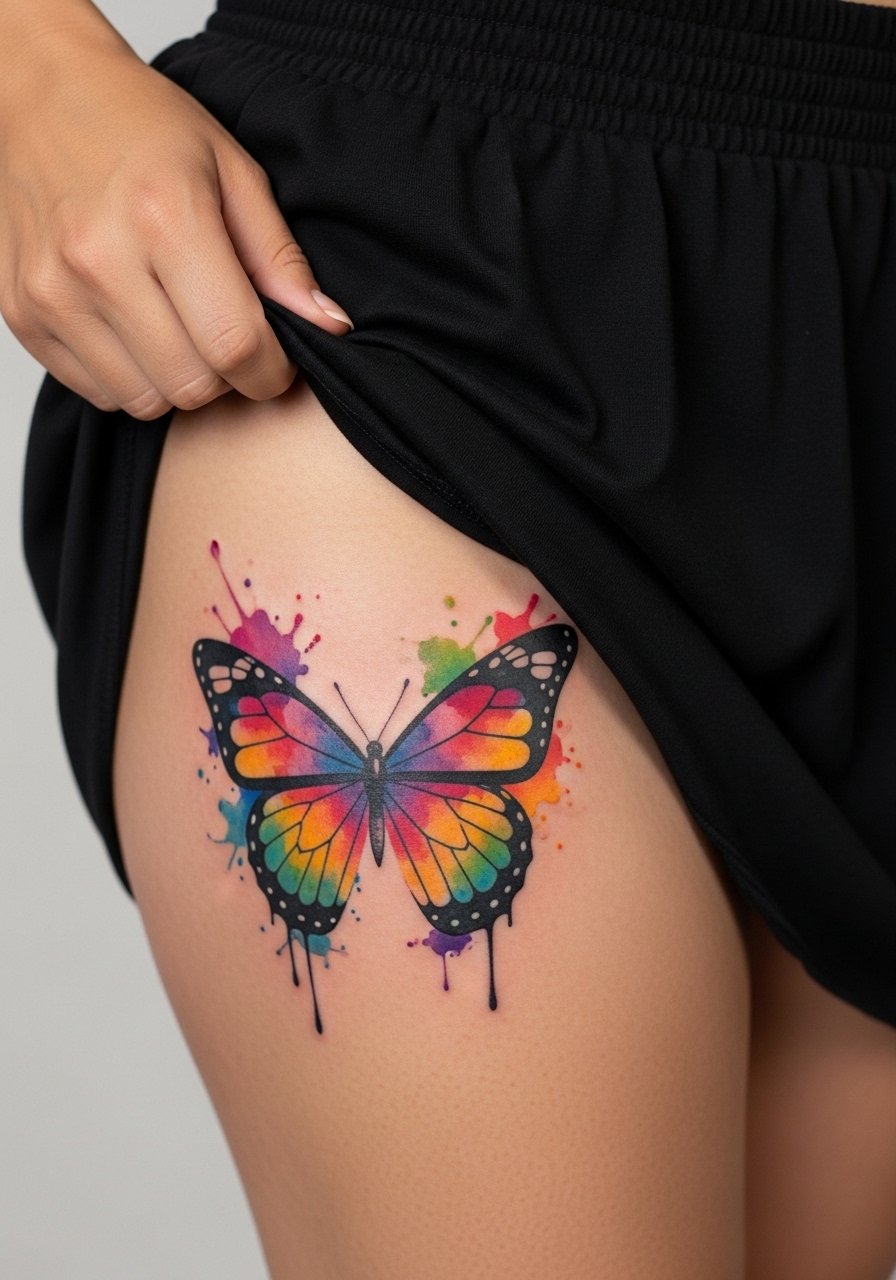
Watercolor lets color feel like it floats on the skin, which works well on the upper thigh around the hip where the surface is broad. The trade-off is that washes need strong anchor points. Ask for thin line anchors or a faint geometric base so the color retains shape as it heals. People often request pure wash with no outlines and then find it fades unevenly after sun exposure. Session time is moderate to long depending on color layering. For casual wear, a crop top with low rise jeans or a sarong highlights the piece. Plan on touching up saturated spots sooner than solid black sections.
5. Neo-Traditional Rose and Dagger That Reads from a Distance
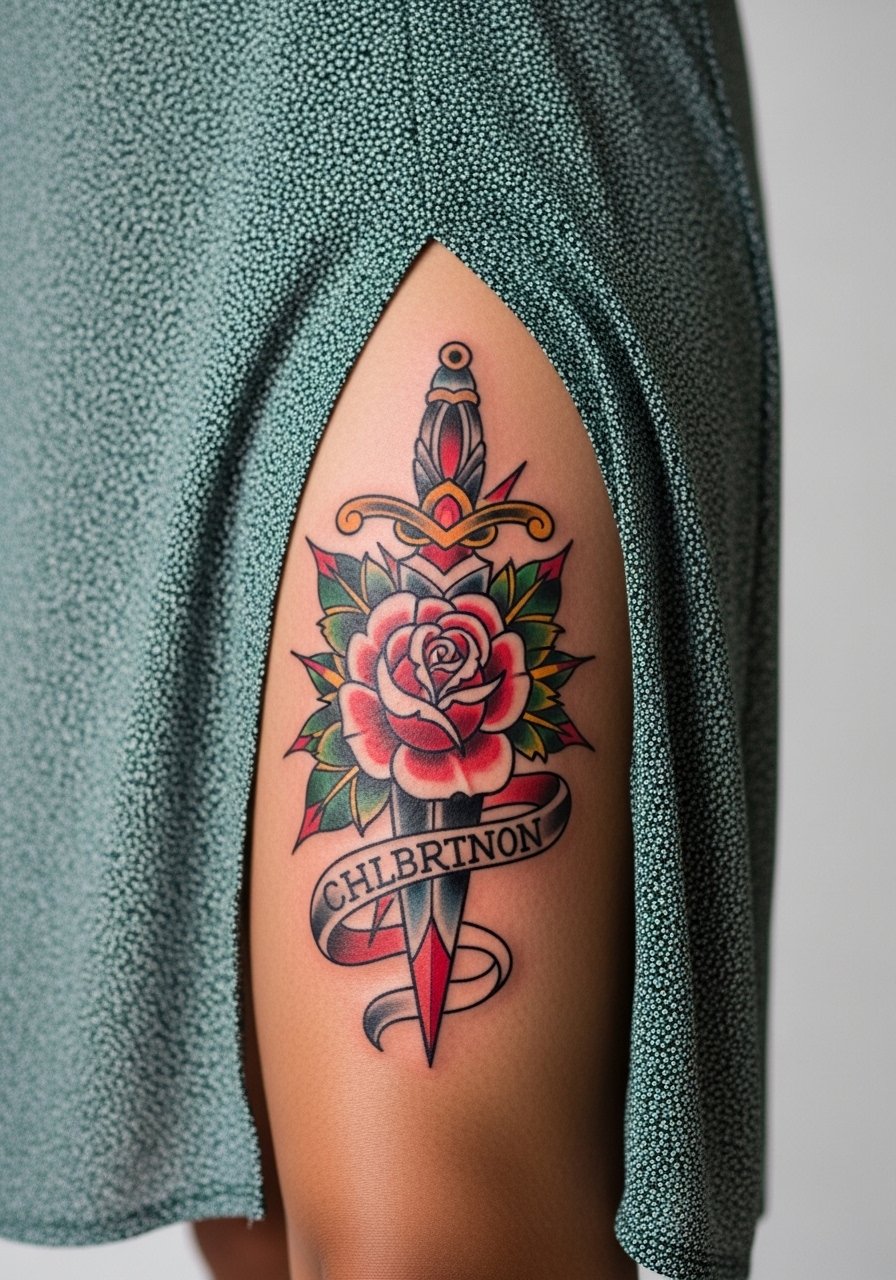
This is for collectors who want visible imagery with color that survives wear. Tell your artist you want strong outer linework and saturated fills so the roses hold contrast over time. A common error is asking for micro details inside petals that disappear into the thigh contours. Expect noticeable discomfort near the hip bone so schedule that portion last in the session. Pair the finished sleeve with midi skirts with thigh slits to frame the art. Touch-ups are normal three to five years out, especially on color blocks that get sun exposure.
6. Minimalist Vine Wrap That Grows Into a Sleeve
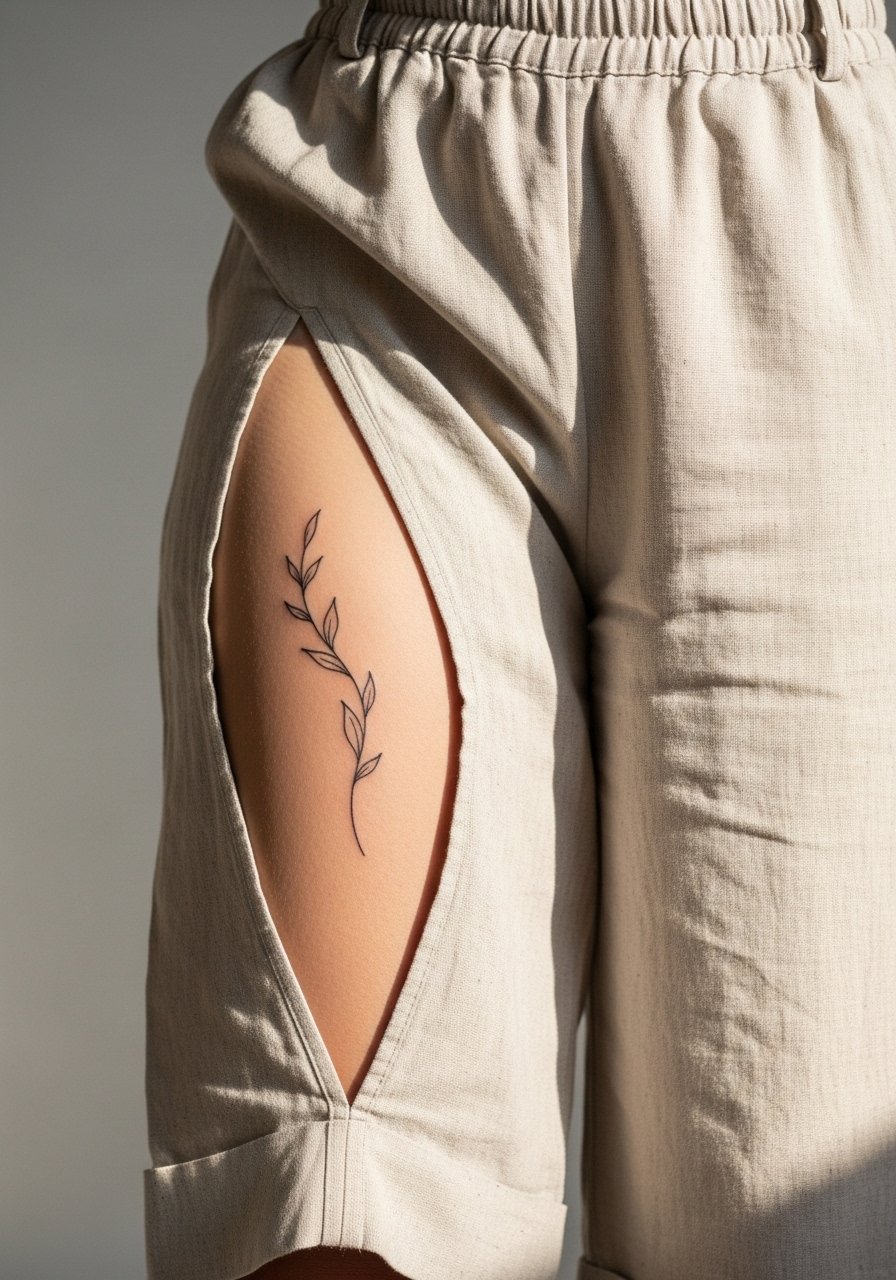
Vine wraps are ideal if you want to build a sleeve slowly and keep the option to patch in heavier work later. During consultation say you plan phased additions so the artist can leave negative space intentionally. The usual mistake is asking for extremely hairline vines that blur with thigh friction. Session pain is generally low on fleshy outer areas but higher toward inner creases. For sessions wear linen wide leg pants you can roll up easily. This approach keeps future expansions cohesive and helps manage cost across multiple visits.
Studio Day Picks
The first six ideas above cover outer wraps, inner vines, and upper-thigh panels, and they each benefit from slightly different prep and protection for the healing window.
-
Thigh friction balm thin formula. A thin balm cuts rubbing and chafing during the initial days, useful for inner and outer thigh pieces that meet during walking and sitting.
-
Breathable cotton thigh wraps. These hold dressings in place without trapping heat, which helps the mandala and vine work that sits close to skin folds.
-
Australian dotwork salve alternative. Used sparingly, a non-greasy salve keeps stipple shading and ornamental work from becoming a greasy blur.
-
Thin protective film roll. A breathable film is handy for long sessions and prevents fresh ink from sticking to clothing during travel home.
-
Aquaphor healing ointment. A thin layer for the first two to three days helps fine line pieces retain moisture without heavy clogging.
7. Ornamental Mandala Full Circumference for Dot Work
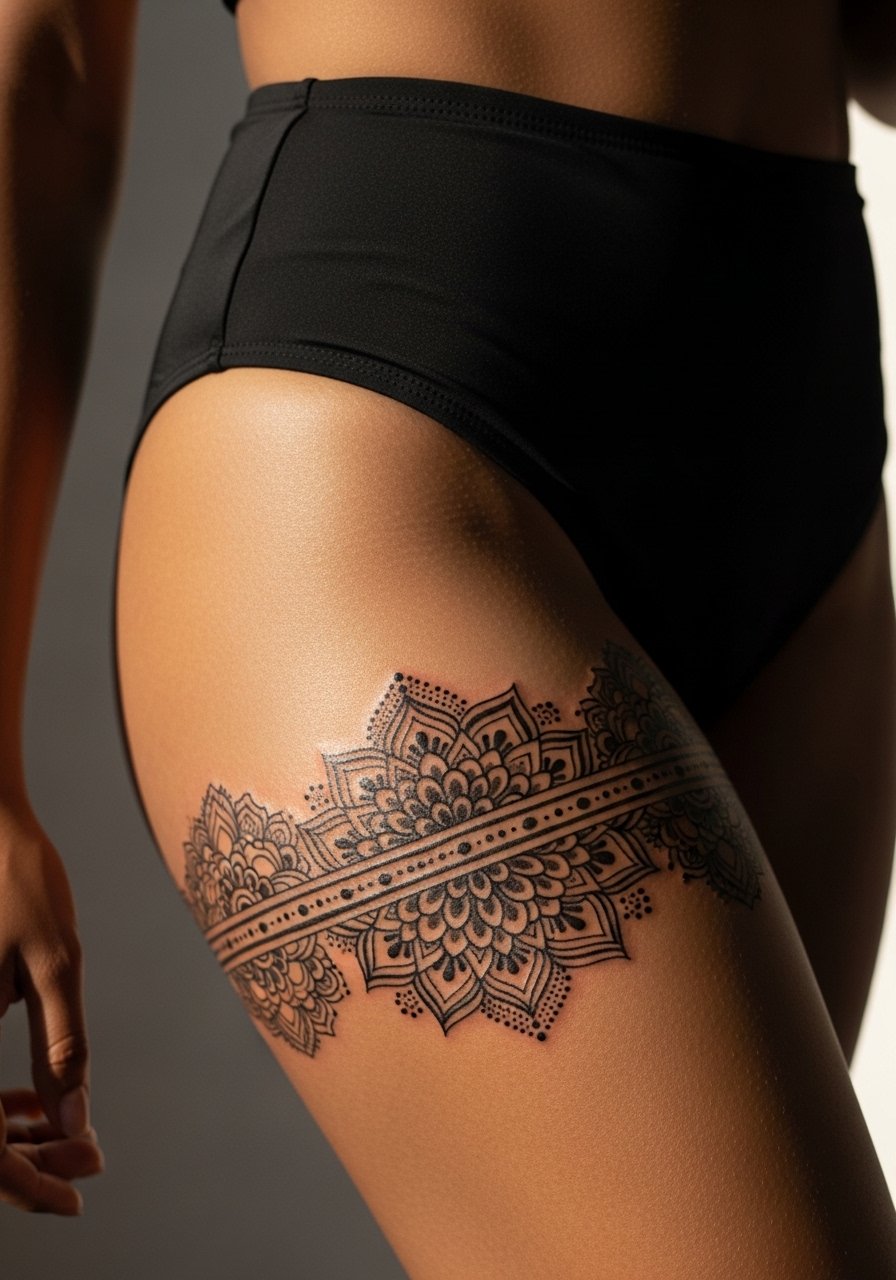
A full thigh band mandala uses dot work and negative space to read like lace. Tell your artist you want larger dot scales toward the center and cleaner spacing outward so the pattern does not merge. People who cram too many tiny stipples end up with muddy sections after healing. This style tolerates heavy blackwork accents well, but dot work requires patient sessions of three to four hours. For formal looks choose skirts with thigh cutouts or slits so the band sits like jewelry. Expect touch-ups primarily in dense dotted areas as they tend to soften first.
8. Micro-Realism Portrait on Upper Inner Thigh
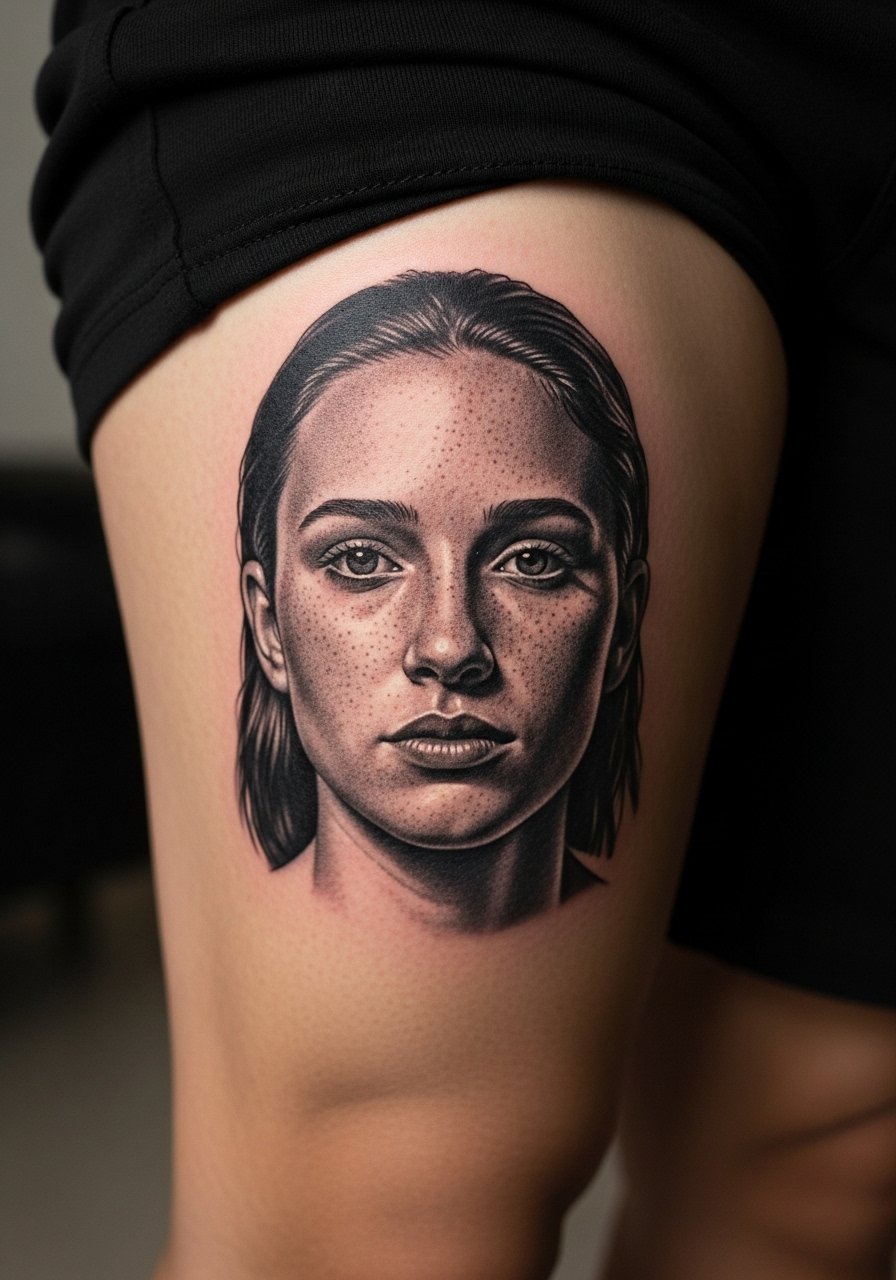
Portraits on the inner thigh make intimate memorials that read small and soft over time. Ask for a grayscale mockup on your skin tone before booking so you can see contrast on your tone. The common failure is scaling a portrait too small or expecting extreme photographic detail at thumb-size. Inner thigh sessions can be more painful than expected near the bone and sensitive areas, so plan shorter sits. This placement benefits from a light numbing strategy if you need it. Expect realism to mellow and require a careful touch-up after a year or two if you want crisp features kept.
9. Ignorant Style Abstract Flowers for Raw Energy
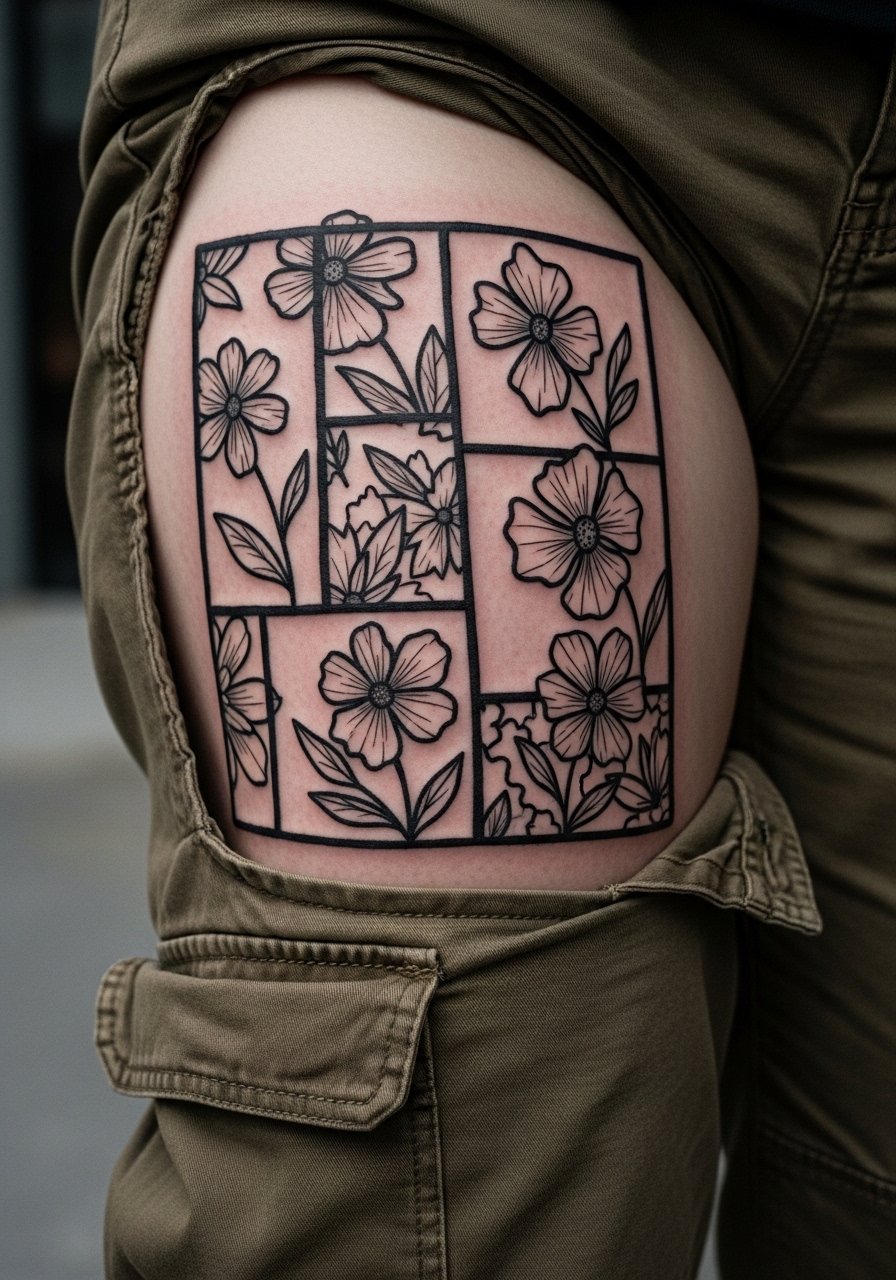
The ignorant style trades polish for personality and it works on the thigh where curves can exaggerate playful line breaks. During consult, show sketches that express the energy you want and let the artist translate imperfections into deliberate strokes. A common mistake is asking for scribbled lines without considering how bold fills will age on moving skin. Sessions run medium length because artists build the look deliberately. Pair this with cargo pants with cutouts for an edgy reveal. Expect touch-ups where thick lines sit near friction zones.
10. Traditional Anchor and Floral Wrap to the Knee
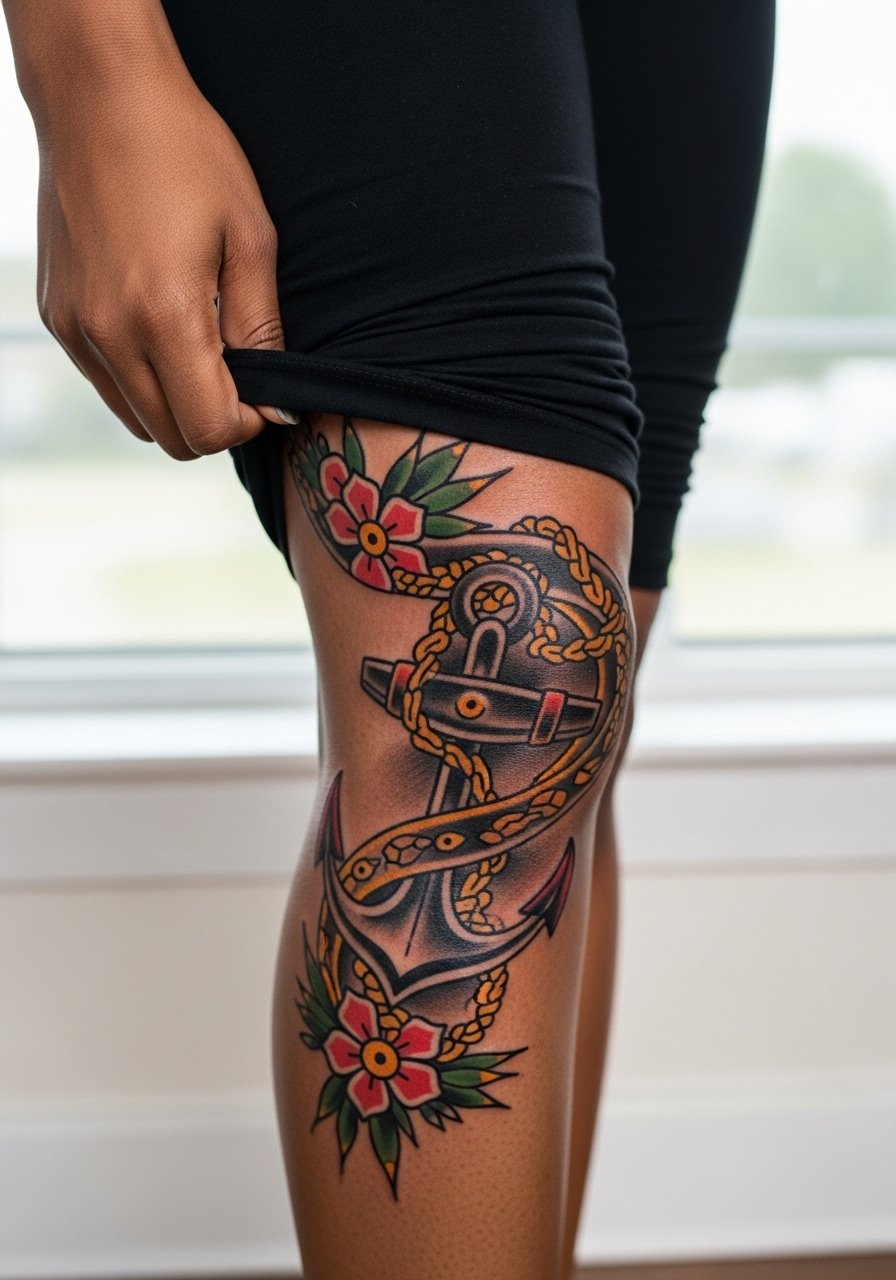
Traditional work survives thanks to clear linework and saturated color. Tell the artist you want solid outlines and dense color fills so the anchor and roses remain legible even as shading softens. Avoid asking for micro texture inside the anchor that competes with bold contours. Sessions are straightforward but expect longer times for color packing down toward the knee. Style with knee-high boots or cropped leggings to balance vintage looks. Linework here tends to age reliably, and color touch-ups are usually needed before five years if frequently exposed to sun.
11. Blackwork Snake Coil That Uses Negative Space
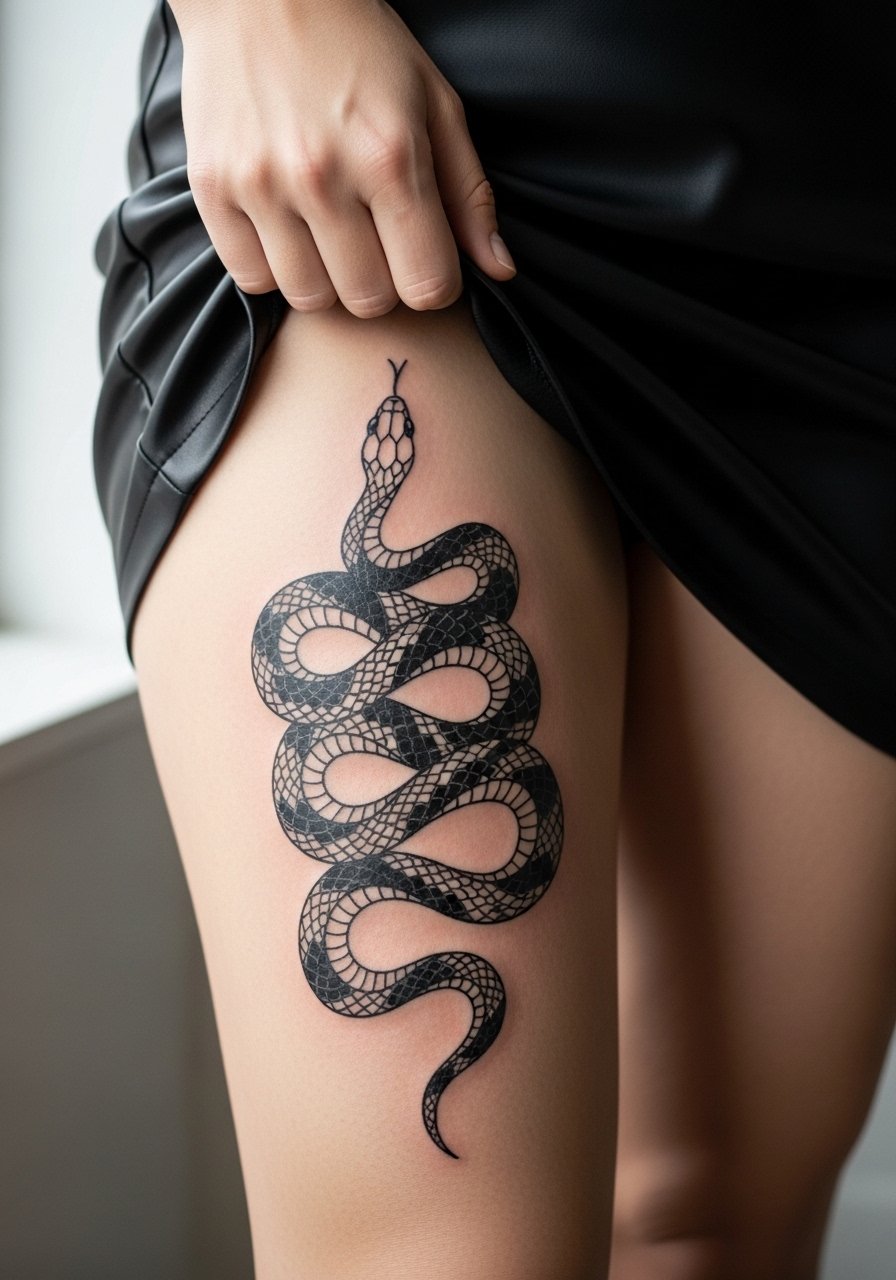
Solid blackwork reads across distance and holds its form on the thigh better than tiny detail. When you ask for a snake coil, specify where you want negative space to remain so the body reads scale texture rather than a blob. People who request continuous black with too-soft edges report blowout-like spreading as the ink settles. Sessions are long because of saturation needs and repeated passes. Pair this with monochrome looks like a faux leather mini skirt for maximum contrast. Plan for touch-ups in high-motion areas.
12. Yoga Pant Seam-Aligned Geometric Panel for Active Lifestyles
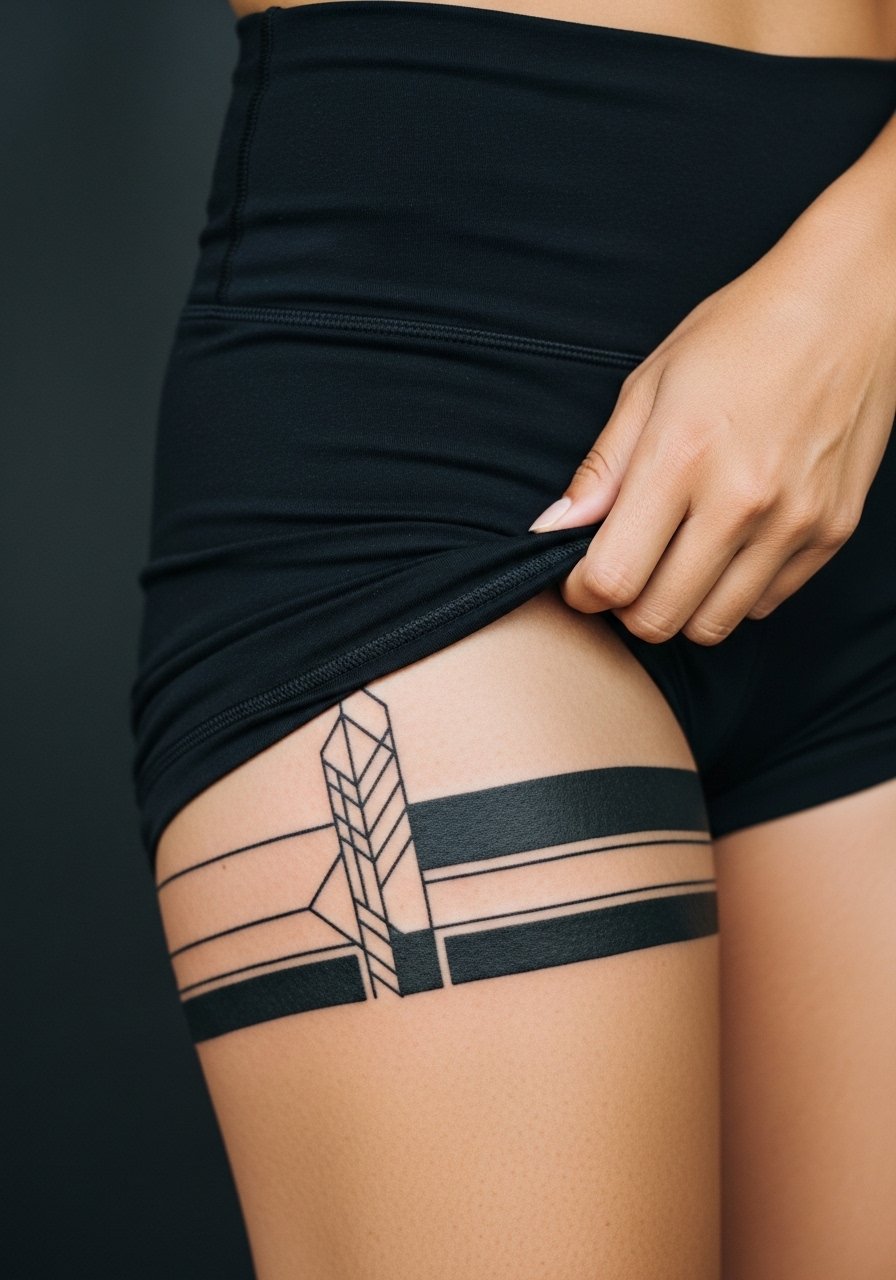
This niche aligns geometric panels with activewear seams so the design appears or hides with specific outfits. Ask your artist to design with the seam in mind and to test the stencil while wearing the actual pants so alignment is precise. A mistake is leaving no allowance for fabric stretch which makes the panel distort during movement. Sessions vary based on scale and require a strong initial layout pass. For show-off outfits match with leggings or crop top coordinates. This approach avoids full wraps when you want geometry to appear only with certain clothing.
13. Hybrid Ignorant-Fine Line That Intentionally Ages
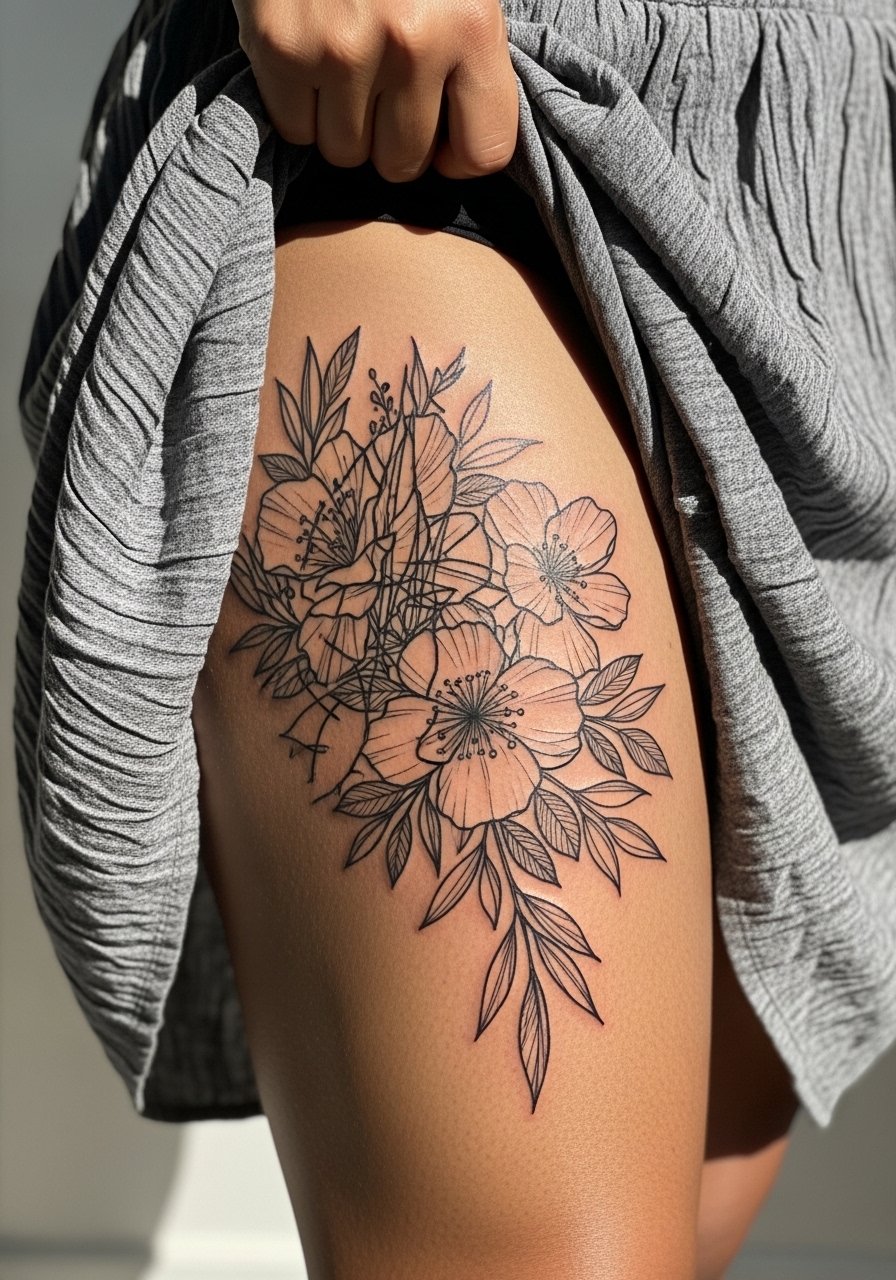
A hybrid that mixes raw ignorant strokes with measured fine line detailing creates a look that evolves. Tell your artist you want bold anchor marks and finer connecting threads so the piece becomes more textured as it heals. The main mistake is asking for both without a hierarchy which leaves the fine lines lost. Pain is manageable on fleshy outer areas but increases near the crease. Session planning is phased so the ignorant elements can sit before the delicate work. This style works well for people who want visible aging rather than a static fresh look.
14. Inner Thigh Quote Hidden Under Clothing
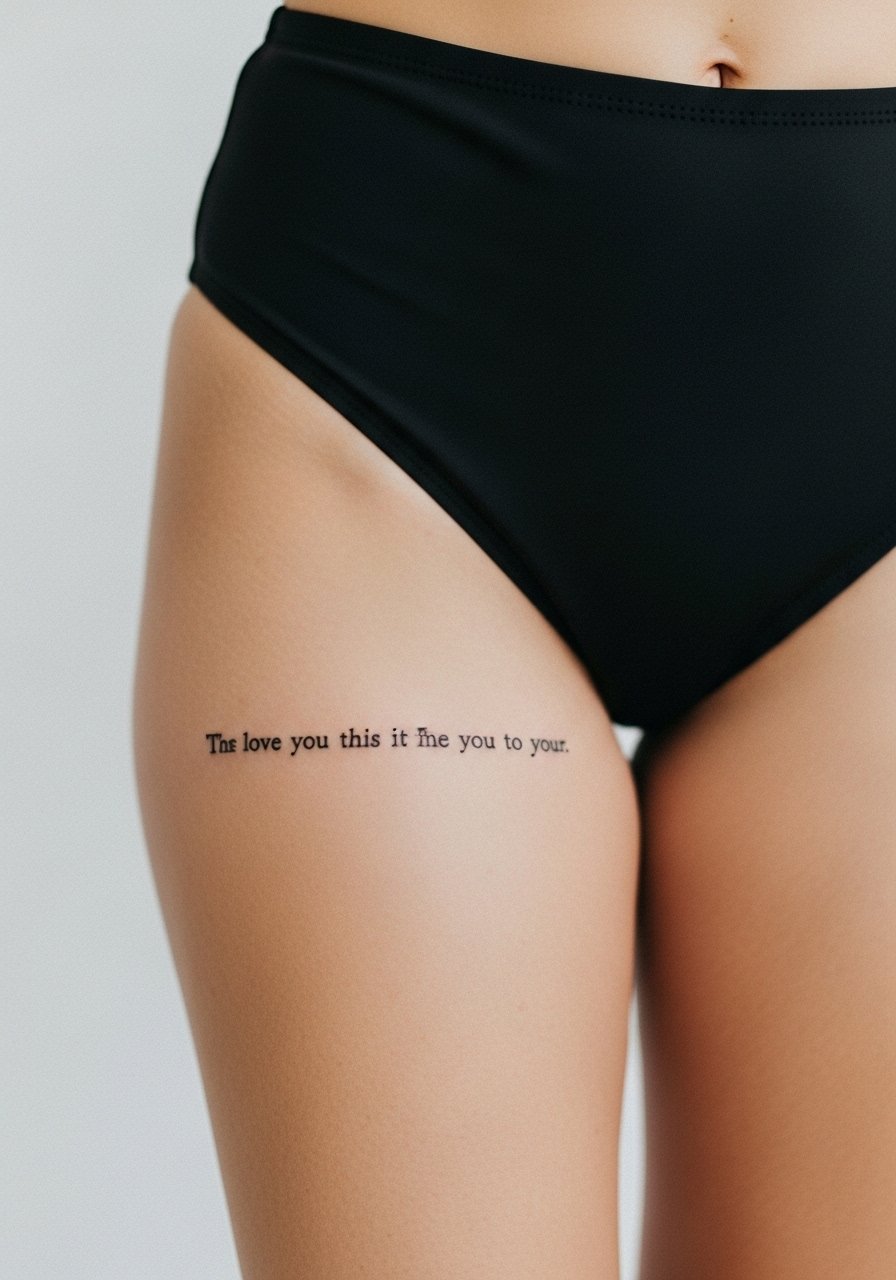
Inner thigh scripts are intimate and can be staged as a secret sleeve start. When you bring wording, spell it out and tell the artist the exact size you want because lettering needs room to breathe. Some artists split on whether fine script holds on inner thigh. One camp says the mobile skin blurs hairline letters fast. The other camp says with proper depth and spacing script settles fine. Ask where your artist stands and see their healed lettering on similar placements. Wear a robe or no pants to the session so access is clean. Expect photo visibility to be lower from a distance.
15. Patchwork Plus-Size Thigh Sleeve Mockup That Plans for Stretch
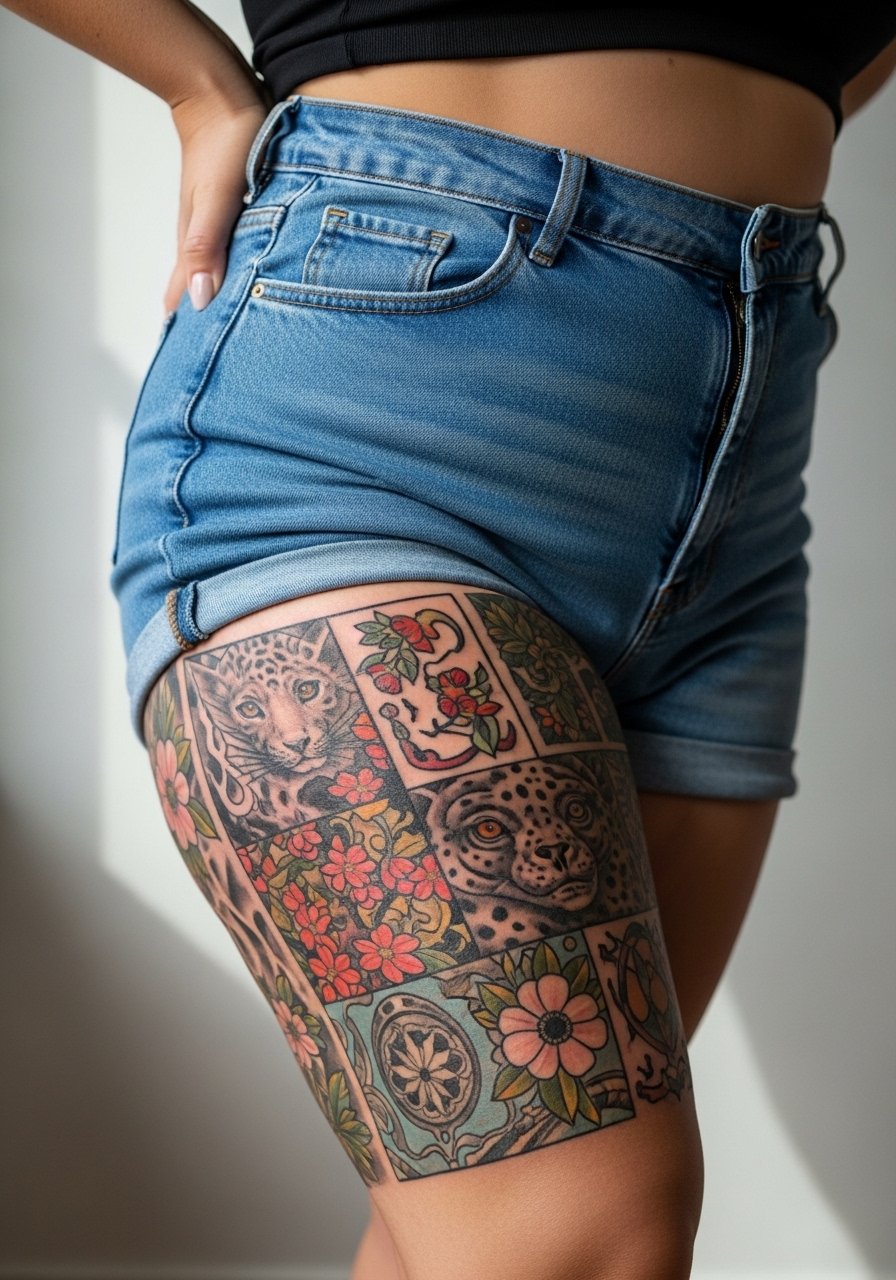
Plus-size mockups are under-covered and they matter because skin stretch responds differently across the thigh. Ask for mockups on your body and request stretch simulations from the artist during consult so you know where detail may spread. The common error is showing only slim-model examples and assuming the same placement reads the same on other body types. These sessions usually start as patchwork over several months rather than one marathon sit. For styling, high-waisted pieces that sit above the art display it well. Prioritize artists who offer in-person mockups or digital renders on matching body types.
16. Thigh-to-Knee Animal Motif for Flowing Movement
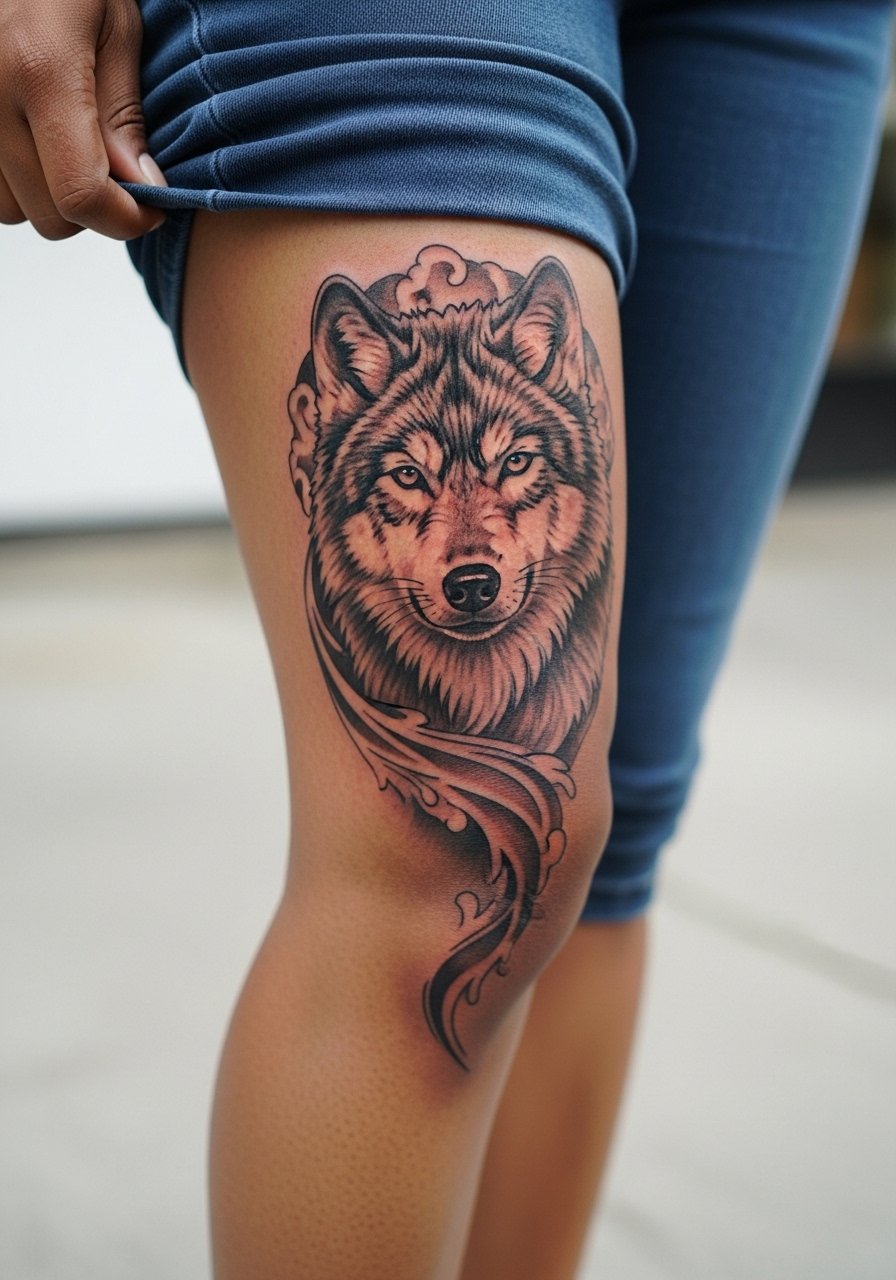
A vertical animal motif leverages the leg length to create motion. Specify the direction of the animal so it reads correctly when standing or walking. The mistake is forcing a horizontal composition onto a vertical plane which breaks the flow. Expect varied pain zones especially near the knee and inner thigh crease. Sessions will alternate between linework and shading passes. Pair this with cropped pants or knee boots to show motion. Over time, shaded transitions soften so plan a follow-up session to keep key contrast points defined.
17. Ornamental Lace Band that Frames Swimwear and Underwear
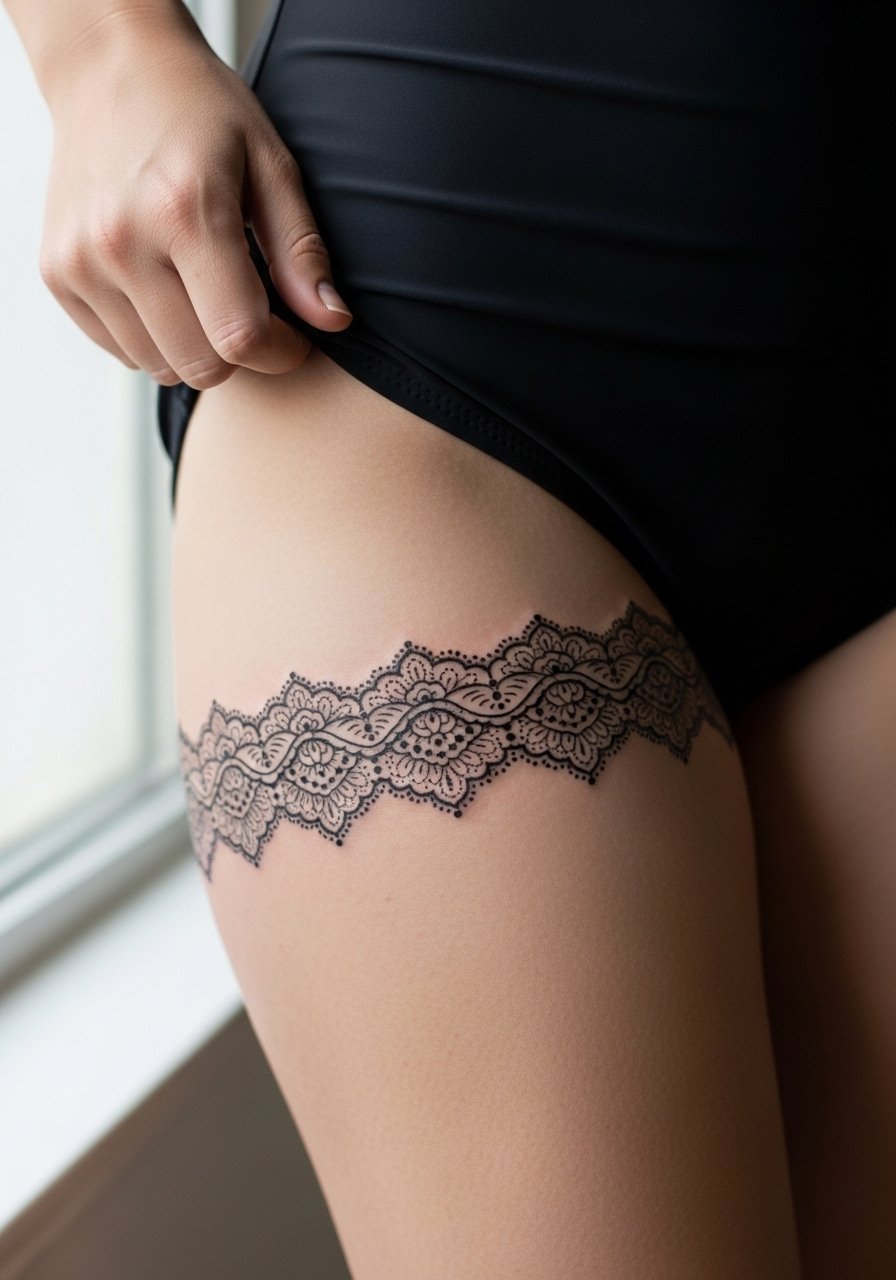
A lace band reads like lingerie and plays well with swimwear or high-cut underwear. During consult point to where clothing lines sit so the band complements garment edges rather than competing with them. People often request extremely tight lace patterns that clump after healing. Ask for larger negative spaces within the lace to preserve separation. Session discomfort is low to moderate on the fleshy hip. For showing it off, choose high-cut swimwear or briefs that let the band peek out. Touch-ups are typically focused where lines meet sewing lines that experience friction.
Frequently Asked Questions
Q: Will fine line flower chains on the inner thigh blur faster than outer thigh work?
A: Fine line on inner thigh faces more friction and mobile skin so it can lose crispness sooner than outer thigh pieces. The fix is slightly stronger line weight, deeper but controlled placement, and planning for touch-ups at year two to three. Ask the artist to show healed lettering or linework examples on similar placements before booking.
Q: How do I avoid sweaty, sticky healing on a large thigh panel over summer?
A: Loose cotton shorts and breathable protective film help. Many people switch to thin cotton wraps and schedule sessions in cooler months if possible. Keep showers short and avoid tight seams against the fresh ink for the first week.
Q: Is patchwork building better than one long session for full thigh sleeves?
A: Patchwork is often smarter because it lets you test artist fit, spacing, and how your skin reacts across different zones. It also reduces session fatigue and gives time to see how early pieces age before committing to more. Budgeting across multiple visits also avoids surprise cost jumps.
Q: Do watercolor butterflies need different aftercare than neo-traditional roses?
A: The basics are the same but watercolor panels rely on preserved color transitions, so sun protection and minimal scrubbing during healing matter more. Keep the area out of direct sunlight and avoid heavy ointments that can shift pigment during the first two weeks.
Q: How do I find artists who handle full leg geometric wraps without them looking patchy on curves?
A: Use hashtags and directories to find specialists and look for healed photos on bodies with similar curves. Search the tag lists and app filters mentioned earlier rather than individual handles. Book a consult where the artist draws on your skin or provides a mockup to see how the geometry will sit.
Q: Should I use numbing cream for thigh bone areas and does it affect the tattoo?
A: Numbing can help around the hip bone and inner thigh where the pain spikes. Some artists avoid it for certain sessions. It does not ruin the ink when used correctly, but discuss timing and product choice with your artist so they can plan needle depth accordingly.