A lot of the tummy tuck cover-up ideas you see online start with a photo and no context, and that is why many people walk into consultations with the wrong expectation. A healed scar, skin texture, and how you move will change the stencil and the ink choices more than a saved image ever could. Read the dozen ways artists actually adapt designs to horizontal scars, what to ask at the consult, and which styles hide the line for good.
1. Realistic Floral Cover-Up Across the Scar
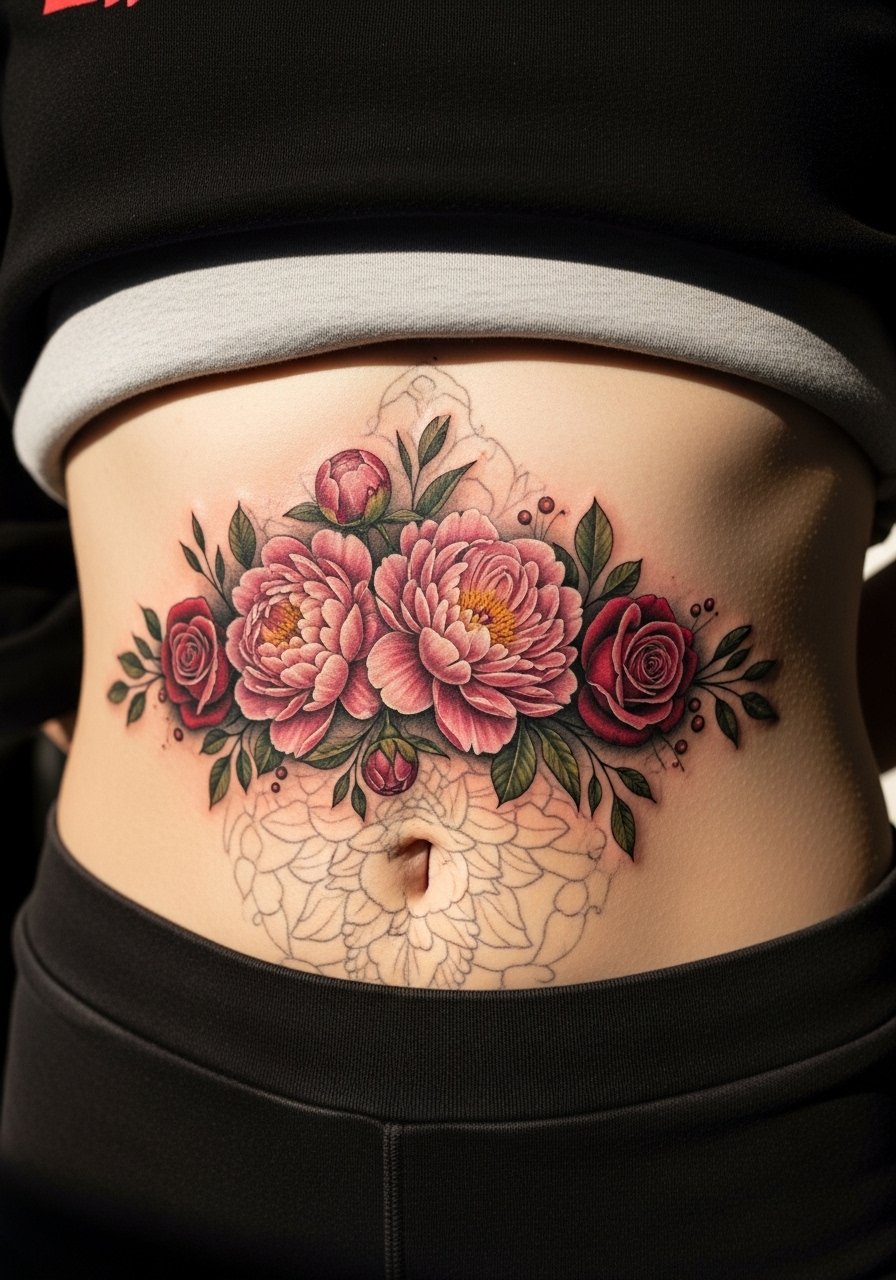
I've seen realistic floral work handle horizontal tummy tuck scars better than most styles when the blooms are arranged to follow the scar line. Tell your artist to plan several overlapping petals and leaves that run along the scar so the scar becomes a textural seam within the composition. The common mistake is asking for single blooms centered on the scar, which exposes straight lines and can age unevenly. Expect two to four sessions for full saturation, and plan a touch-up around year three if you gain or lose significant weight. For showing this off, high-waisted bikinis in solid neutrals frame the piece without busy patterns and let the color read clearly, try high waisted bikini bottoms.
2. Watercolor Floral Band to Soften Edges
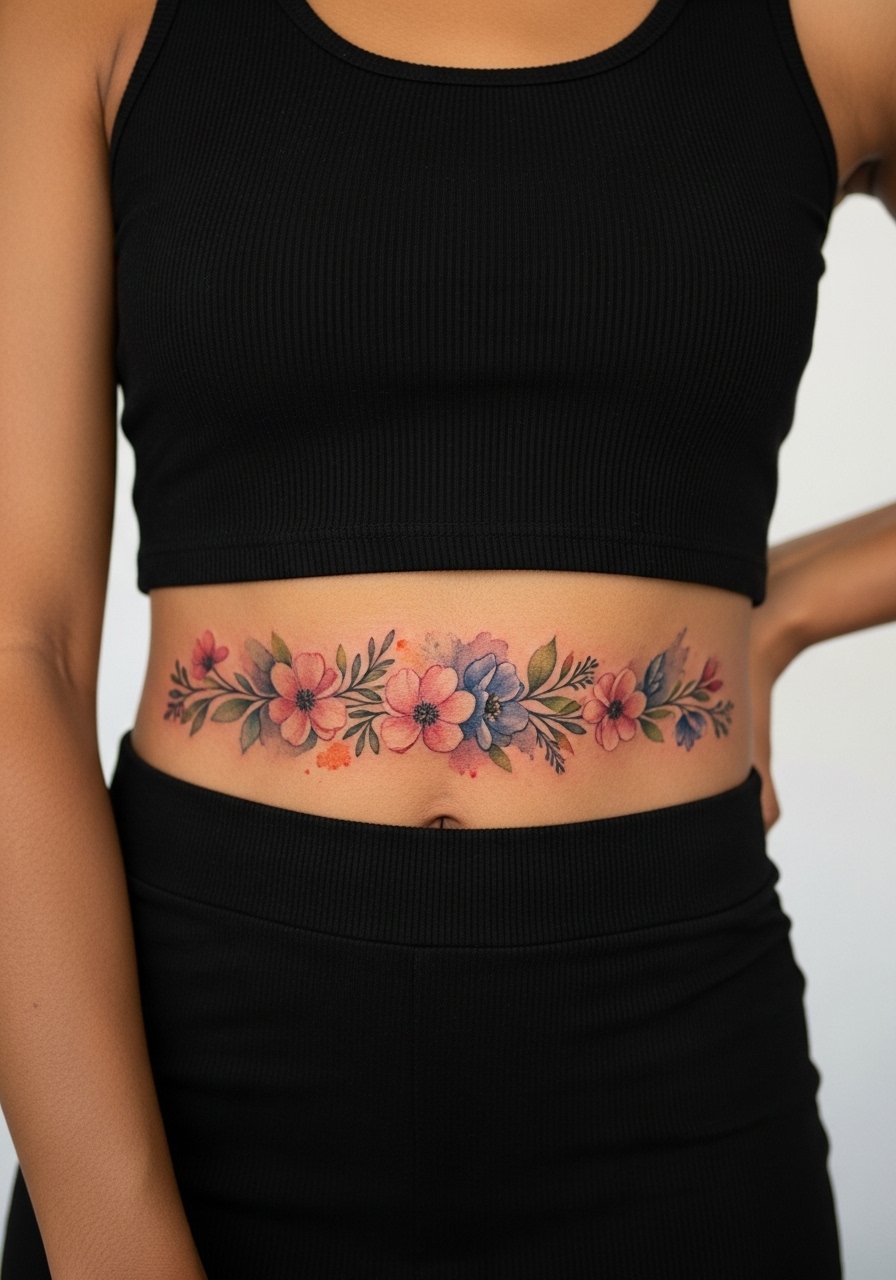
Most watercolor bands use soft gradients to blur scar edges rather than cover them with heavy black. I recommend asking the artist to use layering with light washes and stipple shading rather than dense saturation. The risk is early fading on mobile skin, so expect more frequent color refreshers than with heavy blackwork. A practical version keeps the band 4 to 8 inches wide so the washes have room to breathe. For summer wear, pair the band with a flowy maxi dress pastel or a sheer sarong wrap that echoes the palette.
3. Mandala Symmetry Centered Over the Scar
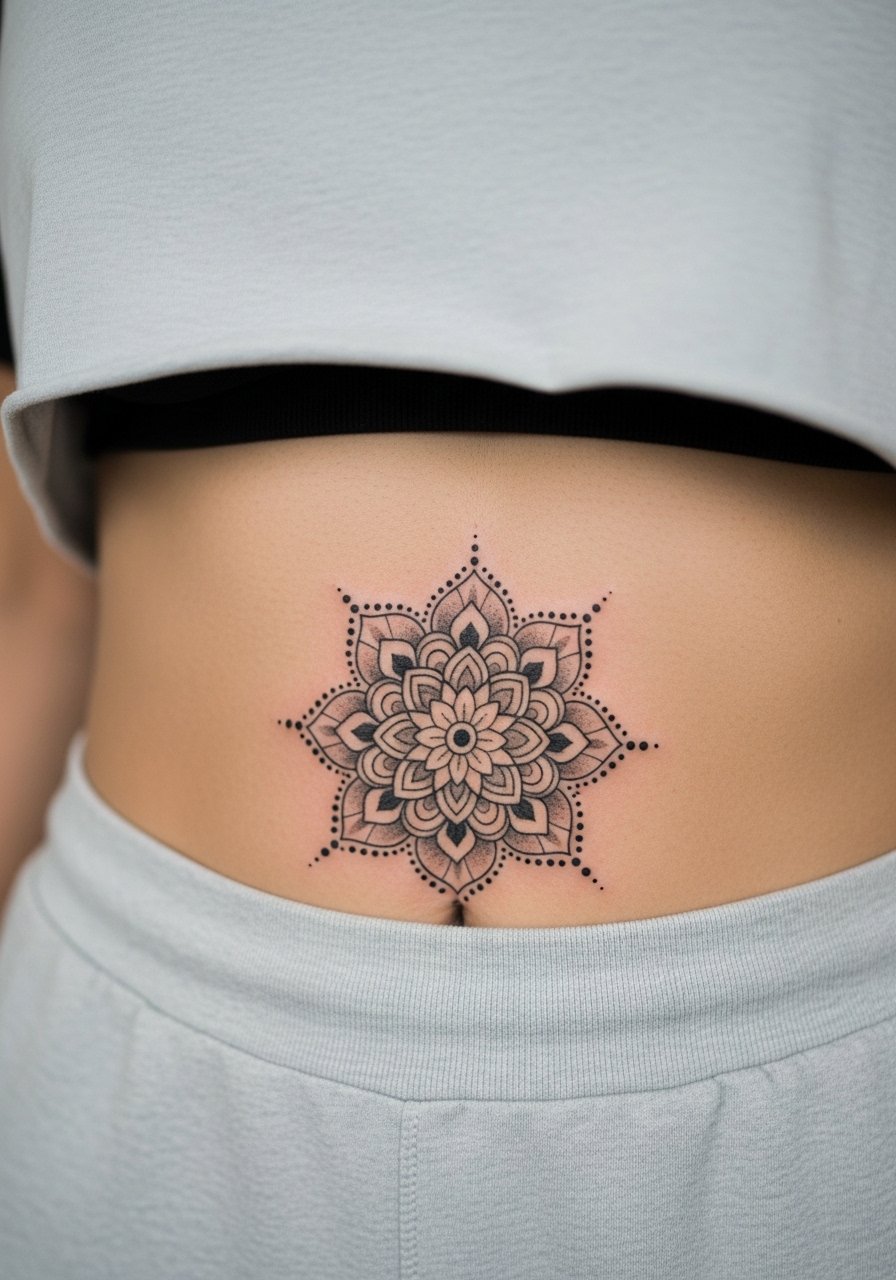
Mandala work plays to symmetry and distraction, and when sized 8 to 12 inches it breaks the visual straight line of a tummy tuck scar. In consults I tell clients to bring clear photos of their scar laid flat, because mandala elements need even spacing to prevent tight clusters that can merge over time. There is a debate here. One camp argues mandalas are ideal because symmetry distracts from linear scars. The other camp cautions that dense mandala linework can blur on mobile skin and may need larger spacing. Ask about spacing and dot work density before the first pass. For nights out try a midriff tank top to show the center point.
4. Lacework Abdominal Overlay, Lingerie Style
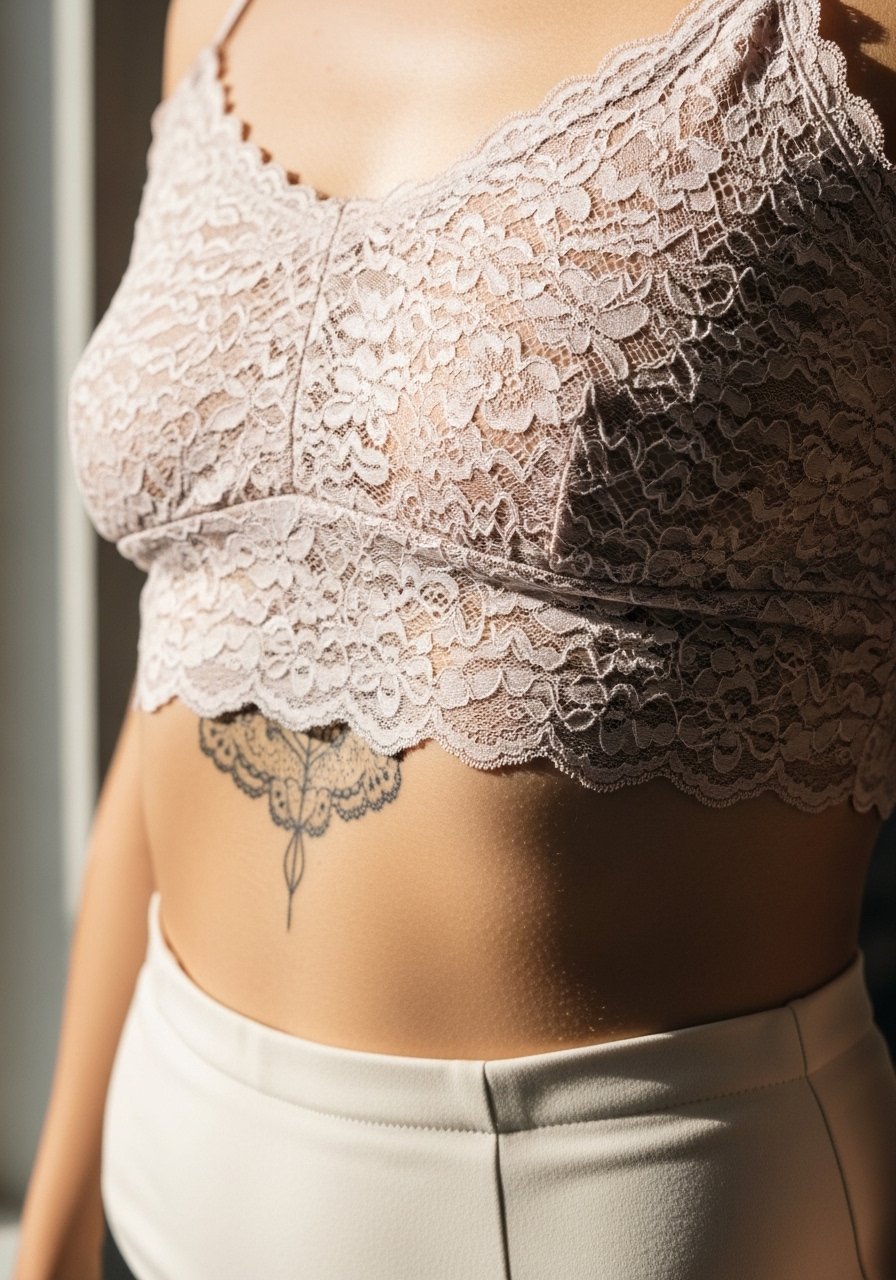
Lacework mimics lingerie and folds the scar into filigree so the incision reads as decorative texture. The typical error is asking for too-fine single-line filigree over raised or uneven scar tissue, which risks early loss of hairline detail. Tell your artist you want slightly bolder anchor lines and delicate filling dots or stipple shading to keep the lace readable after healing. Session time is moderate, usually two sessions for a 5 to 9 inch span. Show-off pairing is simple: a solid crop top frames the overlay without competing, and for the appointment wear loose high-waist pants so the artist has full access.
5. Geometric Abstract Waistband Band
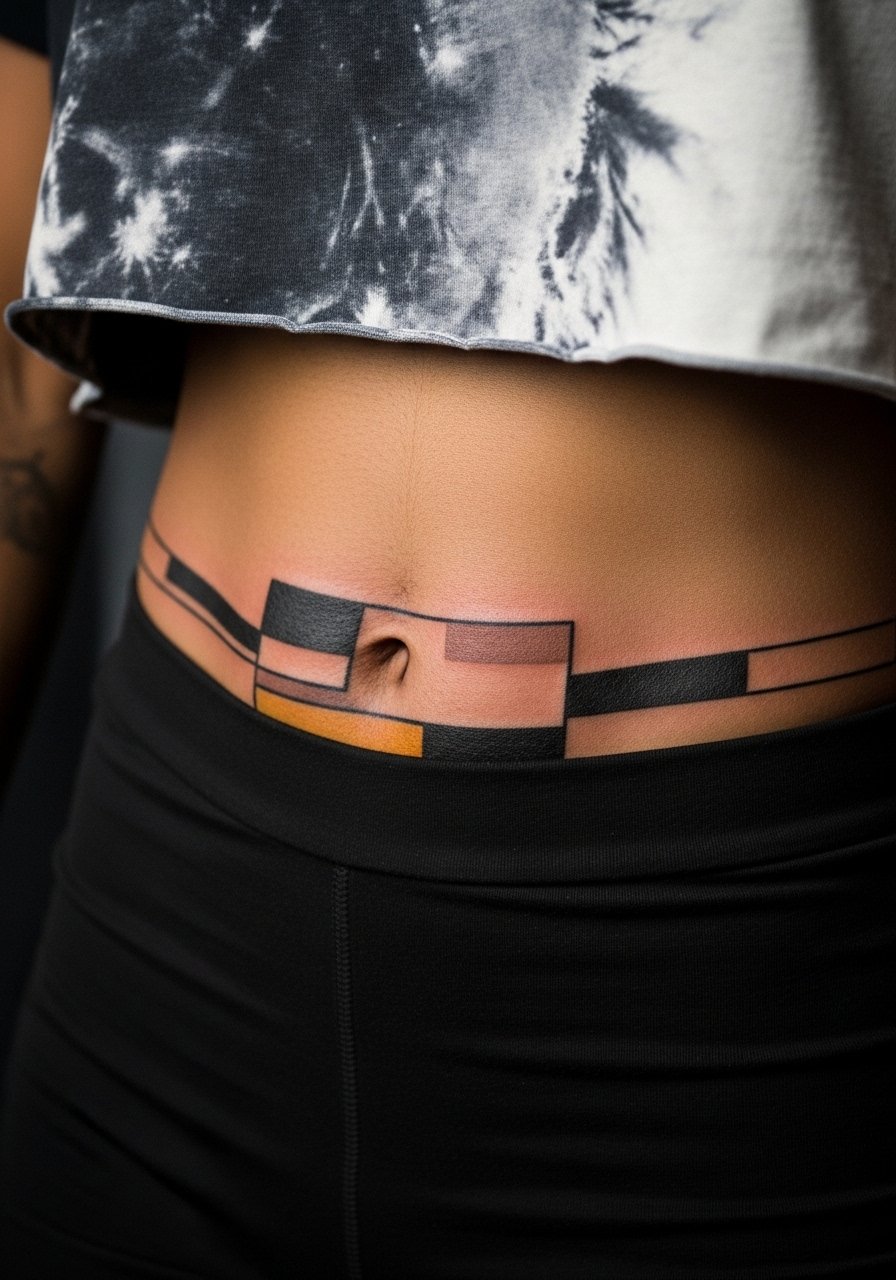
The geometric waistband idea treats the scar like a seam under clothing and turns it into a deliberate horizontal band. The biggest mistake is going too thin. Geometric lines need room to avoid blowout, and on soft abdominal skin bold bars read longer than tiny pin-thin lines. One session often suffices for simple black bands, but complex interlocks may need two. This style pairs with high-rise jeans or minimalist skirts to echo the clean geometry, try high rise straight jeans.
6. Skin-Tone Camouflage for Subtle Blending
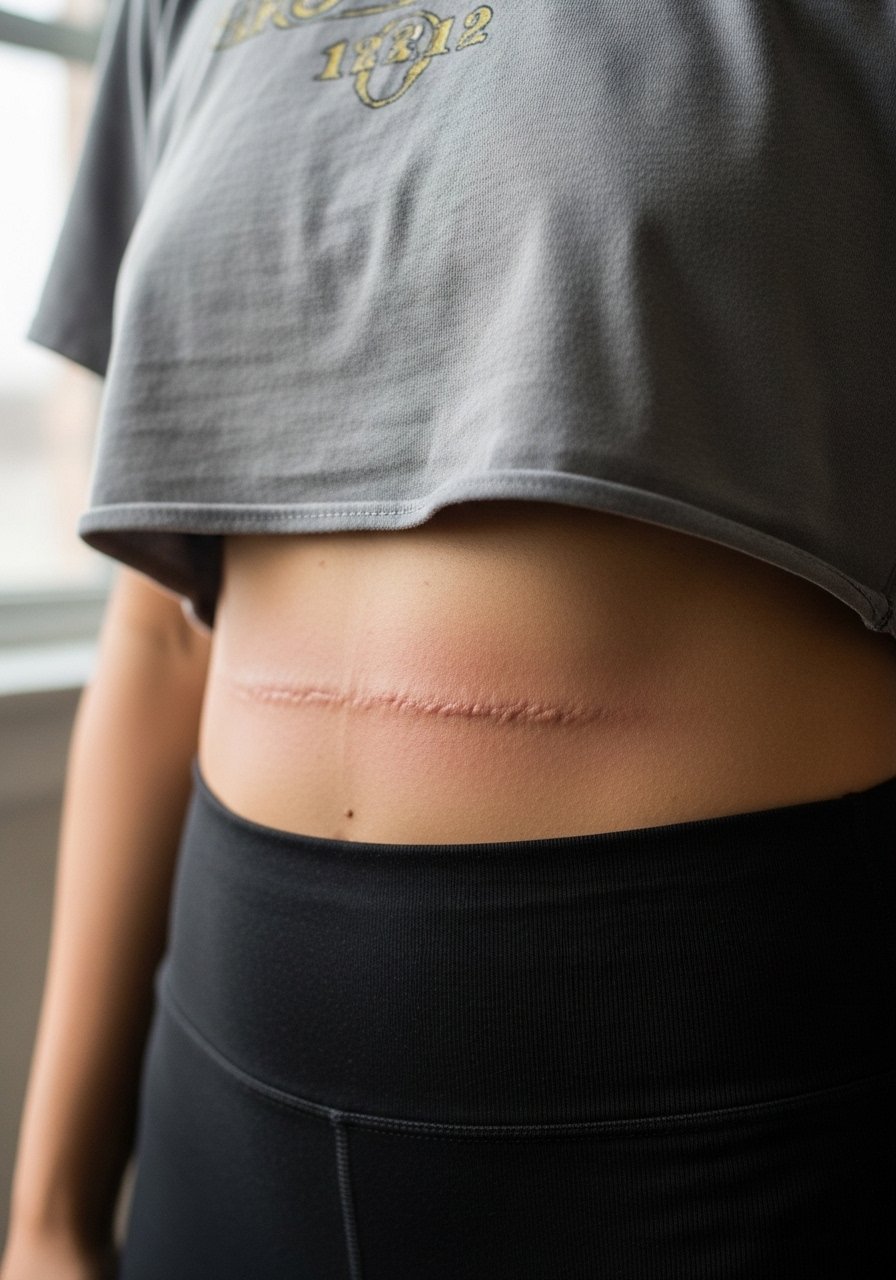
Camouflage tattooing aims for invisibility by matching pigments to surrounding skin. There is a clear divide on timing. One camp insists on waiting two years until scars are pale and flat before attempting camouflage. The other camp suggests decorative work earlier if healing looks even. I usually advise waiting unless your scar is already non-red and smooth. When done correctly a small paramedical session can dramatically reduce visibility without making the area look tattooed. This approach is especially useful if bikinis are a concern rather than bold art.
Studio Day Picks
The lower abdomen pieces above require different session prep than arms, and a few targeted items smooth the appointment and the first week of healing for abdominal cover-ups.
-
Stencil transfer paper kit. Lets you preview placement on the stomach while standing and bending, which is vital when the scar shifts with movement.
-
Topical numbing cream. Useful for clients sensitive across the lower abdomen, applied per artist guidance to reduce surface pain for longer sessions.
-
Thin protective film roll. Keeps abdominal work free from friction for the first 48 hours when pants and waistbands would otherwise rub.
-
Fragrance-free body wash. A gentle cleanser avoids irritation while the tattoo forms a protective scab, especially important under waistbands.
-
Aquaphor healing ointment. Thin layers help maintain moisture in delicate linework areas without clogging the surface.
7. Realistic Lily Cluster That Follows Contours
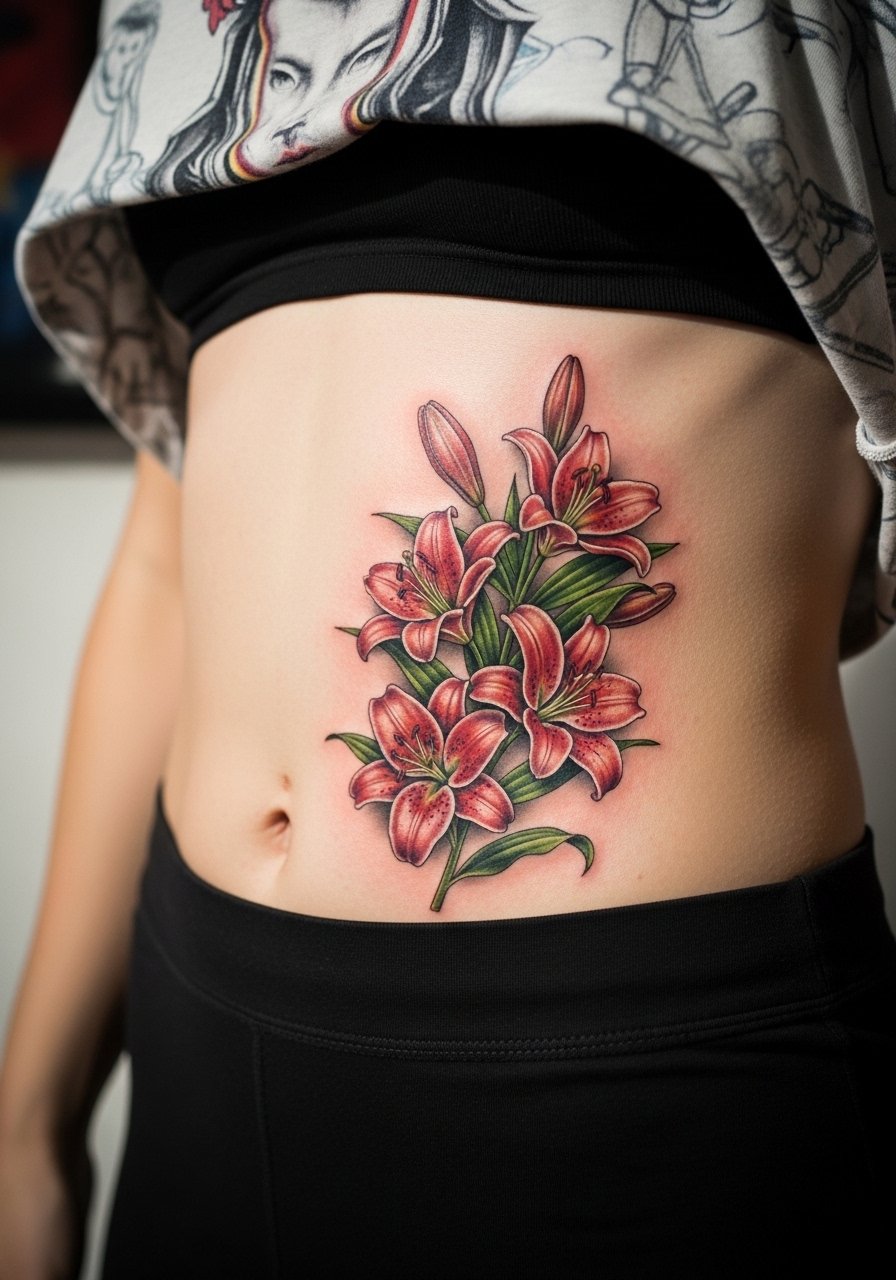
A vertical or slightly diagonal lily cluster can visually elongate the lower abdomen and use the scar as a compositional sweep. When I suggest this, I recommend asking for layered petals with soft saturation rather than a single flat fill, because layered saturation ages with more depth. A common mistake is insisting on micro realism at too-small a scale; micro detail needs space to hold. Expect three to five sessions depending on size. For showing off the piece, high-waisted bikinis or a solid crop top highlight the vertical flow without competing prints.
8. Watercolor Mandala Wash for Movement
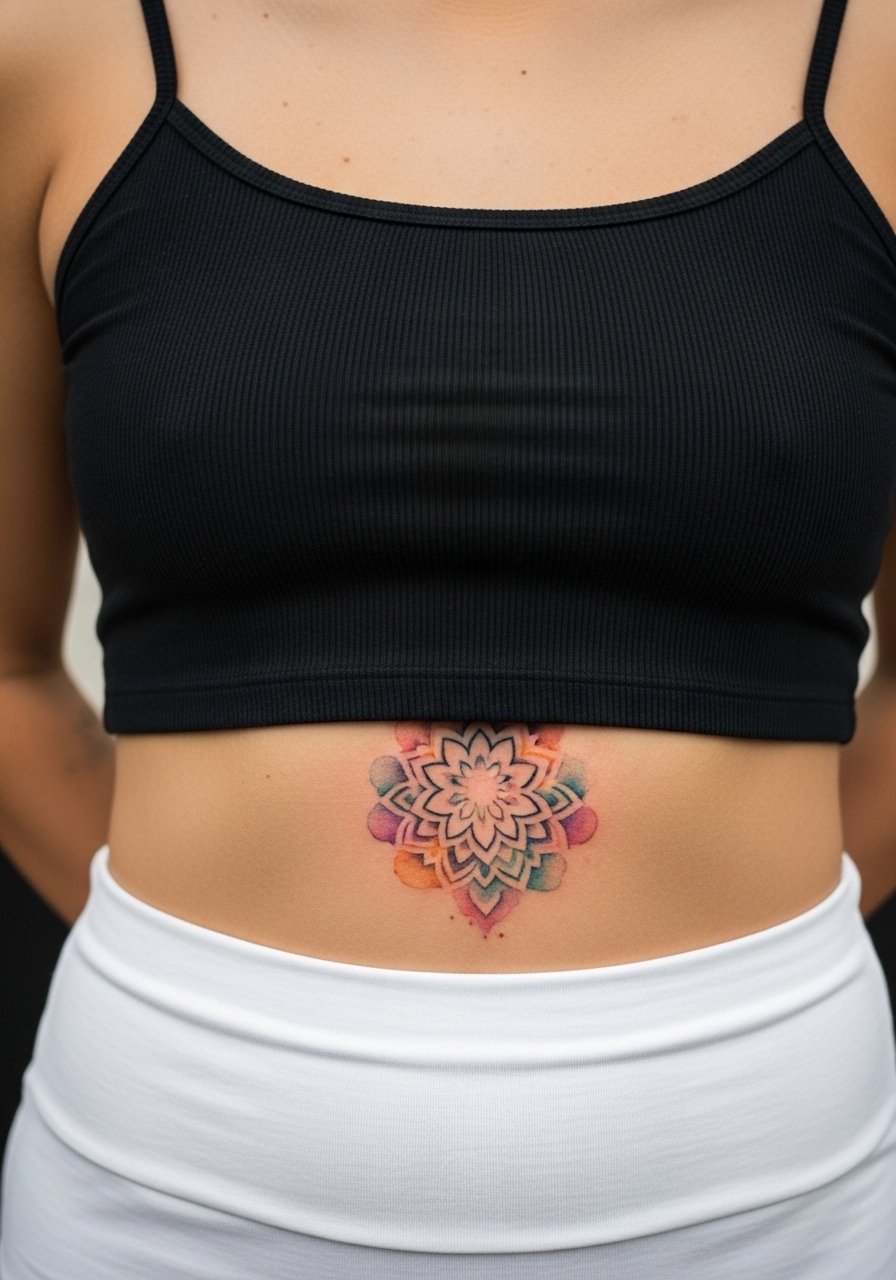
The watercolor mandala blends fluid color around a central mandala, creating movement that distracts from the static horizontal scar. The trade-off is longevity, as mobile abdominal skin can fade washes faster. Choose pigments with higher saturation and discuss planned touch-ups during the consult. Artists often layer washes over two sessions to build depth while avoiding dense saturation that fights watercolor flow. For summer, pair this look with a sheer sarong wrap that echoes the palette.
9. Abstract Shape Waistband That Mimics Clothing
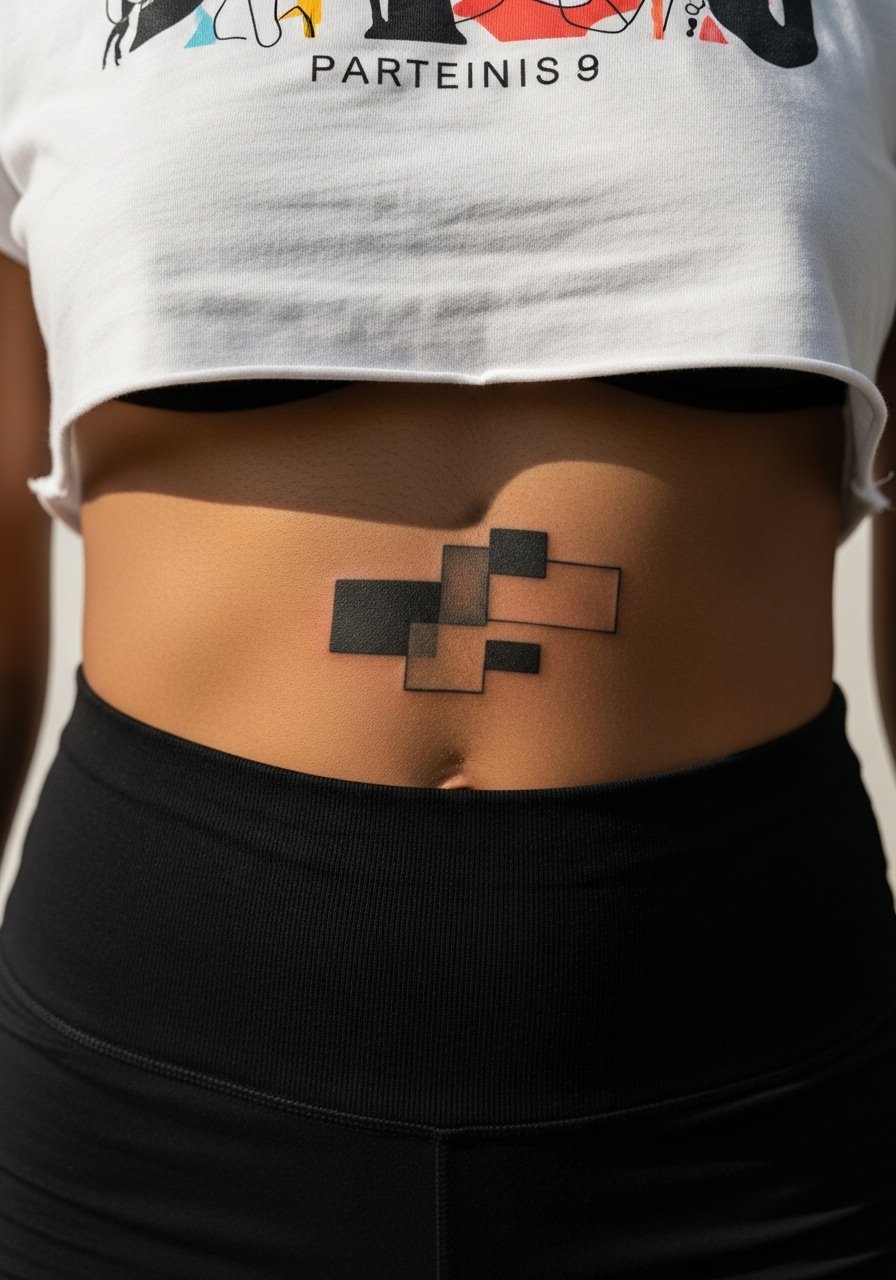
Abstract waistband designs aim to look like a deliberate clothing pattern rather than a cover-up. The practical advantage is that texture and blocks can be placed so they sit under a low-rise pant line when you want discretion. Common mistakes include overly thin detailing that disappears under stretch. Plan the band 4 to 7 inches high and ask for bold anchors so the shapes remain readable. For everyday style, high-rise jeans or a minimalist leather mini skirt echo the band aesthetic.
10. Orchid Micro-Realism to Lengthen the Midline
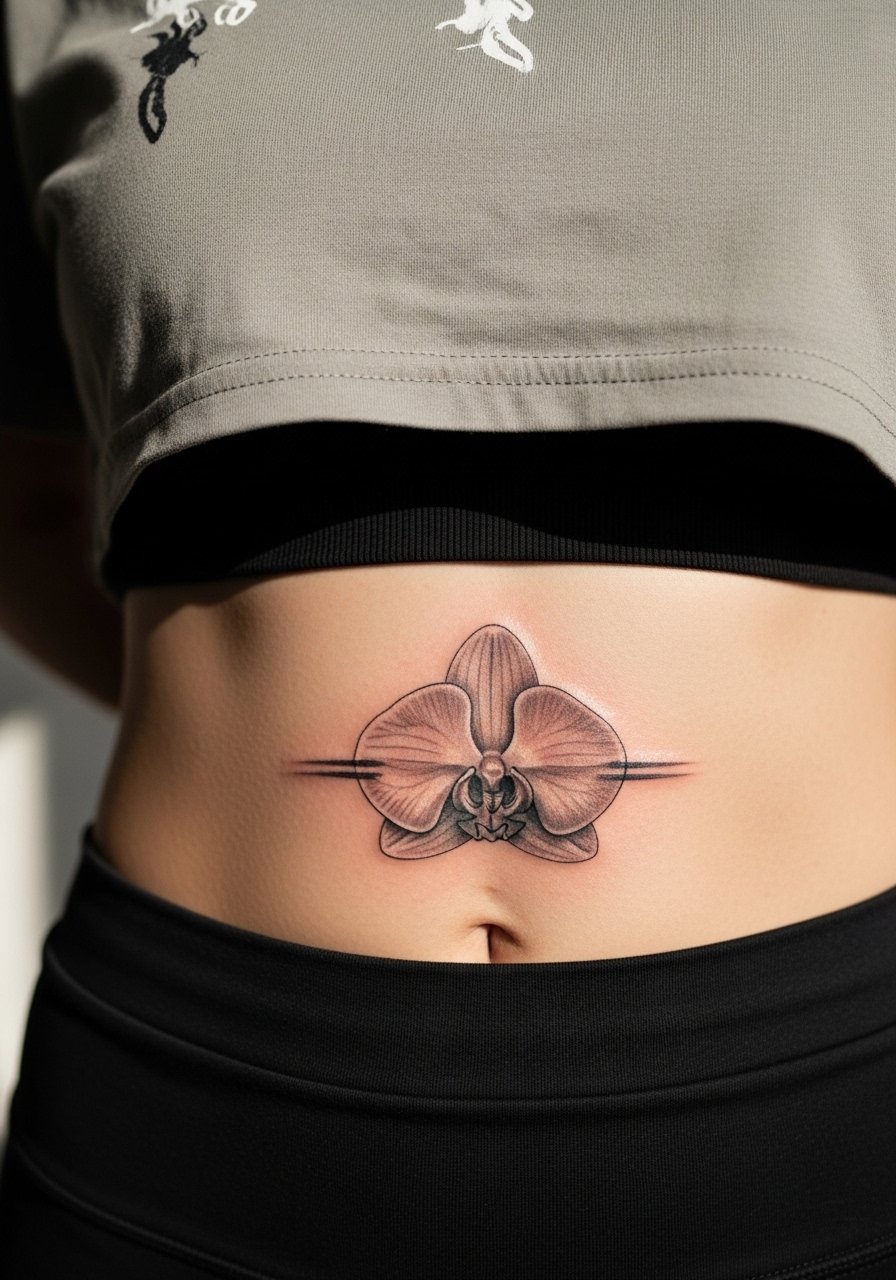
Micro-realism orchids use tiny fine lines and subtle shading to elongate and flatter contours. The first-time mistake is requesting micro scale over scar tissue that still has texture, which hides the detail. Wait until the scar is smooth, or enlarge the scale slightly so the realism reads from arm's length. Micro-realism may require more sessions because artists build detail slowly. Pair the vertical flow with a high waisted bikini bottom or a fitted crop to show how the design complements the midline.
11. Symmetrical Geometric Lace Fusion
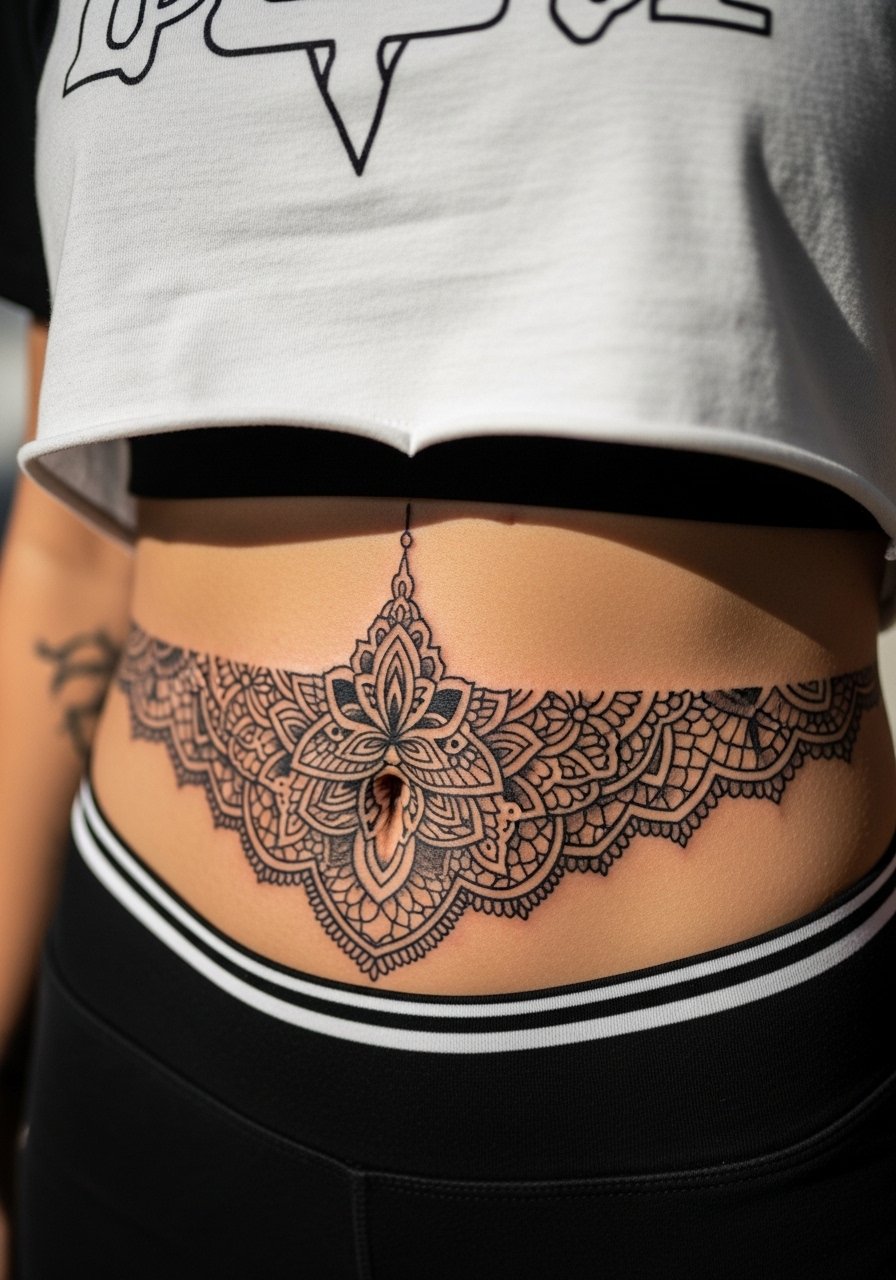
Fusion pieces that combine mandala precision with lace allow dense ornament without losing legibility when spaced properly. The visual impact lead here is that symmetry sells the read, and when the lace uses negative space it resists early merging. Artists differ on density, so ask to see similar healed photos. If you have a history of weight fluctuation the fusion can be adapted with larger motifs to preserve form. For evening wear, a gold chain belt can sit at the waistline and highlight the symmetry.
12. Pale Scar Paramedical Blend
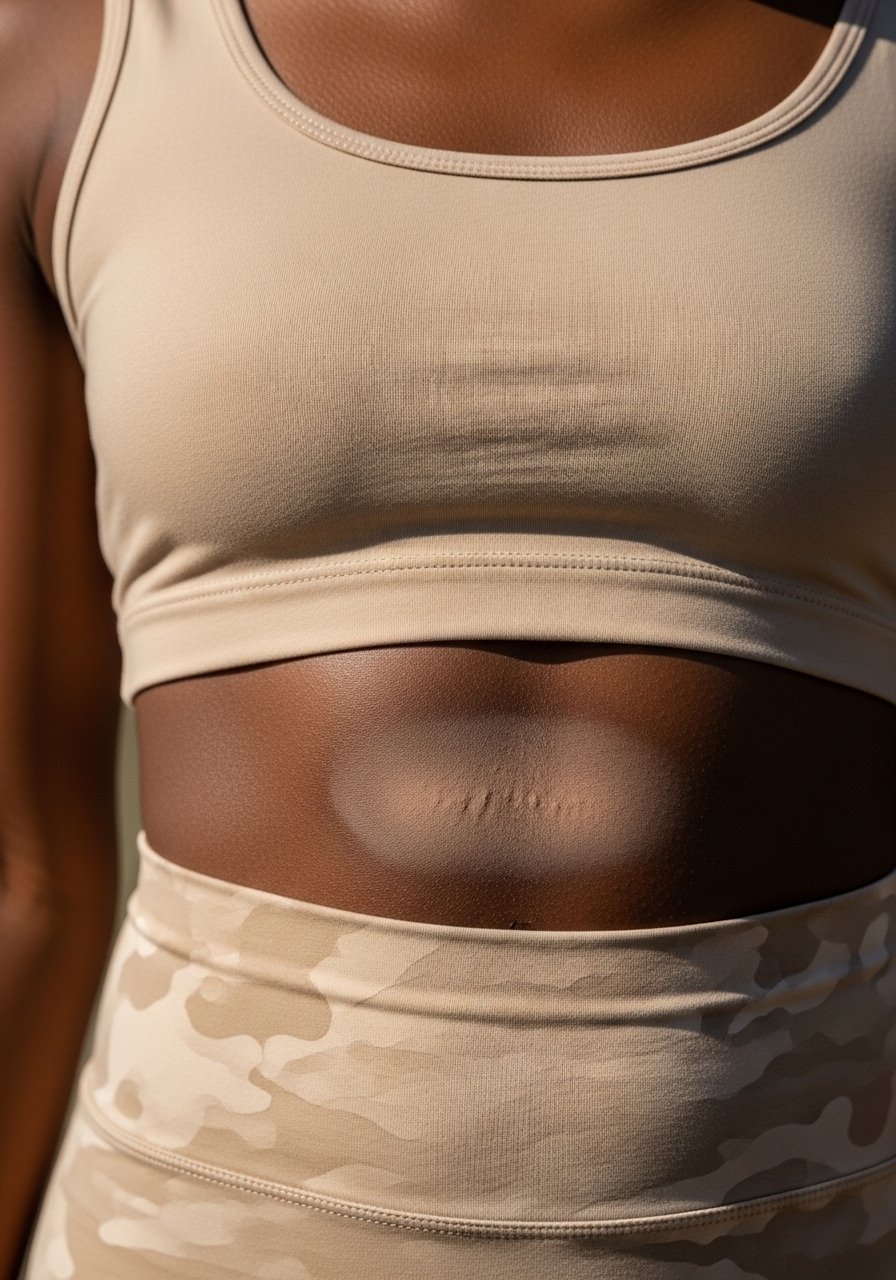
Paramedical camouflage targets pale, non-red scars by implanting neutral tones to even out contrast. Pain warning lead applies here because placement can feel sensitive across scar tissue, but sessions are usually short. The strict rule most studios follow is waiting at least two years for the scar to mature. If your scar is still red or sunken you should plan to delay. For discretion in swimwear, this approach is the least visible option.
13. Abstract Floral Panel for Asymmetry
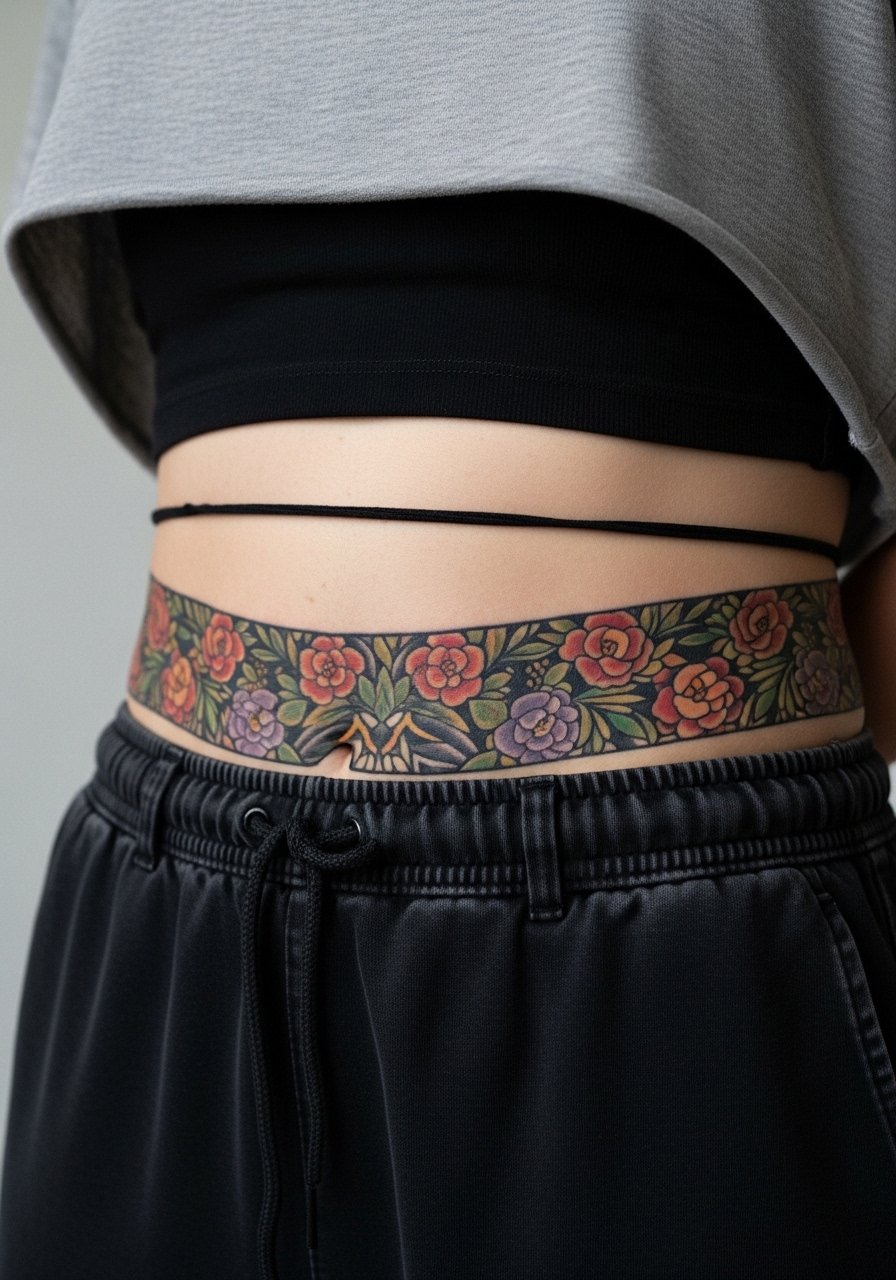
An asymmetrical floral panel leans into the scar instead of trying to hide it perfectly, using varying petal sizes and negative space so one side reads denser. Consultation tip: ask the artist to sketch the panel with your natural standing posture so they account for skin fold and stretch. A mistake I see often is asking for a perfectly centered layout when your scar sits lower on one hip. Session feel is moderate but spread over two sittings for larger panels. Pair with a loose drawstring linen pant for comfortable appointment day wear.
14. Textured Dot Work to Integrate Raised Scars
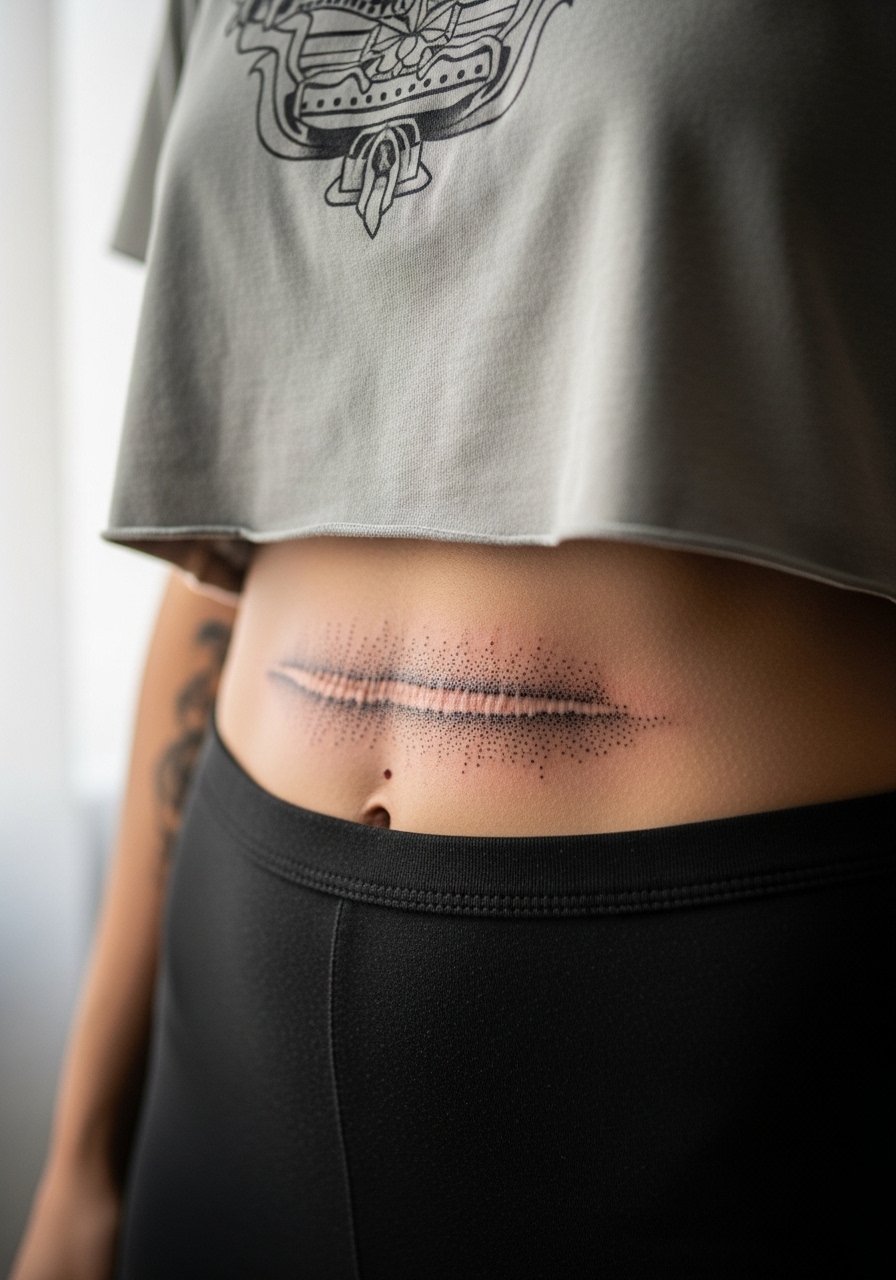
Dot work or stipple shading can disguise raised scar texture by using density variation to mimic skin topography. The aging and healing lead here is useful: dot work often retains its texture over time because it avoids large solid fills that can shift. A common mistake is asking for single-tone fills instead of layered stippling. Touch-ups for dot work are usually minor and predictable. For the session wear a loose button-down shirt you can pull aside so the artist has unobstructed access.
15. Linear Botanical Band That Follows Scar Direction
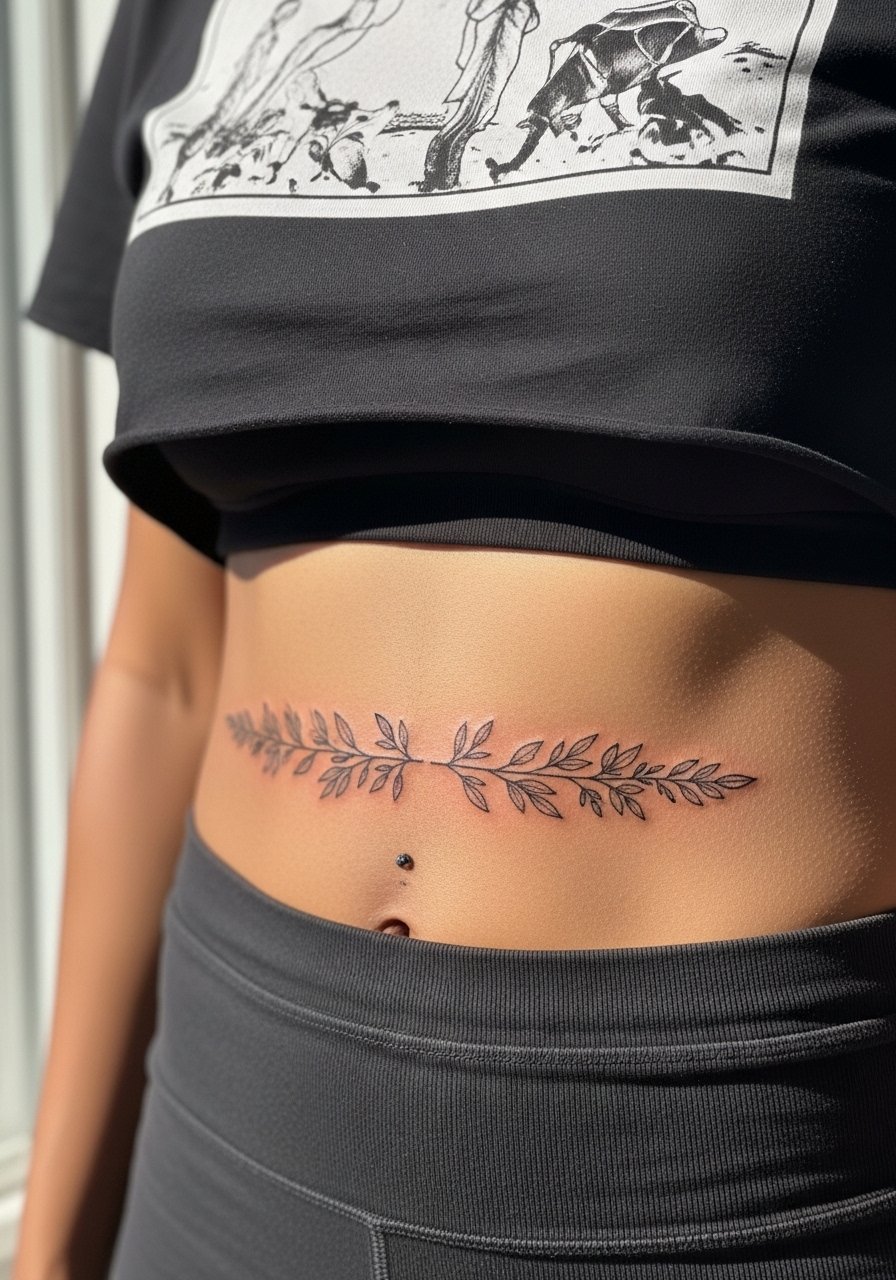
Linear botanicals work when the elements run parallel to the scar. The visual trick is to use repeated small motifs so the eye reads pattern instead of a straight surgical line. The mistake most clients make is over-contrasting black outlines on new scar tissue, which can call attention to texture rather than hide it. Expect one to two sessions and plan a touch-up if you notice migration after weight changes. For showing off, neutral solid tops and a solid crop top keep attention on the horizontal flow.
16. Bold Blackwork Band With Negative Space
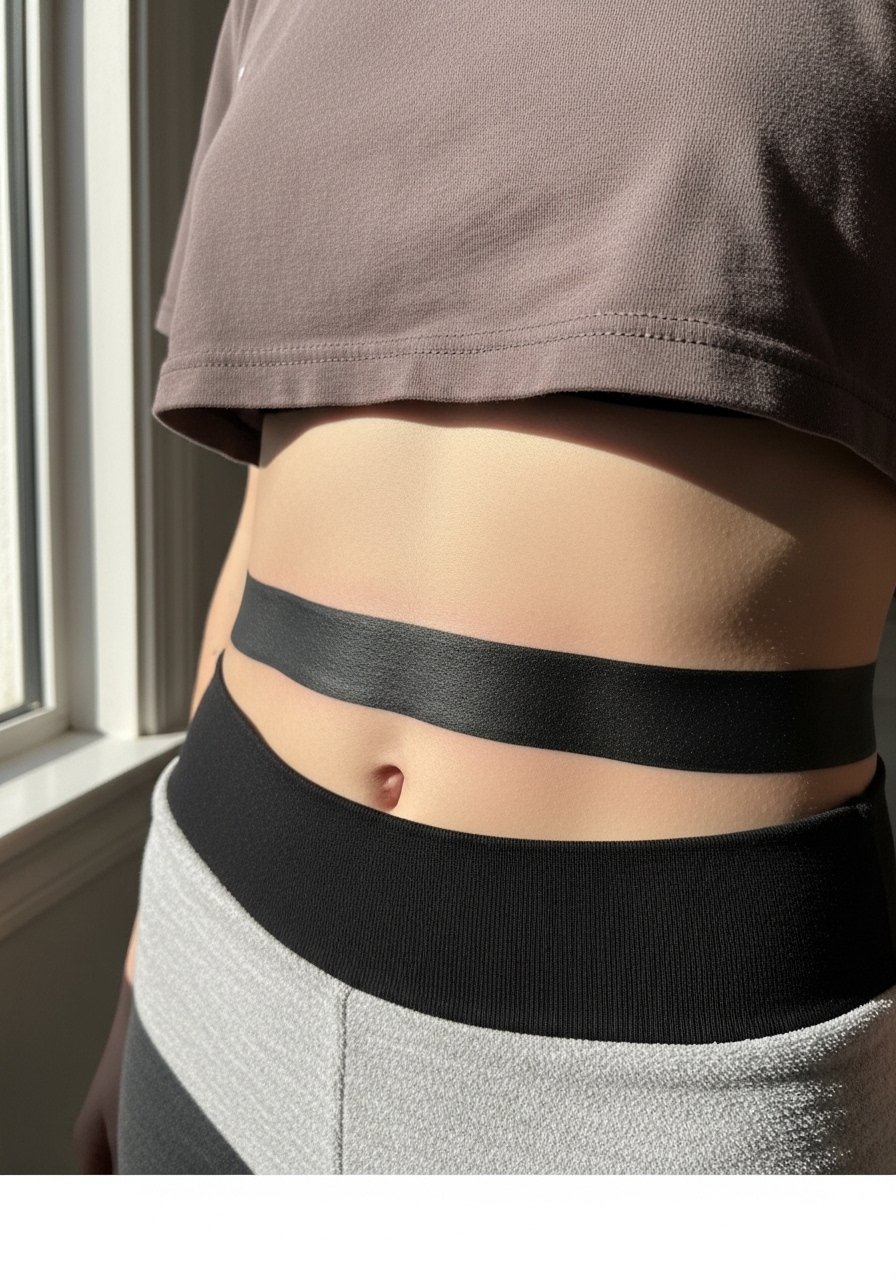
Bold blackwork is practical for deep or discolored scars because large saturated shapes can mask contrast. The aging reality is that saturated black often holds longer than pale color washes, but it also shows scarring texture more. If you choose blackwork, ask for crisp anchor shapes with small negative-space breaks to read as design rather than a patch. Pain level is moderate because larger fills mean longer machine time. Pair with a high rise straight jeans look to mirror the clean geometry.
17. Fine Line Script Framed by Flourishes
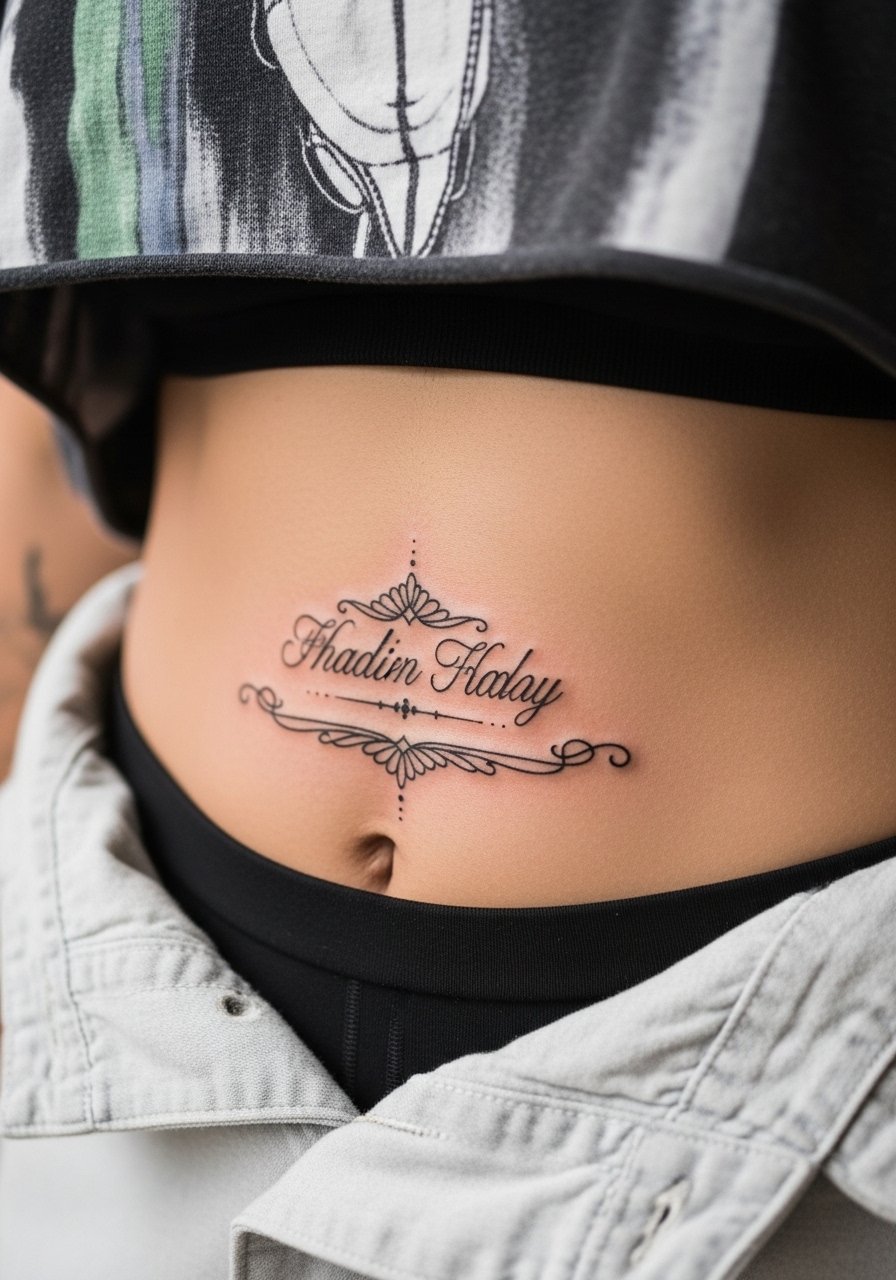
Script over scar tissue can be elegant, but the mistake is choosing very thin lettering or tight cursive that can blur into the scar. If you want script, pick slightly bolder linework and short phrases rather than long sentences so the lettering has breathing room. Consult about letter spacing and font samples drawn on the scar before inking. Session time is short for small scripts, but plan for a follow-up touch-up if your scar absorbs ink unevenly. For appointments wear an elastic-waist garment that avoids pressure on the area.
18. Neo-Traditional Panel That Reinterprets the Scar
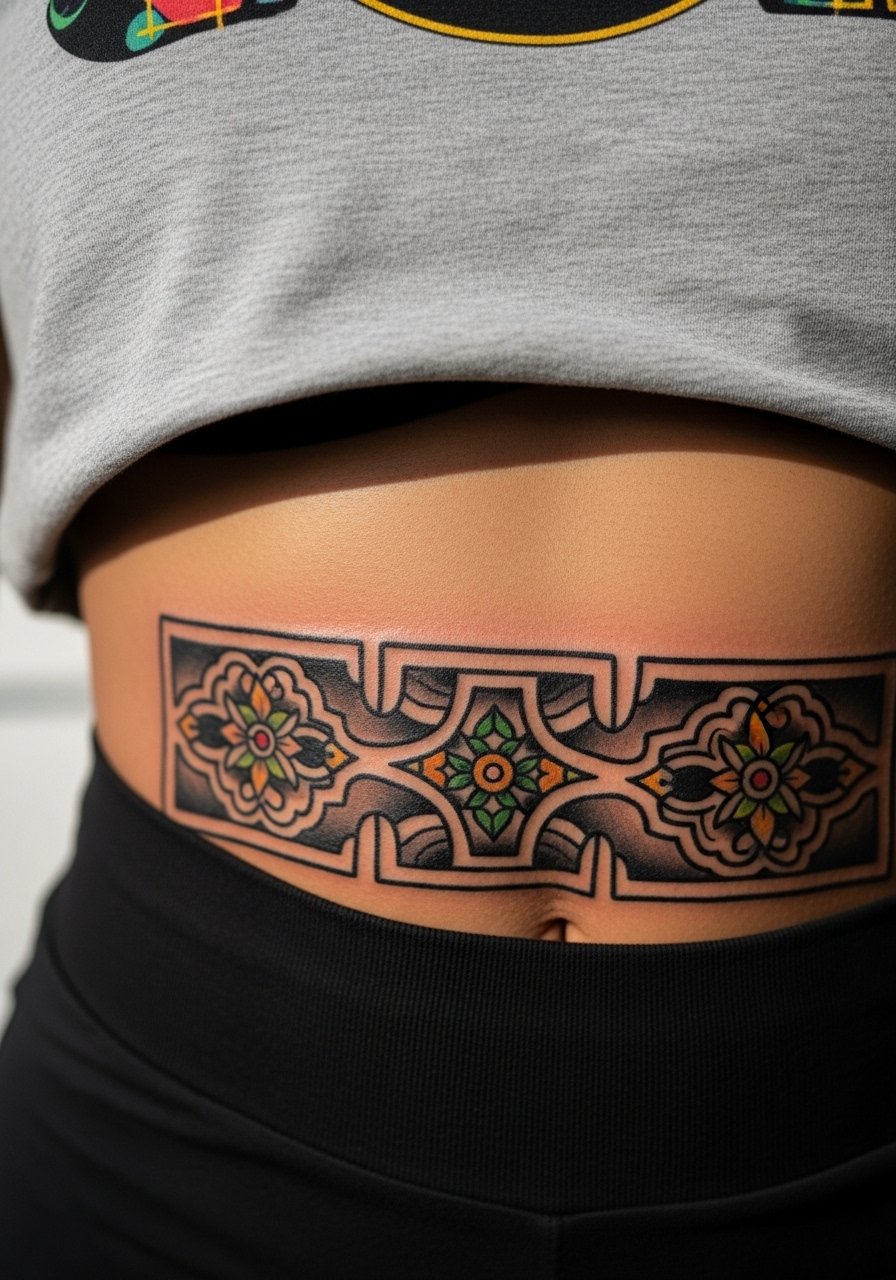
Neo-traditional panels let artists rework the scar into bold shapes with clear outlines, and the technique ages predictably because it uses solid anchors. The common mistake is cramming too many small details into a compact panel, which leads to blurring after a few years. Ask your artist to prioritize strong outlines and mid-tone fills so the piece stays readable. For session comfort, elastic waistbands or pull-down shorts make it easier for the artist to reach the lower abdomen without tight fabric.
19. Fabric-Mimic Lace That Hides Under Clothing Lines
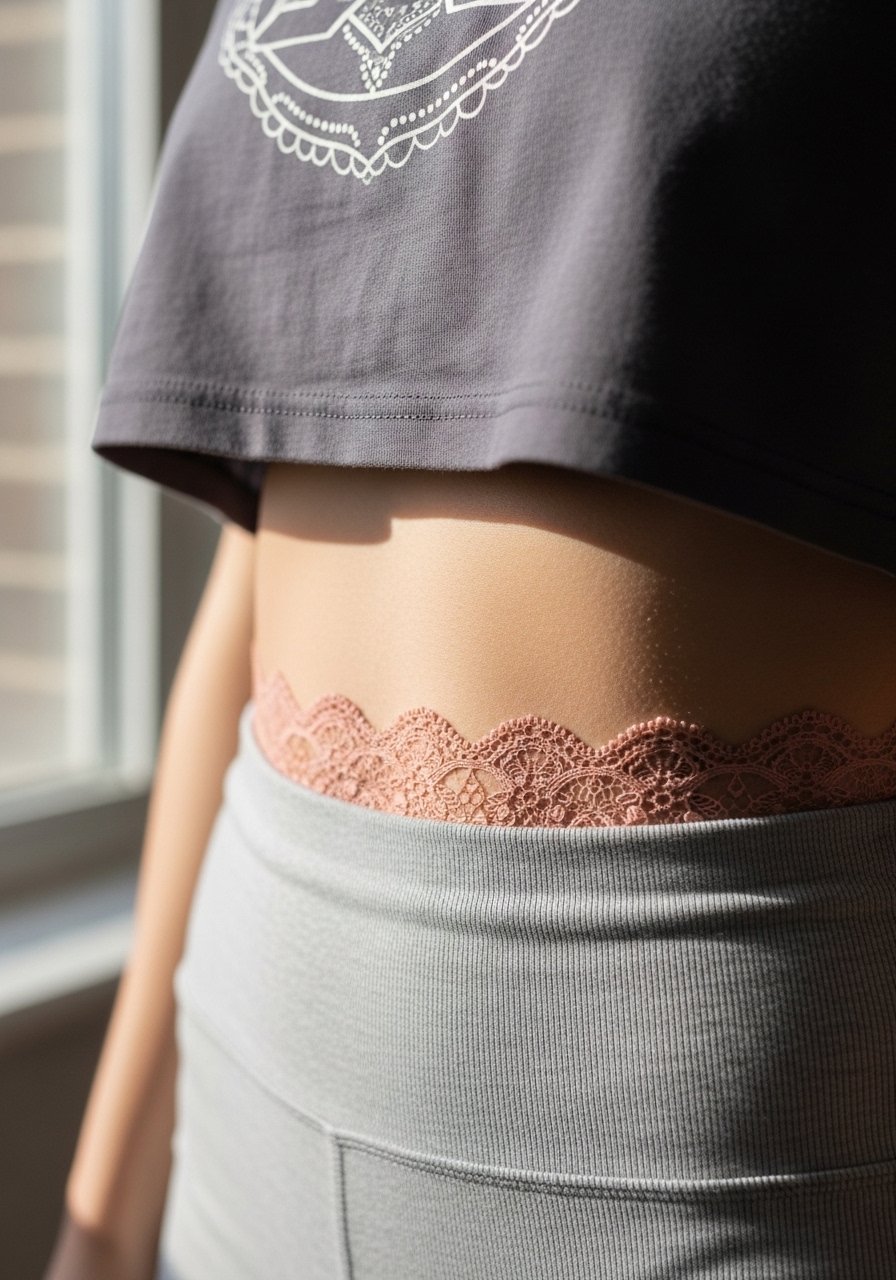
Designs that mimic fabric patterns are clever because they sit under low-rise clothing and read as decorative trim. When artists map motifs to the waistband area they can place heavier detailing beneath the natural pant line so it is hidden when you want discretion. The error is choosing too intricate a repeat when the cloth view will be disrupted by body movement. For the appointment pick loose waist garments so the pattern can be applied without pressure.
20. Asymmetric Geometric Panels for Shifting Scars
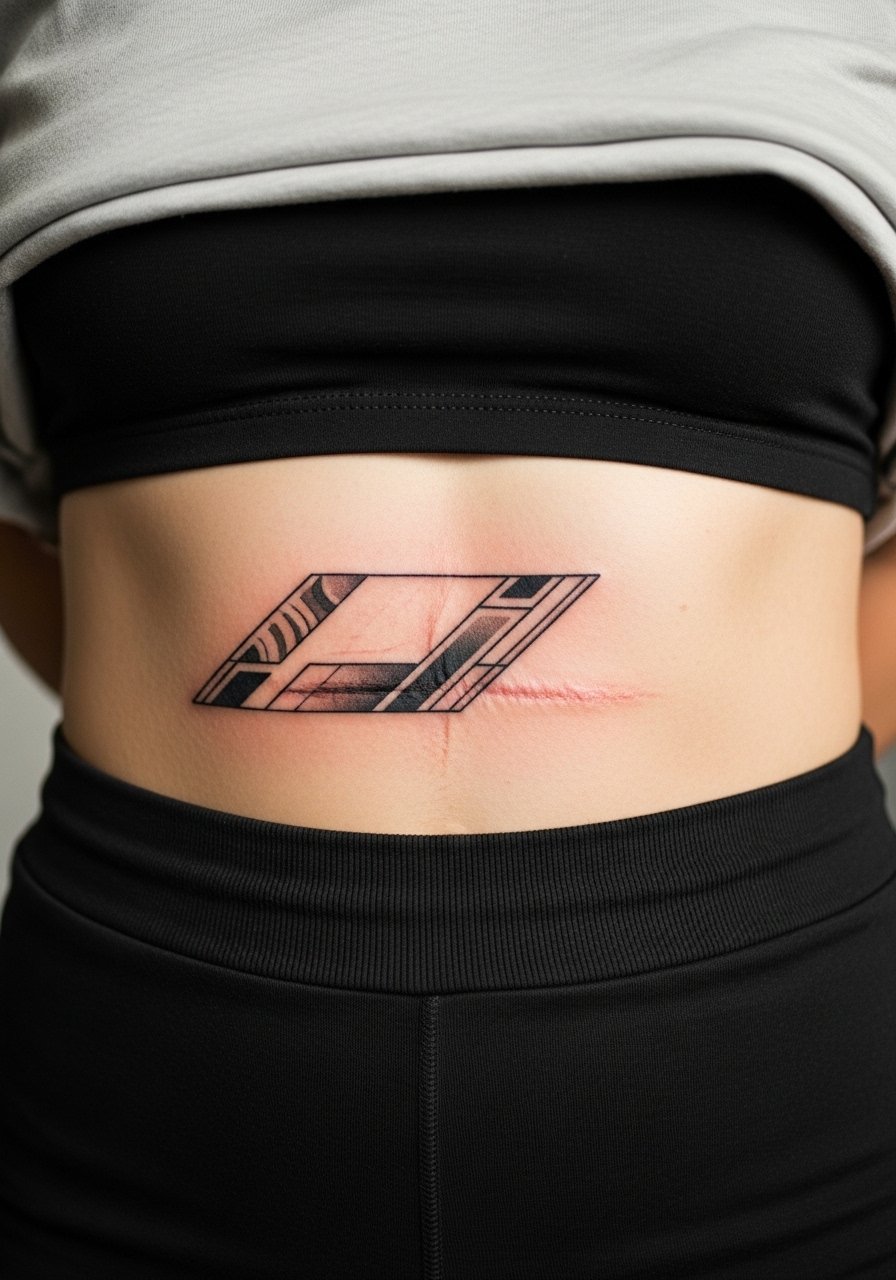
If your scar has shifted due to weight change, asymmetric geometry can adapt where rigid symmetry cannot. During consultation ask for mockups in standing and lying positions so the artist sees how the scar moves. The mistake is expecting perfectly matched halves when one side of the scar sits higher. Asymmetric panels give visual balance without forcing symmetry that will break on mobile skin. For session-day comfort choose athletic pull down shorts so the artist can work without tight elastic.
21. Minimalist Band With Skin-Tone Accents
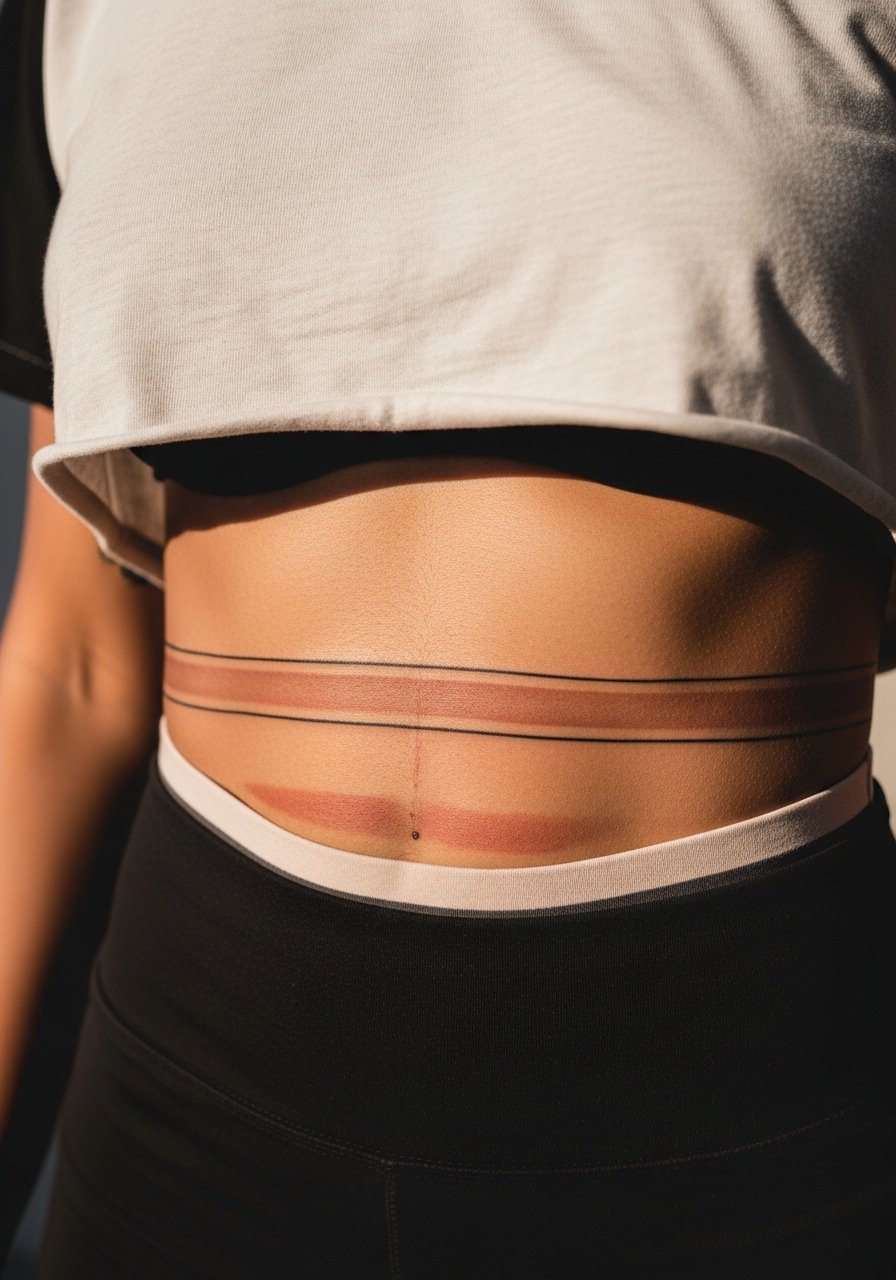
A minimalist band that combines clean black outlines with small skin-tone fills can balance discretion and design. The aging lead is simple: minimalist work needs space. Too-small bands blur, and tiny skin-tone infills can fade faster than black. If you favor low visibility in swimwear but want a designed look, ask for a slightly wider band and plan on a touch-up at year two if your skin stretches. For appointments wear loose, easy-to-shift clothing so the artist can adjust access without pressure on fresh ink.
Frequently Asked Questions
Q: How long should I wait after a tummy tuck before getting a cover-up tattoo?
A: Most paramedical specialists suggest waiting until the scar is pale and flat, which for many people means about two years. If your scar healed evenly sooner and is non-red, some artists will consider earlier work, but expect touch-ups if texture or color changes later.
Q: Which styles hold up best on mobile lower-abdomen skin over five years?
A: Bold blackwork and larger geometric panels typically age more predictably than delicate watercolor washes. Dot work and stipple shading also age well because they avoid large saturated fills that migrate. Plan touch-ups based on weight fluctuation and sun exposure.
Q: Can scar camouflage make the scar invisible in a bikini?
A: Camouflage can minimize contrast, especially for pale, non-red scars, and it is often the best option if bikini discretion is the goal. Remember that timing matters and that camouflage is about blending tones, not removing texture.
Q: How should I prepare clothing-wise for a lower abdomen session?
A: Wear a cropped tee or a tank with high-waisted bottoms that you can pull down slightly. Elastic waist garments or pull-down shorts are ideal. That lets the artist access the scar without exposing more skin than necessary.
Q: Will watercolor washes fade faster on the abdomen than on an arm?
A: Yes, mobile areas like the abdomen experience more friction and stretch, which can soften washes more quickly. If you love watercolor, plan for periodic color refreshes and ask the artist about pigments that hold longer on moving skin.
Q: Where can I find artists who specialize in scar camouflage or paramedical work?
A: Search hashtags like #TummyTuckCoverUp and #ScarCoverTattoo on social platforms, filter for "scar cover-up" and "abdomen" in portfolio apps, or check local booking platforms for paramedical specialists. Seeing healed examples of similar scars is the best vetting step.