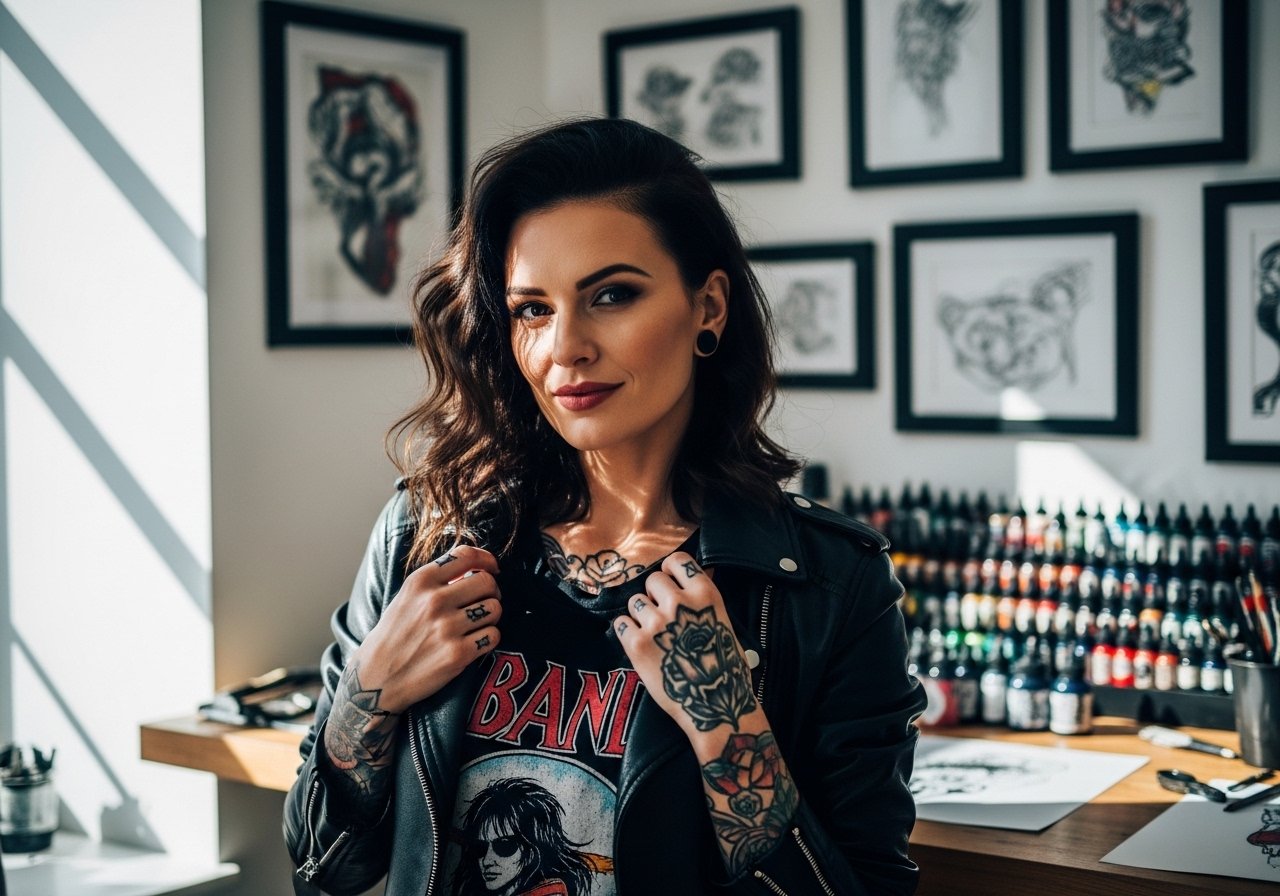
Fine line sun and moon tattoos are everywhere on saved boards, but they do not all age the same. The trend favors delicate linework and tiny phases, yet where you put a piece and how it is spaced matters more than how pretty it looks fresh. Read on for 21 sun and moon ideas that account for skin tone, longevity, styling, and the little consultation notes that keep these motifs readable for years.
1. Minimalist Sun and Moon Outline on the Wrist

I see this tiny outline on wrists more than anything else, and its strength is being discreet. Ask your artist for 1.5 to 2 millimeter line weight rather than hairlines so the pair keeps its separation after a year. Common mistake is requesting an inch-wide design with ultra hairline detail, which often blurs on high-movement skin. Expect a 30 to 45 minute session and mild soreness for a day. For showing it off, stack a thin chain bracelet on the opposite wrist and wear a linen cuff shirt to frame the ink. Touch-ups at year two are common for fine line wrist work.
2. Fine Line Yin-Yang Sun Moon Near the Collarbone
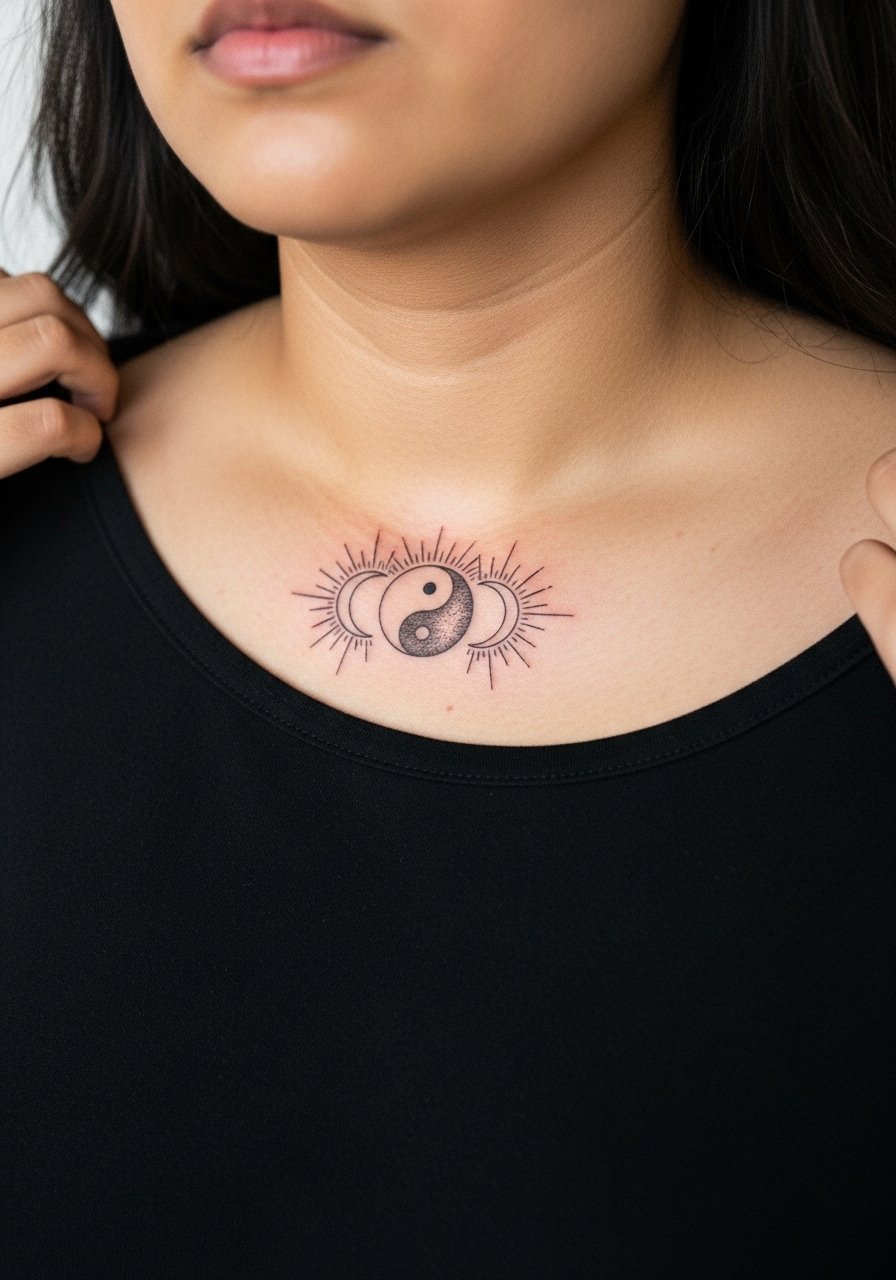
This placement reads delicate and sits well under open necklines. In consultation, specify relative sizes of each orb so neither overpowers the other, and ask for slightly heavier outer contour when the piece is 2 to 3 inches. Expect two short sessions if you want very soft stipple shading. Aging looks good here because the skin is relatively stable, though layered necklaces can hide the detail when worn. For appointments, wear an off shoulder blouse or a wide-neck tee you can easily slide aside. If you like soft contrast, ask for dot work in the moon rather than full gray wash to keep texture over time.
3. Watercolor Sun Over Moon on the Shoulder Blade
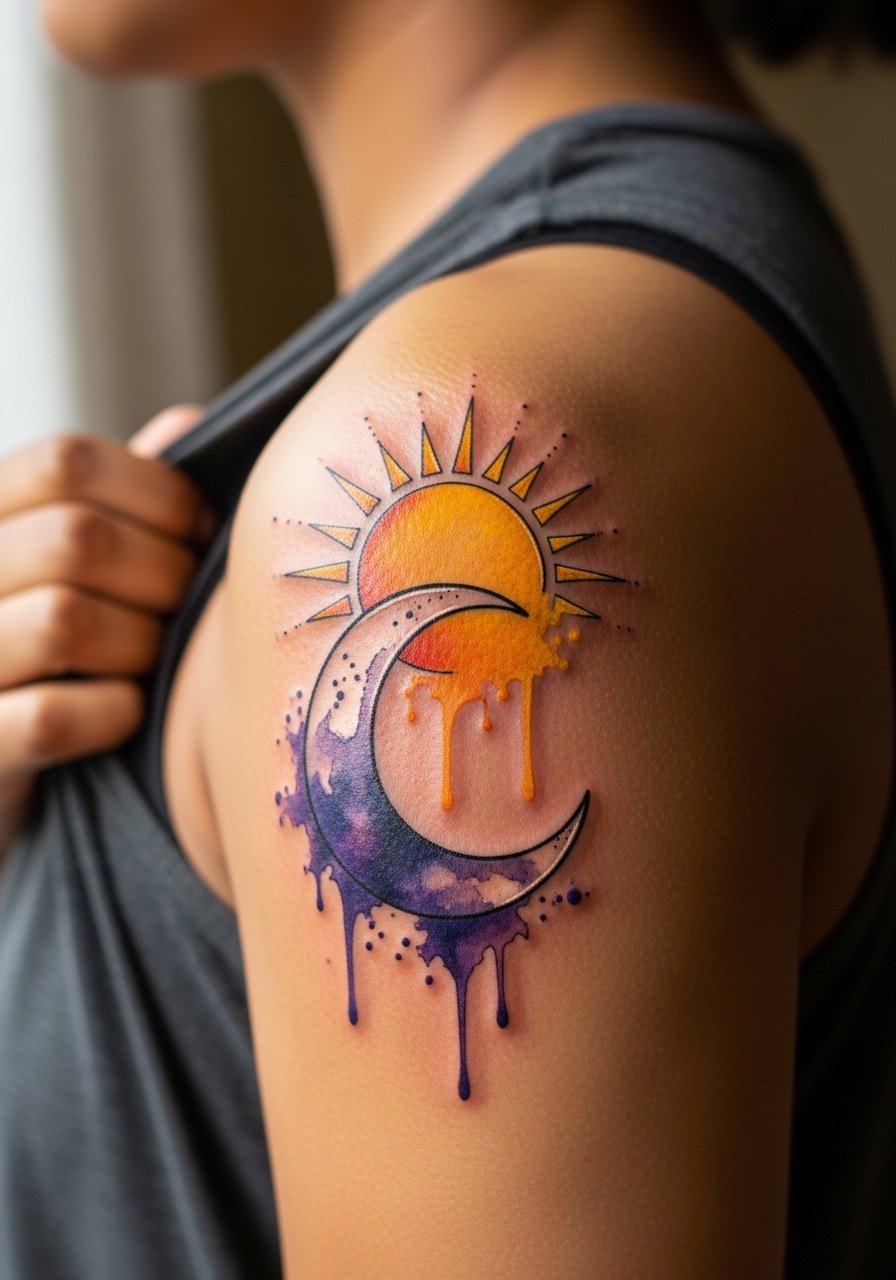
Watercolor pieces can be gorgeous here, but they need saturation zones that will anchor as the colors soften. Tell your artist you want color islands with black anchor points so the composition survives UV exposure and friction from straps. Sessions tend to run longer, often two sittings for layering. This placement is forgiving of touch-ups, yet washes can fade into a bruise-like cast if the inks are too pastel. For showing the shoulder art, a sleeveless tank and a leather jacket left open highlight the contrast. Budget for a touch-up at year three if you plan heavy sun exposure.
4. Blackwork Geometric Sun and Moon on the Forearm
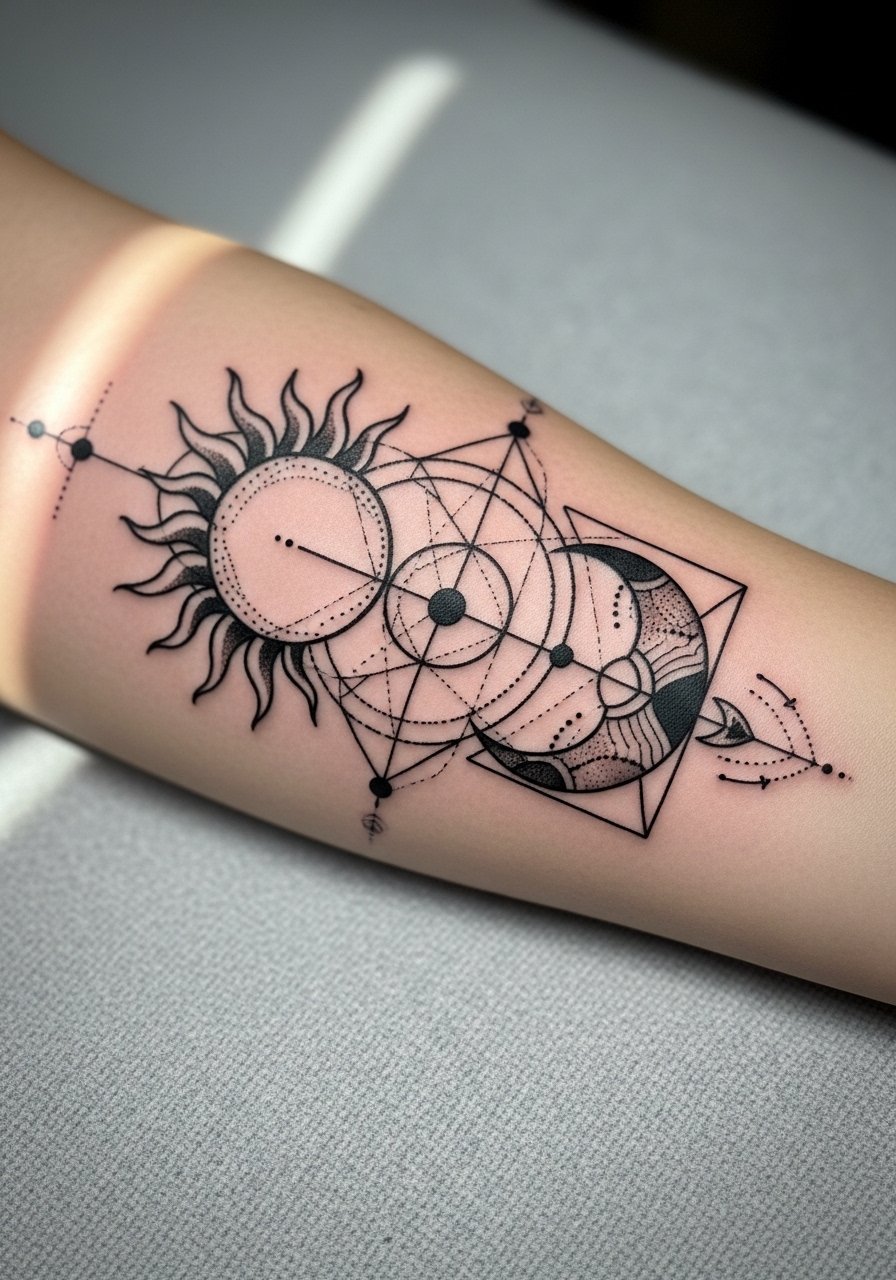
Bold blackwork is forgiving and ages predictably, especially on the forearm where skin movement is moderate. The biggest mistake is drawing geometric negative space too tight; give the triangles and circles breathing room. Tell your artist you want spot saturation rather than overall solid fills to prevent large healed matte patches. Expect one to two sessions depending on size. For casual display, roll up a loose button-down shirt and let the sleeve stop just above the ink. Healed contrast stays strong on most skin tones when the black is saturated and layered correctly.
5. Neo-Traditional Celestial Pair on the Upper Arm
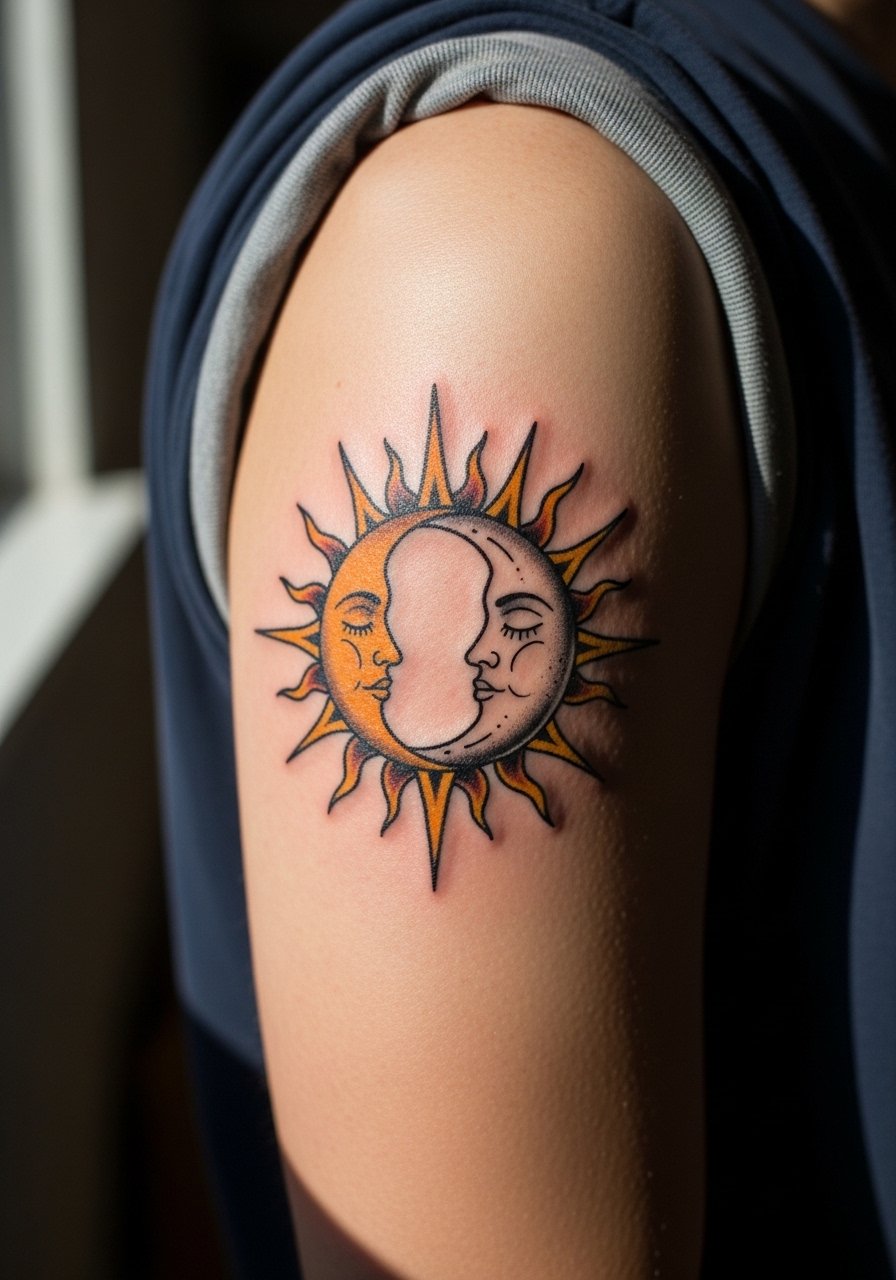
If you like retro curves and punchy color, neo-traditional is a great upper-arm choice that reads from a distance. Sessions run longer due to color blocking and layering. A common error is packing too much tiny detail into a five-inch panel, which can soften into muddiness as the piece heals. Ask for bold outlines and intentional empty space between elements. For summer wear, a high waist shorts look great with sleeveless tops that show off the arm. Expect saturation to mellow into a softer palette at two to three years without sun protection.
6. Micro-Realism Sun and Moon Phases on the Ribcage
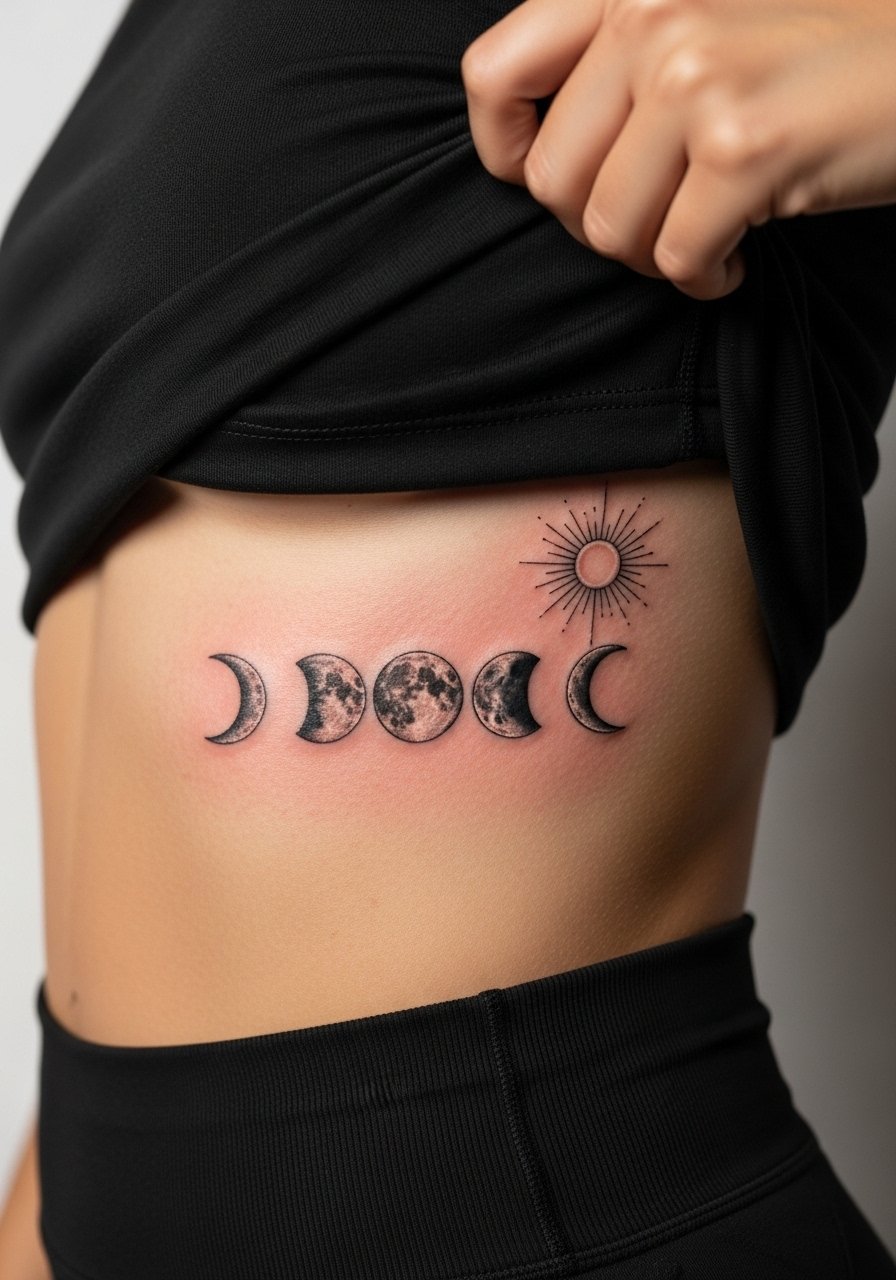
Fair warning, ribs are a high pain zone and micro-realism needs calm breathing during long passes. One camp of artists says fine detail on ribs blurs fast because the skin flexes with breathing. The other camp says careful needle depth and spacing keep detail intact. Name both camps aloud in consultation and ask how your artist plans to space elements. Micro pieces here look razor-sharp at six months, softer at two years, and often need a targeted touch-up by year three if you want the same crispness. For session comfort, wear a fitted sports bra you can loosen so the artist has access without exposing more than necessary.
Studio Day Picks
The wrist, forearm, and ribs above all have different prep needs, so a short kit tailored to those areas makes sessions easier and the first week smoother.
-
Stencil transfer paper kit. Helps you preview placement, which matters a lot for wrist wraps and collarbone pieces.
-
Topical numbing cream. Useful for tight ribcage passes and concentrated micro-realism spots.
-
Thin protective film roll. Keeps wrist and forearm work cleaner during the first week of constant handwashing.
-
Fragrance-free gentle body wash. Mild cleansers reduce irritation for delicate collarbone and shoulder pieces.
-
Aquaphor healing ointment. A thin layer in the first days locks in moisture for fine line work without clogging pores.
7. Dotwork Sun Embracing Moon on the Inner Bicep

The inner bicep is intimate and responds well to stipple shading because the dots maintain texture longer than gradients. The session may include longer stencil checks since the curvature affects spacing. A real mistake is packing concentric dot rings too close together, which heals into a gray mass. Ask for variable dot density and local contrast spots. Pain is moderate to high depending on sensitivity, and touch-ups at two years are common for dotwork in areas that sweat. No accessory links here because the placement is less visible in everyday styling, but plan loose sleeves for the session.
8. Traditional Flash Sun and Moon on the Ankle
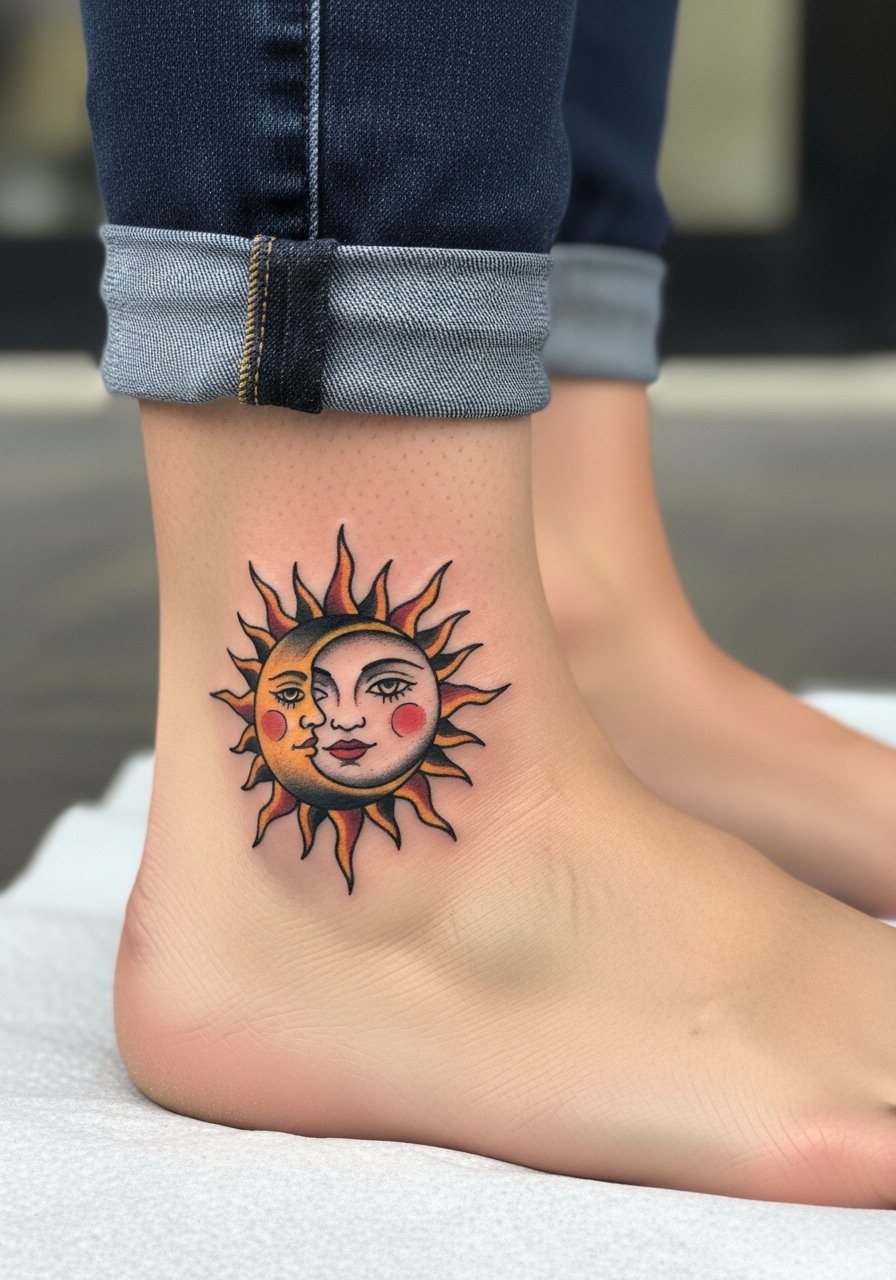
Ankle tattoos face friction from socks and shoes, which affects color retention. Traditional saturation and thick outlines help this style last longer than fine washes. Tell your artist you want strongly separated color fields and a bold outline to withstand abrasion. The session is short and the pain is surprisingly sharp for a minute then fades. For showing the piece, cuffed slim jeans and a delicate ankle chain complement the design without competing. Expect color to soften within two to three years, especially if you walk a lot and do not protect the area.
9. Ignorant Style Abstract Duo on the Forearm
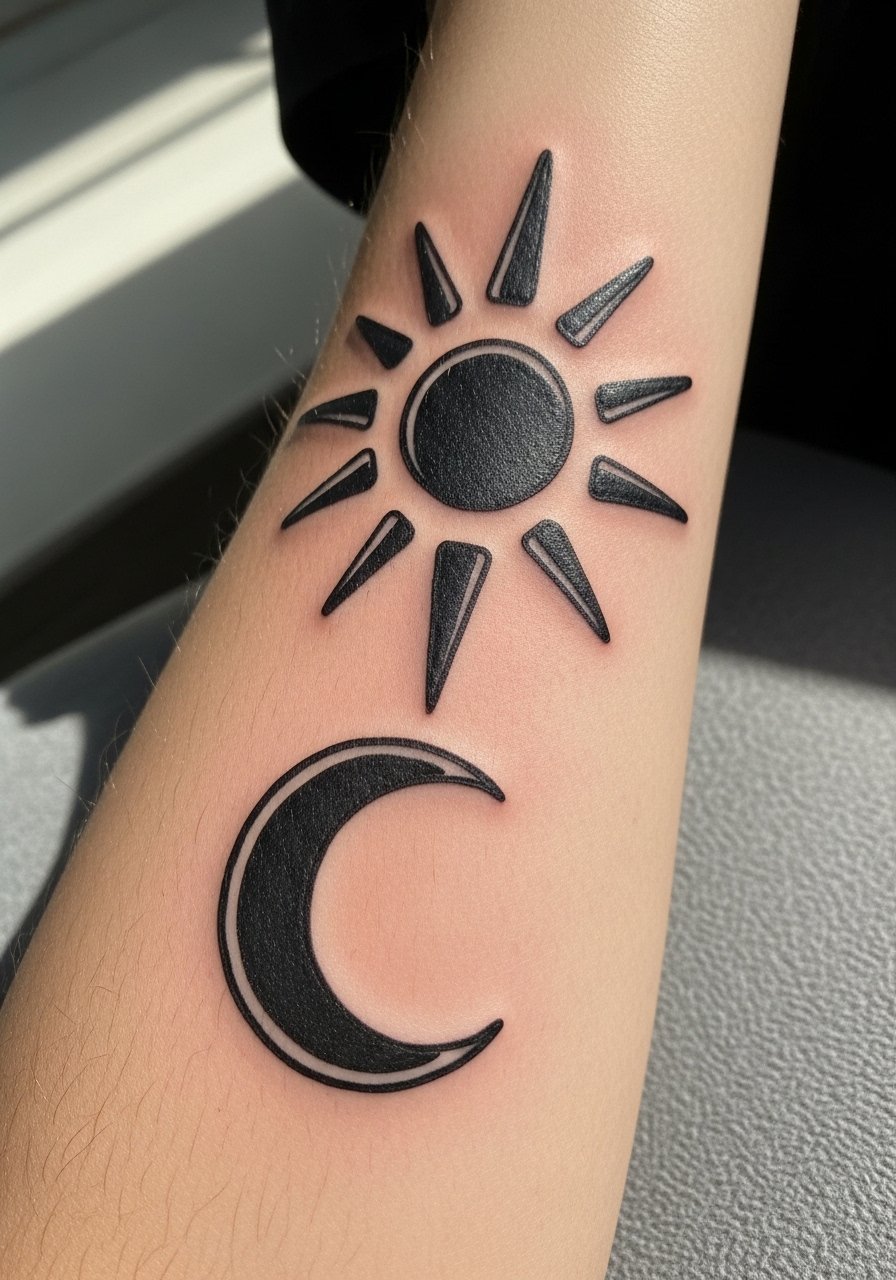
Ignorant style embraces rough, childlike lines that pretend to be careless but need smart composition. The biggest misstep is asking for intentional mess without structure, which can read as sloppy. Bring reference for the exact degree of imbalance you want and ask the artist to preserve intentional negative space. Session times are short, and touch-ups are straightforward because the aesthetic tolerates uneven saturation. For everyday wear, roll sleeves in a rolled sleeve shirt to show the piece while keeping the rest of the arm neutral.
10. Fine Line Half-Sun Half-Moon Face on the Wrist
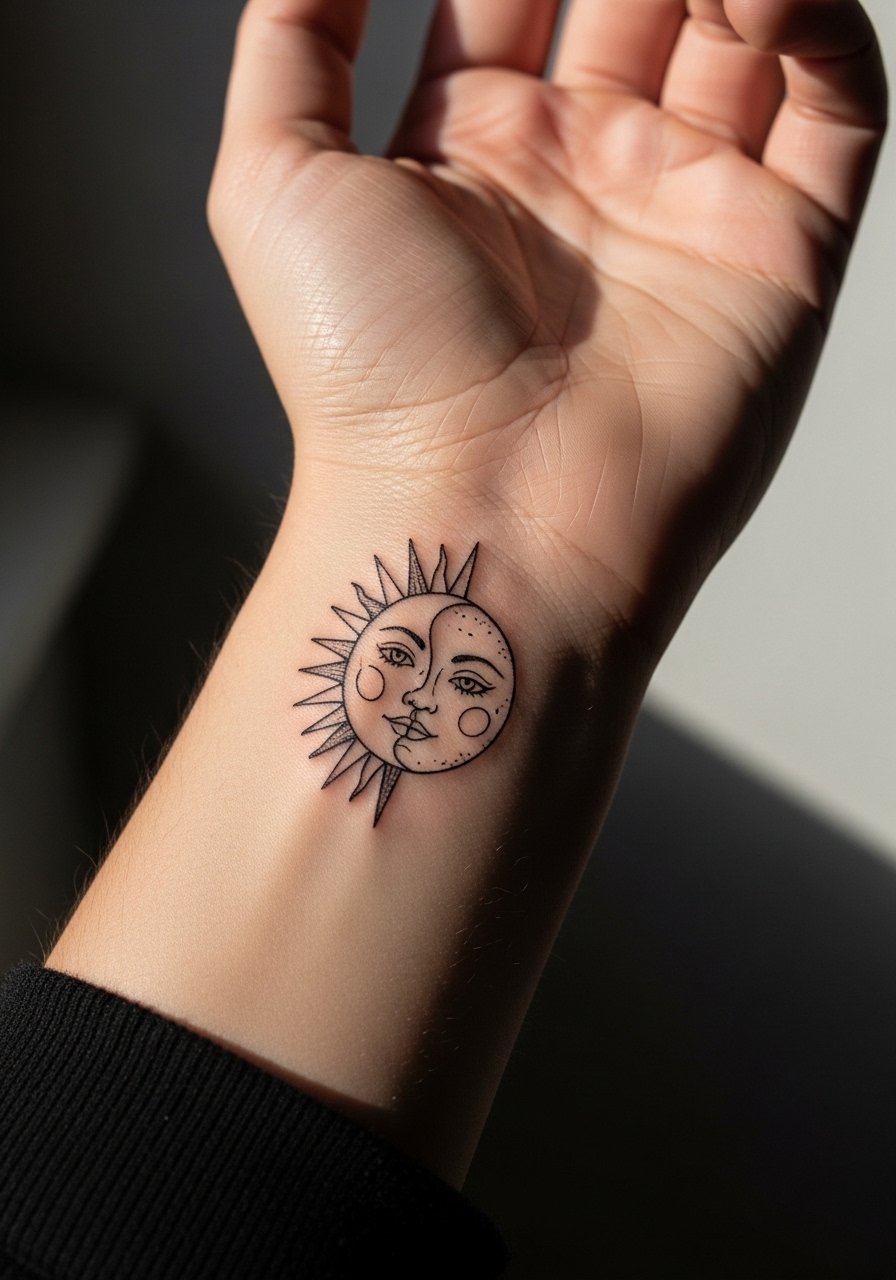
This tiny portrait-style motif reads best at one inch or slightly larger. The wrist is a high-motion area and hairline strokes are at risk. Tell your artist you want slightly bolder facial contours and minimal inner shading to keep features legible at six months. Common aging pattern is softening of eyelids and loss of micro contrast, which can be corrected at a touch-up. The appointment hurts for a brief stretch and then eases. Pair with a dainty ring set on the opposite hand to balance jewelry without covering the wrist.
11. Black and Gray Realism Eclipse on the Shoulder Blade
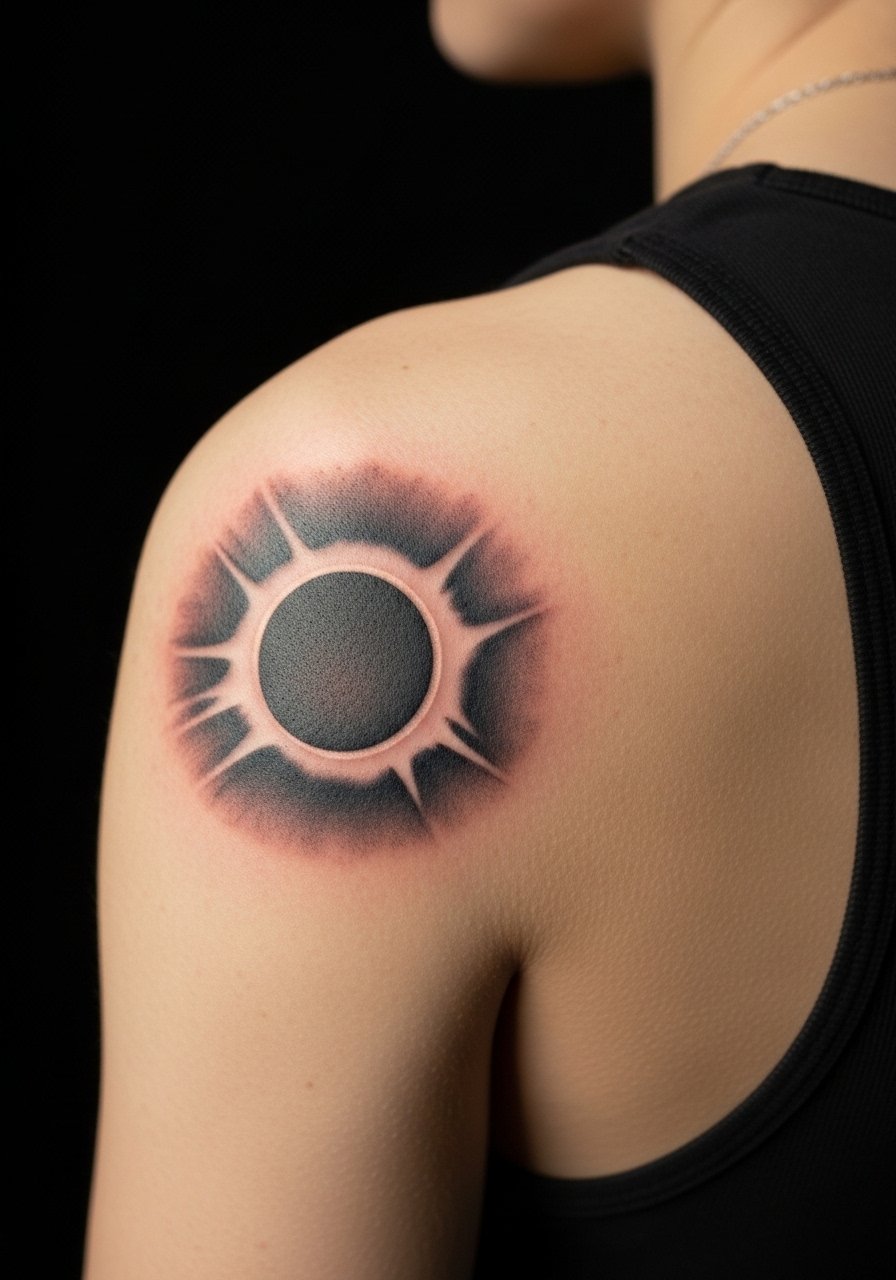
Realism demands layered shading passes, and the shoulder blade gives the canvas space for a dramatic overlap. Avoid tiny contrast lines inside shaded gradients; they flatten quickly. Ask your artist for crisp edge demarcation where the sun meets the moon so the core silhouette keeps its shape as the gray melts. Sessions can stretch into two sittings. The shoulder ages well because it is rarely exposed to constant friction. For the session wear a loose button-down shirt you can slide aside without exposing more than the area needed.
12. Ornamental Mandala Sun Moon on the Upper Thigh
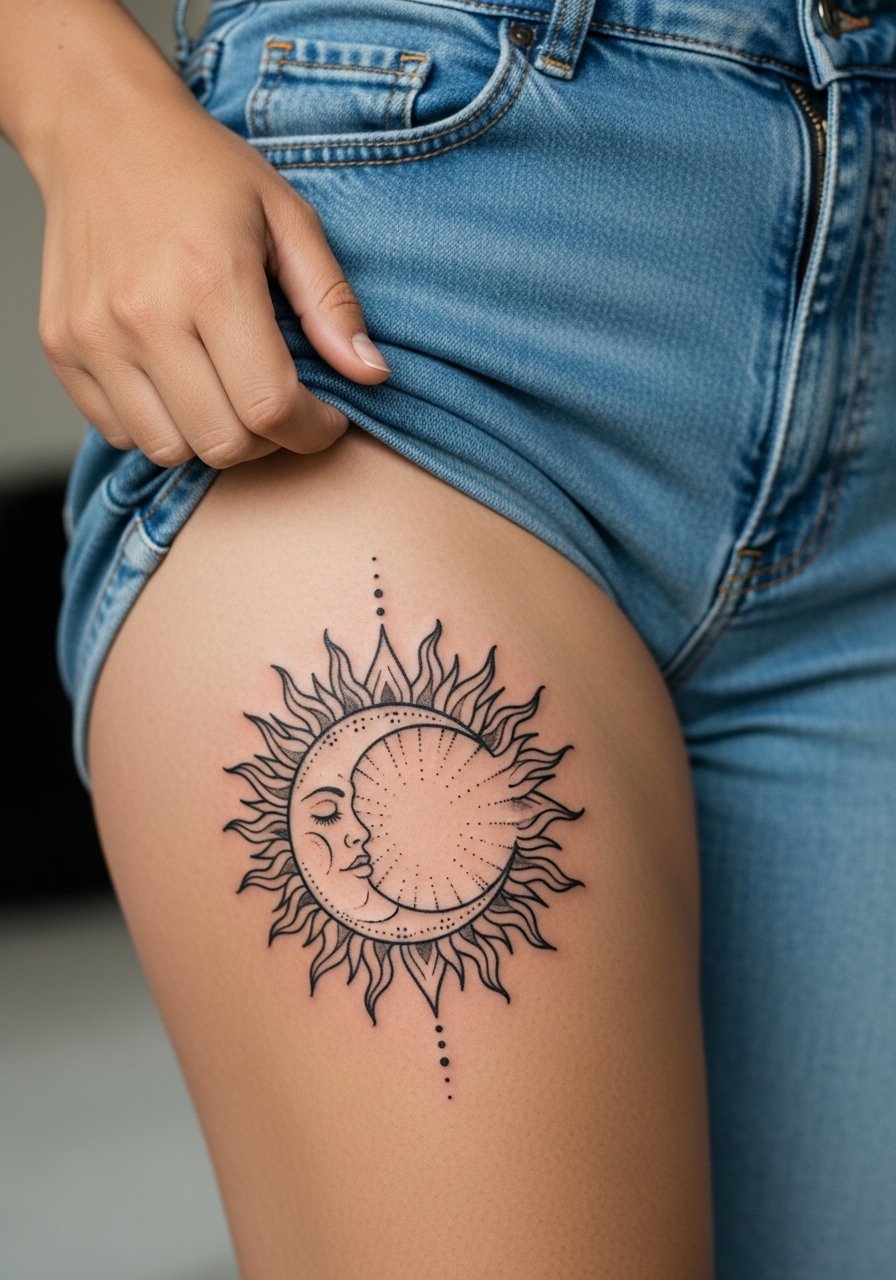
Thigh placements are forgiving and allow for larger mandala detail that breathes. The main mistake is compressing too many petal layers into a small 3-inch circle, which blurs into a textured mass. Tell your artist you prefer spacing and negative space between mandala rings, and request heavier outer linework to anchor the pattern. Sessions are moderately painful and usually done in longer sittings. For showing off, high-waisted shorts and slit dresses work best, and a high waist shorts option helps frame the design when you want it visible. Consider subtle variations if the motif borrows from sacred geometry to respect origin sources.
13. Micro-Realism Crescent on the Neck
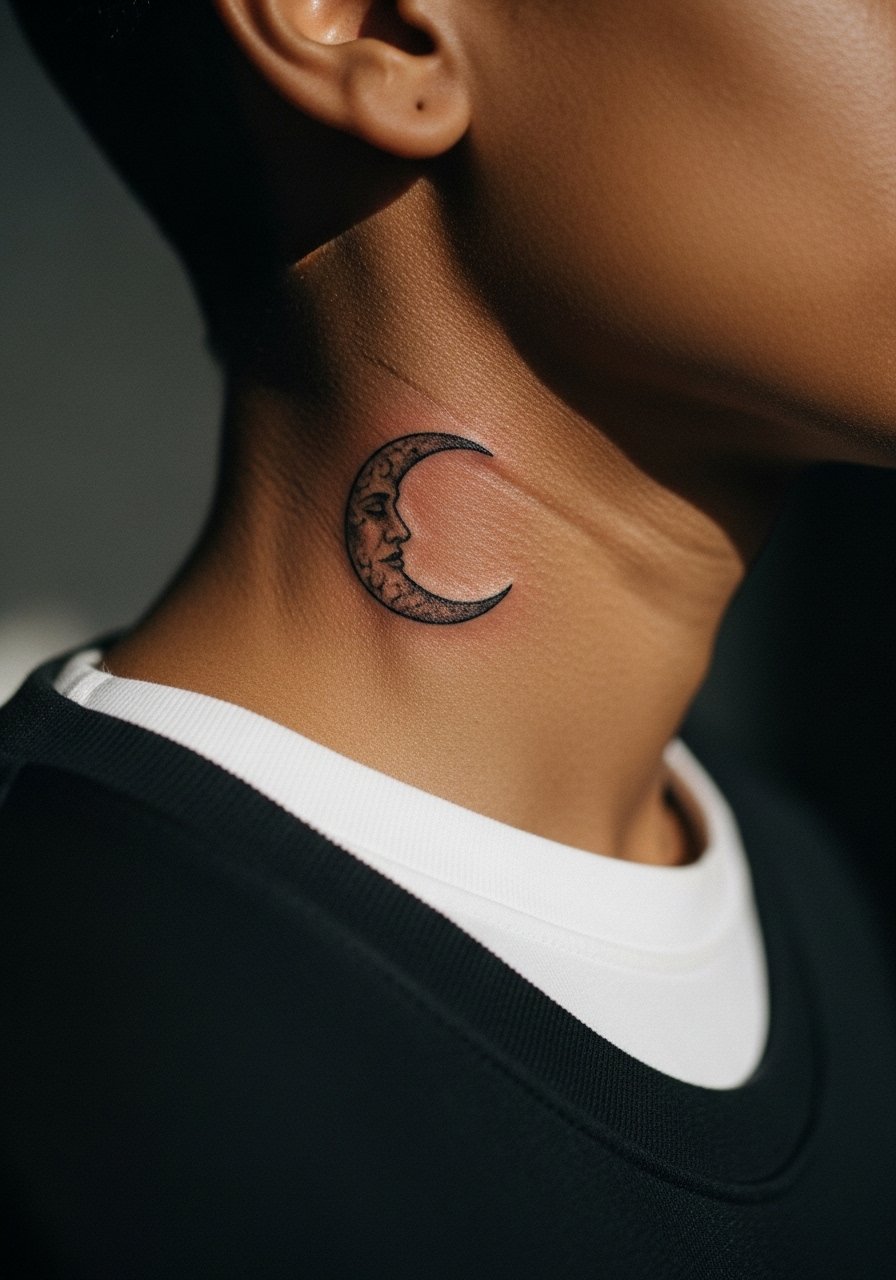
Neck tattoos are visible and bold even when small. Micro-realism here reads as delicate but the area is exposed to sun and clothing friction, which can fade detail. A common mistake is asking for feathered hairline strokes without thicker supporting points. Ask for tiny anchor dots and slightly heavier outer lines. Pain is a 6 to 8 out of 10 depending on sensitivity. Show-off styling is subtle here, but a layered necklace worn just below the piece frames the neck area when you want to complement the art.
14. Spine Sun and Moon Line Up
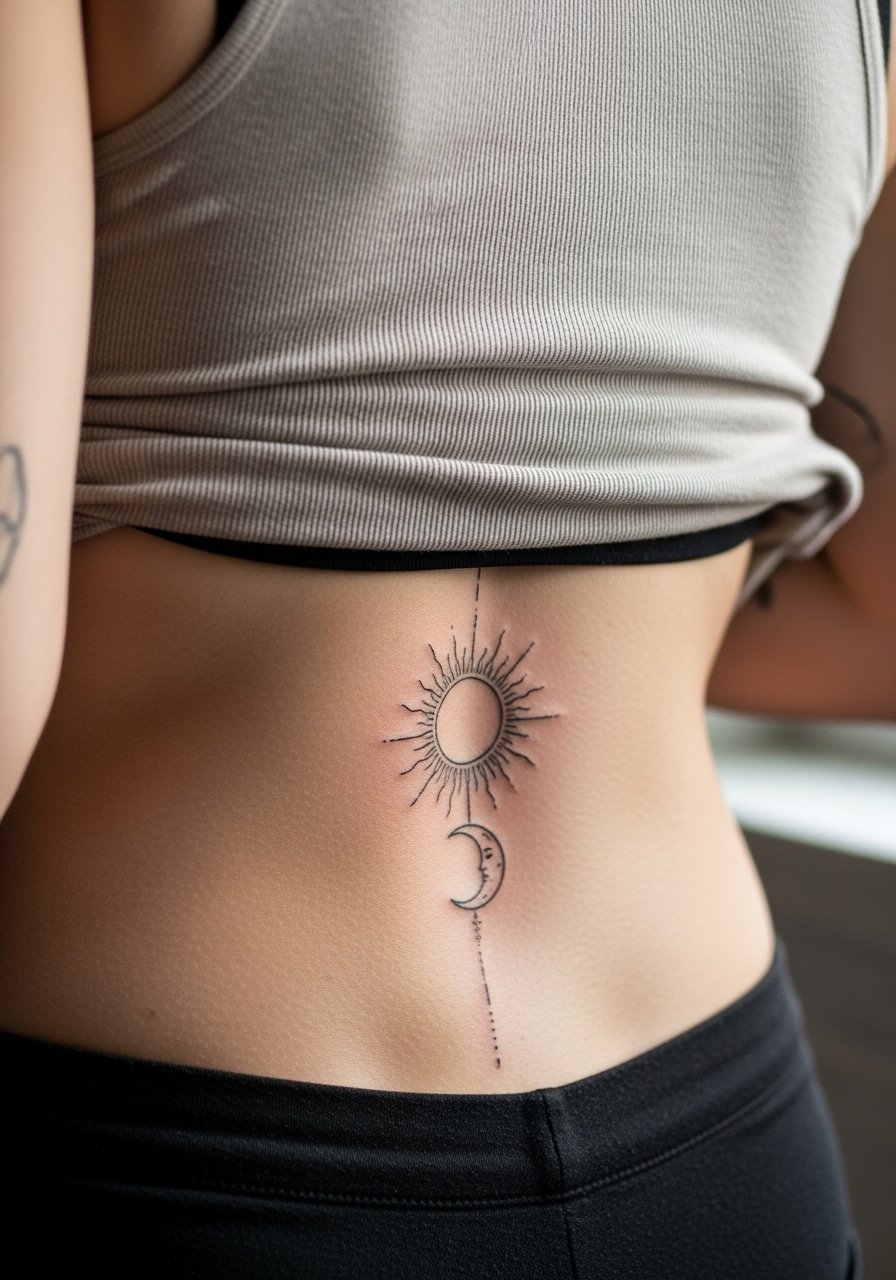
Spine work reads elongated and private, especially with hair down. This placement needs contour-aware layout because the spine curves and shifts with posture. The error I see most is treating the spine like flat paper and centering elements without compensating for curve, which makes circles look off when you stand. Tell your artist you want a mock-up on skin in a few positions before the first pass. Pain varies along the spine, and sessions are typically broken into shorter passes. For discretion, plan clothing like open-back tops when you want to show the line.
15. Dark-Skin Optimized Blackwork Sun and Moon on the Calf
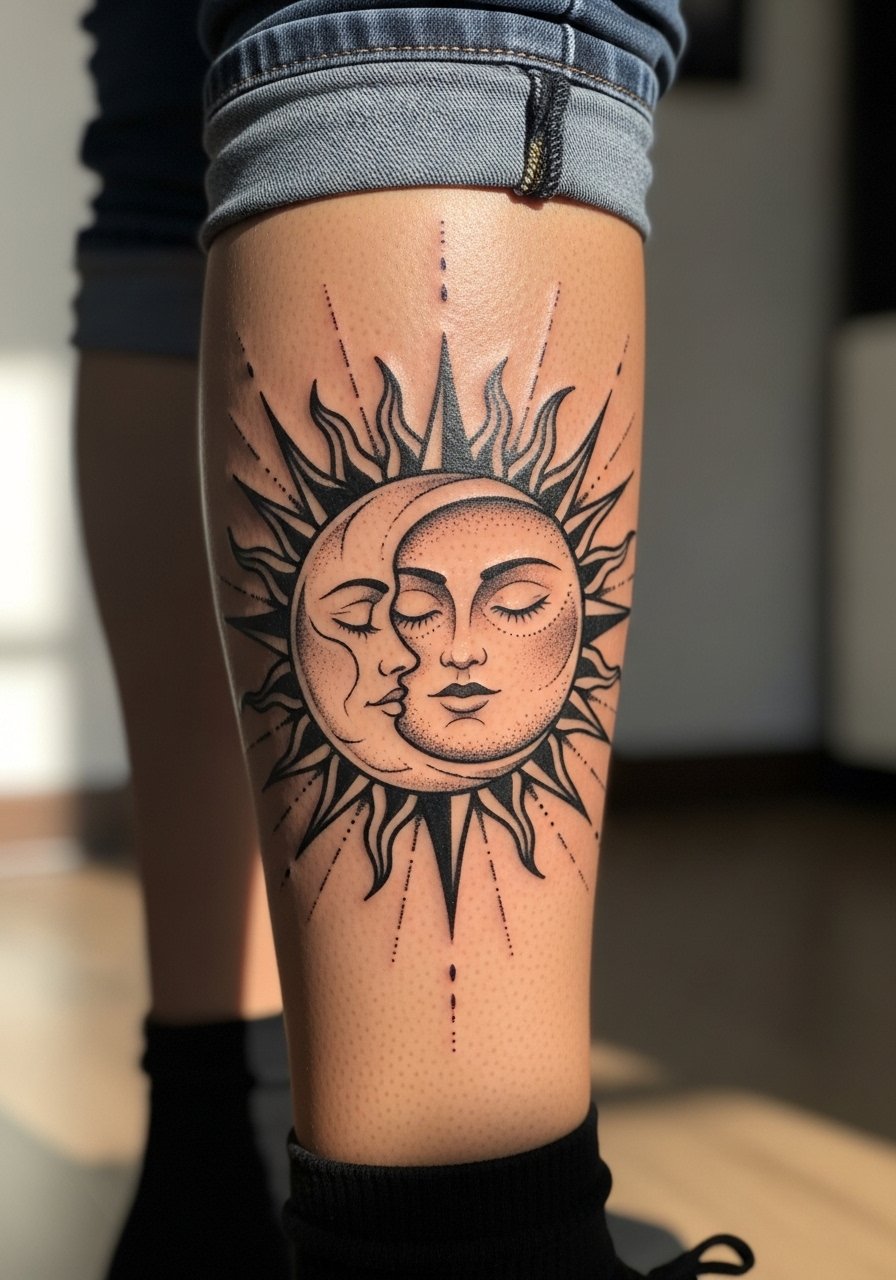
Dark skin needs bold contrast and strategic negative space to make shapes read over time. A common mistake is using thin gray shading that disappears against deeper skin tones. Ask the artist to prioritize saturated black and strong silhouettes, and to show examples of healed work on a similar skin tone. Sessions are straightforward and pain is moderate. For display, try cuffed pants and summer sandals, and pair the piece with a delicate ankle chain if it sits near the ankle. This approach respects pigmentation differences without changing the motif.
16. Interactive Couples Pieces Using Moon Phases
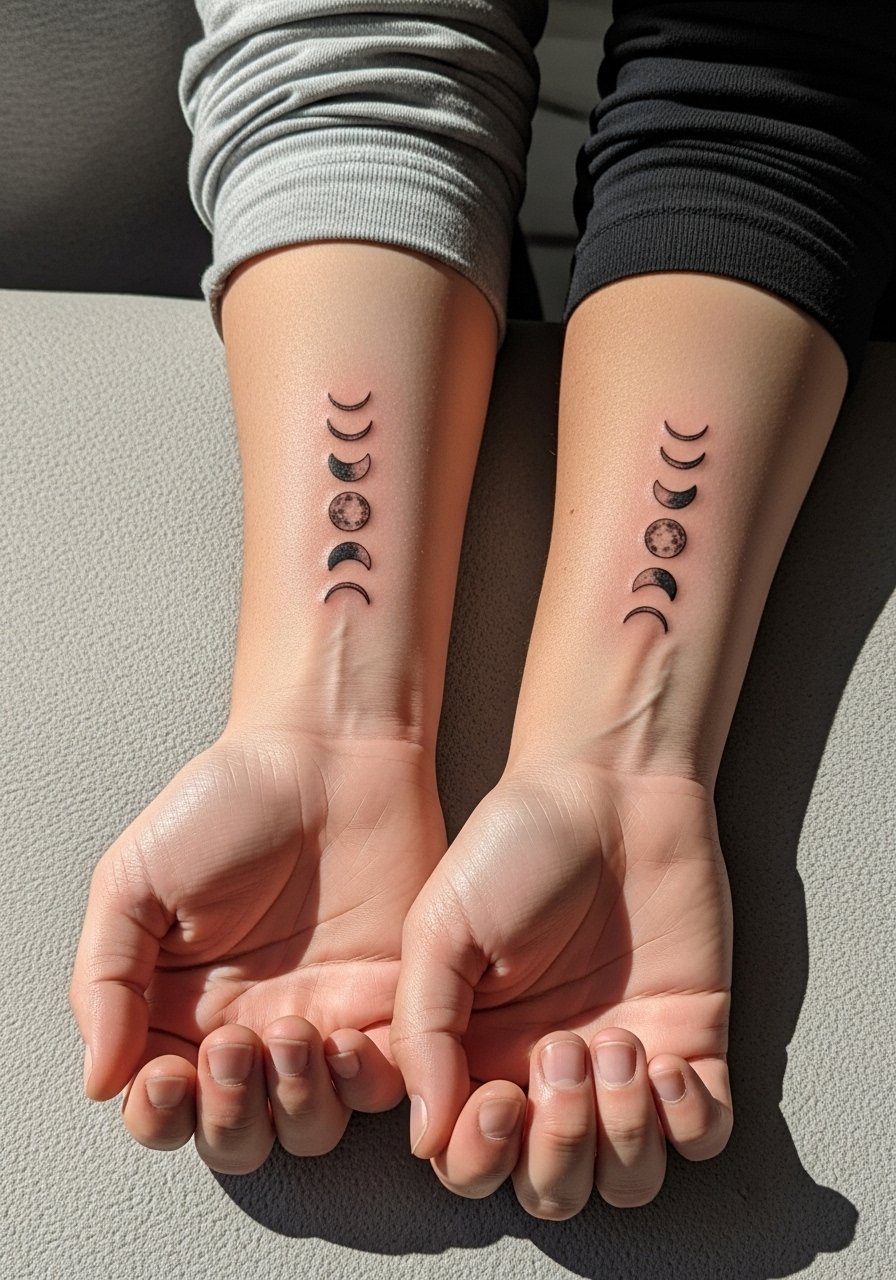
Couples and friends are choosing phase-based matches where one person’s sun lines up with the other’s moon when arms are placed next to each other. Plan the interactive element in consultation so placement mirrors when you stand side by side. The usual mistake is assuming symmetrical placement without test stencils on both bodies. Sessions are short for micro pieces, and touch-ups are common as life shifts the skin. For showing this pairing, roll sleeves to just above the forearm and coordinate simple bracelets like a minimalist bracelet stack to highlight the match.
17. Stipple Shaded Sun Embrace on the Inner Thigh
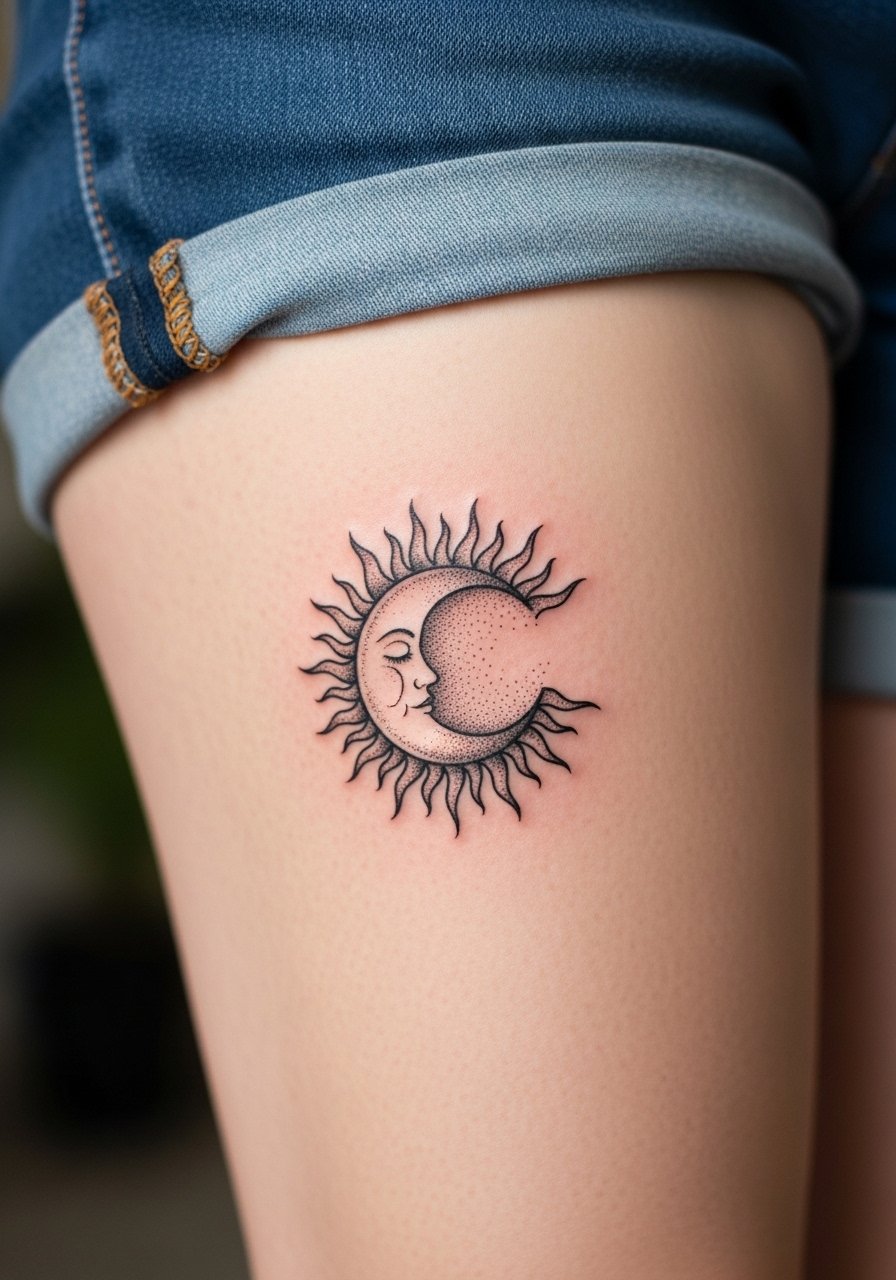
Inner thigh pieces are private and react to weight fluctuations, so sizing is important. The mistake I see is selecting extreme fine dot spacing for a dense look, which turns into gray when the skin expands or contracts. Ask for strategic dot gradients with clear edge lines and plan for touch-ups if your body changes. Sessions are done in longer blocks and can feel tender. For session day, wear shorts you can pull up comfortably so the artist has clean access without exposing more than necessary.
18. Solar Mandala Wrist Wrap

Wraps need breathing room so the pattern avoids warping when the wrist turns. One common error is making the wrap too tight around the wrist, which causes the mandala to compress and blur. Ask your artist to map the wrap on your wrist and test the stencil with movement. Sessions are short and can be finished in one appointment. For showing the wrap, stack a minimalist bracelet stack on the opposite wrist to keep the focus balanced.
19. Eclipse Baroque Chest Piece Above the Sternum

Chest pieces are dramatic and require a plan for symmetry. For sternum-adjacent placement, wear a fitted sports bra during the appointment so the artist can see the placement relative to clothing lines. A typical mistake is centering to the rib rather than the sternum, which looks off with necklaces. This design ages well when line weights are varied and the darkest points are anchored. Sessions can be taxing and you will want breaks. If the artwork borrows from baroque motifs, mention origin respect to avoid direct cultural replication.
20. Small Crescent Behind the Ear with Hairline Framing
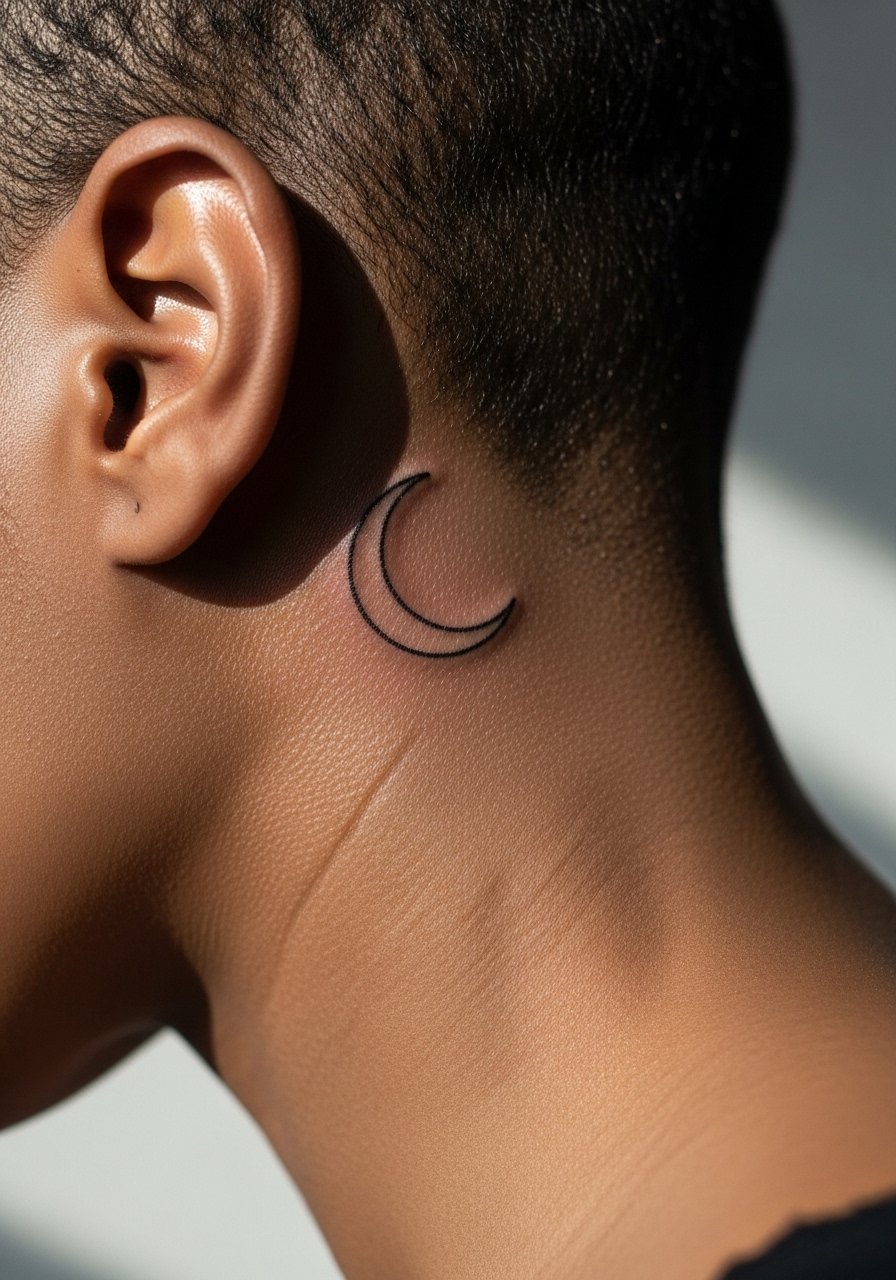
Behind-the-ear placements are subtle and require careful framing with hair. Never ask for a design that relies on wide negative space here because most of it is hidden by hairlines. The session is quick and the pain is low to moderate. A common oversight is failing to specify whether the piece should peek through hair or be fully visible. If visibility is important, consider short hair or a tucked style. This area also benefits from touch-ups because shampooing and friction can dull fine strokes.
21. Minimal Line Sun and Moon Spine Accent for Hair-Down Concealment
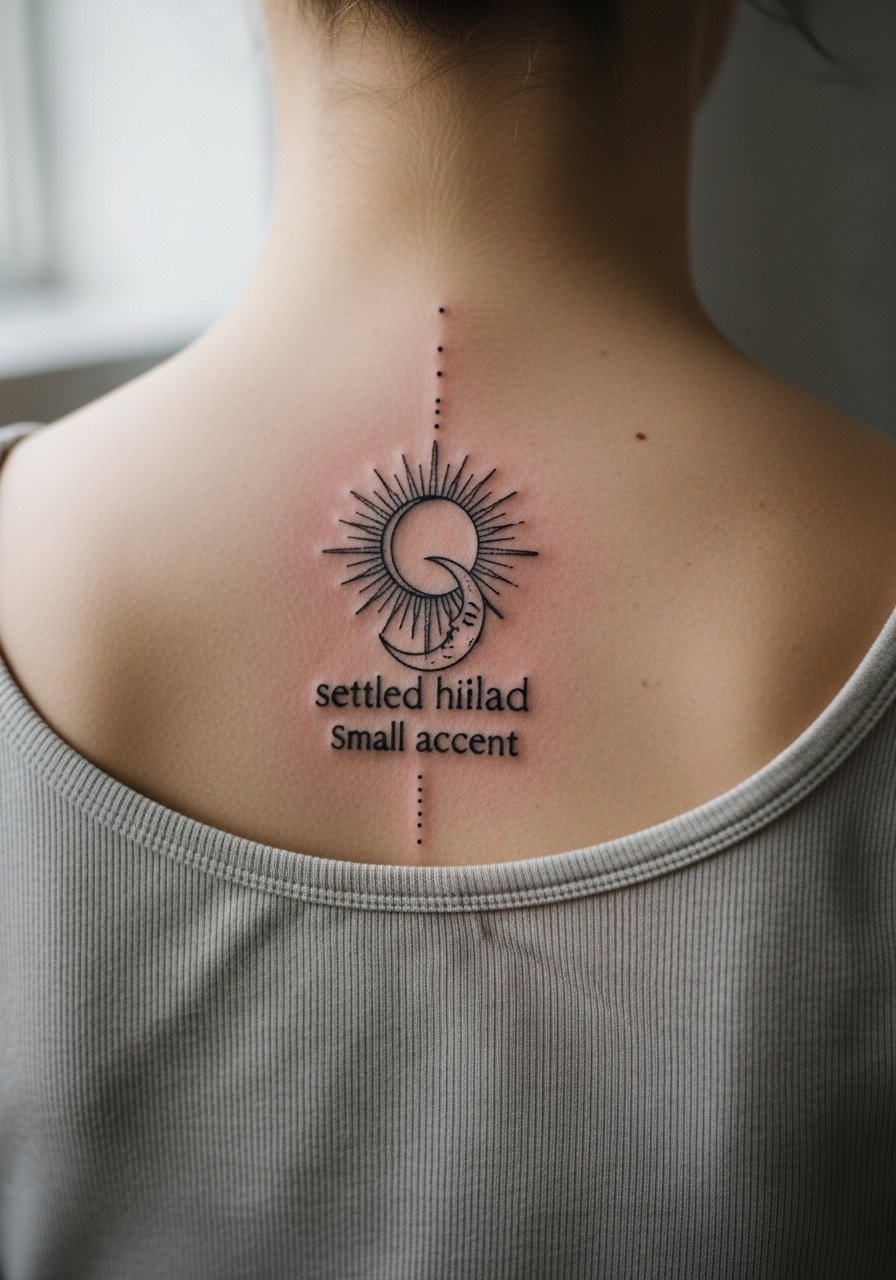
A small vertical pair on the upper spine is a smart compromise if you want concealment with the option to show. The spine curves and moves, so test the stencil while standing and sitting. The mistake I see is placing both elements too close together, which compresses on movement. Ask for a one-finger gap between motifs and a slightly thicker outline than usual to retain legibility. Sessions are moderate in pain and can be done in one short sitting. For wardrobe, open-back dresses or halter tops reveal the line when you want it visible without making it constant.
Frequently Asked Questions
Q: Will fine line sun and moon tattoos blur faster than bold designs on my wrist and hands?
A: From what I have seen, ultra fine line work on high-motion areas like wrists and hands tends to soften sooner than bolder outlines. The practical route is to request slightly heavier contour lines and spacing in the stencil so the forms do not merge. If you want a very thin aesthetic, pick forearm or collarbone placements where motion is less severe.
Q: Do watercolor sun-over-moon pieces need different aftercare than blackwork ones?
A: The healing steps are similar, but watercolor pieces benefit from extra sun protection once healed because lighter pigments fade faster. During the first two weeks, follow your studio's protocol and keep the area out of direct sun. Later, layer sunscreen over color when you are spending extended time outdoors.
Q: Should I tell my artist about skin tone concerns for blackwork on darker skin?
A: Yes, mention it in the consultation and ask to see healed examples on similar skin tones. Artists who work across pigmentations will recommend heavier silhouettes and strategic negative space. That approach keeps the motif readable without overworking the area.
Q: Are ribcage micro-realism pieces worth the pain and touch-up risk?
A: They can be, if you accept the trade-offs. The ribs give a beautiful canvas for small, detailed phases, but breathing and motion require careful spacing. Expect a numbing option, longer sessions, and a likely touch-up within two to three years for sustained crispness.
Q: What should I wear to a collarbone or upper-chest session to make it easy for the artist?
A: Wear a wide-neck shirt or an off shoulder blouse that you can slide aside without exposing more than the target area. That keeps the session comfortable and preserves your modesty while giving the artist clean access.