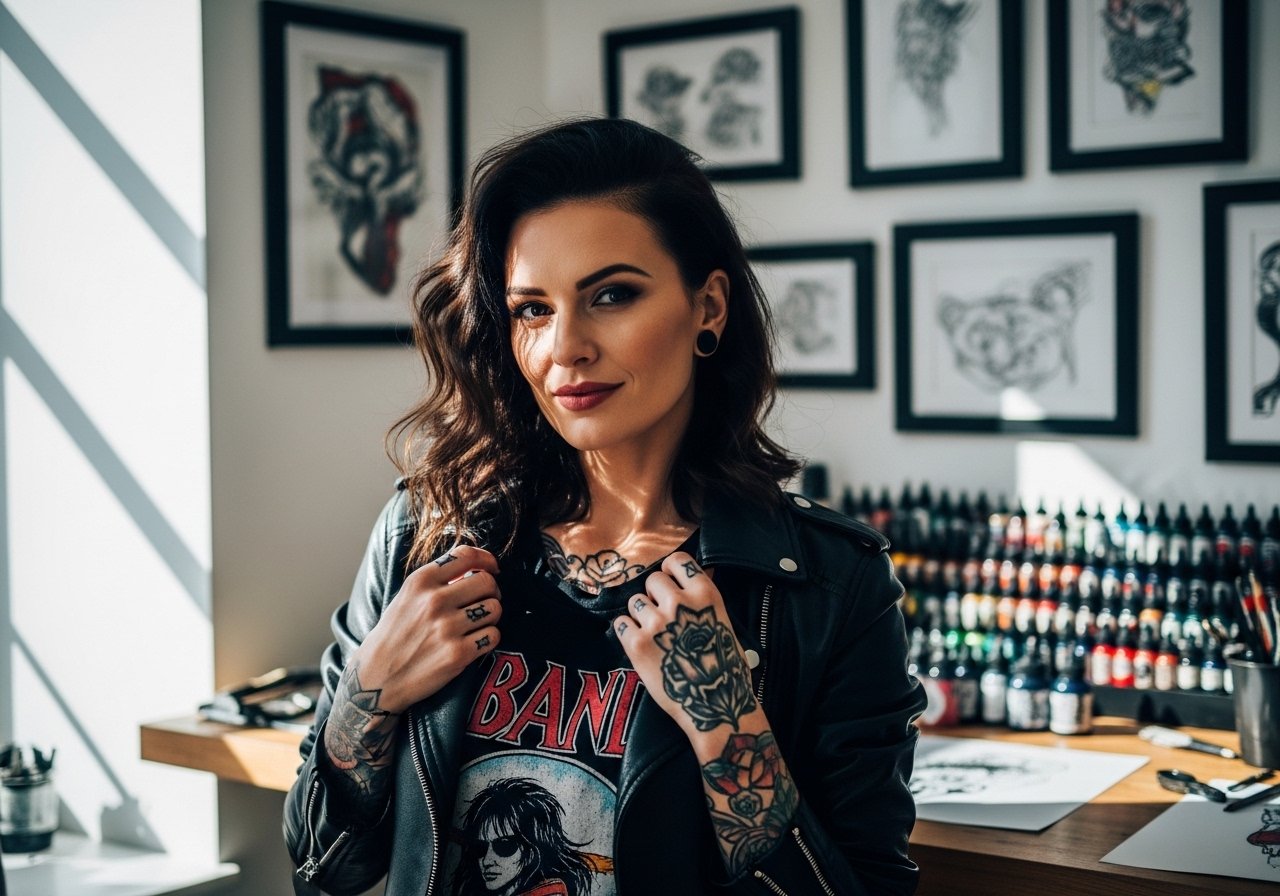
Fine line and watercolor combos flood feeds and feel effortless until you watch one in sunlight five years later. Trends push saturated splashes and feathered edges, but longevity comes down to placement, spacing, and how the artist balances bleed risk with color. I’ve spent time in five shops across Brooklyn and watched clients trade trendy reference images for versions that actually last. Below are watercolor abstract directions that favor how tattoos age and how you can show them off.
1. Fluid Fine-Line Wrist Wash
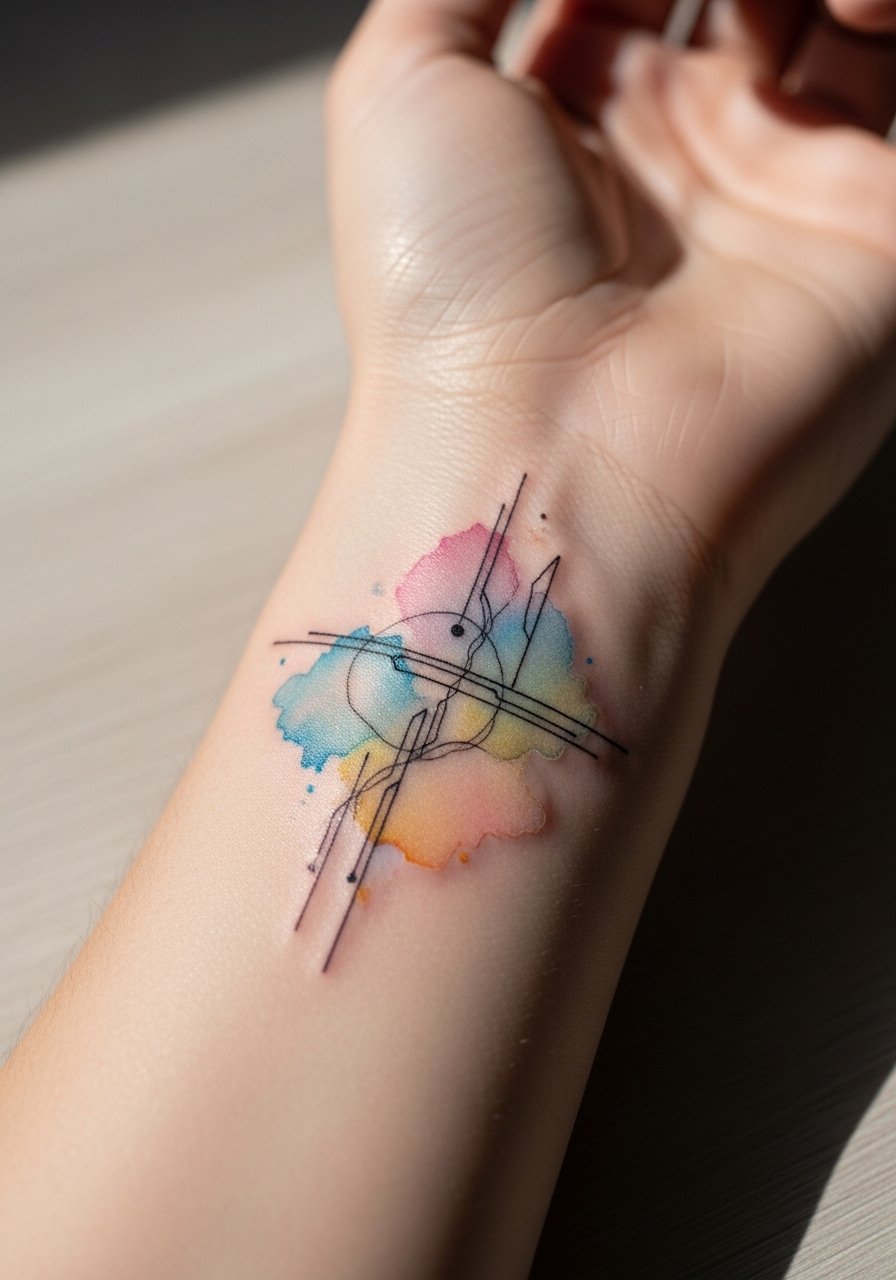
I usually recommend this piece when someone wants the watercolor look but needs to keep scale small and readable. Fair warning, the wrist is a high-friction zone, so ask your artist for slightly heavier linework around the edges and more spacing between color pools. Expect a session of 45 to 90 minutes and some soreness when the needle gets close to bone. A common mistake is asking for micro-detail inside the wash, which blurs at year two. Tell your artist you want defined linework to anchor the watercolor and plan a touch-up at year two if you live in a sunny climate. For showing it off wear a thin chain pendant necklace that sits above the wrist and keeps attention on the piece.
2. Collarbones as Watercolor Frames
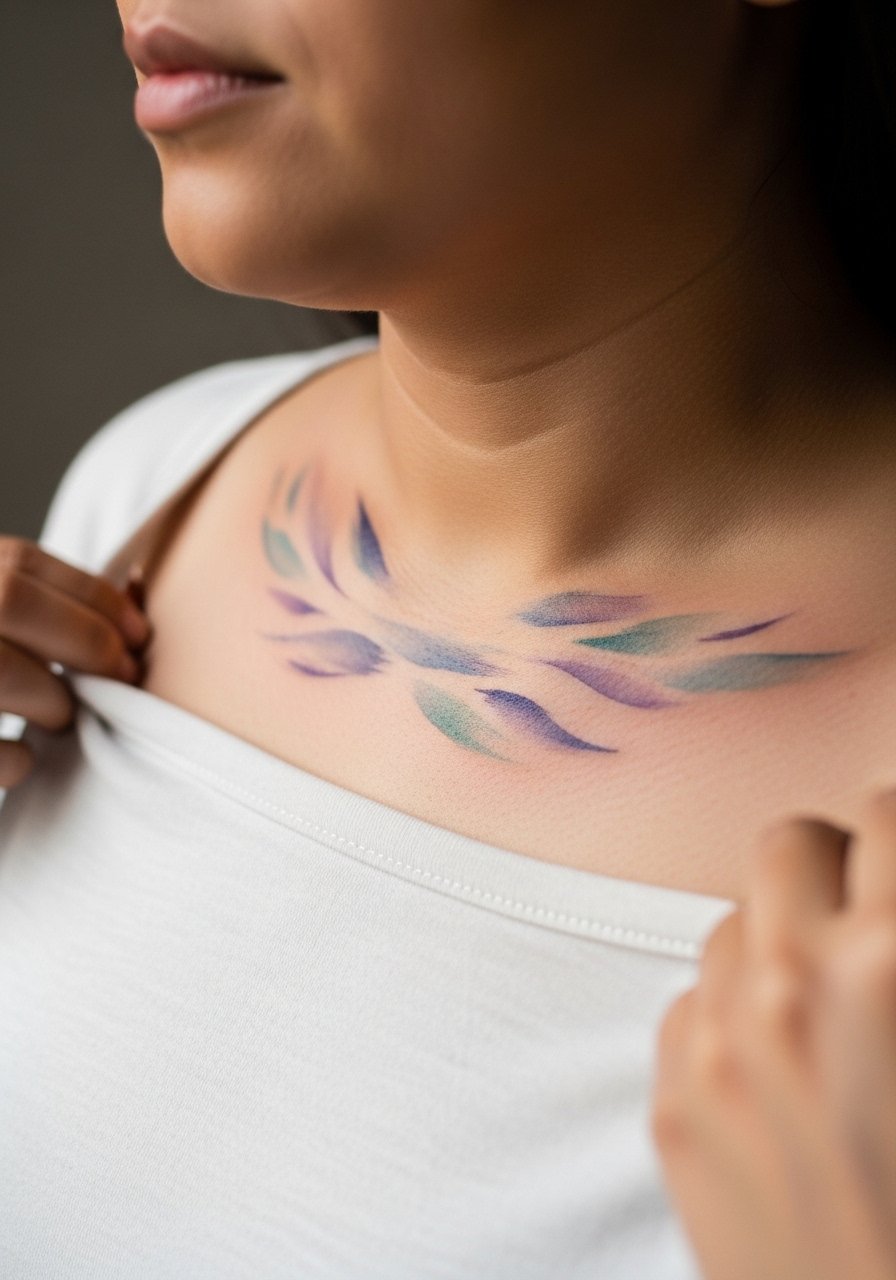
The collarbone reads like a natural frame for upward-moving washes. Pain is moderate because the area has thin tissue over bone, and session time is usually under two hours for a single side. Most people request dense saturation there and then wonder why the color flakes quickly. I advise softer saturation applied with layering so the pigment sits evenly. During consultation, describe the final edge treatment you want so the artist knows whether to feather or finish with crisp linework. This placement pairs well with open-neck tops. Try a wide-neck blouse for evenings when you want the watercolor to peek out.
3. Inner Forearm Ribbon of Color

This is my go-to for people who want a readable, wearable watercolor that ages with grace. The inner forearm gives room for pigment to breathe, so the ink retains definition through years of sun exposure if you commit to sunscreen later. For the consultation, say you want gradual saturation and ask the artist to avoid tiny interlocking shapes that merge over time. Pain is mild and sessions range from one to three hours for larger ribbons. Watch out for blowout near the wrist. Wear a rolled-up linen shirt to the appointment so the artist has clean access without skin tugging.
4. Ribcage Watercolor Bloom, With the Debate
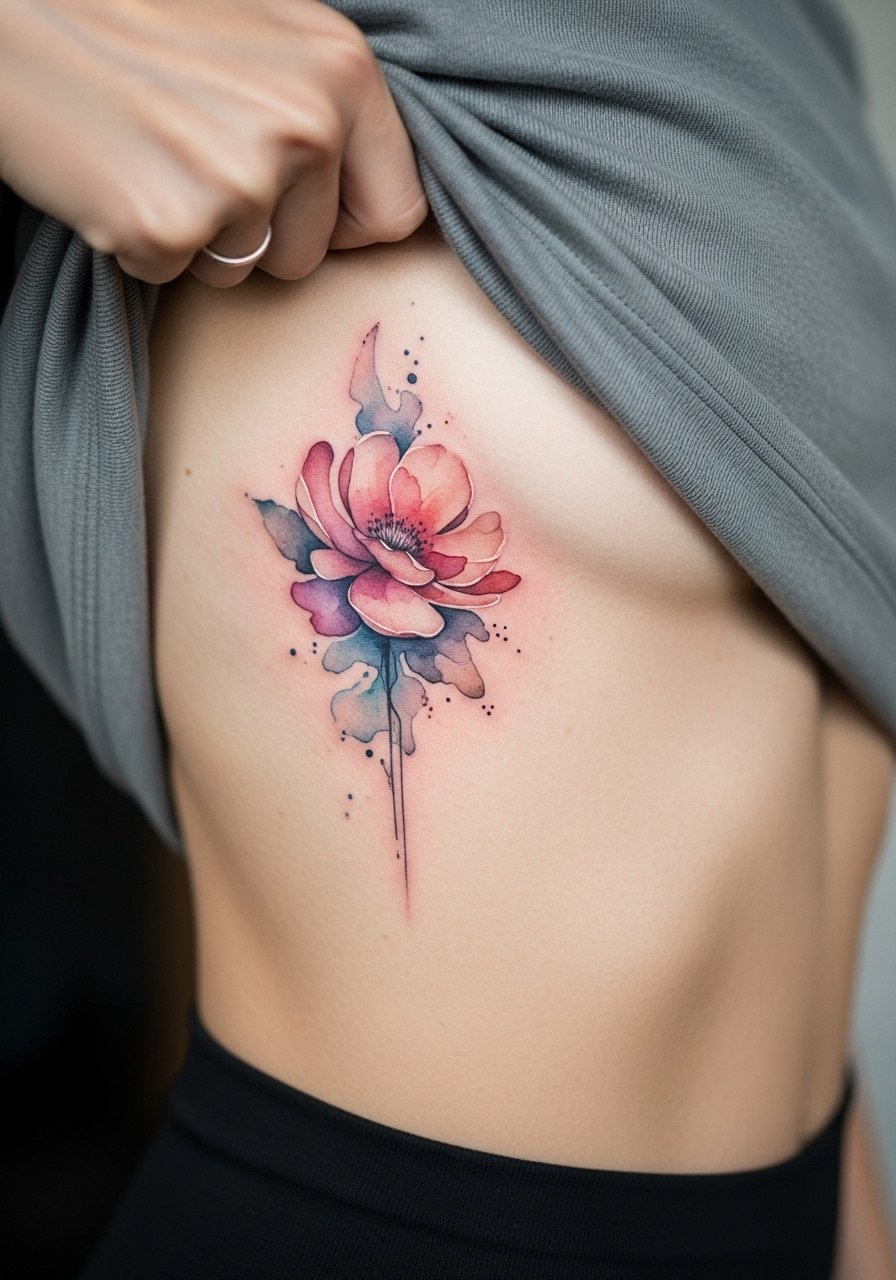
Fine line and watercolor on the ribs split artists into two camps. One camp says the skin stretch and movement blur fine detail within two years. The other camp argues that with correct needle depth and deliberate spacing fine line can settle well there. I tell clients the truth. Expect higher pain and a session that may be split across two appointments. The mistake is asking for dense micro detail on a curved, shifting surface. Instead request a bolder wash with deliberate negative space and plan for a touch-up at year two if lines soften. For the session, wear a cropped athletic top you can lift without getting cold.
5. Ankle Constellation in Watercolor Haze
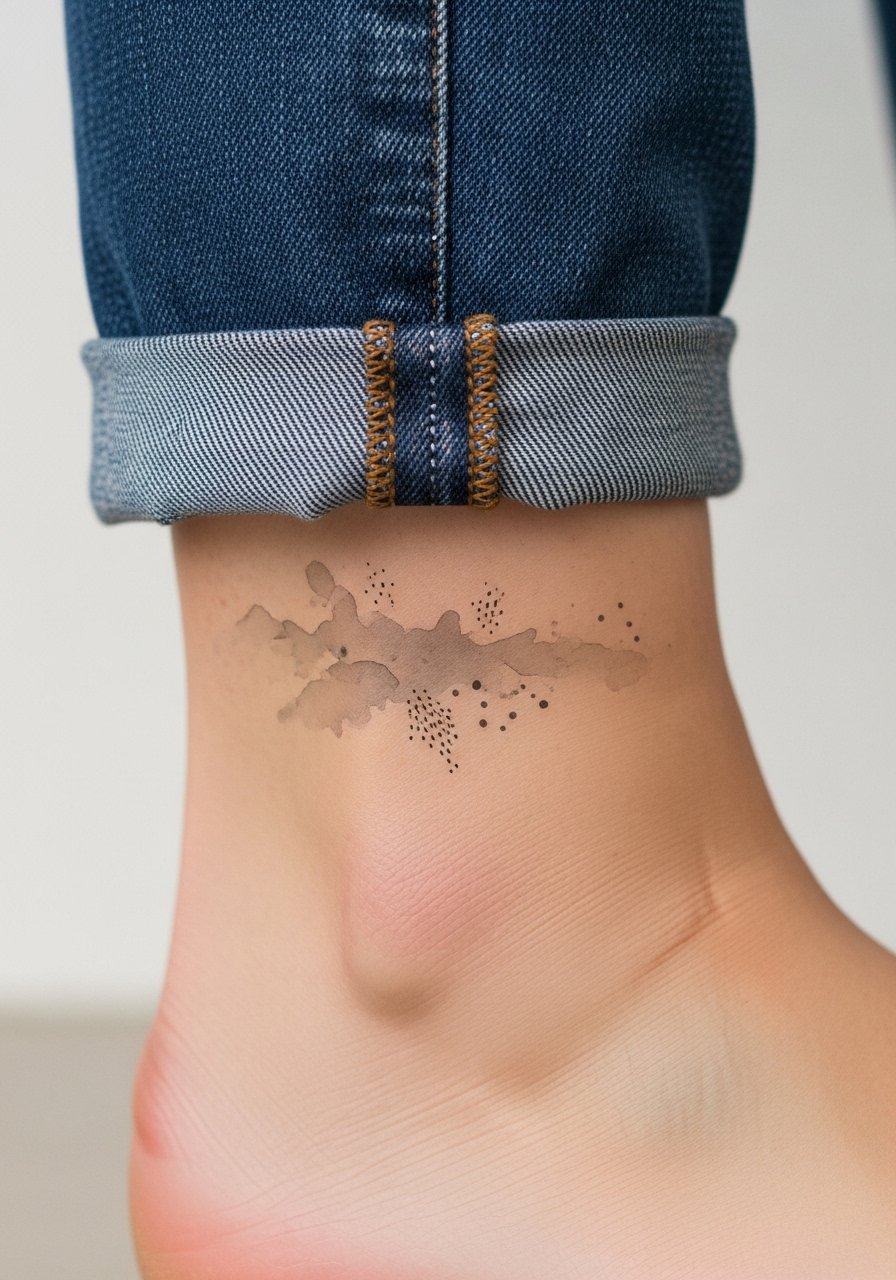
Ankle pieces read small and intimate but face constant rubbing from shoes and socks. Expect a short but precise session and a higher chance of pigment migration if the artist goes too deep. I recommend slightly bolder outer lines that hold the wash, and ask for pigment placement away from the joint crease. A common mistake is over-filling the area with saturated color which needs repeated touch-ups. For showing it off, sandals or cropped trousers work best. Slip on a pair of minimalist leather sandals afterwards to let the art take center stage.
6. Calf Swath That Moves With Muscle

The calf is forgiving for larger watercolor strokes because muscle movement helps distribute pigment evenly. Sessions are comfortable and often longer, depending on size. Tell your artist you want the wash to read from a distance, so they balance saturation for visibility without packing pigment too deep. Watch the tendency to add too many small dots, which can look noisy after a year. For the session, wear loose drawstring shorts so the artist can move the fabric aside easily. Expect touch-up timing to depend on how much sun you expose the area to.
Pre-Session Essentials
The wrist and ankle pieces above heal differently from larger forearm and calf work, so a few targeted items smooth out the session and the first week.
-
Stencil transfer paper kit. Lets you preview placement for the wrist wash and the inner forearm ribbon so the scale reads right on your skin.
-
Topical numbing cream. Use before ribs or sternum sessions if sensitivity is a concern, applied as directed and discussed with your artist.
-
Thin protective film roll. Keeps ankle and finger work cleaner in the first week of wearing shoes and socks.
-
Fragrance-free body wash. Gentle cleansing supports fine-line edges on forearm and collarbone pieces without stripping pigment.
-
Aquaphor healing ointment. A thin layer for the initial days helps retain moisture for watercolor edges without suffocating the area.
7. Upper Back Abstract Panels
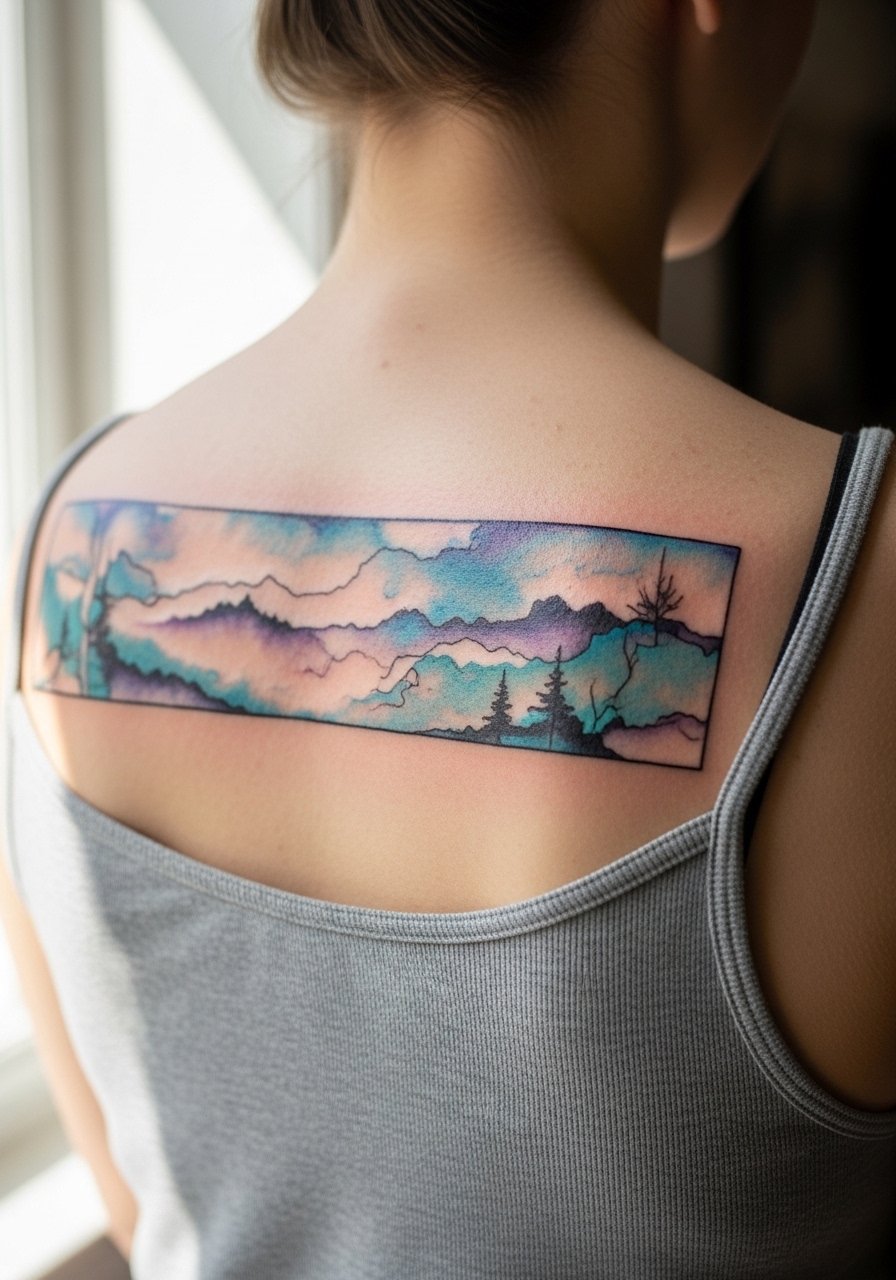
Upper back pieces allow broad movement in color and can be scaled up easily. Sessions tend to be longer and sometimes split across visits. The main mistake I see is asking for tiny elements inside a big wash which get lost. In consultation, ask about how the panel will sit under clothing so you avoid awkward cutoffs. Pain is moderate and recovery is straightforward. If you plan to show it at events, an open-back dress highlights the panels without forcing a reveal.
8. Sternum Central Wash, Careful Framing
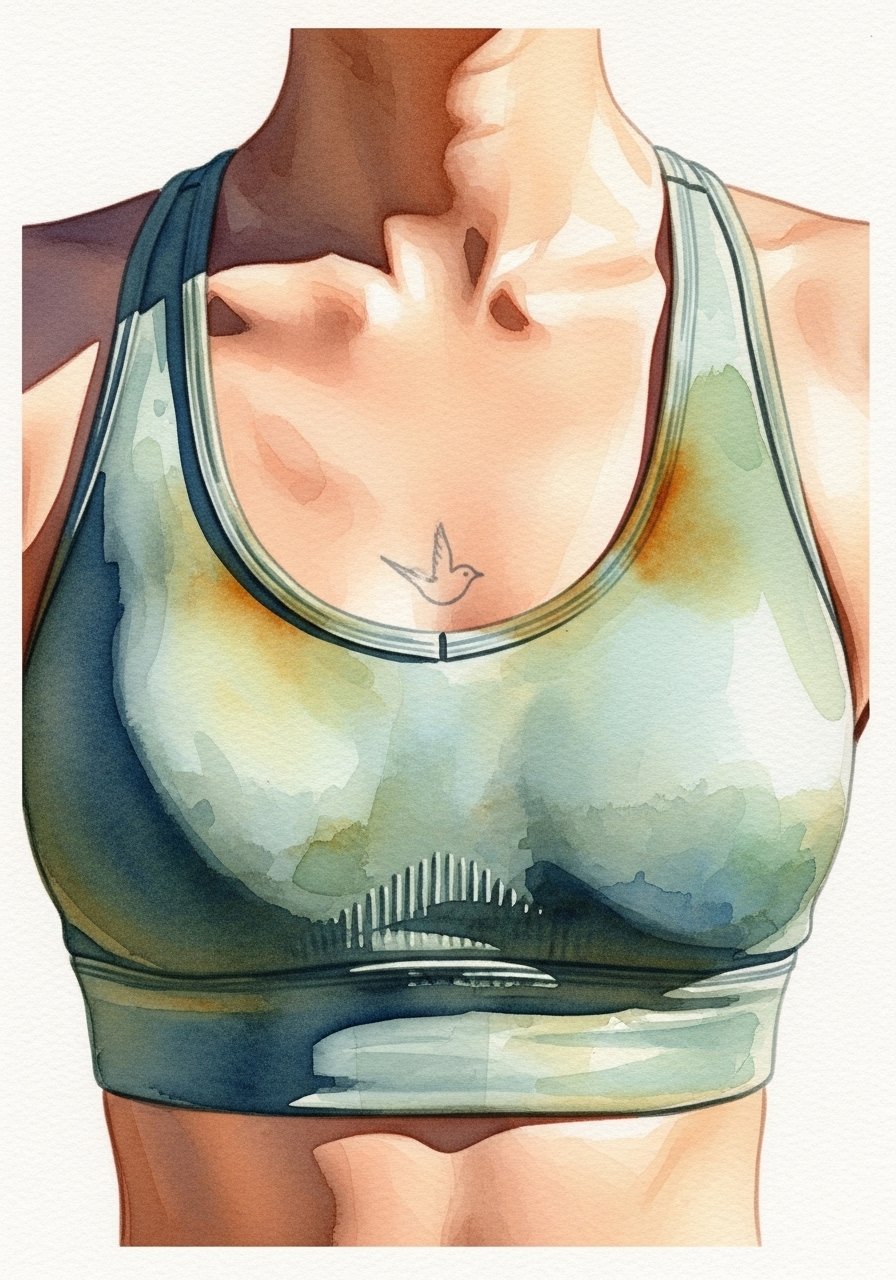
Sternum tattoos are intimate and require precise framing to avoid awkward reads when clothing moves. Pain is high and sessions often split. Artists are split on how dense to pack pigment near the sternum because movement and sweat can affect retention. Ask for a more layered application rather than one heavy pass. Expect touch-ups sooner than on the arm. For the session, wear a fitted sports bra so the artist can access the area without risking exposure.
9. Thigh Wash with Negative Space
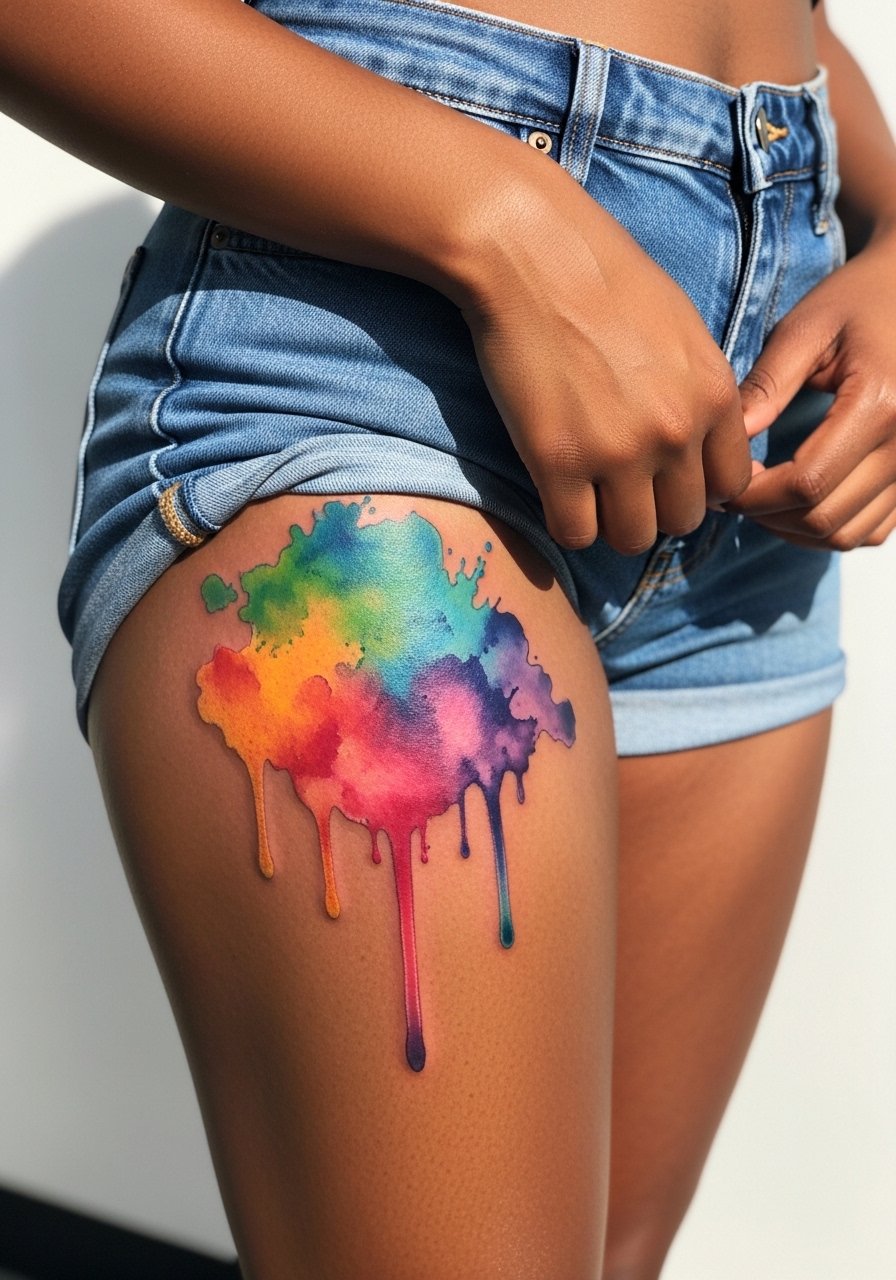
The thigh gives room for dramatic watercolor work and benefits from negative space to keep shapes readable. Sessions can be long and are comfortable for most clients because the area tolerates pressure. Avoid asking for tiny stipple detail inside a broad wash. Instead request bold composition with areas left bare to let the skin tone interact with color. During the session, wear high-waisted shorts you can shift slightly for access. Touch-ups depend on friction from clothing, so plan wardrobe choices during healing.
10. Hand-Adjacent Wrist Splash
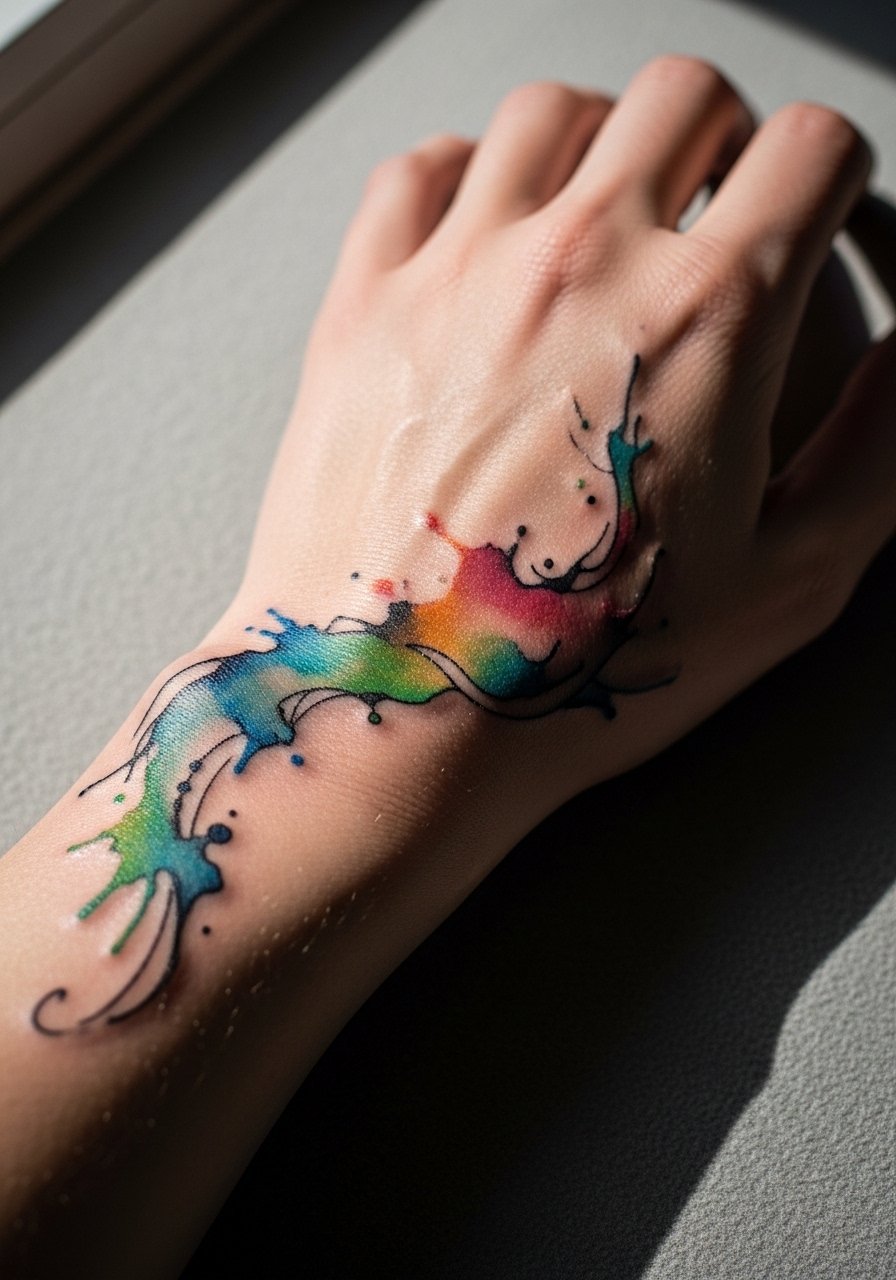
Hand and hand-adjacent work ages differently and is subject to more washout because of constant washing. Artists debate whether hand watercolor is worth the upkeep. One camp treats the hand as a high-maintenance area and avoids watercolor there. The other will do it with the caveat that touch-ups are expected every one to two years. If you proceed, ask for bolder anchors and less diffuse pigment near the fingers. The session feels quick but the healing window is noisy. For showing it off, stack a minimalist bracelet loosely so it does not rub the area.
11. Shoulder Cap Burst
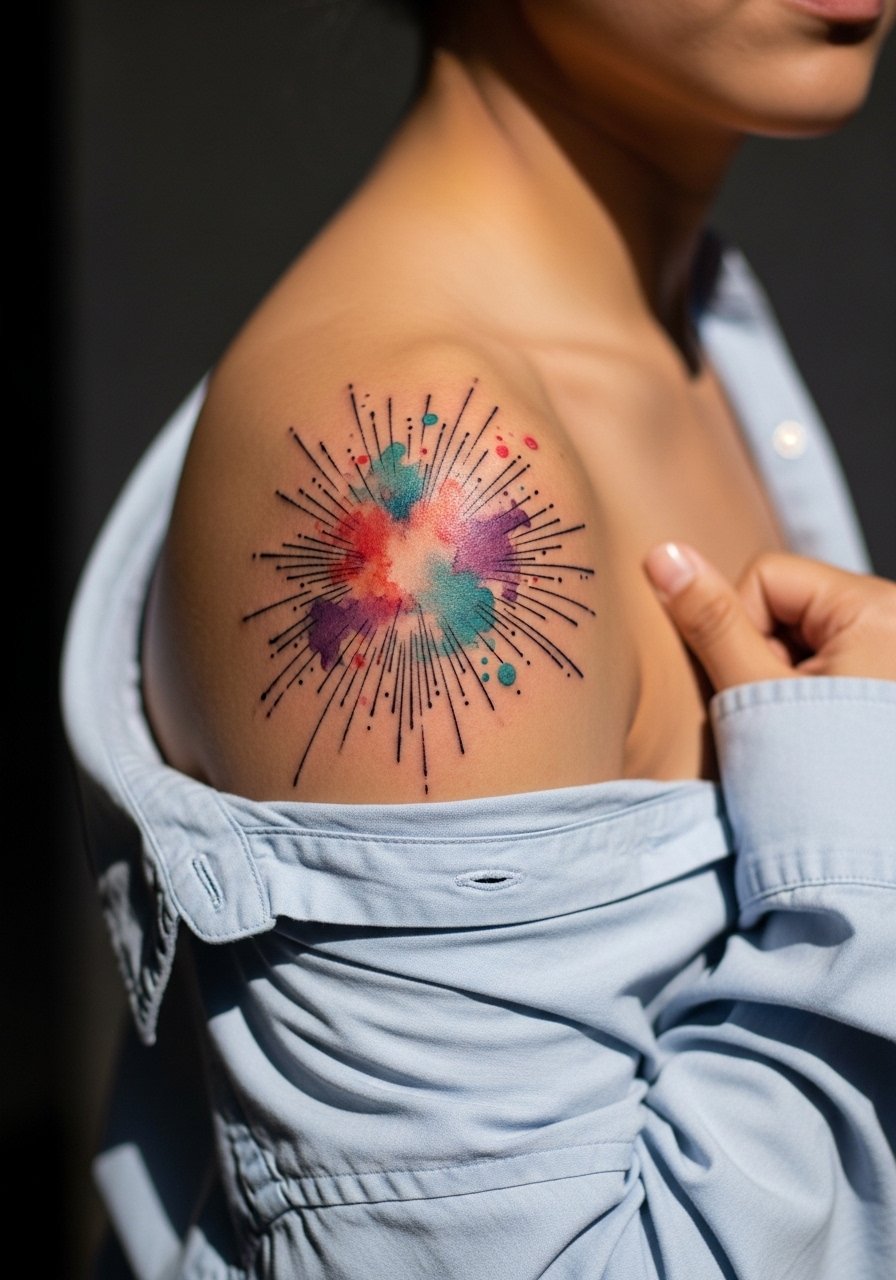
Shoulder pieces ride well with movement and often retain color for longer than thin-line work on hands or ribs. Sessions are comfortable and typically completed in one sitting. The usual mistake is packing too many small color blobs into a curved surface which can merge over time. Tell your artist you want broad strokes with occasional sharp edges so the piece keeps its shape from different distances. A loose button-down shirt works well to access the area at the appointment.
12. Neck-Side Watercolor Accent
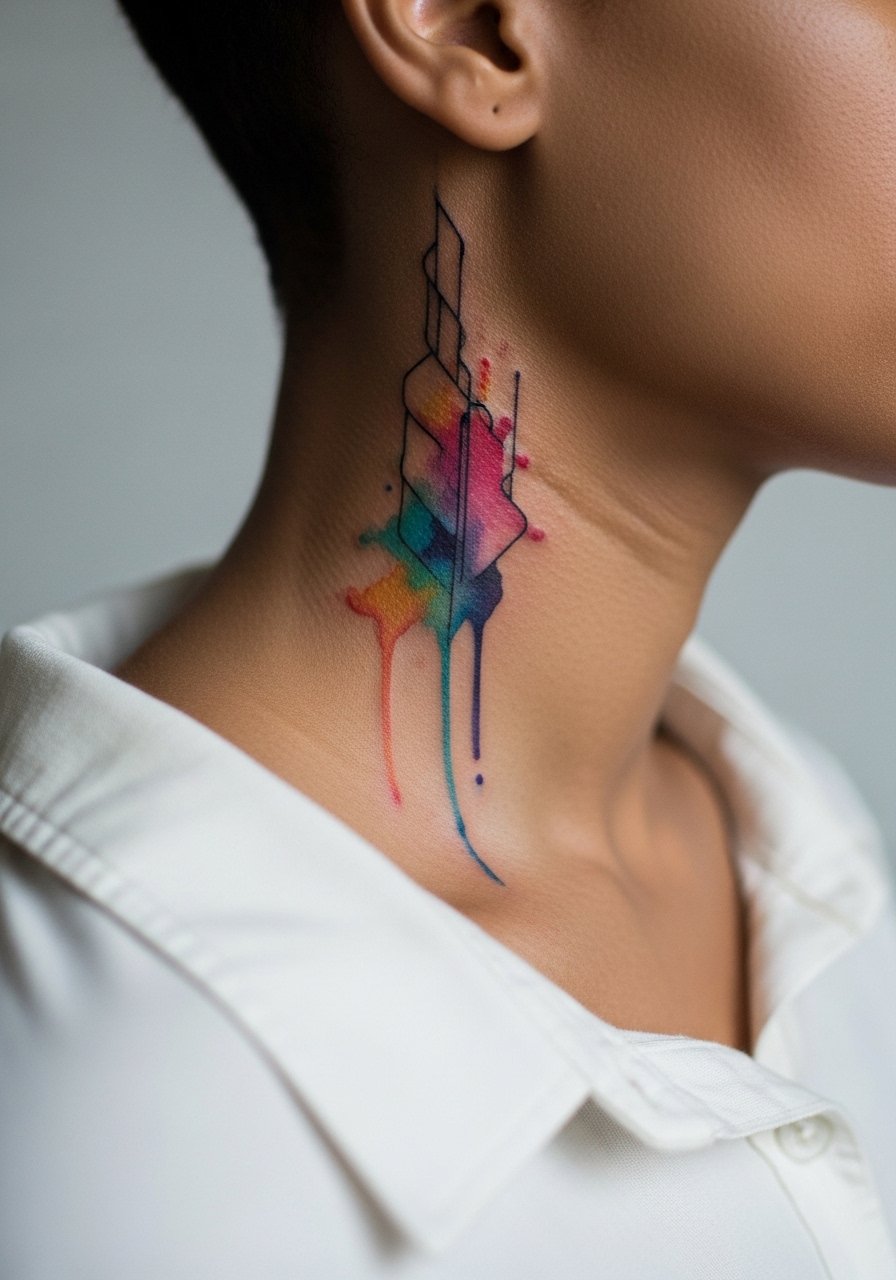
Neck pieces are visible and can influence career considerations. Pain is higher and the area shows fading faster under sun exposure. A mistake I see is tight micro detail near the spine of the neck which blurs quickly. Ask for simpler shapes with negative space and expect to revisit the piece at year two for saturation. For the session, wear a wide-neck tee so the artist can work without having you undress.
13. Abstract Sleeve Accent
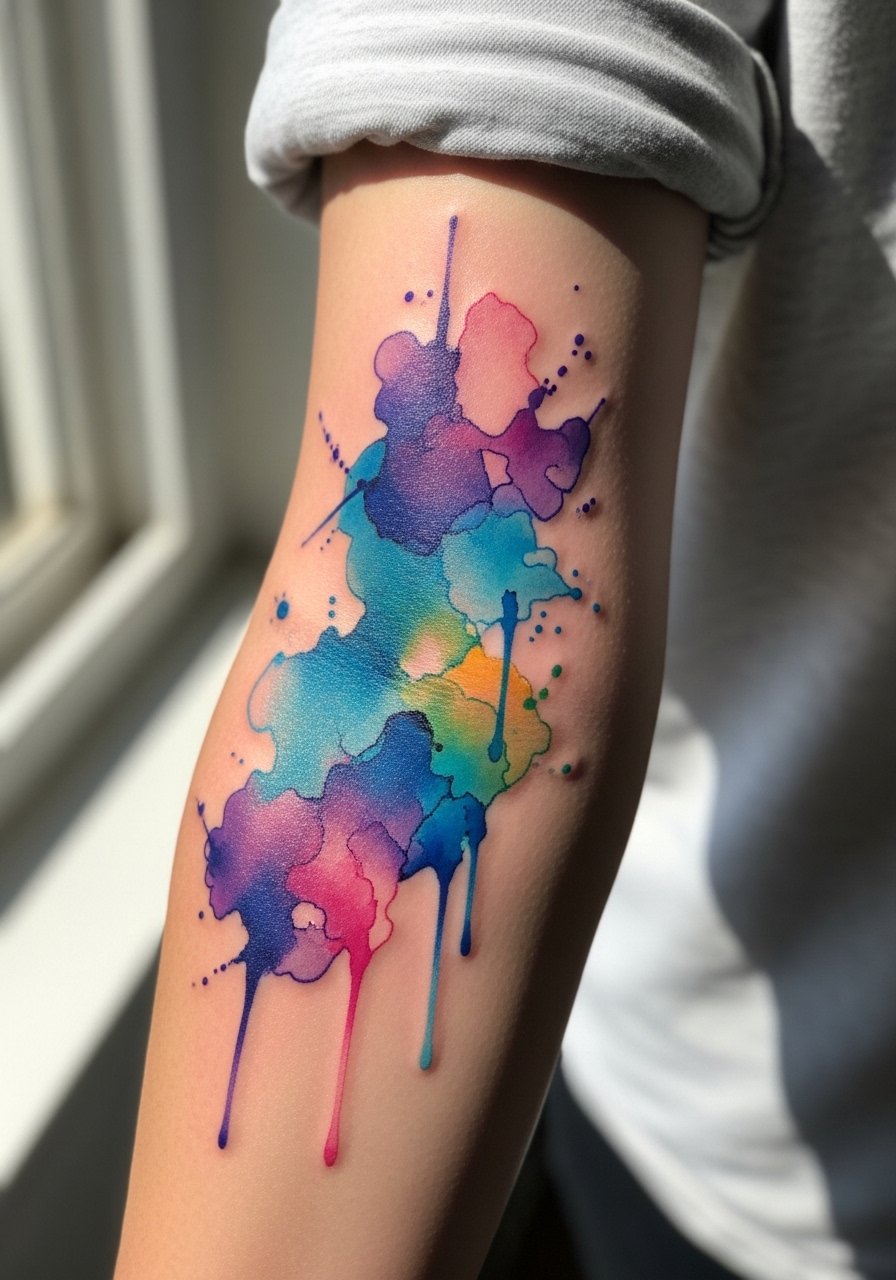
Integrating watercolor into existing sleeves requires composition thinking. The session time depends on whether this is a fresh build or a cover element. Tell your artist which parts of your current sleeve you want to keep visible and which parts you want softened. One mistake is trying to force watercolor over heavy black without intermediate sessions. Expect gradual layering and plan for touch-ups where the watercolor meets saturated black. For showing off a sleeve, rolled-up linen shirts frame the forearm and let the abstract pockets be visible.
14. Minimal Finger Haze Accent
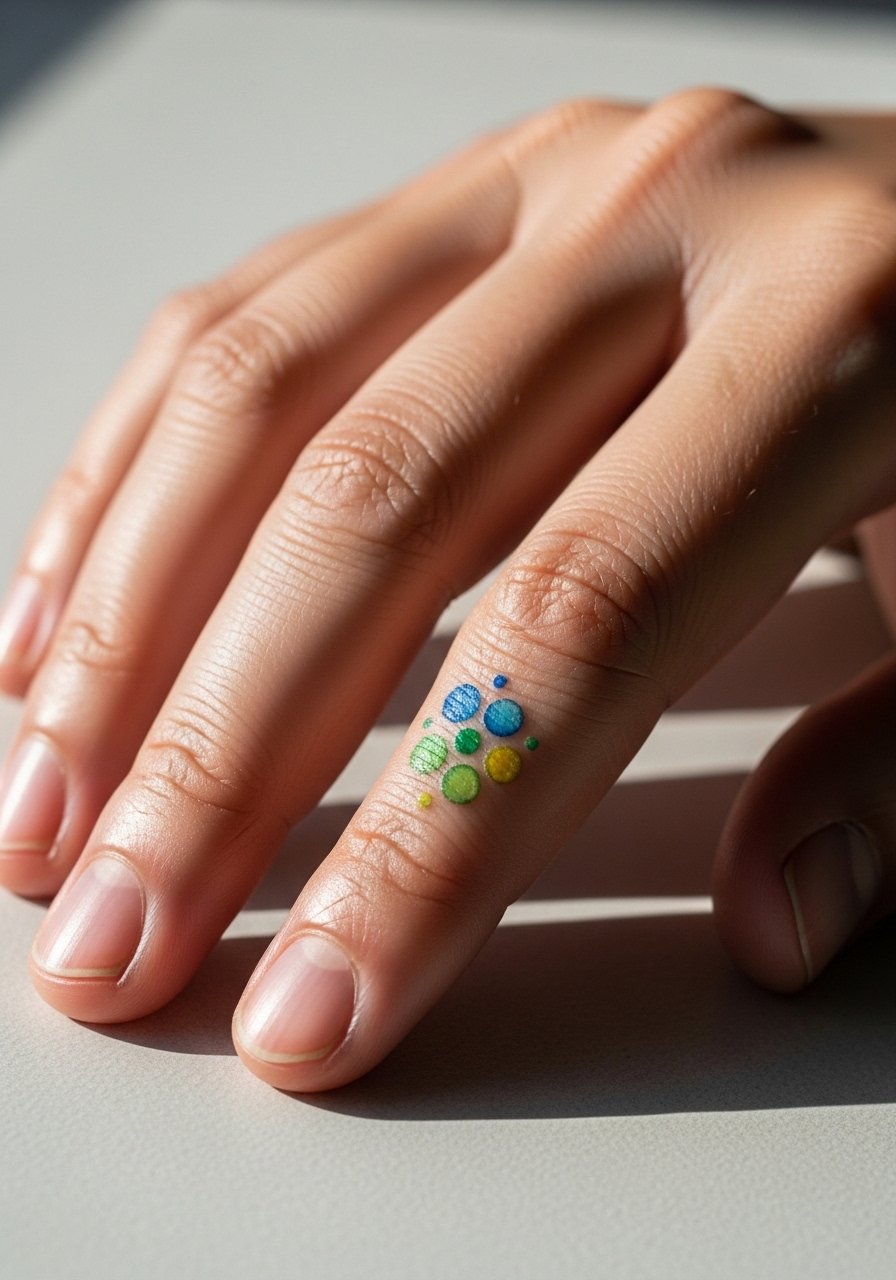
Finger work is high-maintenance because skin there regenerates quickly and pigment fades faster. The most common error is cramming too much color or detail into a tiny space. I recommend minimal pigment and accepting that touch-ups may be needed every year. For the session, expect short bursts with more frequent passes. If you want to style it, a thin stacked ring set draws the eye without covering the haze.
15. Rib-to-Side Gradient, Placement-First
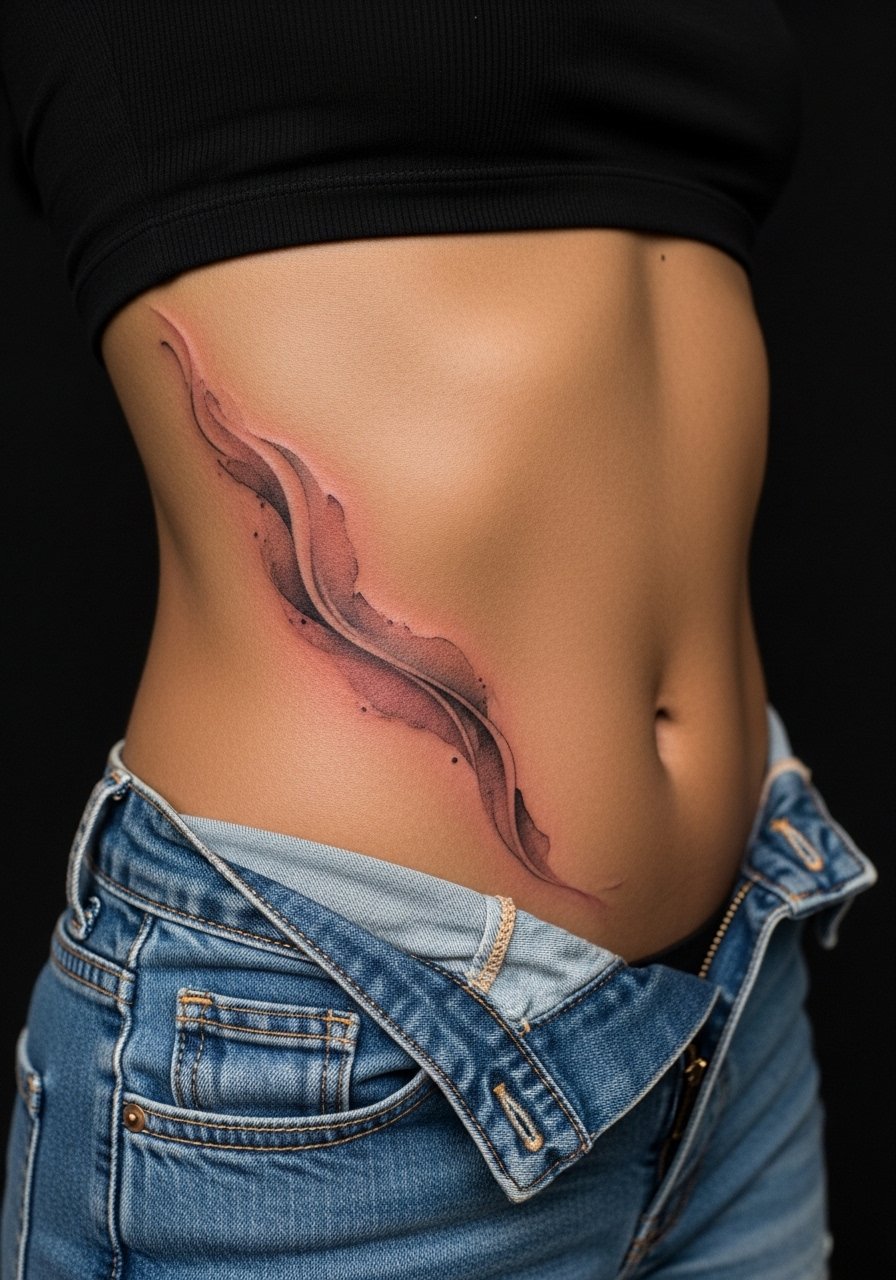
This orientation uses skin movement to its advantage and looks dramatic if planned with body contours in mind. Sessions are intense and often split. The error I see is starting the gradient too close to the hip crease where clothing rub will speed fading. Ask your artist to map the sweep so the densest pigment sits where clothing friction is lowest. Pain is higher in the rib area and a staggered approach helps with healing. Consider wearing high-waisted bottoms after the session to reduce immediate rubbing.
16. Subtle Sternum Linework with Color Halo
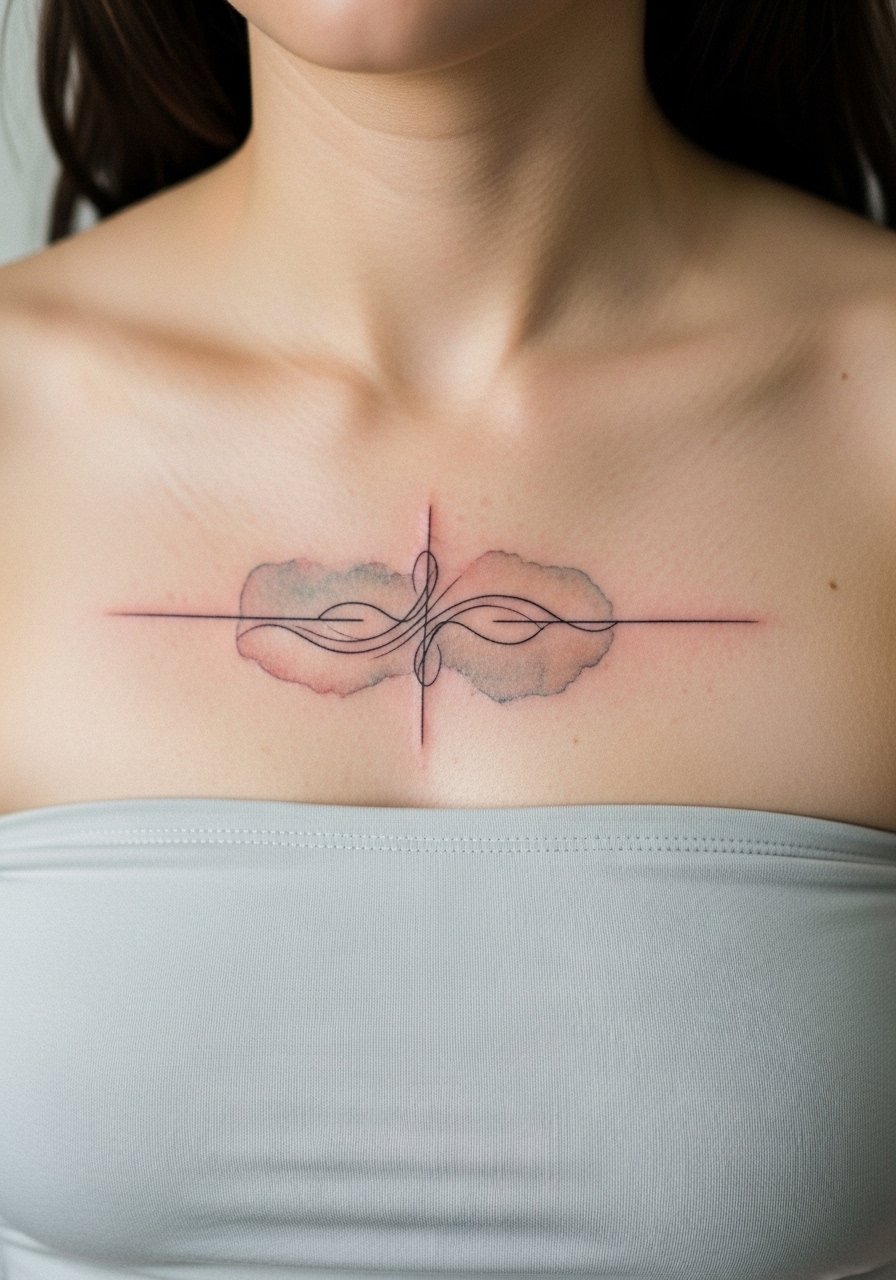
Combining thin line and a watercolor halo can be risky on sternum because the area moves with breathing. Expect two camps among artists again. One group avoids fine central lines there and prefers bolder anchors. The other will do it if spacing and depth are carefully set. The best approach is to request a halo with a slightly thicker central line that still reads delicate. The session is sensitive and often slower because artists work cautiously. For appointment comfort, a bandeau top keeps coverage neat and allows access.
17. Calmer Lower Back Wash
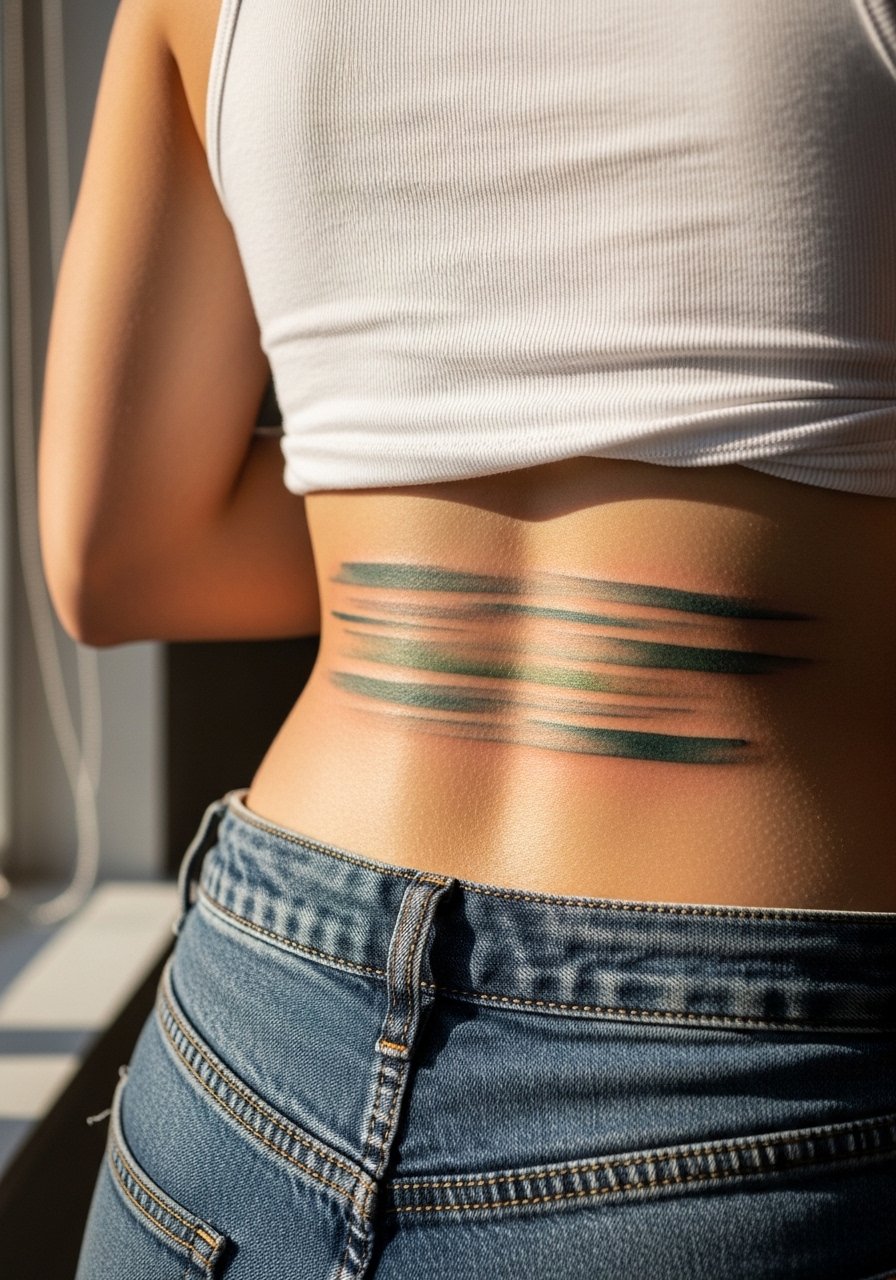
Lower back tattoos let watercolor breathe across a flat canvas and often age well if kept out of constant friction. Sessions are comfortable and may be longer for larger compositions. A common mistake is centering the piece too low near pant lines where rubbing occurs. Discuss the exact vertical placement so the wash avoids daily abrasion zones. If you plan to show it periodically, opt for clothing like low-back dresses that reveal the area deliberately rather than constantly.
Frequently Asked Questions
Q: How long do watercolor abstract pieces typically keep their brightness on forearms and calves?
A: From what I have seen, forearms and calves retain color longer than hands and ribs because they face less constant abrasion. Brightness depends on initial saturation and sun exposure. Expect gradual softening over two to five years and a touch-up if you want the original punch restored.
Q: Are fine-line details safe to combine with watercolor on the ribs and sternum?
A: Artists split into two camps on this. One camp says the stretch in those zones blurs fine-line detail fast. The other camp says careful depth and spacing can make it work. My advice is to ask the artist about their specific experience with those placements and plan for a staged session and a touch-up.
Q: What should I wear to a thigh watercolor session to make the appointment easier?
A: Wear something you can shift easily without exposing more skin than needed. A pair of high-waisted shorts or a skirt you can roll up slightly gives good access and keeps you comfortable during long sittings.
Q: Will small watercolor tattoos on hands or fingers require touch-ups sooner than other placements?
A: Yes. Hands and fingers regenerate and get washed much more, so pigment fades faster. Plan for maintenance every one to two years if you want the same saturation.
Q: How should I talk to an artist about preventing blowout in a watercolor abstract on the wrist?
A: Be specific in the consultation. Ask the artist about needle depth and whether they recommend stronger anchor lines along the edges. Show examples that highlight spacing and ask whether they would scale the piece up slightly to reduce blowout risk. Trust the portfolio that shows healed results rather than only fresh photos.