Fine line wolf trends look gorgeous on feed, and they also force a choice most people skip: do you want a design that looks delicate now, or one that still reads crisp in five years? The best wolf pieces balance line weight, placement, and spacing so detail survives touch-ups. Below are 17 tattoo ideas that show how to get a wolf that fits your style and holds up through seasons, outfits, and life changes.
1. Micro-Realism Snarling Wolf on Outer Forearm
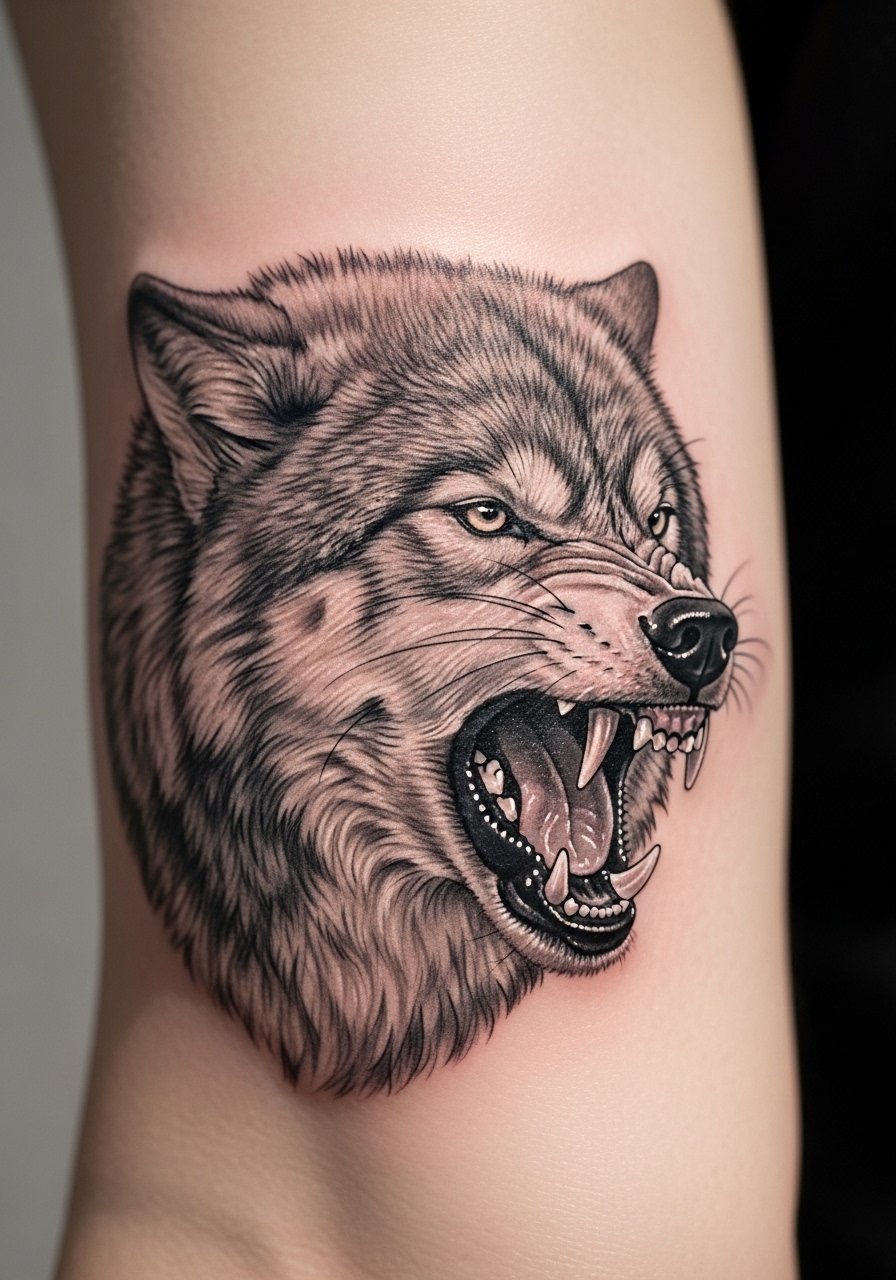
I see this forearm placement a lot because it reads like a statement without demanding a cover-up strategy. Ask your artist for a 4 to 6 inch piece with heavier contrast in the jaw and eye sockets so the snarling expression keeps its bite as the ink settles. Fair warning, forearms change with weight and sun exposure, so expect a touch-up around year two to three if you wear a lot of sun or sleeves that rub the area. Session time is usually two shorter sittings rather than a single marathon. For showing it off, roll up sleeves or pair with a black fitted tank top to keep the texture visible.
2. Minimalist Wolf Silhouette with Moon Phases, Wrist

Wrist placements are excellent for small wolf silhouettes, but small fine lines face more friction and sun than other spots. Tell your artist to use slightly bolder outline weight than the reference photo, and keep moon phases spaced so dots do not merge. Expect higher sensitivity during the session since the wrist is thin-skinned. A common mistake is asking for hair-fine moons and wolves at 1 inch, which often blurs into a smudge by year three. For a polished daytime look, layer thin silver bangles on the opposite wrist and roll blouse cuffs; try a thin silver bangle set when you want that framed effect.
3. Neo-Traditional Howling Wolf on Shoulder Blade

Shoulder blades are forgiving and they make color saturation last. This neo-traditional howler benefits from bolder linework around the muzzle and flowers to keep contrast as pigments soften. In consultation, request the color accents in blues and purples rather than thin washes, and ask how the artist plans to space petals to avoid heavy overlap. Sessions usually take multiple passes because color layering matters. For show-off outfits, an off-shoulder sweater or an open-back top frames the piece, and a strapless bra makes the session easier on both you and the artist.
4. Fine Line Paw Print Trail on Inner Bicep
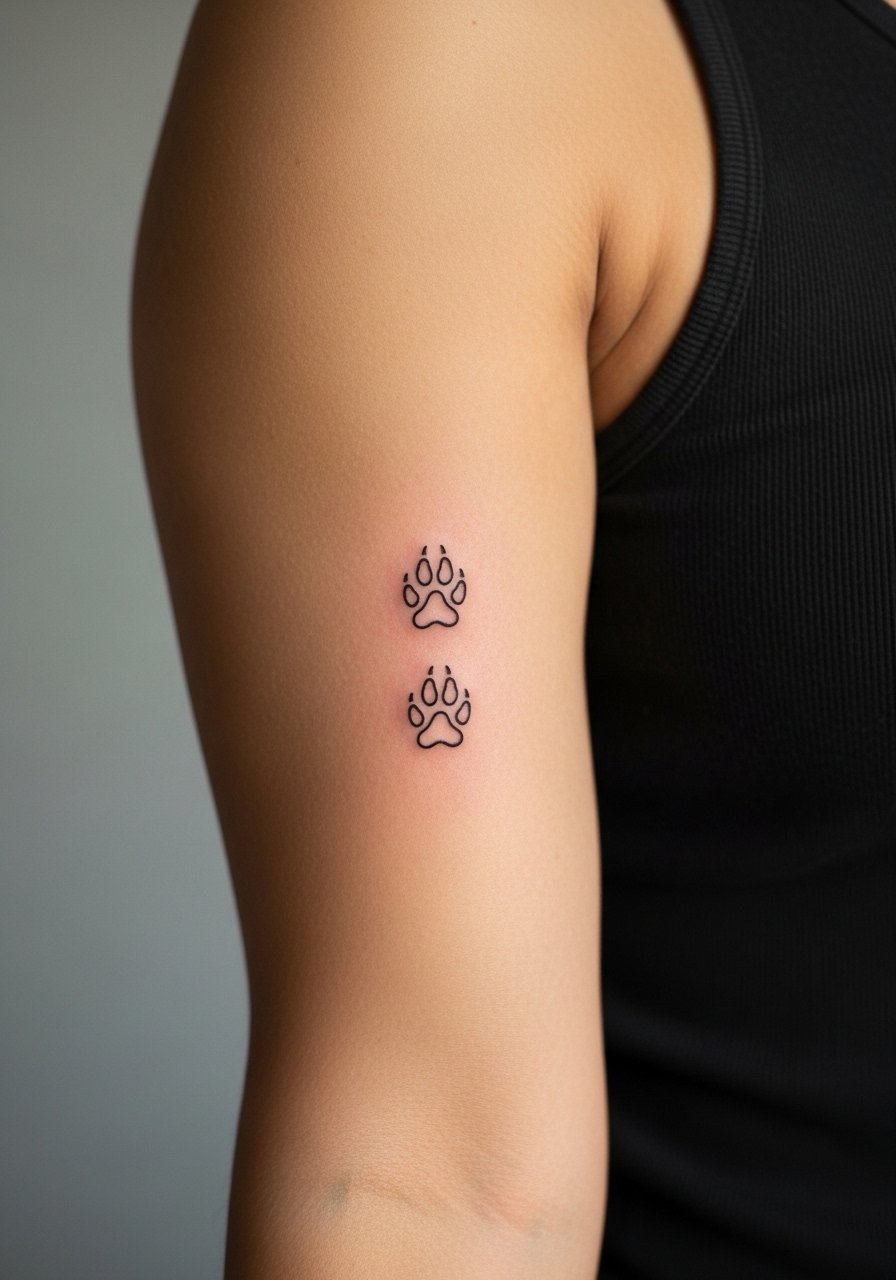
This is a favorite for people building a larger sleeve over time because each paw reads like a small chapter. The inner bicep can be tender during the session, so wear a tank top that lets the artist work without stretching the skin too much. Tell your artist you want paw prints spaced at least a half inch apart so dot work does not merge as it heals. A frequent error is asking for ultra-tiny prints that look charming day one and disappear into a blur after months. Expect a single session for a short trail, with a touch-up at 6 to 12 months if you notice softening. For a subtle show-off, pair the piece with a sleeveless bodysuit.
5. Blackwork Geometric Wolf Mandala on Upper Thigh

Thigh placements tolerate dense blackwork and intricate mandalas because the skin there holds saturation well. The biggest mistake is compressing too many thin lines into a small diameter. Ask for a 5 to 6 inch minimum so the symmetry breathes, and expect multiple sessions for block fills. For people with darker skin tones, negative space and solid black give the strongest contrast. Showing this design works well with high-waisted shorts or skirts that have thigh slits; try pairing with high waisted shorts women for summer visibility. If you plan to expand the design later, discuss modular anchors in the first session so new elements connect naturally.
6. Watercolor Wolf Portrait with Tribal Accents on Collarbone

Collarbones are showy and the slight curve can distort washes if the watercolor is too thin. The aging reality is that watercolor fades faster than solid black, so ask your artist to lock key features like eyes and nose in black or deep gray so the portrait keeps its structure. Sessions tend to be shorter but layered. A common misstep is requesting all-pale washes with no dark anchor, which becomes ghostly over time. For a delicate evening look, a V-neck top and a delicate chain necklace frame the portrait without competing with the color.
7. Traditional Wolf Head with Roses on Calf

Calf tattoos age reliably because the area is low-friction and easy to protect. Classic traditional saturation benefits from strong outlines and fully saturated reds in the roses so the piece keeps shape as pigments settle. Tell your artist to keep linework a touch thicker than their fine-line examples and avoid tiny dot shading in the petals. Expect two sessions for color layering. This placement pairs perfectly with cropped jeans or midi skirts and ankle boots for a seasonally visible look. During the session wear loose pants you can roll up without tugging the skin.
8. Micro-Realism Lone Wolf on Ribcage

Fair warning, the ribcage registers high on most pain scales, but it also gives a stunning vertical canvas for solitude-themed portraits. Artists split on fine line work here. One camp says the skin stretch and movement blur delicate lines within two years. The other camp says with the right needle depth and spacing, tight detail settles fine. Ask the artist which camp they follow and request spacing that accounts for breathing and clothing friction. This piece usually takes multiple sittings, and touching up at year two is common if you want crisp fur texture. For session wear, a strapless top or zip-up you can shift makes the appointment more comfortable.
9. Ignorant Style Abstract Wolf Face on Outer Thigh

This playful, distorted take thrives at a medium size where black negative shapes read clearly. The outer thigh is forgiving and the flat surface helps prevent blowout in dense sections. The common mistake is shrinking this into a 3-inch piece where the abstract negative space merges. Ask for clear separation between thick outlines and negative fields and plan two sessions for clean fills. For visibility, pair it with high-waisted shorts or skirts that make room for the design, like a thigh high slit skirt if you want a seasonal show-off.
10. Ornamental Wolf with Celtic Knots Along the Spine
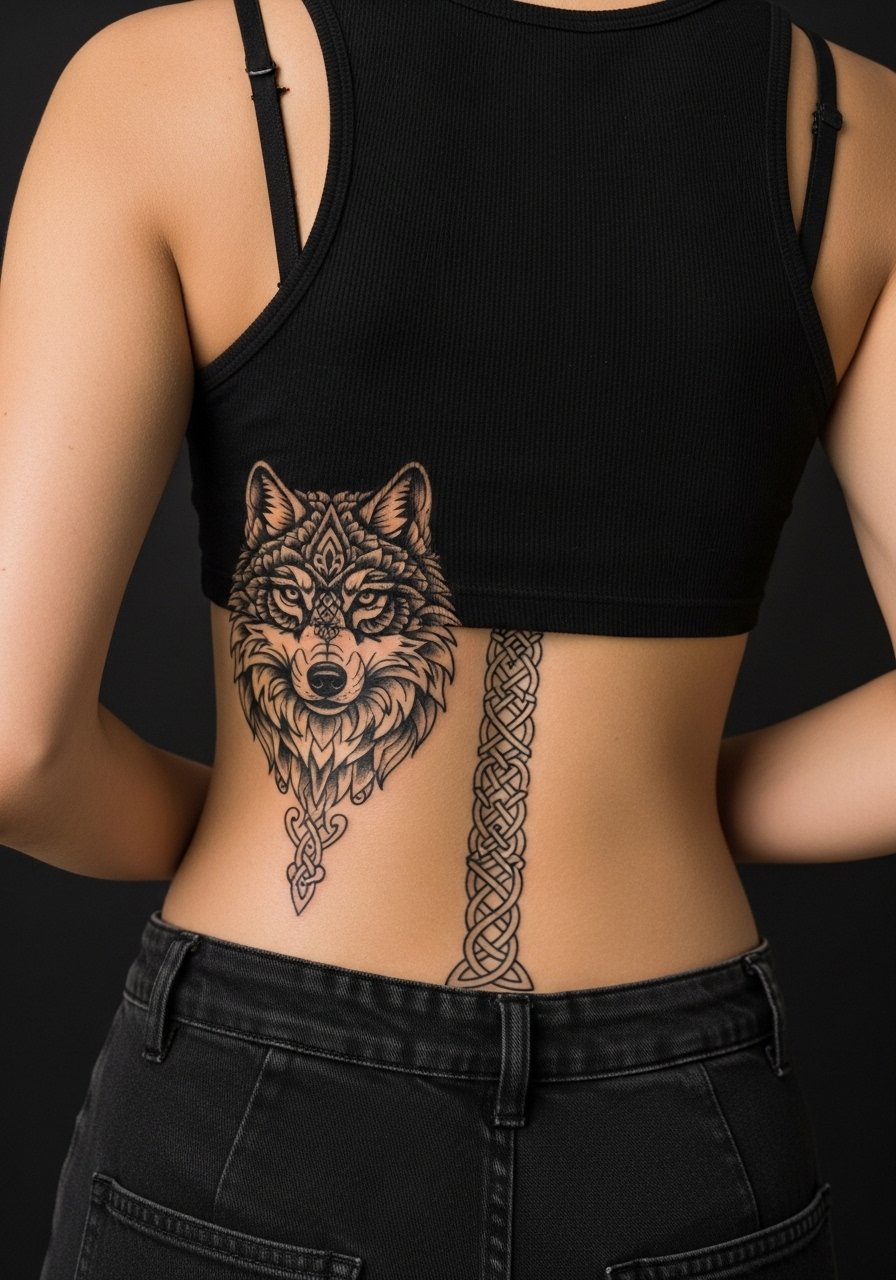
Spinal verticals read dramatically when the linework is crisp and evenly spaced. The key consultation note is to plan knotwork spacing that survives movement and lying down. Too-tight knots on a vertical spine will merge as skin shifts. Expect three sessions for linework and follow-up to refine intersections. For career considerations, remember spinal pieces are easy to hide under shirts but show well with open-back dresses. Choose a top with a low back cut that frames the vertical line when you want to reveal it.
11. Neo-Traditional Wolf Pack Silhouette on Inner Arm

Inner arm placements give a private-to-public reveal depending on sleeve length. For a pack silhouette, ask for clear separation between foreground and background wolves so the design does not collapse into one mass as pigment spreads. The inner arm is medium on the pain scale and often sees little sun, so color retention is decent. Expect two sittings for smooth washes. For showing it off in casual settings, roll sleeves or wear a short-sleeve button-down that highlights the silhouette.
12. Fine Line Wolf Eyes with Starry Dotwork on Neck
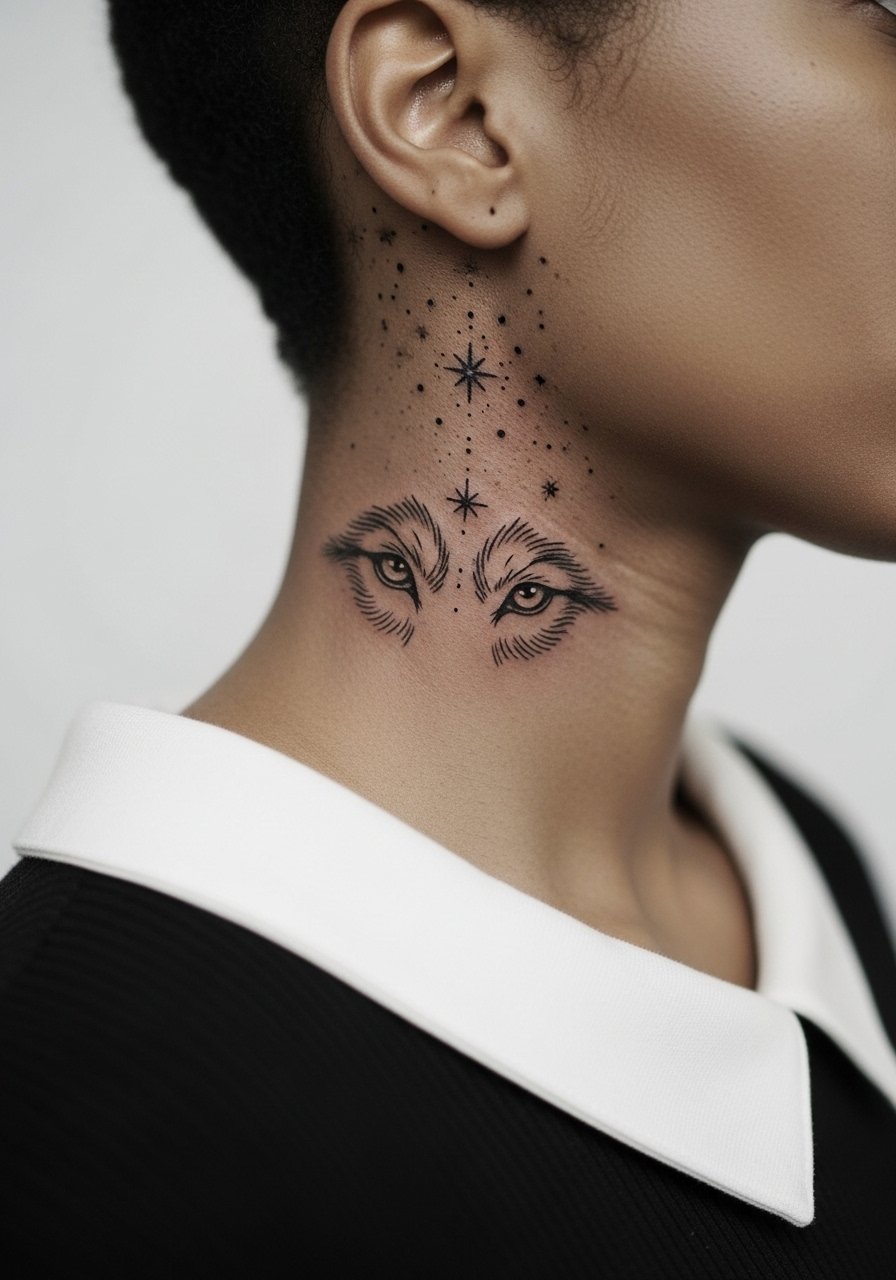
Neck tattoos are visible and carry professional considerations, so think about career implications before booking. Fine line eyes can be very striking on the neck, but this area ages differently because of sun and motion. Ask for slightly bolder linework in key focal points like the iris to keep the gaze readable over time. A single session often suffices for small pieces, but touch-ups may be needed sooner than for arm work. When showing the piece, wide-neck shirts or collars pulled to the side frame the eyes without making them feel overwhelming.
13. Birth Flower Wolf Crest, Forearm Wrap
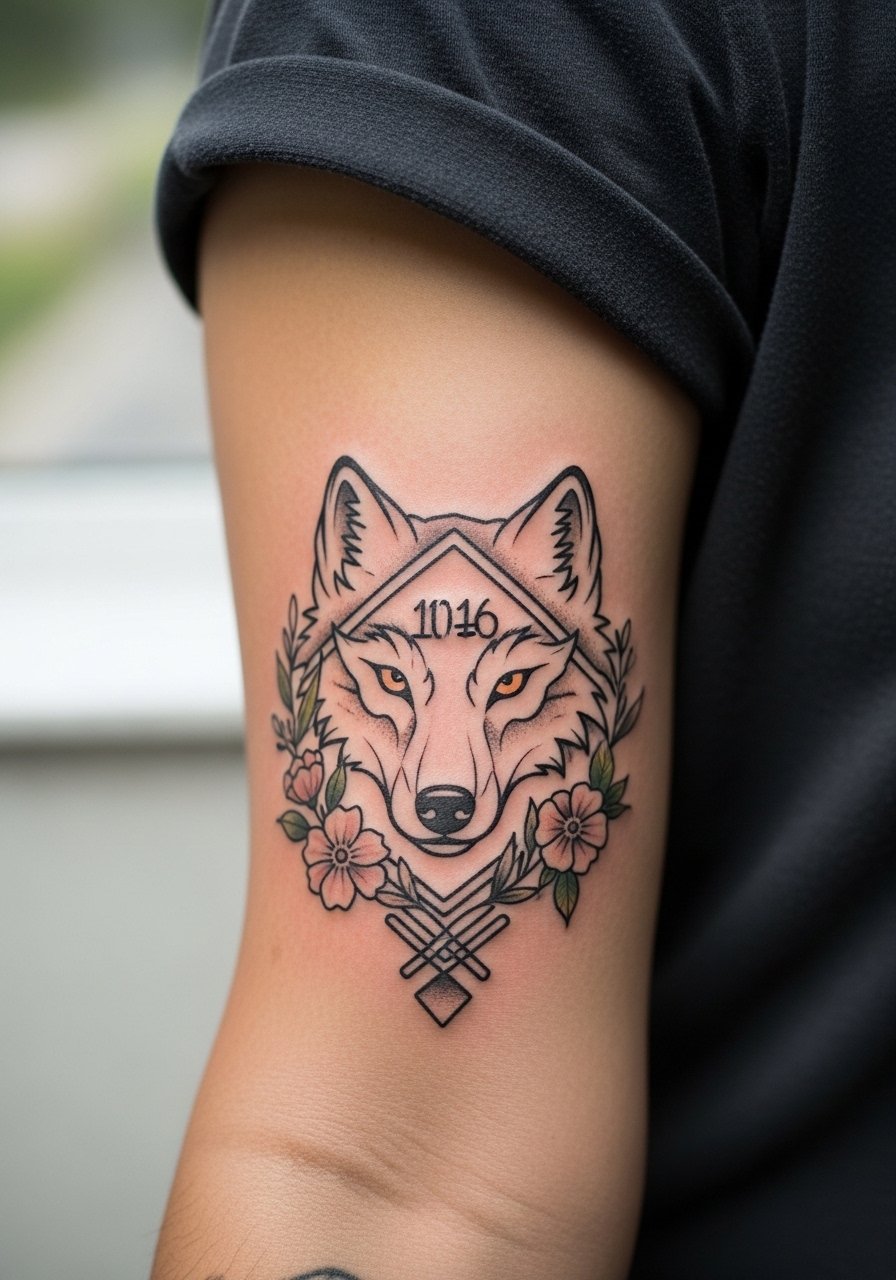
Pairing a wolf with birth flowers personalizes the emblem without borrowing cultural motifs. Forearm wraps need careful placement so flowers do not crowd the face of the wolf. Tell your artist which flower and where you want it anchored so the composition reads from the elbow toward the wrist. This design ages well when the floral color is used sparingly as accents rather than full watercolor fills. For showing it off, a rolled short-sleeve linen shirt brings attention to the wrap. Consider a loose button down shirt for sessions and styling.
14. Negative Space Wolf for Darker Skin, Upper Arm
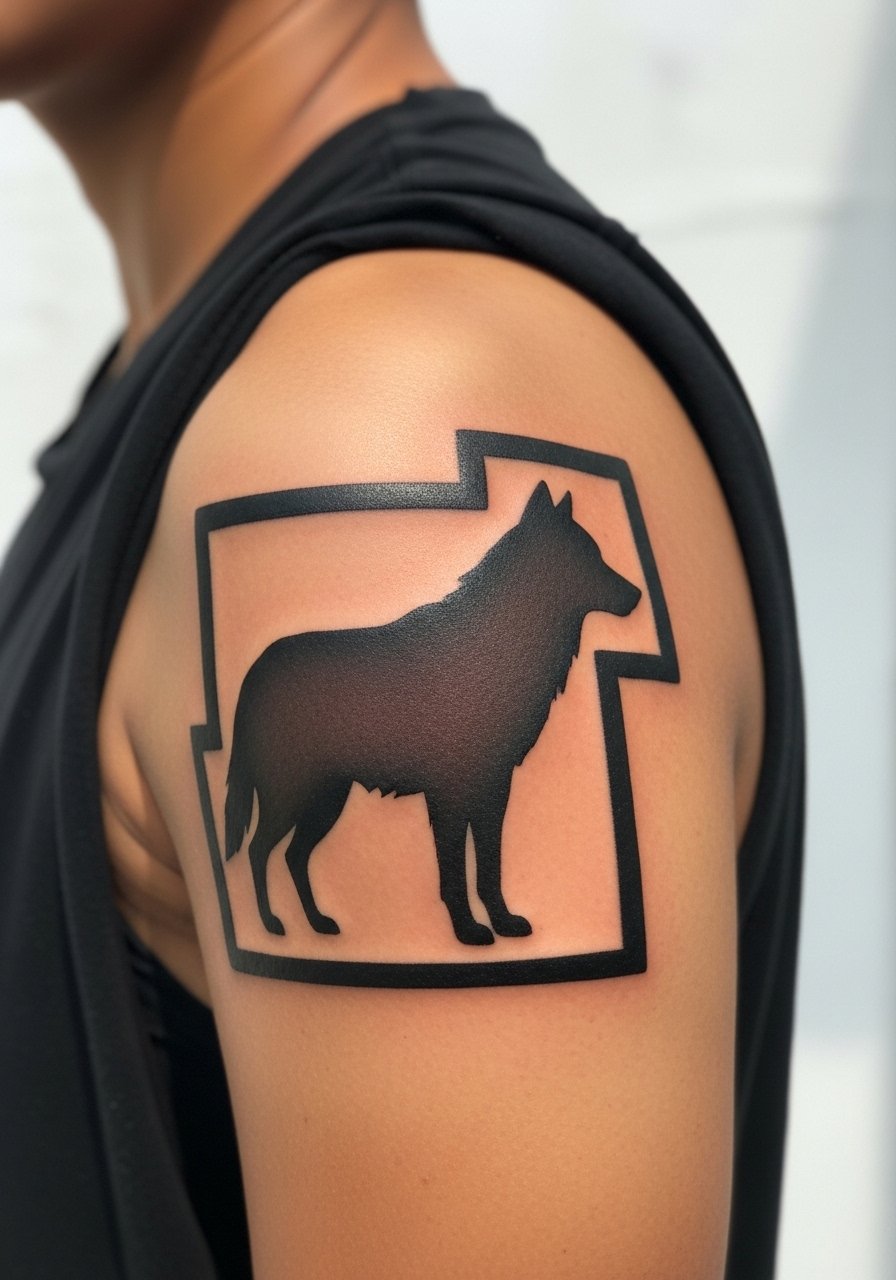
Negative space is a strong strategy for darker skin tones because it relies on contrast rather than subtle washes. The upper arm is forgiving and the technique preserves form as pigments shift. In consultation, emphasize crisp edges and generous negative shapes rather than fiddly dotwork that can vanish. This technique reduces the need for early touch-ups if executed with ample spacing. For show-off outfits, sleeveless bodysuits or tank tops keep attention on the bold silhouette.
15. Modular Wolf Pack Design for Future Expansion, Rib-to-Back Transition
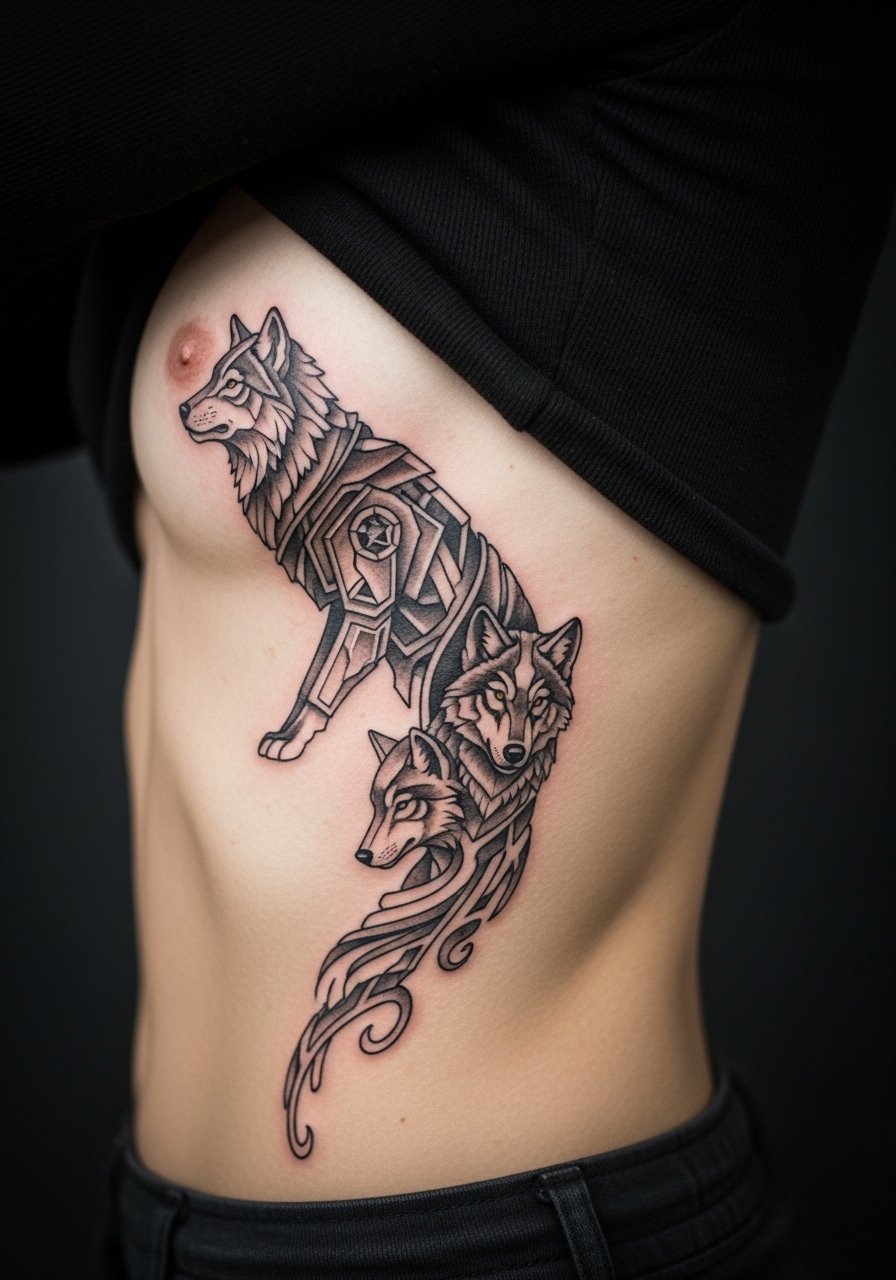
If you want a piece that can grow over years, plan modular anchors that can be added to without breaking the composition. The rib-to-back flow needs intentional spacing because ribs are a higher-movement area and back panels lie flatter. In the consultation, map future pieces on stencil sheets and agree on anchor points. Expect multiple sessions spaced months apart. Common errors include treating modular designs like single-session wraps, which forces compromises later. Session wear should be a strapless top for unobstructed access during long appointments.
16. Tiny Ankle Constellation Wolf, Minimalist Line

Ankle tattoos are discreet and great for tiny wolf motifs. They face high friction from socks and shoes, so ask your artist to reinforce key contour lines slightly thicker than standard minimal work. Sessions are short but healing needs attention. A typical mistake is asking for sub-1-inch detail on the ankle where movement blurs the smallest strokes. For summer show-off looks, roll jeans and try sandals to frame the ankle design.
17. Ear-Adjacent Wolf Ear Outline, Behind the Ear Illusion

This subtle illusion plays with hairlines and works as a discreet accent that peers out when you tuck hair back. The area behind the ear requires a specific framing in the stencil so the artist does not place ink on the ear itself, and it heals differently because of hair and sweat. Ask for a simple outline so the piece keeps clarity. Sessions are brief but precise. If you want a visible hint, tuck hair behind the ear or wear short hairstyles that reveal the line.
Studio Day Picks
The forearm, collarbone, thigh, and rib pieces above all demand slightly different prep, so these picks smooth the chair day and the first week of wear.
-
Stencil transfer paper kit. Lets you preview placement and lineweight on skin before the needle touches down, which is especially helpful for forearm wraps and vertical spine pieces.
-
Topical numbing cream. Applied as directed about 45 minutes before the session eases wrist and ribcage sensitivity so you can sit through detail work more comfortably.
-
Thin protective film roll. Handy for covering small wrist or ankle tattoos in the first day when friction from clothing and shoes is most likely.
-
Fragrance free gentle body wash. Gentle cleansers reduce irritation in the week after a collarbone or thigh session when you are showering around the area.
-
Aquaphor healing ointment. A thin initial layer for small linework pieces helps retain moisture in the tight needle channels without over-saturating the surface.
Frequently Asked Questions
Q: Will a fine line wolf on my wrist blur faster than one on my shoulder?
A: Yes, the wrist sees more sun, washing, and friction than the shoulder, so ultra-fine lines on wrists are more likely to soften. If you love the wrist for a small wolf, ask for slightly heavier primary outlines and plan a touch-up at year one to two if you want to keep the crispness.
Q: How should I talk to my artist about adding flowers or knots to a wolf so the piece can expand later?
A: Bring references that show scale and point to anchor zones you want left open, like a blank margin at the rib edge or a reserved field on the thigh. Ask the artist to mark future join points on the stencil, and agree on a palette or line weight that will carry over into new elements.
Q: Are blackwork geometric wolves a better choice for darker skin tones?
A: In many cases blackwork and generous negative space read stronger on deeper tones than pale wash styles. The trick is to keep shapes bold and avoid tiny dotwork that can vanish. If you want detail, plan for larger dimensions so the geometry stays distinct.
Q: Do watercolor wolf portraits require different wardrobe choices for the session?
A: Yes, wear a strapless top or a V-neck blouse you can pull aside so the artist can work without tugging. For the collarbone portrait above, a strapless top is practical for both access and keeping the area clean.
Q: If I want a wolf on my ribs but worry about pain and aging, what realistic expectations should I have?
A: Expect higher discomfort during sitting and a multi-session timeline for detail. Ribs move with breathing so very fine hairlines risk blurring faster. Many artists recommend slightly bolder primary lines and booking a touch-up in the first two years to maintain texture.