Fine line ankle patchwork is trending, but what looks delicate on a phone screen can blur fast when it meets shoes, sweat, and daily movement. I have seen ankle pieces fade unevenly, get knocked by boots, or need touch-ups sooner than owners expected. Start by thinking about placement, footwear friction, and realistic touch-up plans, and the first idea below shows how to make those choices work.
1. Micro Patchwork Florals Around the Lateral Ankle
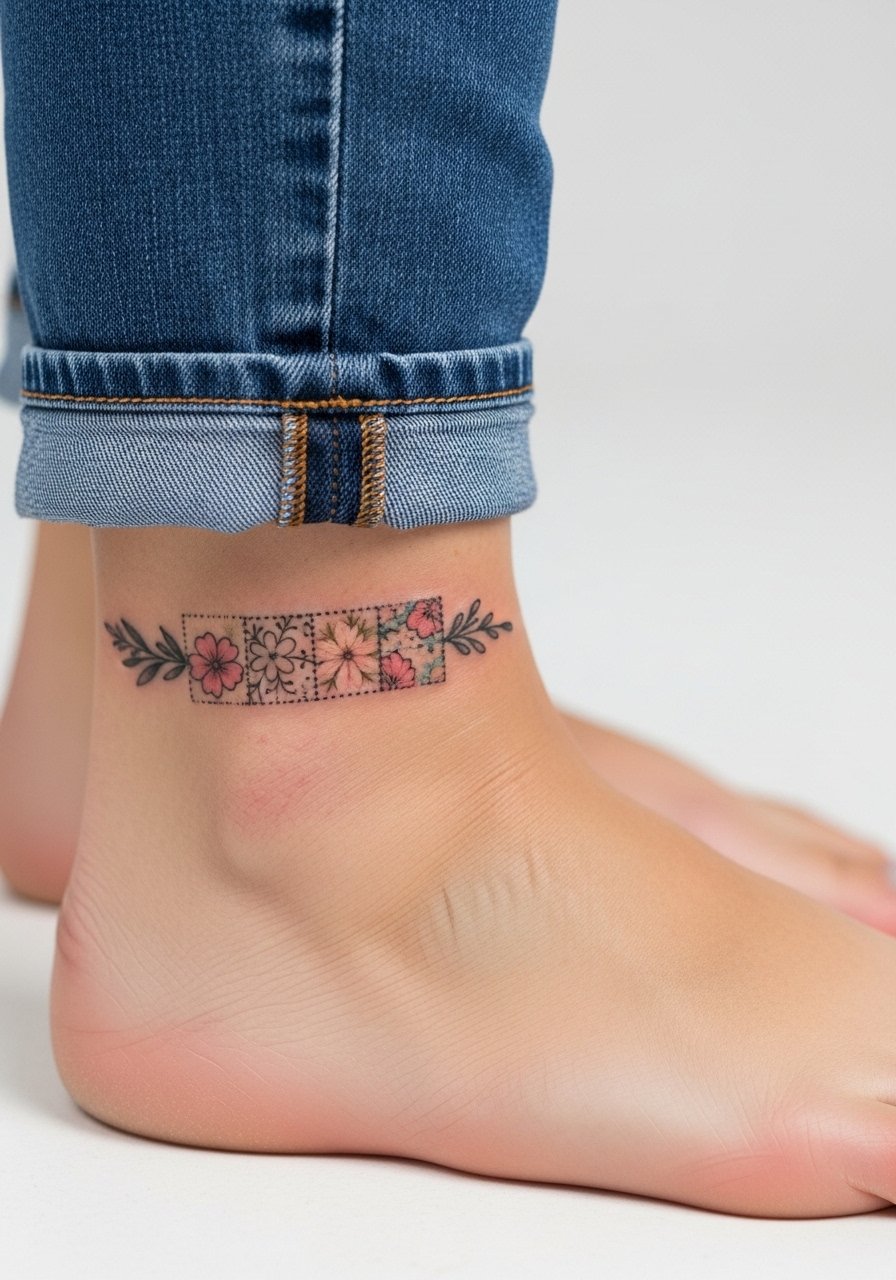
This layout uses several tiny floral flashes arranged like a loose bracelet around the lateral ankle. I recommend slightly increasing line weight compared with ultra-micro work so the petals do not merge with time. Tell your artist you want spaced elements with thin but confident linework and small negative-space gaps between motifs. The ankle swells and rubs in shoes, so expect a touch-up around year two for very fine pieces. Session time is usually short, but the area can sting more than a calf because of thin skin and proximity to bone. A common mistake is asking for everything one size smaller than the reference. Leave room for breathing or the result can look crowded when healed.
2. Tiny Geometric Tiles on the Inner Ankle with Sandal-Friendly Styling
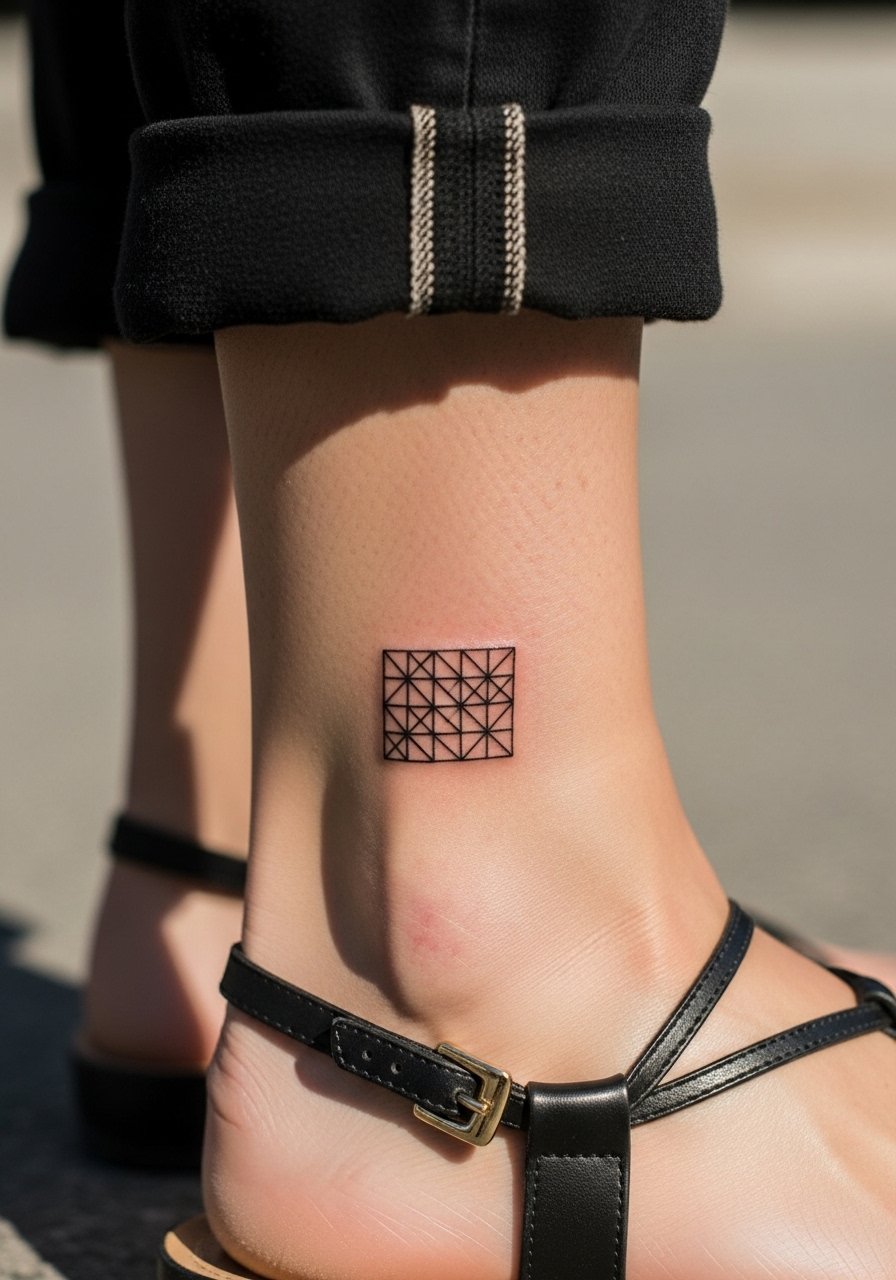
This angular patchwork works well for someone who wants repetition without bold color. Ask your artist for slightly heavier anchor lines around focal tiles so the pattern keeps shape over time. The inner ankle sees less direct shoe friction than the outer edge, but swelling after long walks is common. For the session wear, pull on cuffed linen trousers so the artist has clear access without pressure on the skin. For showing it off, strappy leather sandals frames the tiles without covering them. Expect short sittings, but plan a touch-up at year two if you wear closed shoes daily.
3. Patchwork Script and Coordinates Around the Ankle Bone
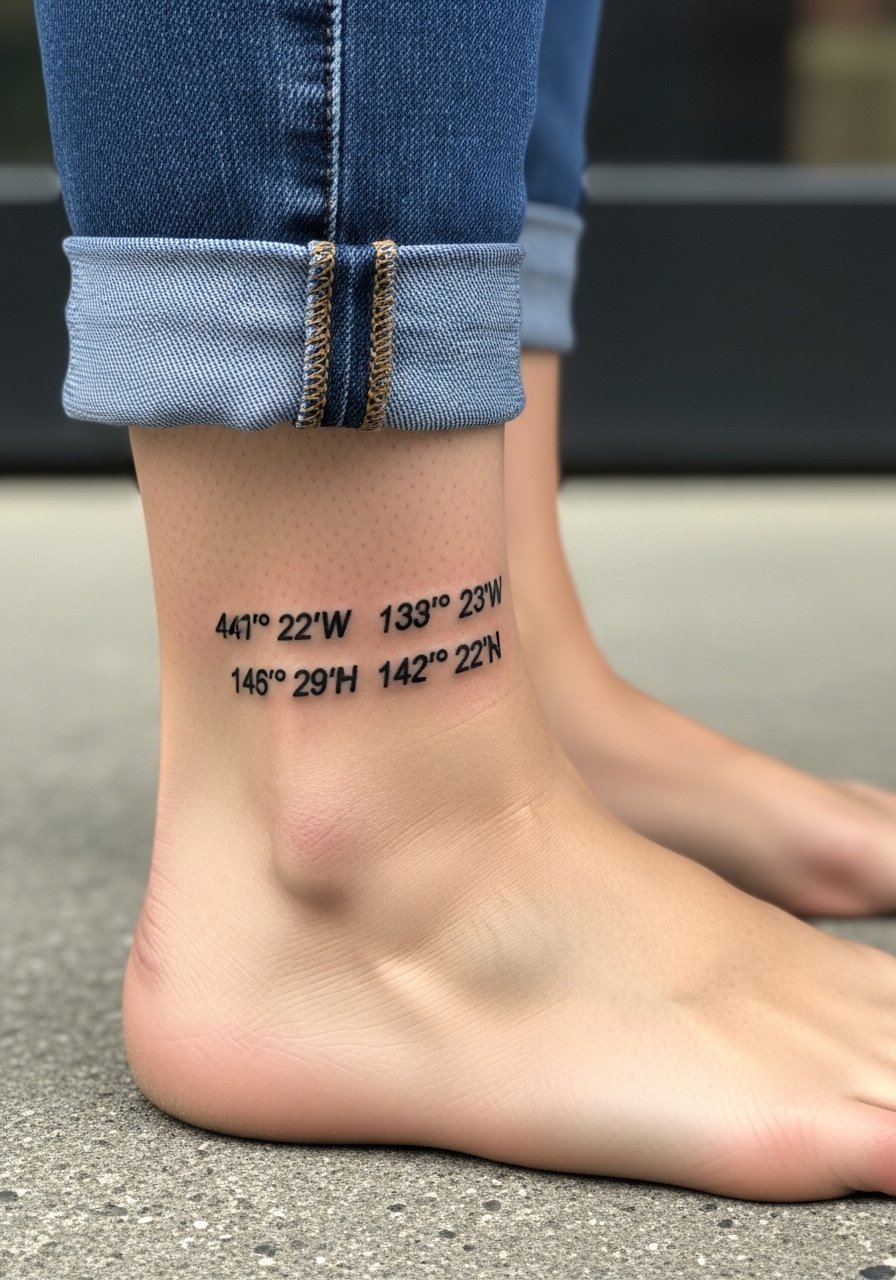
Text in patchwork can read like a cuff if each piece has deliberate spacing. Specify exact lettering size and weight in the consult. When you ask for script and coordinates, tell the artist the exact font and the precise text so the stencil matches your intent. The ankle bone area has thin skin and higher blowout risk if lines are too shallow. One camp of artists avoids ultra-fine script here. The other camp says with correct depth and spacing script holds. Ask where your artist stands so you can choose size accordingly. Sessions feel sharp on the bone, so plan short breaks if needed.
4. Mixed Dot Work and Stipple Shading Around the Achilles Tendon
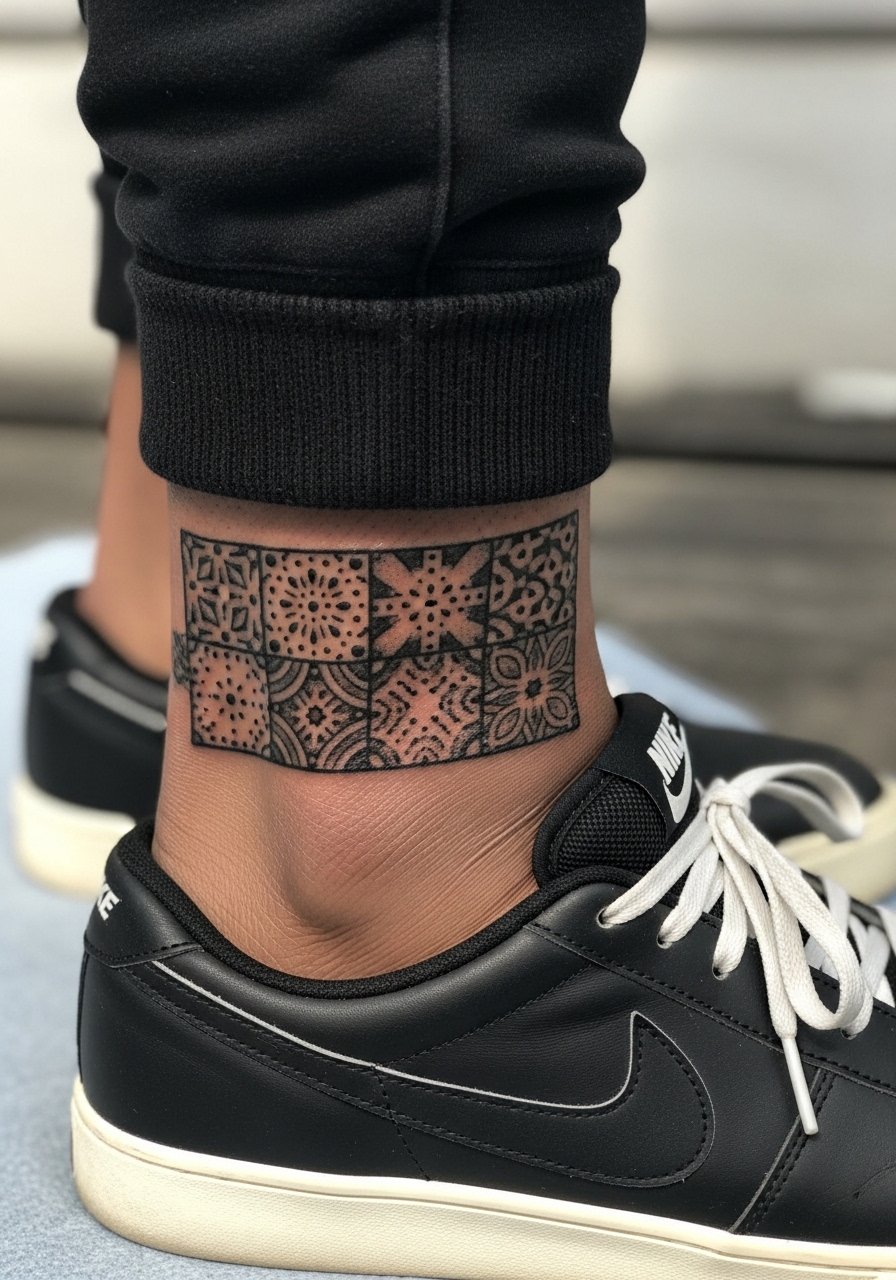
Dot work gives the illusion of texture while keeping negative space intact. For the Achilles area, ask for denser stippling close to focal motifs and lighter dots at the edges so the pattern transitions with movement. Be aware the tendon area moves a lot, which changes how dots settle. The biggest mistake is packing stipple too densely against thin skin. Expect a moderate pain level and sessions that require repositioning the foot for access. For showing this off, a simple low-cut sneaker with the sock cuff lowered lets the pattern peek out without rubbing directly on the ink.
5. Bold Patchwork Icons Encircling the Ankle Cuff
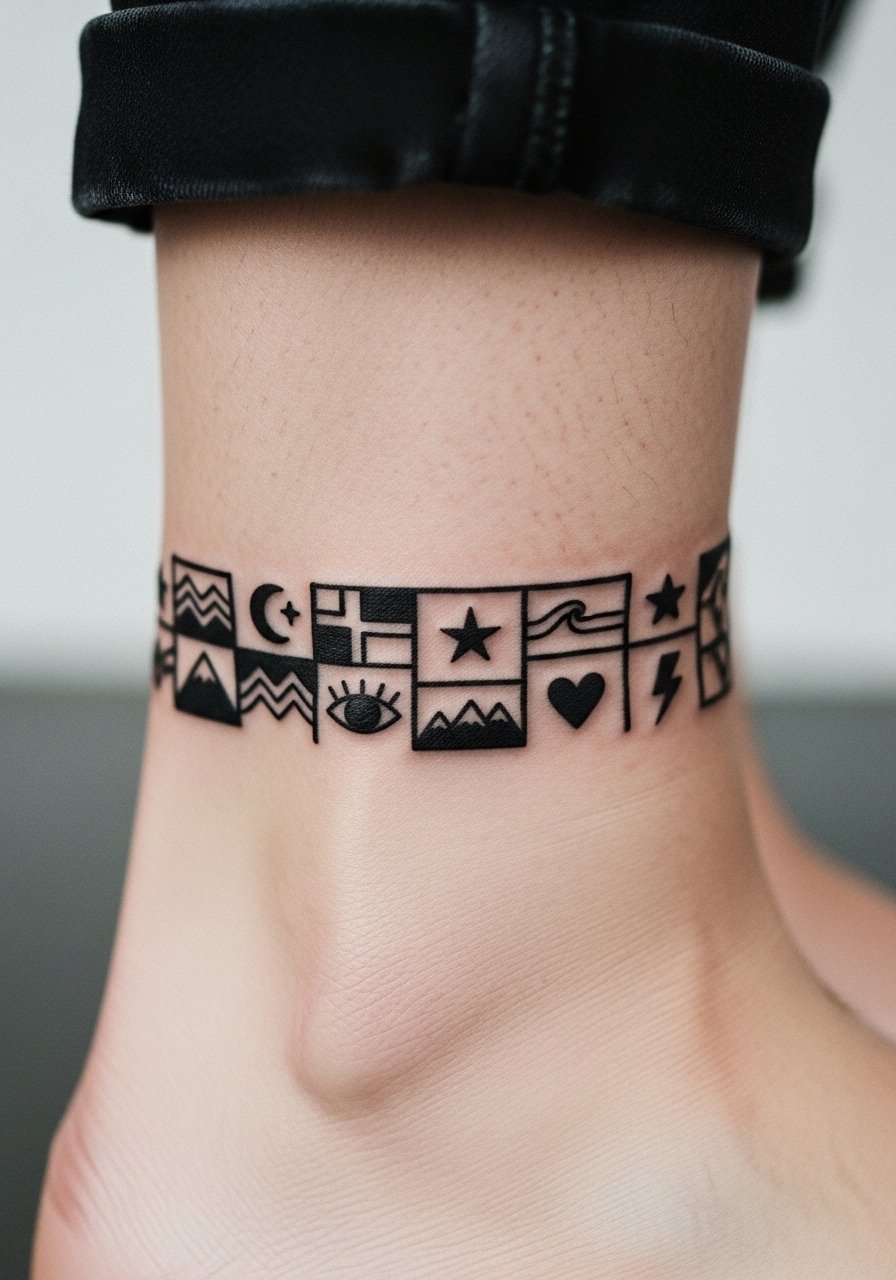
Bold icons age differently than fine motifs. Saturated blackwork in small patches around the ankle keeps shape longer because the thicker saturation resists blowout visually. Tell your artist you want confident outlines and solid fill in the icons, not hairline detail. The trade-off is longer session time and more immediate swelling. For people who want longevity with minimal touch-ups, this approach beats ultra-thin decorative lines. Avoid asking for tiny filled shapes without outline contrast or they can melt into indistinct blobs over years.
6. Color Block Patchwork with Faded-Edge Technique
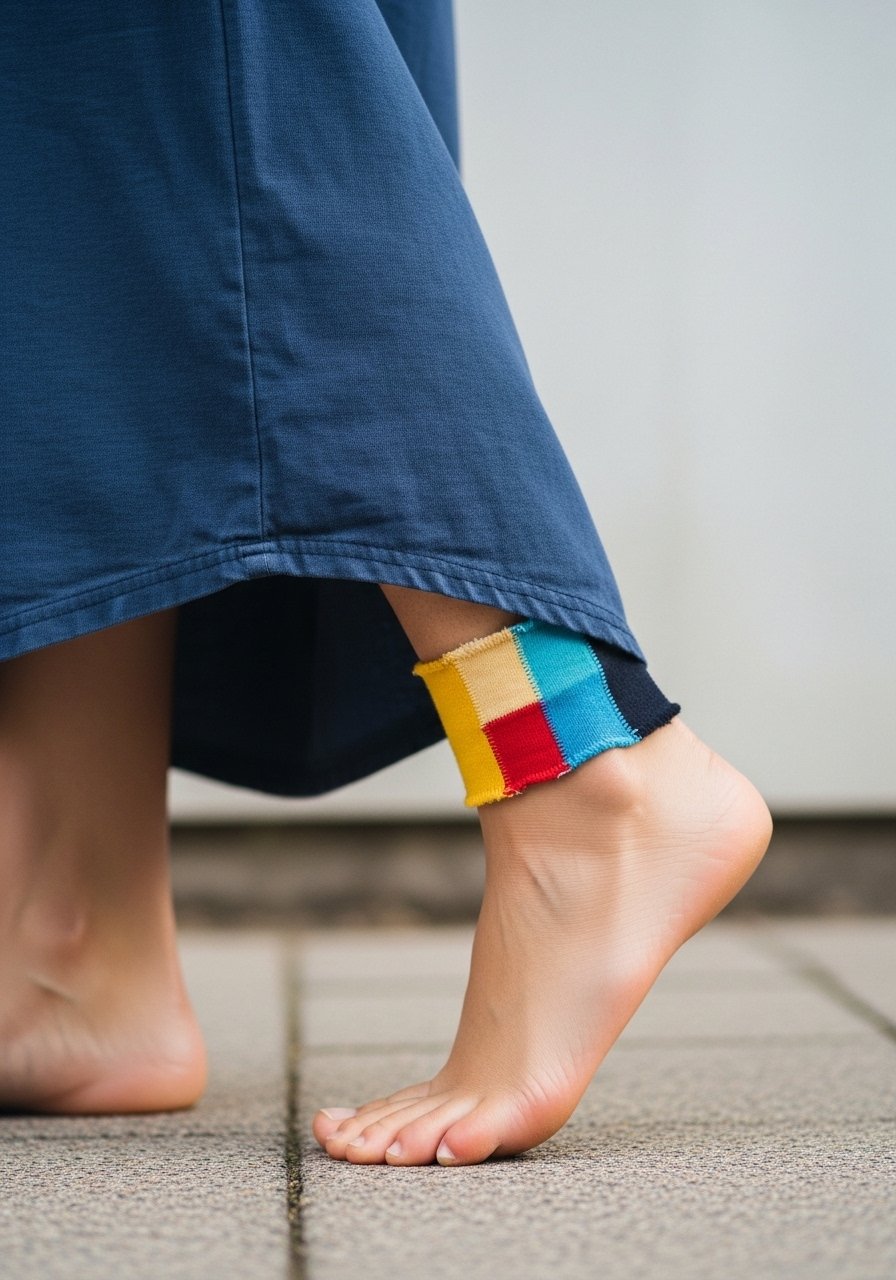
Color on the ankle is beautiful but it faces friction from shoes and socks. Ask the artist for slightly muted saturation and faded-edge technique so the color softens into skin rather than sitting as a harsh edge that flakes unevenly. One camp of artists recommends vivid saturation regardless of placement. The other camp prefers softer fills on high-friction areas like ankles. The softer approach often looks more natural as it heals. For evenings out, pair the piece with open-back sandals to reduce rubbing. Expect a touch-up at year one or two depending on shoe wear.
Pack Smart
Those first six ankle ideas highlight friction, thin-skin sensitivity, and the need for easy session access. A few targeted items smooth out the appointment and the first week of healing.
- Stencil transfer paper kit. Lets you preview exactly where each tiny patch lands on the ankle, which matters when working around bone and shoe lines.
- Topical numbing cream. Applied per directions 45 minutes before the session can make bone-adjacent ankle work much more manageable.
- Thin protective film roll. Keeps ankle patches clean during the first days when socks and shoes would otherwise rub and trap moisture.
- Fragrance-free gentle body wash. Cleanses without irritating delicate patches of linework and color in the ankle area.
- Aquaphor healing ointment. Thin layers in the first 48 hours lock in moisture without suffocating fine line channels near bone.
7. Patchwork Seashells Along the Medial Ankle
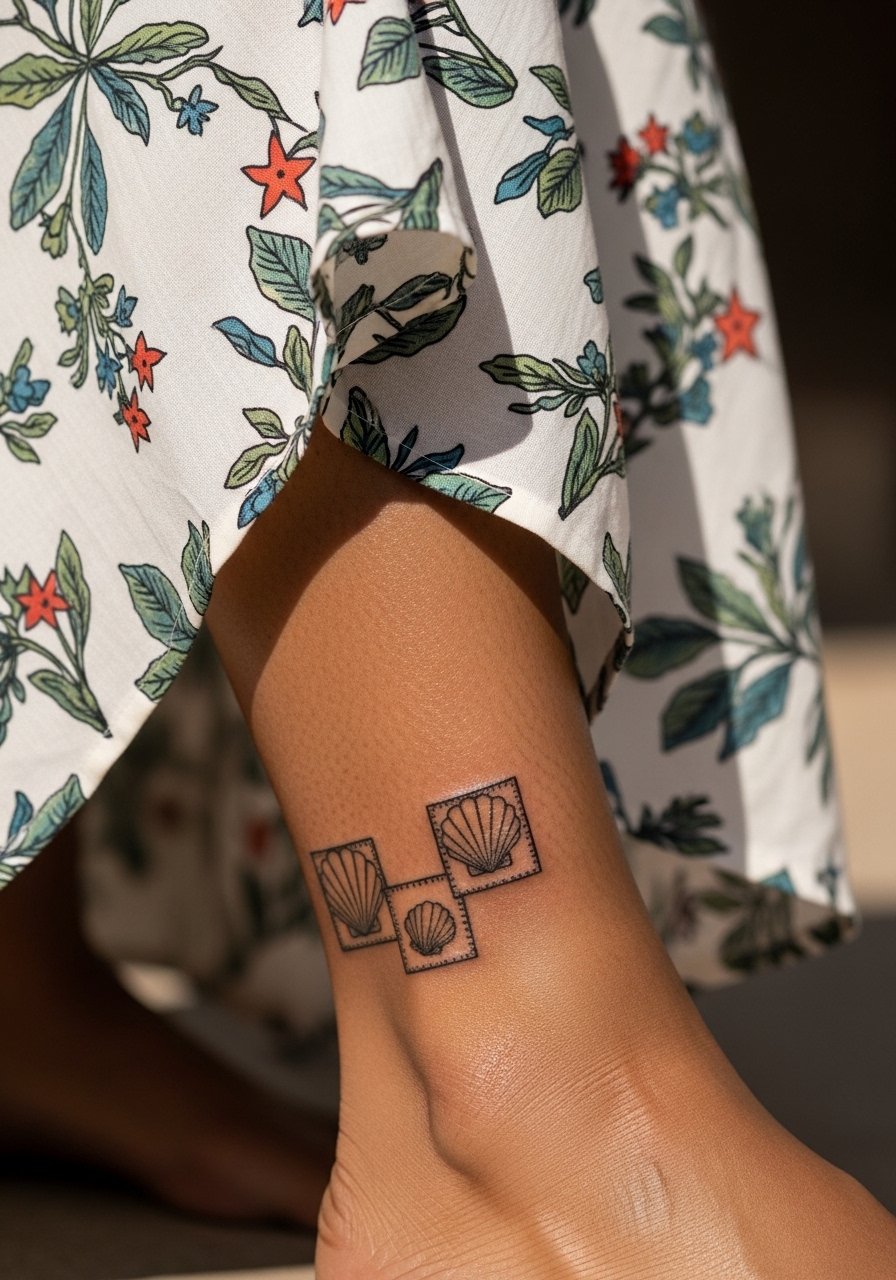
This seaside motif reads like a travel talisman when scattered around the medial ankle. I tell people to bring multiple shell references and highlight one anchor piece so the layout feels intentional. The medial ankle is less prone to sole friction but still shifts in shoes. Avoid tiny, indistinct shell ridges and instead ask for clear edge definition with selective shading. The session is short but precise. For showing it off, an open-heel sandal or cropped hem keeps the arrangement visible. Consider a touch-up if you wear snug boots frequently.
8. Tiny Botanical Patchwork with Anklet Pairing
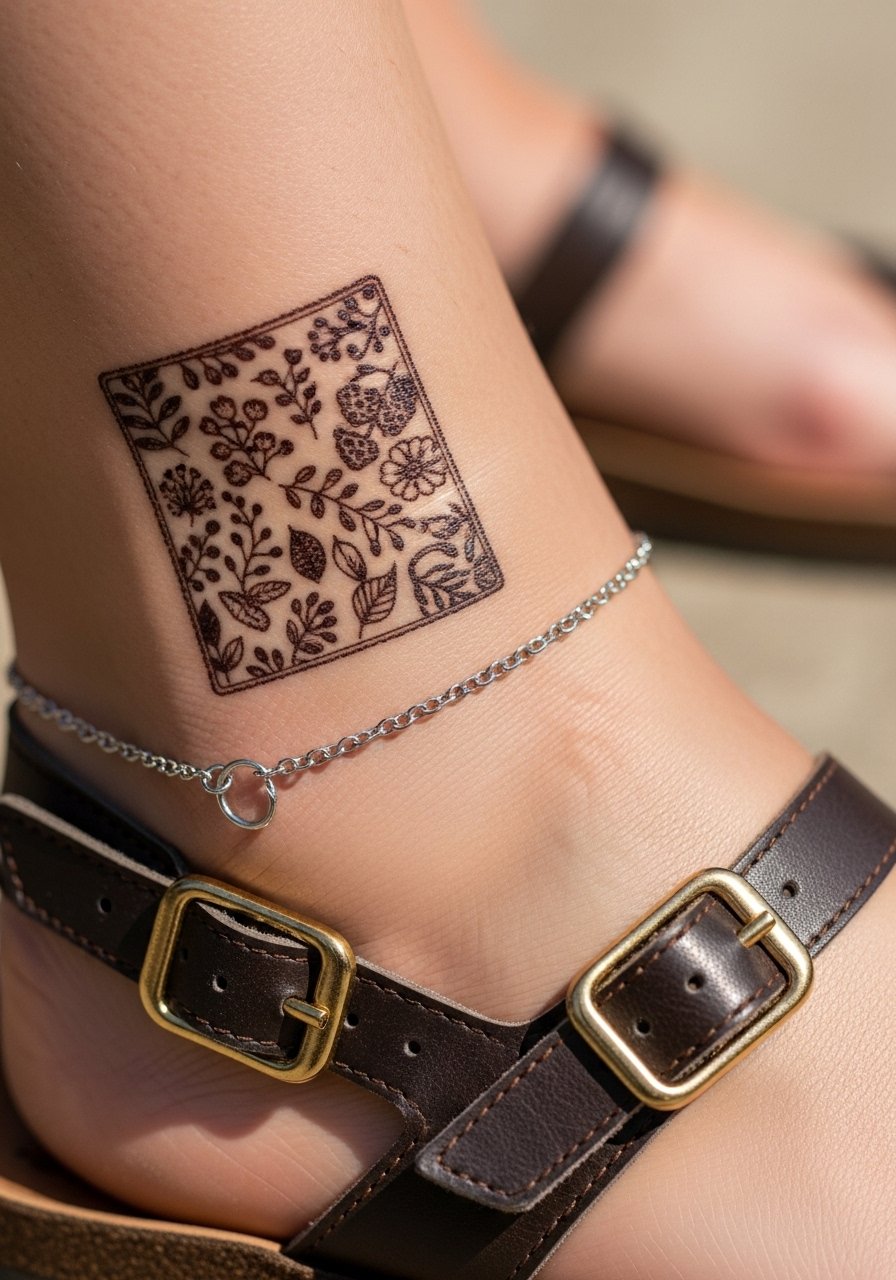
Botanical bits arranged like a mosaic make a soft cuff. Ask for negative-space gaps and varied leaf sizes so the pattern does not read as a single band. For showing off, a thin chain anklet complements without crowding the ink. Try a thin chain anklet that sits just above the tattoos so the eye travels rather than competes. The ankle tolerates small botanical pieces well, but heavy outdoor activity and shoe friction can dull tiny leaf detail over a couple of years.
9. Mixed Media Patchwork: Tiny Portraits and Symbols
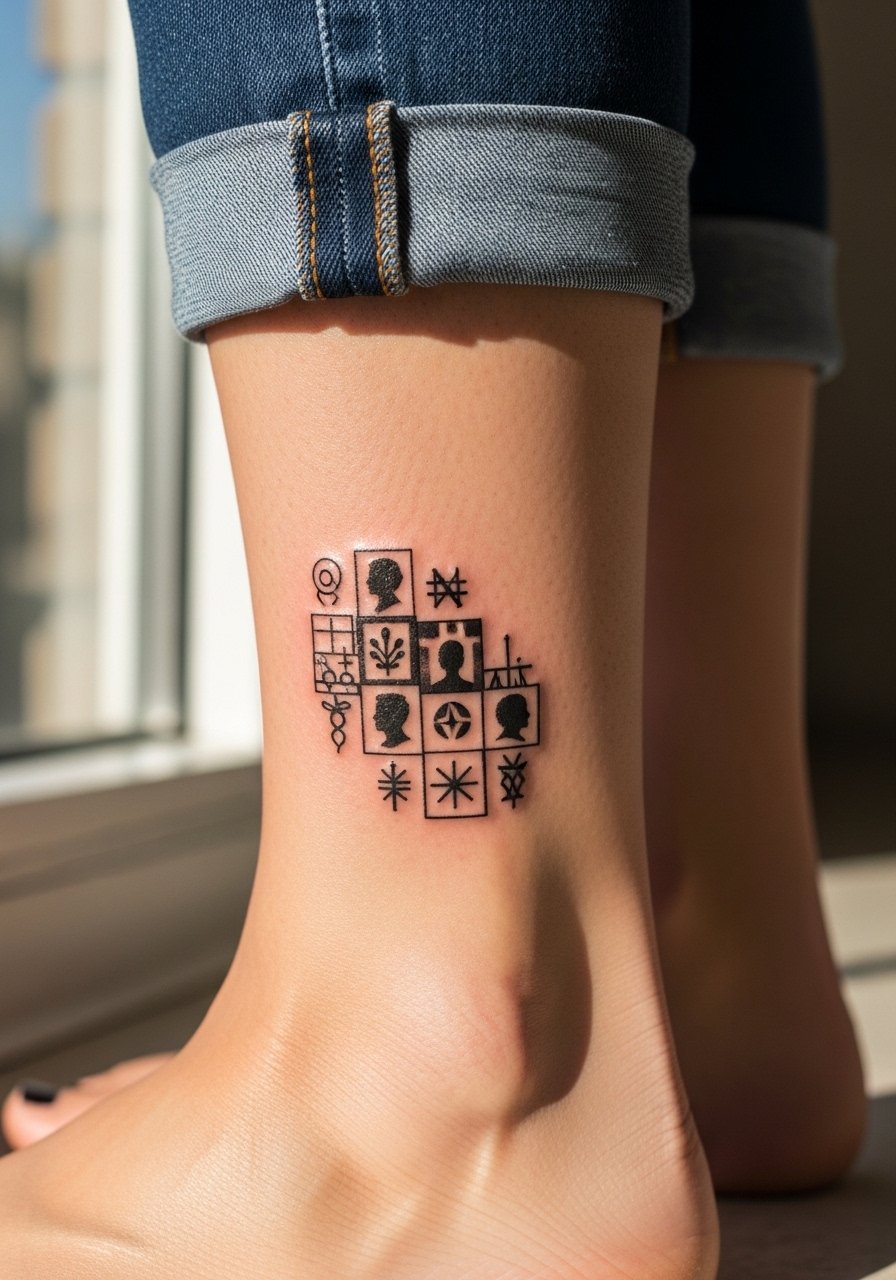
Micro portraits in a patchwork are ambitious on the ankle. I usually recommend keeping portraits slightly larger than micro size and pairing them with bold symbols so the faces keep definition. The debate here splits artists into two camps. One says micro portraits can hold if scaled up and placed on flatter skin. The other says ankles move too much for reliable face detail. If you want a portrait, ask for a mockup at life size on the ankle so you see legibility before committing. Plan for longer session time and likely touch-ups at year two.
10. Minimalist Tattoo Coins Stacked Near the Ankle with Shoe-Friendly Advice
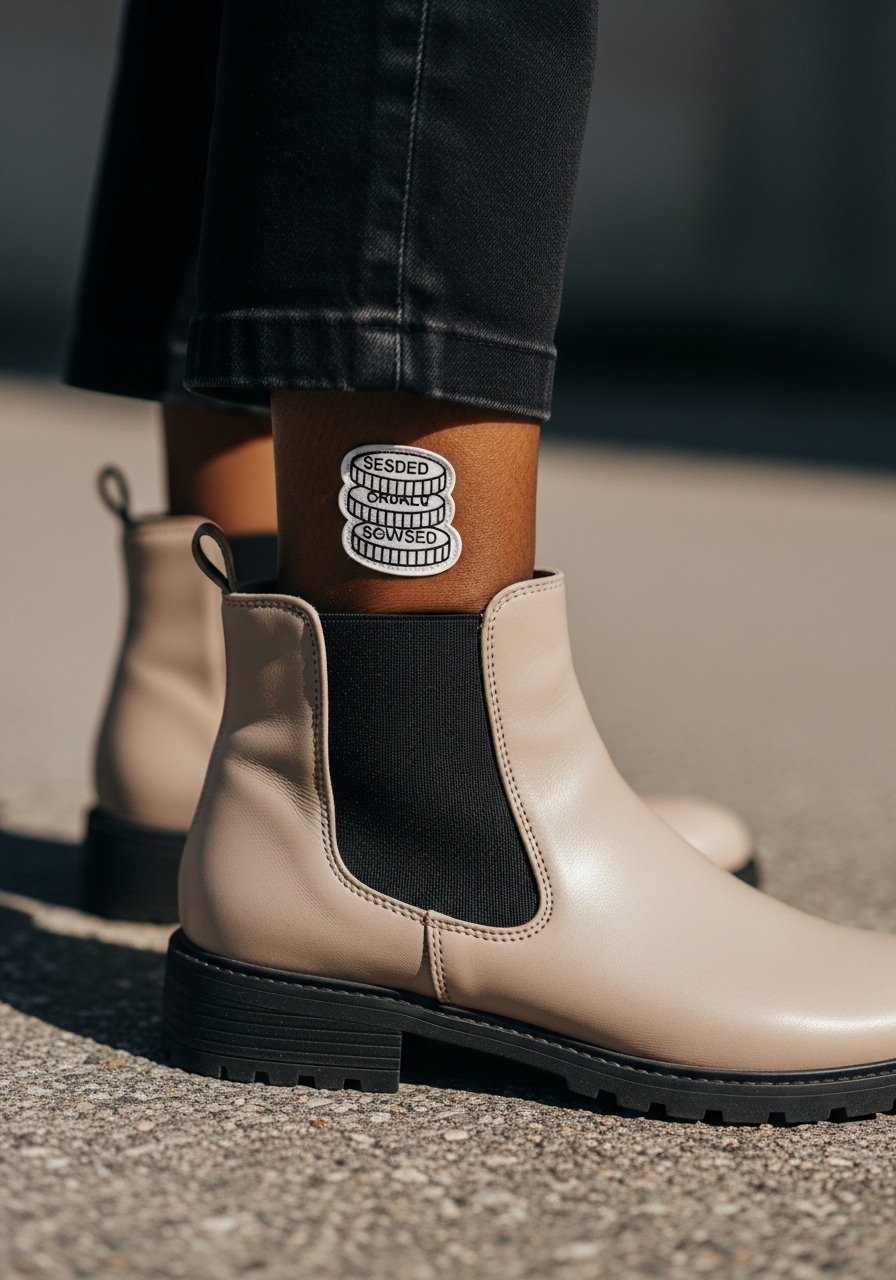
Stacked coin motifs read like a curated collection of small symbols. The main consultation detail is spacing. Ask the artist to map the stack so shoe collars do not sit directly on the lowest coin. For session day, wear cropped pants that you can roll up without compressing the ankle to get accurate placement. Shoes with hard collars are a common mistake because they cause friction during healing. Expect the lower coins to need touch-up sooner if you wear structured boots a lot.
11. Patchwork Constellations Tracing the Ankle Bone
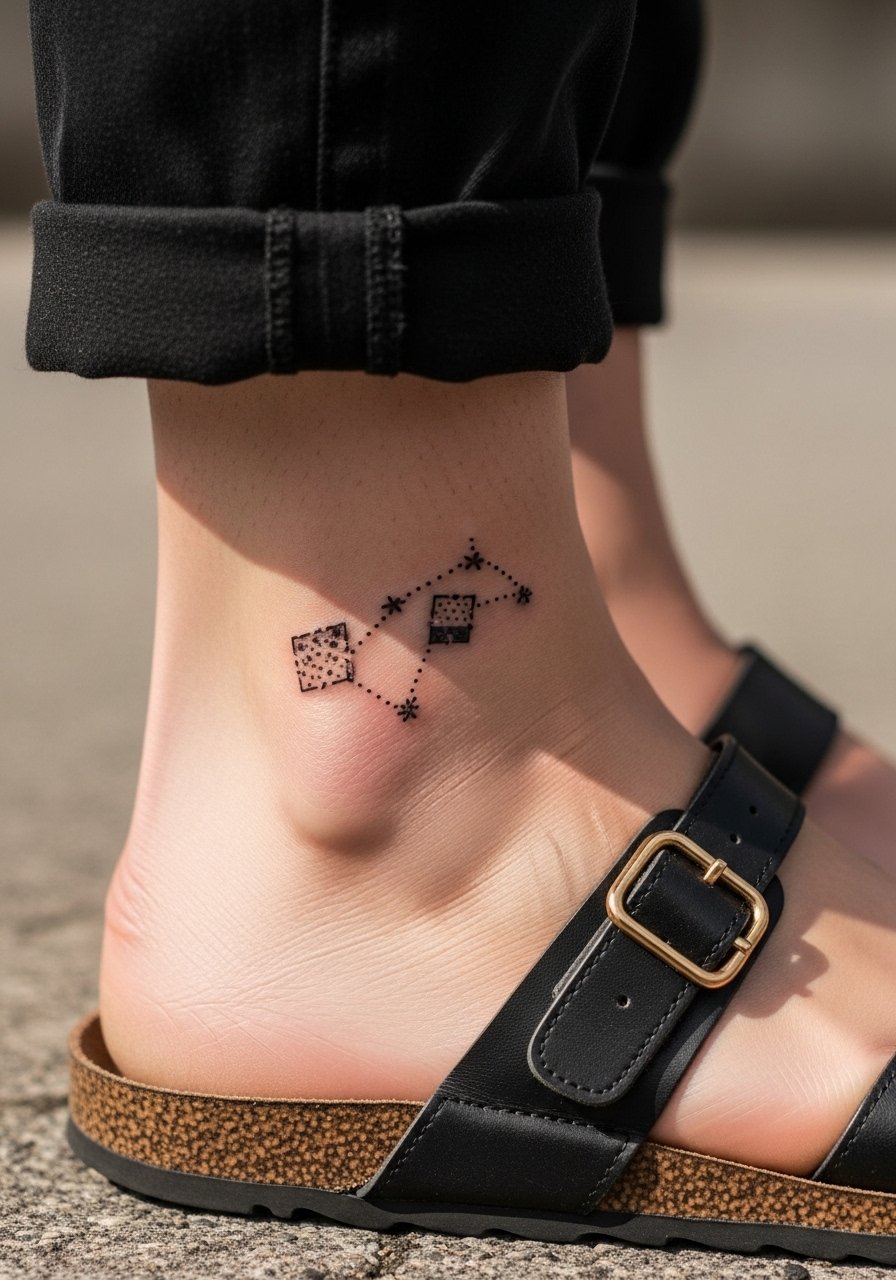
Constellation patches lean on negative space and dotted connectors. For longevity, ask for slightly bolder anchor stars and softer connecting dots so the network still reads if some dots blur. The ankle bone is sharp and tactile so pain is higher than on the shin. A practical mistake is asking for all connectors at hairline weight. Space and variance keep the design readable at six months and at two years.
12. Patchwork Paisley Bits with Statement Footwear Pairing
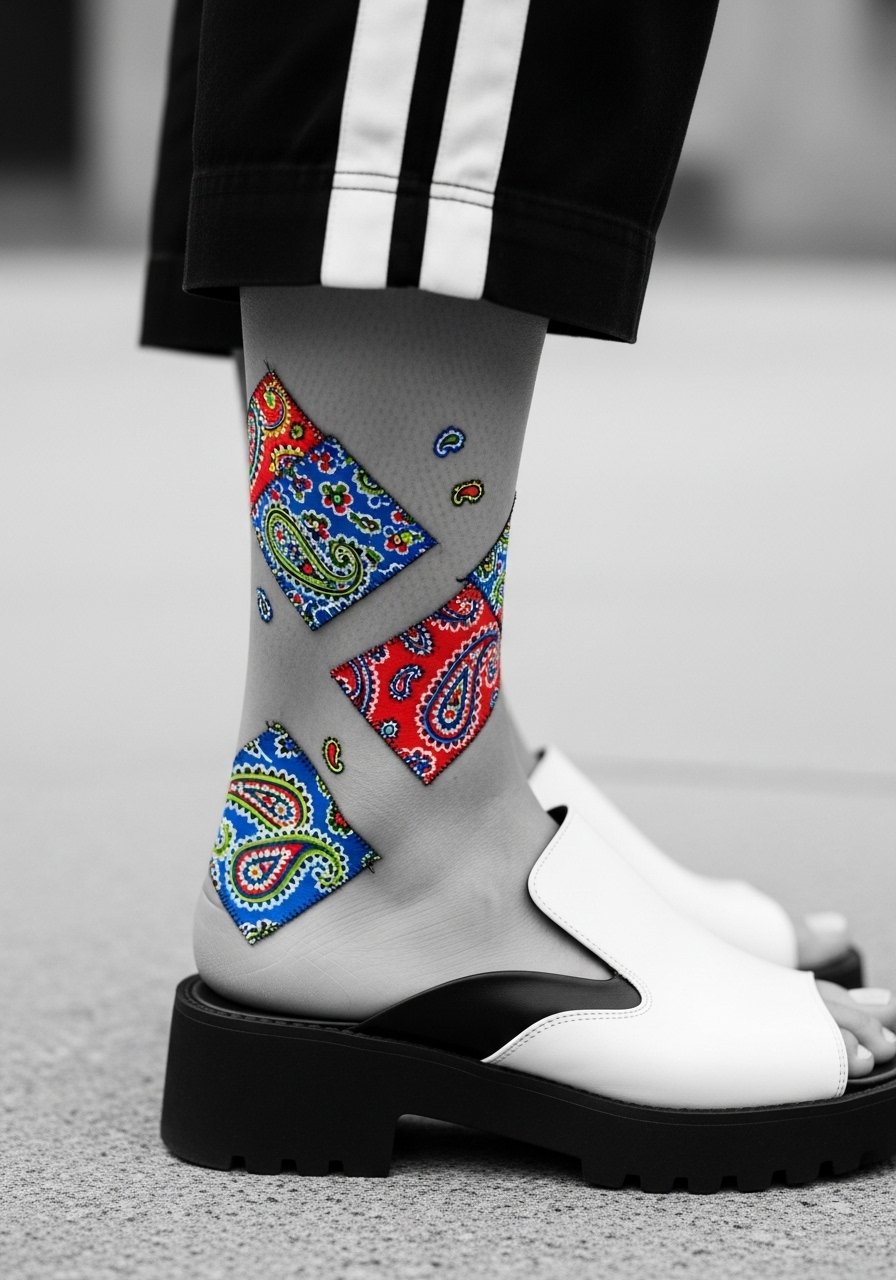
Paisley fragments bring ornamental rhythm to the ankle without a continuous band. Ask your artist for varied scale and for a couple of bolder motif anchors. For shows and events, pair with open-toe mules so the artwork sits in view without being stepped on. The outer ankle rubs against straps more than the inner side, so consider placement relative to your favorite shoes. Expect moderate session pain and a one-year check for color settle.
13. Fragmented Traditional Flash Around the Ankle
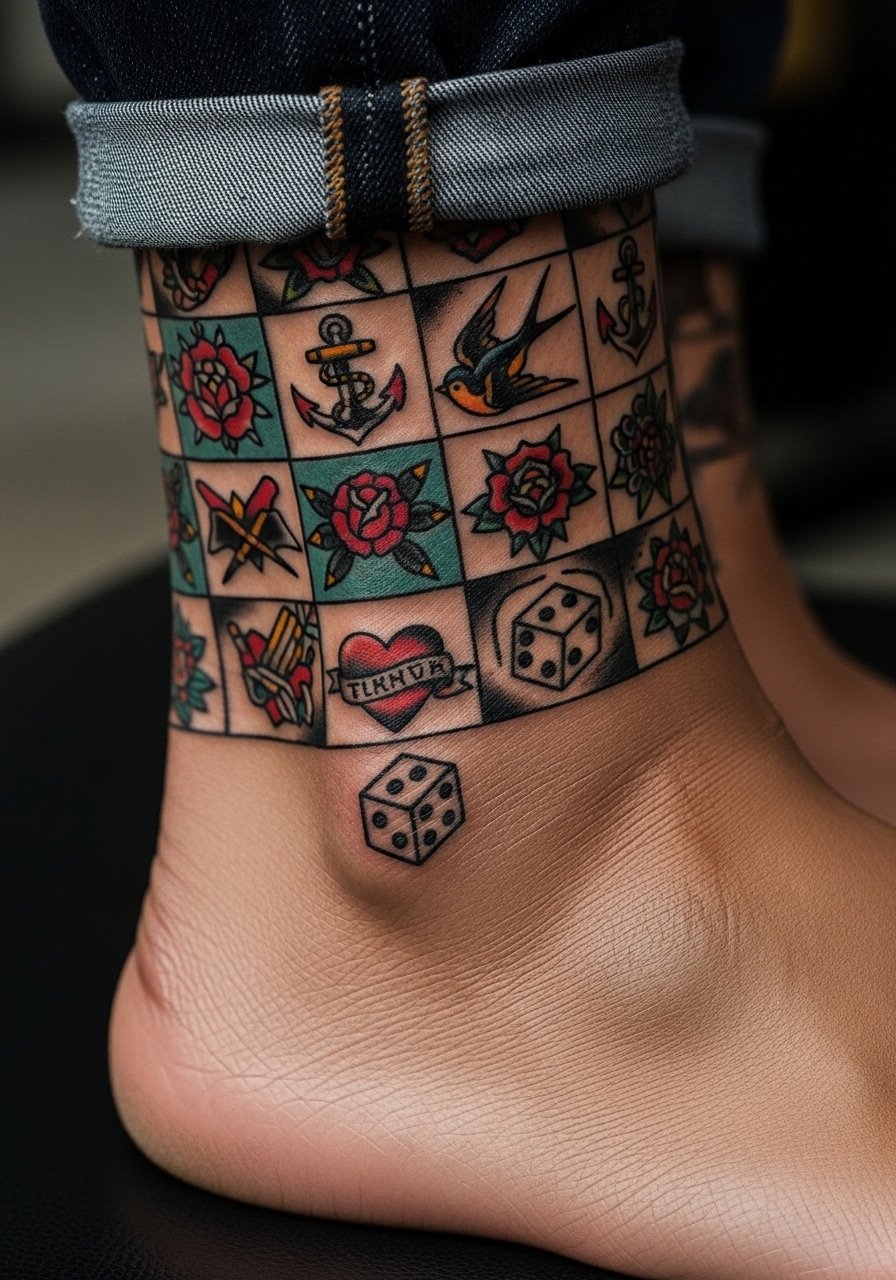
Traditional flash motifs translate well to ankle patchwork because bold outlines hold up. Tell your artist you want classic saturation and clear outlines, not tiny shaded details. The ankle benefits from this approach because thicker linework resists blowout visually. Many people pick traditional pieces because they read clearly at a distance and age into a graphic cuff. Sessions run somewhat longer if multiple filled motifs are done in one sitting.
14. Negative-Space Lace Patchwork with Minimal Jewelry Tie-In
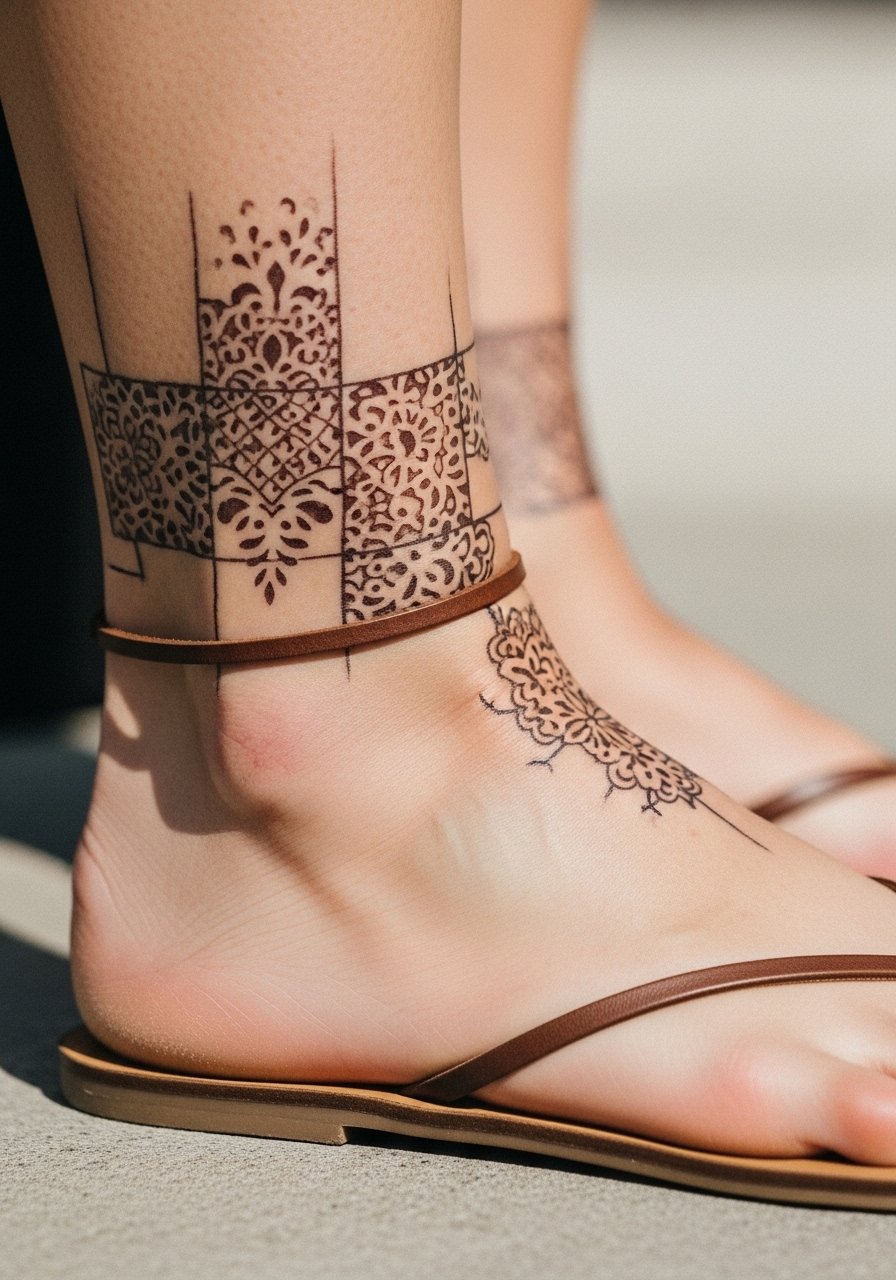
Negative-space lace feels intricate without adding more ink. Ask for breathing room between lace panels so the skin acts as part of the design. For evening looks, a minimalist leather anklet sits above the lace and complements the openwork. The ankle stretches and compresses, so lace must be mapped to muscle and bone lines. The main mistake is packing lace too close together which makes it look muddy once healed.
15. Collage Patchwork with Tiny Botanical and Nautical Pieces
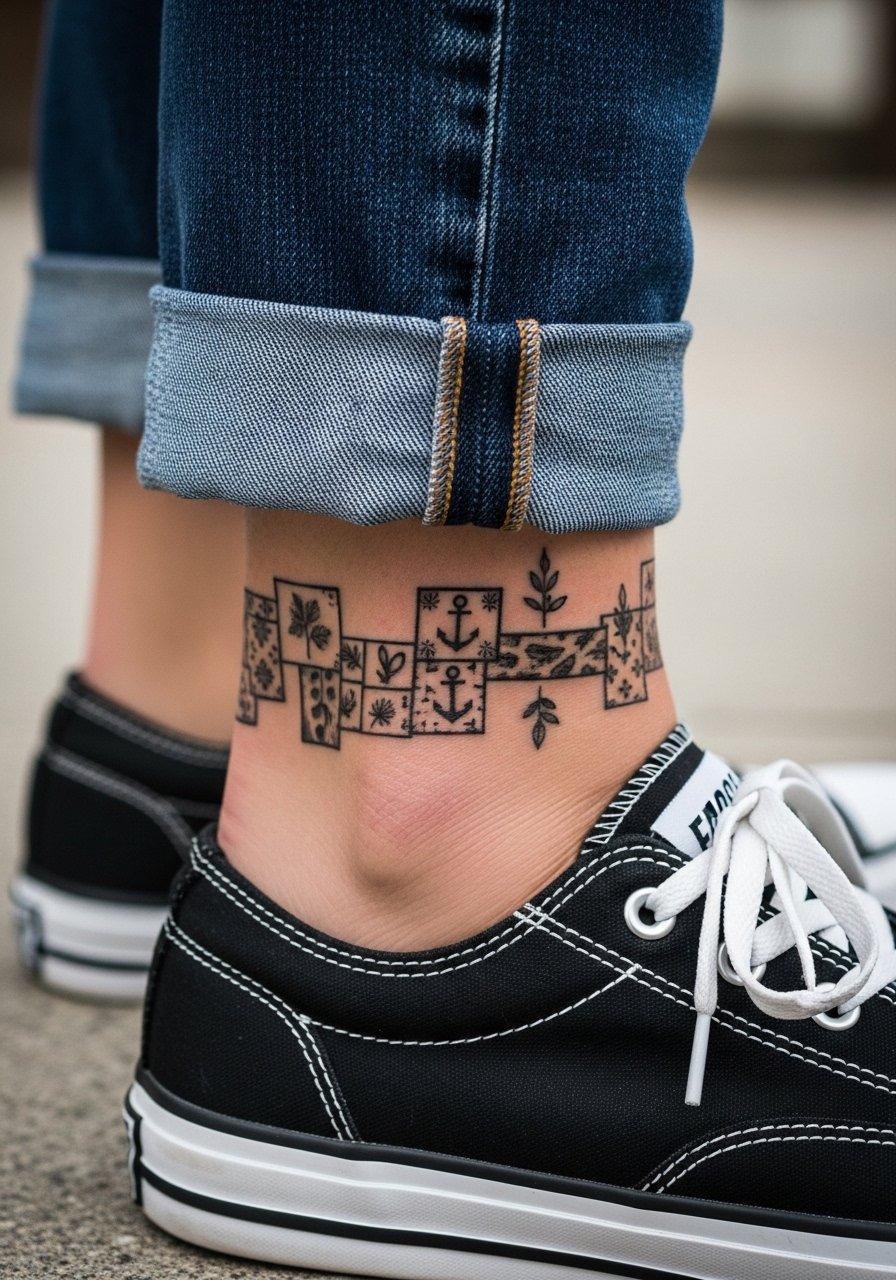
A collage allows personal items to coexist without forming a single band. During consultation, prioritize which motifs are anchors and which are filler so the layout reads at a glance. The ankle will tell you which pieces need slightly heavier linework. If you wear sneakers often, note that lower lateral pieces will face more abrasion. Sessions are flexible because individual motifs can be done across multiple short sittings.
16. Tiny Abstract Brushstrokes in Patchwork with Summer Shoe Tips
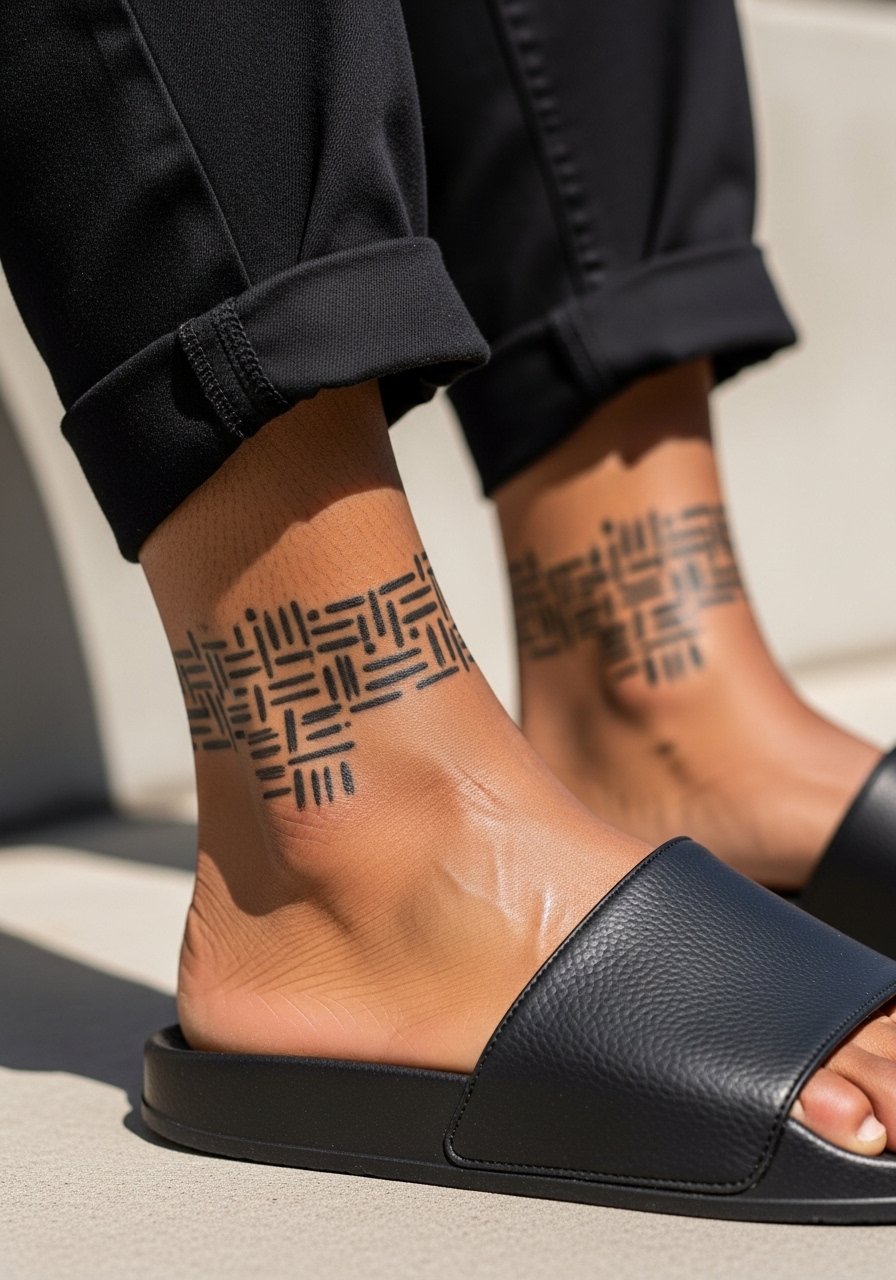
Abstract brushstrokes play well as patchwork because they are forgiving as lines blur slightly. Tell your artist you want deliberate, varied stroke widths and some strokes to overlap negative space. For summer wear, slides or slide sandals keep rubbing to a minimum while showing off the strokes. The main risk with ankle brushstrokes is asking for too many overlapping hairline strokes which can merge into indistinct marks after a year or two.
17. Patchwork Charms and Tiny Symbols for a Travel-Worn Look
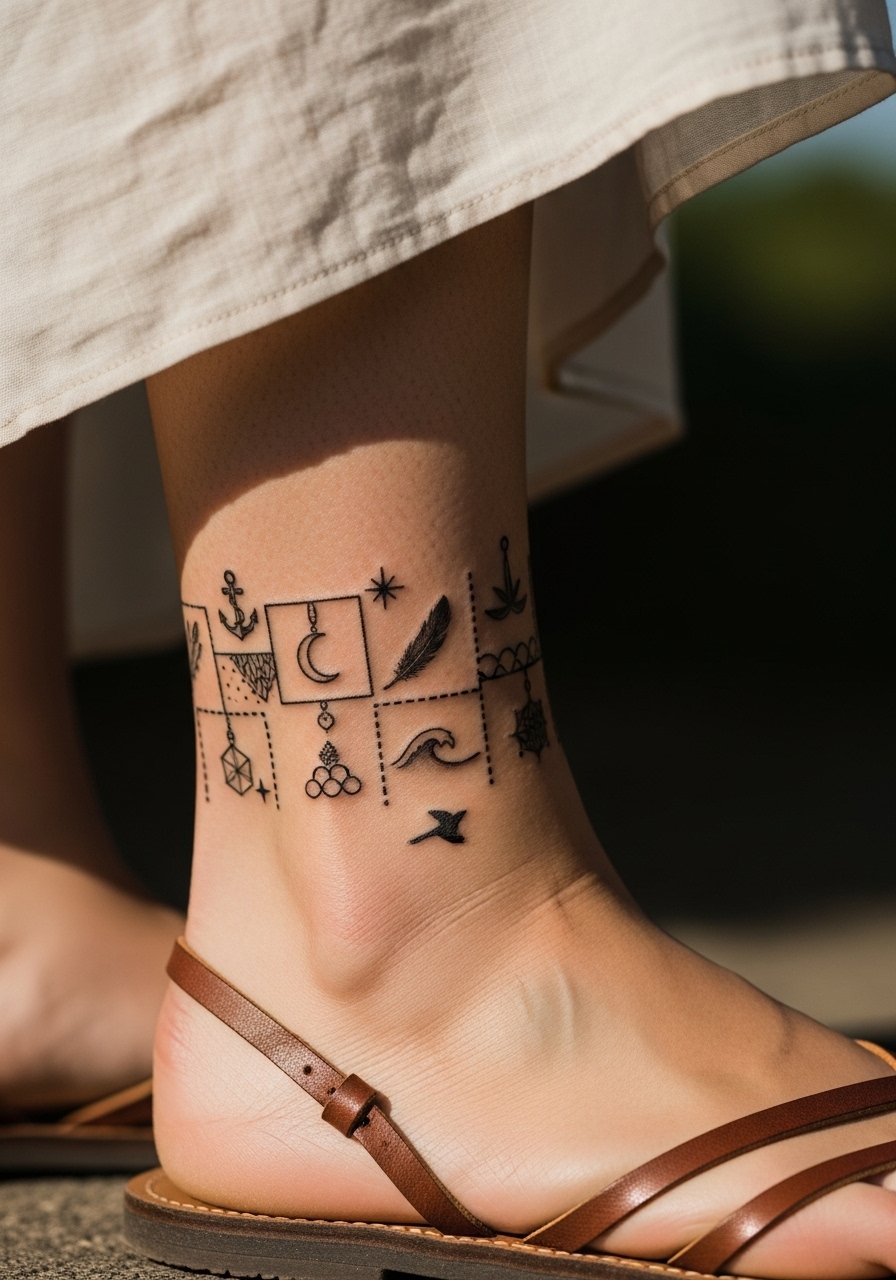
Charm-style patches feel like a curated travel bracelet on the ankle. During consults I advise clients to pick 3 to 5 narrative pieces first and let the artist add filler motifs. The ankle is a high-movement, high-friction spot. One camp argues tiny charms hardly last in that zone. The other camp says with smart spacing and bolder anchors they do. Choose your side based on how often you wear shoes that press on the ankle and ask for a realistic mockup on your skin.
Frequently Asked Questions
Q: How much will an ankle patchwork hurt compared with a forearm piece?
A: The ankle usually rates higher on most pain scales because of thin skin and bone proximity. Forearms have more padding and often feel easier during longer sessions. Plan for shorter sittings for ankle patches and bring a friend if you need moral support.
Q: Do patchwork ankle tattoos need different aftercare than other places?
A: The basics are the same, but ankles face more friction from socks and shoes. Keep shoes loose the first week, sleep with your ankle uncovered if possible, and expect to recheck areas that sit under shoe collars. The product suggestions in the Pack Smart block cover the specific concerns for ankle healing.
Q: Will fine line patchwork on the ankle blur faster than bold work?
A: Fine line tends to soften faster on high-movement, thin-skin areas like the ankle. Bold outlines and selective saturation resist visual blur longer. If you want a crisp look that lasts, ask your artist for slightly heavier anchor lines and planned negative space.
Q: How do I find an artist who handles ankle patchwork well without naming anyone?
A: Use discovery pathways like local convention guest lists, shop directories, hashtag searches that include your city and the technique, and forum threads where clients post healed photos. Look for healed portfolios showing ankle work up close and ask during consults how they manage spacing and touch-ups.
Q: When should I plan a touch-up for ankle patchwork?
A: Expect to schedule a touch-up between one and three years depending on footwear, exposure, and how fine the original work was. If you wear snug shoes daily, check at one year. If your pieces are bolder and you mostly go barefoot or wear open shoes, you may push that window further out.