Sitting down for a thigh stencil is one of those loud moments that forces quick decisions. The chair, the cool wipe, the paper stencil pressed to skin, and suddenly you notice how much the placement will show through shorts or a swimsuit. Pain, longevity, and how the design moves with your leg should shape the plan before the needle. Start with one clear ask to your artist and the rest falls into place.
1. Neo-Traditional Lion Head on Outer Thigh
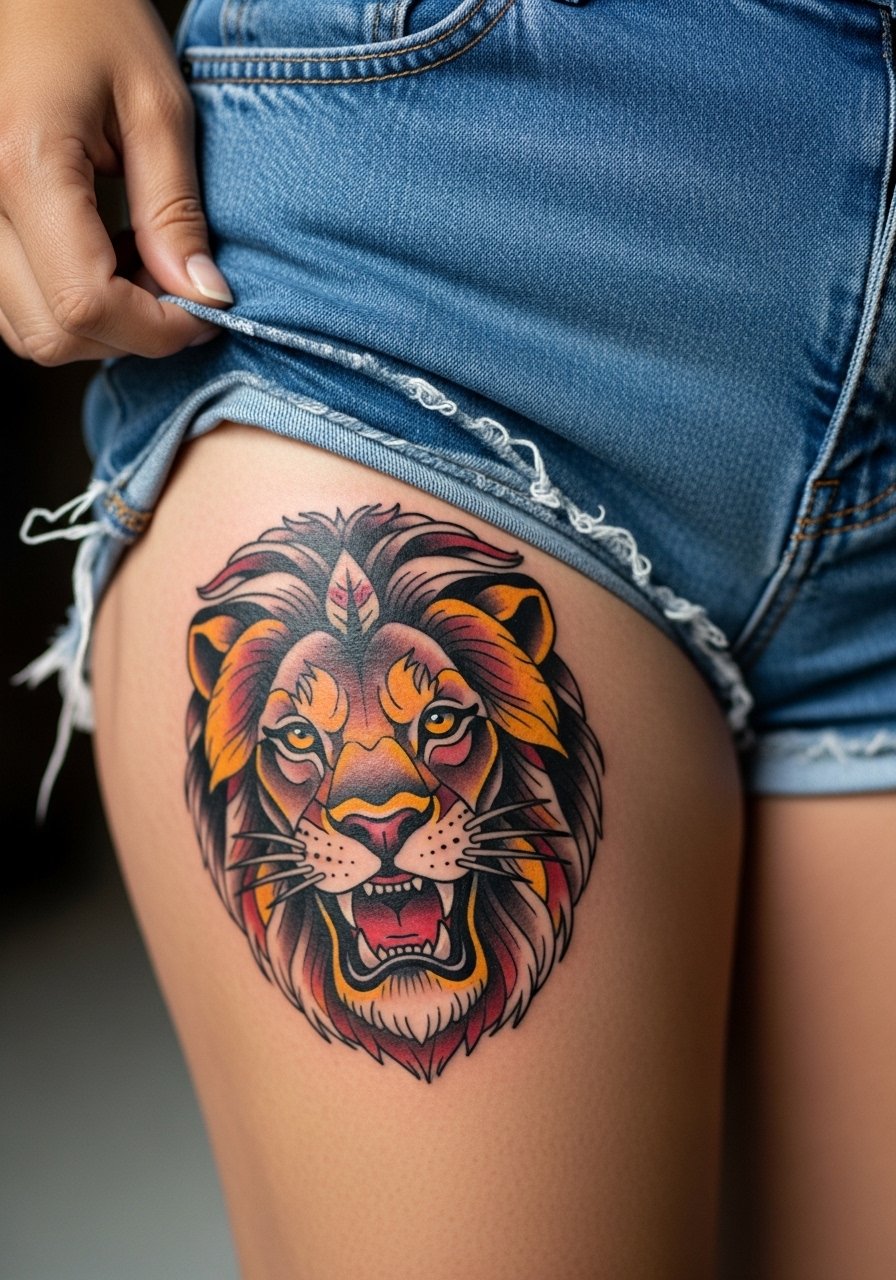
The outer thigh is ideal for a bold neo-traditional lion because the canvas lets the artist push scale and saturation. Fair warning, this placement can take longer sessions and a few breaks, so expect a mid-level pain curve and at least one multi-hour appointment. Tell your artist you want heavy linework and dense saturation rather than tiny interior detail, and ask them to map how the piece sits when you stand and walk. A common mistake is compressing too many small motifs into one head, which ages into visual clutter. For showing it off, pair the piece with high waisted denim shorts that let the outer thigh sit between cover and reveal.
2. Fine Line Botanical on Inner Thigh
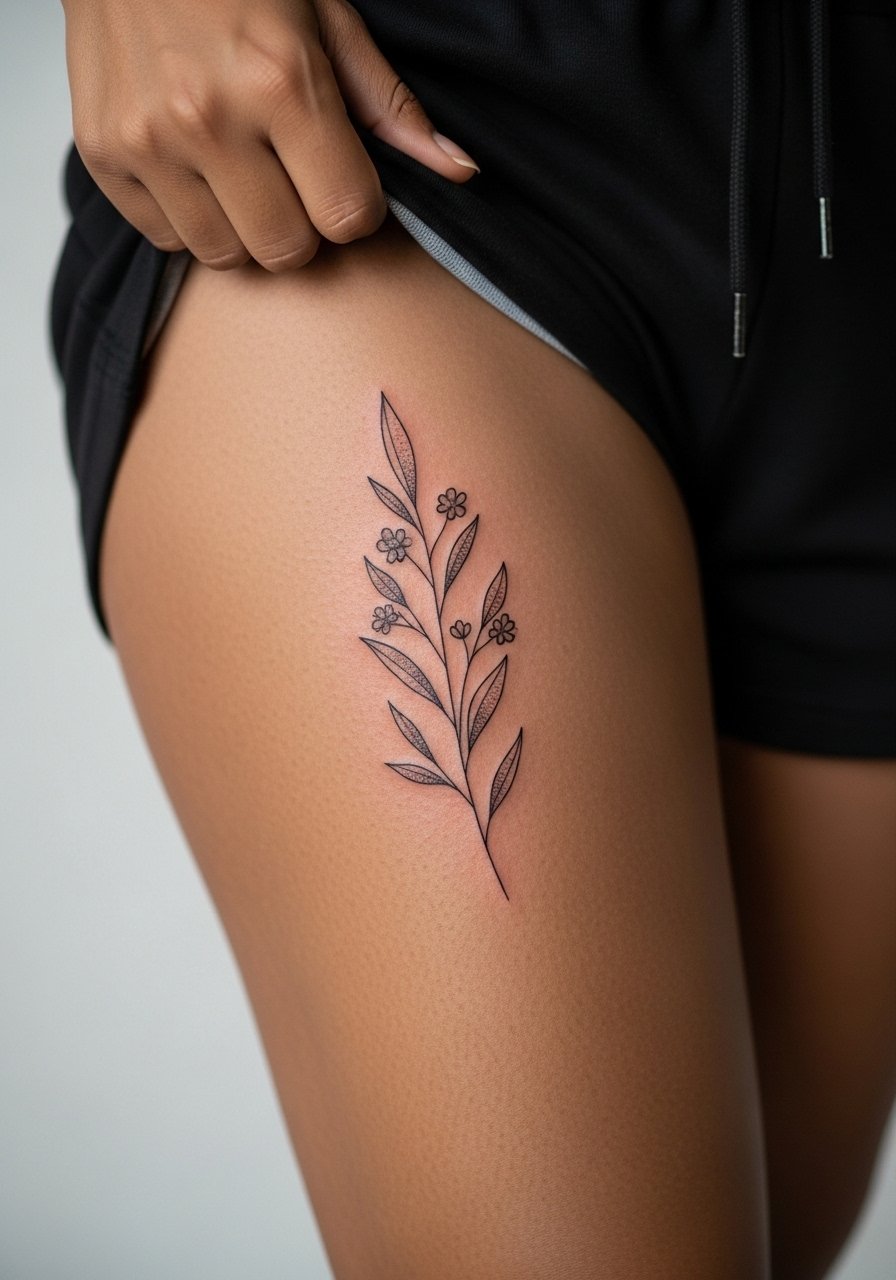
When you choose fine line for the inner thigh, have an honest talk about longevity. Artists split into two camps on this one. One group says thin lines on inner thigh blur faster because the skin is soft and subject to friction. The other group says with slightly increased line weight and spacing it can hold well for years. I advise asking for a slightly bolder outline than your Pinterest references show. During the session wear loose drawstring linen shorts so the artist can roll the leg up without pressure on the area.
3. Blackwork Tribal Band Across Upper Thigh
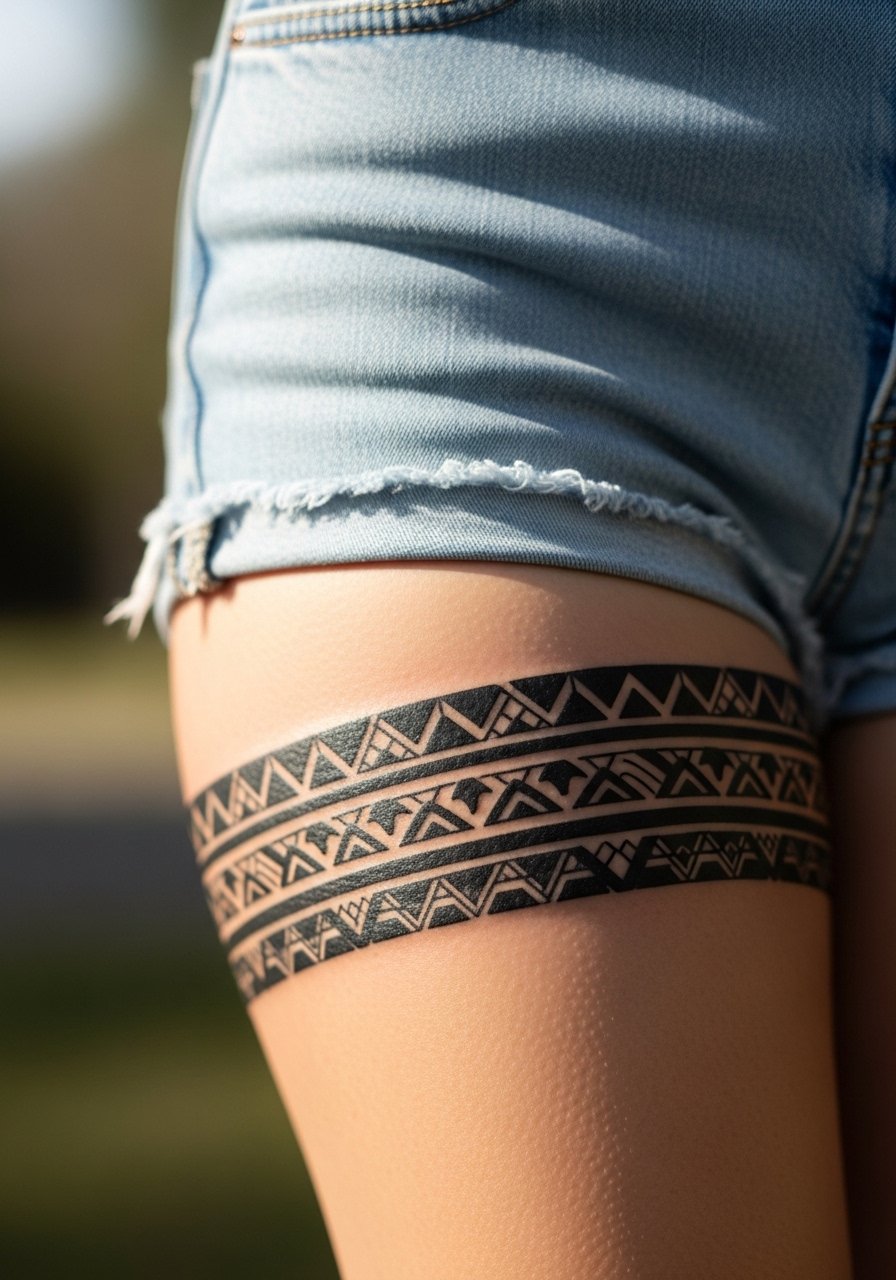
This style leans into saturation and contrast, which help it age cleaner than fussy detail. Expect a few hours of heavy shading and a firm pressure that can feel intense on the muscle under the skin. Tell the artist you want clean negative space between elements so the band reads from a distance without merging into a solid blur. A real mistake is getting the band too tight around the leg circumference, which distorts when you sit. For evenings out, balance the band with a linen button-down shirt you can half-tuck to keep focus on the thigh without overexposing.
4. Micro-Realism Portrait Mid-Thigh
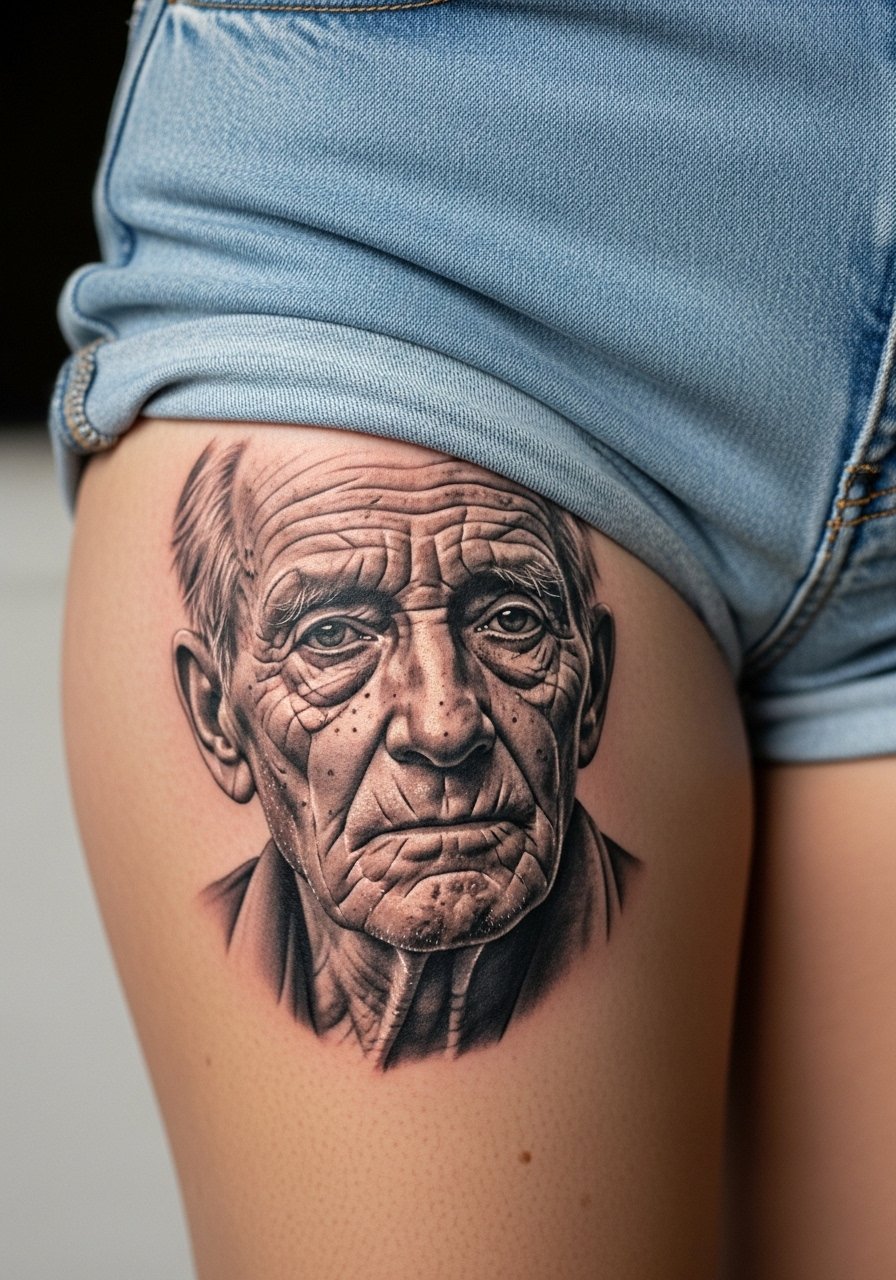
Portraits can look astonishing on the thigh because there is space for scale and subtle shading. Expect a longer session and an artist who specializes in micro-realism. In consultation bring clear reference photos of the same facial angle and lighting. A common aging issue is relying on ultra-fine dot work that fades into mush over time. Ask for slightly increased saturation in shadow areas so the midtones read after healing. Session comfort improves if you wear loose drawstring shorts that let the artist access the front and sides without you feeling pinned.
5. Japanese-Inspired Koi Flowing Down Thigh
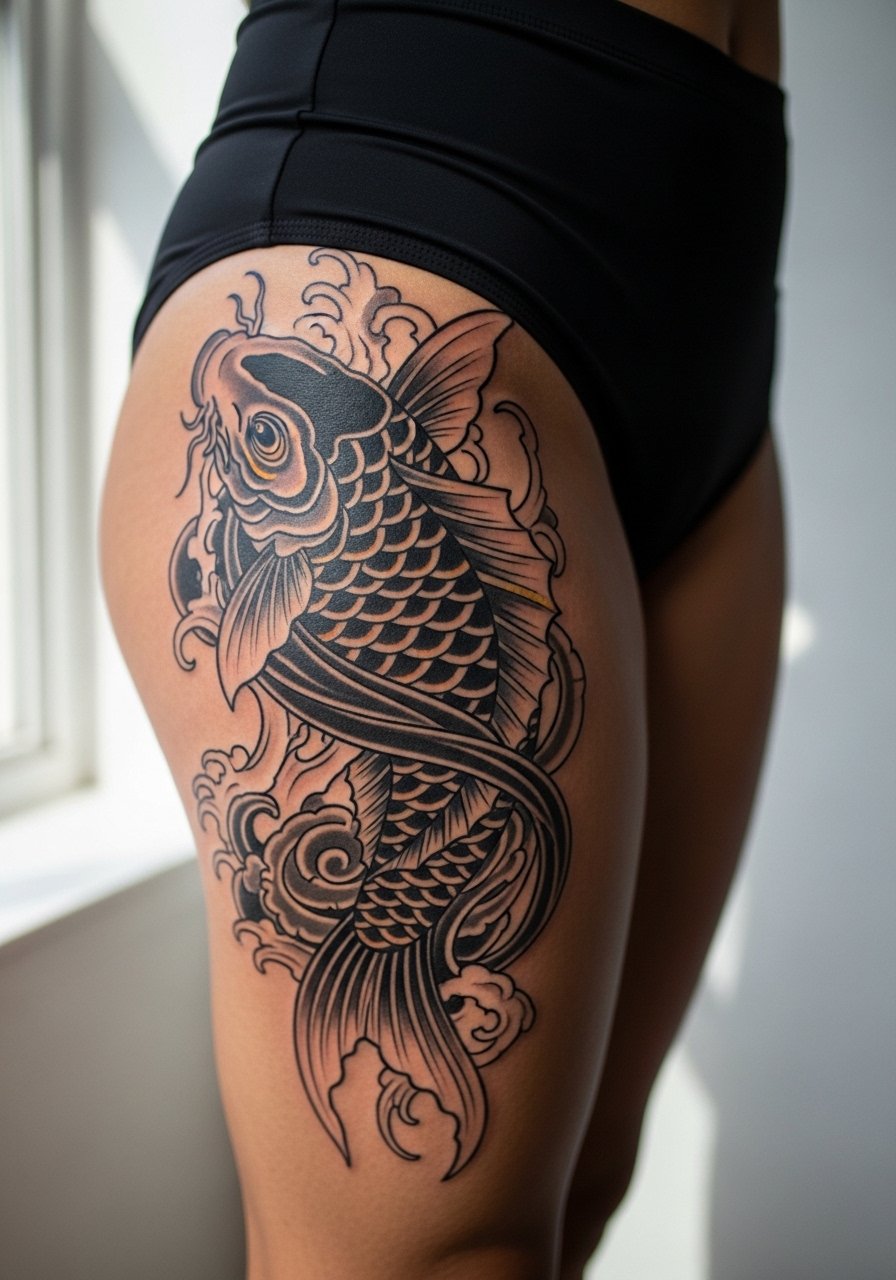
This is a classic scale play that reads well as a narrative down the leg. There is cultural origin to respect with Irezumi motifs, so consider a variation rather than a direct cultural replica. Tell your artist the direction you want the flow to take when you walk and when you sit. The main mistake is penciling the pattern too small, which loses the koi's motion when healed. Expect heavy saturation sessions and a touch-up at year two for color refresh. For beach months pick a high cut swimsuit bottom that frames the artwork without crowding the composition.
6. Geometric Mandala Panel on Upper Inner Thigh
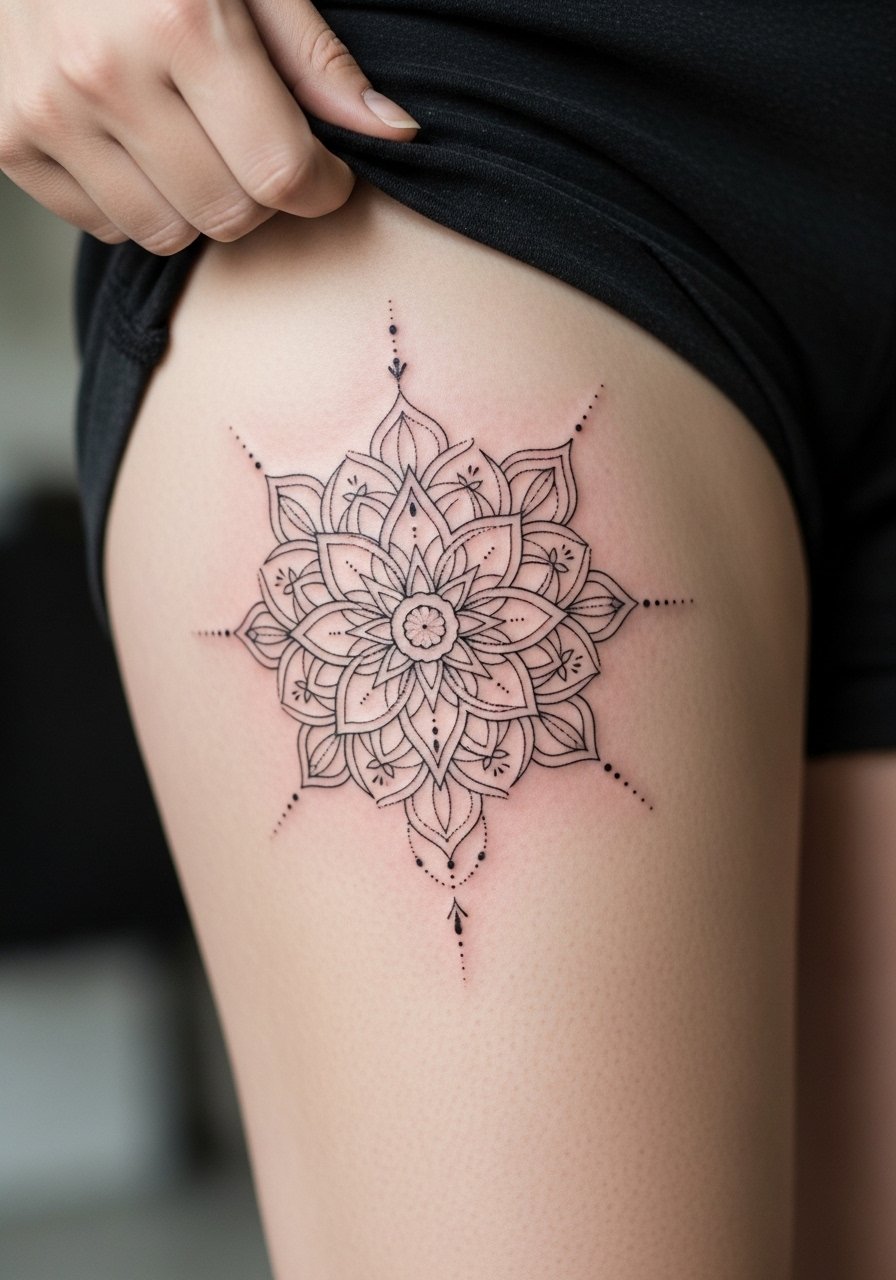
The inner-thigh mandala is a striking choice if you want a piece that sits both private and deliberate. This placement risks blowout if the dots and lines are too tight, so request negative spacing and controlled needle depth. Artists are split on whether dense dot work holds here. One camp warns about skin elasticity and friction. The other points to technique and depth control as solutions. If you plan to show it, a high waisted skirt or shorts with a side slit keeps the circle visible at the right moments.
Studio Day Picks
The first six thigh pieces above range from large saturated work to delicate line panels, and they need different prep and session day items.
-
Stencil transfer paper kit. Lets you preview placement and symmetry on the thigh before the artist commits ink, which matters for flowing designs and mandalas.
-
Topical numbing cream. Applied per directions before long thigh sessions can ease sensitivity during heavy shading blocks without altering artist technique.
-
Thin protective film roll. Useful for covering upper thigh work during the first few days when fabric rub can irritate fresh lines.
-
Fragrance-free gentle body wash. A mild cleanser keeps the thigh area clean without stripping initial moisture from delicate line areas.
-
Aquaphor healing ointment. A thin layer in the first 48 hours helps maintain hydration for detailed pieces while avoiding heavy buildup.
7. Stipple-Shaded Peony That Wraps the Thigh
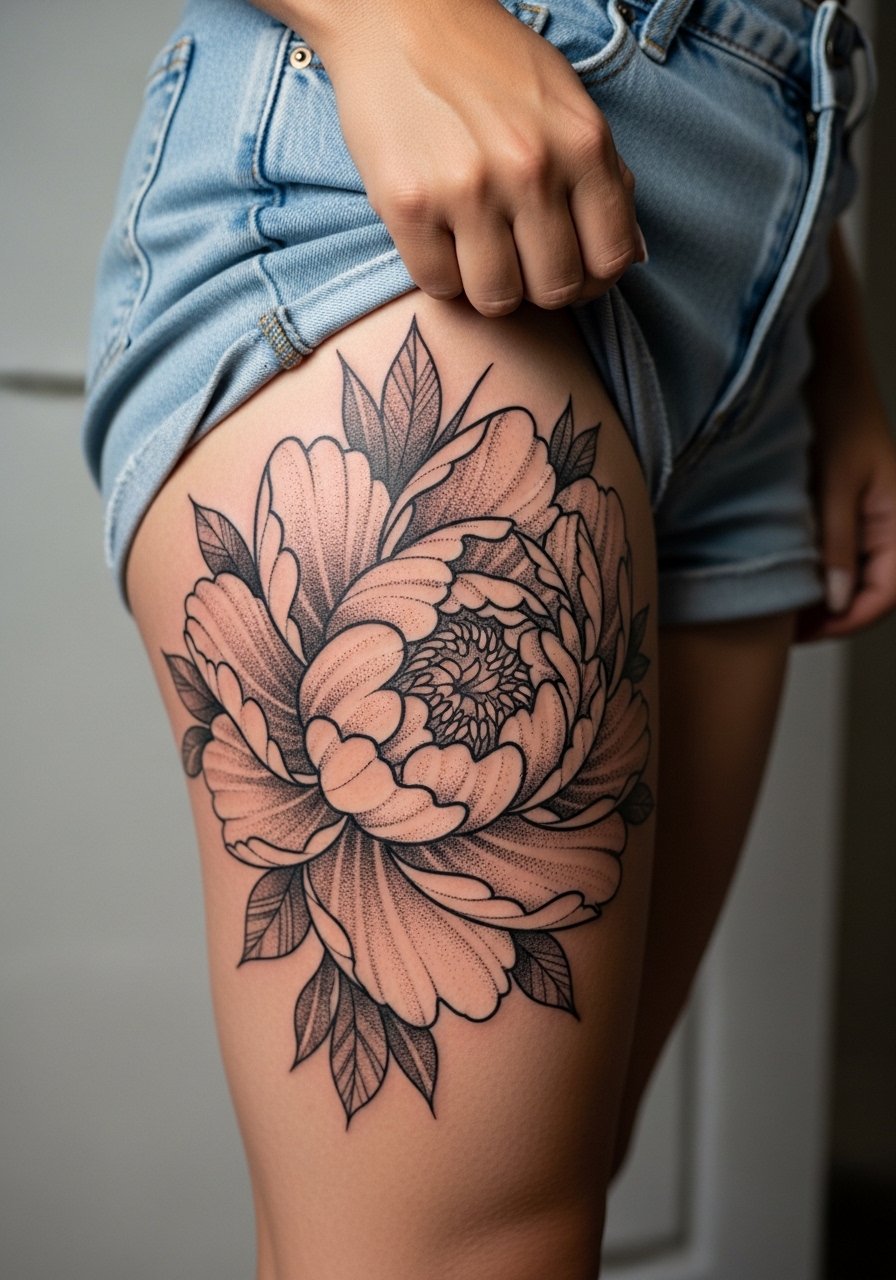
There's a reason floral pieces age well on the thigh. The large surface hides small shifts in saturation and the muscle movement creates gentle visual life. For stipple shading ask your artist to keep dots looser in shadow areas to avoid merging. The session often alternates between long stretches of dot work and brief breaks, so bring a playlist and stay hydrated. A mistake I see is insisting on too many tiny petals packed tightly. If you want to show it, pair a loose linen mini skirt that reveals the wrap without overstating it.
8. Minimalist Single-Line Mountain Range
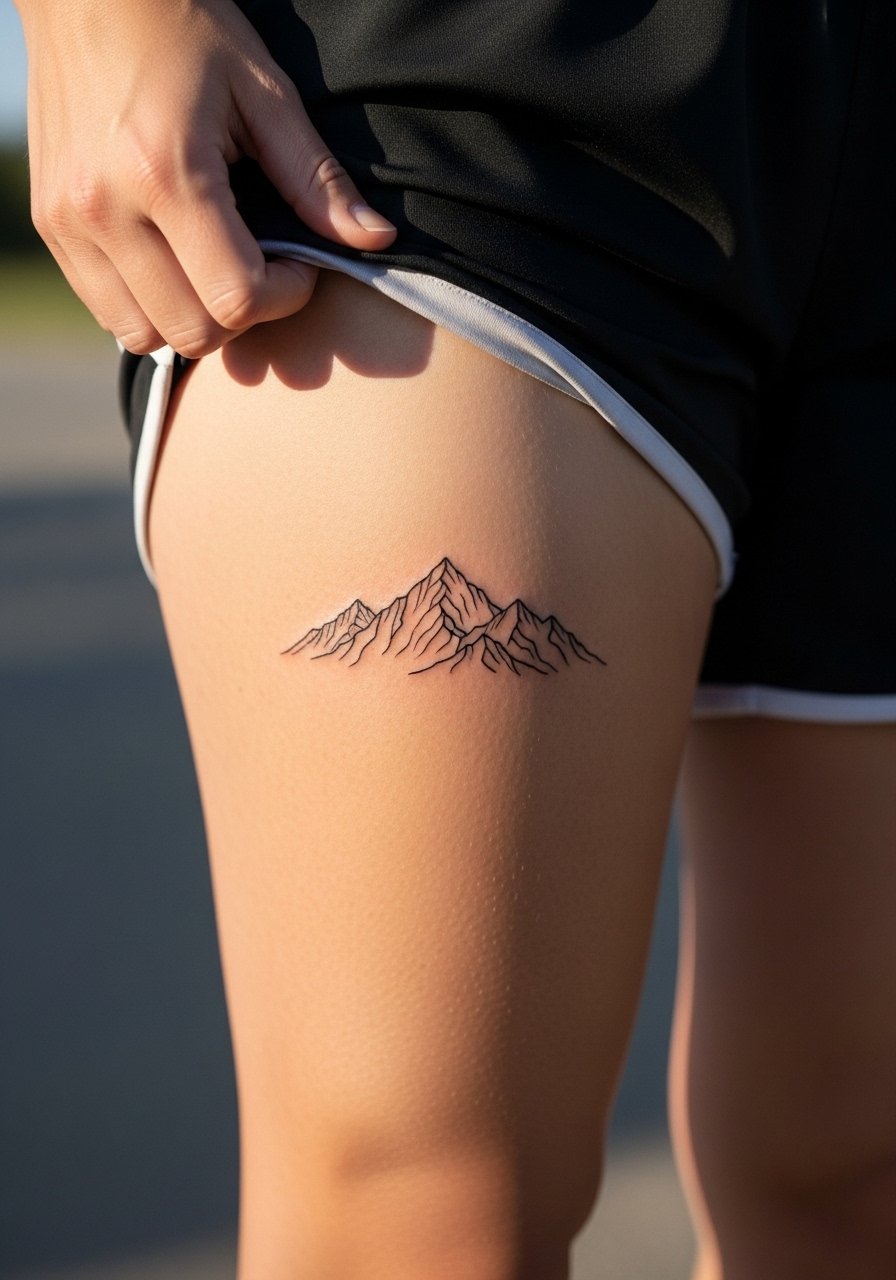
Minimal often reads as deliberate on the thigh because of scale. The key consultation point is size. Too small and the single line risks looking like a scratch in months. Ask for a slightly thicker single pass and a clear plan for spacing. Pain is manageable here but the artist will warn about movement and stretching during placement. The common mistake is copying an Instagram snap without scaling it to the canvas. For sessions wear athletic shorts you can easily shift to give the artist access without cooling down too much.
9. Watercolor Splash Peony Along Outer Thigh
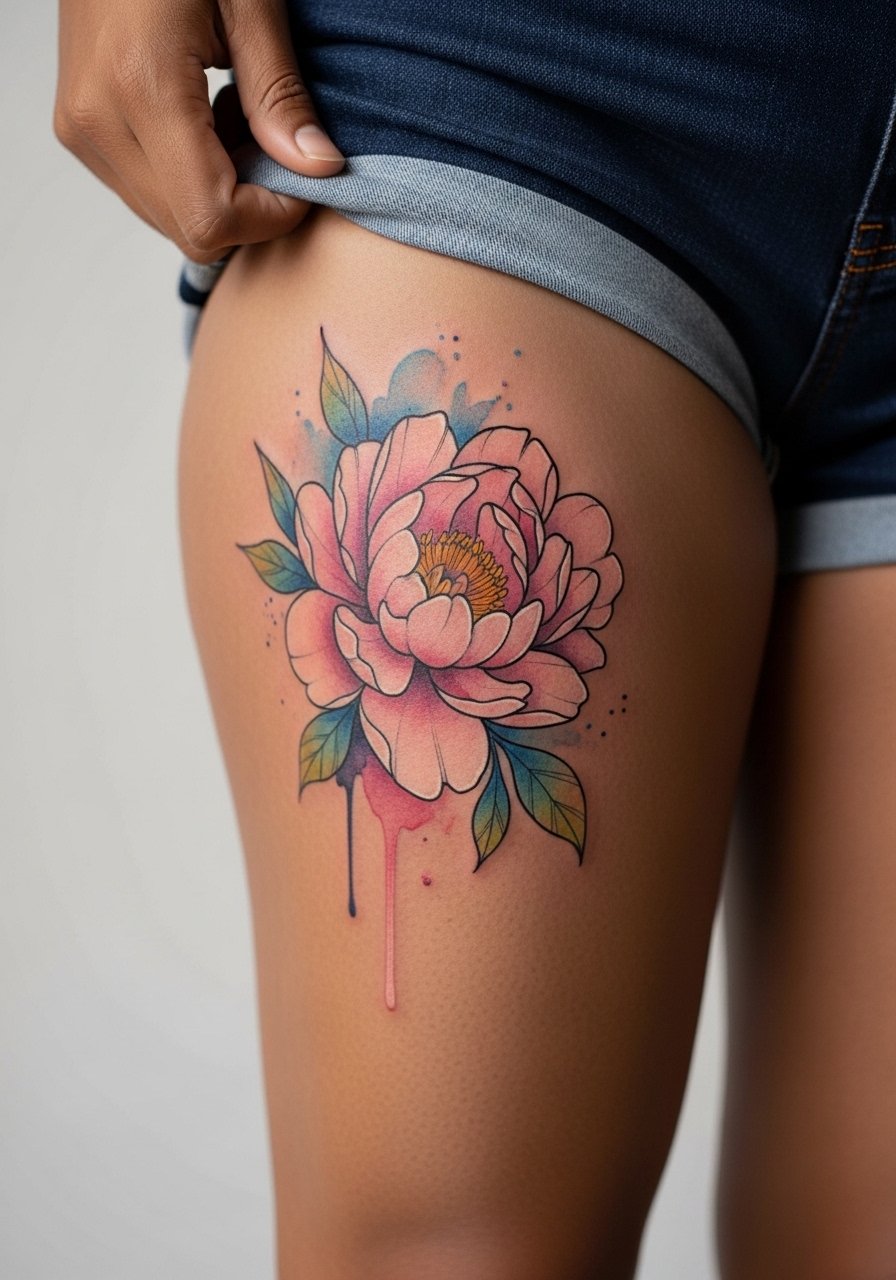
Watercolor techniques can be gorgeous on a large thigh canvas but they come with longevity trade-offs. The colors that sing fresh may need touch-ups at year two for vibrancy. Tell your artist you want color anchors in the midtones so the piece keeps structure as the washes soften. A frequent misstep is using too subtle a palette on darker skin, which can disappear. For warm-weather showing, a bandeau top or high waisted shorts look frames the art without competing.
10. Bold Script Quote Along the Thigh Line
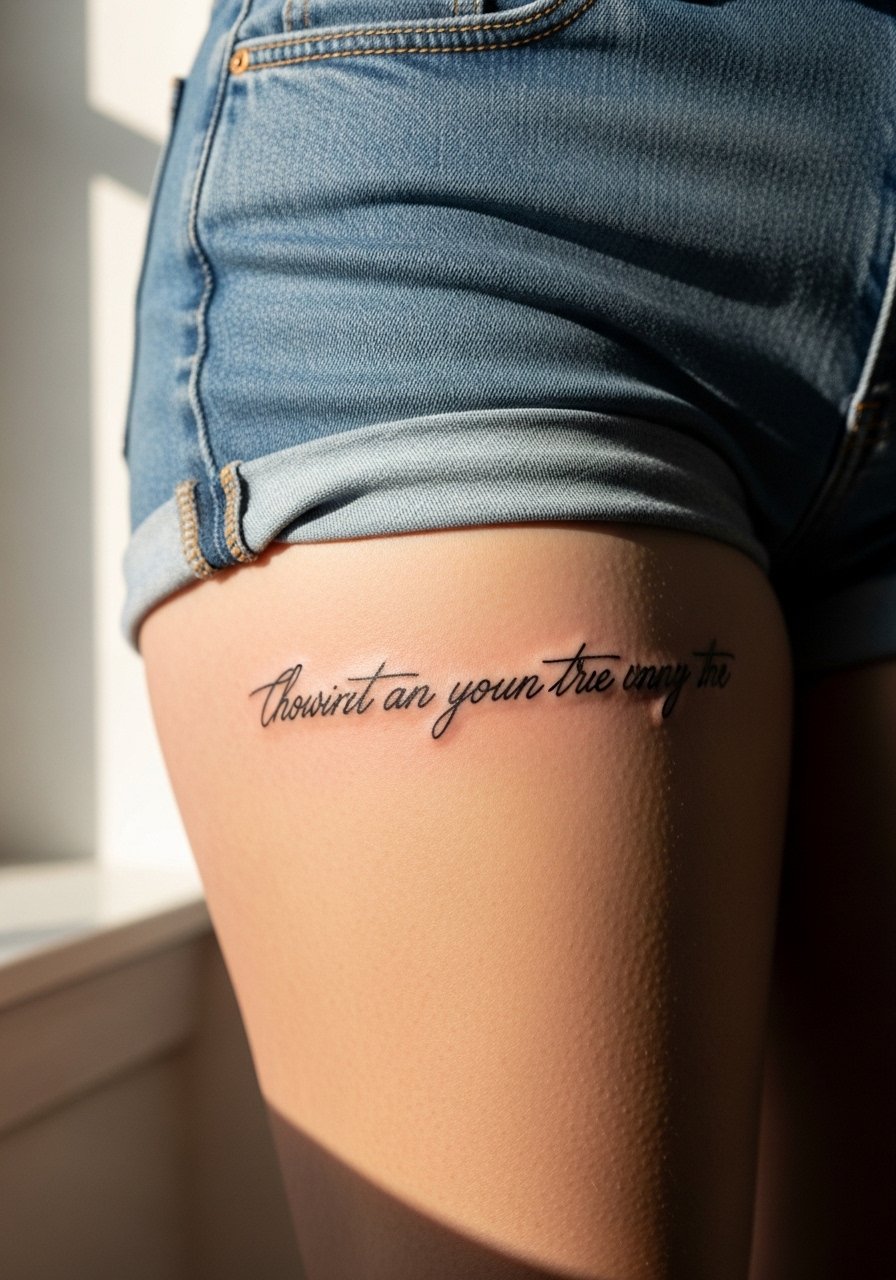
Text on the thigh reads beautifully when planned around movement. Have the exact wording ready and specify font weight. Image generators sometimes mangle text so give the artist typed text in the consultation. The common mistake is choosing ultra-fine cursive that the skin will soften into illegibility. Ask for clear letter spacing and a plan for touch-ups if you want the quote to stay crisp after several years. For showing the line consider high waisted shorts that let the script sit just under the waistband.
11. Topographic Map Panel That Wraps the Thigh
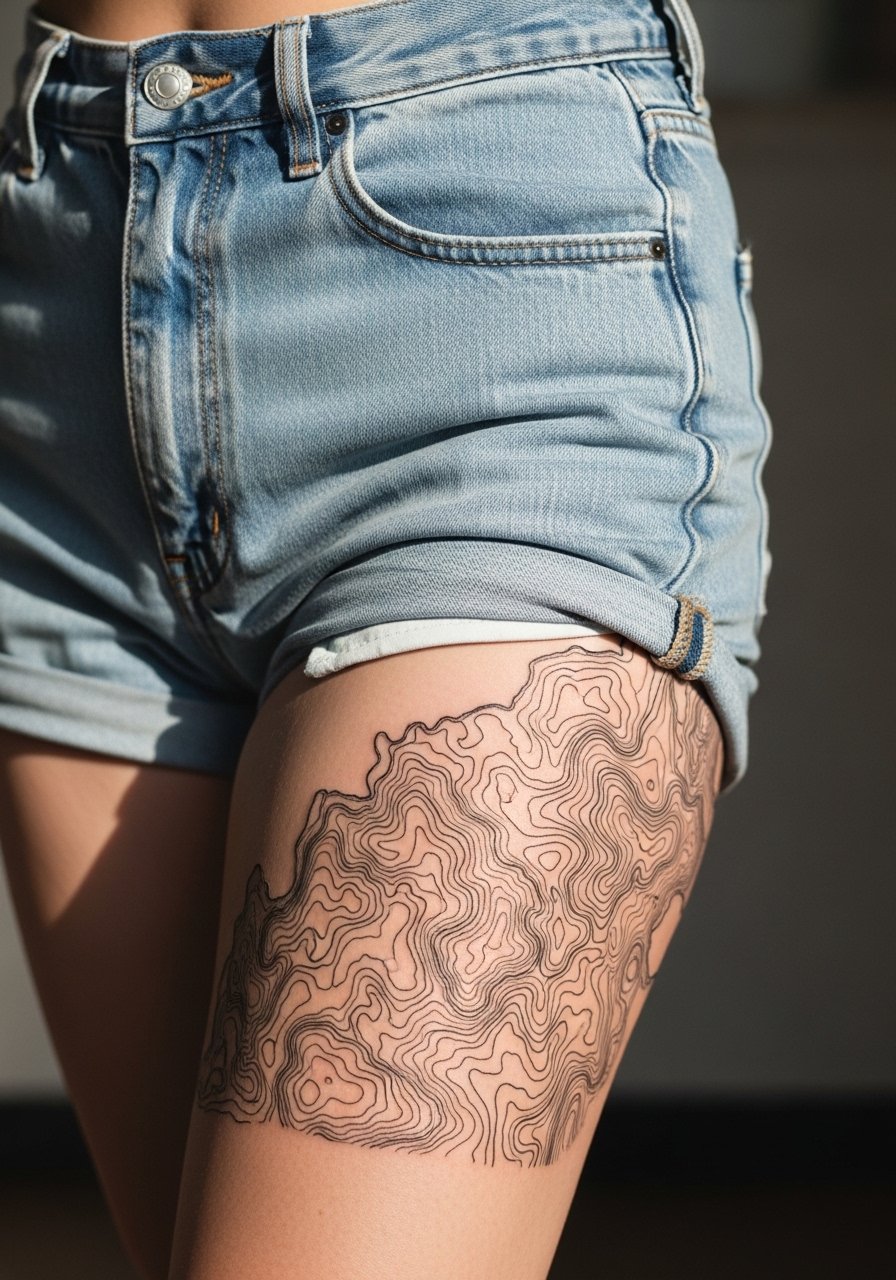
Topographic designs benefit from scale so the contour lines retain spacing as you age. The session will require precision and patience. Ask your artist to mock the wrap on a standing stencil to check how lines sit across muscle curves. A mistake is packing contour lines too close together which risks merging into gray areas later. If you travel a lot, this design pairs well with high waisted cargo shorts that let you choose when the map shows.
12. Stained-Glass Panel With Bold Outlines
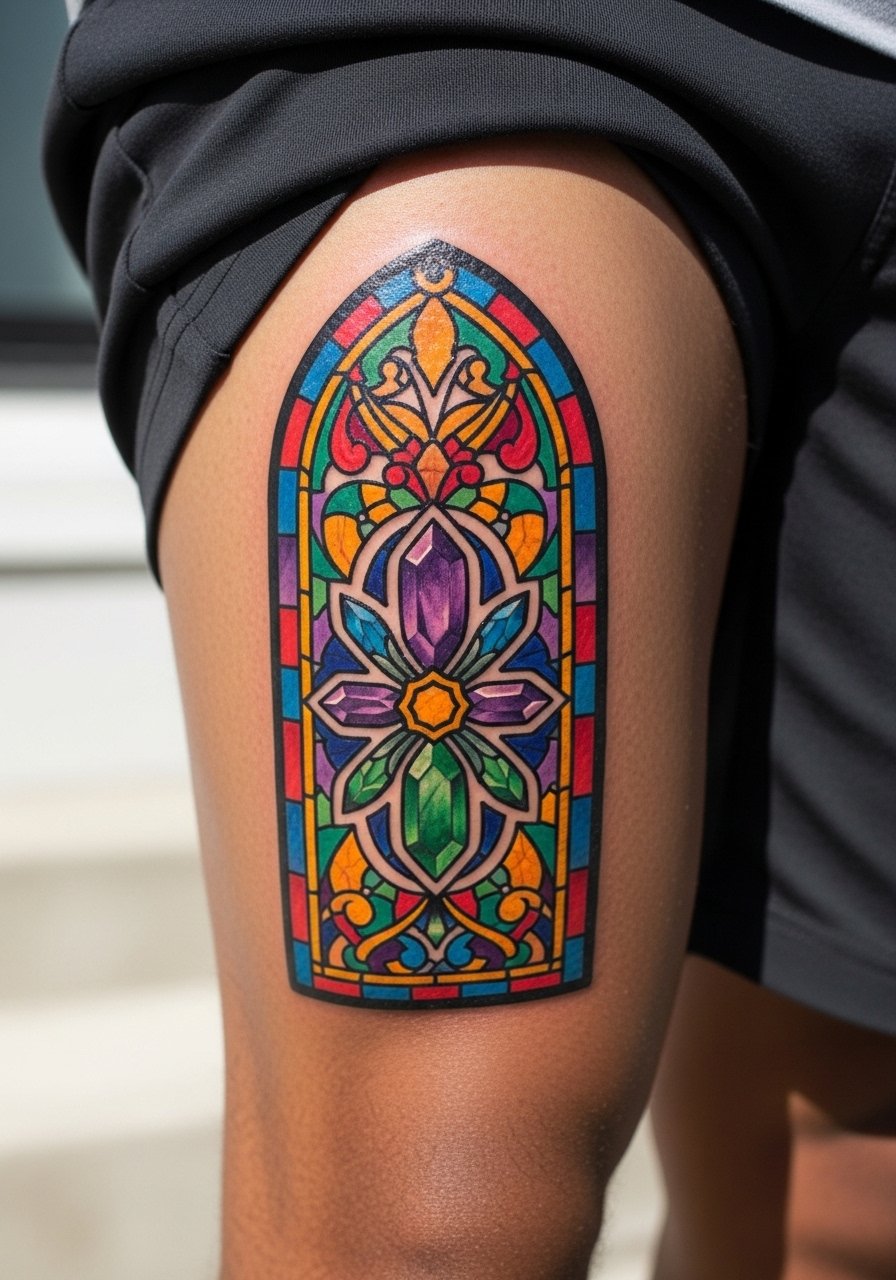
A stained-glass piece uses heavy outlines to protect color blocks from bleeding. That makes it a smart choice for long-term clarity. Tell the artist you want crisp lead lines and slightly denser saturation at the edges to prevent feathering. The session can be moderately painful in color-saturated zones, so break the work up if needed. The typical error is choosing too many tiny color panes. For nights out try a slit midi skirt that shows a panel without demanding full exposure.
13. Biomechanical Strip Running Down the Thigh
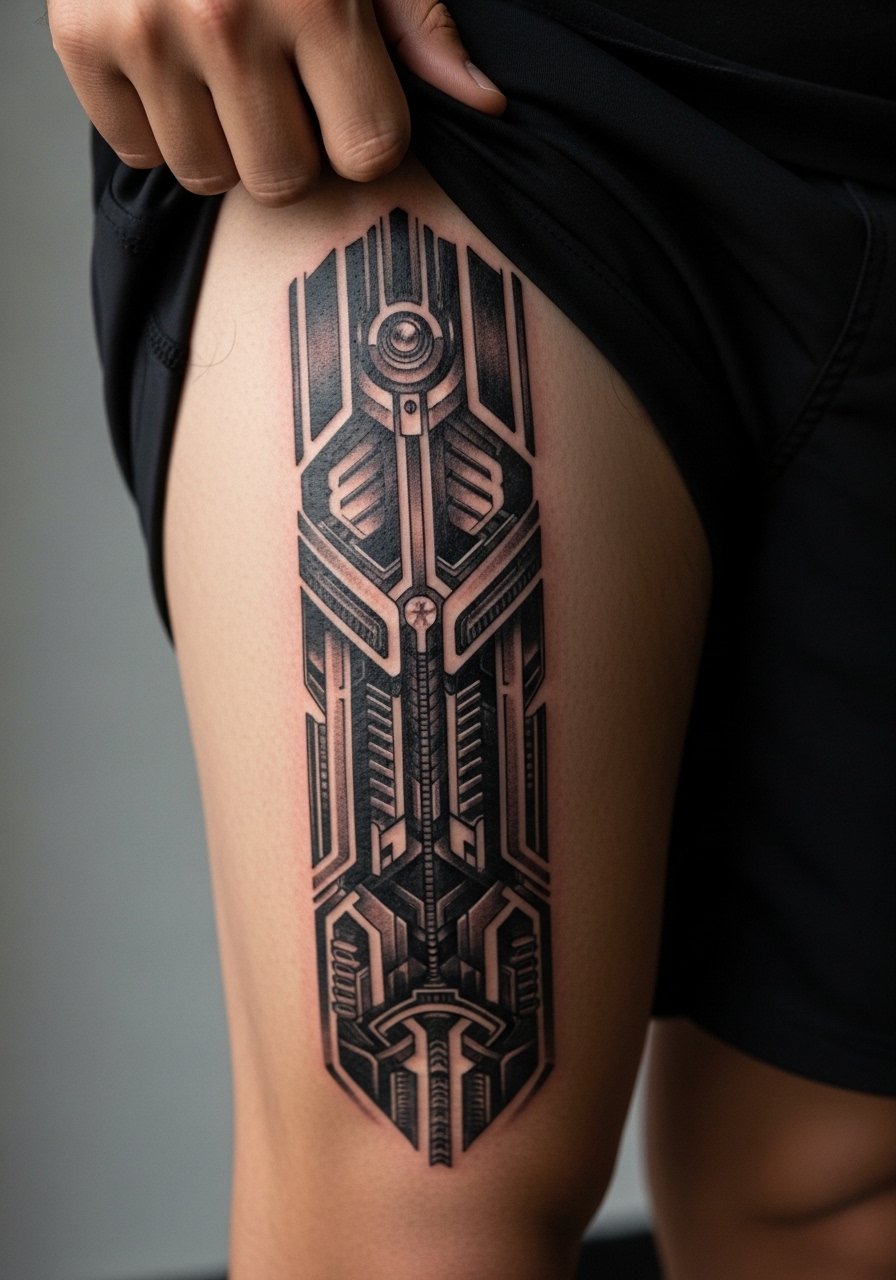
This motif reads as kinetic because of the layered elements. Expect deeper blacks and heavier sessions. During consultation discuss how the piece bends when you sit, because joints and muscle contracting will change the look. A common mistake is placing intense small detail over soft flesh where blowout is likelier. For the session wear breathable drawstring shorts so pressure from clothing does not irritate freshly inked areas.
14. Chain-Link Geometry Across the Thigh
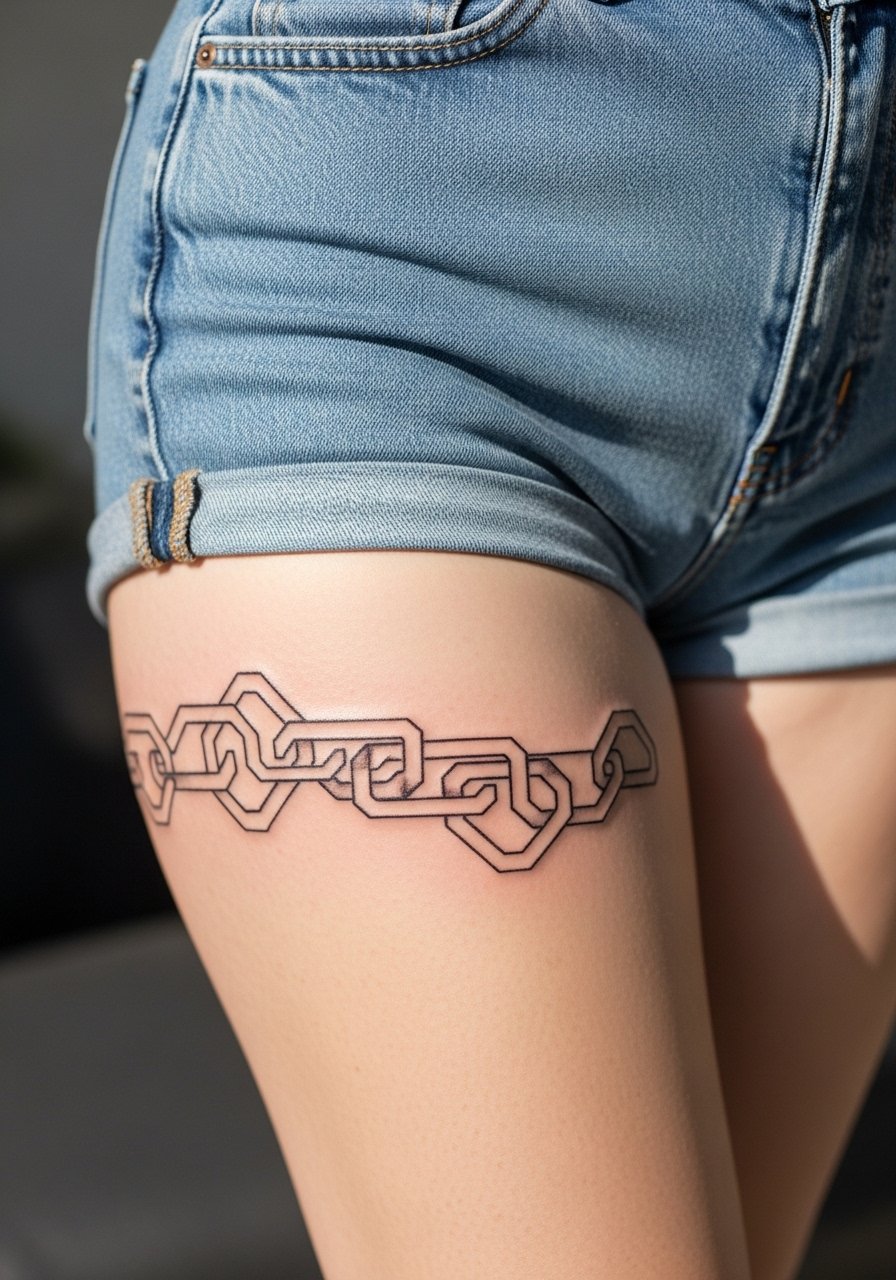
Geometric chains look sharp at scale but need exact spacing. The pain is steady but tolerable. Ask your artist to size the repeat pattern for your thigh circumference so joins do not distort. The usual mistake is expecting tiny repeats to hold up; they blur into density. For casual wear a plain white tee and shorts keeps attention on the pattern without crowding the visual.
15. Celtic Knot Panel Near the Hip
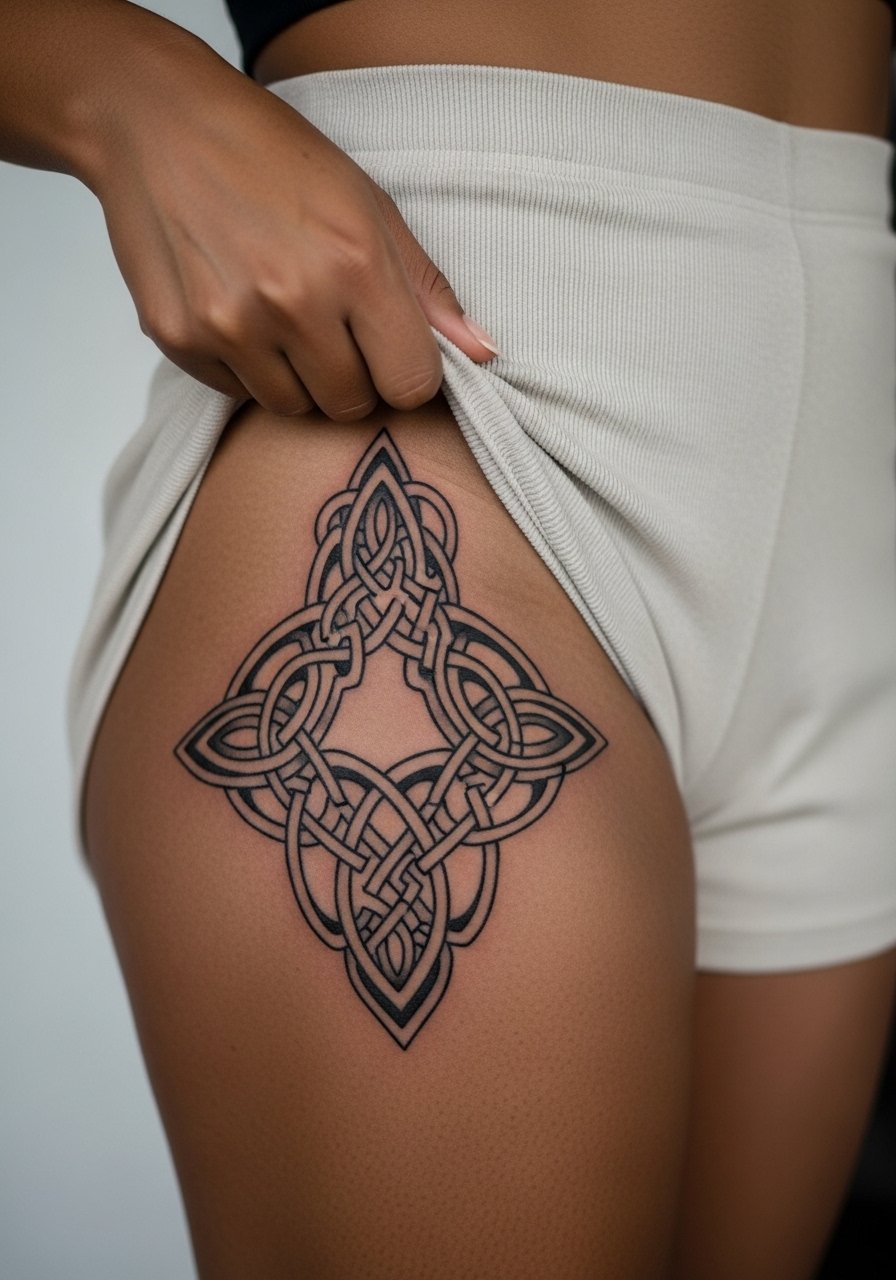
Celtic forms come from a cultural tradition, so many people prefer a personalized take rather than a direct historic copy. The knotwork needs breathing room to prevent lines from merging. Pain-wise the hip edge can be sharp where bone meets tissue. Tell the artist you want distinct joins and a clear plan for negative space. A common mistake is compressing the knot into a small area which makes the pattern unreadable after a few years. For seasonal showing try high waisted swim bottoms that sit just below the piece.
16. Animal Paw Trail That Follows the Thigh Curve
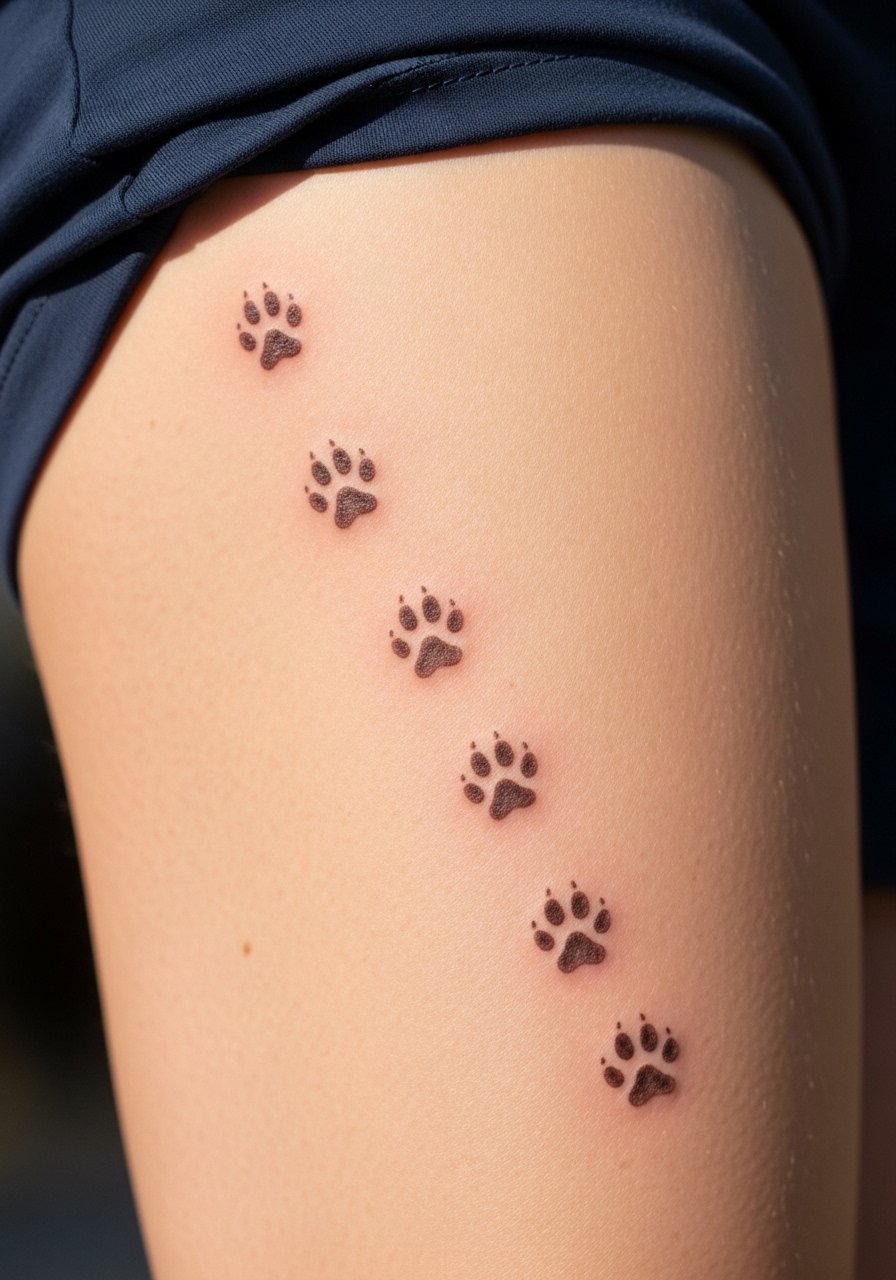
A paw trail is a subtle narrative that moves with the leg. Because it uses small elements spaced along the thigh, ask for clear spacing and heavier micro-outlines so each print remains distinct. The session is low to moderate pain but the nail in placement is checking how prints read when you change position. A common mistake is using ultra-thin outlines that fade. For everyday wear the trail works with casual rolled up jeans that hint at the sequence while keeping most coverage.
17. Traditional Dagger and Rose on Upper Thigh
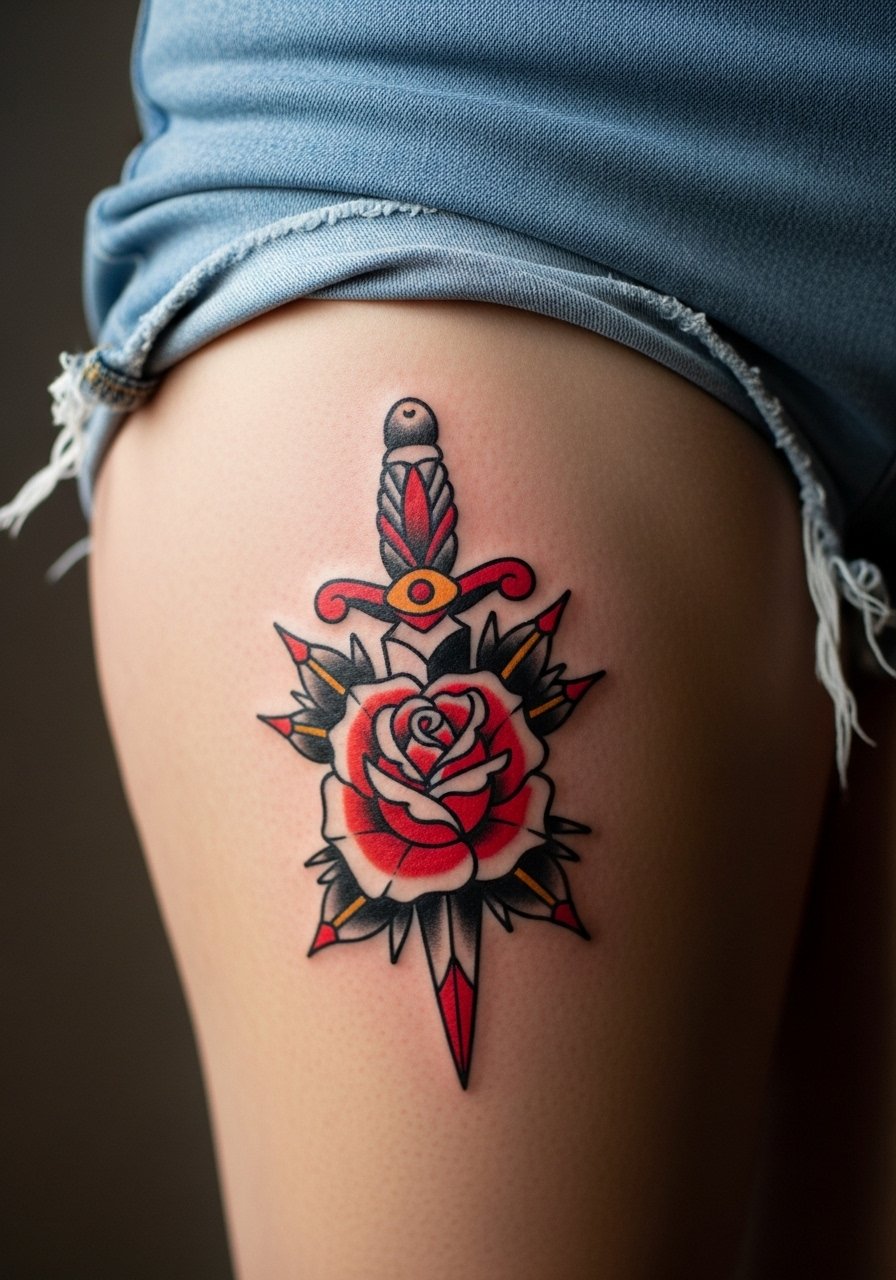
Traditional pieces age well because the bold outlines protect color. This choice is a reliable long-term play for the thigh. Expect a few hours for crisp outlines and color packing. During consult ask for a balance between the dagger scale and the rose so neither dominates on your leg. A mistake is shoehorning extra motifs around the central image which muddles the silhouette. For nights out pair with tailored shorts that show the central placement without overexposure.
18. Gothic Cathedral Silhouette Panel
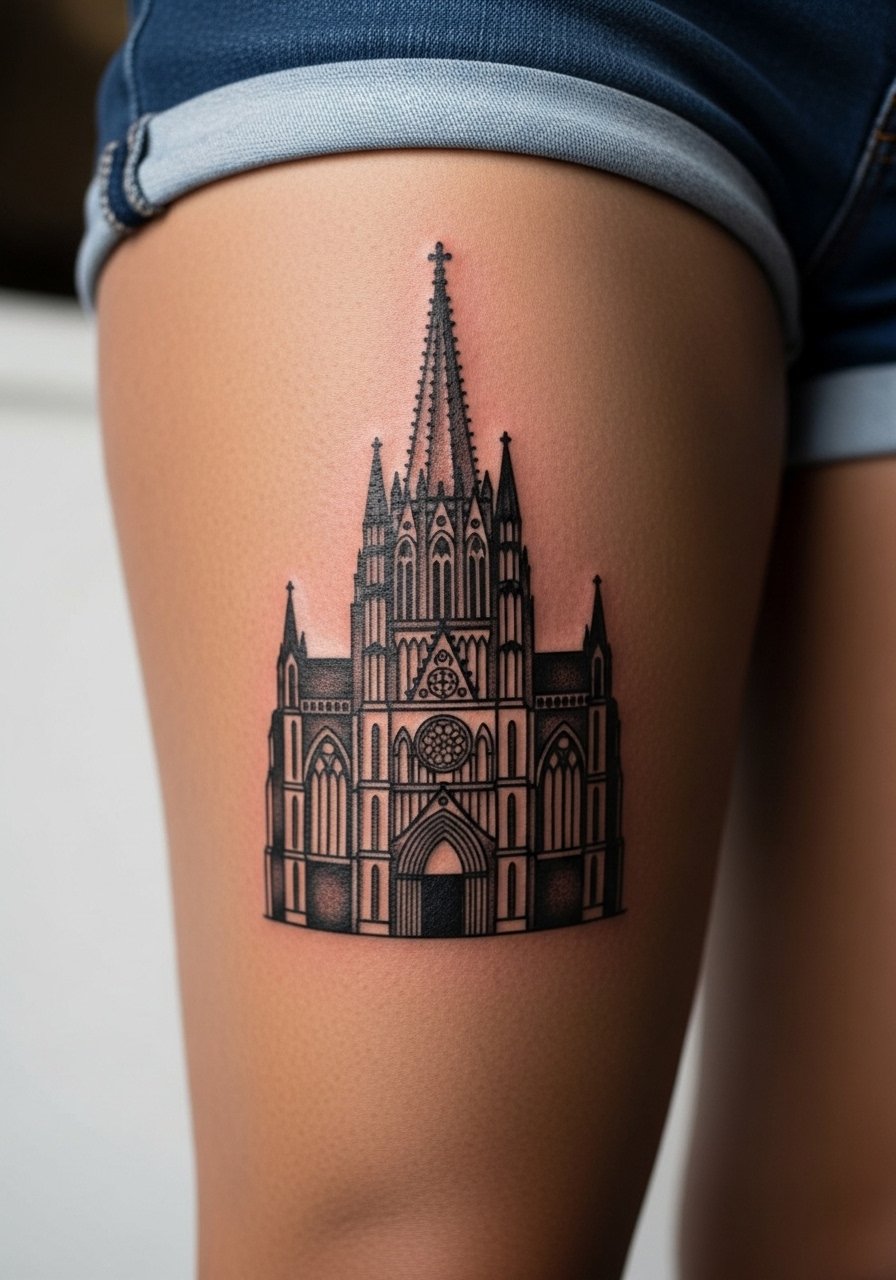
Silhouette work depends on crisp negative shapes to read as architecture. The consultation should include standing and seated mockups so spires do not collapse when you sit. The intense black areas can feel like a long press during sessions. A frequent oversight is compressing window details into thin lines that later disappear. For styling, a longline open-back top keeps torso coverage while letting the thigh panel speak.
19. Constellation with Coordinates Along the Inner Thigh
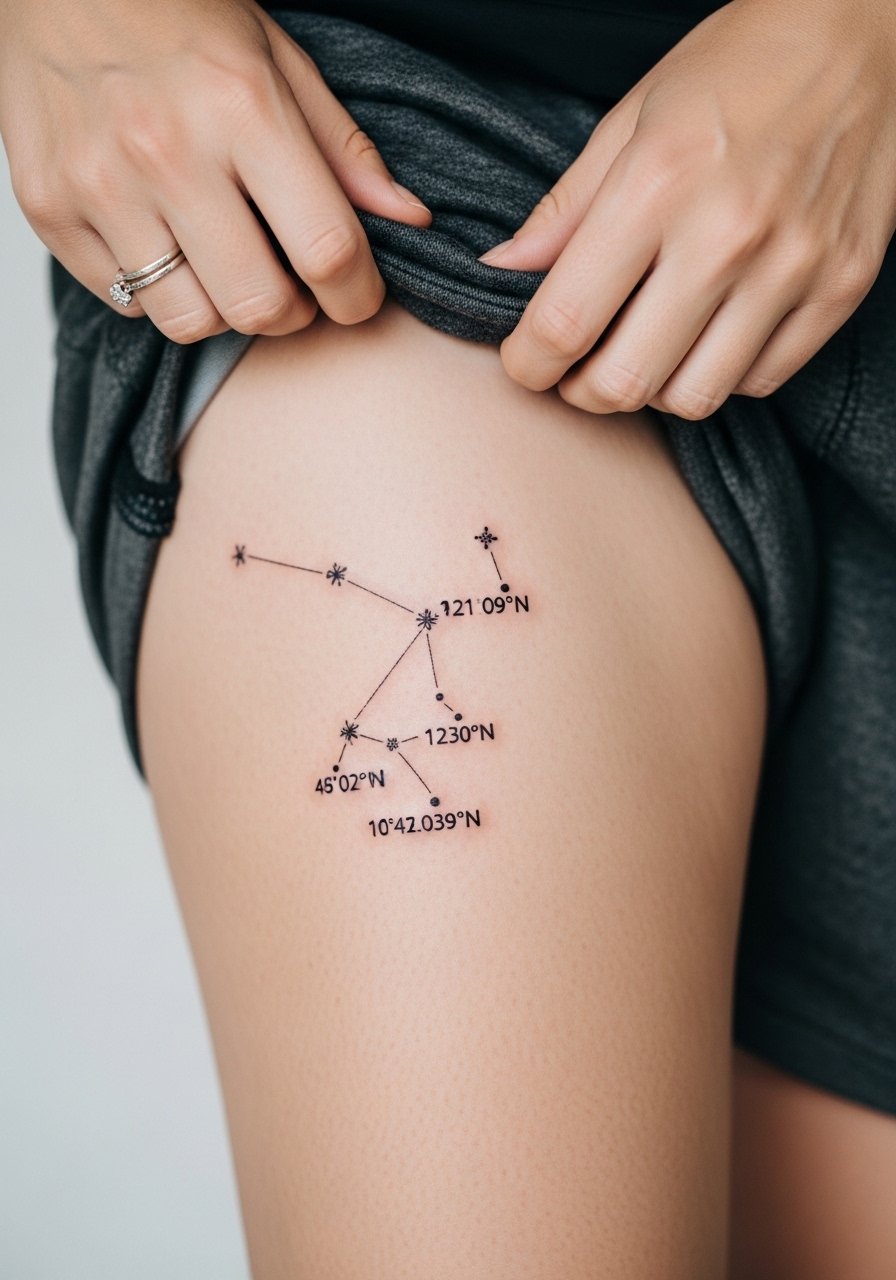
When you include text or coordinates make sure the artist ink the exact characters you want. Image generators and even rushed stencils can introduce typos. The inner-thigh placement requires care to avoid line merging from friction. Tell your artist you want clear dot spacing and slightly heavier coordinate numerals. The mistake is choosing a tiny type size that loses clarity. For session comfort wear loose boxer shorts or athletic shorts that the artist can shift without you feeling exposed.
20. Mandala Sunburst Over Upper Thigh
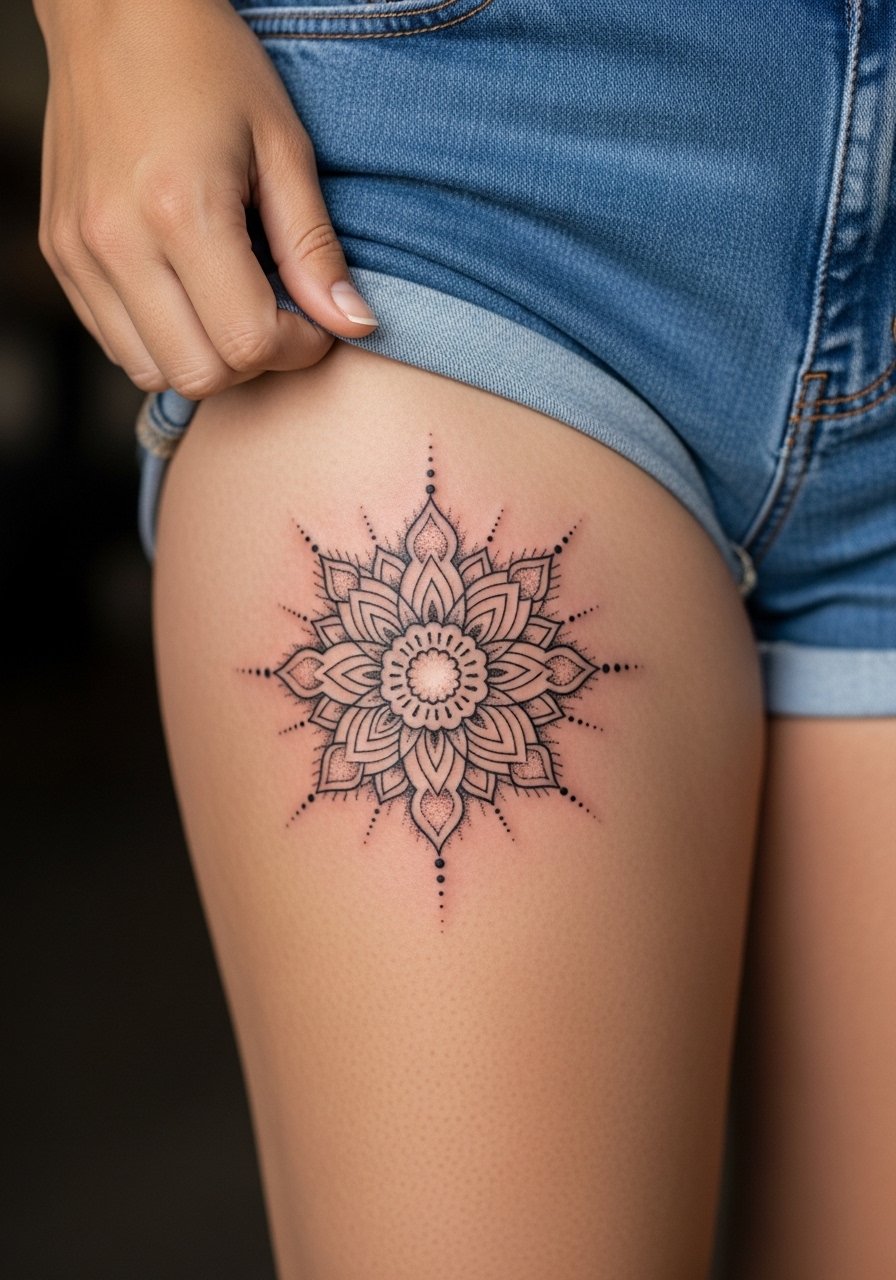
Mandala symmetry needs exact planning. If the center sits off when you stand the whole piece will read oddly. Ask your artist to place the center with you standing and seated so it remains balanced. The inner detail should have intentional spacing to avoid merging into a dense blur. A common error is compressing too much dot work into the center. For showing it in warmer months a flowy wrap skirt highlights the radial composition without demanding constant exposure.
21. Abstract Brushstroke Blackwork Across Thigh
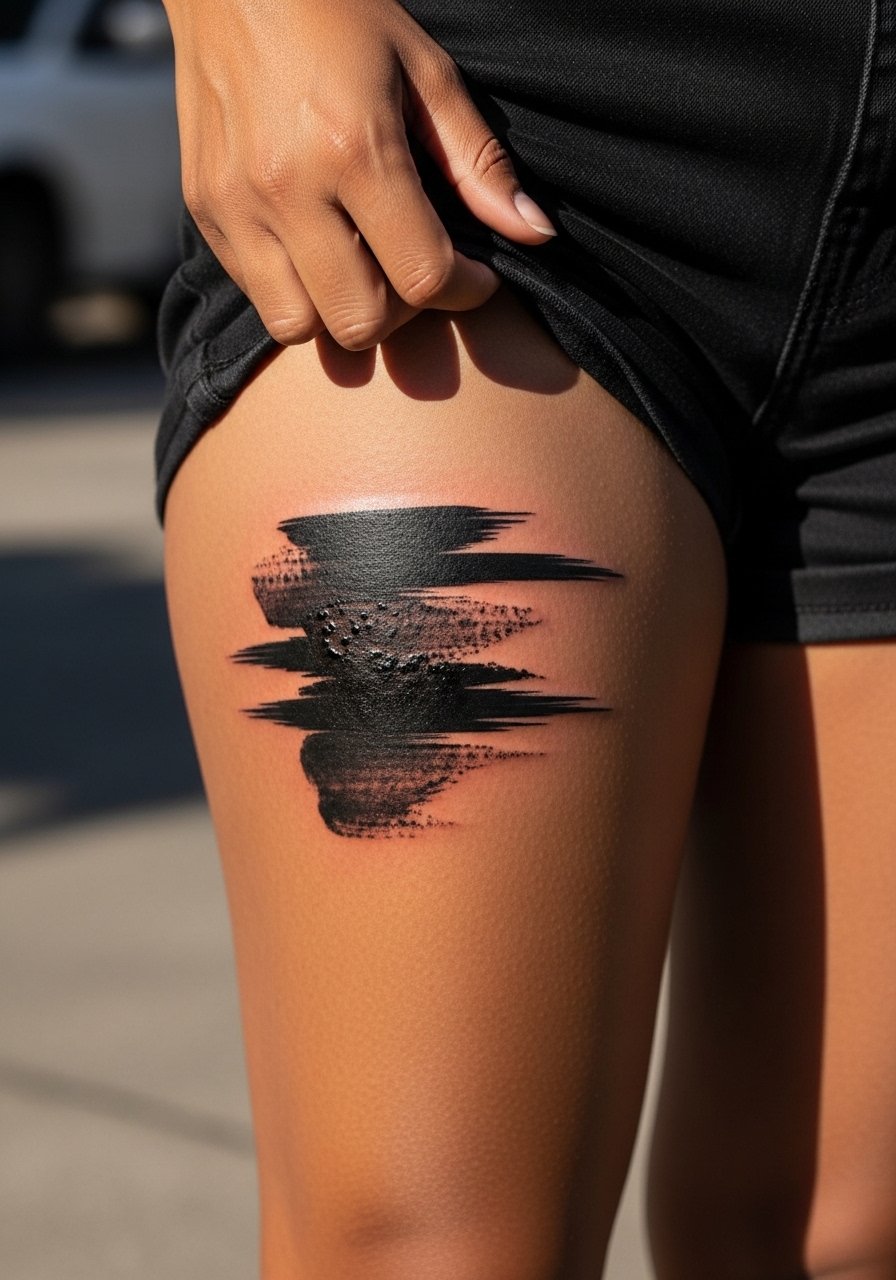
Abstract strokes let the artist play with motion and negative space, which is forgiving over years. The piece tolerates some merging because its graphic intent remains readable. Be explicit in consultation about where you want the heaviest black and where you want skin as negative space. A misstep is asking for too many small textures which can look muddy when the skin settles. For everyday style, chunky knit tops and high waisted shorts create a balanced silhouette that keeps attention on the thigh artwork.
Frequently Asked Questions
Q: Will fine line work on the inner thigh blur faster than bold pieces?
A: From what I've seen, fine line is more vulnerable because the inner thigh gets more friction and softer skin. Some artists counter that with slightly increased line weight and extra negative space. It depends on your skin type and how often you rub the area with clothing.
Q: How many sessions does a large neo-traditional thigh piece usually take?
A: Large, saturated thigh pieces often need at least two sessions. The first handles outlines and base shading. The second packs color and refines edges. Artists will suggest breaks during a session to avoid swelling that affects saturation.
Q: Are there career or social considerations for visible thigh tattoos?
A: Thigh tattoos are mostly private unless you wear shorts or swimwear. Hand and neck tattoos still have more visible hiring impacts. If you plan a piece that shows often, think about your wardrobe and whether you want it seen in professional settings.
Q: Should I expect touch-ups and when?
A: Expect touch-ups anywhere from year one to year three depending on style and sun exposure. Bold blackwork resists fading better. Fine line and watercolor styles often need refreshes sooner. Ask your artist about their touch-up policy when booking.
Q: What should I wear to a thigh session for comfort and access?
A: Wear easy shift shorts or drawstring linen shorts so the artist can expose only the needed area while you stay covered elsewhere. Loose clothing avoids pressure on the fresh tattoo during travel home.
Q: Is there a controversy about doing cultural motifs on the thigh?
A: Yes, some people think using certain cultural or religious designs without context is insensitive. Others argue for respectful reinterpretation and acknowledgment. If you pick a motif with cultural origin, consider a personalized variation and discuss respectful adaptation with your artist.