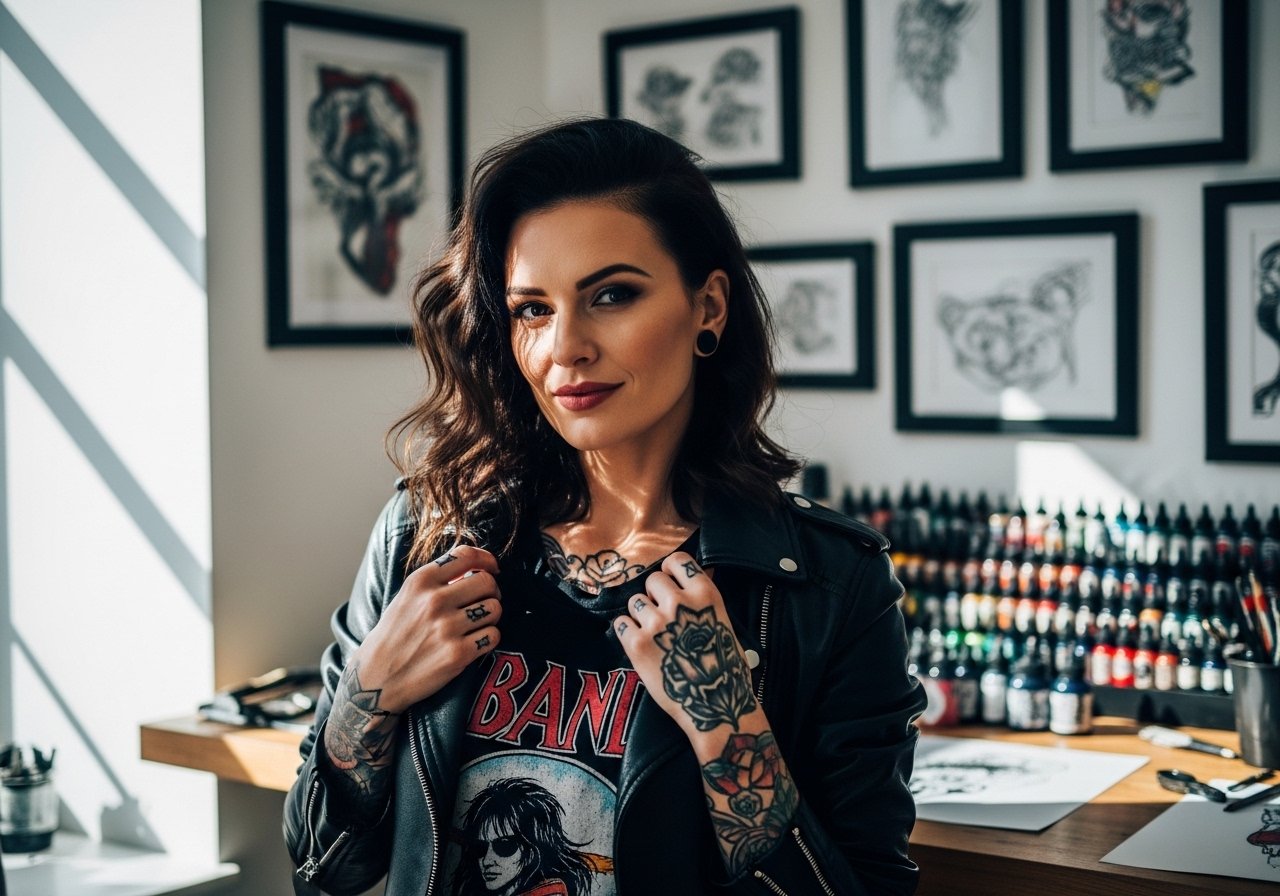
Fine line trends look irresistible online, but what keeps a sun and moon tattoo readable after the first year is not flash alone. I've watched pieces in five Brooklyn shops and at a weekend convention settle in very differently. Placement, spacing, and how the artist spaces the linework matter more than the photo you saved. Start with pieces that plan for aging and the list below shows options that age into something you can keep wearing.
1. Crescent Moon and Tiny Sun on the Inner Forearm
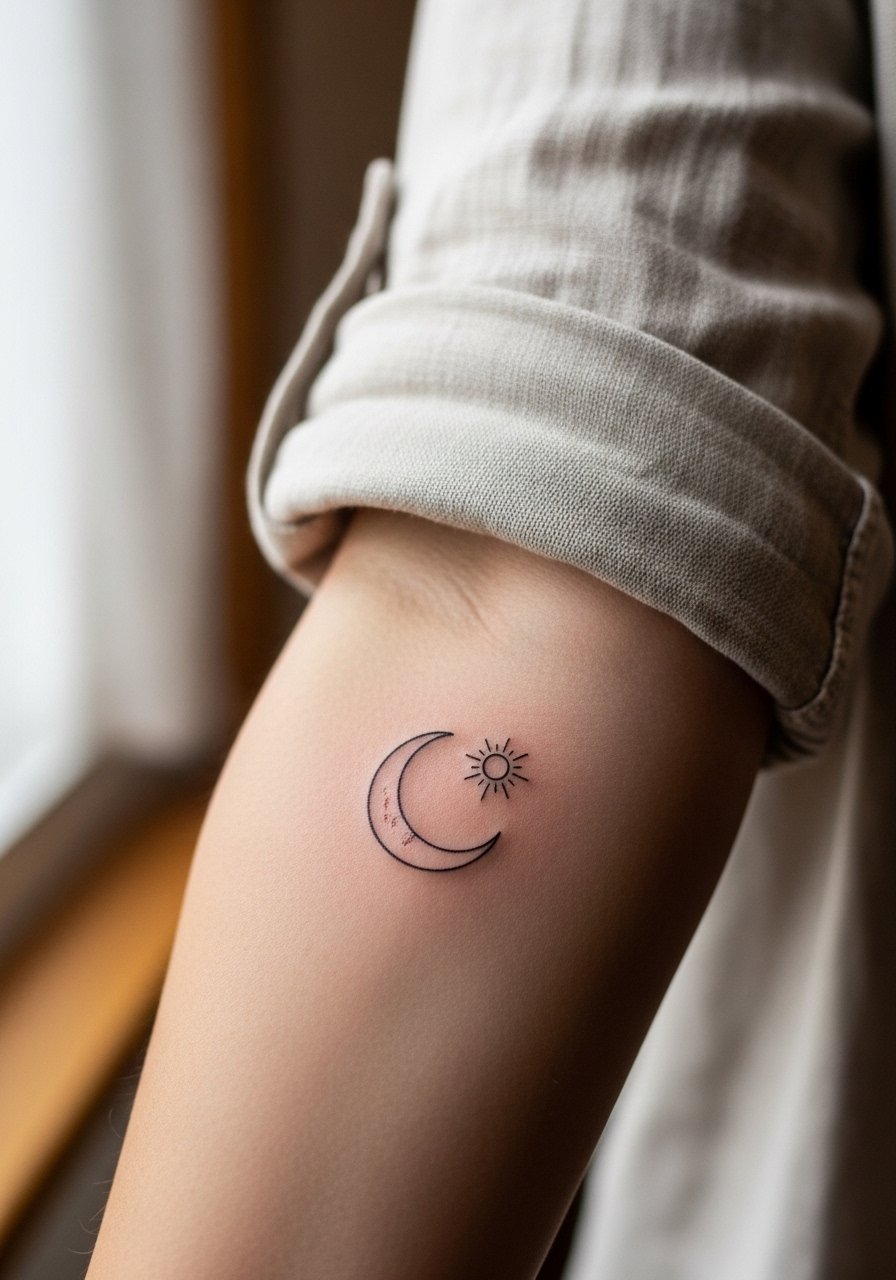
The inner forearm is a forgiving canvas for delicate sun and moon work because the skin holds linework well. Ask your artist for slightly heavier line weight than your initial reference so the pieces do not blur at year three. Common mistakes are going too thin and packing stars or dots tightly around the moons. At six months the lines stay crisp if saturation was correct. At two years expect softer edges, and at five years a subtle touch-up often brings back the original contrast. Session time is usually one to two hours. For showing this off try a loose button-down shirt with sleeves rolled to frame the inner forearm.
2. Micro Geometric Sun and Moon on the Wrist
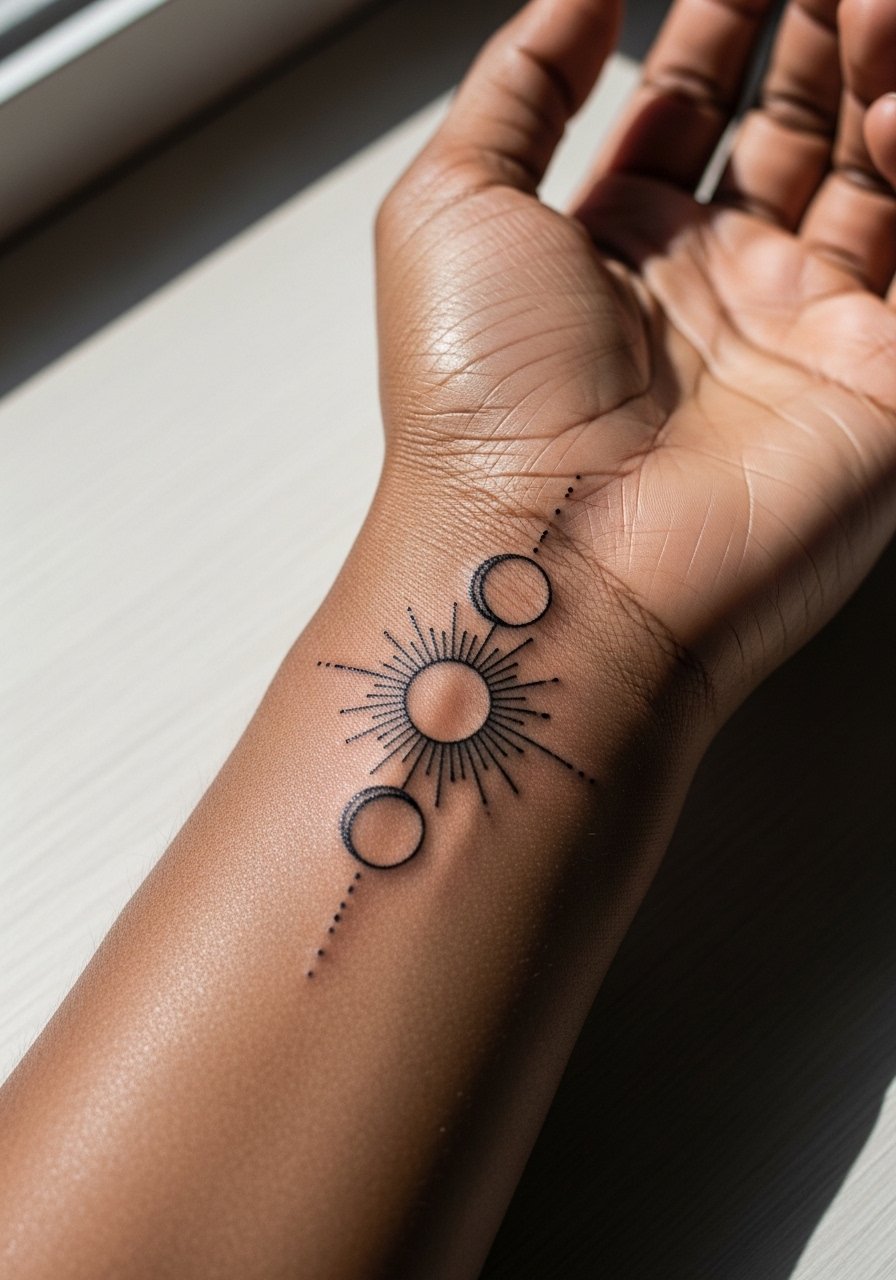
Wrist pieces read immediately but face constant friction from watches and bracelets. One camp says geometric and fine line on the wrist blurs quickly because of movement and thin skin. The other camp argues that with correct spacing and deeper, controlled needle work the geometry holds. Ask your artist which camp their portfolio fits with, and expect a touch-up timeline around year two to three. Pain is mild to moderate and sessions are short. A common mistake is over-detailing the center; let negative space breathe. Pair this with a minimalist watch or thin bracelets so the tattoo stays visible without rubbing.
3. Constellation Sun and Moon at the Ankle
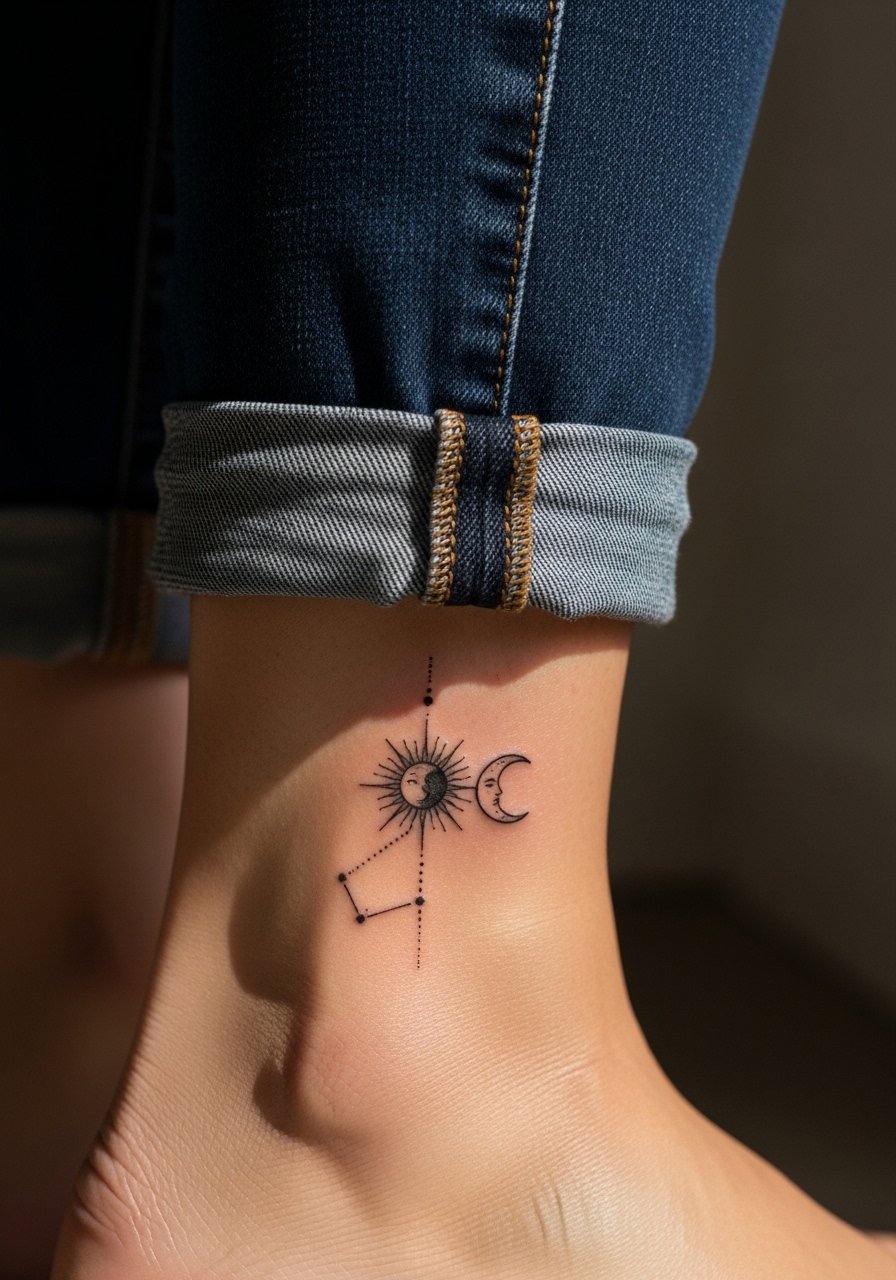
Ankle tattoos face a lot of washing and shoe friction. For a constellation layout, I suggest spacing stars and micro moons so they do not sit within the shoe rub zone. The session feels quick but sensitive when the needle gets close to bone. Blowout risk is low with correct depth, but too shallow and the dots will fade; too deep and the ink can spread. Tell your artist you want slightly bolder dots for longevity and plan a touch-up at the two-year mark. For show-off outfits, cuffed jeans or sandals highlight the ankle without competing with the design.
4. Micro-Realism Solar Eclipse on the Shoulder Blade
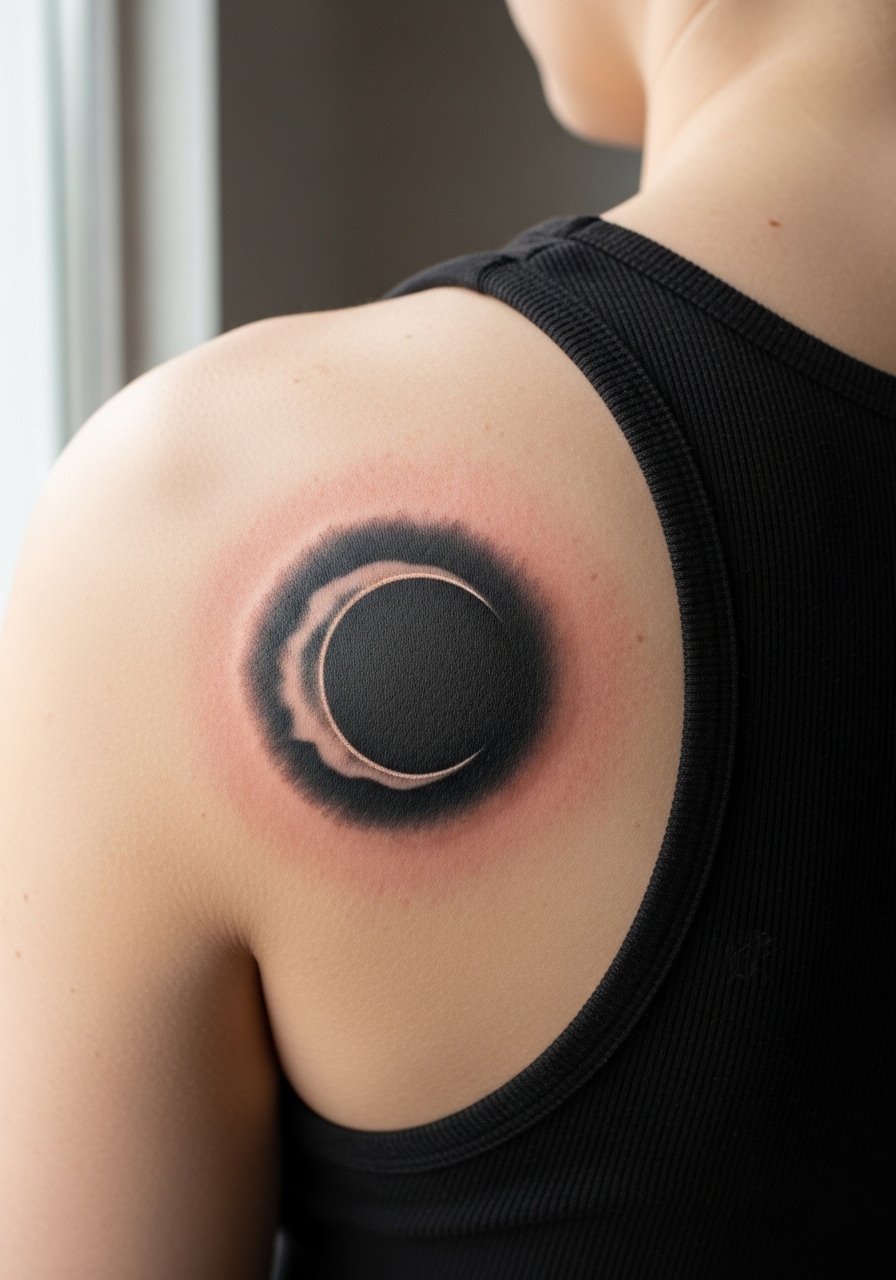
Shoulder blade flesh takes micro-realism well because the skin lies flat during the session. If you want a realistic eclipse, ask for stipple shading and controlled saturation rather than heavy smudged fills. A common mistake is too much tiny shading packed into a small area; that is what fades into an indistinct patch. Expect moderate pain and one to two hours in the chair depending on shading. At six months the contrast looks strong, and at two to five years the dot work will soften but keep the overall shape if saturation was balanced. Wear a loose tank top to the appointment so the artist can access the area without lifting a tight shirt.
5. Stipple Lunar Phases Along the Outer Bicep
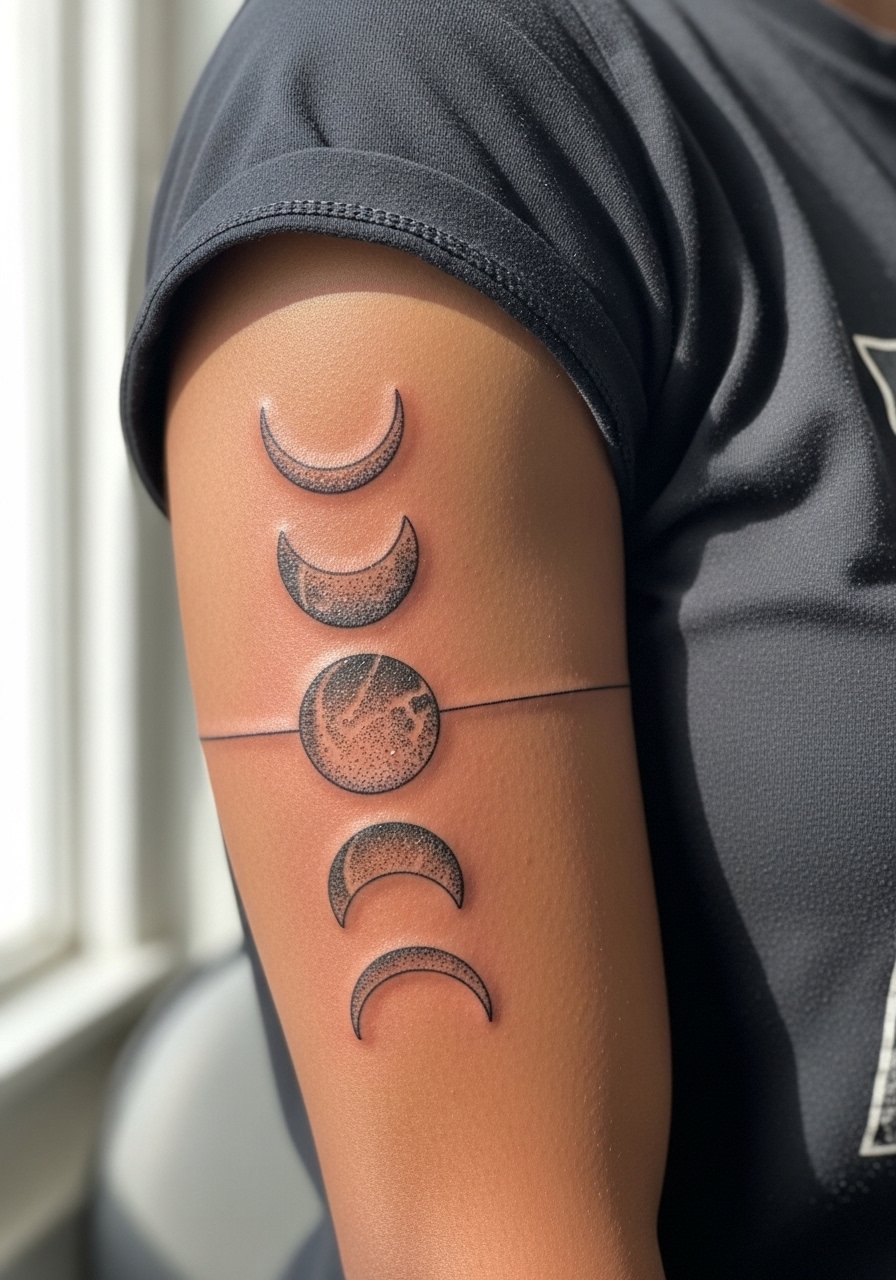
Stipple shading gives lunar phases texture without heavy saturation, and the outer bicep is ideal because the skin stretches less here than on the inner arm. Tell your artist you want dot work spacing wide enough to avoid merging as the ink ages. A frequent mistake is forcing stipple too dense near the edges, which compresses over time. Expect a moderate session with light tenderness during shading. Touch-ups are often needed at year three for dot clarity. This placement pairs well with rolled short sleeves that keep attention on the bicep.
6. Sun and Moon at the Collarbone
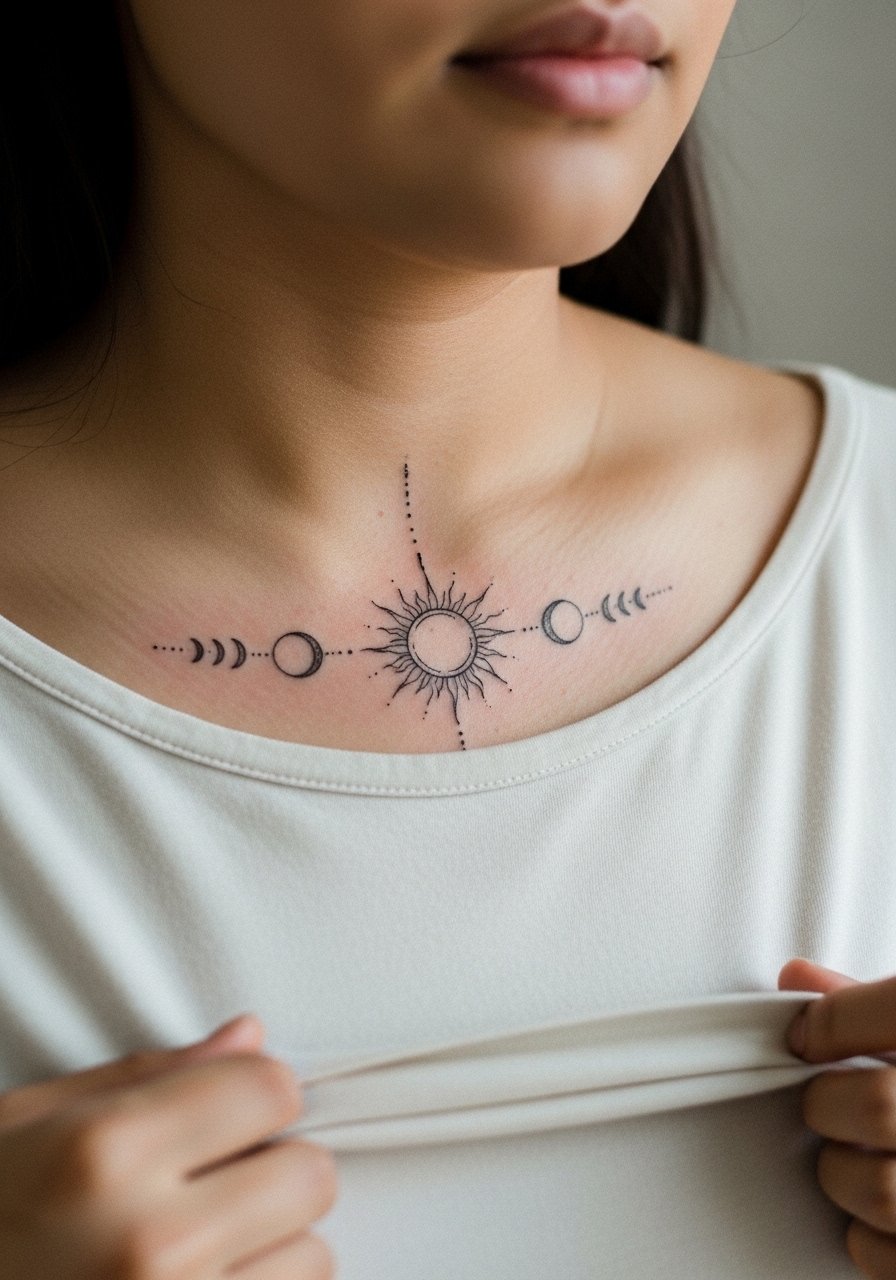
Upper chest work reads like jewelry when placed near the collarbone, but the thin skin can make solid fills heal unevenly. Ask for slightly wider linework around the central sun to prevent early feathering. The session can be more painful than the arm because the collarbone sits close to the surface. People often make the mistake of packing too much tiny detail into a small collarbone tattoo. From my experience the piece looks great at six months, softens at two years, and may need a targeted touch-up on the outlines later. For the studio and showing off, a wide-neck shirt pulled gently aside keeps the area accessible and stylish.
Studio Day Picks
The pieces above, from wrist bands to collarbone accents, ask for different prep and first-week care. These items smooth out the session and protect fine line work while it heals.
- Stencil transfer paper kit. Lets you and the artist preview line placement on the skin, which is especially useful for the forearm constellation and wrist geometry shown above.
- Topical numbing cream. Applied correctly before a session eases the wrist and collarbone discomfort without affecting linework when used as directed.
- Thin protective film roll. Keeps ankle and wrist tattoos from constant moisture and friction during the first days of healing.
- Fragrance-free body wash. Gentle cleansing reduces irritation for treated areas like the shoulder blade and outer bicep where dot work must stay clear.
- Aquaphor Healing Ointment. A thin layer in the first 48 hours helps fine line work keep moisture without clogging tiny needle channels.
7. Vertical Sun and Moon Vine on the Ribcage
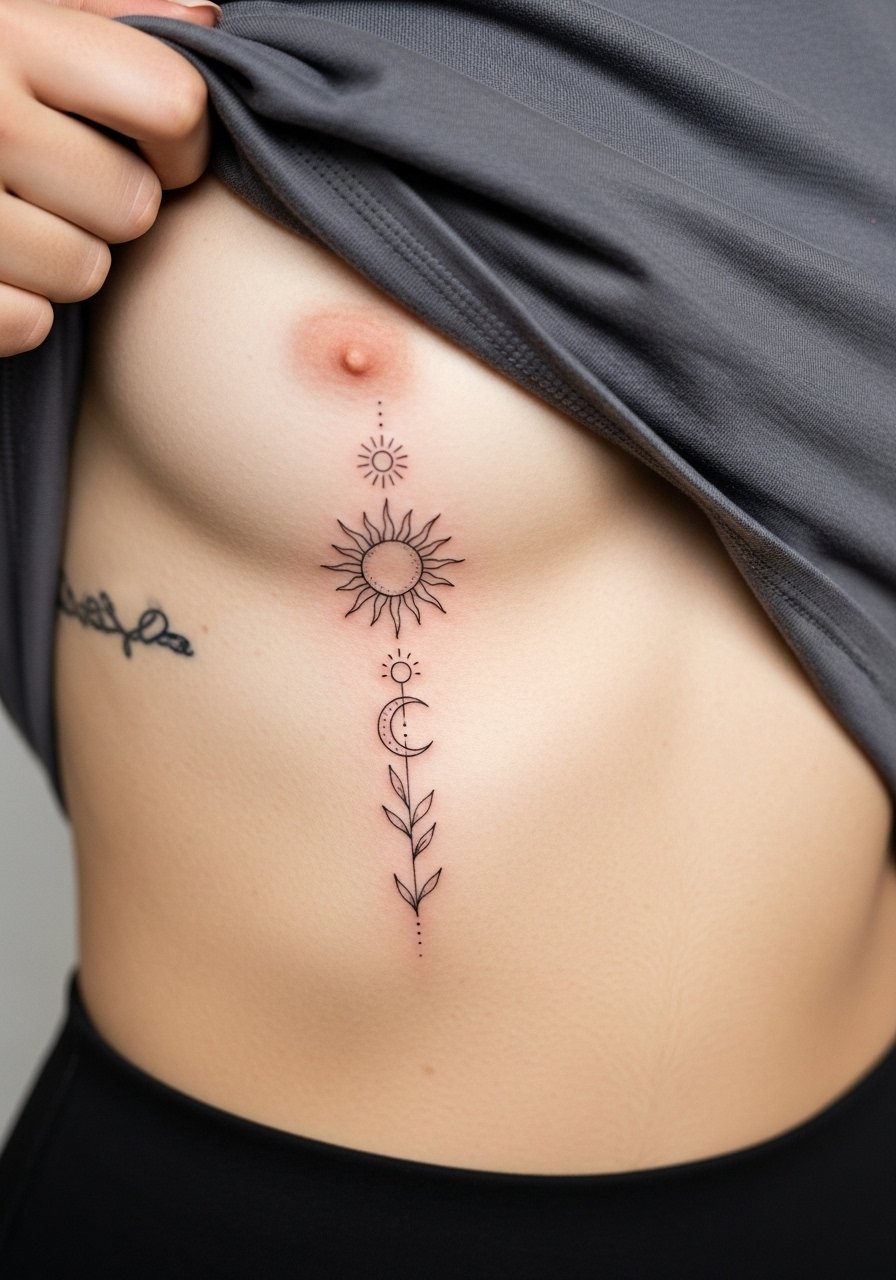
Ribcage pieces make a strong visual but they are notorious for movement and stretch. Artists split into two camps on fine line here. One group says the rib skin stretches and lines blur within two years. The other says with proper needle depth and spacing, fine line settles fine on the ribs. I tell people to ask which camp their artist practices before booking. Pain is high and sessions may be broken into shorter sittings. Common mistakes include cramming dense detail into the curved rib area. Expect slower healing and plan for a touch-up after the first year.
8. Sternum Sun and Crescent Cluster
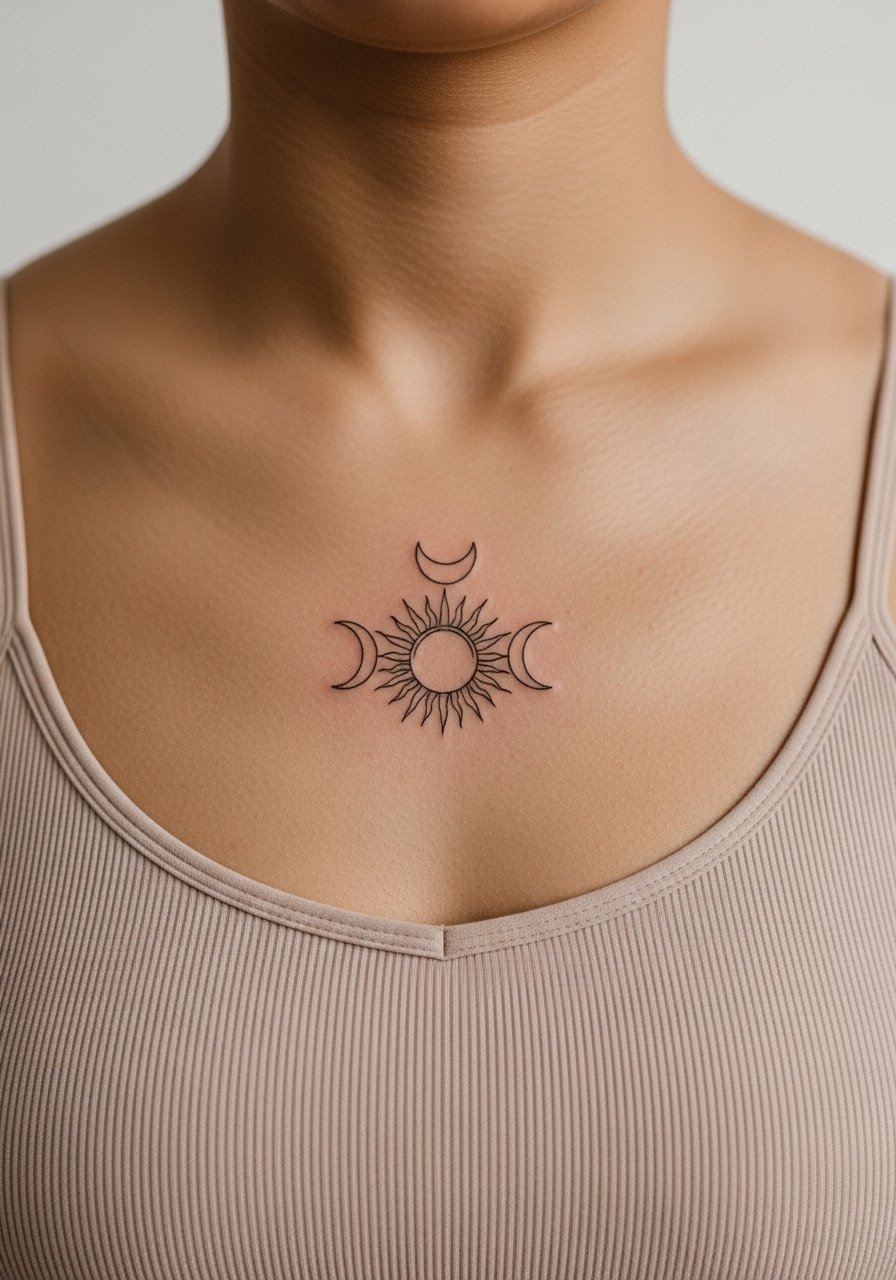
Sternum work is intimate and can be sensitive, both physically and professionally. For session access wear a strapless or fitted sports bra to the appointment. The sternum takes shading poorly if the artist over-saturates, so request lighter fills and clear negative space. Sessions are painful near the breastbone and may need breaks. One common error is asking for heavy black fills that end up looking patchy as they heal. Expect a touch-up at year two for outline sharpening if you want crisp contrast long term.
9. Tiny Stacked Sun and Moon on the Finger
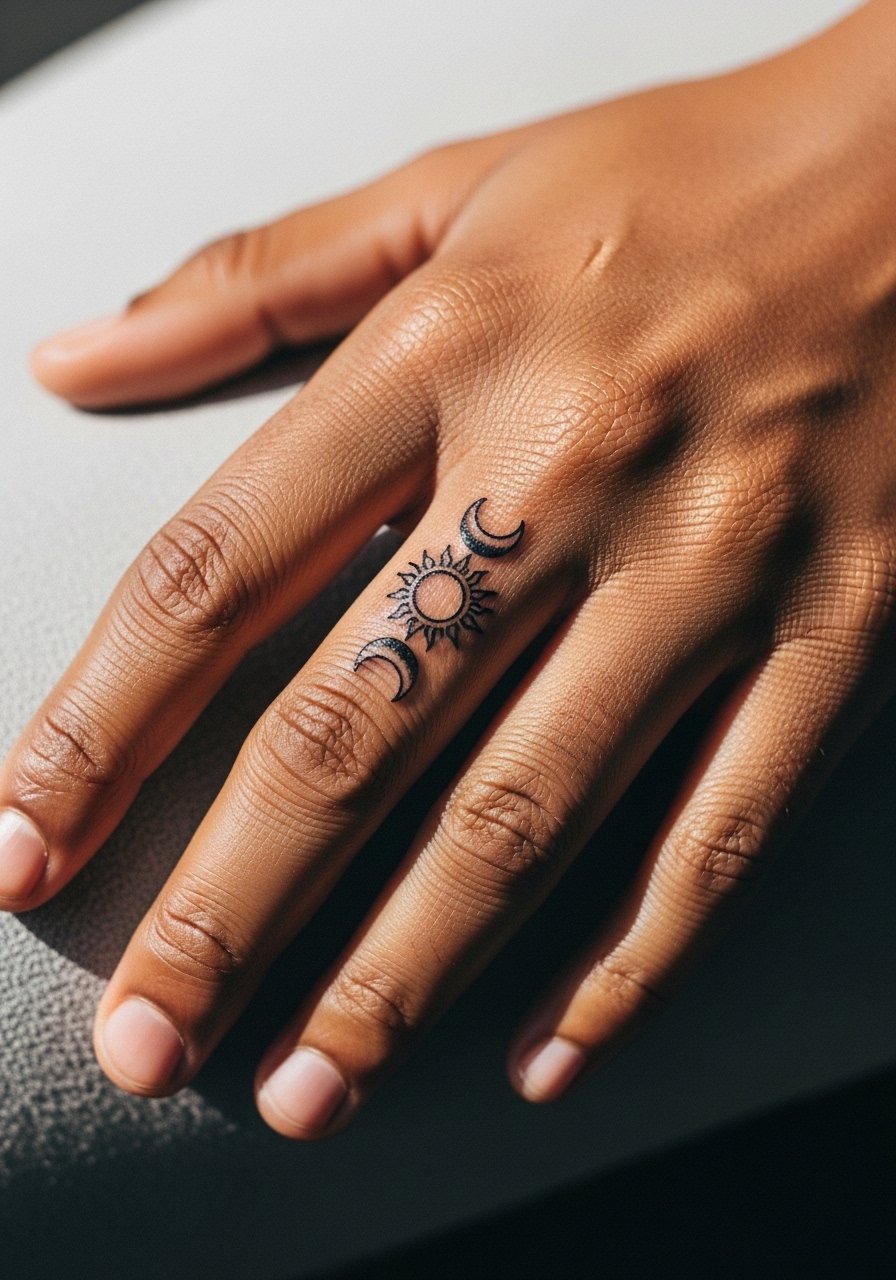
Finger tattoos are visible and fragile because of constant washing and skin renewal. For tiny stacked designs, ask for bold simplified silhouettes rather than micro-detail. A mistake I see often is trying to cram shading into a fingertip design. Expect faster fading and a likely touch-up within a year. Session discomfort is sharp but short. If you like jewelry pairing, wear slim bands or a stackable ring set that frames the finger without rubbing the tattoo too hard.
10. Halo Sun and Moon Around the Ankle Bone
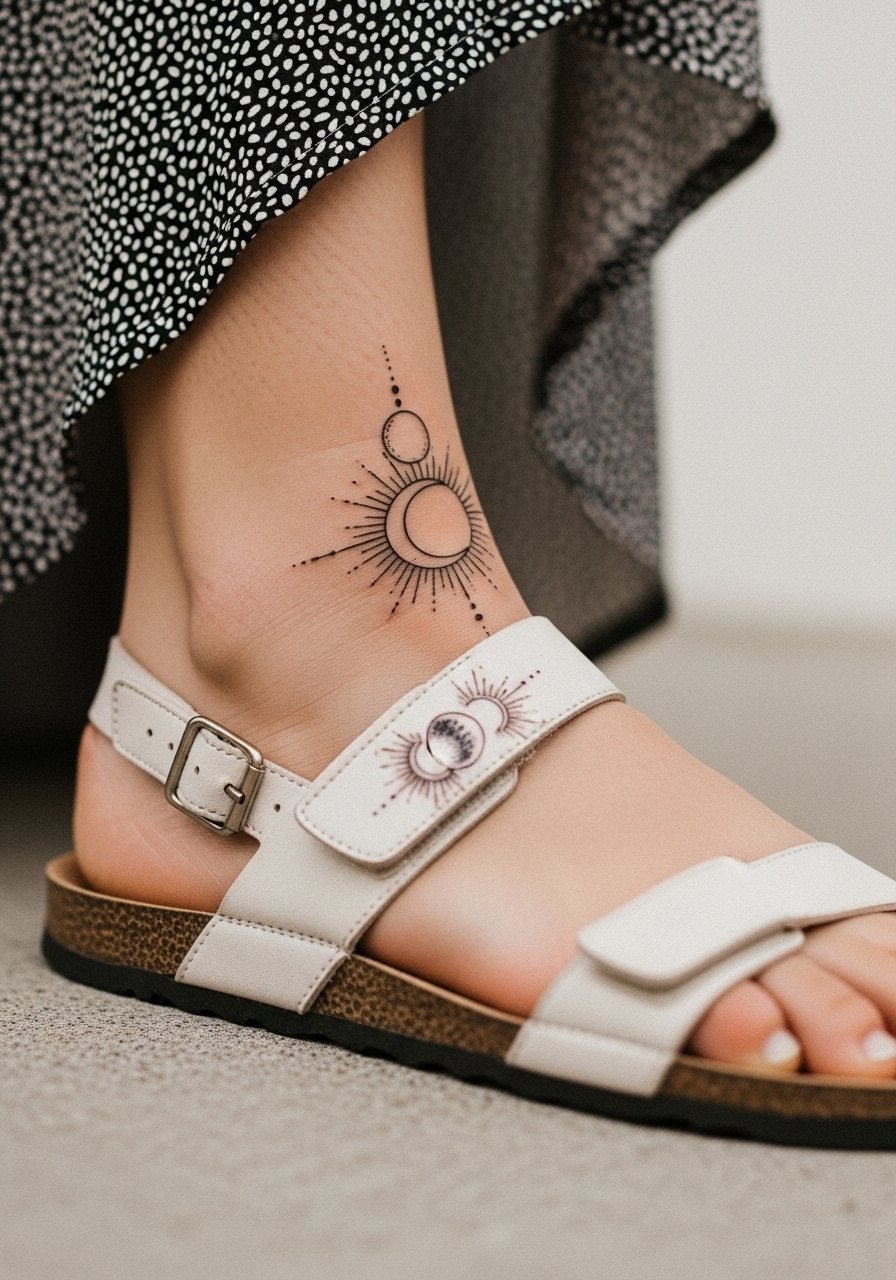
Ankle bone tattoos look delicate and move with shoes and socks. Ask for slightly stronger outlines on the halo so the circle keeps its shape after a few months. Common mistakes are making the halo too thin or adding tiny interior dots that the shoe rubs away. Sessions are short but can feel bony. Plan to avoid tight boots for the first two weeks. Sandals, rolled trousers, and short skirts showcase this placement without putting pressure on the area.
11. Vertical Sun-To-Moon Spine Accent
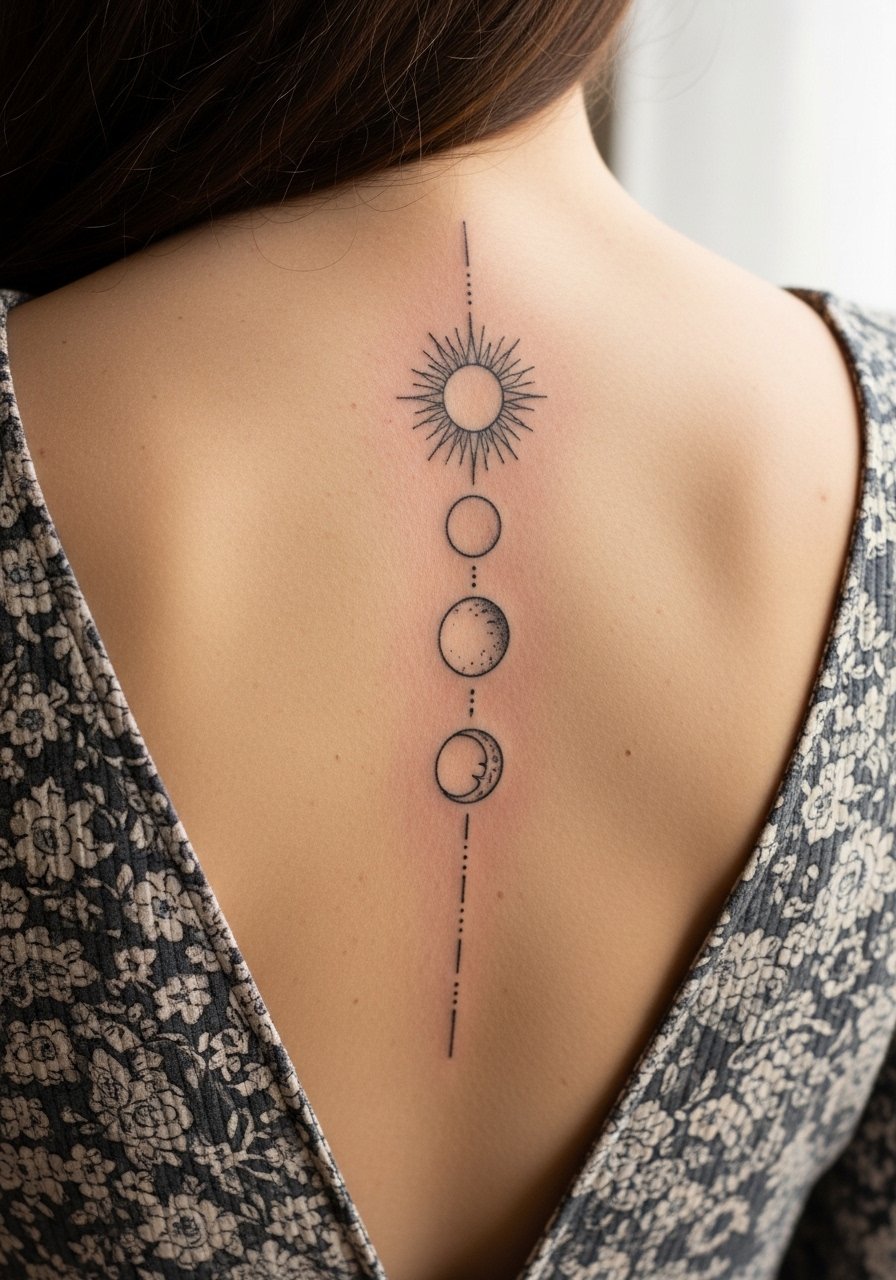
A spine accent reads like jewelry when aligned properly. The middle back skin is steady, which helps linework last. A common error is miscentered placements that look off as you move. The session can be uncomfortable toward the lower vertebrae but is usually manageable. At six months lines stay present and at three to five years shading softens while outlines remain. For appointments, a button-up or open-back layer makes access easy without overexposure.
12. Blackwork Sun and Moon on the Upper Thigh and Hip
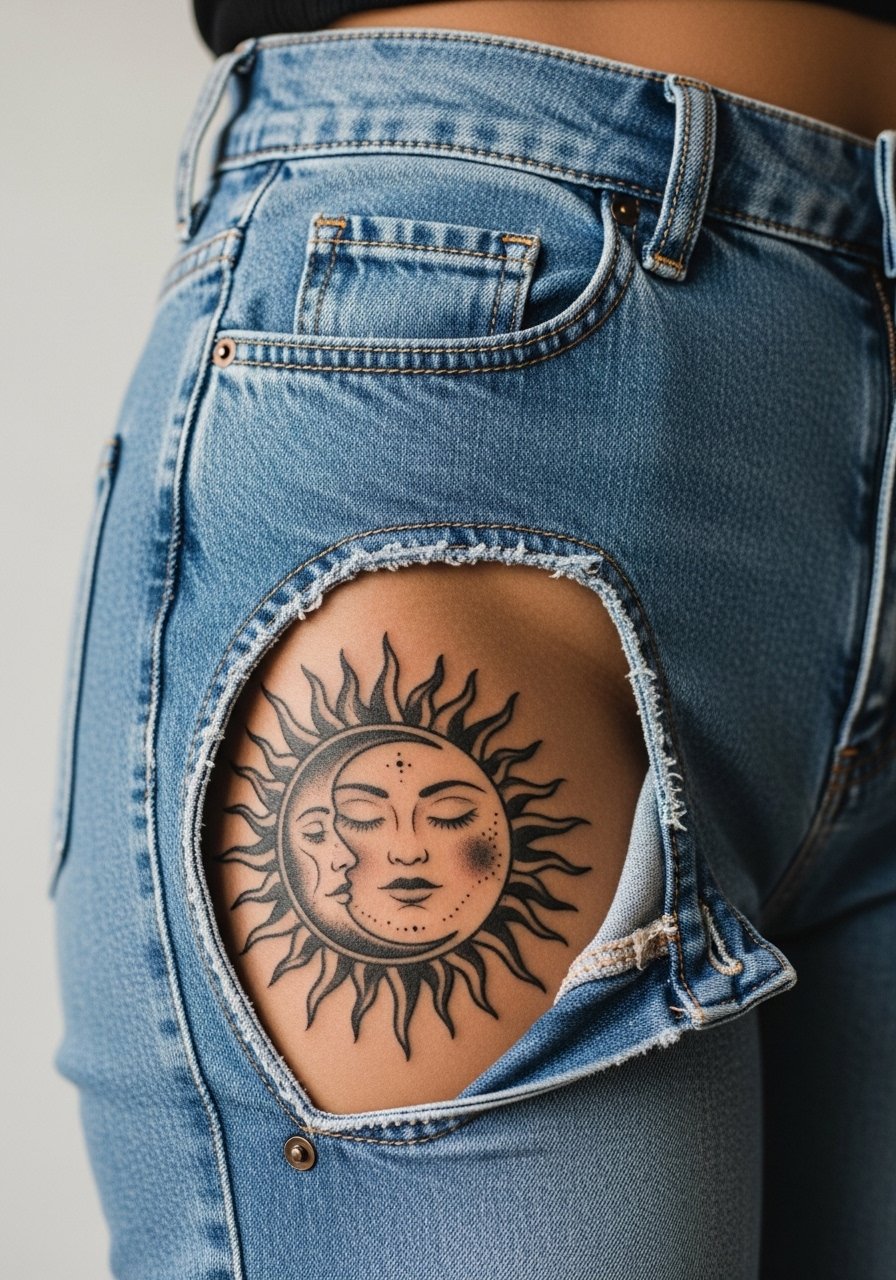
Upper thigh and hip pieces allow for bolder saturation because the area sees less continual abrasion. Tell your artist you want controlled saturation with clean edges so the blackwork ages into solid shapes rather than smudged blobs. The session is longer and you may need breaks. Expect minimal blowout risk if depth is consistent. Many people like to show this area in high-waisted shorts or swimwear. For the studio wear something easy to shift like high-waisted bottoms so the artist can expose only the tattoo zone.
13. Neo-Traditional Sun Face with Crescent on the Calf
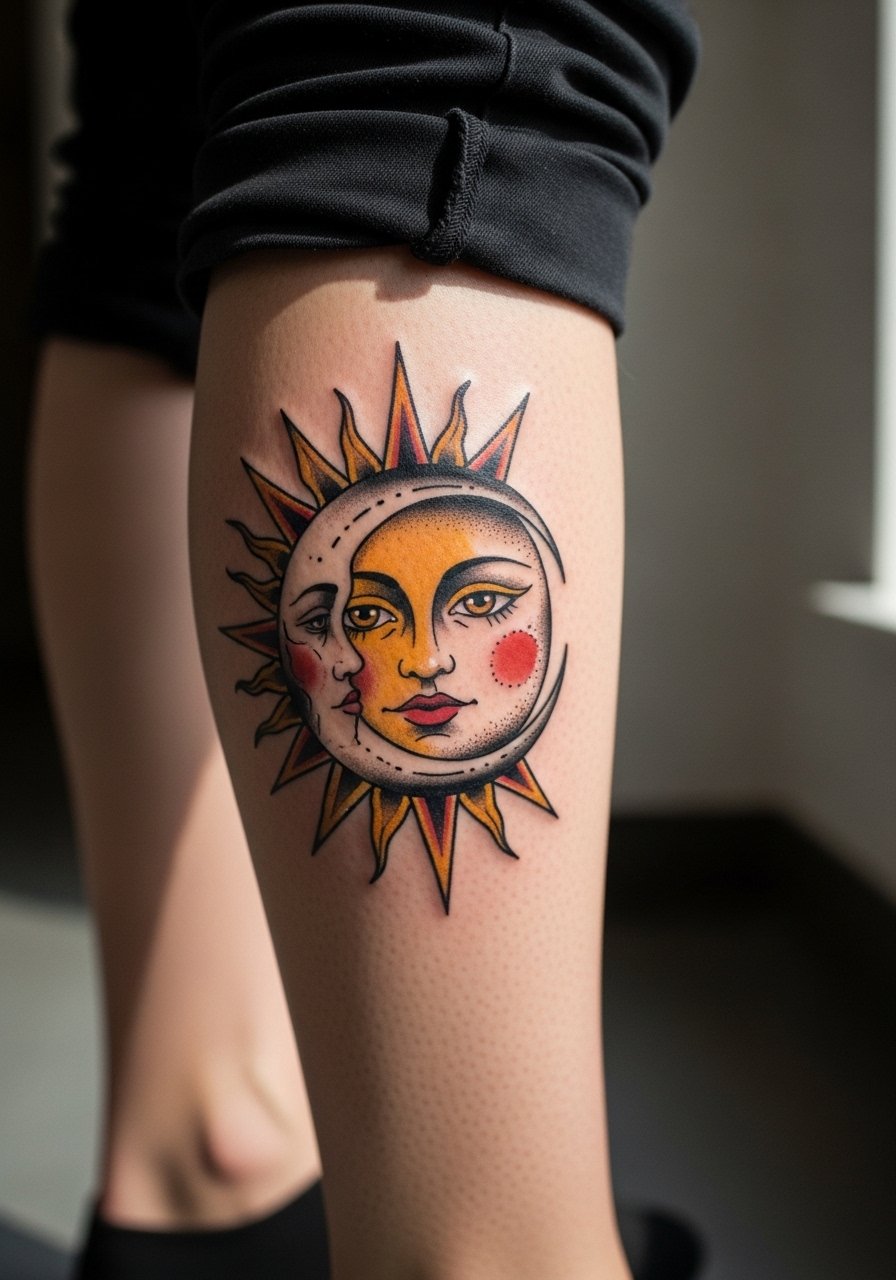
Calf pieces sit well for neo-traditional styles because the muscle keeps color stable. Ask for solid outlines and mid-level saturation so yellows and oranges hold without heavy touch-ups. A mistake I see is requesting extremely fine hairline details in areas that get sun and fade faster. Sessions can be an hour or two depending on color. The calf lets you wear the design with boots or shorts, and touch-ups tend to be cosmetic after the third year.
14. Minimal Script Coordinates with a Tiny Sun on the Inner Wrist
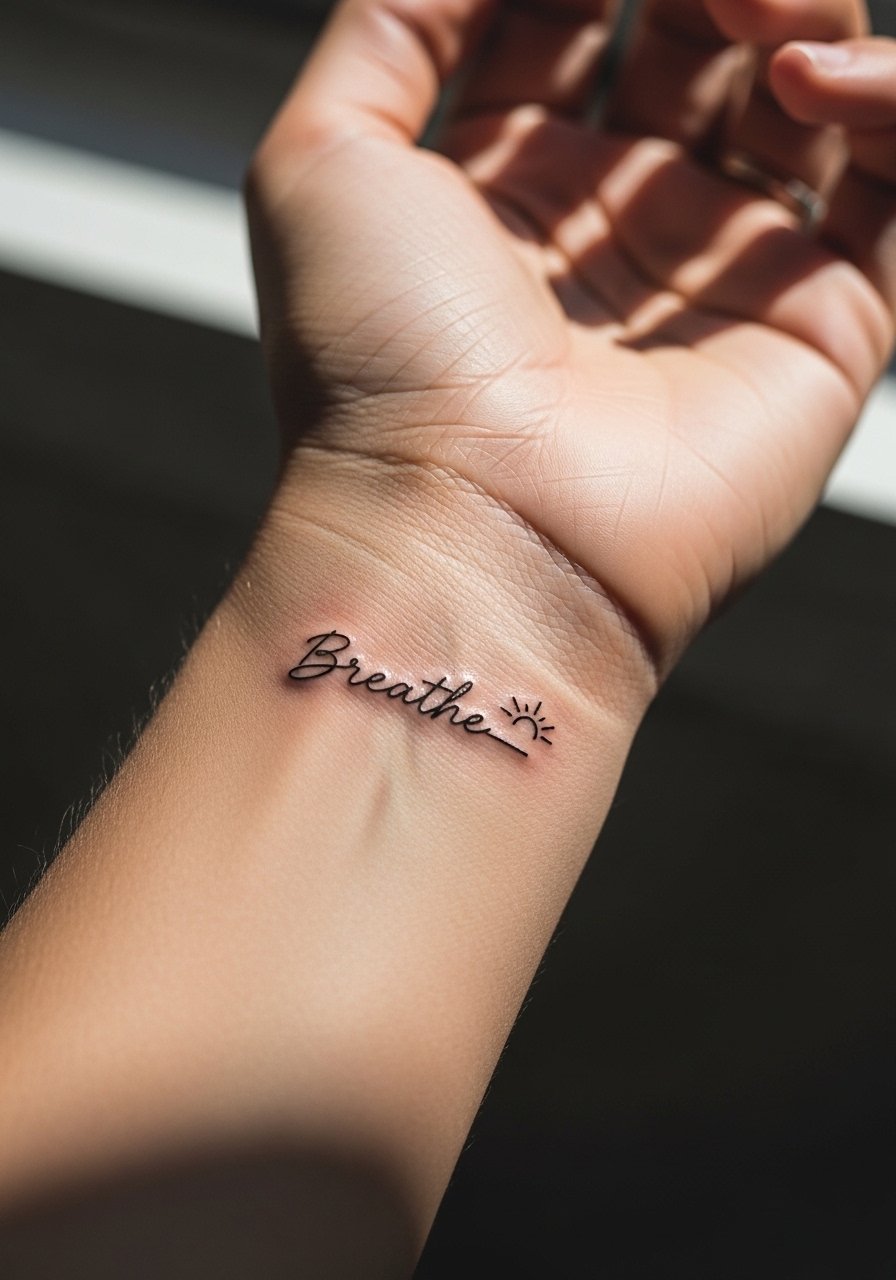
Text plus a motif on the wrist looks like a small statement when spacing is respectful. If you want script and a tiny sun, give the artist the exact word and font weight you want. A frequent mistake is picking an ornate font that merges into the sun symbol as it ages. At six months the script should be clear, but by year two thin script may need a touch-up, especially if you wear wrist accessories. For showing it off, pair this with a thin bracelet or a dainty chain bracelet so the wrist reads intentional without crowding the ink.
15. Dotwork Mandala Sun and Moon on the Shoulder Blade
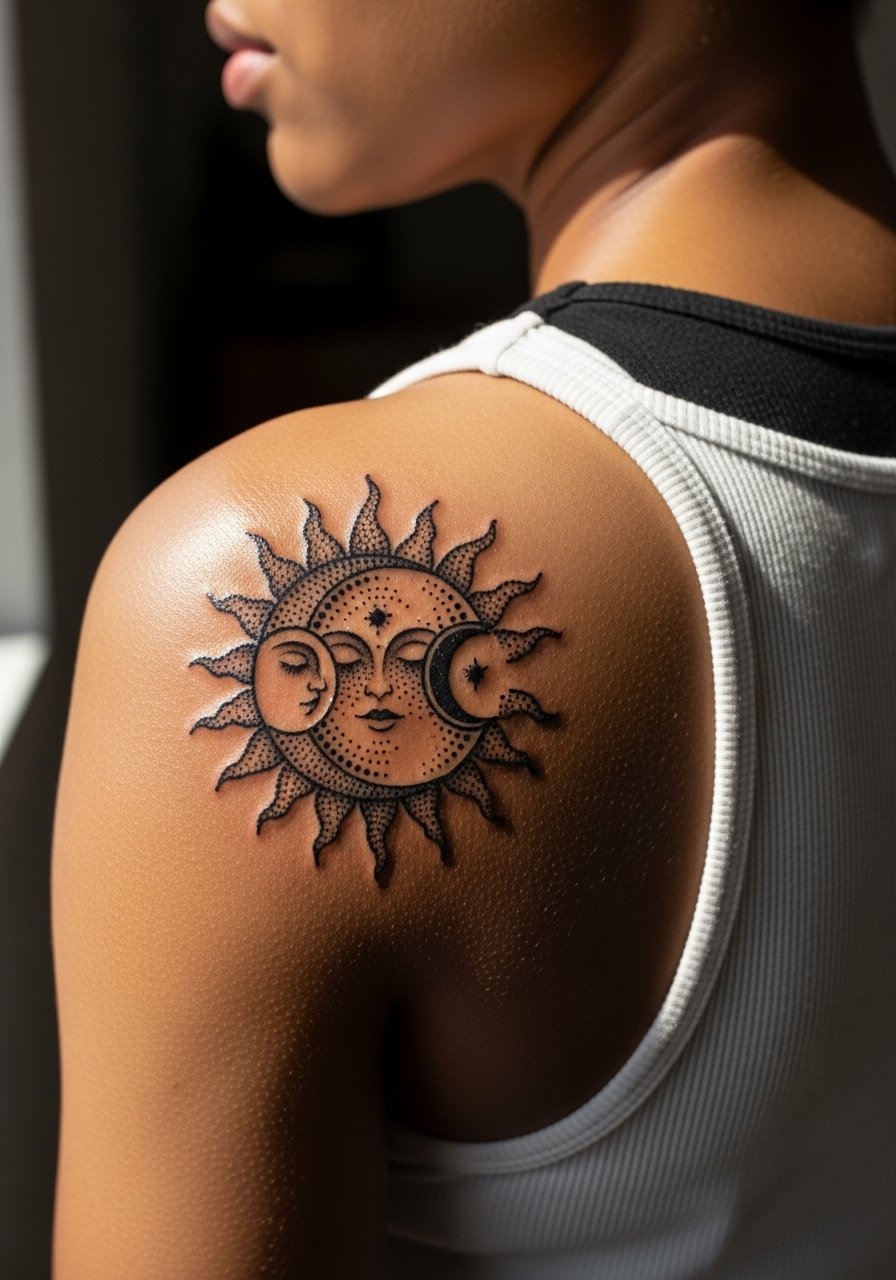
Mandala dotwork needs breathing room to stay crisp. On the shoulder blade the skin is forgiving, but dense dot clusters too close to each other will merge in time. Tell your artist you want graduated dot spacing so the inner beauty stays and outer lines loosen subtly without losing shape. Sessions can be long if the piece is large. Expect dot softness at two to three years, and plan for targeted touch-ups to restore contrast.
16. Inner Bicep Botanical Sun and Moon
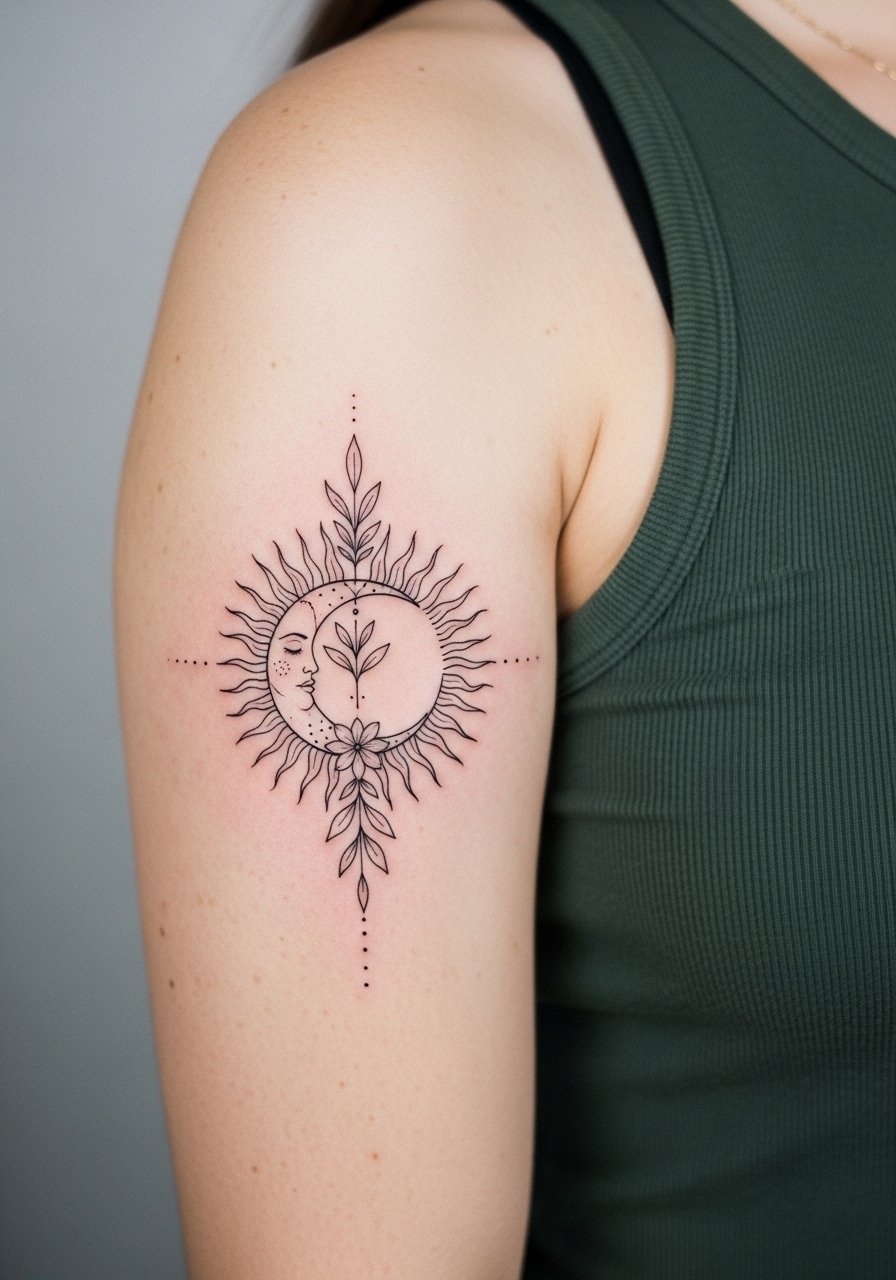
Inner bicep pieces sit on softer, thinner skin so pick designs that tolerate slight stretching. The biggest mistake is tiny closely packed lines that blur after a year. The session feels tender because the inner arm is sensitive. I advise asking for slightly more spacing and moderate line weight to help the design read at two to five years. This placement requires a steady aftercare routine in the first week since sweat can irritate the area.
17. Tiny Nape Sun and Moon at the Hairline
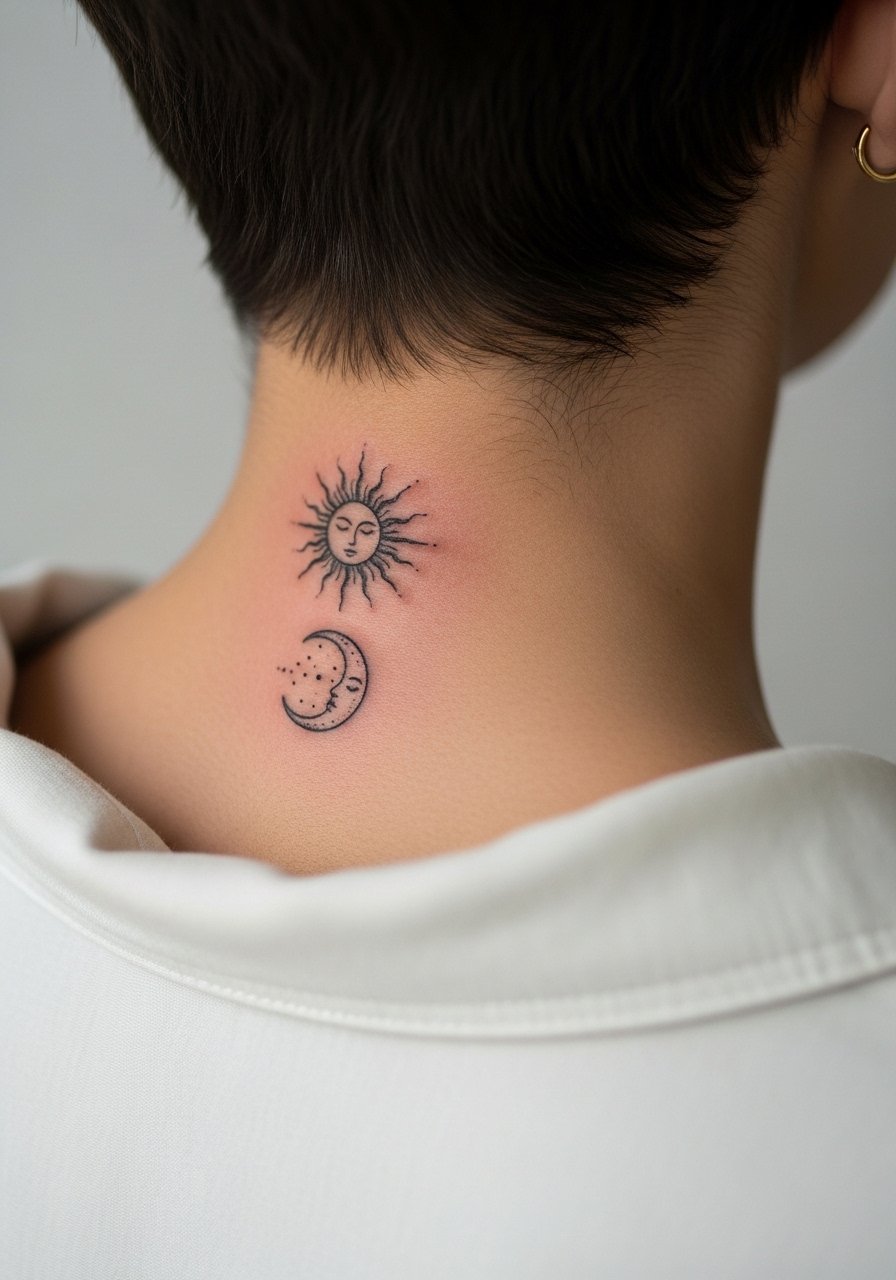
Nape tattoos are discreet and photograph well when exposed. The neck skin moves and hair can rub the area during healing, so request simpler shapes without tiny interior detail. A common mistake is placing too many micro dots which the natural oils and shampooing can dissipate. Sessions are short but sensitive. For showing the piece, a thin chain pendant sits above without competing for attention. When booking, ask about their experience with neck placements so you know they have handled the unique healing needs.
Frequently Asked Questions
Q: Will a delicate sun and moon piece blur into a smudge on the wrist or finger?
A: Small motifs on wrists and fingers face constant friction and handwashing. Expect faster fading and a likely touch-up within one to three years for fingers and two to four years for wrists. Ask your artist about slightly heavier line weight and simplified silhouettes to increase longevity.
Q: How painful is a ribcage sun and moon compared with a forearm piece?
A: Ribcage sessions are usually more painful because the needle is close to bone and breathing moves the canvas. Forearms are generally milder. For ribs plan for breaks, possibly multiple shorter sessions, and realistic expectations about recovery time.
Q: Do blackwork sun and moon pieces need different care than fine line ones?
A: Blackwork is more forgiving in early aging because saturation holds contrast. Fine line needs spacing and moderate saturation to avoid early feathering. Both benefit from sun protection after healing and a realistic touch-up plan based on how your skin holds ink.
Q: What should I wear to a sternum or ribcage appointment so the artist has access?
A: Wear a fitted sports bra, a cropped top, or a button-up you can pull aside so the artist only exposes the treatment area. Comfort and modest coverage make the session smoother and keep you warm between passes.
Q: How often will a sun and moon tattoo need touch-ups for good long-term clarity?
A: It depends on placement, skin type, and daily exposure. Small visible pieces often need touch-ups around year one to three. Larger or bolder blackwork may go longer between touch-ups. Plan on checking the piece at the two-year mark and budgeting for maintenance if you want it crisp.
Q: Are there career or cultural considerations I should think about with neck, hand, or sternum placements?
A: Yes. Hand and neck tattoos can affect how you are perceived in certain workplaces. For culturally specific motifs, consider respectful variation or discuss adaptations that honor the origin while avoiding direct replication. Ask an artist experienced in those placements for guidance.